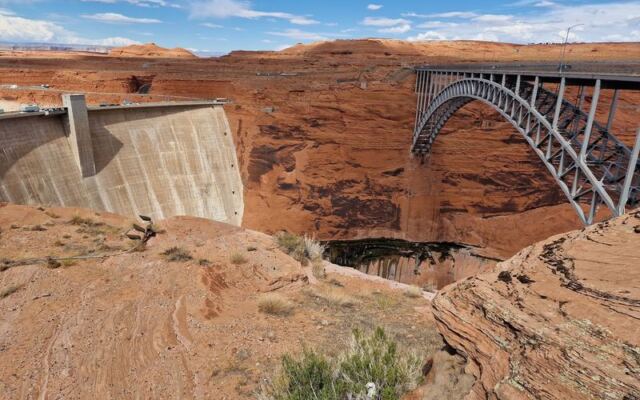
There is a stretch of road in northern Arizona where the pavement suddenly seems to float in midair, with nothing but a slender steel arch holding it above a river far below. Cars roll across at a careful crawl, and the walkway beside them gives a full view straight down into the canyon.
It looks like something engineers dreamed up on a very bold afternoon, and standing on it makes even confident travelers pause. The reward is a look at one of the tallest dams in the country and a river that carved this landscape over countless years.
This story unpacks what makes the crossing so memorable, where to park, what to see, and why so many road trippers rank it among their favorite unexpected stops.
Where the Road Meets the Sky Near Page
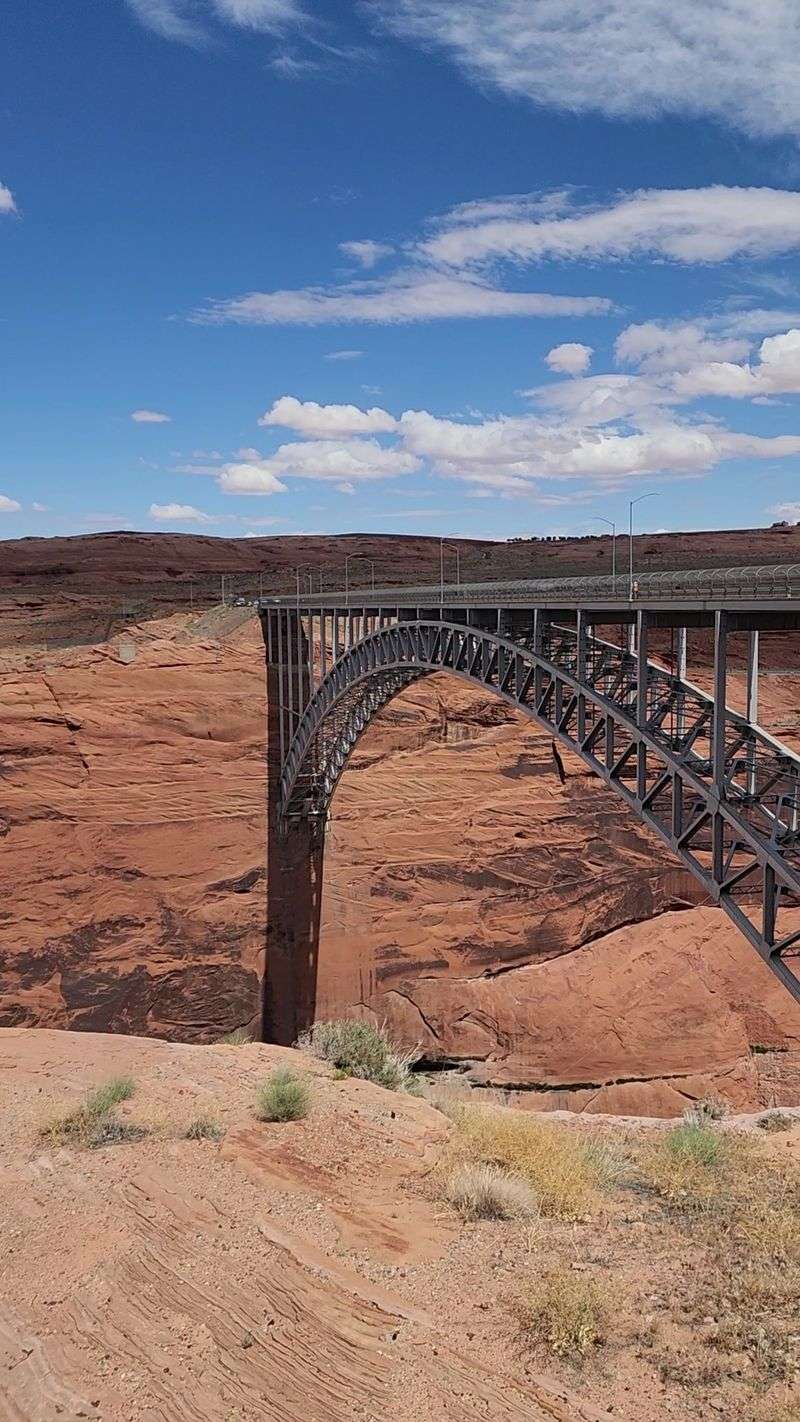
Just outside the small city of Page, Arizona, the road funnels toward a crossing that feels almost too dramatic for an ordinary drive. The full address is Glen Canyon Dam Bridge, Page, AZ 86040, and it sits right beside the towering concrete wall of Glen Canyon Dam.
The bridge carries traffic high above the Colorado River, tucked into the sculpted red canyon that gives the region its striking look. Locals often call it the gateway to Page, a welcoming signal that you have arrived somewhere special.
Open around the clock, seven days a week, it stays accessible whenever the road trip mood strikes. Many travelers pass through on their way toward Grand Canyon or Zion National Park, treating this spot as a worthy pause rather than a quick blur out the window.
An Arch Built to Hold Up a Canyon
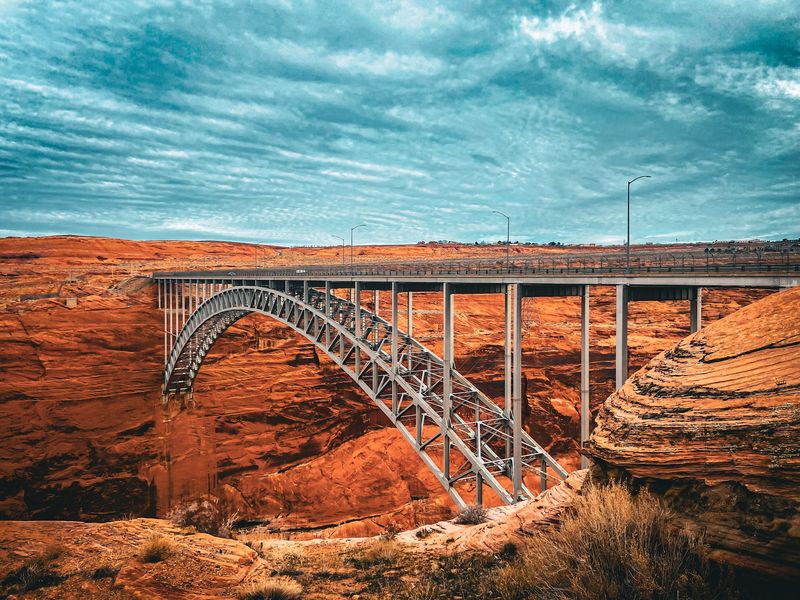
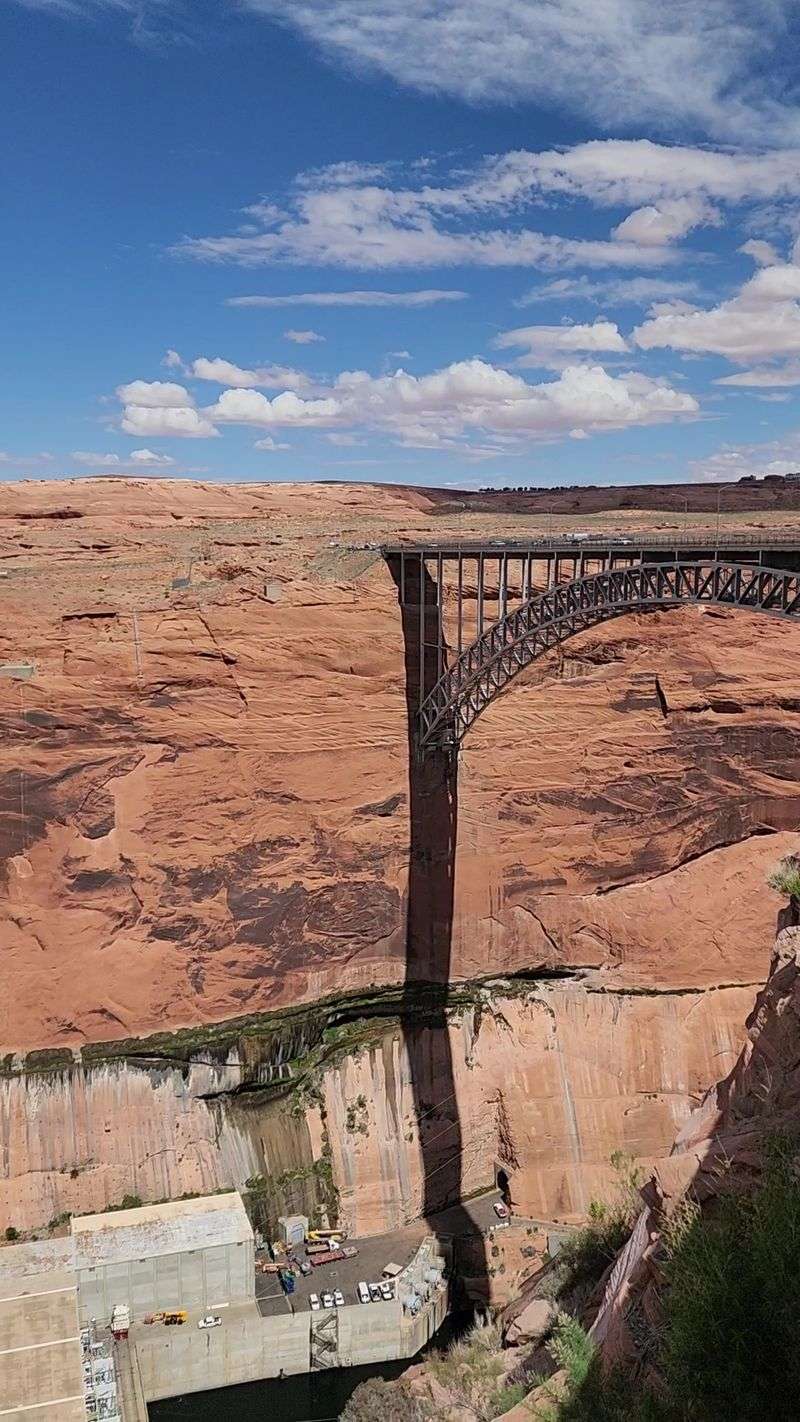
Steel curves upward beneath the roadway, forming an arch that appears both delicate and enormously strong. That combination is exactly what makes people call the structure a masterpiece of modern civil engineering.
The bridge was needed to move construction materials and vehicles across the deep gorge while the dam itself took shape. Without it, workers would have faced a long detour around the canyon.
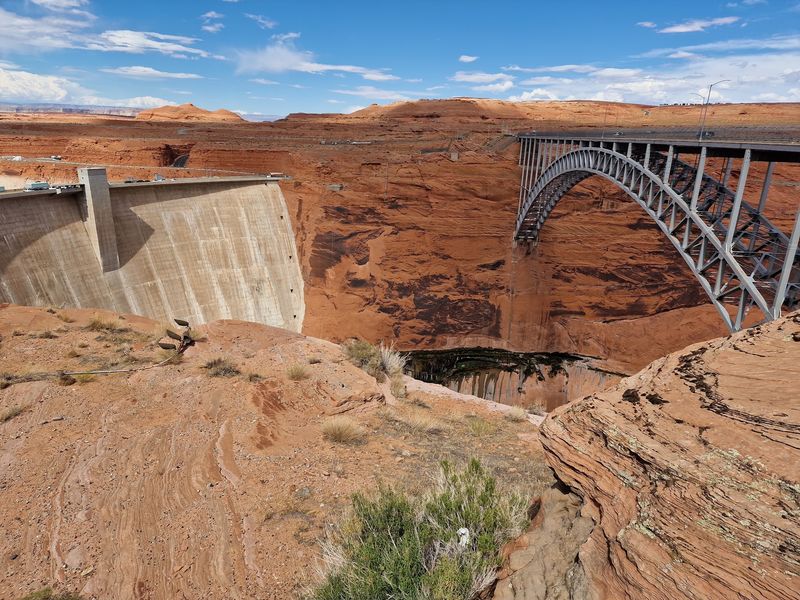
Today the arch does more than carry cars. It frames the whole scene, connecting two rugged canyon walls with a graceful line of metal.
Curious travelers often wonder how vehicles ever reached the canyon floor during construction. The answer involves a hidden tunnel system, a detail that surprises many who assume everything happened from the top down.
That mystery adds a fun layer to an already impressive piece of building work.
Standing Beside One of America’s Tallest Dams
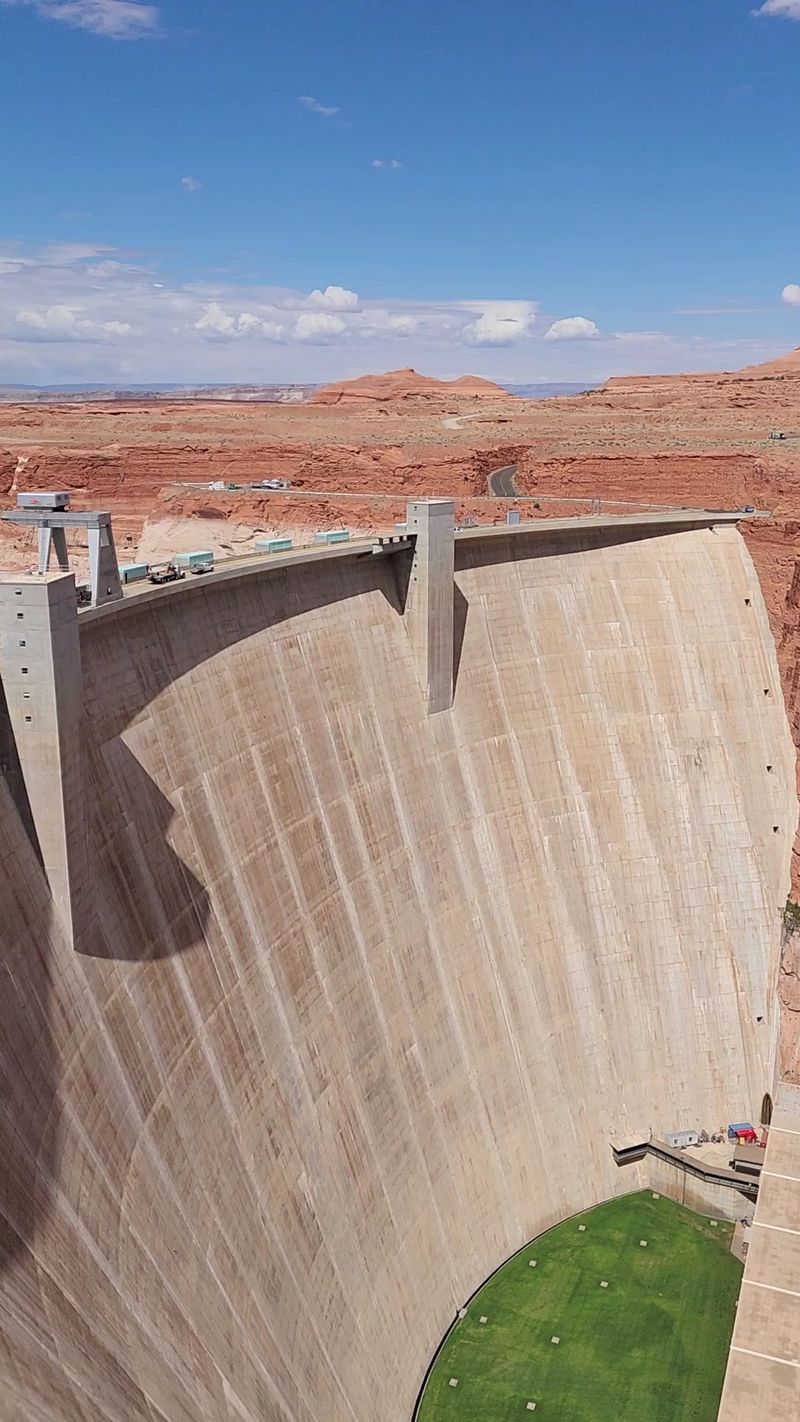
Right next to the bridge stands Glen Canyon Dam, ranked among the tallest dams in the United States and often described as the second largest in the country. The scale is genuinely hard to grasp until you see it holding back an entire lake.
The dam is arched and massive, curving against the pressure of the water it restrains. It manages the water level of the region and generates power for a wide area.
Comparisons to Hoover Dam come up frequently, and while this one is not quite as large, it comes remarkably close. Families driving between states often stop simply because the size demands a second look.
Behind that concrete wall sits Lake Powell, one of the most photographed reservoirs in the American Southwest, stretching far into the surrounding canyon country.
The Walk That Tests Your Nerves
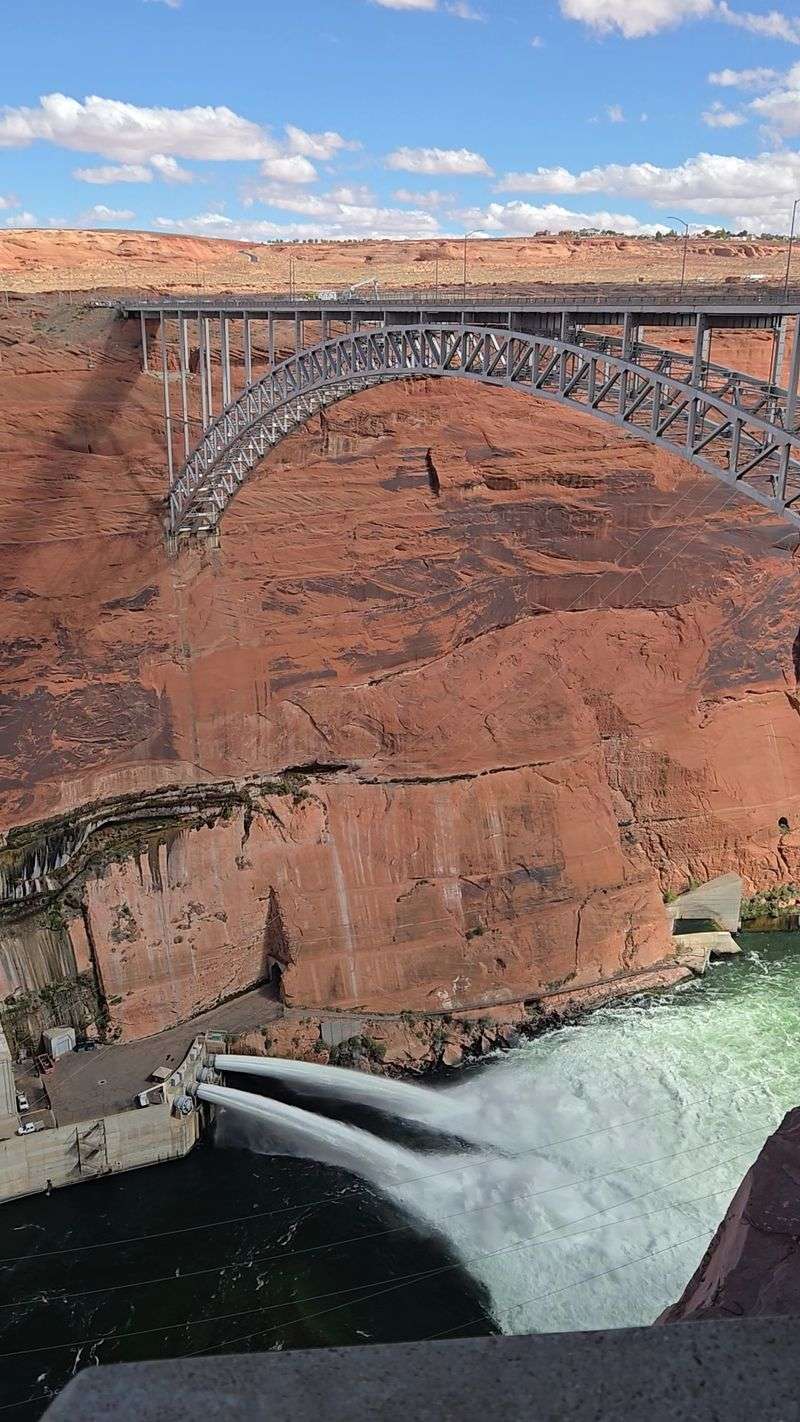
A pedestrian walkway runs alongside the traffic lanes, and this is where the adventure gets personal. Crossing on foot brings a mix of thrill and unease that many describe as cool and a little scary at the same time.
The height is real, and looking down into the canyon reminds you just how far the river sits below. Some people breeze across without a second thought, while others take slow, deliberate steps.
Openings along the mesh fence let you pause and peer straight down at the Colorado River. The engineering underfoot becomes very tangible once you are out over open air.
Reaching the far side feels like a small accomplishment. Even travelers who consider themselves fearless admit the walk out onto the bridge gets their attention in the best possible way.
A View of the Colorado River Far Below
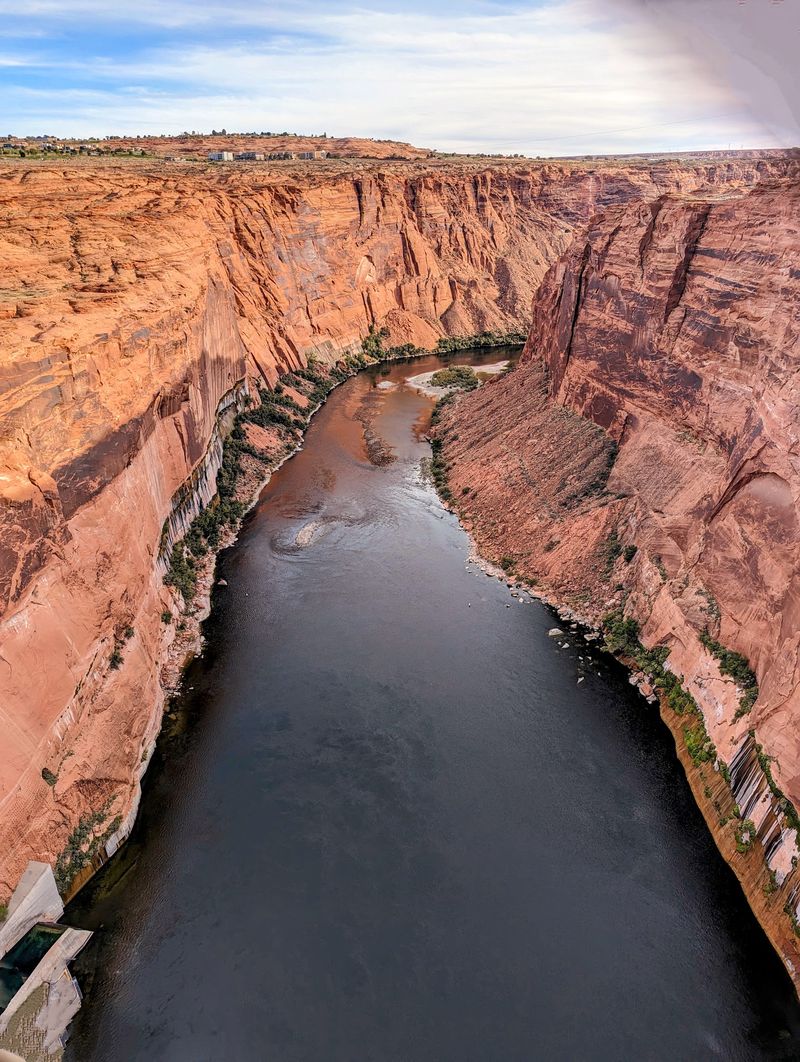
Peering over the edge rewards you with a look at the Colorado River threading through the canyon far beneath your feet. The water appears small from this height, a reminder of just how deep the gorge really is.
The river carved this landscape long before any concrete arrived, and it still flows steadily below the dam. Watching it from above gives a sense of both time and scale.
Many travelers rank this overlook among the most memorable parts of their entire trip. The contrast between the deep water and the red canyon walls is genuinely striking.
The view shifts depending on the light and season, so no two crossings look exactly alike. That changing quality keeps people coming back, hoping to catch the canyon in a fresh mood each time they pass through.
Photo Gaps in the Fence
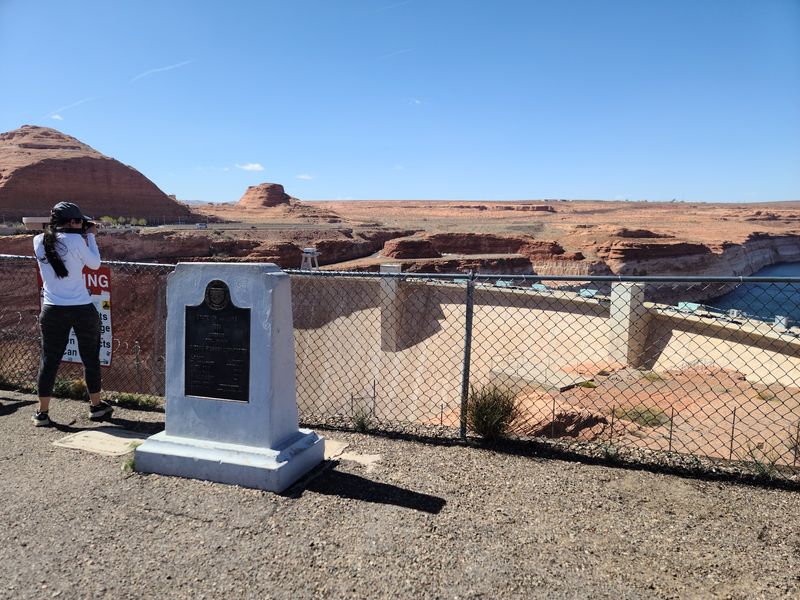
Photographers get a friendly assist thanks to deliberate openings built into the fence along the walkway. These gaps let you capture unobstructed shots of the dam and canyon without wire ruining the frame.
The design shows real thoughtfulness, since fenced bridges usually make clean pictures nearly impossible. Here, someone clearly considered the desire to bring home a great memory.
The openings are not placed dead center, so the very middle of the bridge lacks a perfect window. That is a small quirk worth knowing before you set up your best angle.
Crossing spots in the sidewalk also allow you to switch sides, giving two different perspectives on the same scene. Between the dam, the canyon, and the river, this stop delivers plenty of chances for the kind of photo that anchors a whole vacation album.
Carl Hayden Visitor Center Next Door
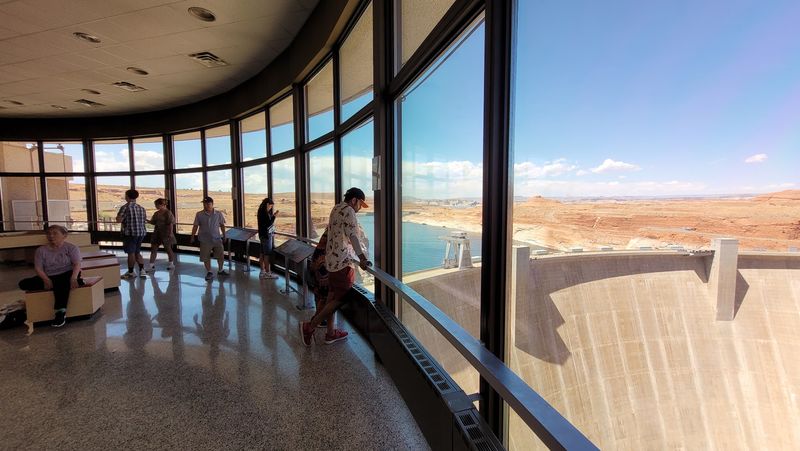
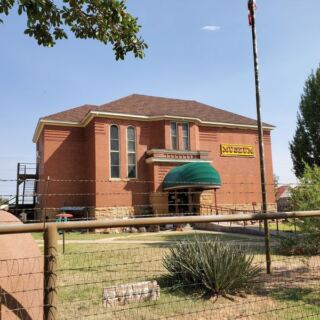
A short stroll from the bridge sits the Carl Hayden Visitor Center, a favorite for anyone wanting more than a quick glance. It functions like a small museum, and entry is completely free.
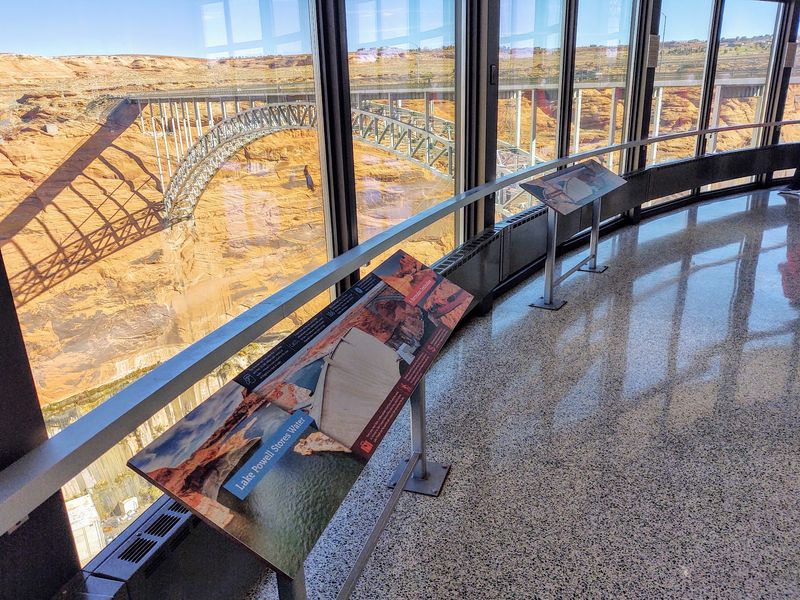
Inside, exhibits explain how the dam works, its history, and how it compares to other giants. A relief map of the dam and Lake Powell helps put the whole region into perspective.
Large windows frame the dam from a warm, indoor vantage point, which is welcome during the hotter parts of the year. A short video adds context for those who like the full story.
Families often spend around an hour here, longer than they first expect. The center turns a roadside pause into a genuine learning stop, blending scenery with real understanding of this remarkable structure.
Free Admission and a Well-Stocked Gift Shop
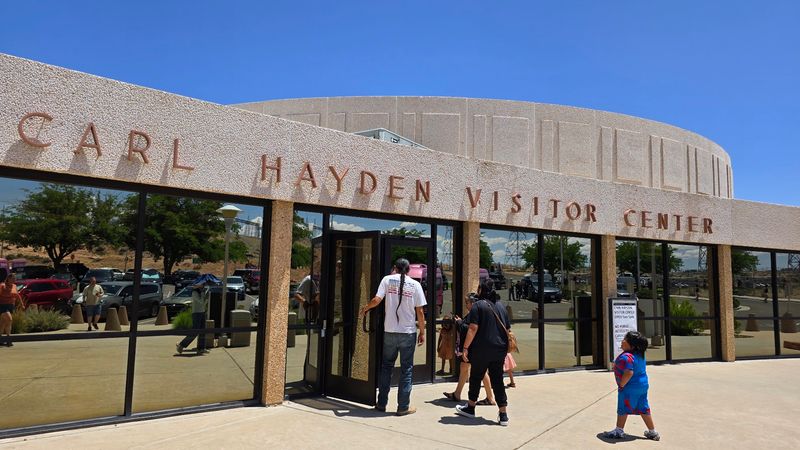
Cost rarely enters the conversation here, and for good reason. Walking the bridge and browsing the visitor center both come free of charge, a rare treat for such a significant attraction.
The gift shop deserves its own mention, with a large and varied selection of items. Souvenirs, keepsakes, and Lake Powell themed goods fill the shelves for those who like to take home a token.
Staff sometimes direct questions to the gift shop counter, which doubles as an information point during busy stretches. It is a practical setup that keeps things moving.
Because there is no entry fee, the stop fits easily into any road trip budget. You can learn, browse, and enjoy the views without spending a cent, then decide whether a small souvenir is worth carrying along for the ride.
Junior Ranger Badges for the Kids
Younger travelers get their own reason to love this stop. The visitor center includes a kids area where children can earn their junior ranger badges.
The activities turn a scenic pause into something interactive, giving little ones a goal beyond simply looking at a big wall of concrete. Earning a badge feels like a real achievement to a curious child.
Visual exhibits throughout the building keep the whole family engaged, blending fun with a bit of learning. Parents appreciate a spot where kids stay entertained without screens.
The combination of free entry and hands-on fun makes this a smart break during a long drive. Families crossing between parks often find the stop energizing rather than tiring, which is exactly what a good road trip halt should be.
Small hands leave with badges and big grins.
Parking and Getting There
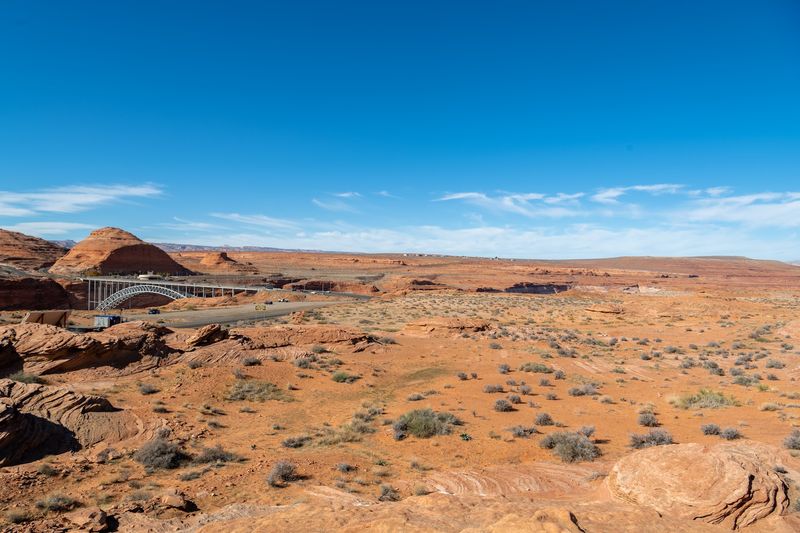
Access turns out to be refreshingly simple, which is not always the case at dramatic overlooks. A thoughtfully designed parking area sits right before the bridge, making the whole site easy to reach.
The road leading in is accessible, and there is room to pull off close to the crossing. From the lot, the walkway is only a short stroll away.
A small downhill trail suits the entire family, offering another gentle way to take in the surroundings. Nothing here demands serious hiking experience.
The layout means people of many abilities can enjoy the bridge and views. Travelers heading toward Utah or coming from the Grand Canyon direction find it a natural place to stretch their legs.
Good parking, easy paths, and clear access make this a stop you can enjoy without any logistical headaches, even mid road trip.
A Safe Crossing at 25 Miles Per Hour
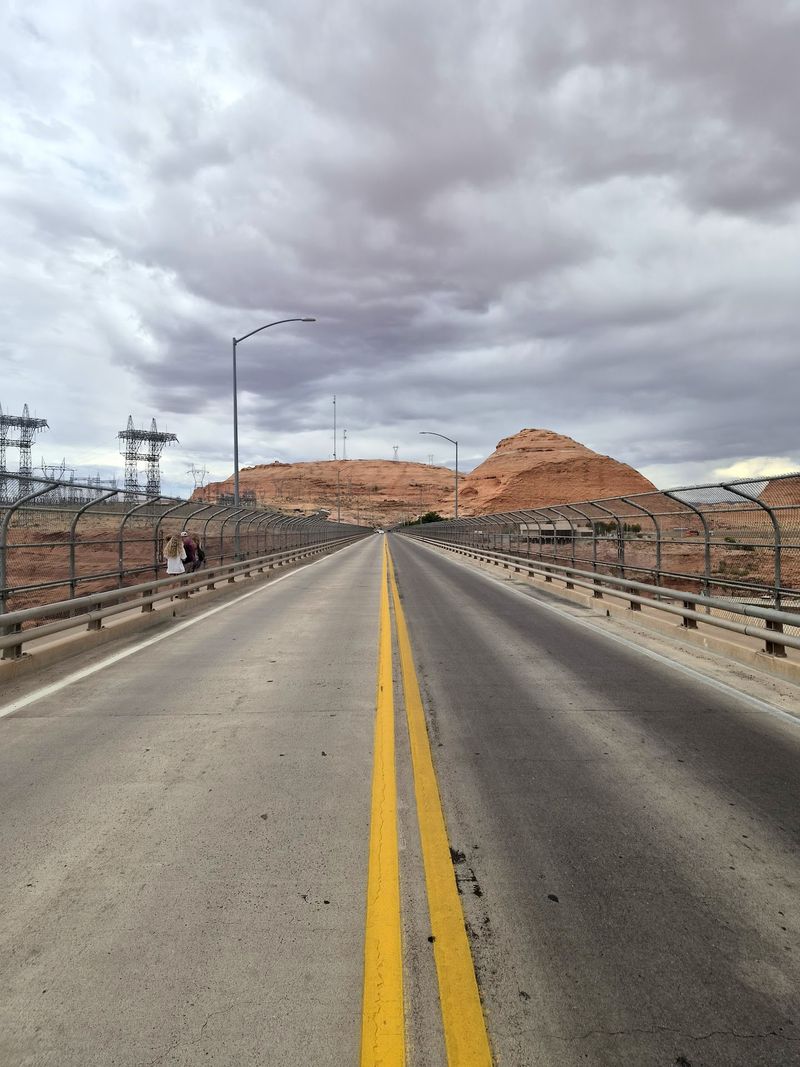
Speed gets kept in check on the bridge, with a posted limit of 25 miles per hour. That slower pace keeps both drivers and walkers comfortable as they share the crossing.
The reduced speed makes the walkway genuinely safe for pedestrians, which matters given the height involved. Cars roll past gently rather than rushing.
Drivers who feel uneasy about the drop can take the crossing at an easy, controlled pace. There is no pressure to hurry across the open span.
The arrangement balances a working roadway with a popular pedestrian attraction, and it does so smoothly. Whether you drive or walk, the design keeps things calm.
For a bridge that looks intimidating from a distance, the actual experience of crossing is far more manageable than first impressions might suggest, thanks in part to that sensible speed limit.
A Crossroads for Travelers From Everywhere
The parking lot often fills with travelers from far beyond Arizona, and that global mix is part of the charm. This stop has become a favorite for tourists arriving from many countries.
People gather around the relief map and the overlooks, comparing notes on their journeys through the American Southwest. Conversations spring up easily among strangers sharing the same view.
The friendly, international feel adds warmth to an already welcoming site. Families from around the world find common ground while marveling at the dam and canyon together.
Because it sits on a natural route between major parks, the bridge draws a steady flow of road trippers with different accents and backgrounds. That variety makes the experience feel bigger than a single roadside stop, turning a quick pause into a small gathering of travelers all chasing the same wide open scenery.
Watching the Water Level Change
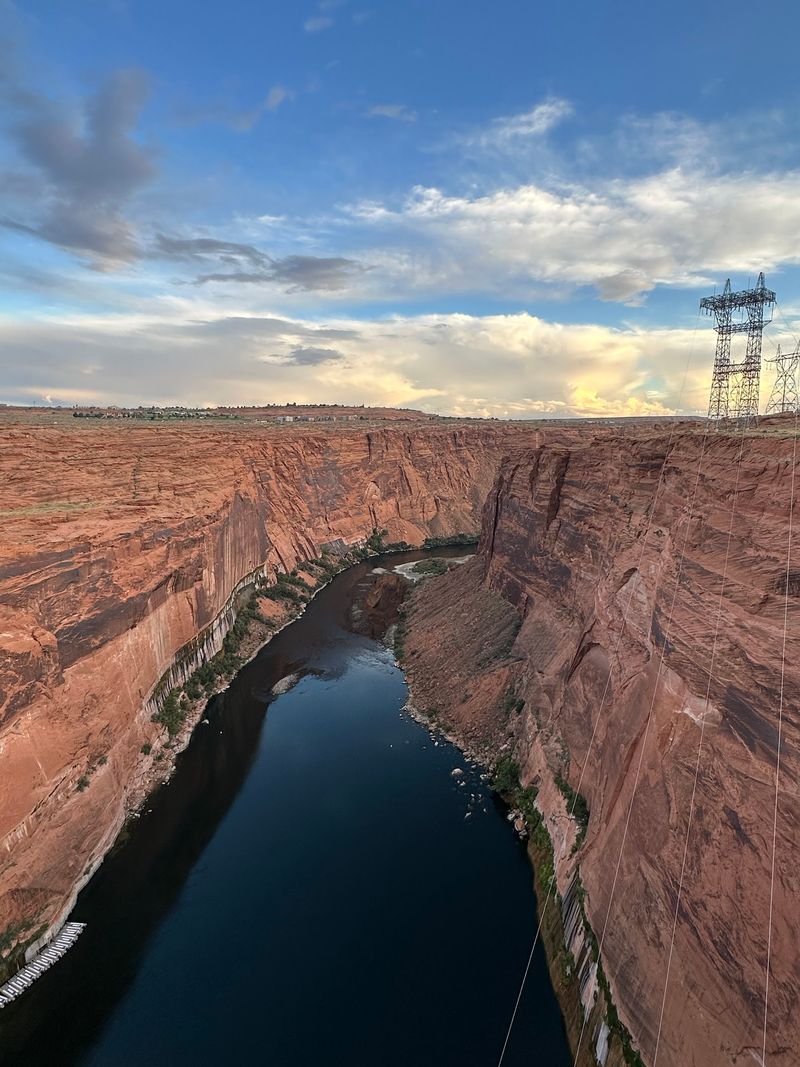
Not every detail here is purely scenic, and that gives the stop a thoughtful edge. Lake Powell has dropped well below its full level, a change visible along the canyon walls.
The dam controls water for both supply and power, so its level carries real weight for the region. Watching those lines on the rock tells a bigger story about the river and how people use it.
The site becomes a quiet lesson in human effect on the environment, prompting reflection alongside admiration. It is a marvel of engineering and a reminder of nature’s limits at once.
Travelers who pause to read the exhibits leave with a fuller picture of the challenges facing this landscape. The changing shoreline turns a photo stop into a moment of genuine curiosity about the future of the Colorado River and everything it sustains downstream.
Why This Crossing Earns Its Reputation
By the time you finish the walk and browse the exhibits, the appeal of this place feels obvious. High marks and steady enthusiasm follow the bridge for good reason.
The blend of engineering, scenery, and free access makes it a rare stop that pleases nearly everyone. Thrill seekers get their heights, history buffs get their facts, and families get an easy, rewarding break.
The slightly scary walk out over the canyon is exactly what many travelers remember most fondly afterward. That mix of nerves and wonder sticks with people.
Sitting between the Grand Canyon and Zion, it fits naturally into a larger Southwest adventure. A stop that started as a quick leg stretch often becomes a highlight.
If your route brings you near Page, this dizzying crossing over the Colorado River is well worth the pause.
Share this story