Montana offers wildlife encounters on a scale few places can match, from bison grazing across open valleys to mountain goats perched high on rocky cliffs. Wetlands, forests, mountains, and remote waterways provide habitat for an impressive variety of animals.
These 12 Montana destinations offer some of the state’s most rewarding wildlife-watching opportunities. Some are easy roadside stops while others require more planning, but each rewards patient visitors who bring binoculars and take the time to look around.
1. CSKT Bison Range, Moiese, Montana
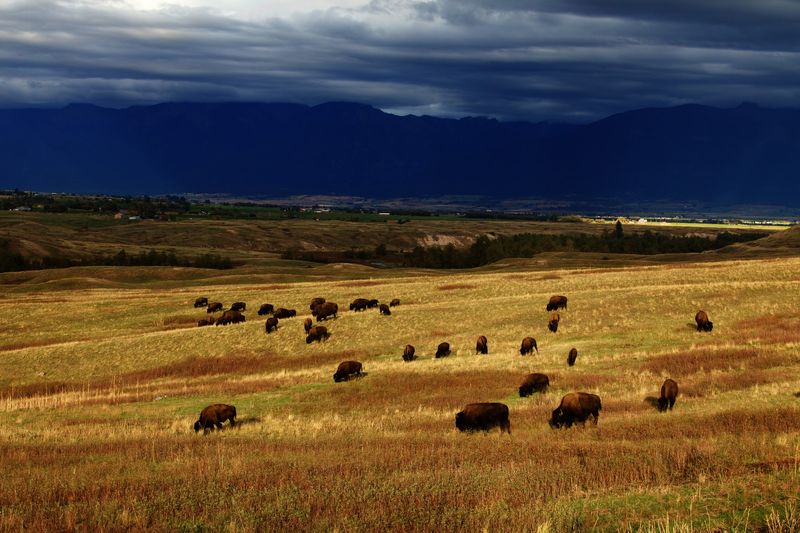
About 350 to 500 bison roam freely across the 18,500-acre CSKT Bison Range, and the odds of spotting one are about as good as wildlife odds get anywhere in North America. The Confederated Salish and Kootenai Tribes have managed this landscape since 2022, continuing a conservation tradition that stretches back over a century.
Two scenic drives give visitors a structured way to cover the terrain. The 14-mile Prairie Drive runs year-round along Mission Creek, while the 19-mile Red Sleep Mountain Drive opens from mid-May through mid-October and climbs high enough to reveal sweeping views of the surrounding plains.
Bison are the headliners, but elk, pronghorn, mule deer, white-tailed deer, and bighorn sheep also share the range. Over 200 bird species have been documented here, including bald eagles, golden eagles, and trumpeter swans.
Scanning distant ridgelines rather than focusing only on the road dramatically increases the chances of a memorable sighting.
2. Lee Metcalf National Wildlife Refuge, Stevensville, Montana
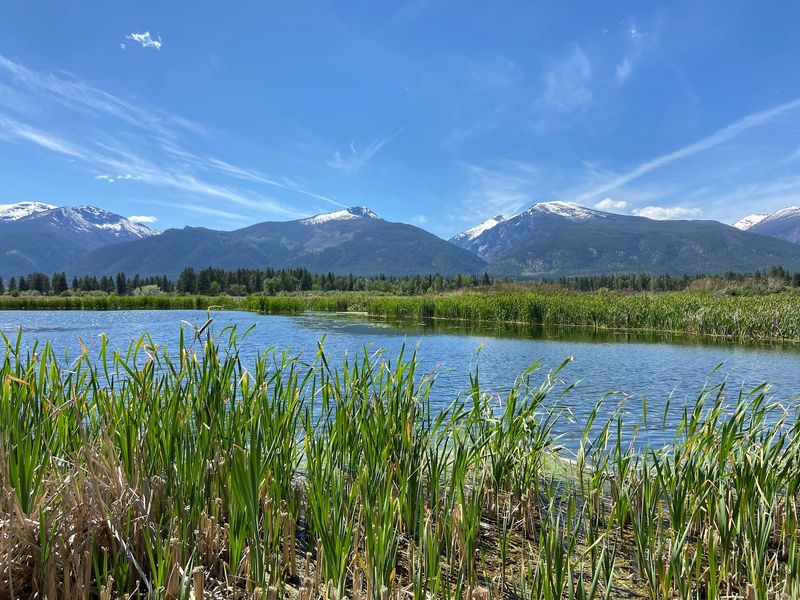
More than 240 bird species have been recorded at Lee Metcalf National Wildlife Refuge, and over 100 of those species nest here annually, which makes this 2,800-acre sanctuary one of the most productive birding destinations in western Montana. The refuge hugs the Bitterroot River outside Stevensville, with wetlands, grasslands, and riparian forest backed by the Bitterroot and Sapphire Mountains.
Spring and fall migrations turn the refuge into a busy stopover, with trumpeter and tundra swans, ospreys, bald eagles, northern harriers, and 33 waterfowl species among the regular visitors. Shorebirds like American avocets and sandhill cranes add variety to the list, while songbirds fill the trees along the river corridor.
Mammals are a bonus rather than the main event, though white-tailed deer are frequently seen, and occasional moose and elk sightings do happen. The 2.5 miles of walking trails, including a paved accessible path, make this an easy refuge to explore at a relaxed pace.
The refuge is open daily from sunrise to sunset.
3. Red Rock Lakes National Wildlife Refuge, Lima, Montana
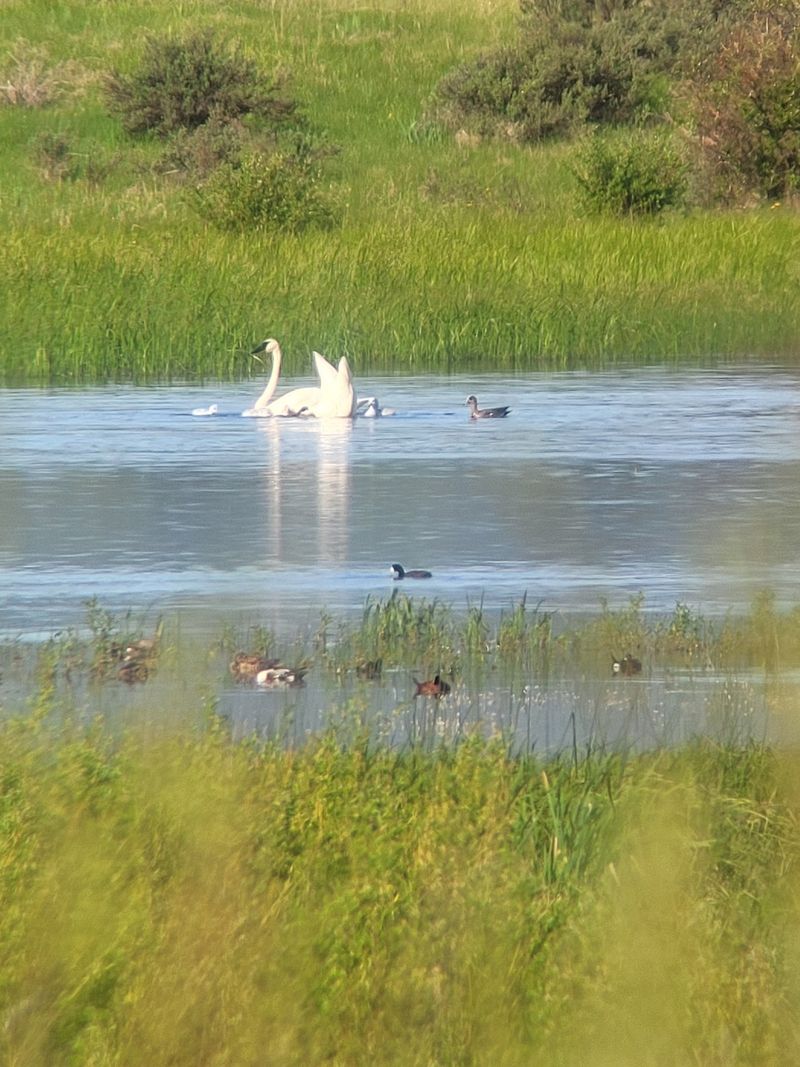
Conservation history was made at Red Rock Lakes when this refuge became the primary location that saved the trumpeter swan from near extinction in the 1930s. Today, thousands of these birds, North America’s largest waterfowl with wingspans reaching eight feet, gather here each fall, and a year-round resident population stays in the spring-fed creeks through winter.
The refuge protects over 53,000 acres of wetlands, meadows, sagebrush country, forests, and lakes in the high-elevation Centennial Valley near the Idaho border. Early fall brings up to 50,000 ducks and geese alongside the trumpeters, while spring delivers nesting sandhill cranes, sage grouse, great blue herons, and peregrine falcons.
Moose, elk, pronghorn, wolves, and grizzly bears are among the mammals that use this landscape. Access is intentionally limited, with no maintained trails in the wilderness areas and primarily gravel road entry.
That remoteness is a feature rather than a flaw, and the refuge rewards visitors who plan ahead and arrive ready to explore slowly.
4. Freezout Lake Wildlife Management Area, Fairfield, Montana
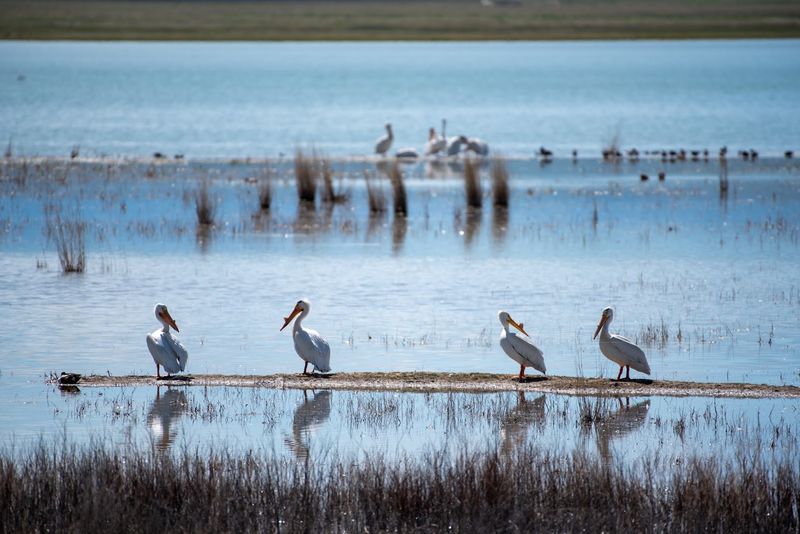
Between mid-March and mid-April, Freezout Lake hosts one of the most spectacular wildlife events in Montana, when somewhere between 100,000 and 300,000 snow and Ross’s geese descend on the wetlands to rest during their migration from California to the Canadian Arctic. Watching that many birds lift off the water at once is the kind of thing that makes people stop mid-sentence.
The 12,000-acre area sits on U.S. Highway 89 between Fairfield and Choteau, west of Great Falls, and functions as an important staging area on the Pacific Flyway.
Tundra swans numbering 5,000 to 10,000 accompany the geese during peak migration, and over 200 other bird species use the refuge across the seasons.
Waterfowl variety is impressive year-round, with mallards, northern pintails, gadwalls, and several teal species among the regulars. Shorebirds move through from mid-April onward, and raptors including bald eagles and Swainson’s hawks patrol the skies regularly.
Early morning and late afternoon offer the most active viewing windows.
5. Ninepipe National Wildlife Refuge, Charlo, Montana
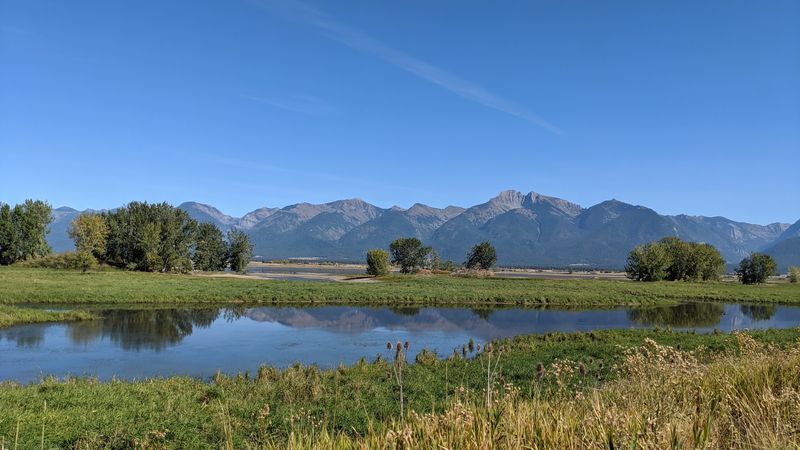
Glaciers carved out over 800 potholes across the Ninepipe landscape, and those shallow depressions now hold water that attracts a remarkable variety of birds throughout the year. The 2,062-acre refuge in the Mission Valley includes a 1,672-acre reservoir, marshes, wetlands, and grasslands, all framed by the Mission Mountains to the east.
Around 180 to 200 bird species have been documented at Ninepipe, with waterfowl like mallards, northern shovelers, redheads, and ruddy ducks among the most consistent residents. A double-crested cormorant colony nests on an island in the reservoir, trumpeter swans have been successfully restored to the area, and northern harriers and short-eared owls nest in the surrounding grasslands.
A paved, barrier-free interpretive trail at the Watchable Wildlife Viewing Area off Highway 93 provides easy access without requiring a long hike. Because wildlife can stay well out from shore, a spotting scope is a smart addition to binoculars here.
Access changes seasonally, with portions of the refuge closed from March through mid-July to protect nesting birds.
6. Benton Lake National Wildlife Refuge, Great Falls, Montana
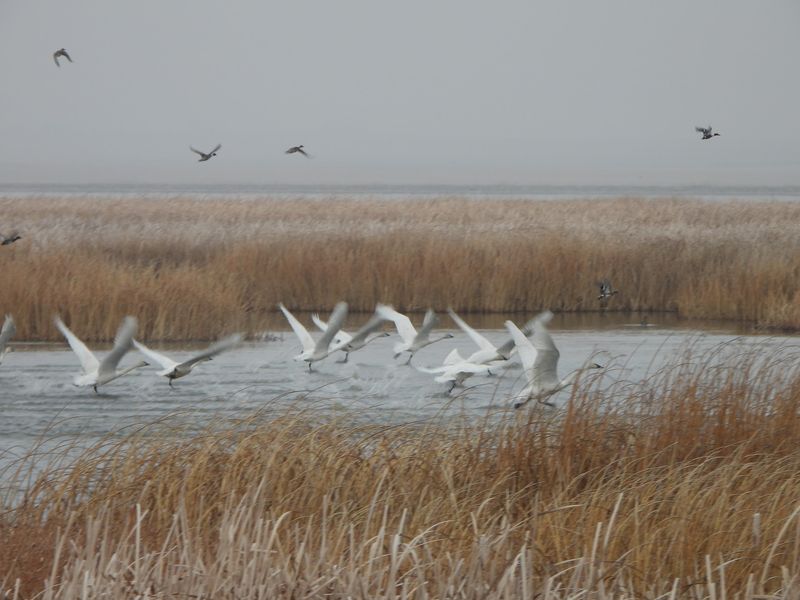
Twelve miles north of Great Falls, Benton Lake spreads across 12,400 acres of shallow wetland and northern mixed-grass prairie, and the bird numbers that move through here during migration are genuinely hard to believe. Up to 150,000 ducks, 40,000 snow geese, 5,000 tundra swans, and 50,000 shorebirds have been counted during peak periods.
The refuge holds designations as both a Globally Important Bird Area and a Western Hemisphere Shorebird Reserve Network site, and around 240 bird species have been documented within its boundaries. A Franklin’s gull colony with over 10,000 nests is among the more unusual features, while ferruginous hawks, Sprague’s pipits, and sharp-tailed grouse use the native grasslands for breeding.
A reservable viewing blind called The Grouse House lets visitors watch sharp-tailed grouse perform their spring courtship dances in April and May, which is a genuinely entertaining experience. The 9-mile Prairie Marsh Wildlife Drive covers a wide range of habitat types with numbered stops and an informational brochure.
Mammals including pronghorn, mule deer, and American badgers round out the viewing options.
7. Wild Horse Island State Park, Big Arm, Montana
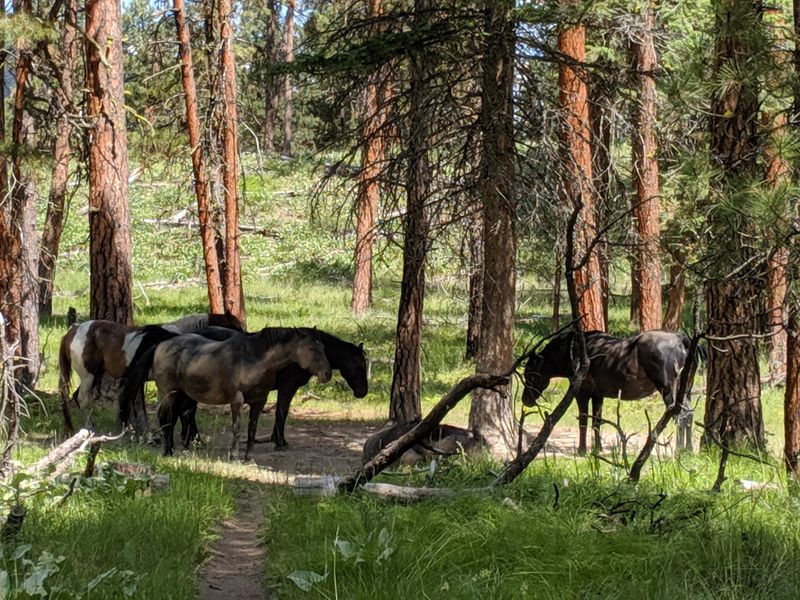
Getting to Wild Horse Island requires a boat, and that single requirement keeps the crowds manageable and the wildlife relatively undisturbed. The 2,165-acre island rises from Flathead Lake, Montana’s largest freshwater lake, and supports one of the most concentrated bighorn sheep populations anywhere in the state.
The herd currently numbers between 130 and 200 animals, descended from just 10 sheep introduced in 1939. Three of the five largest bighorn sheep ever recorded in the United States have come from this island, which gives the herd a genuinely notable conservation legacy.
Montana Fish, Wildlife and Parks periodically relocates offspring from the island to help establish herds elsewhere in the state.
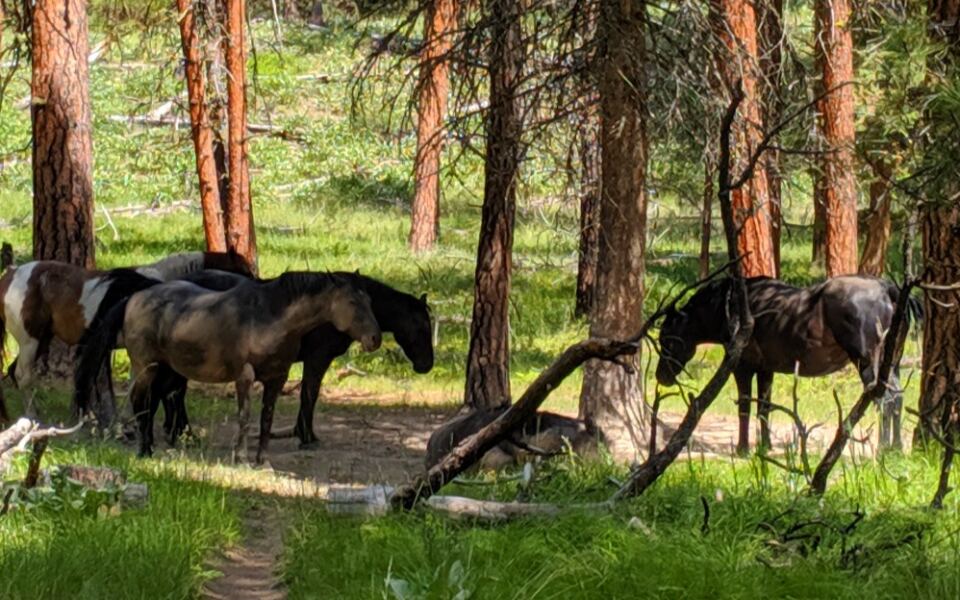
A small group of five or six wild horses also lives on the island, often spotted near the historic apple orchard. Mule deer, bald eagles, ospreys, and various songbirds round out the wildlife roster.
Four miles of hiking trails cross the island, and binoculars are especially useful for scanning rocky hillsides where sheep blend into the dry grass and stone with surprising ease.
8. Lost Creek State Park, Anaconda, Montana
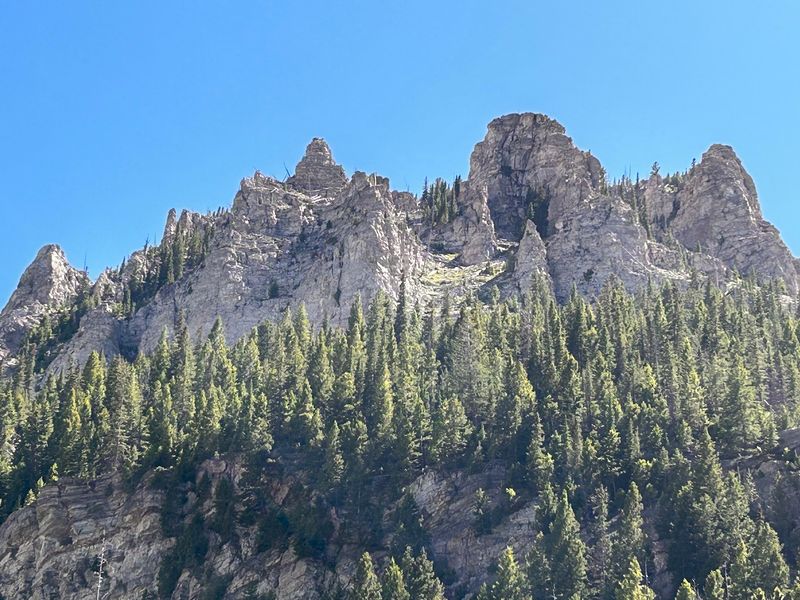
Six miles north of Anaconda, limestone cliffs rise 1,200 feet above the canyon floor at Lost Creek State Park, and those walls are worth studying carefully with binoculars. Mountain goats and bighorn sheep both use these cliffs regularly, and spotting one balanced on a narrow ledge high above the trail tends to become the story visitors tell when they get home.
The park covers 502 acres at an elevation of 6,211 feet, with a short trail leading to a 50-foot waterfall at the northwest end of the canyon. Beyond the falls, U.S.
Forest Service trails extend for miles through forests and meadows, opening up broader views of the surrounding mountains.
Golden eagles circle above the canyon with some regularity, and pika can be found in the rock piles of the upper park for those willing to look carefully at talus slopes. The bighorn herd here is descended from a 1967 transplant, making it a relatively young but well-established population.
Camping is available at 25 first-come, first-served sites for visitors who want to extend their stay.
9. Giant Springs State Park, Great Falls, Montana
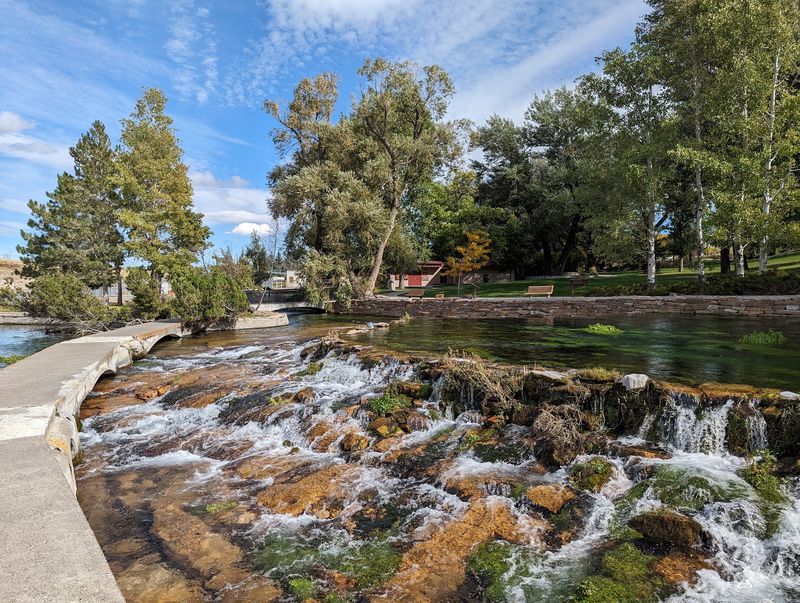
One of the largest freshwater springs in the country pumps 156 to 190 million gallons of water daily at Giant Springs State Park, and that constant flow keeps the area green and open even in winter when other waterways along the Missouri River freeze over. That year-round open water is a significant draw for wildlife, particularly birds that need reliable habitat through the colder months.
Montana Fish, Wildlife and Parks highlights the park’s birding opportunities specifically, and at least 80 species of birds, mammals, and reptiles have been documented within the park boundaries. American white pelicans, belted kingfishers, great horned owls, and Bullock’s orioles are among the year-round regulars, while bald eagles and common loons appear during migration.
The Giant Springs Trout Hatchery, established in 1928, raises and distributes about 1.3 million fish annually and includes a show pond where visitors can observe large trout up close. Nearly 14 miles of Missouri River shoreline run through the park, with trails open 365 days a year for hiking and biking alongside the water.
10. Medicine Rocks State Park, Ekalaka, Montana
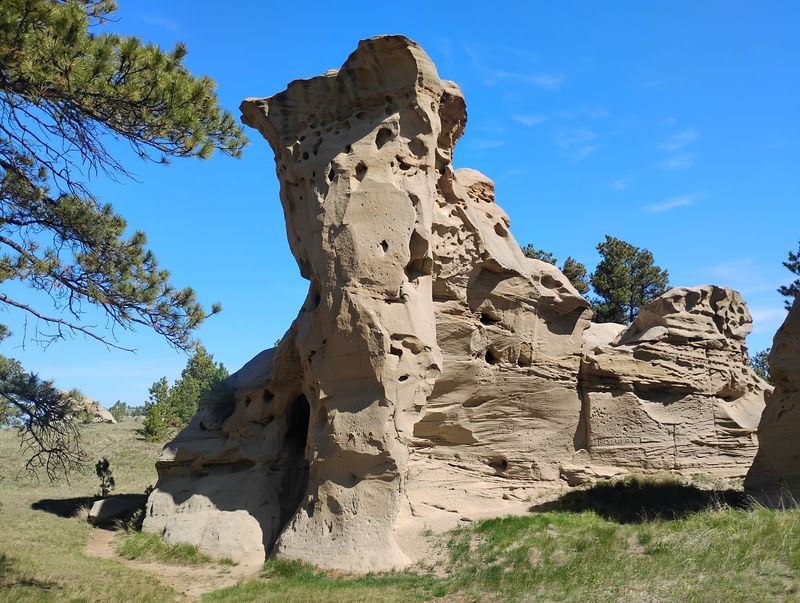
The sandstone formations at Medicine Rocks look like something a sculptor spent centuries perfecting, with pillars, spires, arches, and cave-like openings carved by erosion from the surrounding prairie. Native Americans used this place for vision quests and gatherings for centuries, and the site carries an International Dark Sky Sanctuary designation that draws stargazers from across the region.
Wildlife viewing here rewards patience and a willingness to look beyond the formations into the open grassland. Mule deer and pronghorn are the most commonly seen large mammals, while coyotes, bobcats, badgers, and porcupines are present though less predictable.
Sharp-tailed grouse, pheasants, wild turkeys, and red-tailed hawks are among the bird species associated with the park.
Recent birding visits have turned up red-headed woodpeckers, eastern bluebirds, and yellow-breasted chats, which gives the species list a pleasant element of surprise. Easy flat trails including the Sunset Loop and North Rock Trail wind through the formations and into the surrounding prairie.
The park is open year-round for both day use and primitive camping.
11. Makoshika State Park, Glendive, Montana
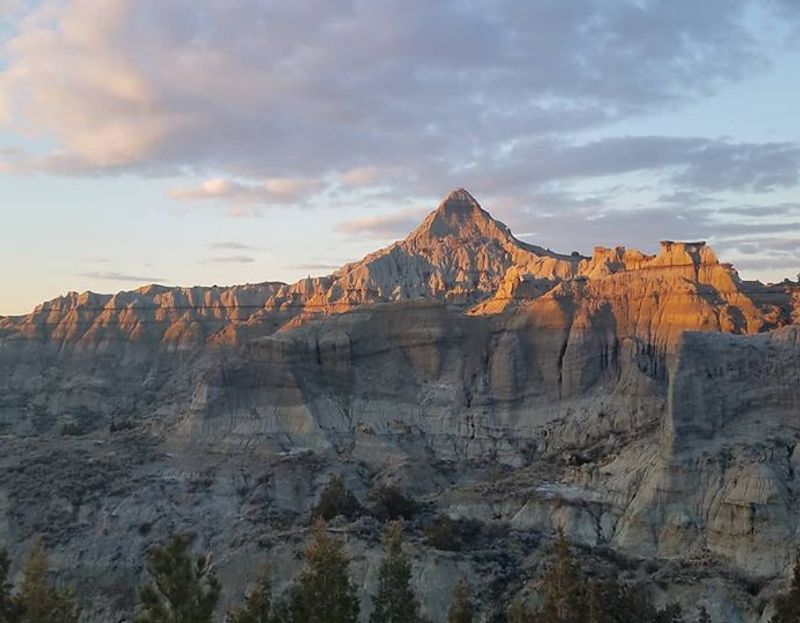
Montana’s largest state park covers over 11,000 acres of badlands southeast of Glendive, and the name Makoshika translates from Lakota as “bad earth” or “bad lands,” which is a fair description of the rugged, eroded terrain. The park sits within the Hell Creek Formation, a geological layer that has produced Tyrannosaurus rex and Triceratops fossils, and the visitor center displays a Triceratops skull to prove the point.
Living wildlife is just as worth watching as the geology. Mule deer and pronghorn move through the coulees and ridgelines, while coyotes, bobcats, and bull snakes are present for those who look carefully.
Turkey vultures and golden eagles soar overhead regularly, and spring brings mountain bluebirds, prairie falcons, upland sandpipers, and long-billed curlews to the grassland edges.
Miles of scenic roads and trails, including the Cap Rock Trail, Kinney Coulee Trail, and Bluebird Trail, open up views across terrain that rewards slow, attentive observation. Overlooks like Birdseye and Sunset provide elevated sightlines that are well suited to binocular scanning.
Camping options including yurts and sheep wagons make multi-day visits easy to arrange.
12. Lone Pine State Park, Kalispell, Montana
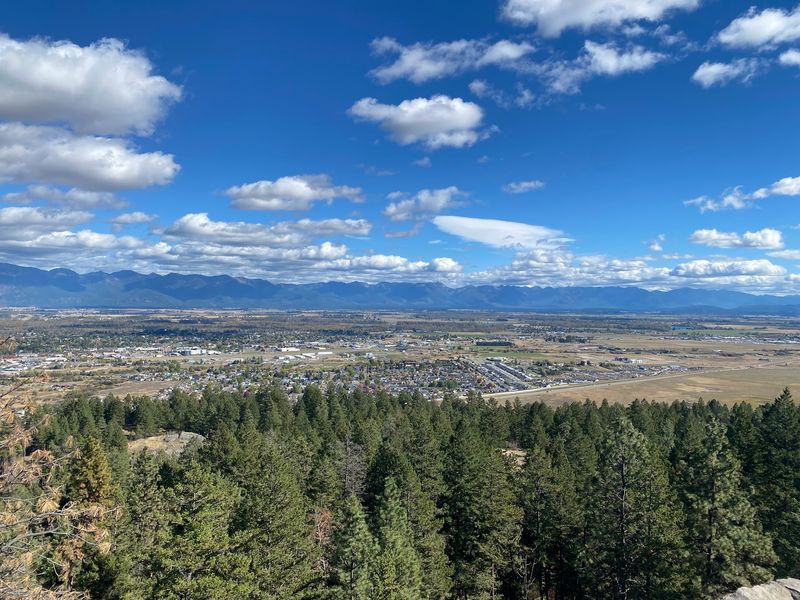
Perched above Kalispell with views stretching toward Flathead Lake, Big Mountain, Jewel Basin, and Glacier National Park on clear days, Lone Pine State Park offers a wildlife watching experience that starts the moment you reach one of the elevated overlooks. The 270-acre park combines forested terrain, open viewpoints, and 7.5 miles of well-maintained trails in a package that is genuinely convenient for visitors based in town.
White-tailed deer and rabbits are frequent trail companions, while black bears and mountain lions are known to pass through the park annually. Songbirds and raptors use the forest throughout the year, and spring migration brings additional variety as birds move through the elevated terrain.
The park hosts an annual Birds of Prey Festival that draws nature enthusiasts specifically for the raptor viewing opportunities.
The visitor center provides interpretive displays on local wildlife and forest ecology, along with educational programs for adults and children. An all-terrain wheelchair called an Action Trackchair is available for use on the primary trail, making the park accessible to a wider range of visitors.
The park is open from sunrise to sunset year-round.
Share this story