Most history lessons happen in classrooms or behind velvet ropes. But in certain American towns, the past refuses to stay politely on a shelf.
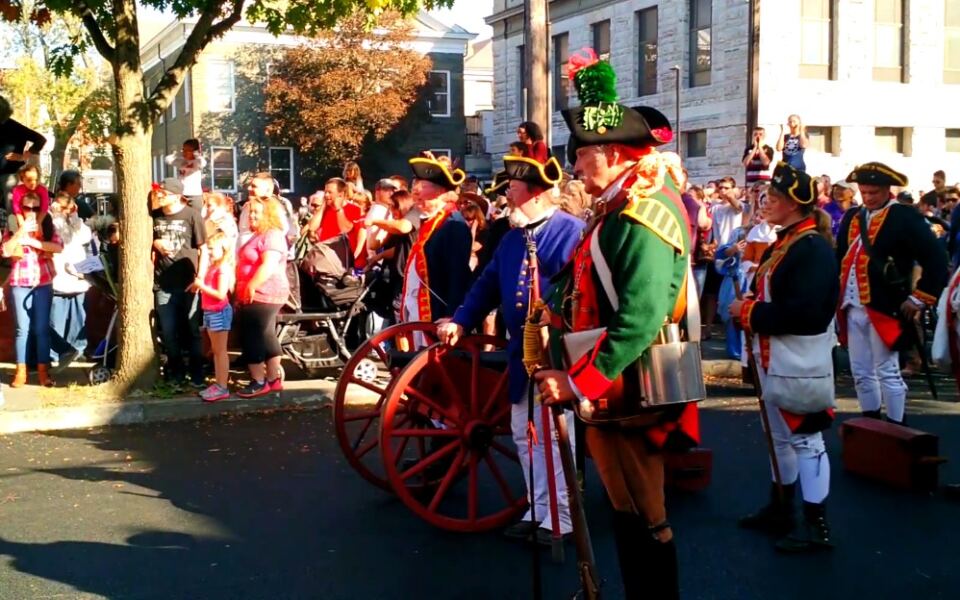
Soldiers march down real streets, battles break out near storefronts, and ordinary neighborhoods suddenly look like they belong to a completely different century. These towns do not just remember history; they perform it, and the results can be genuinely jaw-dropping.
From a tiny Maryland community that hosts a Civil War street battle to the country’s most ambitious living-history district in Virginia, each location on this list offers something that no textbook can replicate: the feeling of actually being there. Whether you are planning a road trip or just curious about where American history comes alive in the most dramatic ways possible, this list covers 13 towns that take reenactment seriously enough to bring it straight to their front doors.
1. Downtown Jefferson, Jefferson, Texas
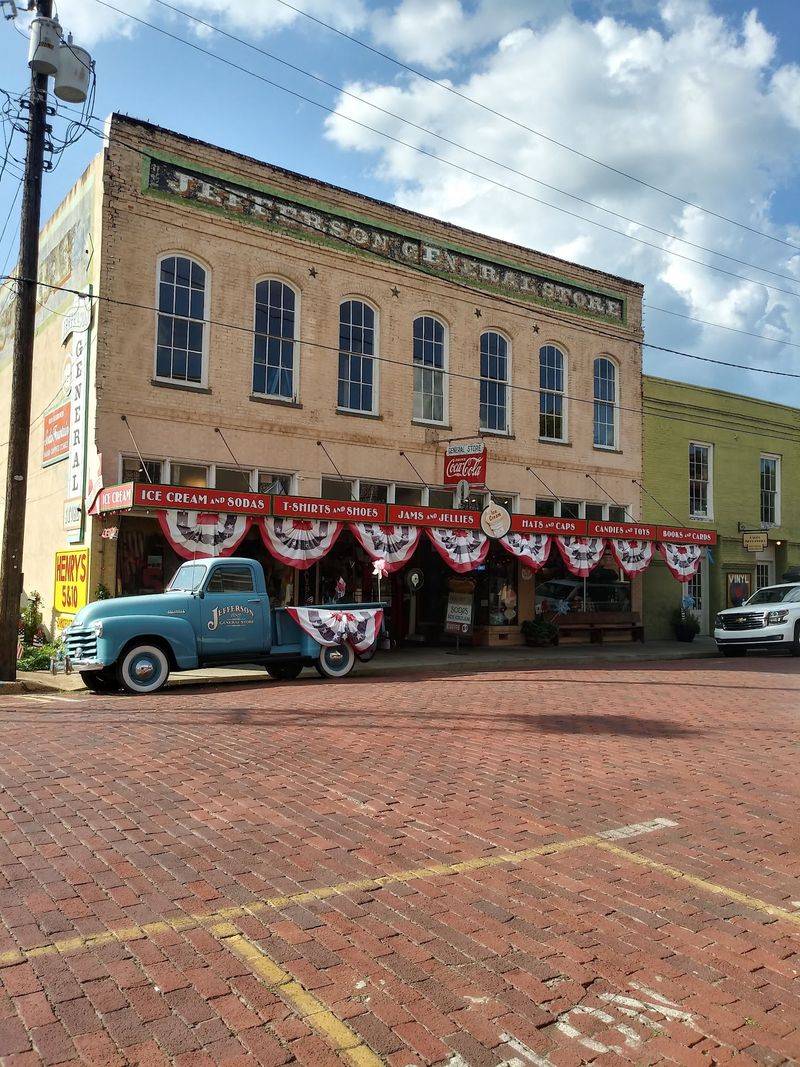
Texas does not do anything small, and its largest Civil War reenactment proves that point convincingly. The Battle for Jefferson draws hundreds of reenactors to this remarkably well-preserved 19th-century town each May, turning its brick-lined downtown streets into a living history stage that stretches across an entire weekend.
The programming is genuinely ambitious. Infantry, cavalry, and artillery units fill the historic district, while the Pilgrimage Parade moves through Vale and Austin streets.
A replica ironclad gunboat fires cannons along the Big Cypress Bayou, adding a naval angle that most land-based reenactments cannot match.
Living history camps line the bayou with storytelling and historical demonstrations, and the Muskets and Magnolias Grand Ball rounds out the evenings with period elegance. Organizers describe the event as transforming the entire downtown historic district and surrounding neighborhoods into a multi-day immersive encampment, and based on the scale, that description is not an exaggeration.
2. South Bound Brook, New Jersey
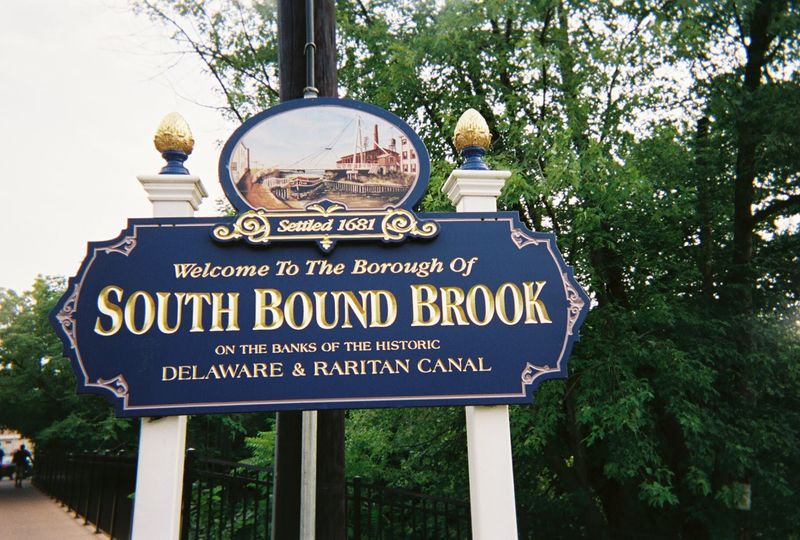
April 13, 1777, was a very bad morning for the Continental Army outpost at Bound Brook, when British and Hessian forces launched a surprise attack that scattered American troops. The Annual Battle of Bound Brook Living History Weekend recreates that chaotic morning with impressive historical accuracy and a route that covers two actual towns.
Reenactors begin at the Abraham Staats House, a genuine 18th-century landmark, before marching toward the Old Stone Arch Bridge in Bound Brook for the first engagement. A second major street battle then travels along Main Street in South Bound Brook from Weston Canal Road toward Maple Avenue, giving spectators two distinct viewing opportunities across one weekend.
Beyond the battles, the event offers a Colonial Tavern Night for adults, educational presentations on African American experiences during the Revolution, and demonstrations of period music. The community is already looking ahead to the 250th anniversary of the battle in 2027, promising an especially significant commemoration.
3. Guyandotte, Huntington, West Virginia
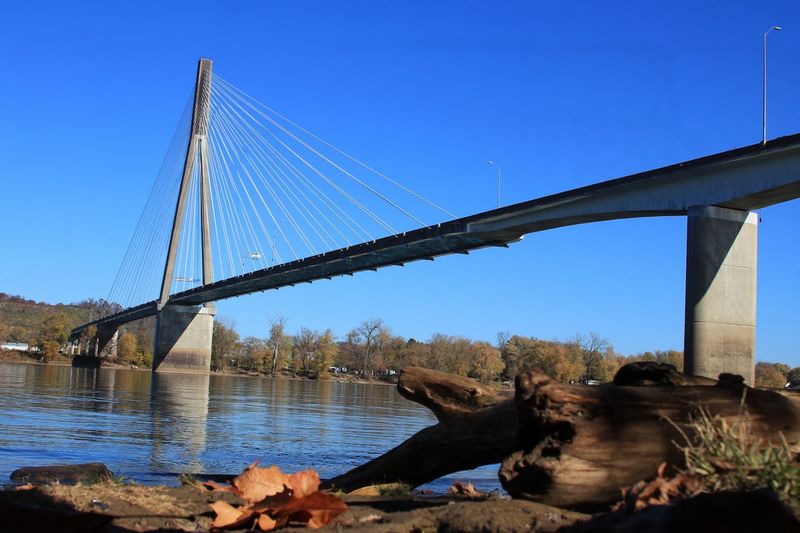
Organizers of Guyandotte Civil War Days have given their event a bold nickname: America’s greatest street battle. That is a significant claim, but the setting does support it.
Each November, Huntington’s historic Guyandotte neighborhood becomes the backdrop for a two-day recreation of the Confederate raid of November 10, 1861, and the Union recapture that followed the very next day.
Unlike events staged in open fields, the Guyandotte reenactment unfolds through actual neighborhood streets where the original fighting occurred, which gives spectators an unusually direct connection to the history being portrayed. There are no bleachers keeping the crowd at a safe distance; visitors experience the action from within the same community that witnessed it more than 160 years ago.
The festival also includes tours of the Madie Carroll House, built in 1810, historic church visits, Sutlers Row for period merchandise, and Civil War Haunted History Tours that add an unexpectedly theatrical dimension to the weekend’s historical programming.
4. Brandenburg, Kentucky
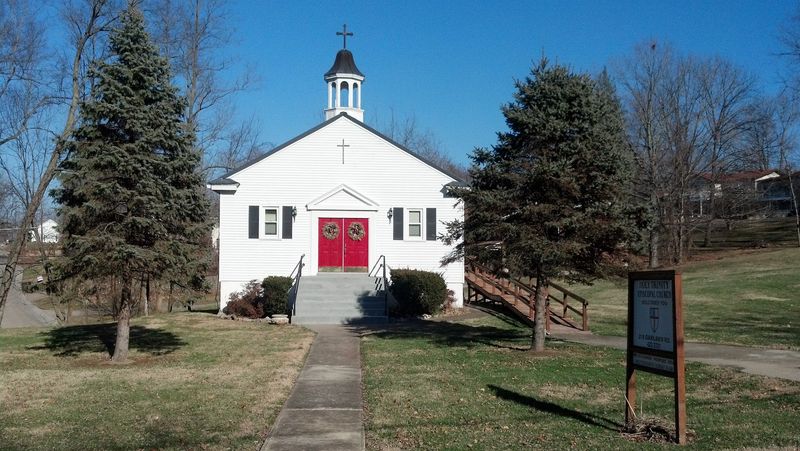
Brandenburg Civil War Days has a scheduling trick that most reenactments cannot pull off: it starts at the river and ends in the middle of town. The 2026 event, set for July 11 and 12, opens with living history camps and artillery demonstrations at the riverfront pavilion along the Ohio River before the main spectacle moves into the heart of the community.
That main spectacle is the Raid on Main Street, featuring the Kentucky Home Guard Band and mounted reenactors portraying John Hunt Morgan’s famous 1863 crossing. Watching cavalry and infantry bring Civil War history into a modern town center is one of those experiences that photographs cannot fully capture.
The weekend also includes a Ladies’ Tea for participating reenactors, an evening camp dance, and a Sunday Final Battle staged on the soccer field. The variety of settings across two days keeps the experience from feeling repetitive, which is harder to achieve than it sounds.
5. Downtown Exeter, Exeter, New Hampshire

Exeter has a quiet but genuine claim to Revolutionary importance. The town served as New Hampshire’s wartime capital, hosted the drafting of the state’s constitution, and produced a generation of political figures who shaped the new republic.
Its annual American Independence Festival does not have to invent a historical connection; it simply has to honor the one that already exists.
For America’s 250th anniversary in 2026, the celebration was especially ambitious, with colonial and British forces appearing downtown and skirmishing near the Squamscott River. Portions of the downtown were closed to vehicles, allowing reenactors, artisans, and visitors to fill the streets in a way that genuinely changes how the town looks and feels for a full day.
Period craft demonstrations, costumed interpreters, and military portrayals spread throughout the historic center, creating an immersive scene that goes well beyond a simple parade. For a town of its size, Exeter consistently delivers a living-history experience that rivals far larger events in comparable cities.
6. Downtown Hampton, Hampton, Virginia
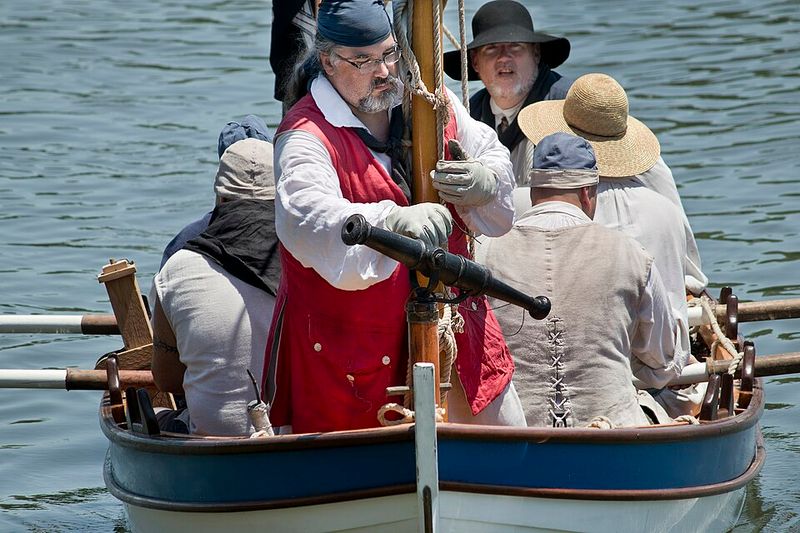
Not every piece of American history involves muskets and infantry formations. Hampton’s Blackbeard Pirate Festival proves that maritime history can be just as dramatic, and considerably more theatrical, than any land-based military reenactment.
Recognized as one of North America’s top pirate festivals, the annual event transforms the city’s waterfront and downtown into an 18th-century seaport for an entire weekend each June.
Blackbeard himself leads dozens of pirate reenactors through Mill Point Park and the surrounding streets, and the interactions between performers and the public are deliberately unscripted and spontaneous. Sea battles unfold in Hampton Harbor, including a recreation of Blackbeard’s famous final confrontation, while tall ships anchor nearby to complete the maritime picture.
Living history demonstrations cover 18th-century trades including blacksmithing, pottery making, candlemaking, and ships’ surgery, offering genuine historical content behind the theatrical surface. The 2024 festival kicked off with a Grand Pirates’ Bash on May 31 before the main weekend on June 1 and 2.
7. Historic St. Augustine, St. Augustine, Florida
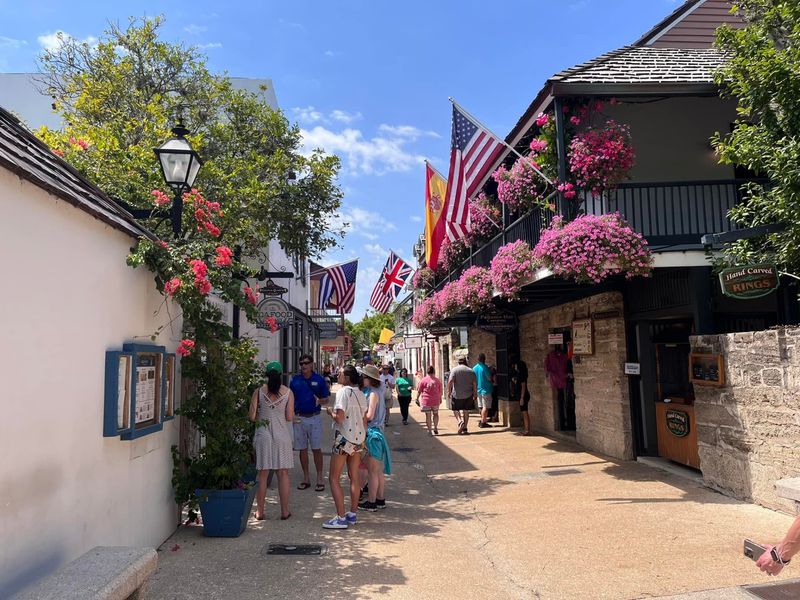
St. Augustine does not need much help looking old. Its stone buildings, narrow lanes, and the massive Castillo de San Marcos fortress already create a sense of age that most American cities cannot manufacture even with careful restoration.
When reenactors arrive, they are not adding a historical layer to a modern town; they are adding movement to a place that already belongs to a different era.
Events like Drake’s Raid send English and Spanish combatants from the Governor’s House along St. George Street toward Orange Street, recreating Sir Francis Drake’s 1586 attack with period weapons and authentic uniforms. The annual Searle’s Sack commemoration similarly stages a 17th-century battle on Orange Street, framed by colonial encampments and historical demonstrations.
The Castillo de San Marcos looms over all of it, serving as both a backdrop and a reminder that the fortress actually stood during the events being portrayed. Few American cities offer that level of architectural authenticity as the setting for a living-history event.
8. Uptown Kingston, Kingston, New York
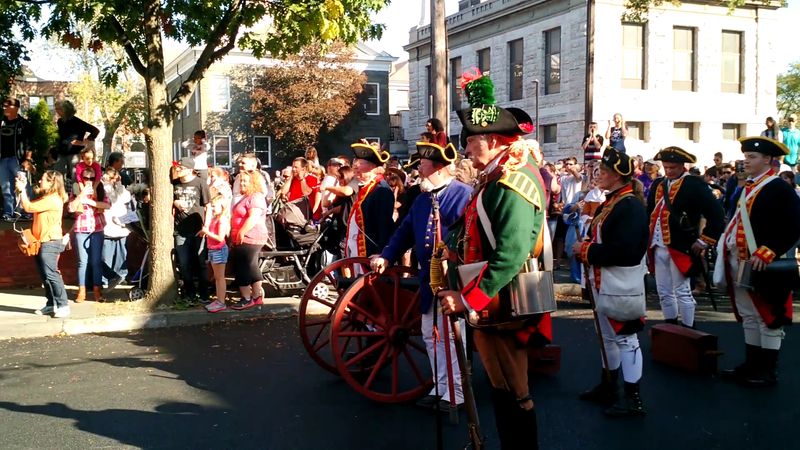
In October 1777, British forces burned Kingston to the ground while it was serving as New York State’s first capital. The Burning of Kingston commemoration does not let anyone forget it.
Held in the Uptown Stockade District, the event sends British soldiers and colonial militia reenactors through the same historic streets where the original confrontation unfolded.
The 2026 program, confirmed for October 15 through 18, includes street battles complete with cannon fire, the theatrical capture of the mayor, and a recreated trial that adds a surprising dose of courtroom drama to the weekend.
Recent editions of the commemoration have expanded beyond traditional military portrayals to include the perspectives of indigenous peoples, enslaved individuals, women, and refugees, creating a more complete picture of what that period actually looked like. A commemorative 5K run from Uptown Kingston to historic Hurley adds an active way to connect with the region’s Revolutionary geography.
9. Lexington Battle Green, Lexington, Massachusetts
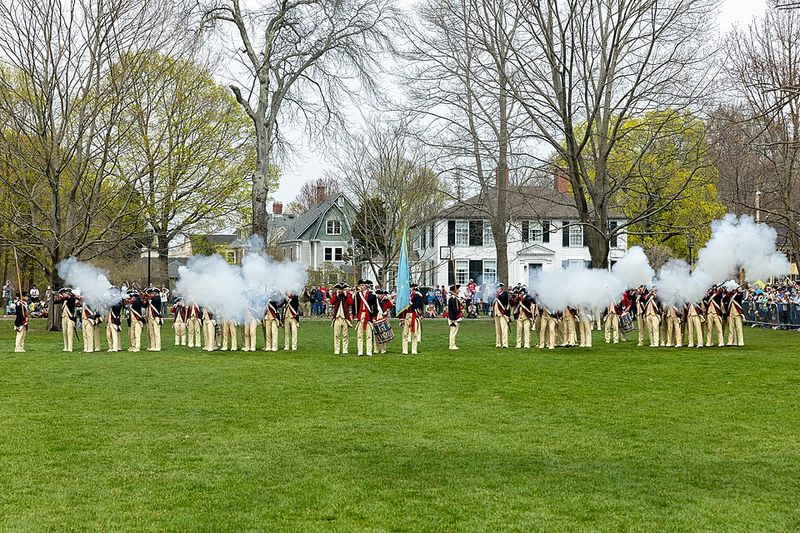
Before most of the town is awake, history is already happening on the Battle Green. Lexington’s Patriots’ Day reenactment begins in the pre-dawn hours, gathering colonial militia and British regular reenactors on the exact ground where the first armed confrontation of the Revolutionary War took place on April 19, 1775.
The timing is intentional and the effect is genuinely powerful.
This tradition has deep roots that stretch well beyond the modern living-history movement. Lexington has been commemorating the events of that April morning for generations, and the reenactment carries a civic weight that newer events have not yet accumulated.
Watching muskets fired and formations drilled in the blue-gray light of early morning, surrounded by the preserved center of a historic New England town, is an experience that tends to stay with people.
The combination of an authentic location, a pre-dawn start time, and a tradition measured in decades rather than years makes Lexington’s Patriots’ Day one of the most distinctive historical commemorations anywhere in the country.
10. Downtown Washington, Washington, Pennsylvania
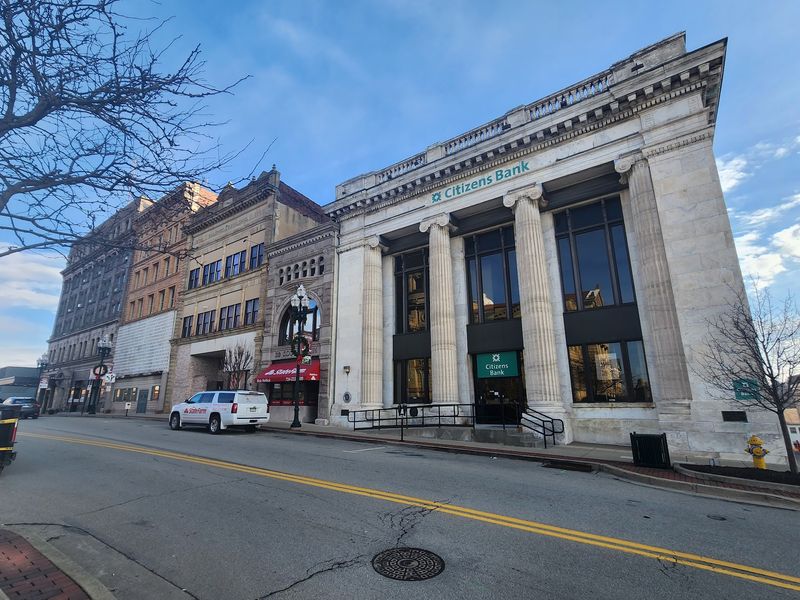
The Whiskey Rebellion does not get nearly the historical attention it deserves, which makes Washington, Pennsylvania’s annual festival dedicated to it feel like a welcome correction. The 1790s resistance to the federal excise tax on whiskey was one of the young republic’s first serious tests of federal authority, and western Pennsylvania was right at the center of it.
The Whiskey Rebellion Festival spreads through downtown Washington with a combination of historical reenactments, heritage demonstrations, live music, and food that turns the city’s streets and public spaces into a broad celebration rather than a single staged event. The decentralized format rewards exploration, with different activities scattered across the historic downtown rather than concentrated in one spot.
That structure makes the festival particularly accessible for families and casual visitors who may not know the history going in but leave with a solid understanding of why a tax on whiskey nearly brought an early American government to its knees. History has rarely been this approachable.
11. Mackinaw City, Mackinaw City, Michigan
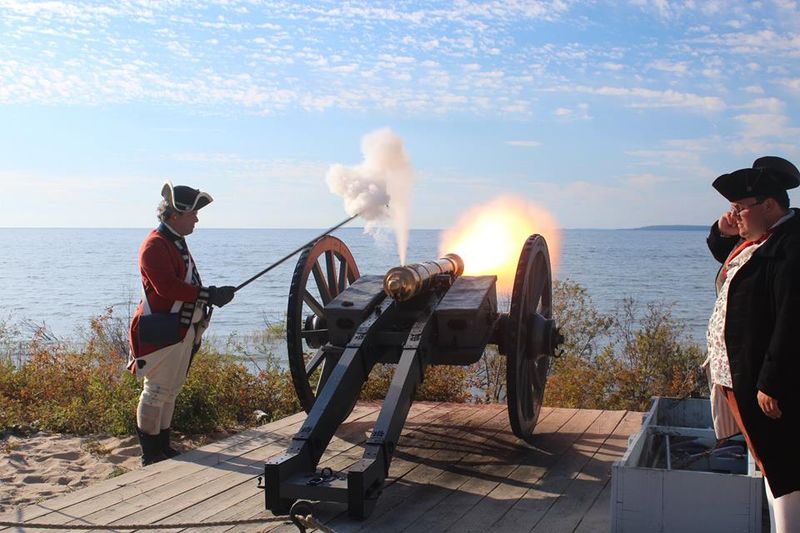
Colonial Michilimackinac already operates as a continuous living-history site year-round, with costumed interpreters demonstrating fur-trade-era life inside a reconstructed 18th-century fort overlooking the Straits of Mackinac. But the annual Mackinaw living-history gathering takes that baseline and expands it considerably, bringing in additional reenactors and programming that extends the historical narrative beyond the fort walls.
Period military portrayals, Indigenous interpreters, merchants, and civilian reenactors fill the site during the gathering, and a recreated street battle adds a dramatic element that the fort’s regular programming does not always include. The combination of an authentic reconstructed setting and a concentrated gathering of living historians creates an unusually immersive experience for visitors.
The geography helps enormously. With the Straits of Mackinac in view and the reconstructed fort as a physical anchor, the 18th-century Great Lakes fur trade world feels genuinely plausible here in a way that a similar event staged in a parking lot simply could not replicate.
Location, in living history, is everything.
12. Downtown Fort Smith, Fort Smith, Arkansas
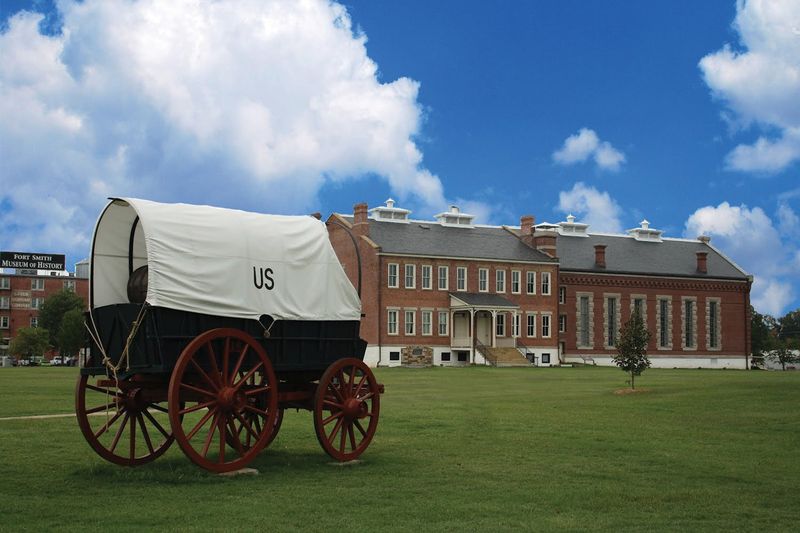
Fort Smith sits at a geographic and historical crossroads where frontier justice, military history, and territorial expansion all converged in the 19th century. The annual Fall Festival channels that layered past by bringing more than 80 living-history reenactors into the downtown historic district, portraying soldiers, Deputy U.S.
Marshals, and frontier civilians across a full day of programming.
Infantry, cavalry, and cannon demonstrations give the event its visual scale, but the detail that tends to surprise first-time visitors is the reenacted Belle Starr trial staged inside the actual historic courtroom. Combining a theatrical courtroom drama with outdoor military demonstrations in the same afternoon is an unusual approach, and it works well.
Participating downtown museums and attractions extend the experience beyond the festival footprint, encouraging visitors to explore Fort Smith’s broader history while they are already in the neighborhood. The result is a frontier history day that covers considerably more ground, both literally and historically, than a single battle reenactment ever could.
13. Colonial Williamsburg, Williamsburg, Virginia
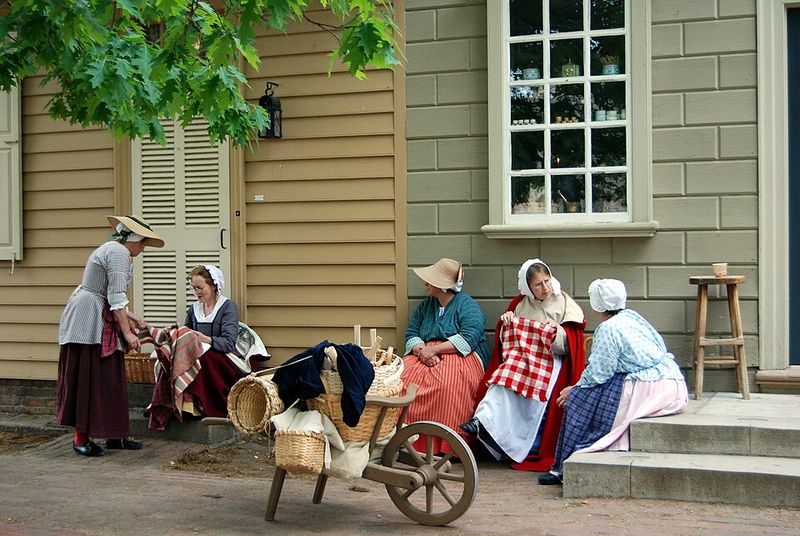
Colonial Williamsburg does not wait for a special weekend to bring the 18th century back to life. The 300-acre historic area operates year-round as the country’s most extensive living-history district, with costumed interpreters portraying tradespeople, political figures, soldiers, and everyday residents against a backdrop of 89 original structures and hundreds of carefully restored buildings.
Duke of Gloucester Street serves as the district’s main artery, and on any given day visitors can encounter military demonstrations, horse-drawn vehicles, and practitioners of more than 20 historic trades, some of which are performed in their authentic 18th-century form nowhere else in the country. The programming also thoughtfully incorporates the experiences of free and enslaved African Americans, adding historical depth that earlier versions of the site did not always prioritize.
For anyone who has ever wanted to experience American history as a place rather than a subject, Williamsburg delivers that on a scale and with a consistency that no single weekend reenactment can match. It is, in the most straightforward sense, the gold standard of American living history.
Share this story