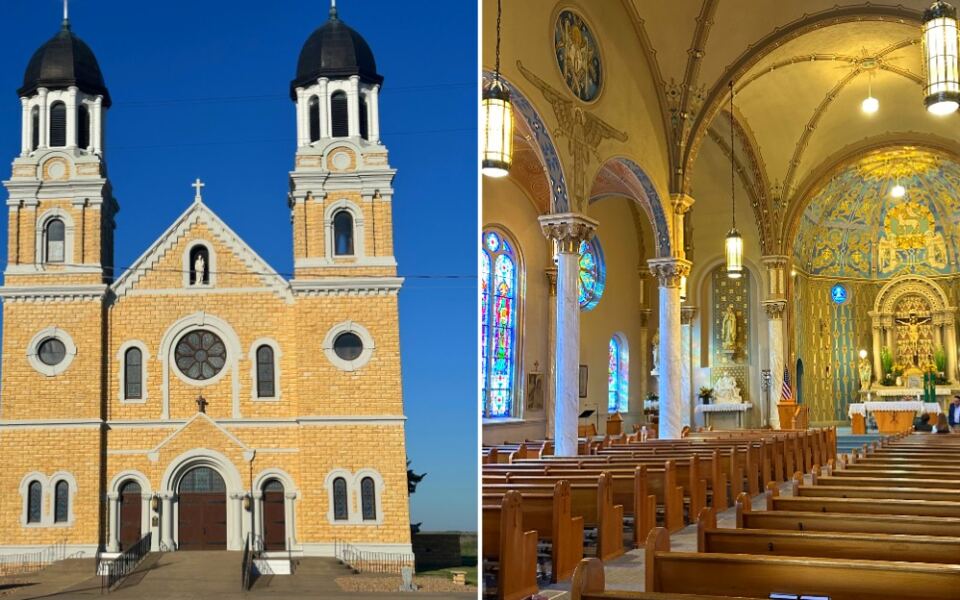
A copper roof described as being about as thick as a penny sits on top of a stone church in a Kansas town of only a few hundred people. That roof went up in 1947, decades after the walls were finished.
Travelers heading to other places often spot the twin towers from miles away and simply pull over.
The town itself was started in 1888 by French Canadian settlers. Their faith and their roots shaped everything about this building, from its style to its setting.
I like places that surprise people on a road trip. A Romanesque church rising out of open farmland in Rooks County does exactly that.
The bigger puzzle is how a small farming community pulled off something this grand. The answer starts with the people who built it and the stone they chose.
A French Canadian Landmark on Oak Street
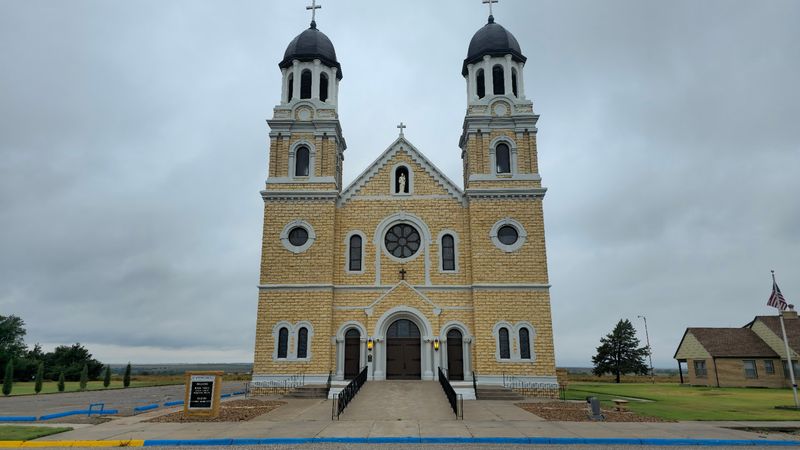
The official name is St Joseph Catholic Church, and you’ll find it at 107 N Oak St in Damar, Kansas 67632. Damar sits in western Rooks County, a short drive north of Hays in the United States heartland.
The building dates to 1912, and it still serves an active Catholic parish today. That matters, because this is a working house of worship and not a museum.
Visitors should treat it with the same respect they would give their own hometown church.
So why should anyone outside Rooks County care about it? The answer is scale.
Damar is a tiny farming town, yet its church stands taller than almost anything around it for miles.
I find that contrast fascinating. A small group of settlers decided their community deserved a building that would outlast them, and they were right.
The church also earned a place on the National Register of Historic Places in 2005. That listing recognizes both its architecture and its importance to local history.
To understand why the building looks the way it does, though, you need to meet the families who founded the town in the first place.
The Settlers Who Brought Quebec to the Prairie
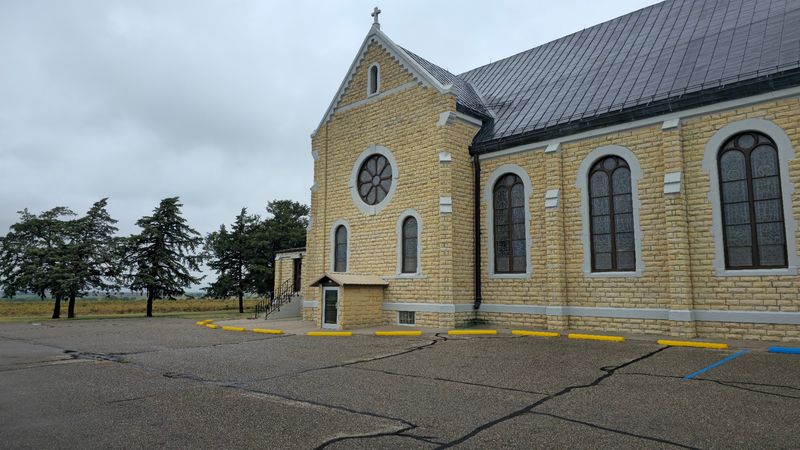
In 1888, a group of French Canadian families set out to build a new life in northwest Kansas. They founded Damar, and their Catholic faith was at the center of the town from day one.
Most nearby Catholic communities in Ellis County trace their roots to Volga Germans. Damar stands apart because its heritage comes from French-speaking Canada instead.
That difference shows up in the town’s culture and in the church itself.
Many businesses in Damar have carried French names over the years. It’s a quiet, friendly way the town keeps its story alive.
I think this history is the key to enjoying a visit. Once you know who built the church, the building stops being just pretty stonework.
It becomes a family album made of rock and copper.
The early settlers worshipped in simpler spaces before the current church went up. By the early 1900s, the parish had grown enough to dream bigger.
Their answer was a stone church in a style that felt grand, old, and lasting, which brings us to the architecture that catches drivers’ eyes from the highway.
Romanesque Lines in the Middle of Farm Country
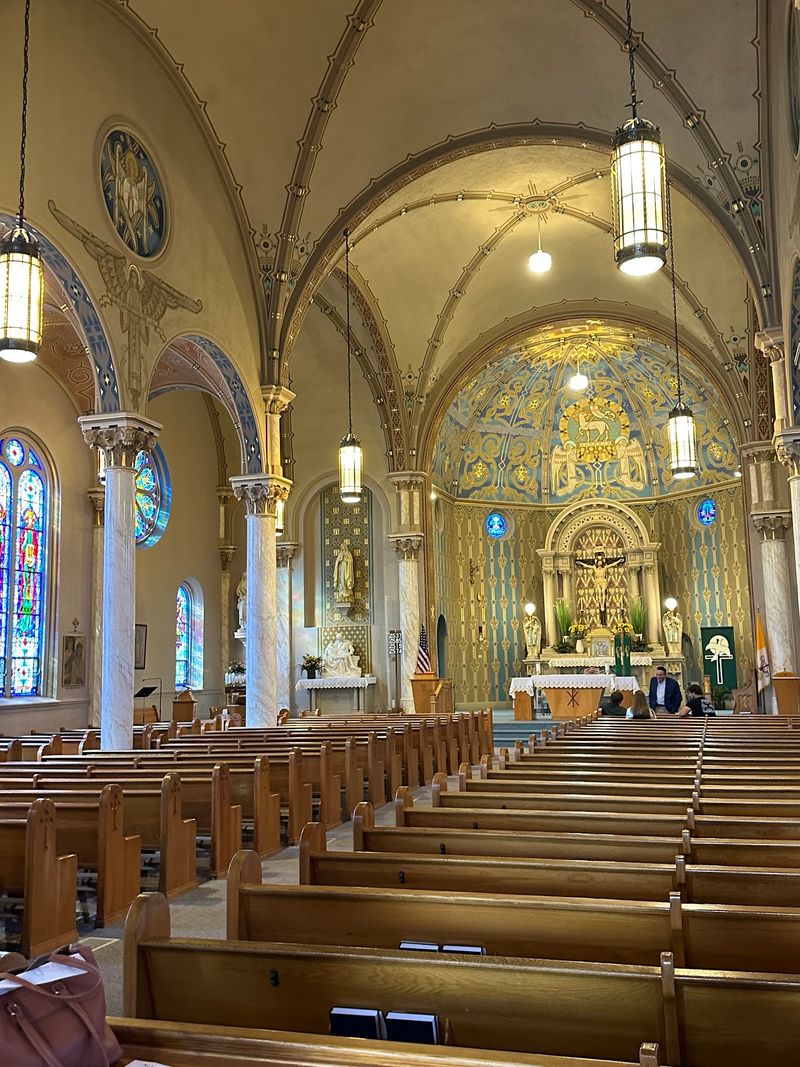
Round arches give it away. St Joseph was designed in the Romanesque Revival style, a look inspired by churches built in Europe roughly a thousand years ago.
Romanesque buildings are known for heavy walls, rounded windows, and a solid, grounded feeling. They don’t try to look delicate.
They look like they plan to stay put through every Kansas storm for the next few centuries.
That style set Damar’s church apart from many other Catholic churches in the region. One longtime visitor with family roots in the area pointed out that the design feels distinct from the Volga German churches nearby.
When you stand in front of the building, look for the repeating arches over doors and windows. Notice how the shapes echo each other from bottom to top.
Those patterns are part of what makes the whole structure feel balanced. Nothing seems random or tacked on.
I’d suggest walking all the way around the outside before heading in, because each side shows off the style a little differently. And whichever side you start on, your eyes will keep drifting upward toward the two towers.
Twin Towers You Can Spot Before You Reach Town
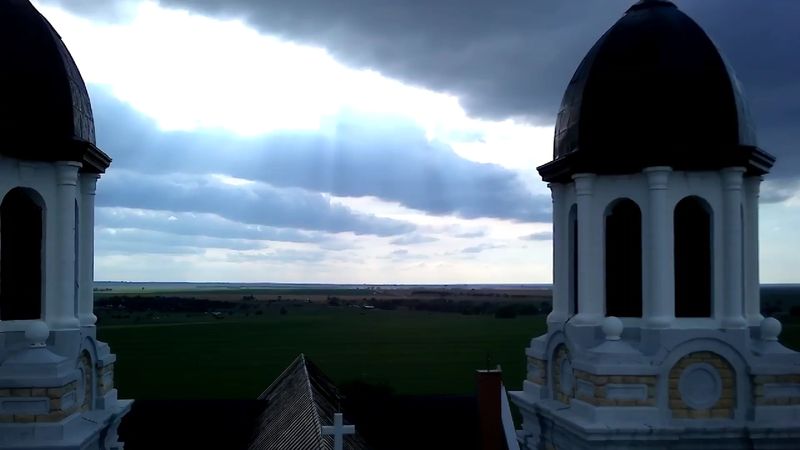
Two towers rise from the front of St Joseph, and they do a great job of announcing Damar long before you arrive. On flat northwest Kansas land, tall shapes stand out quickly.
Travelers have mentioned seeing the church from a distance while heading somewhere else entirely. One group was on the way to the Nicodemus National Historic Site and stopped because the towers caught their attention.
That’s a fun detail for road trippers. You don’t need a sign to find this place.
You just need clear weather and a little patience.
Twin towers were a common feature on larger churches of this era. They framed the entrance and gave the building a strong, symmetrical face.
For photos, I’d try a few shots from the edge of town first. The towers look especially striking with open fields and sky around them, since nothing competes for attention.
Then move closer and look straight up. From the base, you get a real sense of how much effort went into building something this tall with early 1900s tools.
That effort started with the material in the walls.
Limestone Walls Shaped by Hand
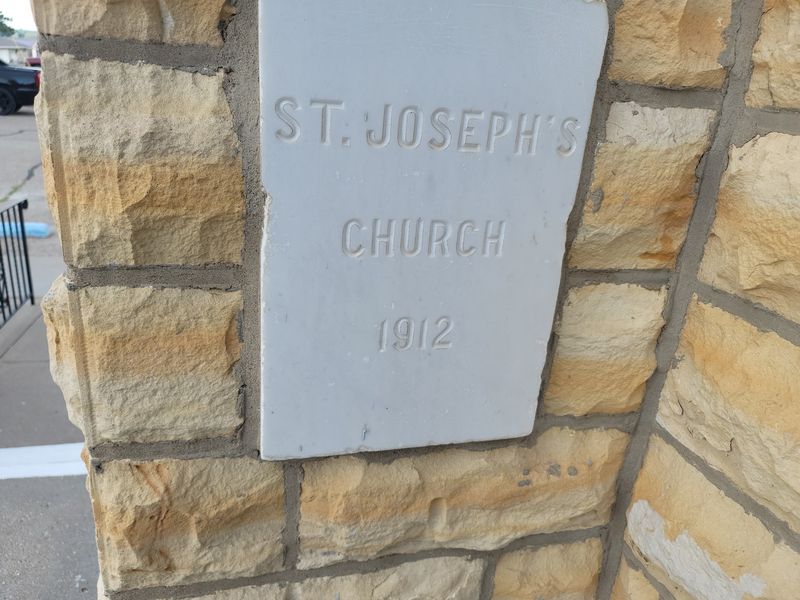
Limestone is the backbone of this church. Kansas has plenty of it, and builders in the region used the native stone for homes, fence posts, and churches.
Back in 1912, shaping that stone took serious muscle. Blocks had to be cut, dressed, and set by hand to form walls thick enough to hold up the towers and roof.
Take a close look at the surface when you visit. Each block carries its own color and texture, and the walls show a natural variety that machine-made materials rarely match.
I find stone churches like this humbling. Somebody measured, lifted, and placed every one of those pieces without modern cranes.
The stone also explains why the building has lasted so well. Limestone handles the hot summers and cold winters of the plains, and thick walls help keep the inside steady through changing weather.
A practical tip: the tan stone looks warmest in early morning or late afternoon light. If you’re planning photos, those hours make the walls glow.
Up above all that stone, though, sits a newer addition with its own surprising story.
A Copper Roof About as Thick as a Penny
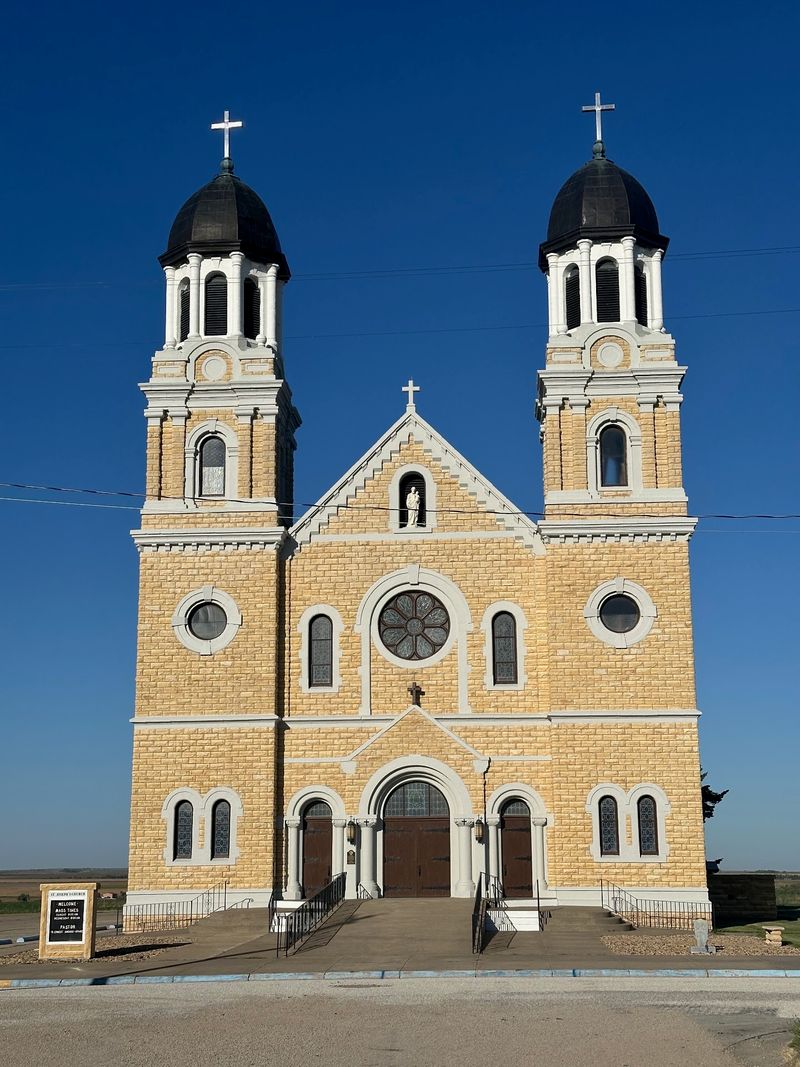
Here’s a detail most people never think to ask about. The copper roof on St Joseph went on in 1947, and it has been described as roughly penny-thickness.
That’s thin for a single sheet, but copper is tough. It resists rust, sheds rain and snow, and can last for generations when cared for.
Copper also changes color over time. Fresh copper shines like a new coin, while older copper often darkens or turns green as it reacts with the air.
The 1947 date tells a story too. The roof arrived about 35 years after the church was built, showing how the parish kept investing in the building long after the first stones were laid.
I like that the church wasn’t treated as finished in 1912. Each generation added care and upgrades.
When you visit, step back far enough to see the roofline clearly. The way it meets the towers and the stone walls is worth a slow look.
Those layers of work over the decades help explain why the church earned national recognition many years later.
About That Cathedral of the Plains Nickname
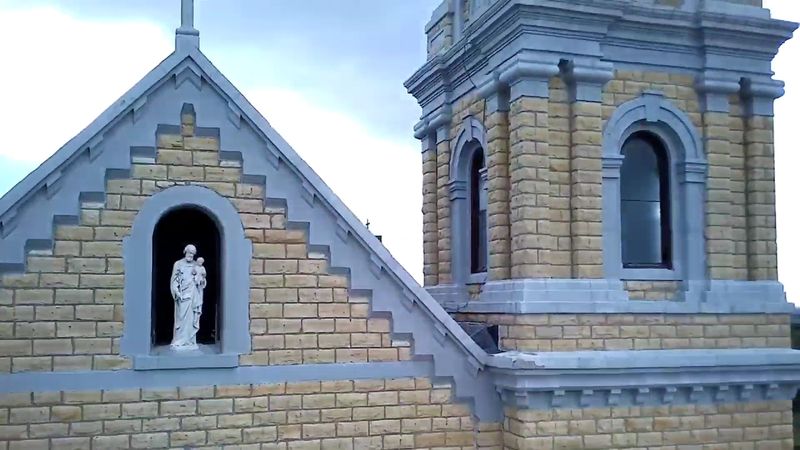
Let’s clear something up, because accuracy matters. The title Cathedral of the Plains officially belongs to St Fidelis Church in Victoria, Kansas, which is also the area’s well-known basilica.
So why does the phrase come up around Damar? Northwest Kansas is dotted with grand stone churches, and people often use the nickname loosely for this whole family of prairie landmarks.
St Joseph fits right into that tradition. It has the stone walls, the twin towers, and the size that make travelers stop and stare.
Still, it isn’t a cathedral or a basilica in the official Catholic sense. It’s a parish church, and honestly, that makes it more impressive to me.
A small parish built this without the backing of a big city. That says a lot about the community.
If you’re touring the region, Damar pairs well with a stop in Victoria. Seeing both lets you compare Volga German and French Canadian church styles side by side.
You’ll notice how each community expressed its faith in its own way, and how Damar’s version reflects roots that reach all the way back to Canada.
A Spot on the National Register
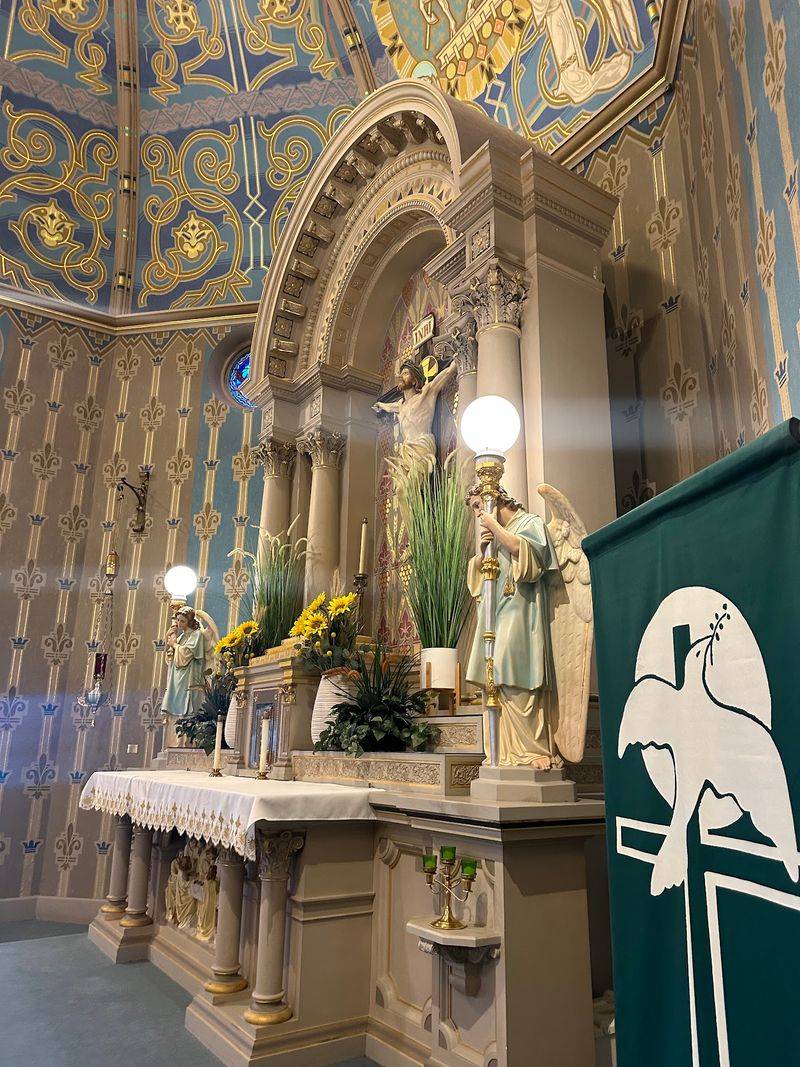
In 2005, St Joseph Catholic Church was added to the National Register of Historic Places. That’s the official list of buildings and sites the country considers worth preserving.
Getting on the list isn’t automatic. A building needs historical or architectural importance, and someone has to document why it matters.
For St Joseph, both boxes are checked. The Romanesque Revival design is notable, and the church tells the story of French Canadian settlement in Kansas, which is less common than many people realize.
I always enjoy seeing a small town earn that kind of recognition. It means the people of Damar weren’t just using an old building.
They were looking after a piece of history for everyone.
The listing doesn’t turn the church into a tourist attraction, though. It’s still a place of worship first.
If you’d like to learn more before your trip, local historical groups in Rooks County are a good place to start. Knowing the background makes small details easier to appreciate in person.
One of those details actually sits outside of town, on a hill with a clear view back toward the towers.
The Hilltop View Back Toward Town
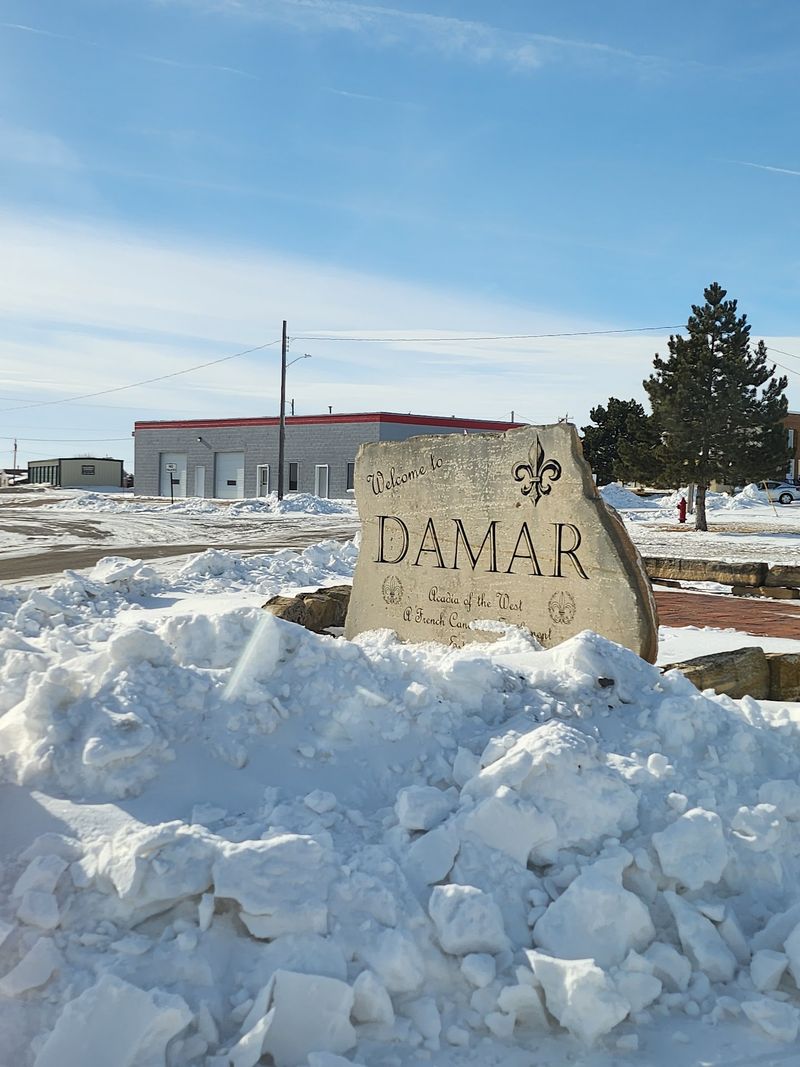
A short drive outside Damar, the parish cemetery sits on a hill. From up there, you can look back across the landscape and see the church rising over town.
That view gives you a fresh way to understand the building. Up close, you notice stone and arches.
From the hill, you see how the church anchors the entire community.
Many families with roots in Damar have relatives resting in this cemetery. Some visitors come specifically to trace their family history and connect with ancestors who helped build the town.
If you go, please be respectful. Stay on paths where possible, keep voices low, and avoid disturbing any markers or decorations.
I’d recommend this stop for anyone interested in genealogy or quiet photography. The setting feels calm and open, and the long view is hard to get anywhere else.
Bring water in summer, since there’s little shade on the open prairie. Wind is common here too, so hold on to your hat.
After soaking in that view, you’ll probably want to think about the practical side of visiting the church itself.
Smart Tips Before You Make the Drive
Plan ahead, because Damar isn’t right off Interstate 70 like some of the region’s famous churches. You’ll head north from the Hays area on rural roads to get there.
That extra drive keeps things peaceful. It also means services like gas and food are limited, so fill up before you leave a larger town.
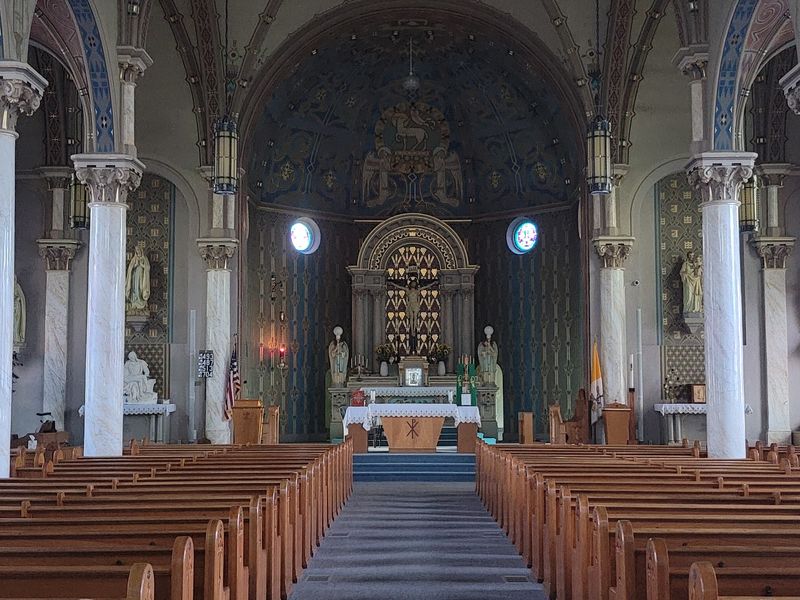
The church may not always be open to drop-in visitors. Since it’s an active parish, check current Mass times and contact the parish ahead of time if you hope to see the inside.
Some lucky travelers have found the doors open while someone practiced the organ. I wouldn’t count on that, but it’s a nice reminder that this building is still in regular use.
Dress modestly if you enter during or near a service. Silence your phone and avoid flash photography inside.
Nearby, the Nicodemus National Historic Site makes an easy pairing for history fans. Together, the two stops show very different stories of people who settled the Kansas plains.
Damar’s story, of course, keeps going today through the parish that still gathers under those copper-topped towers.
Share this story