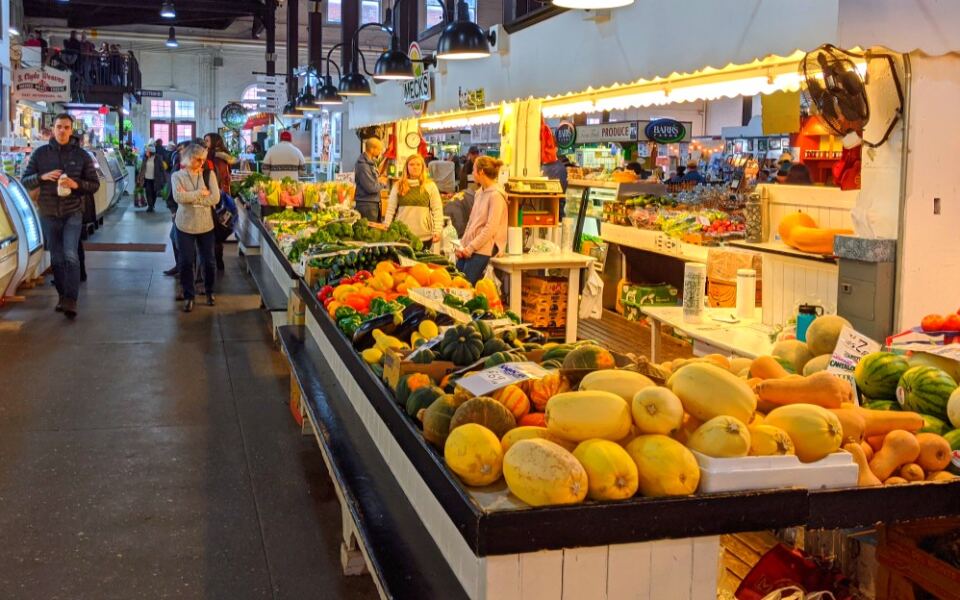
America’s oldest public markets were not built to be tourist attractions. They were built because people needed to eat, trade, and gather, and they have been doing exactly that ever since.
Some of these markets predate the United States itself, which means they have outlasted wars, economic collapses, urban renewal projects, and the rise of the modern grocery store. A few have burned down and been rebuilt.
Others have moved around the block a time or two. But each one on this list is still open, still packed with vendors, and still drawing crowds of real shoppers alongside curious visitors.
From a Pennsylvania market that got its charter from a British king to a Seattle waterfront institution that nearly got bulldozed in the 1960s, these places have stories worth knowing. Read on to find out which markets made the list and what keeps them going after all these years.
1. Soulard Farmers Market, St. Louis, Missouri
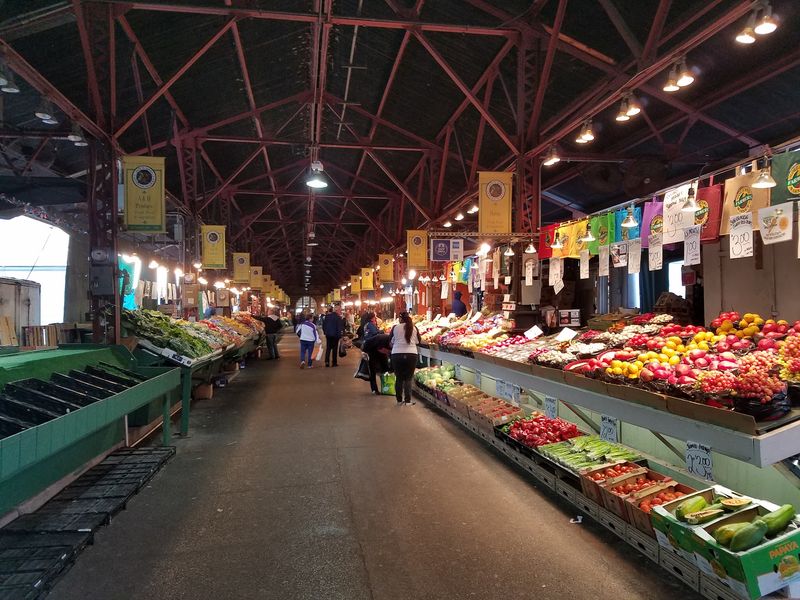
St. Louis had a public market before it had a city charter. Soulard Farmers Market traces its roots to 1779, predating the city’s official incorporation and making it one of the oldest continuously active market traditions anywhere in the country.
The current market building, constructed in 1929, replaced an earlier structure and continues to anchor the historic Soulard neighborhood. More than 100 vendors fill its stalls with farm-fresh produce, meats, baked goods, flowers, crafts, and prepared meals throughout the week.
Saturdays bring the largest vendor turnout and the heaviest foot traffic, when the market takes on the energy of a genuine community event rather than a simple shopping stop. The market has adapted steadily over the decades while holding onto its core mission of connecting local producers directly with everyday shoppers.
2. Lexington Market, Baltimore, Maryland
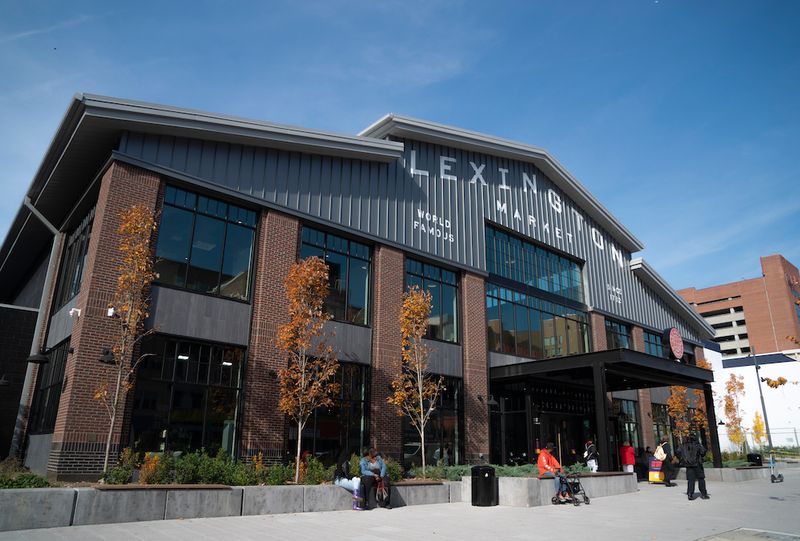
Baltimore has had a public market on this site since 1782, which means Lexington Market was already a going concern before the Constitution was ratified. That kind of staying power demands respect, and the market has earned it the hard way, surviving fires, economic downturns, and multiple rounds of urban change.
A recent renovation gave the market a refreshed building while preserving its identity as a food-first institution. Vendors now sell fresh seafood, poultry, produce, baked goods, sweets, spices, and a wide range of prepared meals, covering just about every food category a shopper could need.
The surrounding neighborhood has changed dramatically since the 18th century, but the market’s core purpose has not shifted. It remains a place built around everyday commerce and the straightforward idea that people need good food at fair prices.
3. Charleston City Market, Charleston, South Carolina
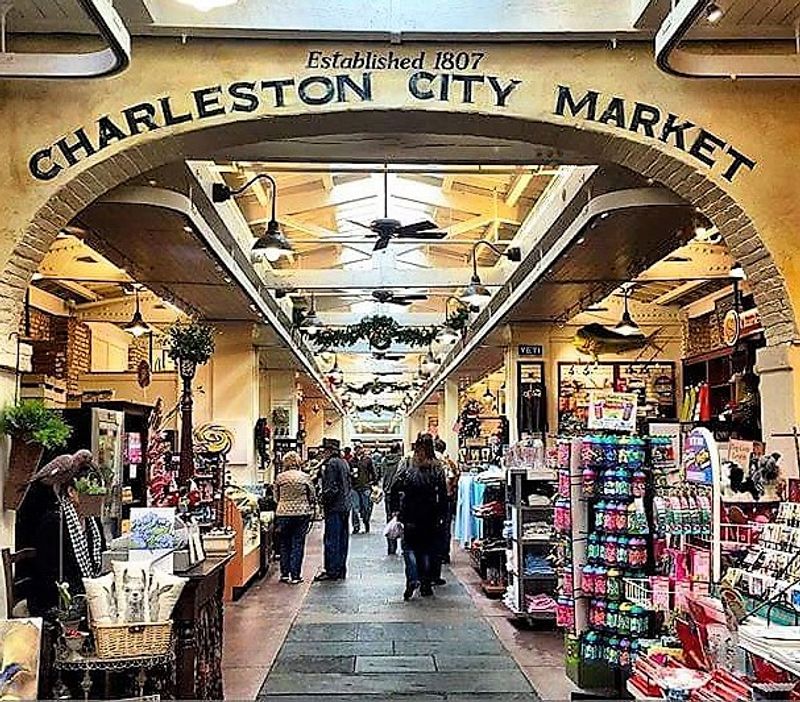
The land for Charleston City Market was set aside for public use in 1788, and the covered market sheds that define its look today began appearing in the early 1800s. The National Register of Historic Places recognized the complex in 1973, cementing its status as one of Charleston’s most important historic sites.
What makes this market stand apart from most is its community of sweetgrass basket weavers. More than 50 artisans practice the craft here, carrying on a Lowcountry tradition rooted in West African techniques that arrived with enslaved people over 300 years ago.
The baskets were originally used for winnowing rice and are now considered both cultural artifacts and collectible works of art.
Beyond the baskets, vendors offer local crafts, food products, and souvenirs. Walking the market aisles is still one of the most direct ways to experience Charleston’s layered commercial and cultural history.
4. French Market, New Orleans, Louisiana
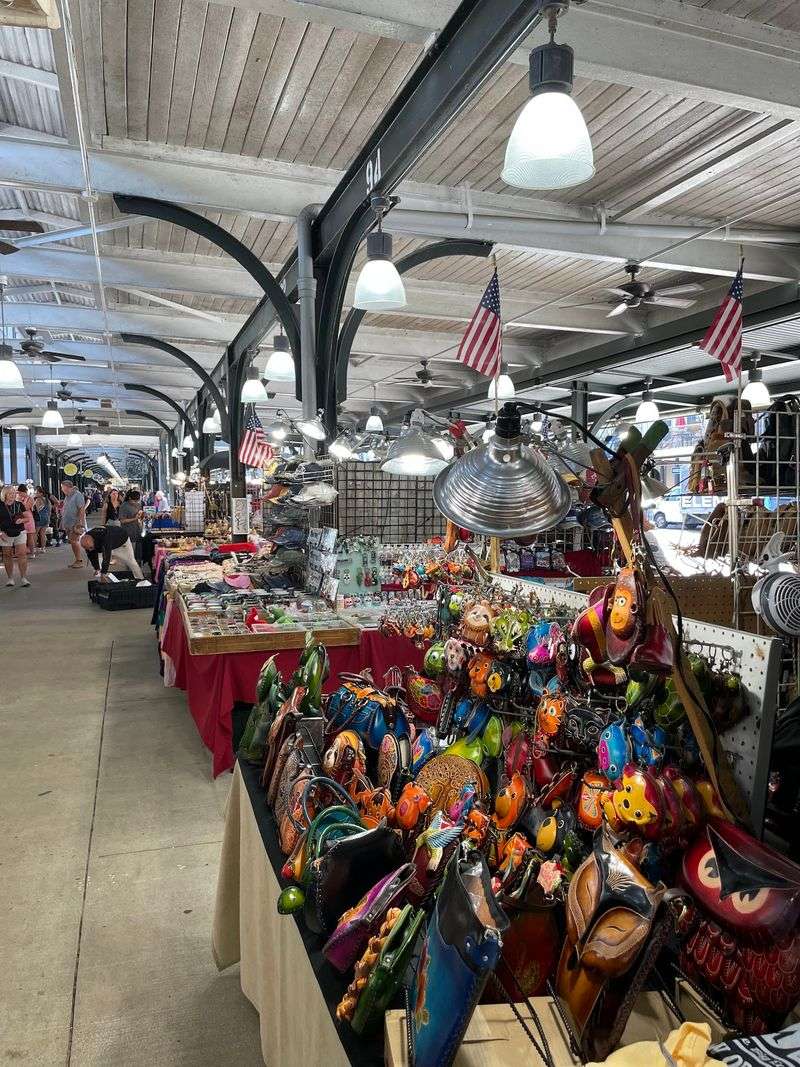
Market activity along the New Orleans levee dates to the late 1700s, and the surviving 1813 Meat Market building gives the French Market a physical connection to that era that very few American markets can claim. Hurricanes took out the earliest structures, but the 1813 building held, and additional market sheds built between then and 1872 added to the district’s historic depth.
Today, the market stretches three blocks from Jackson Square along Decatur Street. The Farmers Market section carries fresh produce, herbs, seafood, and local Creole specialties, while the Flea Market area shifts toward crafts, clothing, art, and souvenirs.
Specialty merchants and food vendors fill out the rest of the complex.
The French Market is one of the rare places where a visitor can move from a century-old building to a produce stall to a craft booth without ever leaving the same historic footprint.
5. Quincy Market, Boston, Massachusetts
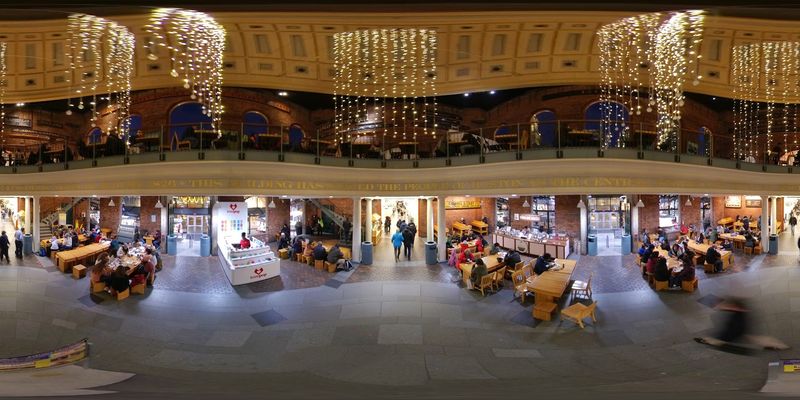
Quincy Market opened in 1826 as a deliberate expansion of the older Faneuil Hall marketplace, and its architects went big. The monumental granite building was designed to hold 128 food stalls, which was an enormous number for a single market structure in early 19th-century America.
Nearly 200 years later, the building still functions as one of downtown Boston’s busiest gathering points. Visitors stream through the long central hall for food, shopping, and a close look at architecture that dates squarely to the early republic.
The neoclassical columns and interior proportions remain largely intact, giving the space a weight that modern food halls cannot replicate.
The market complex sits at the edge of the historic waterfront district and draws a steady mix of locals and out-of-town visitors. Its combination of genuine age, active commerce, and architectural scale keeps it in a category of its own among Boston landmarks.
6. Findlay Market, Cincinnati, Ohio
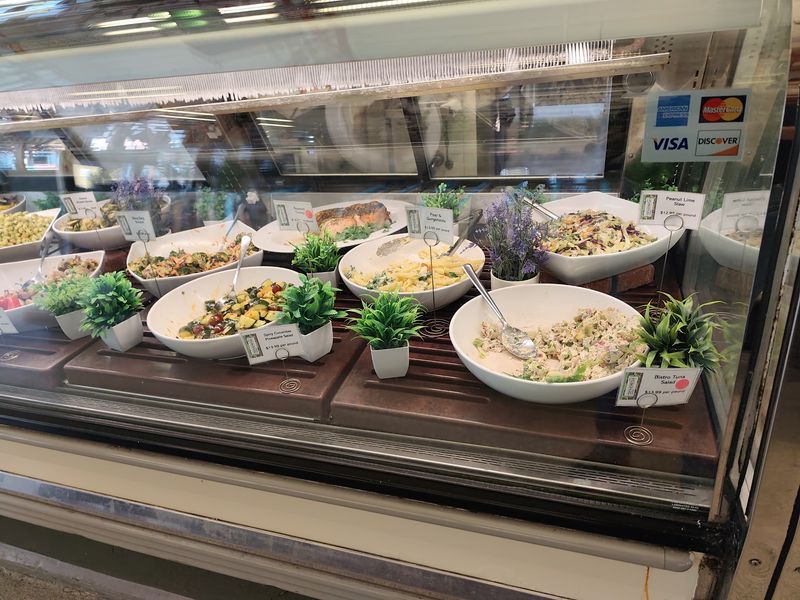
Ohio’s oldest continuously operated public market opened in 1855 and has not stopped running since. Findlay Market earned a spot on the National Register of Historic Places in 1972, partly because its iron-framed Italianate market house was one of the earliest structures in the country to use that construction method when it was built in 1852.
More than 50 full-time indoor merchants now sell produce, meats, seafood, poultry, flowers, artisan cheeses, and specialty ethnic foods under that same historic roof. Weekends add a surge of outdoor vendors, street performers, and seasonal events that expand the market well beyond its permanent footprint.
Findlay Market also functions as a small-business engine for the Over-the-Rhine neighborhood, supporting independent operators and helping drive one of Cincinnati’s most significant urban revivals. Shopping here means spending money in a place that actively reinvests it in the surrounding community.
7. Eastern Market, Washington, DC
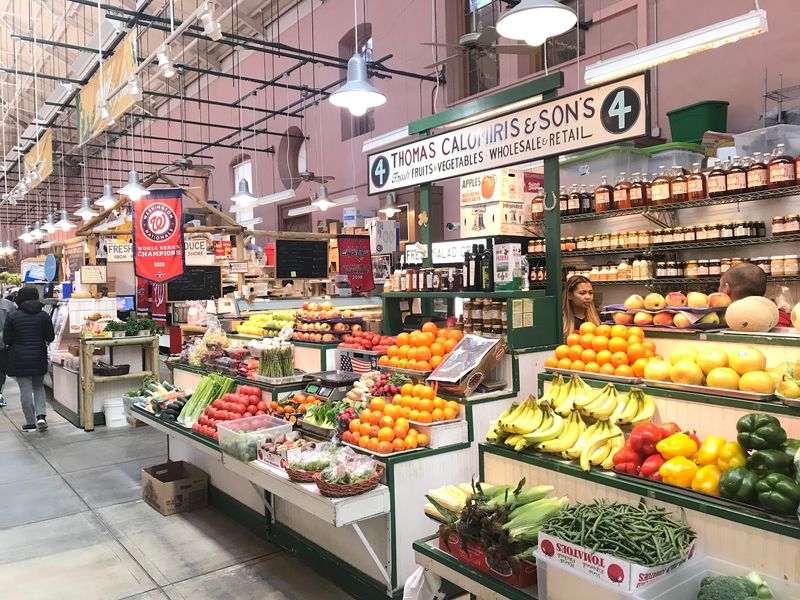
Washington has had public markets since its earliest days as a planned city, but Eastern Market is the only one of those historic market buildings still performing its original job. The market opened in 1873, and its brick South Hall has been selling food to Capitol Hill residents ever since, making it the sole survivor of DC’s once-extensive public market network.
Inside, permanent merchants offer meats, poultry, seafood, produce, cheese, pasta, and baked goods across well-established counters. On market days, the action spills outdoors, where additional vendors set up with farm products, handmade crafts, antiques, and collectibles.
The Capitol Hill setting gives weekend visits a particular character. Neighbors run errands alongside tourists, and longtime stallholders greet regular customers by name.
That mix of everyday utility and genuine community connection is what keeps Eastern Market feeling less like a landmark and more like a living neighborhood institution.
8. North Market Downtown, Columbus, Ohio
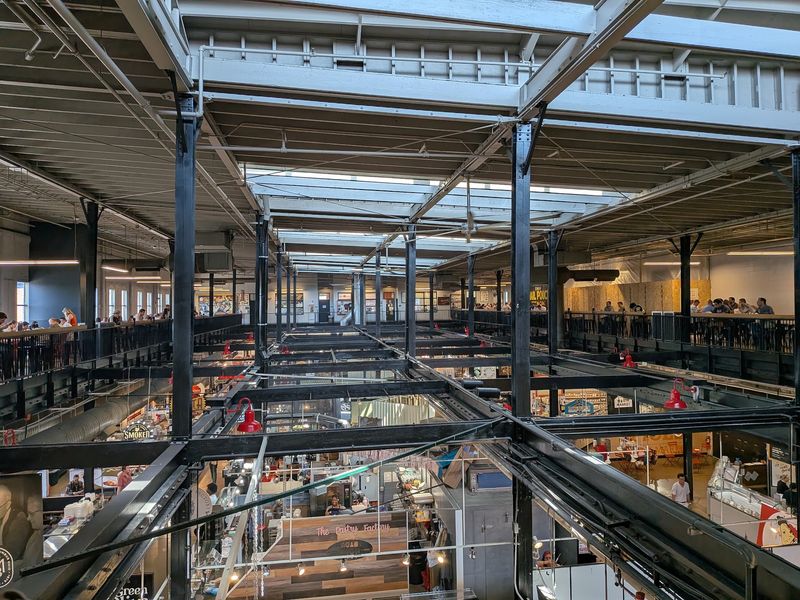
The land under North Market Downtown has an unusual past. Columbus established its first public market here in 1876 on a site that had previously served as the city’s North Graveyard, which makes the market’s cheerful present-day energy all the more remarkable.
The market has since survived fire, redevelopment pressure, and multiple structural reinventions without losing its identity as an independent-merchant hub.
Today’s downtown hall hosts butchers, produce vendors, bakeries, specialty-food shops, coffee counters, and cuisines from India, Italy, Thailand, Poland, Mexico, Vietnam, and Nepal, covering more ground in one building than most shoppers expect. The market also launched Jeni’s Splendid Ice Creams, which started as a single stall here before becoming a nationally recognized brand.
Weekend farmers markets, wine festivals, and Night Markets add rotating programming that brings in visitors who might not otherwise have a reason to stop by on a regular Tuesday.
9. Roanoke City Market, Roanoke, Virginia
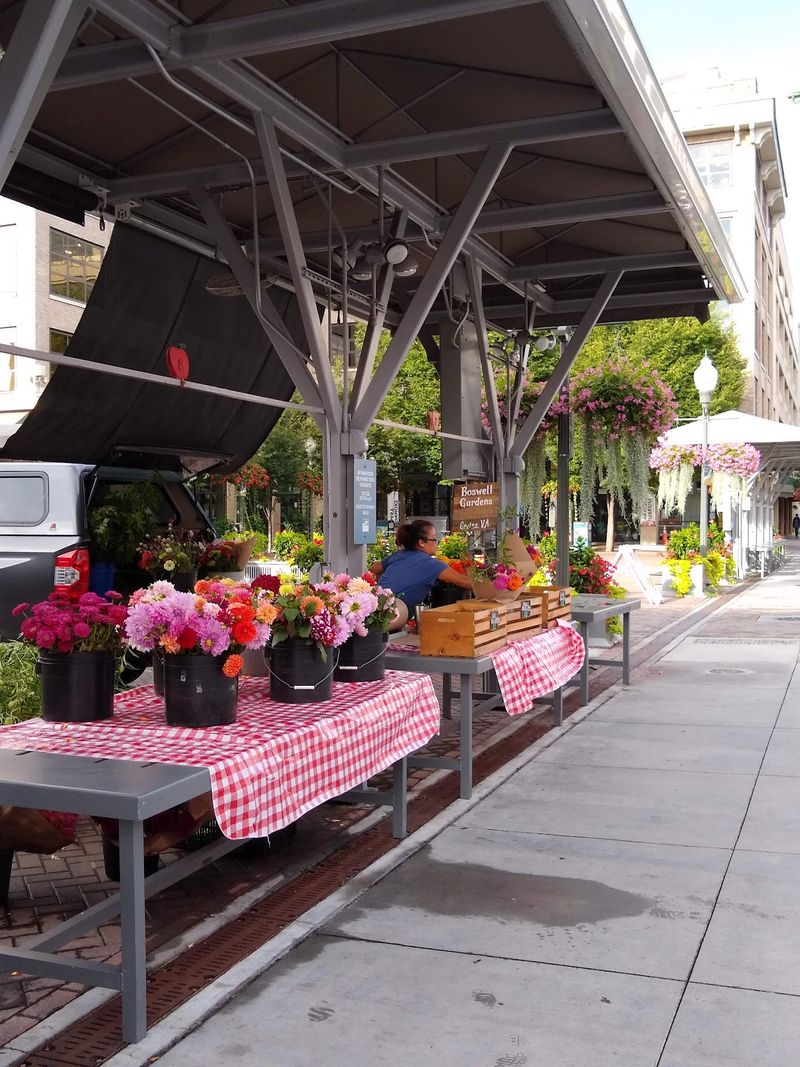
Virginia’s oldest continuously operating open-air market got its start in 1882 with 25 licensed vendors, officially called hucksters in the market records of the day. The Lyndhurst Foundation later recognized it as a Great American Public Place, a designation that reflects both its age and its ongoing role in Roanoke’s downtown life.
The market runs seven days a week, closing only on Christmas and New Year’s Day, which puts it in rare company among historic markets that maintain year-round operations. Vendors sell fresh produce, plants, baked goods, meats, handmade crafts, jewelry, and art objects across covered tables and adjacent outdoor spaces.
A strict sourcing rule keeps the market locally grounded: USDA Farmer’s Market guidelines require that at least 75 percent of vendors be farmers, ranchers, or growers selling products from within a 100-mile radius. That policy gives shoppers a reliable connection to the region’s actual agricultural output.
10. Eastern Market, Detroit, Michigan
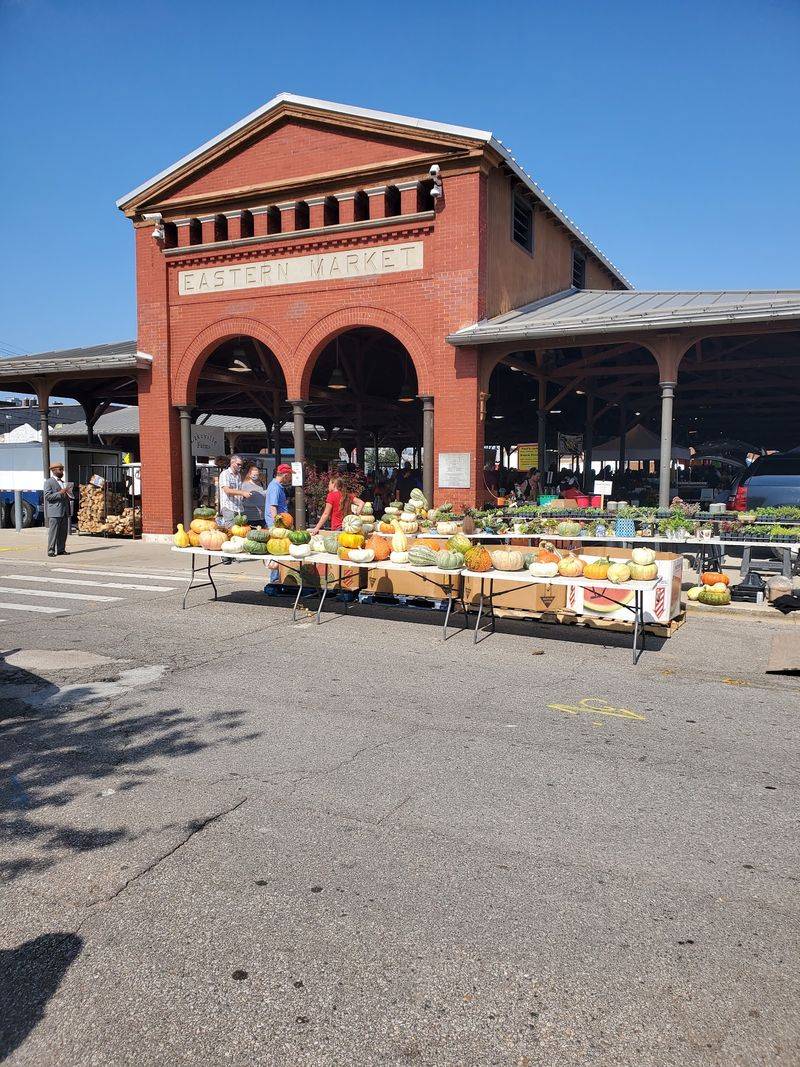
Detroit’s Eastern Market was formally established at its current location in 1891, but the city’s public market traditions run deeper than that founding date suggests. The market has grown over time into something larger than a single building or even a single block, functioning more like a dedicated food neighborhood than a conventional indoor marketplace.
The Saturday Market is the centerpiece, filling the historic sheds with farmers, produce sellers, flower growers, specialty food producers, and artisans every week. The surrounding district extends the activity outward, adding wholesale operations and independent food businesses that operate throughout the week.
That combination of a weekly public market and a surrounding food-industry district creates an ecosystem where professional buyers and weekend shoppers share the same streets. Eastern Market is one of the few places in America where the scale of a full food district and the character of a neighborhood market exist in the same place at the same time.
11. Lancaster Central Market, Lancaster, Pennsylvania
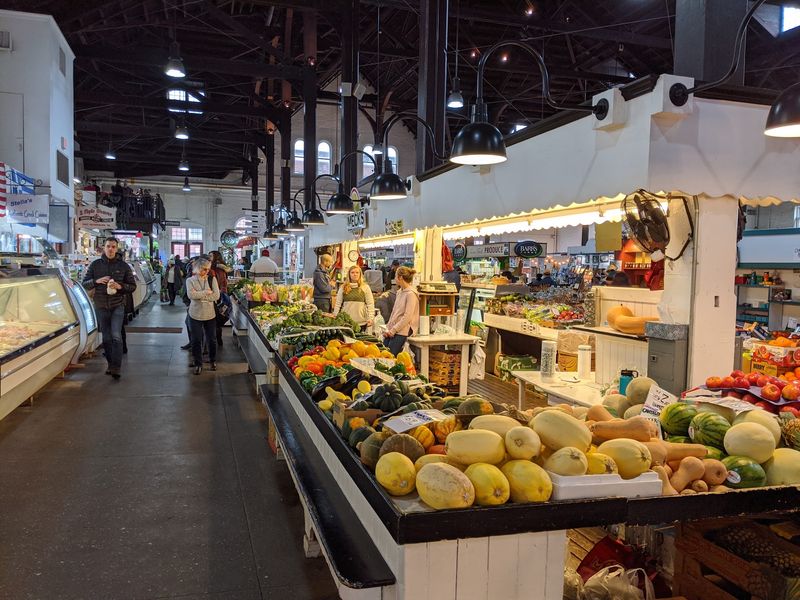
King George II handed Lancaster Central Market its royal charter in 1742, making it the oldest continuously operated public market in the United States, a title it has held without interruption ever since.
The handsome Romanesque Revival brick building that houses the market today dates to 1889 and fits more than 65 local standholders under one roof. Shoppers can pick up traditional Pennsylvania Dutch staples like shoo-fly pie, soft pretzels, scrapple, and chow-chow alongside newer international offerings from Greek, Thai, and Middle Eastern vendors.
The market runs on Tuesdays, Fridays, and Saturdays, keeping a schedule that has remained largely consistent for generations. Beyond food, merchants also sell candles, handmade glasswork, rare teas, and locally themed gifts.
Few markets in America can match this combination of documented age and genuine daily activity.
12. Reading Terminal Market, Philadelphia, Pennsylvania
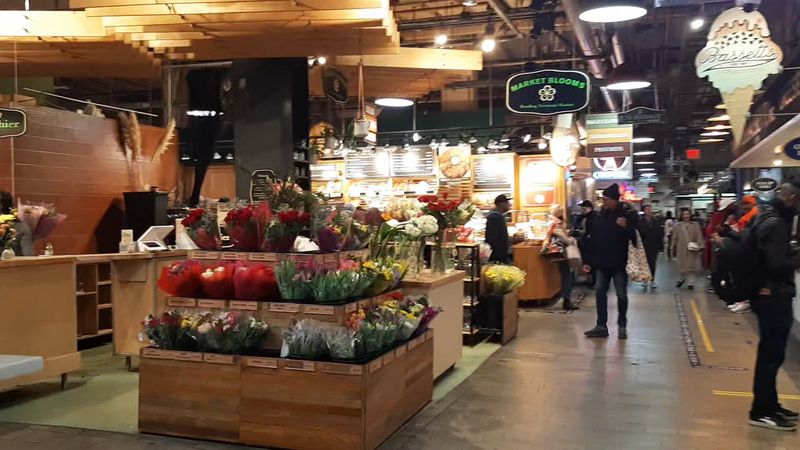
Reading Terminal Market opened in 1893 under the new Reading Railroad terminal at 12th and Arch Streets, born from a city push to move public markets indoors for sanitation reasons. By 1913, it housed 250 food dealers and 100 farmers, making it one of the most densely packed market operations in the country at the time.
More than a century later, over 80 merchants still fill its aisles with produce, meats, poultry, seafood, artisan cheeses, baked goods, confections, and prepared foods. Several current standholders are descendants of the market’s original merchants, giving certain counters a family continuity that spans four or five generations.
The market’s layout follows a grid pattern modeled after Philadelphia’s street plan, which makes navigation surprisingly logical for a building this busy. Old signage, worn wooden counters, and the sheer variety of food on offer make Reading Terminal one of the most visually engaging historic markets in the country.
13. Rochester Public Market, Rochester, New York
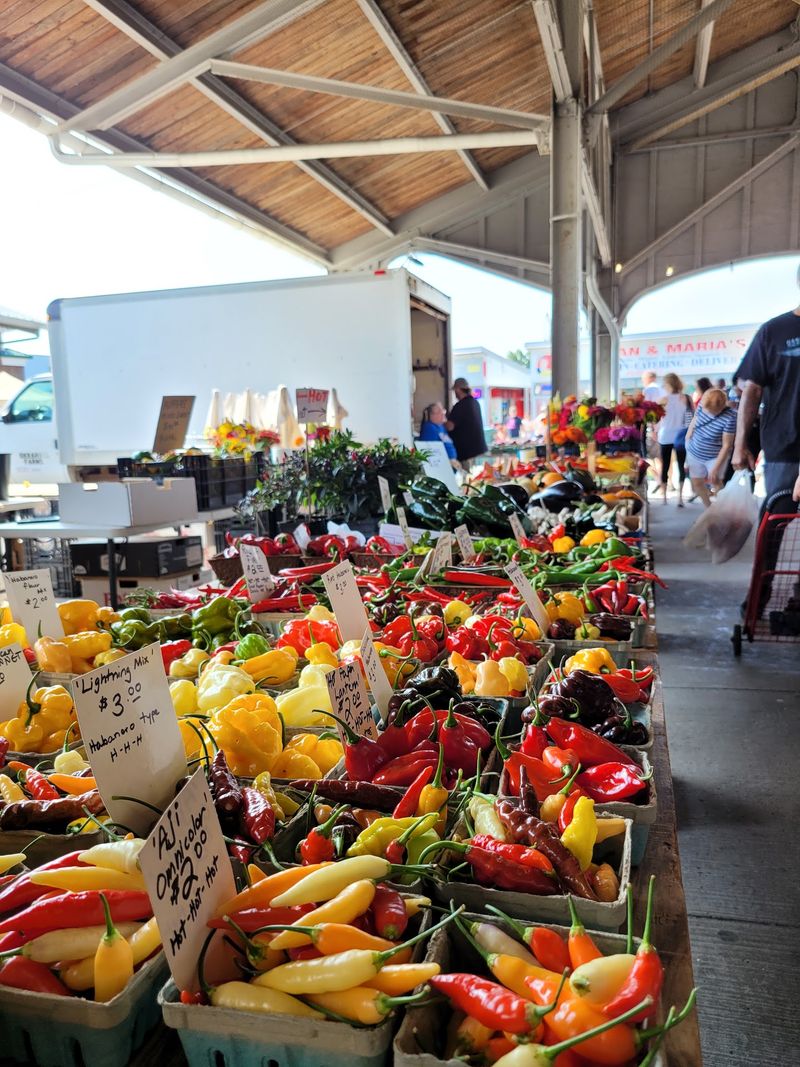
Rochester Public Market has occupied its North Union Street site since 1905 and remains city-operated to this day, a governance structure that has helped it maintain the practical, working-market character that many comparable historic markets abandoned during mid-century modernization efforts.
On the busiest Saturdays, more than 300 vendor stalls fill the covered sheds and surrounding outdoor spaces with fresh produce, quality meats, seafood, dairy products, baked goods, international foods, and general merchandise. The range is broad enough to handle a full week’s worth of grocery shopping in a single visit.
The market’s covered sheds give it a functional, all-weather layout that keeps vendors and shoppers protected without turning the experience into something overly polished or curated. Rochester Public Market is, at its core, a no-frills institution that has stayed relevant by consistently delivering what its shoppers actually need rather than what looks good in a marketing brochure.
14. Pike Place Market, Seattle, Washington
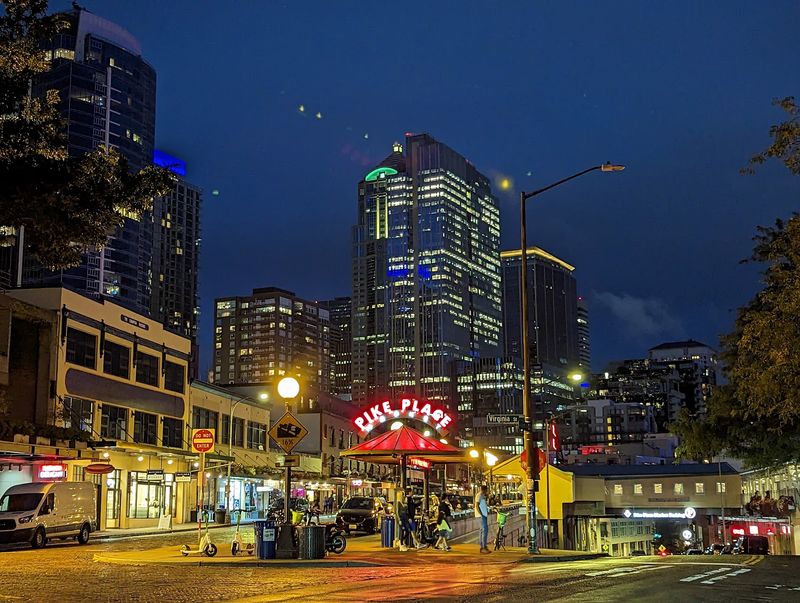
Seattle created Pike Place Market in August 1907 specifically so that farmers could sell directly to city residents without going through a middleman, and that founding principle has never officially changed. What began with a handful of farmers quickly expanded into a nine-acre historic district that now supports hundreds of farmers, craftspeople, restaurants, shops, and small businesses.
The market’s architecture developed organically over decades, resulting in steep passageways, multiple lower levels below the main street, and a layout that rewards exploration rather than efficient grid-style navigation. Produce stands, flower stalls, and famous food counters line the main arcade, while specialty shops and smaller vendors fill the lower floors.
Nearly 500 people also live in eight residential buildings within the market district, making it a functioning mixed-use community. Citizen activism saved the market from demolition in 1971 and established it as a Historic District, a decision that preserved what Seattle calls the soul of the city.
15. West Side Market, Cleveland, Ohio
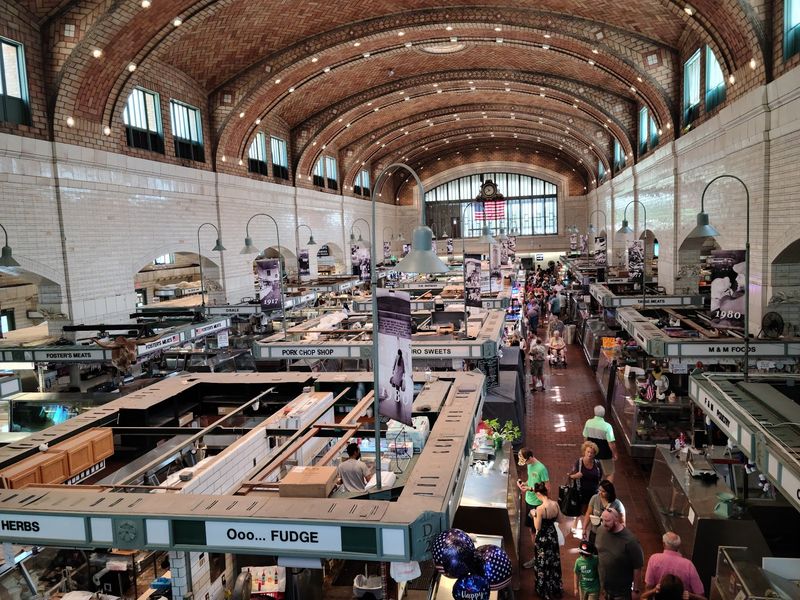
Cleveland’s West Side Market opened its landmark hall in 1912, though open-air trading on the site goes back to 1840. Architects W.
Dominick Benes and Benjamin Hubbell designed the 241-by-124-foot structure, which features a Guastavino tile vaulted ceiling rising 44 feet overhead and a 137-foot clock tower visible from several blocks away. The American Planning Association named it one of Ten Great Public Places in America in 2008.
About 60 small businesses currently operate inside, selling fresh produce, meats, seafood, baked goods, prepared foods, and specialty items. The market originally housed 109 stands serving Cleveland’s growing immigrant population in the early 20th century, and it remains the only one of the city’s three original public markets still in operation today.
The interior layout, with its rows of tiled counters and high arched ceiling, turns a routine grocery run into something that feels genuinely different from any modern food hall. History here is structural, not decorative.
Share this story