Ohio has a way of hiding its most jaw-dropping places in plain sight, and Hocking Hills might be the best example of that. Tucked into the forested hills of southeast Ohio is a massive natural cavern with a waterfall you can actually step behind without getting soaked.
It sounds like something you’d need to travel far for, but this one is a straightforward drive from most of the state. Once you see it in person, you’ll wonder how you ever went this long without knowing it existed.
What Ash Cave Actually Is and Where to Find It
Carved into the sandstone hills of southeast Ohio, Ash Cave is one of the largest recess caves in the entire state. Located at 26400 OH-56 in South Bloomingville, it sits within Hocking Hills State Park, one of Ohio’s most celebrated natural destinations.
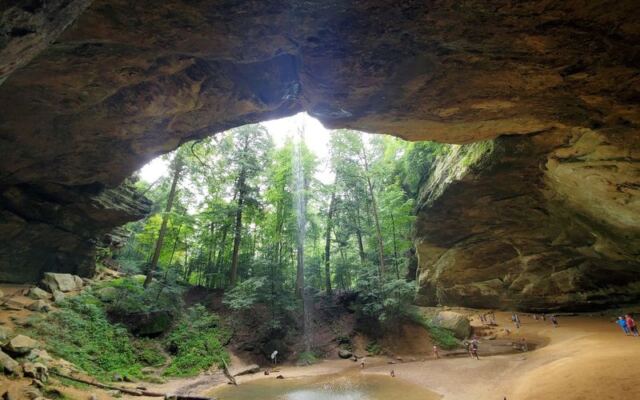
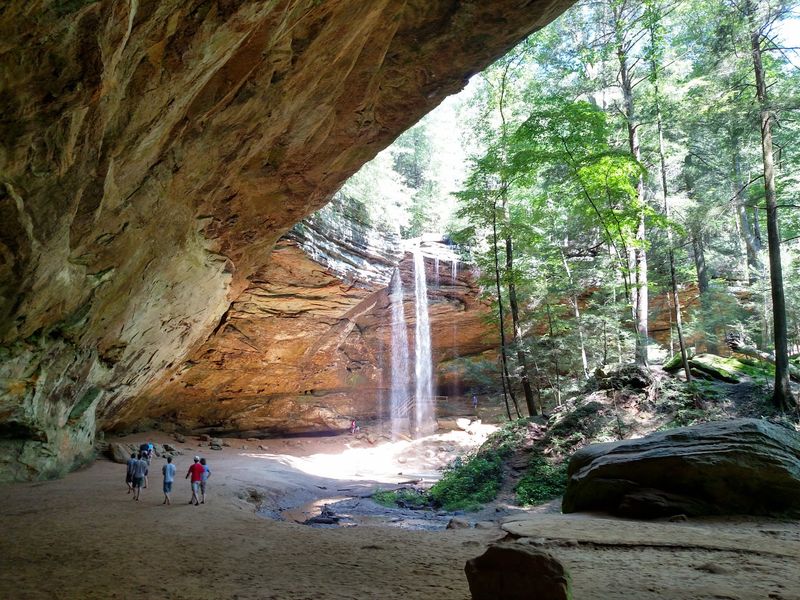
The cave is not a dark, narrow tunnel you squeeze through. Rather, it is an enormous horseshoe-shaped overhang that stretches roughly 700 feet across and stands about 90 feet tall at its highest point.
Standing inside it feels like being sheltered inside a natural cathedral.
A seasonal waterfall drops from the rim of the cave down to the sandy floor below, creating a scene that genuinely stops people mid-step. Visitors consistently describe their first glimpse of the space as a “wow” moment that no photograph can fully capture.
The Story Behind the Name
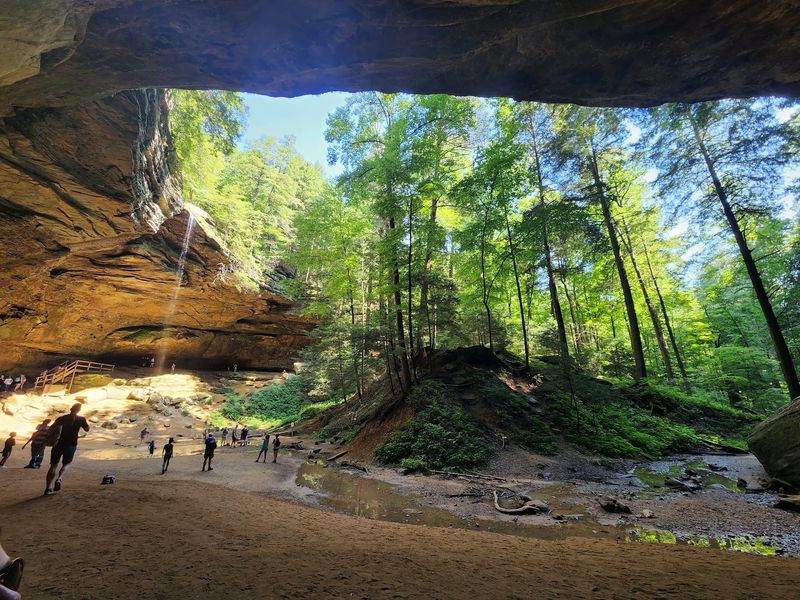
Names like “Ash Cave” tend to carry a story, and this one does not disappoint. The cave earned its name from the enormous piles of ash that early settlers discovered on its sandy floor when they first explored the area.
Those ash deposits are believed to be the remains of fires built by Indigenous peoples who used the cave as a shelter long before European settlers arrived. The sheer size of the overhang would have made it an ideal camp, offering natural protection from rain and wind.
Visitors with a sense of history often remark that standing inside the cave makes it easy to picture those ancient encampments. The scale of the space, the filtered light, and the sound of falling water all combine to give the site a quietly powerful atmosphere that connects you to something much older than yourself.
The Waterfall You Can Walk Behind
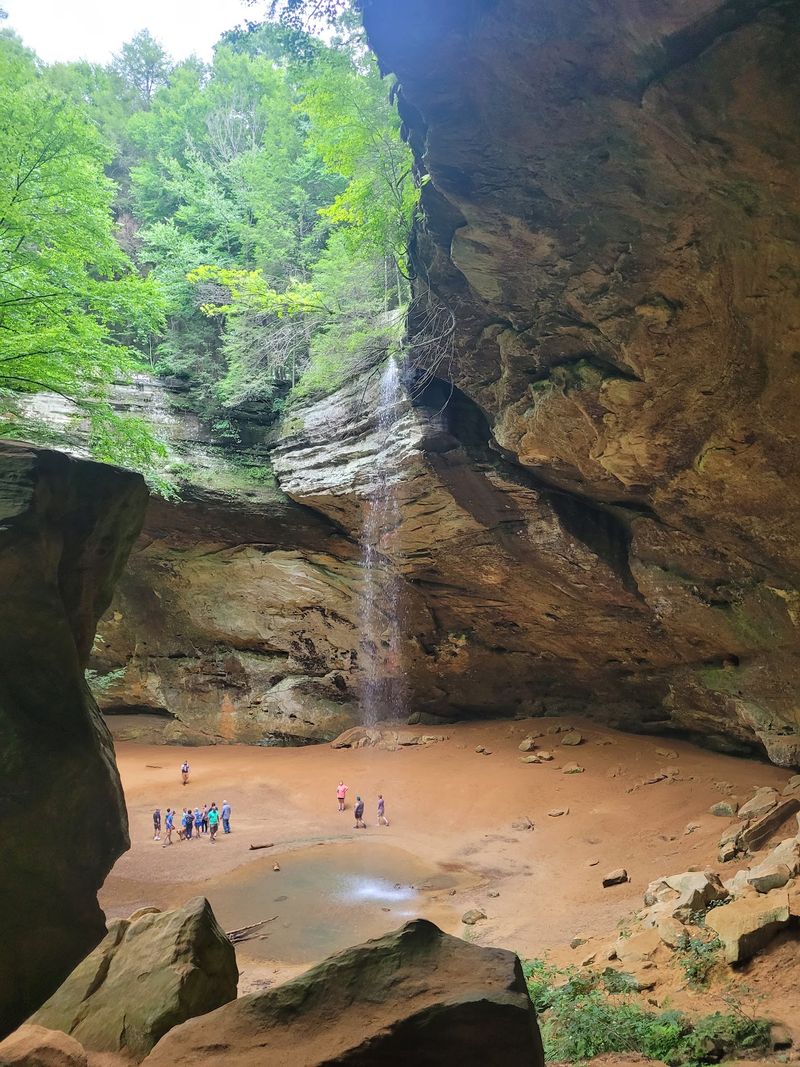
Walking behind a waterfall without getting soaked sounds like a trick, but at Ash Cave it is simply how the geology works. The enormous overhang extends far enough that the waterfall drops from the cave rim and lands several feet in front of the back wall, leaving a dry corridor behind the curtain of water.
When water flow is strong, typically in spring or after heavy rainfall, the falls create a genuine curtain effect that visitors can peer through from the dry sandy floor. Even stepping close to the cascade, the mist stays manageable rather than drenching.
During long dry spells, the waterfall can slow to a trickle, so timing your visit after a good rain increases the payoff. Even without a full flow, the cave itself is striking enough that most visitors leave satisfied regardless of what the waterfall is doing that day.
The Paved Trail That Makes It Accessible to Almost Everyone
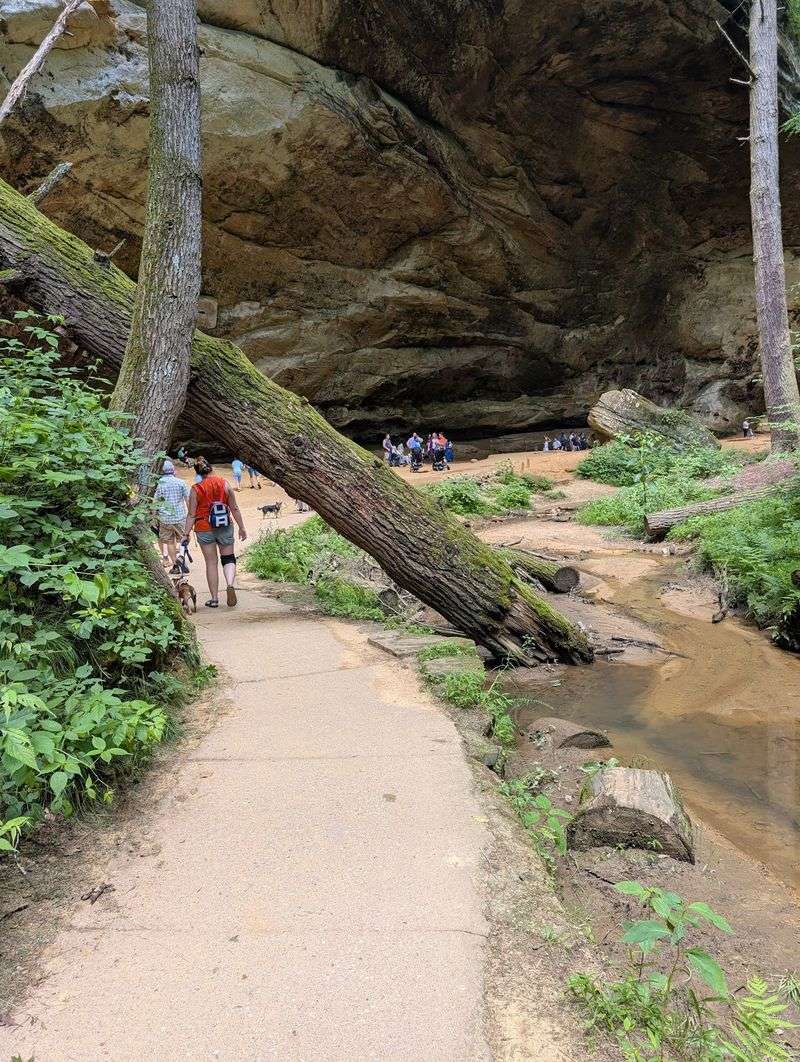
Accessibility is one of the most talked-about features at Ash Cave, and for good reason. The main trail to the cave is paved, level, and ADA compliant, making it one of the rare natural wonders in Ohio that nearly anyone can reach regardless of physical ability.
Families with strollers, visitors using wheelchairs, and those with mobility scooters regularly make the roughly quarter-mile walk without difficulty. The path runs alongside a gentle stream and passes through tall, shaded trees that keep the route cool even on warm days.
A selfie stand near the cave area helps groups get photos without the usual struggle of finding a stranger to hold the camera. Visitors frequently mention that the trail itself is scenic enough to be worth the walk even before the cave comes into view, with birdsong and the sound of flowing water accompanying you the whole way.
The Cathedral Scale of the Cave Interior
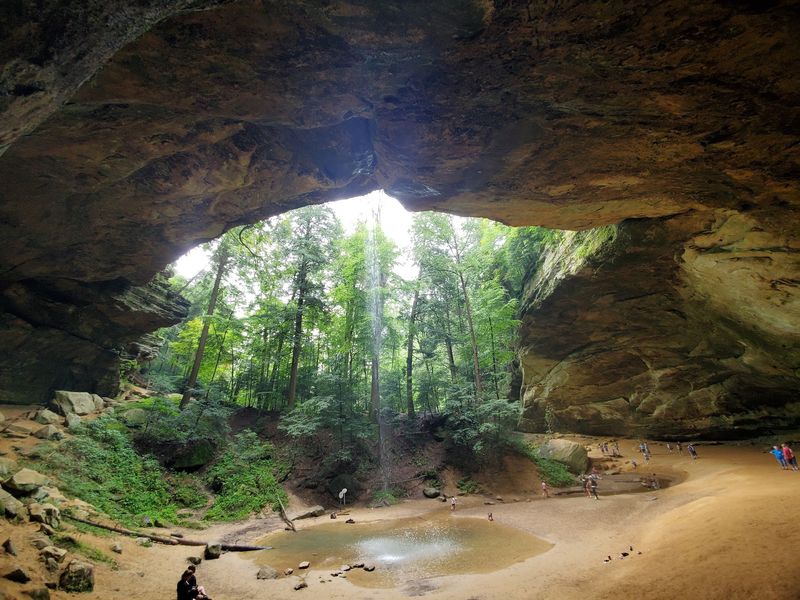
Photographs of Ash Cave are impressive, but they consistently fail to convey the true scale of the place. Visitors who have seen plenty of pictures still report being genuinely stunned when the cave comes into full view on the trail.
The horseshoe shape of the overhang creates a space so wide and open that it functions almost like an outdoor amphitheater. Voices carry and echo in a way that underscores just how much volume the cave actually holds.
Standing at the back wall and looking out at the forested gorge beyond the cave mouth is a perspective you simply cannot recreate from a photo.
The sandy floor adds to the otherworldly quality of the space. Kids instinctively gravitate toward it, and several visitors mention children spending long stretches just playing in the sand while adults absorb the scenery above them.
Spring and Post-Rain Visits vs. Dry Season
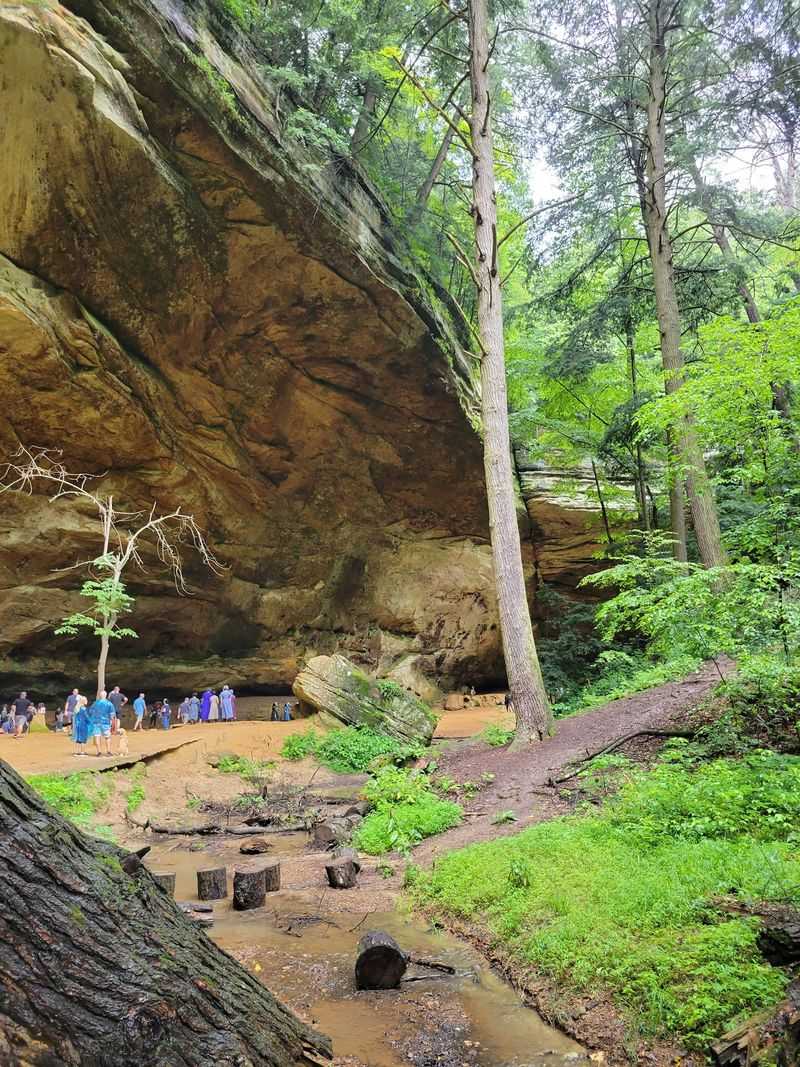
Timing matters at Ash Cave more than at many natural sites. Spring is widely considered the prime season because snowmelt and frequent rainfall keep the waterfall running at its most dramatic, and the surrounding forest glows with fresh green growth that frames the cave beautifully.
Visiting after a recent rainfall at any time of year is also a smart move. The waterfall responds quickly to precipitation, so even a day or two after a good rain can mean the difference between a trickle and a proper cascade.
The earthy scent of wet sandstone and forest adds another layer to the experience that dry visits simply cannot match.
That said, summer and fall visits have their own appeal. Summer shade from the tall canopy keeps the gorge cool, making it a natural heat escape.
Fall color reflected in the stream along the trail is a strong draw for photographers and casual walkers alike.
Photography Opportunities Inside the Cave
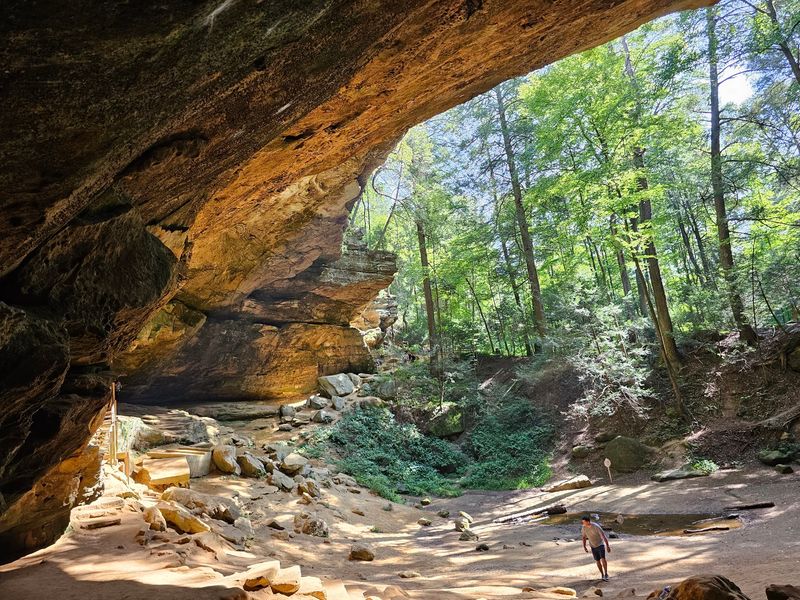
Few places in Ohio offer the compositional variety that Ash Cave delivers for photographers. The wide horseshoe opening creates natural framing for shots looking outward into the gorge, while the cave interior provides dramatic backdrops for portraits and landscape images alike.
The waterfall, when flowing, adds a dynamic focal point that anchors wide-angle compositions. The mist it generates softens light in a way that makes images feel almost cinematic without any editing.
Early morning visits reward photographers with lower foot traffic and gentler light filtering through the tree canopy above the gorge.
Several visitors specifically mention Ash Cave as a location for milestone photos, including prom portraits and family sessions. The sandy floor, towering walls, and natural light combine into a setting that professional photographers would charge significantly to replicate in a studio.
The selfie stand provided on-site is a practical bonus for groups working without a photographer.
Who This Place Is Perfect For
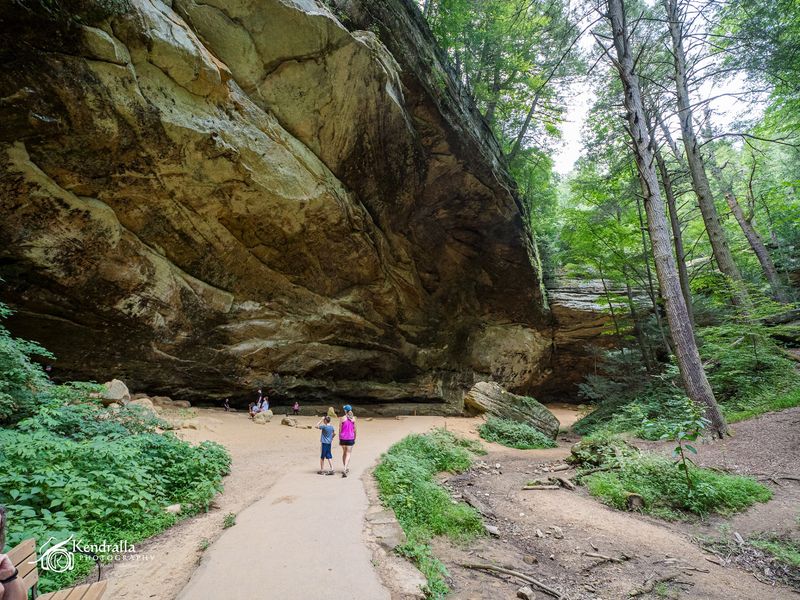
Ash Cave has an unusually broad appeal, and that is not something many natural sites can honestly claim. Families with young children find it ideal because the paved trail is manageable for small legs and the sandy cave floor keeps kids entertained long after adults have finished admiring the scenery.
Older visitors and those with limited mobility benefit from the ADA-compliant route, which makes this one of the most genuinely inclusive hikes in all of Hocking Hills State Park. Grandparents and grandchildren can make the same trip together without anyone being left behind at the trailhead.
Hikers looking for more challenge can extend the day by continuing to Cedar Falls or climbing to the fire tower, both of which are accessible from the same area. Ash Cave works equally well as a quick thirty-minute stop or as the anchor of a longer day exploring the broader Hocking Hills trail network.
The Loop Trail Option and What It Adds
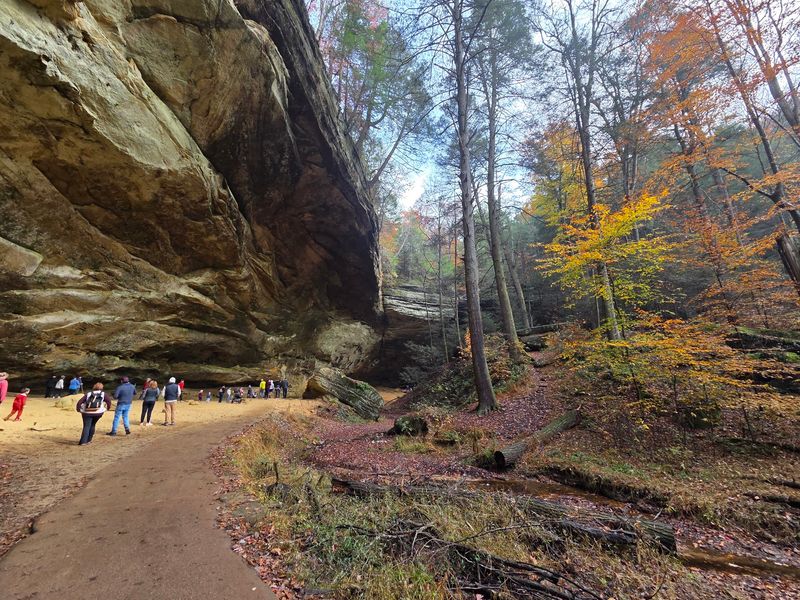
Most visitors arrive, walk the paved lower trail to the cave, and return the same way. But there is a loop option that adds a completely different perspective on the same landscape, and it is worth knowing about before you go.
After spending time at the cave, you can take a set of stairs that climb upward and loop back to the parking area along a more traditional forest trail. The elevation gain is modest but noticeable, and the views looking back down into the gorge from the upper trail reveal how the cave fits into the surrounding topography in a way the lower path cannot show.
Visitors describe the return loop as a satisfying way to earn the full experience rather than simply retracing steps. The upper trail is not wheelchair accessible, so it works best as an add-on for those who want a bit more exertion after the easy lower route.
Practical Details Before You Go
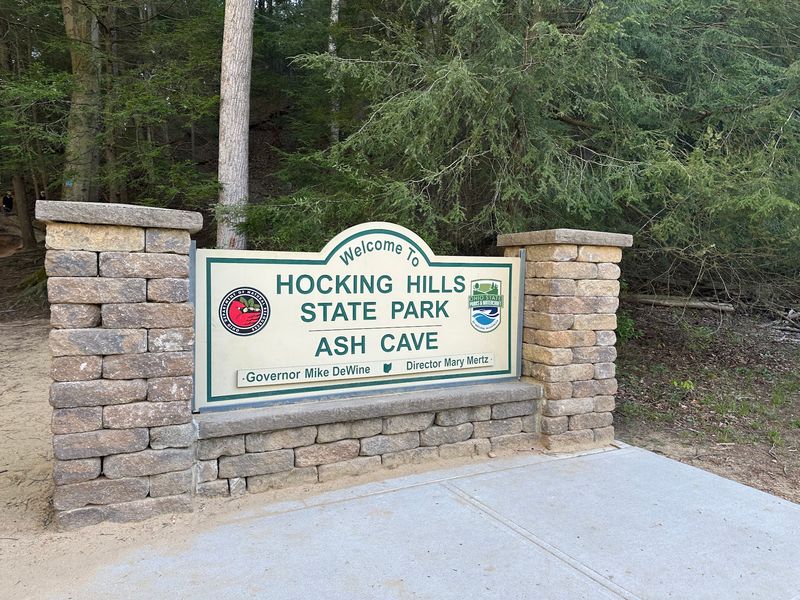
Ash Cave is open every day of the week, with hours running from 7 am to 5 pm. The park is managed by the Ohio Department of Natural Resources, and the website for planning your visit is ohiodnr.gov.
For direct questions, the phone number on file is +1 740-385-6842.
Parking is available across the road from the trailhead and visitors consistently describe it as plentiful, which is a genuine relief at a site this popular. Picnic tables and a covered pavilion are on-site, making it easy to turn the visit into a full afternoon outing with a packed lunch.
Restroom facilities are available at the trailhead area. One honest note from visitors is that the bathrooms can be unpleasant during busy periods, so coming prepared with hand sanitizer is a reasonable precaution.
Dogs are welcome on the trail, adding another reason for pet owners to put this on their weekend list.
Why Ash Cave Earns Its Place as a Hocking Hills Standout
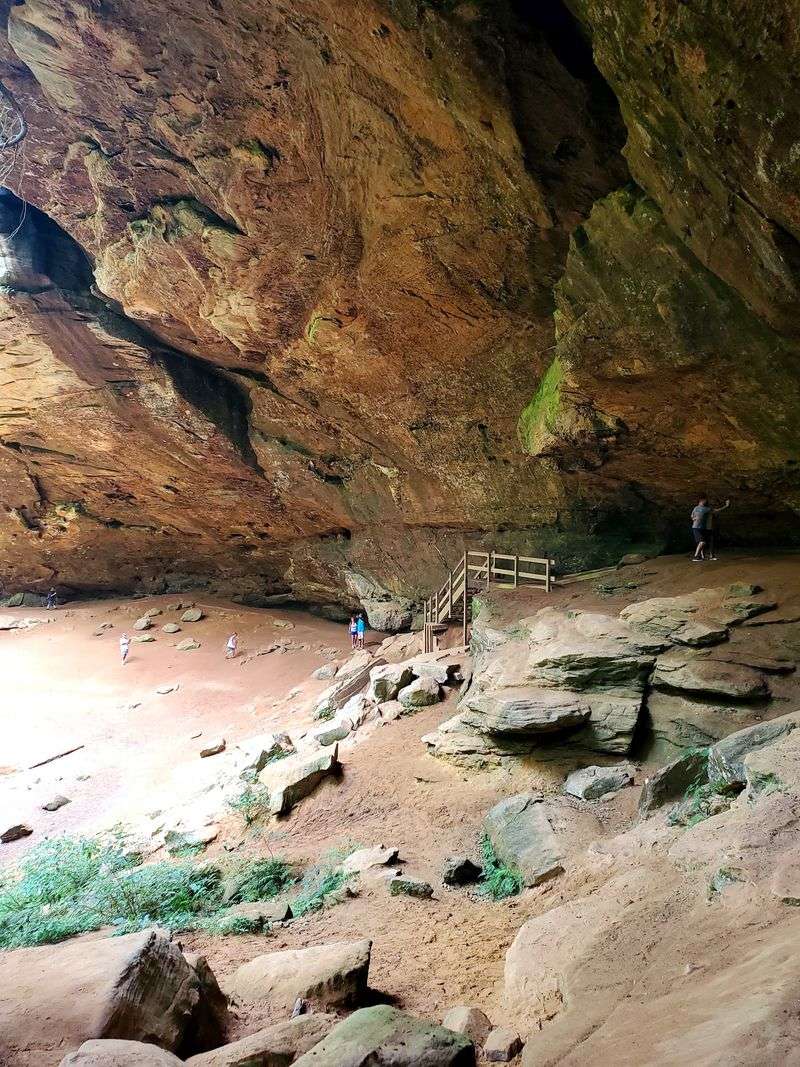
Among all the remarkable stops in Hocking Hills State Park, Ash Cave holds its own as a genuine highlight rather than just a supporting act. The combination of sheer scale, accessible trail, seasonal waterfall, and historical depth gives it a range that few single natural sites can match.
Visitors who have explored Old Man’s Cave and Cedar Falls often describe Ash Cave as offering something distinctly different, specifically the open, airy quality of the recess cave versus the narrower gorge experiences elsewhere in the park. The sense of standing inside something ancient and enormous is hard to replicate anywhere else in Ohio.
For Ohioans who want a natural experience that genuinely surprises without requiring a long drive or technical hiking skills, Ash Cave delivers. Come for the waterfall, stay for the atmosphere, and leave with the quiet suspicion that Ohio has been holding out on you for years.
Share this story