Most road trips are planned around the big destinations, but the best surprises tend to happen in between. Tiny towns with a single main street, a curious museum, or an unexpected food stop can turn an ordinary drive into something you actually talk about later.
The United States is full of communities that look like nothing from the highway but reveal genuine history, local character, and real personality the moment you slow down. This list covers 15 of those places, from a mountain town that declared itself the center of the universe to a Tennessee square that practically guilt-trips you into parking.
None of them will take more than an hour or two to explore, but each one offers something concrete and memorable. Keep reading, because at least one of these will end up on your next route.
1. Wallace, Idaho
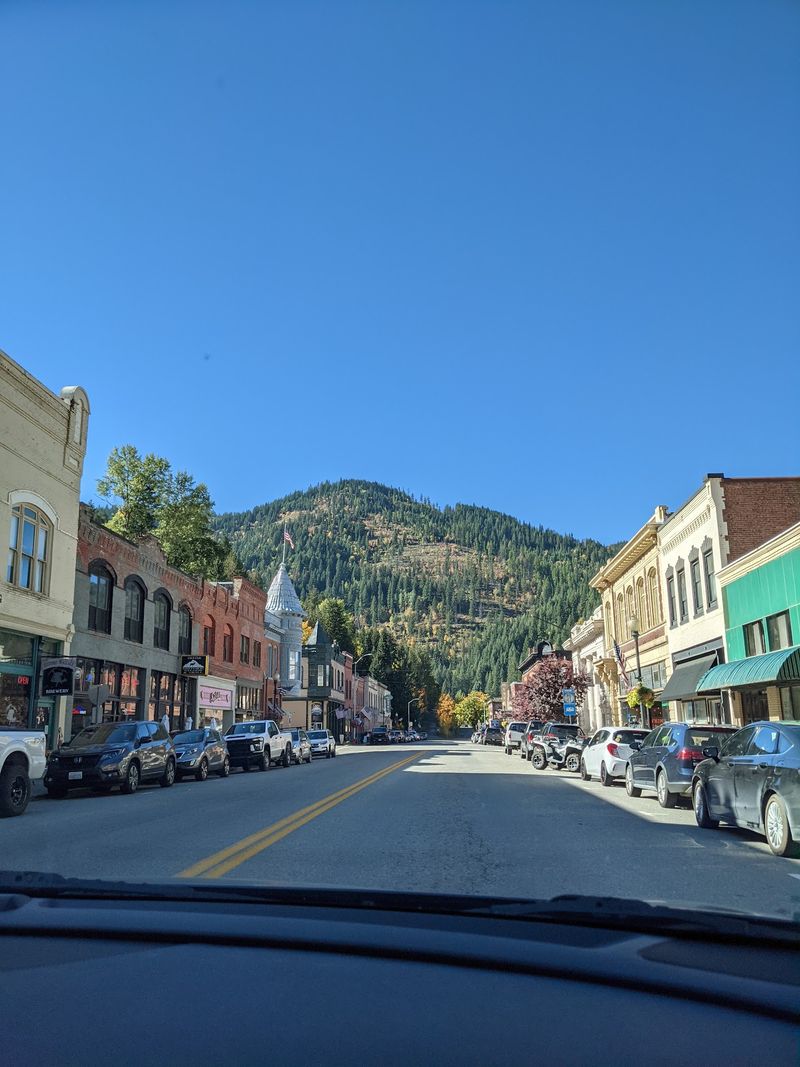
Wallace, Idaho, has the audacity to call itself the Center of the Universe, and thanks to a ceremonial manhole cover at Bank Street and Sixth Street, it has the paperwork to back it up. The claim is based on the theory of probabilism: if something cannot be disproven, it must be true.
Mayor Ron Garitone made it official in 2004, and nobody has successfully argued otherwise.
The entire downtown is listed on the National Register of Historic Places, a designation that actually saved it from demolition when Interstate 90 was built. The highway now runs on stilts directly through town.
Guided tours of the Oasis Bordello Museum and the Sierra Silver Mine give visitors two very different windows into Wallace’s colorful past. Hundreds of miles of biking trails, including the Route of the Hiawatha, round out the stop nicely.
2. Helper, Utah
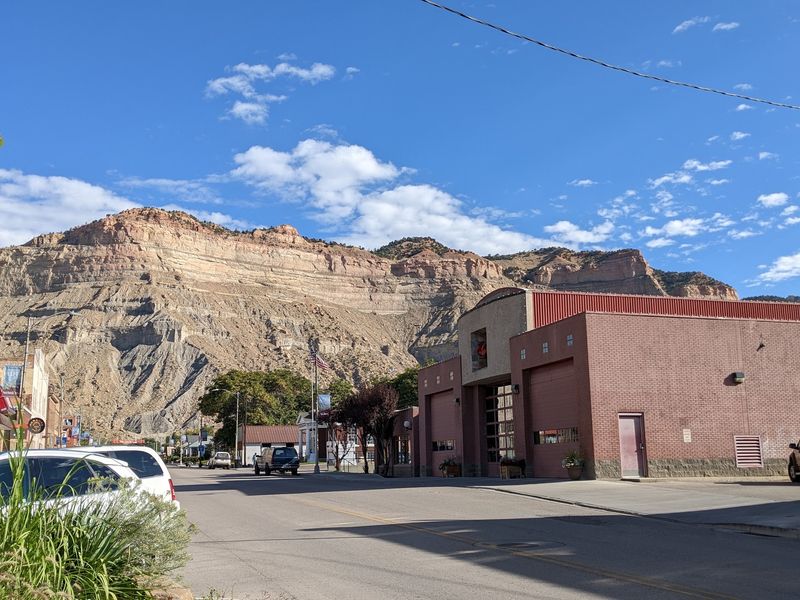
Helper earned its name from the extra locomotives once needed to push freight trains up the steep grades of Price Canyon, which tells you something about the kind of town this has always been: practical, hardworking, and quietly essential.
The restored Main Street is compact enough to cover on foot in under an hour, with the Helper Museum anchoring the experience inside a historic building on South Main Street. The museum preserves stories from coal miners, railroad workers, and immigrant communities who built this corner of eastern Utah.
What sets Helper apart from similar towns is its growing arts district, which has added galleries and studios to a streetscape that once belonged entirely to industry. The canyon walls rising directly behind downtown make the whole scene feel more dramatic than a town this size has any right to look.
3. Madrid, New Mexico
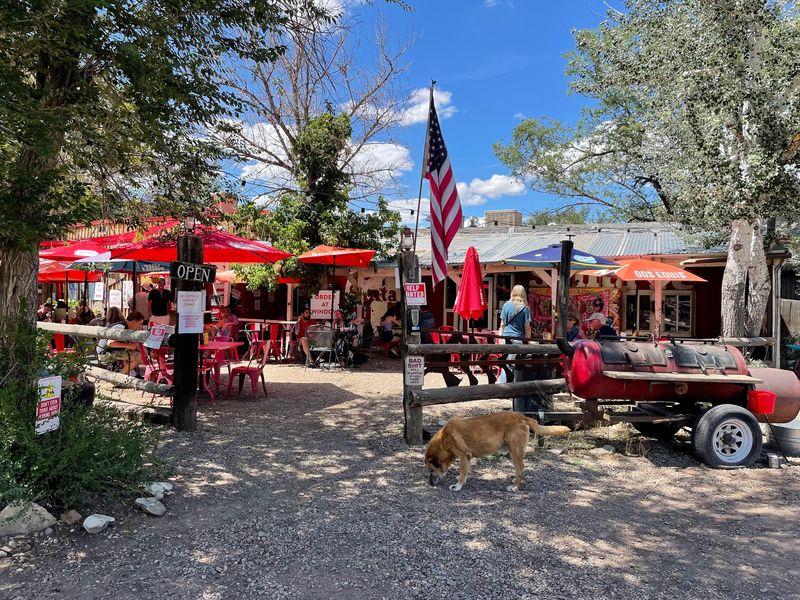
Madrid is the kind of place that sneaks up on you along the Turquoise Trail, starting with a few weathered buildings and suddenly revealing an entire community of galleries, studios, and shops that used to be a company-owned coal town.
The Mine Shaft Tavern on NM 14 is the social center of Madrid, a historic restaurant with thousands of visitor reviews and a reputation for live music that draws people from Albuquerque and Santa Fe alike. Right next door, the Madrid Old Coal Town Museum connects the current creative scene to the industrial past that preceded it.
The buildings themselves are part of the attraction. Many original mining-era structures still stand, now housing artists and independent retailers rather than company offices.
The surrounding Ortiz Mountains add a high-desert backdrop that makes the whole stretch of highway feel worth slowing down for.
4. Mountainair, New Mexico
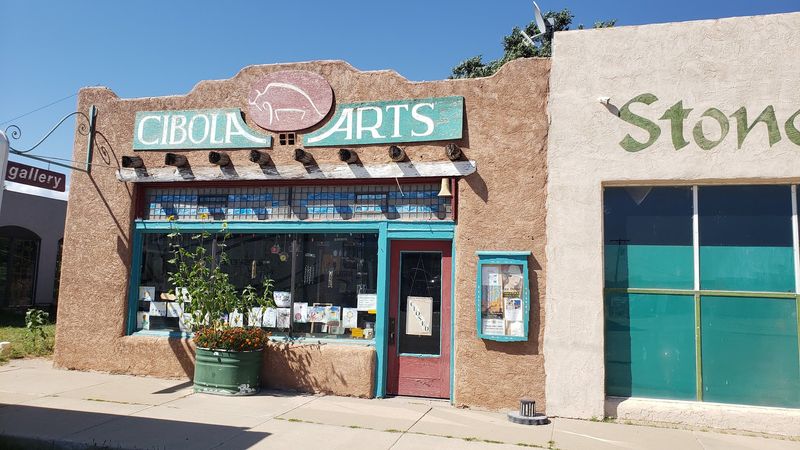
Mountainair does not announce itself loudly, but it holds a surprisingly important key: the headquarters and visitor center for Salinas Pueblo Missions National Monument sits right in the middle of town, making it the logical first stop before exploring three remarkable archaeological sites nearby.
The monument’s units at Abo, Gran Quivira, and Quarai preserve 17th-century Spanish mission churches alongside ancient pueblo ruins, and the visitor center staff can point you toward whichever site fits your time and interest. Without stopping in Mountainair, most travelers would miss the context entirely.
The town itself contributes with colorful murals and local businesses that make a short break worthwhile on its own terms. The surrounding juniper and piñon landscape gives the area a distinct character that belongs entirely to central New Mexico.
A quick stop here can easily expand into a half-day of genuine historical exploration.
5. Waverly, Alabama
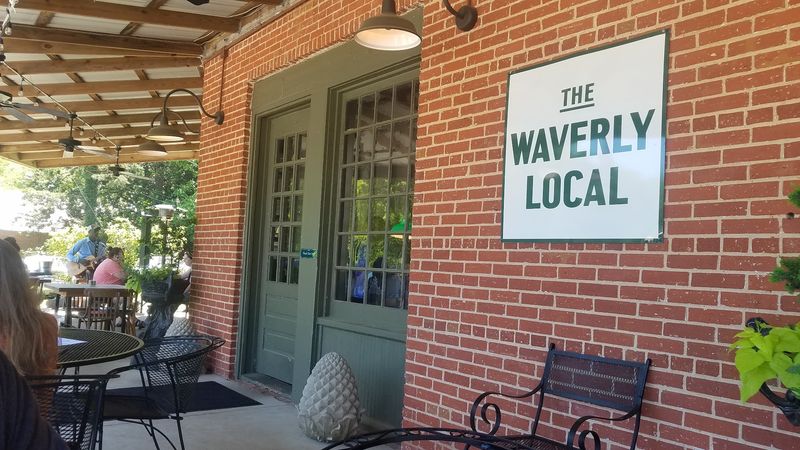
Waverly, Alabama, covers very little ground on a map, but it has built a cultural identity that punches considerably above its weight class. The secret is Standard Deluxe on Mayberry Avenue, an event venue and screen-printing operation that regularly hosts outdoor music festivals drawing crowds from well outside the county.
Recent travel coverage has highlighted Waverly as an example of a tiny community that reinvented itself around creativity rather than commerce. There are no chain restaurants or big-box stores pulling people in.
What exists instead is a concentrated local scene that feels genuine rather than manufactured for visitors.
For travelers crossing eastern Alabama, Waverly offers proof that a town does not need a long list of attractions to make a stop worthwhile. One well-run, community-rooted venue with a real schedule of events is sometimes all it takes to turn a detour into a destination.
6. Edison, Washington
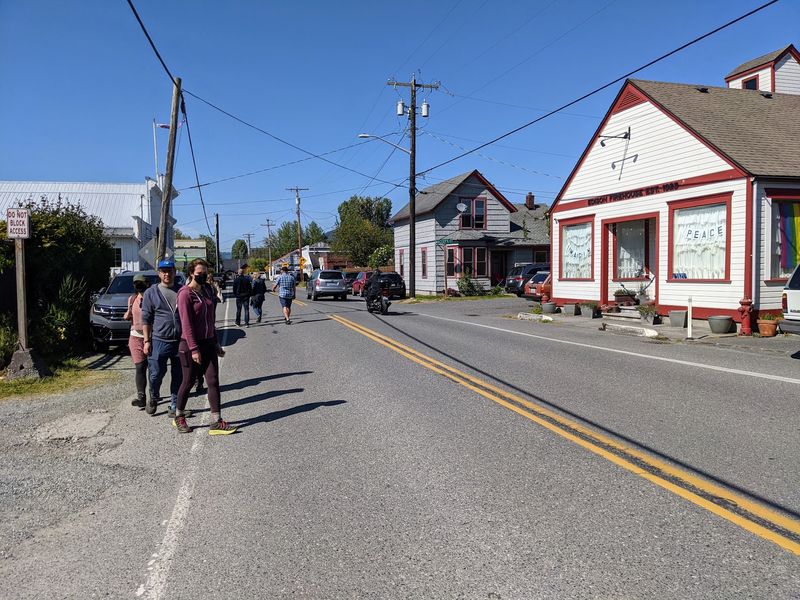
Edison, Washington, is the sort of town where the population is measured in dozens rather than thousands, yet food writers and road-trippers keep mentioning it in the same breath as much larger destinations. That reputation rests largely on Breadfarm, an artisan bakery that draws a steady stream of visitors to its spot in the heart of this Skagit Valley community.
Tweets, a popular breakfast and lunch spot nearby, adds a second compelling reason to stop rather than simply admire the farmland from the car window. Together, these two businesses have turned Edison into one of those rare rural detours where the food is genuinely the point.
The Skagit Valley itself is known for fertile agricultural land, and Edison sits comfortably within that context. Flat fields, wide skies, and a handful of excellent local businesses make this an easy and satisfying stop for anyone traveling through northwestern Washington.
7. Marcell, Minnesota
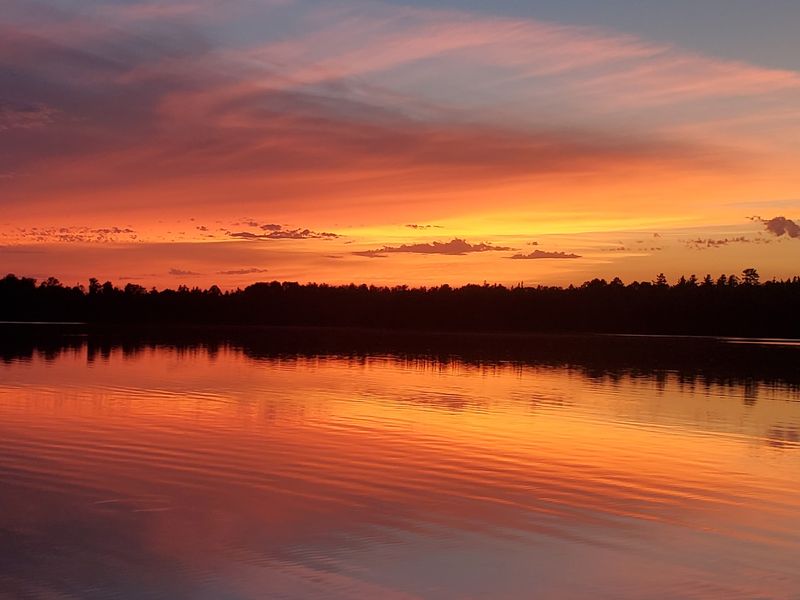
Highway 38 passes through Marcell with the same quiet efficiency it applies to every other small community in Minnesota’s Northwoods, which means most drivers go through without registering anything more than trees, lakes, and a fuel gauge check.
The Edge of the Wilderness Discovery Center changes that calculation. The visitor center operates along Highway 38 and provides a well-organized introduction to the ecology, wildlife, and logging history of the surrounding Chippewa National Forest.
Exhibits are informative without being overwhelming, and staff can point visitors toward hiking, fishing, and canoeing opportunities nearby.
Marcell also sits along the Edge of the Wilderness Scenic Byway, which makes the Discovery Center a logical interpretive anchor for the whole route. For anyone driving north through this part of Minnesota, stopping here trades a few minutes of highway time for a much clearer understanding of what makes the landscape worth looking at.
8. WaKeeney, Kansas
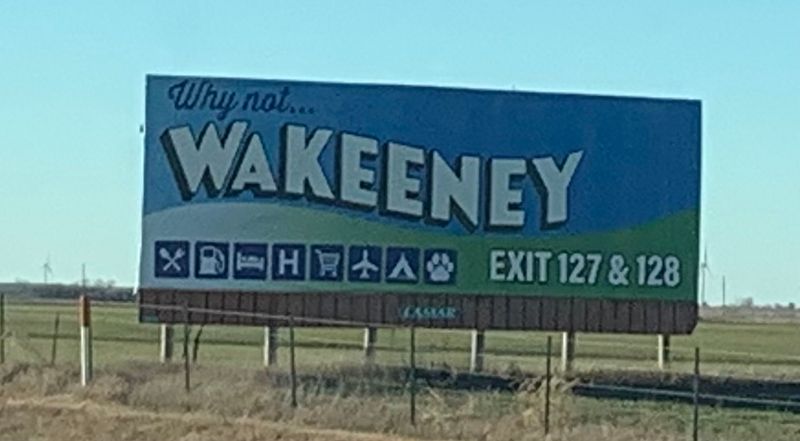
Western Kansas has a reputation for being the part of the road trip people endure rather than enjoy, and WaKeeney has spent years quietly making the case that this attitude is a mistake. The town sits along Interstate 70 with an old-fashioned downtown that rewards anyone willing to take the exit.
The Trego County Historical Society Museum covers pioneer life, agricultural history, and railroad development in detail, giving context to the flat landscape that surrounds the town in every direction. The exhibits are specific and locally sourced, which makes them more interesting than a generic regional history display.
WaKeeney also holds an unexpected seasonal identity as the Christmas City of the High Plains, a title earned through an elaborate holiday light display that draws visitors annually. For drivers accustomed to crossing Kansas without stopping, this town offers a legitimate reason to slow down and pay attention to what the prairie actually contains.
9. Pioneertown, California
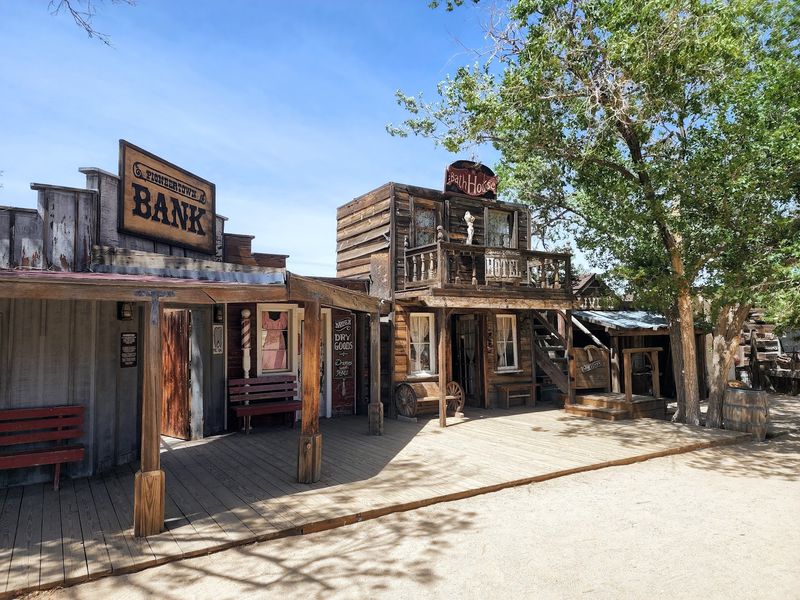
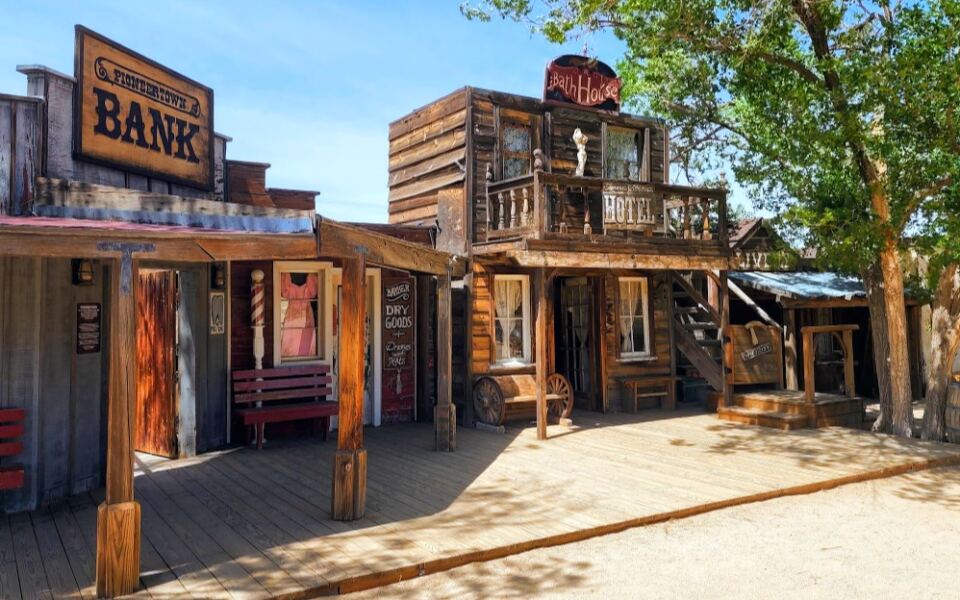
Roy Rogers, Gene Autry, and a group of Hollywood investors built Pioneertown in 1946 as a functioning movie set where residents could actually live, which is either the most practical or most unusual town-planning decision in California history, depending on your perspective.
Mane Street, spelled exactly that way, remains open to the public and features the wooden facades that once served as backdrops for Western films and television productions. The street looks convincingly like a frontier town, and the high-desert landscape of the Mojave does nothing to break the illusion.
Pappy and Harriet’s Pioneertown Palace continues operating as a restaurant and live-music venue, drawing visitors for food and performances in a setting that feels genuinely unique. Artisan shops and a bowling alley add to the mix.
The whole community gives the impression of a movie set that everyone forgot to dismantle, which, in the best possible way, is exactly what it is.
10. Los Alamos, California
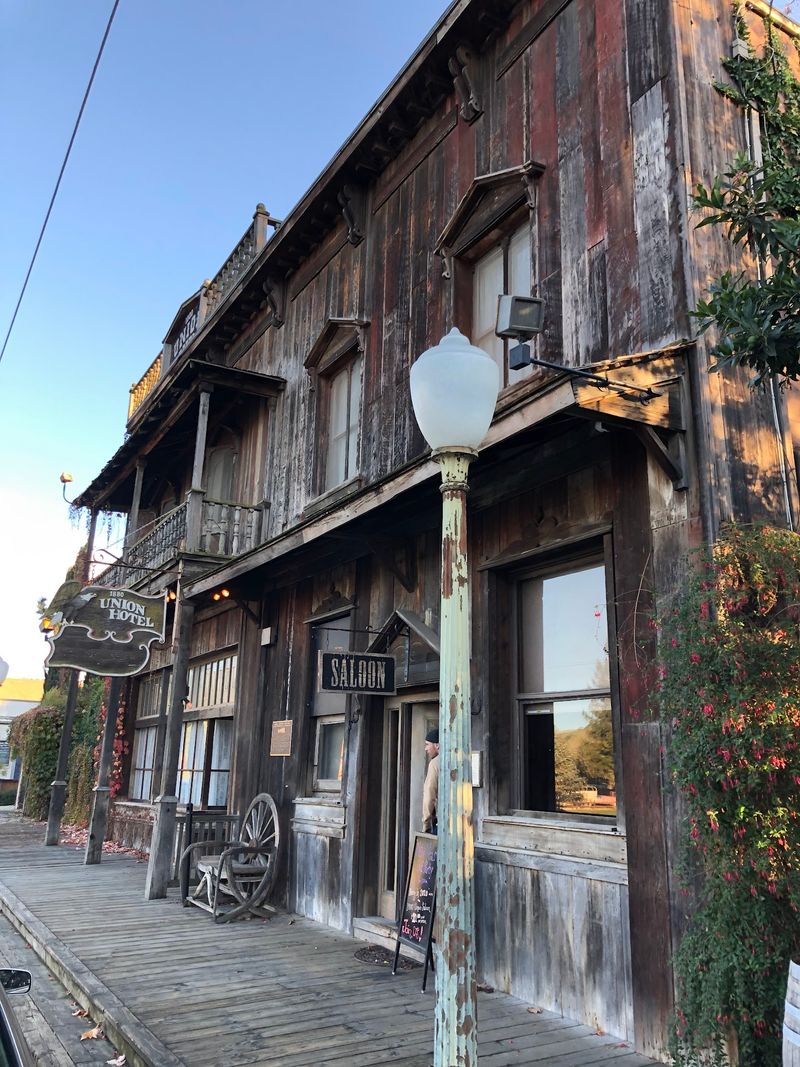
California has a Los Alamos that has nothing to do with nuclear research and everything to do with good bread and Central Coast wine country. The Santa Barbara County version sits along Bell Street with a row of historic storefronts that manage to look genuinely old without feeling like a theme park.
The 1880 Union Hotel is the most recognizable building in town, maintaining its period architecture while serving as a local landmark that anchors the streetscape. Bob’s Well Bread Bakery draws visitors specifically for its artisan breads and breakfast items, and the line out the door on weekend mornings tells you everything about its reputation.
Tasting rooms, antique shops, and independent restaurants fill out the rest of Bell Street, making Los Alamos a practical and enjoyable detour for anyone exploring the Central Coast. Simply passing through on the highway feels like the wrong choice once you know what is sitting a block off the main road.
11. Chama, New Mexico
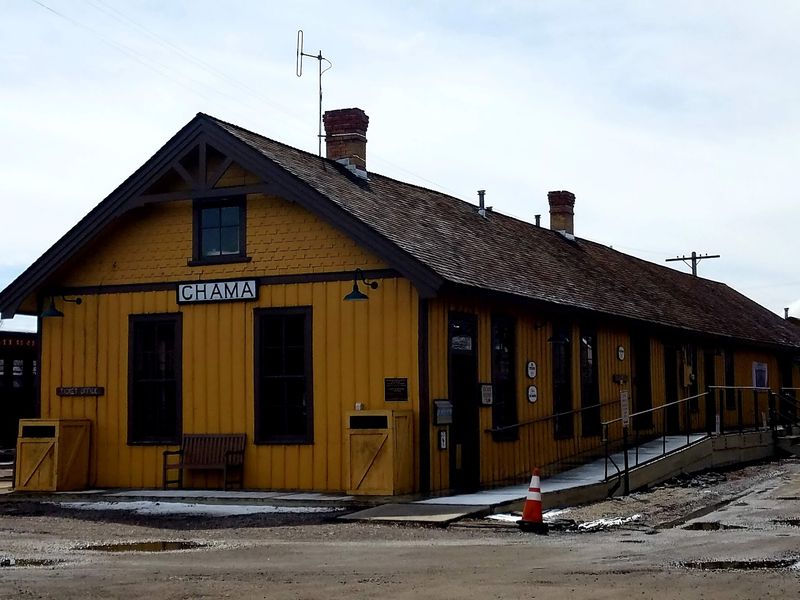
Chama sits near the Colorado border in mountain country that feels entirely separate from the desert landscapes most people associate with New Mexico, and its most prominent attraction announces itself with steam and a historic rail yard that has been in operation for over a century.
The Cumbres and Toltec Scenic Railroad is a National Historic Landmark and holds the distinction of being the highest and longest narrow-gauge steam railroad in North America. Passenger excursions run from the Chama station through dramatic mountain terrain along the New Mexico and Colorado border, covering country that is largely inaccessible by road.
The rail yard itself is worth a look even without boarding a train, with historic equipment and infrastructure that connect the town directly to its transportation past. The surrounding San Juan Mountains and the Rio Chama add natural context that makes Chama far more than a quick fuel stop on the way to Colorado.
12. Medicine Park, Oklahoma
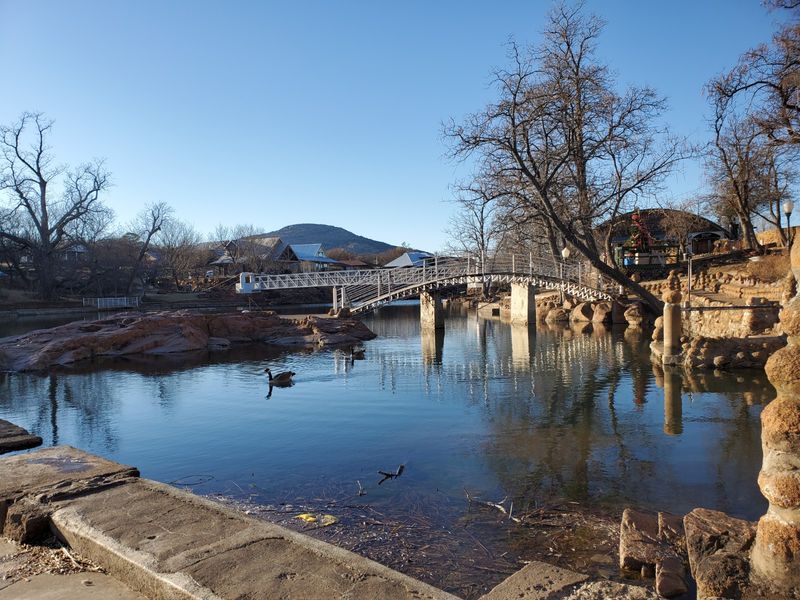
Medicine Park was Oklahoma’s first planned resort town, established in 1908, and the cobblestone construction style used throughout the community gives it an appearance unlike anything else in the state. The rounded local stones used in the buildings create a rustic texture that photographs well and holds up to scrutiny in person.
The town sits beside Medicine Creek with the Wichita Mountains rising nearby, a combination of water, stone architecture, and mountain backdrop that makes it one of the more photogenic small communities in the region. Bridges, creek views, and historic buildings cluster together in a way that rewards slow exploration on foot.
The Medicine Park Aquarium and Natural Sciences Center adds an educational stop to the visit, featuring local aquatic life and drawing consistent visitor traffic. Access to the Wichita Mountains Wildlife Refuge nearby means outdoor recreation is also part of the picture.
Medicine Park is the kind of place that makes you wonder why you had never heard of it before.
13. Arrow Rock, Missouri
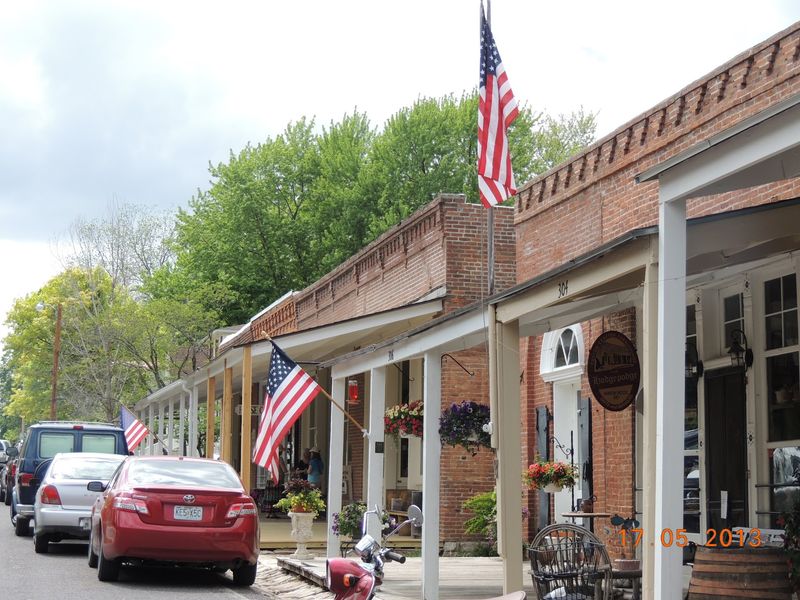
Arrow Rock is designated as a National Historic Landmark in its entirety, which is a distinction that covers the whole village rather than just a single building or site. That tells you something about how thoroughly the 19th century has been preserved here.
The J. Huston Tavern, which has operated continuously since 1834, is one of the most concrete examples of that preservation.
Arrow Rock State Historic Site maintains this and other historical structures, including the George Caleb Bingham Home, giving visitors a genuinely layered look at a community that served as a major departure point on the Santa Fe Trail.
The Arrow Rock Lyceum Theatre, Missouri’s oldest professional regional theater, adds live performances to the mix, which means the town offers cultural programming alongside historical exploration. Arrow Rock is not trying to simulate the past.
It simply never fully left it, and that distinction makes a stop here feel unlike most historic-site visits.
14. Thomas, West Virginia
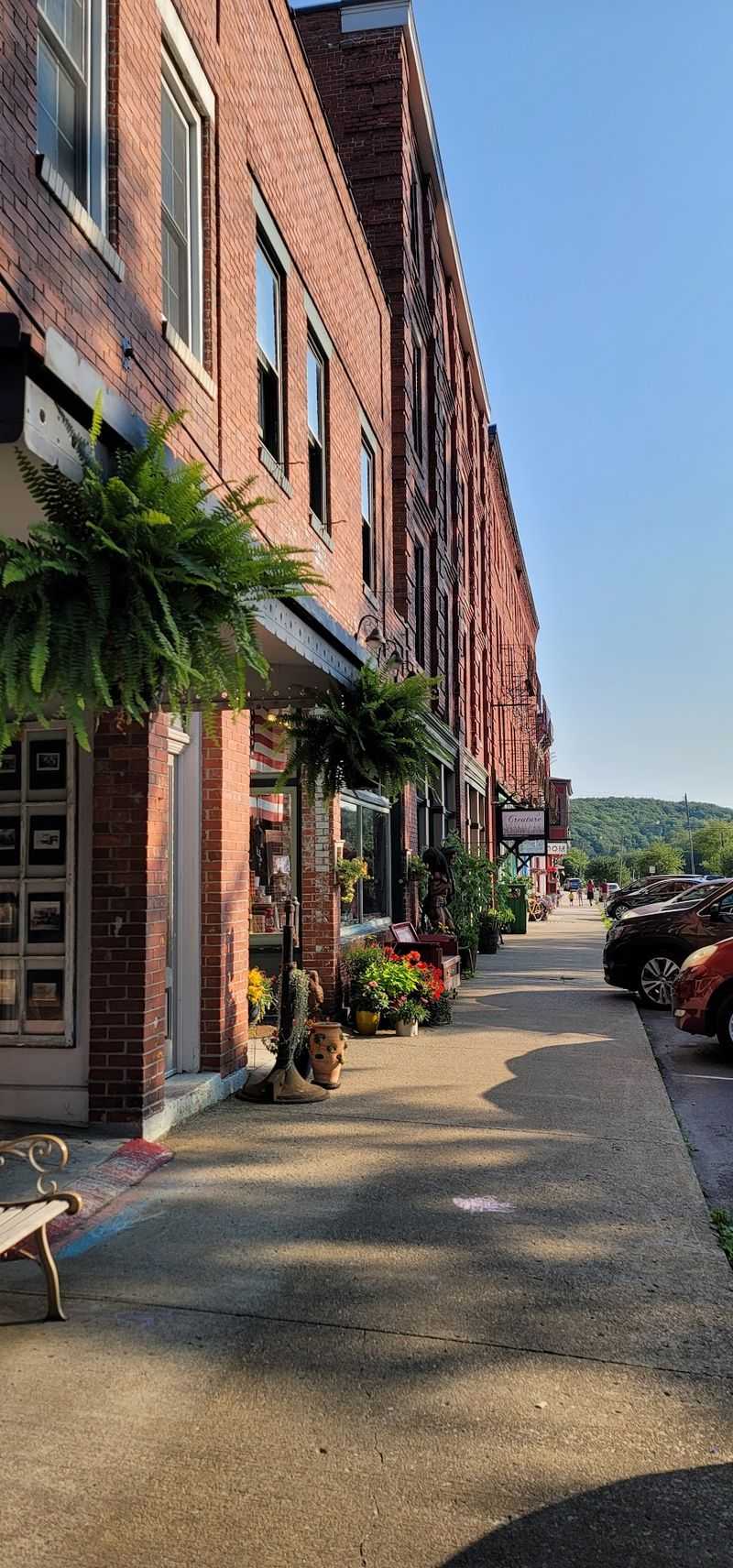
Thomas, West Virginia, started as a coal and railroad boomtown in the Allegheny Mountains, and the historic brick buildings lining Front Street still carry that industrial-era confidence. What changed over the decades is everything happening inside those buildings.
The Purple Fiddle has become the most recognized stop in town, combining a food menu with live music performances in the historic business district. It draws both local residents and visitors who come specifically for the programming, giving Thomas a cultural anchor that keeps the community active rather than simply preserved.
Art studios, independent shops, and restaurants have followed a similar pattern, filling Front Street with enough activity to justify the drive from anywhere within a reasonable distance. The surrounding Monongahela National Forest adds outdoor recreation as another reason to linger.
Thomas delivers more concentrated personality per block than most towns ten times its size, and that is not an exaggeration.
15. Bell Buckle, Tennessee
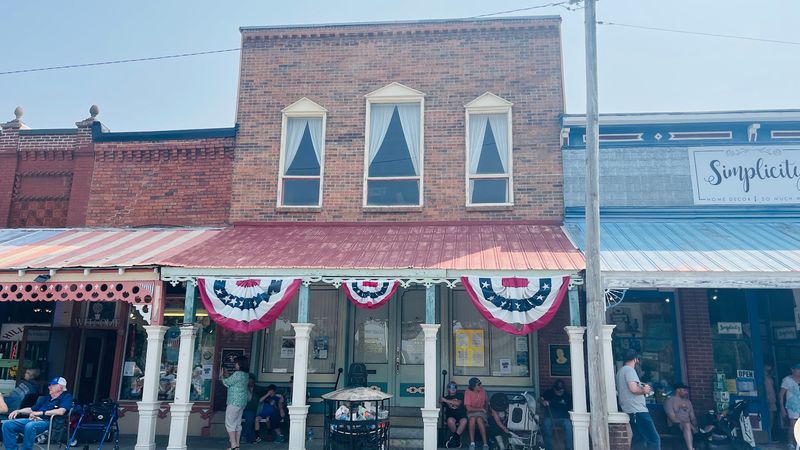
Bell Buckle is the kind of Tennessee town that seems designed specifically to make you feel guilty about not stopping. Railroad Square sits at the center of it all, surrounded by well-preserved Victorian storefronts that house independent businesses rather than vacant windows.
Bell Buckle Cafe is the busiest gathering spot in town, with thousands of visitor reviews backing up its reputation for Southern comfort food and live music. The nearby Bell Buckle Coffee Shop and Book Swap adds a second distinctly local option, combining beverages with a rotating selection of books in a space that encourages staying longer than planned.
The town also hosts the annual RC-Cola and MoonPie Festival, an event that is exactly as delightfully specific as it sounds and draws significant crowds each year. Bell Buckle is compact, nostalgic, and just quirky enough to remind you that the best road-trip stops are rarely the ones you planned for.
Share this story