America is full of buildings that stop you in your tracks. From a house cantilevered over a waterfall to a gleaming steel arch that touches the sky, the country’s architectural landmarks tell stories about creativity, history, and human ambition.
Some of these places are famous enough to appear on postcards, while others surprise even well-traveled visitors with their scale, detail, or sheer originality. Whether you’re a design enthusiast, a history lover, or simply someone who appreciates a great road trip destination, this list covers 17 structures worth seeing in person.
Each one offers something genuinely different, and together they make a strong case that architecture is one of the most compelling reasons to travel across the United States.
Fallingwater, Mill Run, Pennsylvania
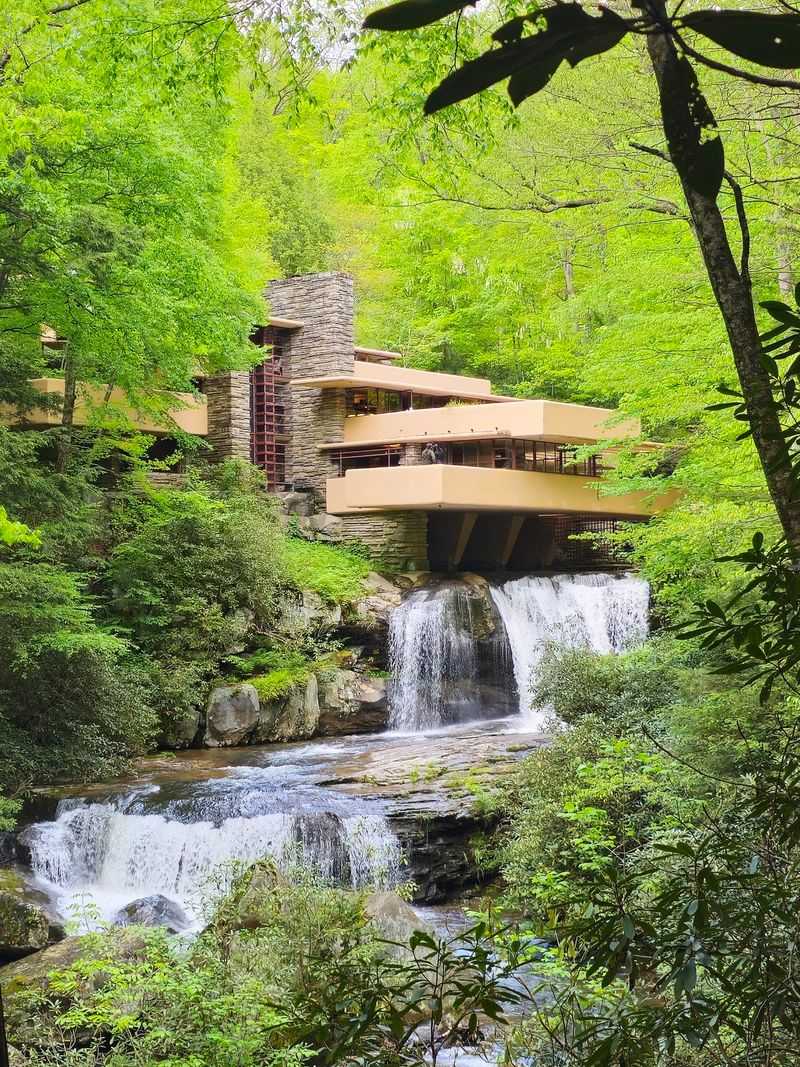
Few buildings in the world generate the kind of quiet astonishment that Fallingwater does the moment it comes into view. Frank Lloyd Wright designed this private home in 1935, and it was completed in 1939 for the Kaufmann family, who used it as a weekend retreat in the Laurel Highlands of southwestern Pennsylvania.
The structure’s most dramatic feature is the way it extends horizontally over Bear Run, a natural stream that flows beneath the house. Wright used reinforced concrete cantilevered terraces to achieve this effect, creating the impression that the home is floating above the water below.
For the 2026 tour season, Fallingwater is welcoming visitors with both architectural and in-depth guided tours. The surrounding forest and natural setting are part of the experience, so comfortable walking shoes are a good idea.
Reservations are recommended, especially for weekend visits during peak season.
Hearst Castle, San Simeon, California
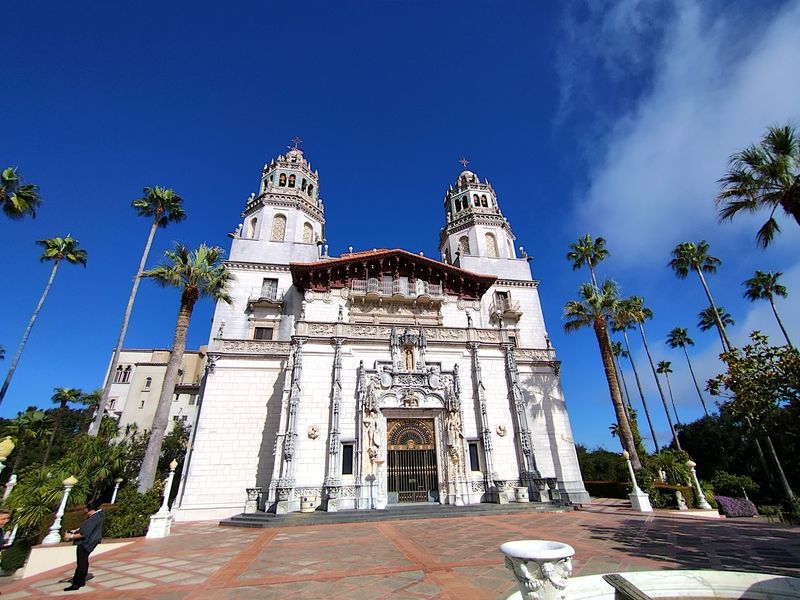
Perched on a hill overlooking the California coastline, Hearst Castle is the kind of place that requires more than one visit to fully absorb. Architect Julia Morgan spent nearly three decades working on the estate for newspaper publisher William Randolph Hearst, and the result is an extraordinary mix of Mediterranean Revival architecture and European art collected from around the world.
The property includes the main house, known as Casa Grande, as well as three guest houses, two outdoor pools, and extensive gardens. The Neptune Pool alone, with its classical colonnade and mountain backdrop, is one of the most photographed spots on the California coast.
Multiple tour options are currently available through California State Parks, which manages the estate. Tours cover different areas of the property, so visitors who want to see the full scope of the estate may want to book more than one.
Gateway Arch, St. Louis, Missouri
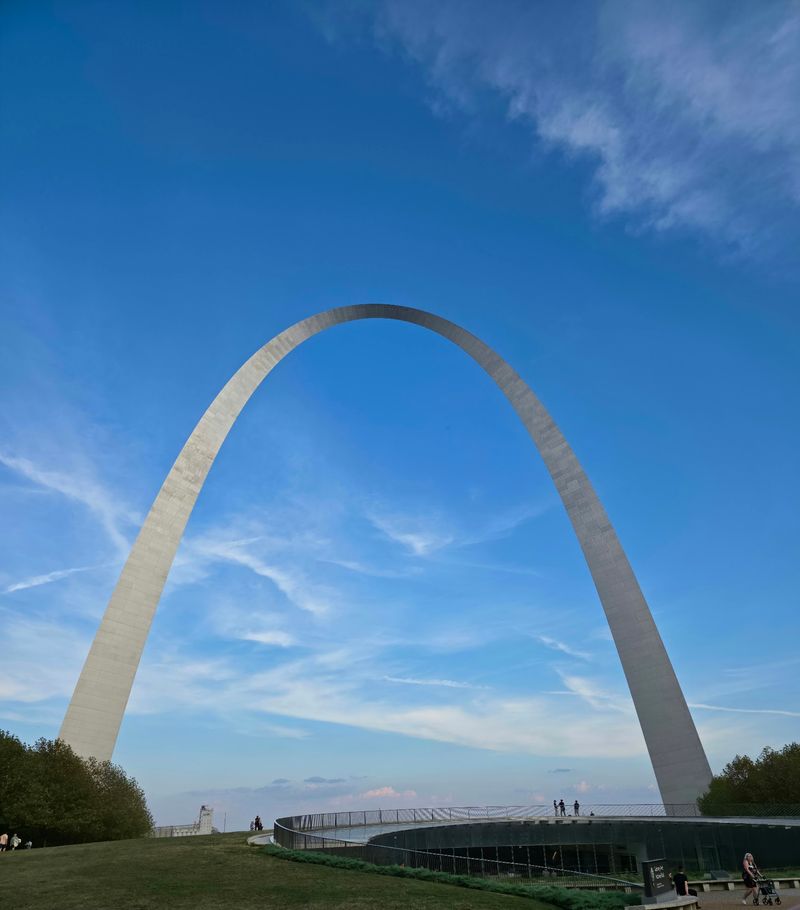
At 630 feet tall, the Gateway Arch is the tallest monument in the United States, and its form is as mathematically precise as it is visually striking. Finnish-American architect Eero Saarinen won the design competition in 1948, though construction did not begin until 1963.
The arch follows the shape of a weighted catenary curve, which gives it a structural elegance that flat photos can barely capture.
The stainless steel exterior reflects light differently depending on the time of day and weather, which means it genuinely looks different on every visit. Visitors can ride a unique tram system to the observation area at the top, where windows offer views across St. Louis and into Illinois on the other side of the Mississippi.
The Gateway Arch National Park surrounds the monument, and the Museum at the Gateway Arch underground explores the history of westward expansion. Admission to the tram ride is separate from general park entry.
Space Needle, Seattle, Washington
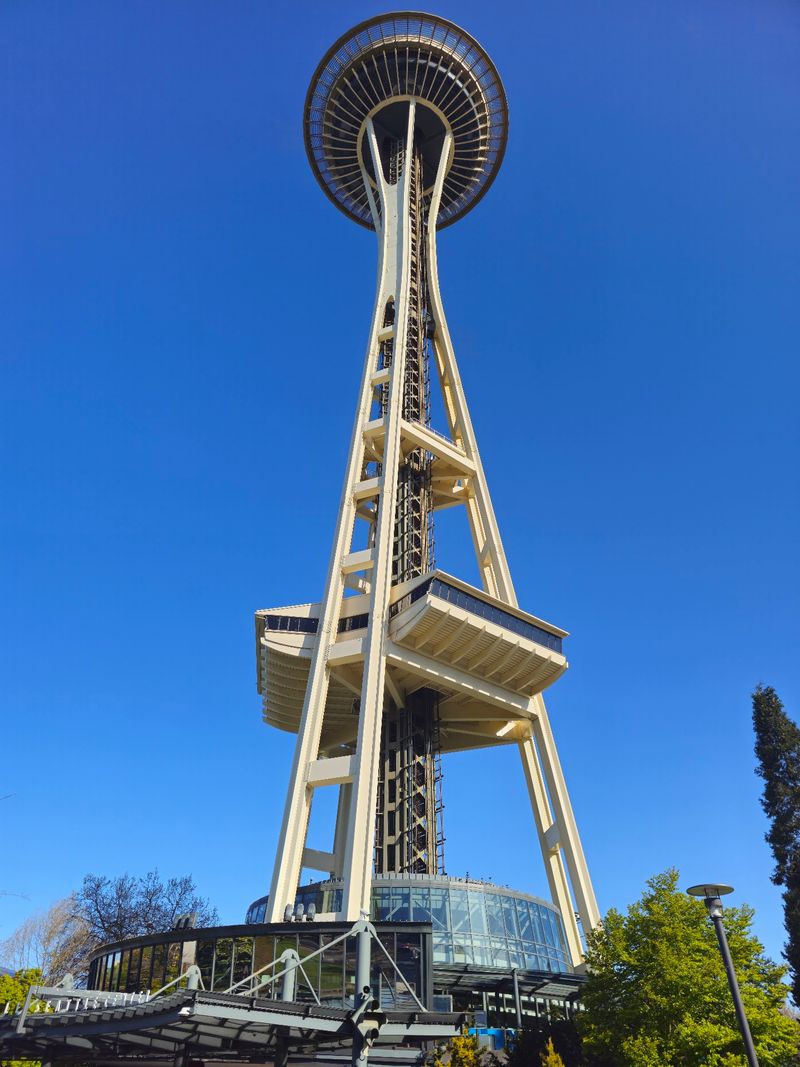
Built for the 1962 World’s Fair, the Space Needle was designed to represent a future that felt genuinely optimistic about science and technology. The tower stands 605 feet tall and was designed by architect Edward E.
Carlson with structural engineer John K. Minasian.
Its flying saucer silhouette made it a symbol of Space Age design almost immediately after it opened.
Today the Space Needle remains one of the most recognizable structures in the Pacific Northwest. A major renovation completed in 2018 added a glass floor and rotating glass walls to the observation deck, giving visitors a more immersive view of Seattle, Puget Sound, and the surrounding mountains on clear days.
The tower is open year-round, and timed-entry tickets are available online. Visiting on a clear day dramatically improves the experience, since Mount Rainier and the Olympic Mountains are both visible from the upper observation level when the weather cooperates.
Biltmore House, Asheville, North Carolina
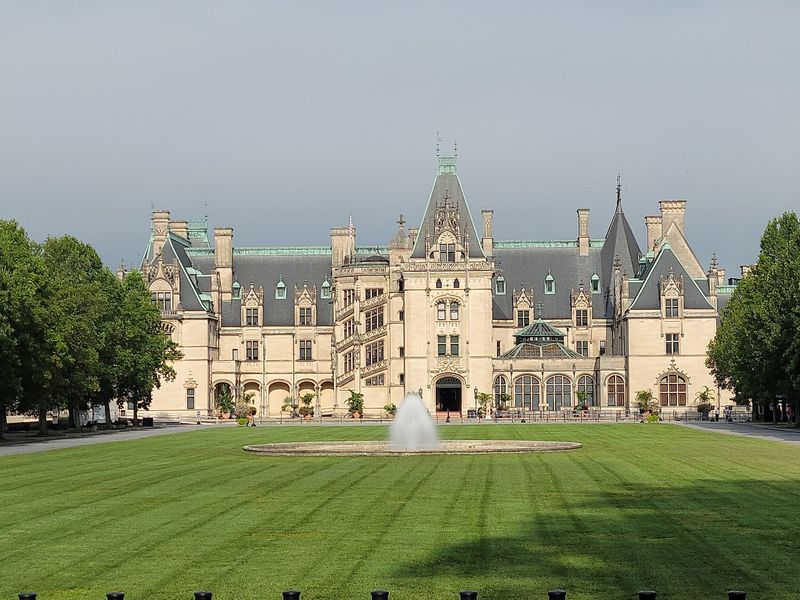
George Vanderbilt commissioned architect Richard Morris Hunt to design Biltmore House in the late 1880s, and the result became the largest privately owned home in the United States. The château-inspired mansion contains 35 bedrooms, 43 bathrooms, and 65 fireplaces spread across more than 178,000 square feet of floor space.
Construction was completed in 1895, and the Vanderbilt family still owns and operates the estate today.
Frederick Law Olmsted, who also designed New York’s Central Park, created the landscape plan for the surrounding grounds. The estate includes formal gardens, a conservatory, woodland trails, and a winery that operates year-round on the property.
Timed-entry tickets for the house are required and are best purchased in advance, especially during the holiday season when the mansion is decorated with elaborate period-appropriate displays. The estate spans thousands of acres, so first-time visitors often find they need more than one day to see everything comfortably.
Monticello, Charlottesville, Virginia
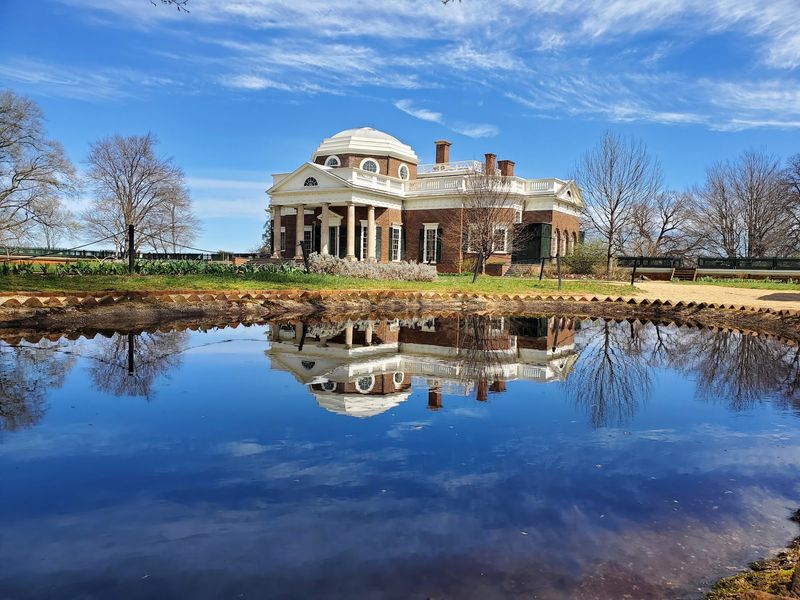
Thomas Jefferson started designing Monticello in 1768 and continued modifying it for decades, treating the house as an ongoing architectural experiment rather than a finished project. The result is a neoclassical home that blends Palladian proportions with Jefferson’s own innovations, including skylights, alcove beds, and a system of dumbwaiters built into the dining room fireplace.
The iconic dome visible from the front is one of the first residential domes in American architecture, inspired by buildings Jefferson observed during his time as a diplomat in France. The house sits on a small mountain southeast of Charlottesville, and the views from the grounds are part of the visit.
Monticello is open year-round, with seasonal adjustments to operating hours. Guided house tours cover the architecture and Jefferson’s design choices, while the estate’s grounds and gardens are also accessible.
Tickets are available online, and advance booking is recommended during peak spring and fall months.
Winchester Mystery House, San Jose, California
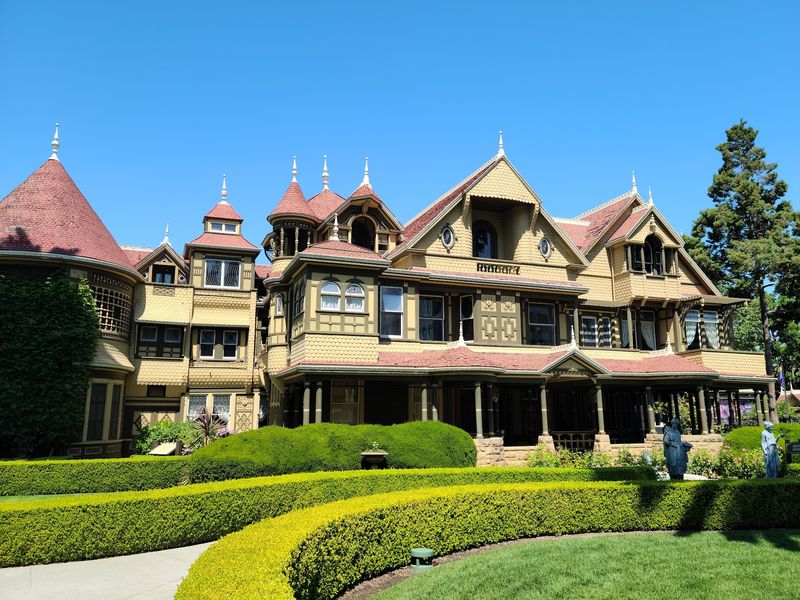
Sarah Winchester began construction on her San Jose home in 1884 and reportedly kept builders working on it continuously until her passing in 1922. The result is a 160-room Victorian mansion with staircases that lead into ceilings, doors that open onto walls, and corridors that double back on themselves without apparent reason.
Whatever motivated the design choices, the architectural outcome is genuinely unlike anything else in the country.
The house originally had around 500 to 600 rooms at its largest, though the 1906 San Francisco earthquake caused significant damage and reduced the total. What remains still covers an enormous footprint and takes a full tour to navigate.
Regularly scheduled mansion tours run throughout the year, and the property also offers specialty tours focused on different aspects of the estate. The surrounding grounds include Victorian gardens and outbuildings.
San Jose’s urban setting makes the property easy to reach, and parking is available on-site.
Taliesin, Spring Green, Wisconsin
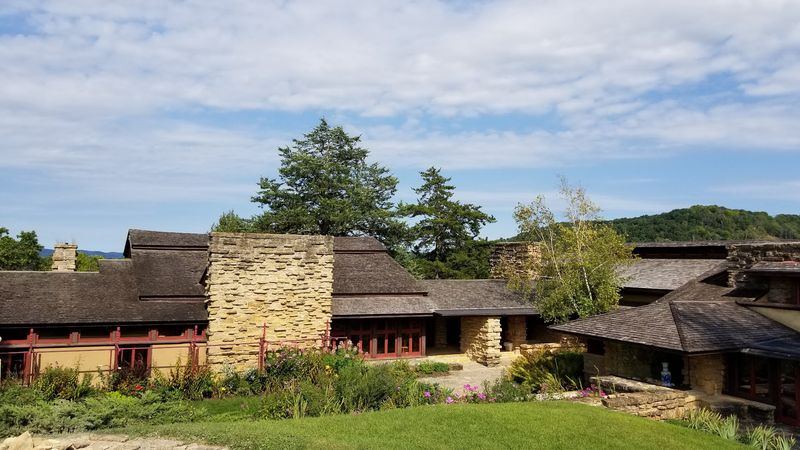
Frank Lloyd Wright built his Wisconsin home and studio on a hillside above the Wisconsin River valley, and he named it Taliesin after a Welsh poet. Construction began in 1911, and Wright continued redesigning and rebuilding the complex over the following decades, particularly after fires in 1914 and 1925 caused significant damage.
The property reflects his belief that architecture should grow naturally from its landscape rather than sit on top of it.
Taliesin served as both Wright’s primary residence and the headquarters for his apprenticeship program, the Taliesin Fellowship, which he founded in 1932. Students lived, worked, and studied alongside Wright on the property, making it an unusual combination of home, studio, and school.
Taliesin Preservation offers seasonal tours of the house, studio, and broader estate from spring through fall. Tour options vary in length and areas covered, so checking availability in advance is worthwhile.
The property is a designated National Historic Landmark.
Taliesin West, Scottsdale, Arizona
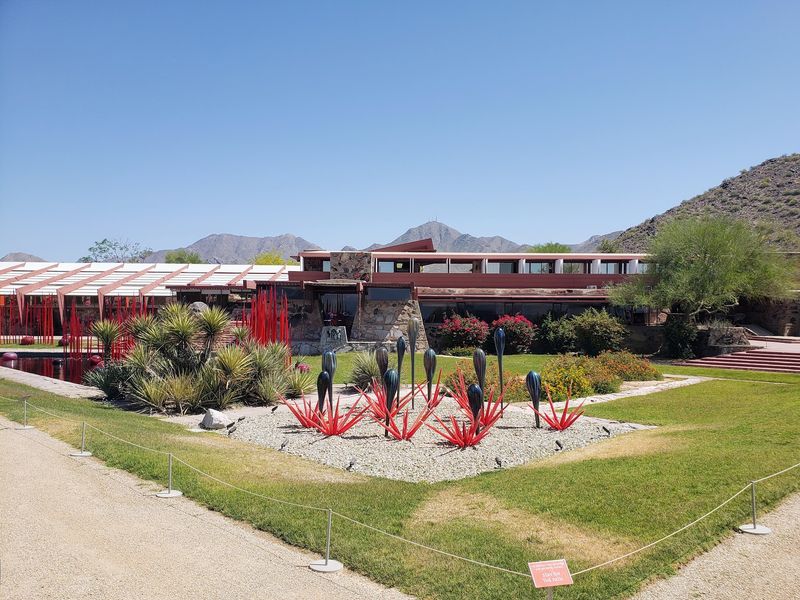
Wright began building Taliesin West in 1937 as a winter home and studio for himself and his apprentices, and the complex feels like it grew directly from the Sonoran Desert floor. He used local desert rock, redwood, and canvas to create a series of low, angular structures that respond to the intense Arizona sun rather than fighting it.
The main drafting studio, with its angled roof structure and controlled natural light, remains one of the most studied interiors in American architectural history.
Unlike many historic houses that are preserved as they were at a single point in time, Taliesin West continued evolving throughout Wright’s life and remains an active architecture school today. The Frank Lloyd Wright Foundation is headquartered here, and the campus houses the School of Architecture at Taliesin.
Tours continue in 2026, with multiple options ranging from introductory walks to in-depth explorations of the studio and living areas. Reservations are available online.
United States Capitol, Washington, D.C.
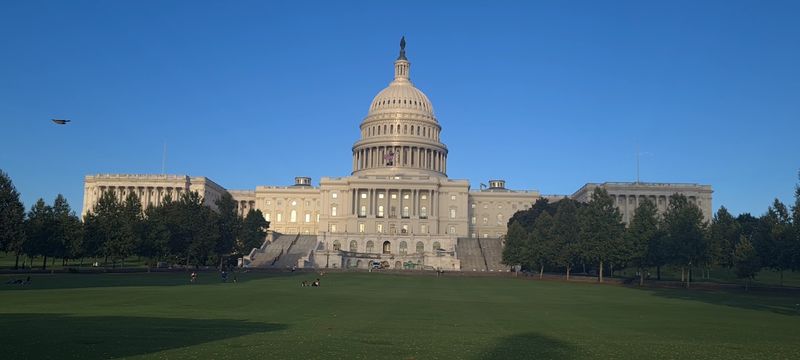
The U.S. Capitol has been under some form of construction, renovation, or expansion almost continuously since the late 1700s, and the building’s current cast-iron dome was completed during the Civil War in 1863.
The dome’s interior, painted with Constantino Brumidi’s fresco “The Apotheosis of Washington,” rises nearly 180 feet above the Rotunda floor and remains one of the most impressive interior spaces in American public architecture.
Beyond the dome, the Capitol contains the House and Senate chambers, the National Statuary Hall, and miles of corridors filled with paintings, sculptures, and architectural details added across multiple centuries. The building is both a working legislative facility and an architectural landmark that took more than a century to reach its current form.
Free public tours are available Monday through Saturday and are arranged through members of Congress or booked through the Capitol Visitor Center. The visitor center itself, located underground on the east side, offers exhibits on the building’s history and construction.
Thomas Jefferson Building, Washington, D.C.
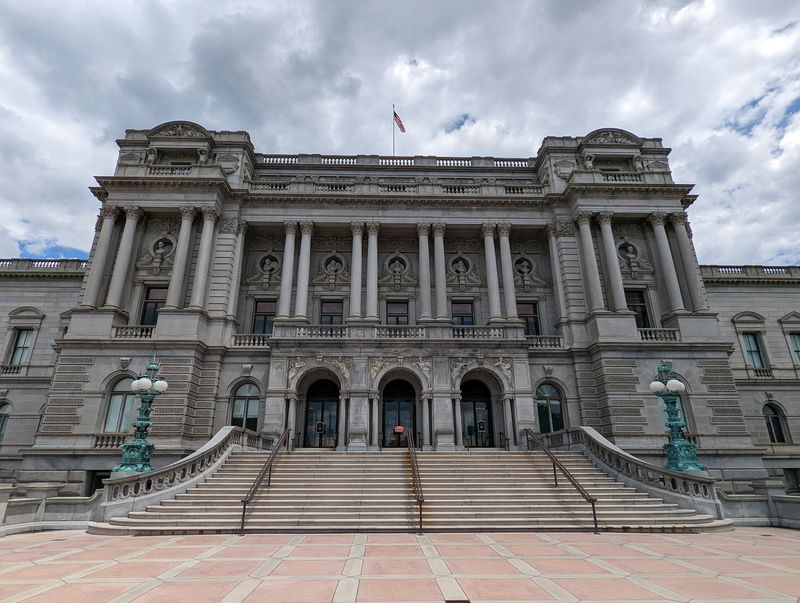
The Library of Congress’s Thomas Jefferson Building opened in 1897 after more than a decade of construction, and the interior immediately set a standard for public architecture that few buildings in the country have matched. The Great Hall features marble floors, gilded arches, painted lunettes, and mosaics covering nearly every surface.
At the center of the building, the Main Reading Room rises 160 feet to a domed ceiling and remains one of the most photographed interiors in Washington.
The building was designed by architects John L. Smithmeyer and Paul J.
Pelz, with finishing work supervised by Edward Pearce Casey. It sits directly across from the U.S.
Capitol on Capitol Hill and is considered one of the finest examples of Italian Renaissance Revival architecture in the United States.
The building is currently open to visitors Tuesday through Saturday, with free timed-entry tickets required. Guided tours of the Great Hall and Reading Room are available during operating hours.
Grand Central Terminal, New York City, New York
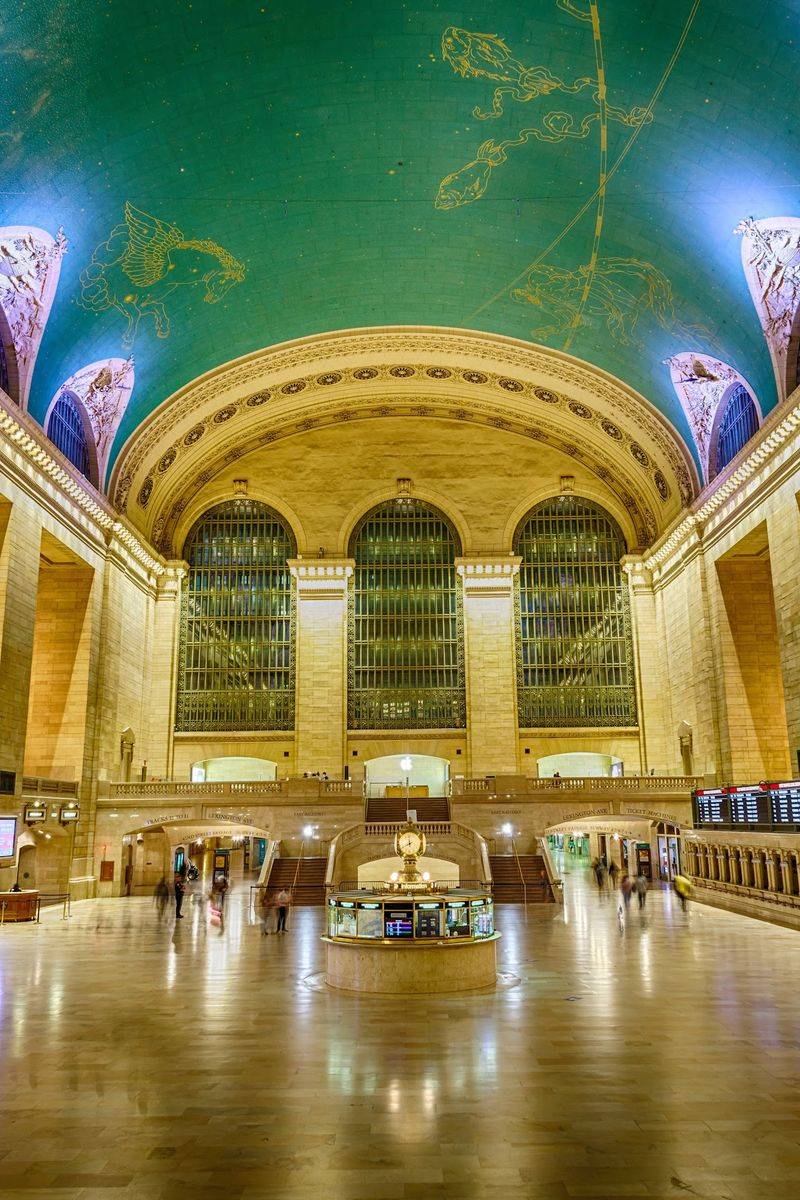
Grand Central Terminal opened in 1913 and was designed by the firms Reed and Stem and Warren and Wetmore in the Beaux-Arts style. The Main Concourse measures 275 feet long, 120 feet wide, and 125 feet high, making it one of the largest interior spaces in the country.
The famous celestial ceiling, painted turquoise and decorated with gold constellations, was restored in the 1990s after decades of grime had obscured much of the original design.
The terminal processes more than 60 subway and commuter rail lines, which means it functions simultaneously as a working transit hub and a major architectural attraction. The lower concourse level contains a food market, and the Vanderbilt Hall space on the main level regularly hosts public events and exhibitions.
Entry to Grand Central is free, and the terminal is open daily. The best time to appreciate the architecture is during off-peak hours, when the concourse is less crowded and the windows cast long diagonal shafts of light across the floor.
The Broad, Los Angeles, California
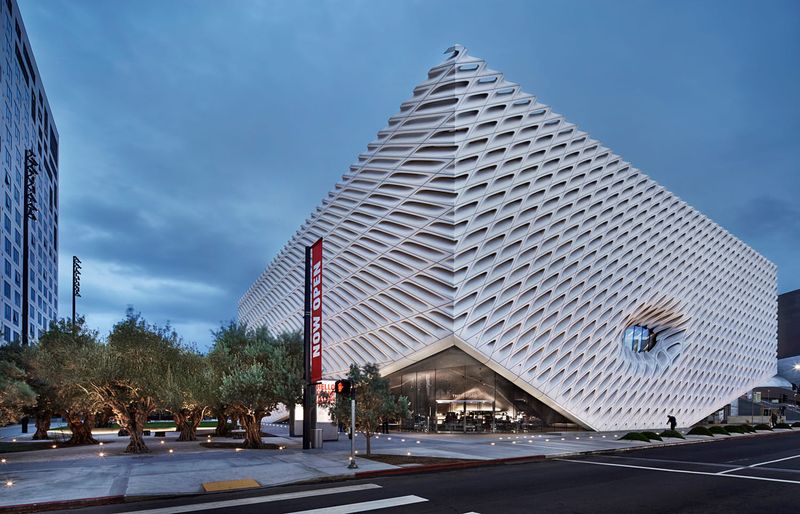
Architects Diller Scofidio and Renfro designed The Broad with a concept they described as a “veil and vault.” The outer shell, or veil, is a perforated concrete and fiberglass skin that wraps the building in a pattern of repeating hexagonal openings. It filters natural light into the galleries while giving the exterior a texture that changes noticeably depending on where you stand and what time of day you visit.
Inside the vault, the museum stores the Broad collection, one of the most significant holdings of postwar and contemporary art in private hands. The galleries above feature works by artists including Jeff Koons, Cindy Sherman, Jean-Michel Basquiat, and Kara Walker, among many others.
General admission to The Broad is free, though timed-entry tickets are required and should be reserved in advance through the museum’s website. Walk-up tickets are sometimes available, but advance booking is the more reliable option.
The museum is open six days a week.
Getty Center, Los Angeles, California
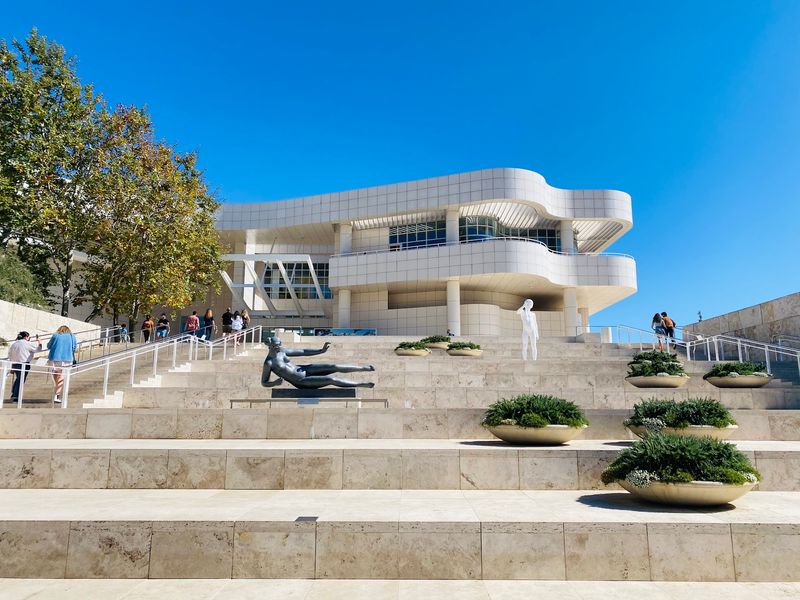
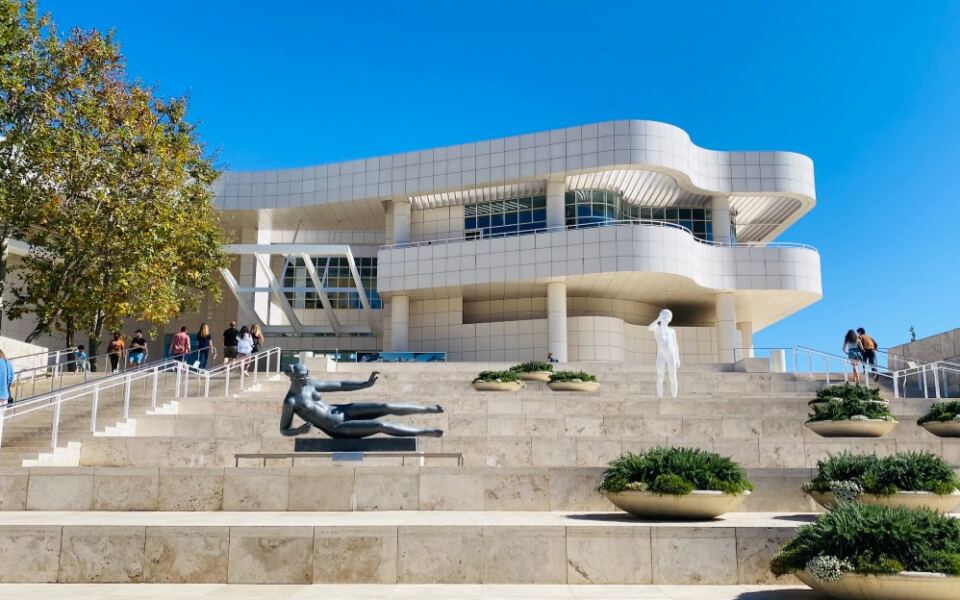
Richard Meier designed the Getty Center over more than a decade, and the complex opened in 1997 on a hilltop above Brentwood in west Los Angeles. The buildings are clad in travertine stone sourced from a quarry in Bagni di Tivoli, Italy, and the material gives the campus a warm, creamy tone that shifts noticeably in different light conditions.
The site plan arranges the pavilions around a central courtyard, with gardens designed by Robert Irwin tucked between the structures.
The Getty’s permanent collection covers European paintings, drawings, sculptures, decorative arts, and photographs spanning centuries. The hilltop location also provides views across Los Angeles to the Pacific Ocean on clear days, which adds a geographic dimension to the visit that most urban museums cannot offer.
Admission to the Getty Center is free, though parking requires a fee. The museum is currently open, with a major modernization closure scheduled to begin in March 2027, so visiting before that date is worth planning for.
National Museum of African American History and Culture, Washington, D.C.
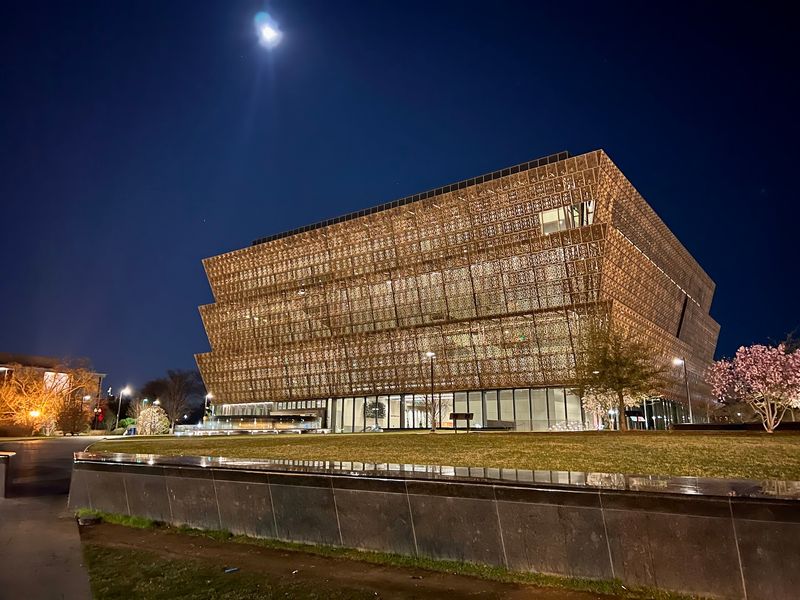
The National Museum of African American History and Culture opened in 2016 and immediately became one of the most visited museums in the country. The building was designed by a team led by David Adjaye, and its exterior is wrapped in a three-tiered bronze-colored corona made from cast aluminum panels.
The pattern on those panels draws from ironwork traditions associated with African American craftspeople in the American South.
The building’s silhouette is immediately recognizable on the National Mall, where it sits between the Washington Monument and the Natural History Museum. Inside, nearly 37,000 artifacts fill galleries organized across multiple floors, covering history, culture, community, and creativity.
The museum is open daily, and timed-entry passes are required for all visitors. Passes are released online in advance and tend to fill quickly, particularly on weekends and during summer months.
Same-day passes are sometimes available but are not guaranteed, so planning ahead is strongly advised.
Ark Encounter, Williamstown, Kentucky
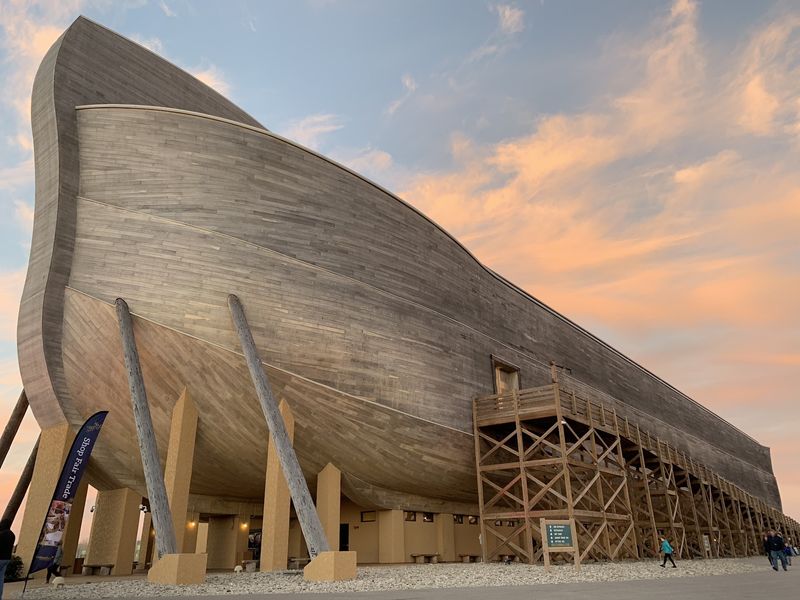
The Ark Encounter opened in 2016 and presents a full-scale interpretation of Noah’s Ark based on dimensions described in the Book of Genesis. The structure measures 510 feet long, 85 feet wide, and 51 feet tall, making it one of the largest timber-frame buildings in the world.
The construction required millions of board feet of lumber and involved a team of Amish craftspeople for portions of the framing work.
Three levels of interior exhibits cover topics related to the biblical narrative, ancient history, and natural history, presented from a young-earth creationist perspective. The attraction is operated by Answers in Genesis, the same organization behind the Creation Museum located about 45 miles away in Petersburg, Kentucky.
The Ark Encounter operates on a seasonal schedule, so checking current hours before visiting is a good idea. The property includes outdoor areas, a petting zoo, and additional attractions beyond the main ark structure.
Tickets are available online and at the entrance.
Grand Avenue Architectural District, Los Angeles, California
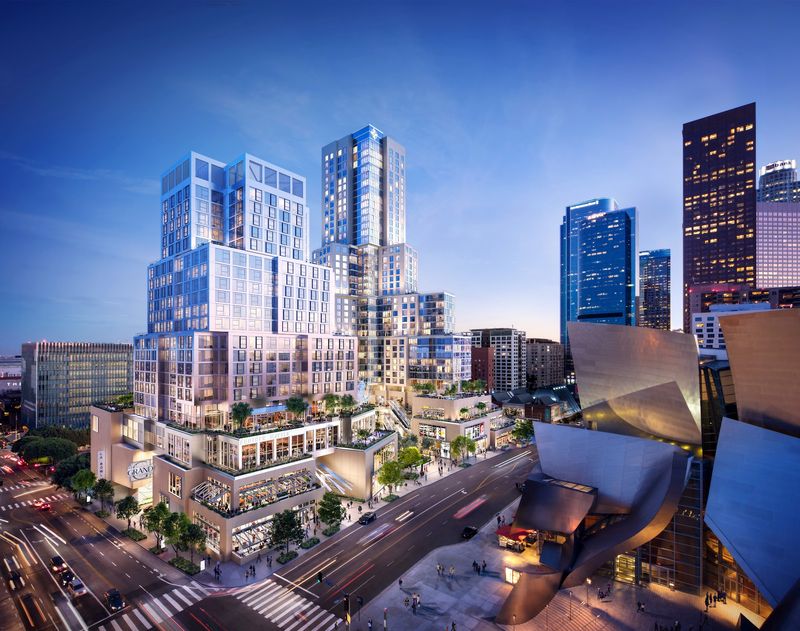
A stretch of Grand Avenue in downtown Los Angeles contains one of the most concentrated collections of contemporary architecture in any American city. Within a few walkable blocks, visitors can see The Broad, the Walt Disney Concert Hall designed by Frank Gehry, the Museum of Contemporary Art designed by Arata Isozaki, the Cathedral of Our Lady of the Angels designed by Jose Rafael Moneo, and the Grand Park green space that connects several of these buildings.
Walt Disney Concert Hall, which opened in 2003, is particularly striking. Its stainless steel exterior panels curve and fold in ways that catch sunlight from almost every angle, and the building has become one of the most photographed pieces of architecture on the West Coast.
Most of these buildings are free to enter or explore from the outside. The Broad is open six days a week with free general admission.
Grand Park is open daily at no charge, making the district one of the more accessible architectural destinations in the country.
Share this story