South America is famous for Machu Picchu, Rio de Janeiro, and Patagonia, but the continent holds countless hidden gems that most travelers never see. Beyond the headline destinations, there are cloud forests, wetland wilderness areas, colonial towns, and Caribbean coral islands waiting to be explored.
These 13 places offer experiences that feel completely different from anything on a typical South American itinerary, and each one tells a story about the continent that most guidebooks skip over.
Chachapoyas, Peru
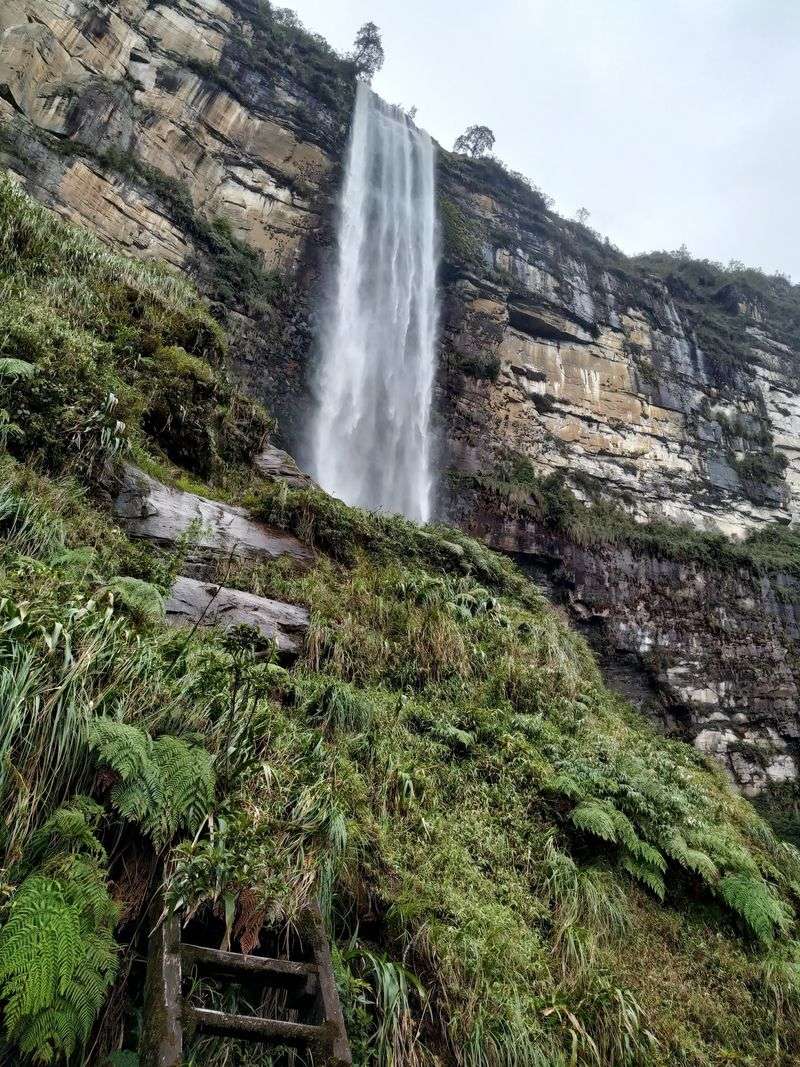
Forget everything you think you know about Peru, because Chachapoyas rewrites the whole script. Sitting at 7,661 feet above sea level, this regional capital sits where the Andes begin melting into the upper Amazon, wrapped in cloud forest, waterfalls, and ruins left by the ancient Chachapoya culture.
Most visitors to Peru never make it this far north, which means you often get these incredible sites nearly to yourself.
Kuélap, the region’s star attraction, rises to around 9,840 feet and contains narrow streets, plazas, and circular stone structures enclosed by towering walls. A cable-car system from Nuevo Tingo now makes the climb far easier than it once was.
Beyond Kuélap, the Gocta waterfall, the Revash cliff mausoleums, and the eerie sarcophagi of Karajía are all within reach.
Chachapoyas feels like a base camp for discovery rather than a polished tourist hub. The town itself is relaxed and friendly, with local restaurants serving hearty Andean food.
If you enjoy history, archaeology, and wild scenery without the crowds, this corner of northern Peru genuinely delivers something special.
Mompox, Colombia
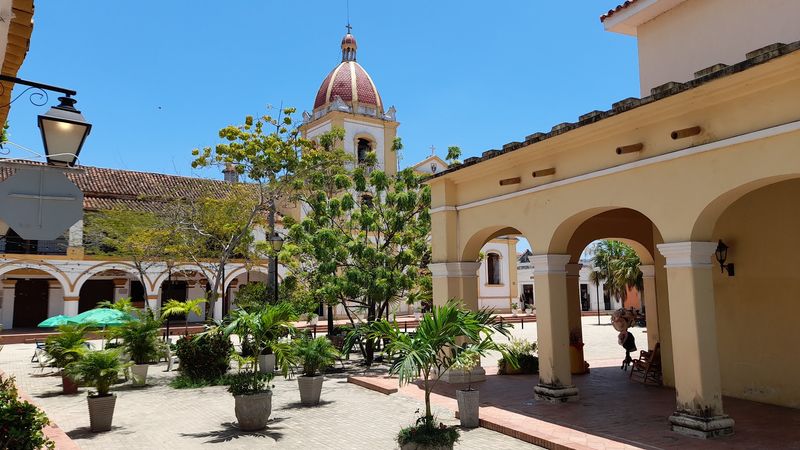
Time moves differently in Mompox. This Colombian river town once thrived as a key trading stop along the Magdalena River, connecting the country’s interior with Caribbean ports.
When the river shifted course over the centuries, Mompox was gradually cut off from the main trade routes, and that isolation turned out to be its greatest gift, preserving a colonial streetscape that feels almost untouched.
Wandering the riverside streets, you pass mansions with wrought-iron balconies, quiet courtyards, and churches that seem too grand for such a small town. Santa Barbara Church stands out for its striking Hispano-Moorish Baroque tower, while the San Francisco complex and the Church of the Immaculate Conception add further layers of architectural richness.
Nearby Cienaga de Pijino offers a completely different experience, best explored by canoe through calm waterways lined with birds and vegetation.
Getting here is easier now thanks to a major bridge that cut the journey from Cartagena to around five hours. Mompox rewards slow travelers who enjoy wandering without a packed schedule.
The heat is real, the pace is gentle, and the atmosphere is genuinely unlike anywhere else in Colombia.
Esteros del Iberá, Argentina
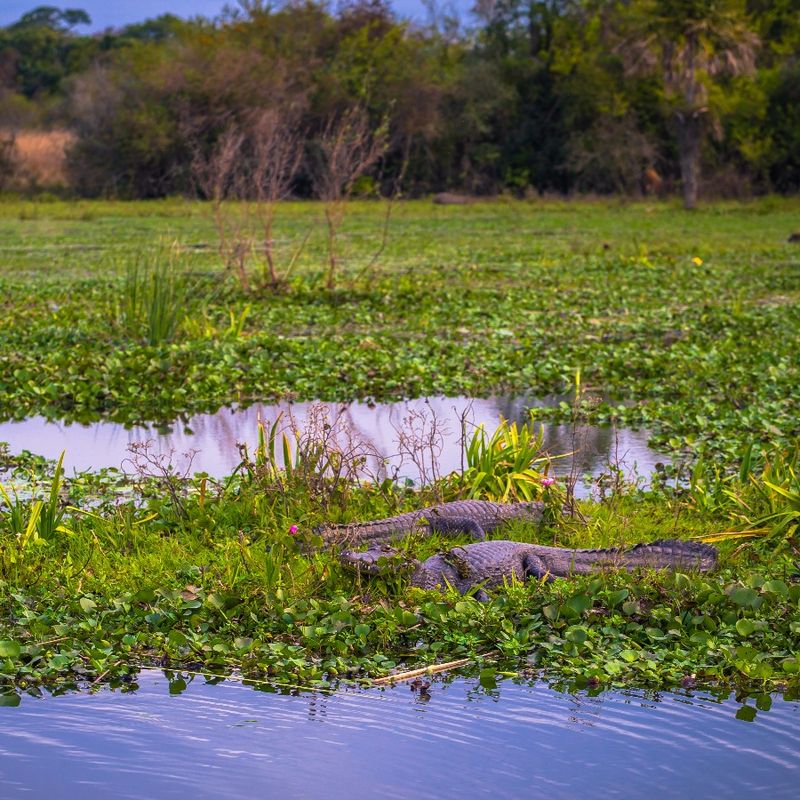
Argentina has a secret it keeps well away from the tourist brochures, and it lives in the northeastern corner of the country. The Ibera Natural Reserve stretches across roughly 1.3 million hectares of lagoons, marshes, rivers, grasslands, and palm groves, making it one of South America’s largest and most biodiverse wetland systems.
Most people fly straight to Patagonia and miss this entirely.
Wildlife here is almost ridiculously abundant. Marsh deer, capybaras, howler monkeys, and two species of caiman are common sightings on boat rides and kayaking trips.
Argentina’s tourism authority counts 85 mammal species, 35 reptile species, and 45 amphibian species within the reserve. Maned wolves and giant anteaters are harder to spot but genuinely present.
Colonia Carlos Pellegrini serves as the main access point, sitting about 120 kilometers from the town of Mercedes across roads that sometimes require a sturdy vehicle. The journey is absolutely worth it.
Boat rides, horseback trips, and night safaris all reveal a version of Argentina that is gloriously green, muddy, and alive. Plan for at least three days to properly absorb what the wetlands have to offer.
Chiloé, Chile
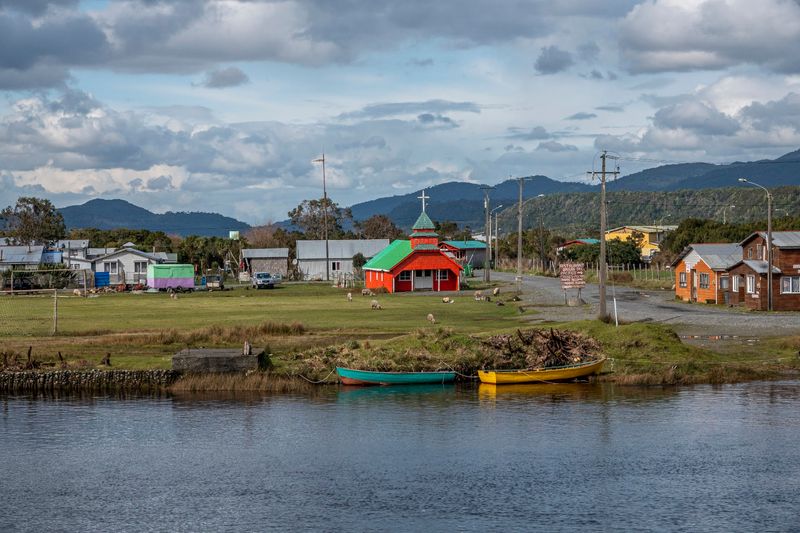
Chiloé operates by its own rules. This southern Chilean archipelago has developed a culture so distinct from the mainland that visiting feels like crossing an invisible border into a parallel version of Chile.
Wooden churches, stilt houses called palafitos, rich seafood traditions, and a mythology filled with sea monsters and forest spirits all combine to create somewhere genuinely unlike anywhere else in the country.
Castro, the archipelago’s capital, is particularly famous for its palafitos, which are brightly painted homes built directly over tidal water on wooden stilts. The effect is charming and slightly surreal, especially at high tide when the houses appear to float.
Adding to the cultural richness, 16 of Chiloé’s historic wooden churches are UNESCO World Heritage properties, each one shaped by the meeting of Jesuit missionaries and local Chilote building traditions.
Chiloé National Park near Cucao adds wild Pacific coastline, Valdivian rainforest, and coastal dunes to the mix. Mocopulli Airport near Castro receives direct flights from Santiago, or travelers can reach the archipelago via Puerto Montt and a ferry across the Chacao Channel.
Chiloé rewards anyone willing to trade predictable sunshine for misty, atmospheric, and deeply memorable travel.
Jesuit Missions of Trinidad and Jesús, Paraguay
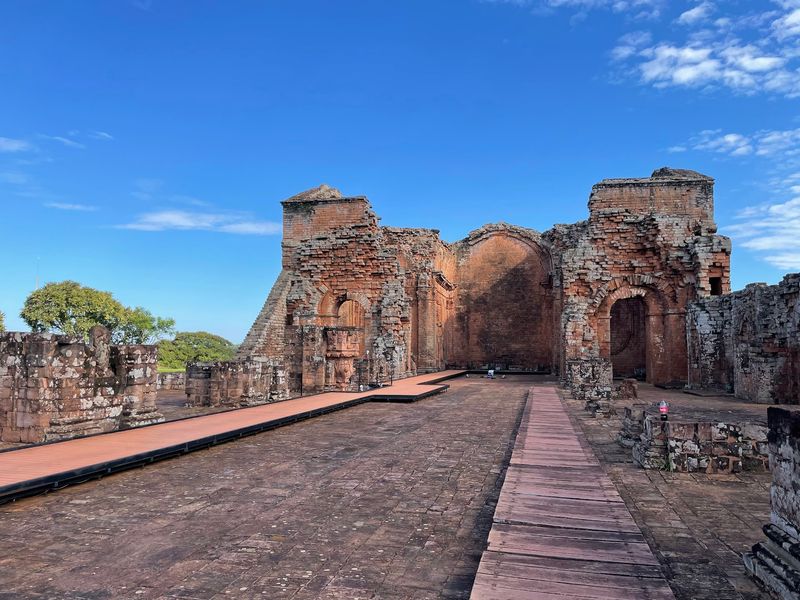
Paraguay gets skipped so often on South American itineraries that it has practically become a running joke among long-term travelers. That is a genuine mistake, because this landlocked country holds one of the continent’s most atmospheric and historically layered archaeological sites.
La Santísima Trinidad de Paraná and Jesus de Tavarangue together form Paraguay’s only UNESCO World Heritage property, representing the last surviving traces of an extraordinary 17th and 18th century mission network.
Trinidad, founded in 1706, is the better-preserved of the two. Its layout once included a church, school, cloister, workshops, gardens, cemeteries, and housing for Indigenous Guarani communities arranged around a central plaza.
Carved sandstone friezes and decorative stonework hint at the artistic sophistication that once flourished here. Walking through the ruins at dusk, when the light turns golden and the stones glow, is genuinely moving.
Jesus de Tavarangue tells a different kind of story. The Jesuits were expelled before construction was completed, leaving an unfinished church with distinctive trefoil arches standing open to the sky.
The incompleteness makes it haunting rather than disappointing. Both sites sit close enough together to visit on the same day from Encarnacion, the nearest city.
Sucre, Bolivia
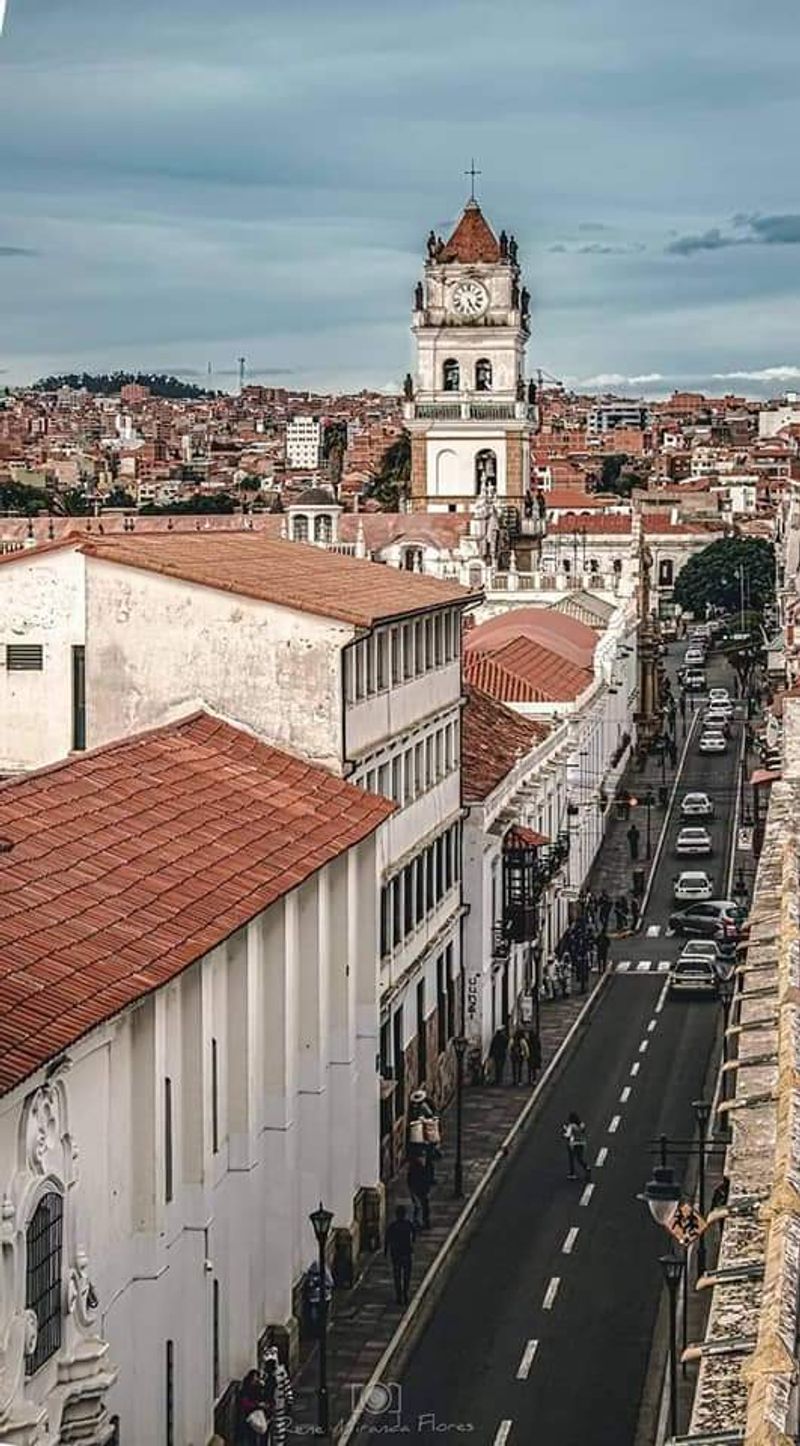
Bolivia’s most visually striking city is not La Paz, and it is certainly not a salt flat. Sucre, the country’s constitutional capital, earns its UNESCO World Heritage status through a historic center so well-preserved and visually coherent that it genuinely stops visitors in their tracks.
Gleaming white facades, terracotta roofs, arcaded courtyards, and grand colonial churches fill street after street in a way that feels planned and harmonious rather than accidental.
Founded by the Spanish in 1538 on lands connected with the Indigenous Yampara culture, Sucre developed as a major center for law, religion, and education. Churches including San Lazaro, San Francisco, and Santo Domingo contain important 16th-century work, while the Casa de la Libertad museum marks the spot where Bolivia’s declaration of independence was signed in 1825.
UNESCO specifically notes how European architectural styles were adapted here to local traditions and materials.
The city’s altitude sits comfortably lower than La Paz, making it physically easier to explore on arrival. Markets, chocolate shops, and a lively student population give Sucre a social energy that balances its historical weight.
For anyone wanting a calmer, more architectural introduction to Bolivia, Sucre is the obvious starting point.
São Luís, Brazil
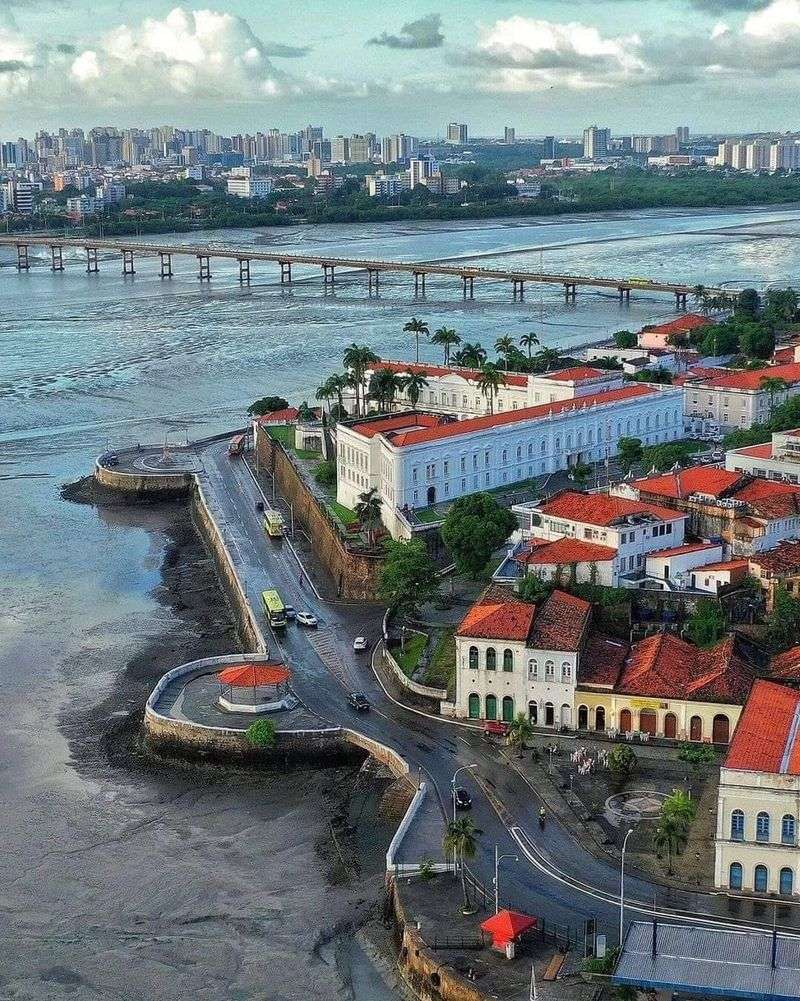
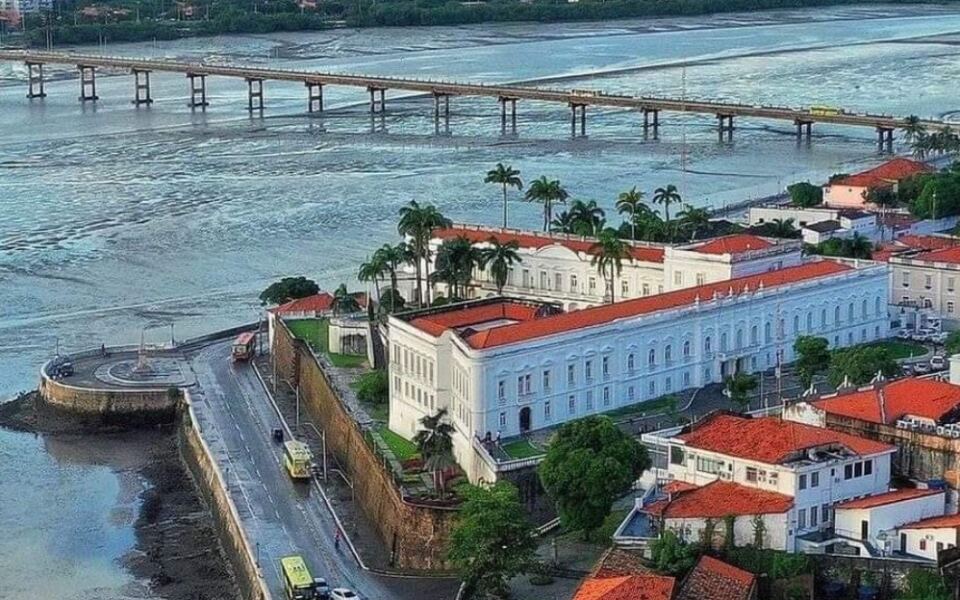
São Luis is the city that Brazil forgot to put on its own poster. While Rio and Salvador soak up international attention, this northern coastal capital quietly holds one of the largest collections of Portuguese colonial architecture in the Americas, with around 4,000 buildings of historical or artistic significance in its UNESCO-listed historic center.
Many of those buildings are covered in azulejo tiles, the blue and white ceramic panels imported from Portugal that turned out to be surprisingly effective insulation against the tropical heat.
The city’s backstory is unusual even by Brazilian standards. It was founded by the French in 1612, then captured by the Dutch, and finally settled permanently by the Portuguese, giving it a colonial history unlike any other city in the country.
That layered past shows up in the culture as much as the architecture. Bumba Meu Boi and Tambor de Crioula are living Afro-Brazilian traditions that animate festivals throughout the year with percussion, costumes, and communal energy.
Regional food is another reason to visit. Cuxá rice, shrimp stew, and sweets made from buriti fruit reflect a cuisine shaped by Indigenous, African, and Portuguese influences.
Visit Brasil recommends June through August as the most favorable months, when rainfall is lower and festivals are at their most vibrant.
Providencia, Colombia
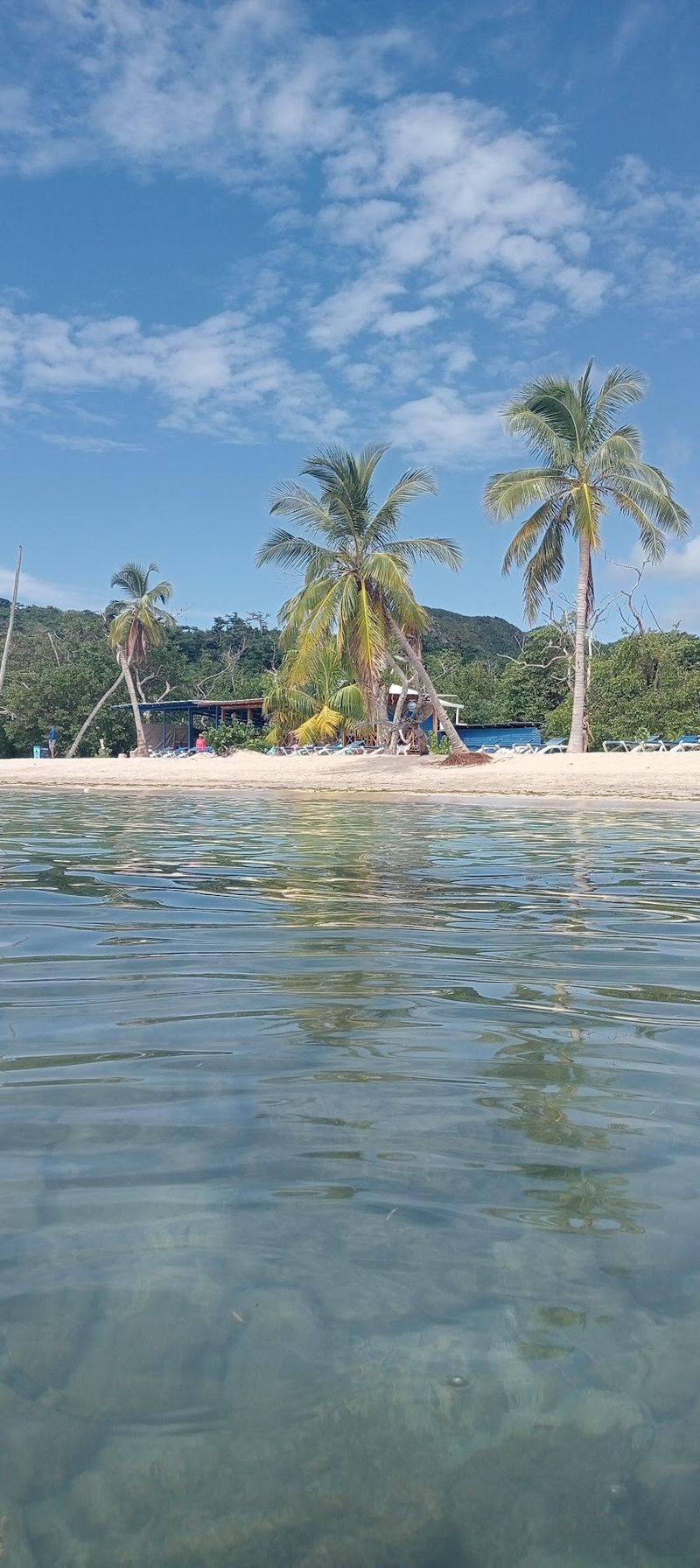
Providencia is Colombia’s best-kept Caribbean secret, and the locals are not exactly rushing to advertise it. This small island sits about 800 kilometers northwest of the Colombian mainland, surrounded by what Colombia’s tourism authority describes as the country’s most extensive coral reef area and the world’s third-longest coral barrier.
That combination of isolation and marine richness creates a Caribbean experience that feels genuinely untouched compared to the country’s busier coastal destinations.
The island’s culture adds another layer of interest. Providencia’s population is largely descended from Afro-Caribbean and Raizal communities, giving the island its own language, music, food traditions, and social rhythms that feel closer to the English-speaking Caribbean than to mainland Colombia.
Old Providence McBean Lagoon National Natural Park protects the most important marine habitat, and boat trips to Crab Cay offer snorkeling above coral formations teeming with fish.
On land, El Pico is the island’s highest point and a rewarding trekking destination with wide views across the reef and surrounding sea. Getting here requires a short flight from San Andres island.
The relative difficulty of reaching Providencia is precisely what keeps it so calm and unhurried, which is exactly the point.
Colonia Carlos Pellegrini, Argentina
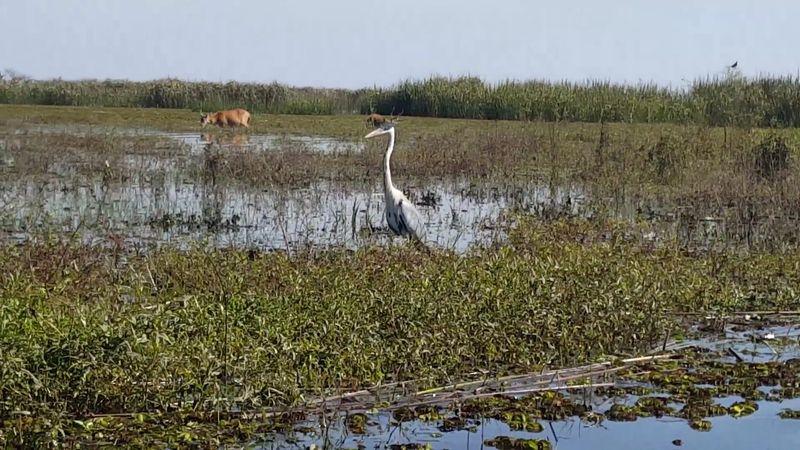
Colonia Carlos Pellegrini has a population small enough to fit inside a single city block, and that is very much the attraction. This tiny village in northeastern Argentina exists almost entirely as a gateway to the Ibera wetlands surrounding it, and Argentina’s tourism authority identifies it as the principal access point for the reserve.
Getting here from Mercedes takes about 120 kilometers of road that can require a vehicle with decent clearance, especially after rain.
Once you arrive, the schedule is simple: go outside and look at things. Lagoons and marshes begin almost immediately at the edge of town, with capybaras wandering through like they own the place, which they arguably do.
Caimans sun themselves on banks, marsh deer graze in the shallows, howler monkeys announce the morning from nearby trees, and birdlife is constant and spectacular throughout the day.
Guided boat rides, kayaking, horseback excursions, and night safaris are all available through local operators and lodges. Argentina’s tourism authority recommends spending three to five days here and identifies March through November as the most suitable period for visiting.
Colonia Carlos Pellegrini is not a town you visit for restaurants or architecture. It is a place you visit to remember that nature operates on a completely different scale than anything humans build.
Humahuaca and the Quebrada, Argentina
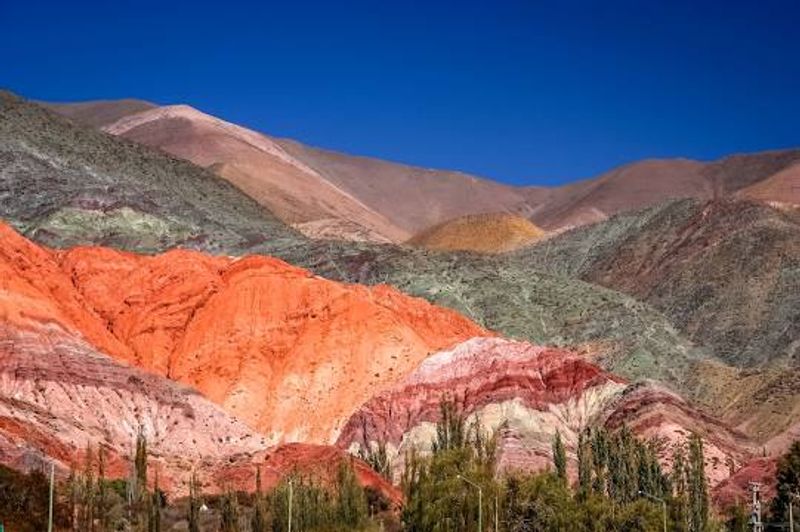
Northern Argentina looks like it belongs on another planet. The Quebrada de Humahuaca cuts through Jujuy province in a corridor of dramatically colored mountains that shift from deep red to purple to yellow depending on the light and the hour.
This UNESCO World Heritage cultural landscape has been a trade route for over 10,000 years, connecting the high Andes with lower valleys, and the human history layered into the landscape is as rich as the geology.
Villages including Humahuaca, Tilcara, and Maimara serve as comfortable bases for exploring the region. Tilcara’s Pucara ruins sit on a hill above town and offer both archaeological interest and sweeping views across the valley.
Salinas Grandes, a high-altitude salt flat reached by a spectacular mountain road, provides a completely different landscape within the same region. Cerro El Huancar near Abra Pampa even offers sandboarding on pale dunes at altitude, which sounds improbable and turns out to be genuinely fun.
The Quebrada lies about 42 kilometers from San Salvador de Jujuy and 165 kilometers from Salta along Route 9, making it accessible as a day trip or a multi-day stay. Local markets sell textiles, ceramics, and food that reflect deep Andean traditions.
This corner of Argentina is colorful, ancient, and quietly spectacular.
Futaleufú, Chile
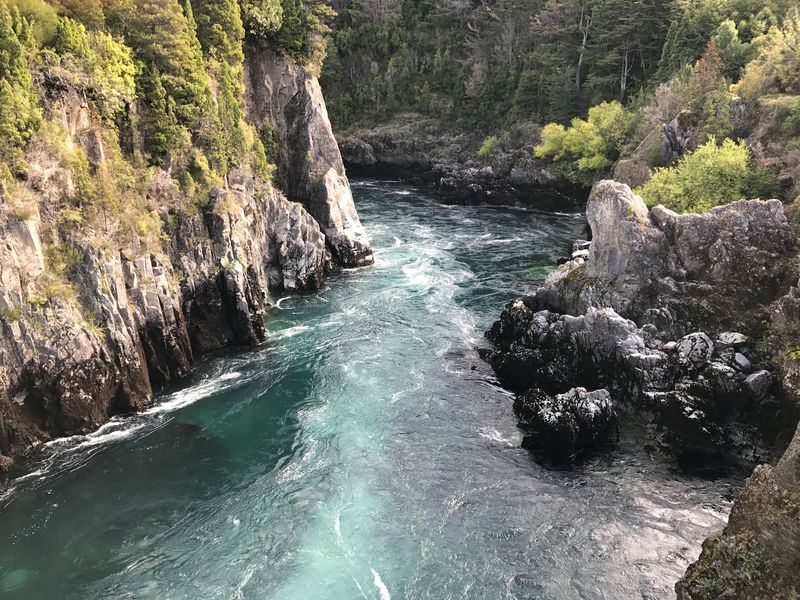
Most people picture Patagonia as a landscape of glaciers and grey skies, but Futaleufú has other ideas. Sitting in southern Chile near the Argentine border, this small town has built an international reputation around one thing: the extraordinary turquoise river that runs beside it.
The name Futaleufu means Big River in Mapudungun, and the river absolutely earns that title with rapids that Chile Travel describes as world-class for rafting and kayaking.
The surrounding landscape is lush, green, and dramatic in a way that surprises travelers expecting classic Patagonian steppe. Forests, mountain valleys, hanging bridges, and clear lakes fill the territory around town.
The Piedra del Aguila route overlooks Cerro Tres Monjas and the Espolon River valley, while Lake Lonconao offers calmer water suitable for fly fishing. Laguna Espejo provides a peaceful, mirror-still alternative for anyone who prefers their water not trying to flip them over.
Wildlife in the surrounding territory includes huemul deer and pumas, though both require patience and luck to spot. The town itself is small and unpretentious, with outfitters, lodges, and a community that has organized its economy around outdoor adventure.
Futaleufú is the kind of place where the river is the main event, and everything else is a happy bonus.
São Luís Island, Brazil
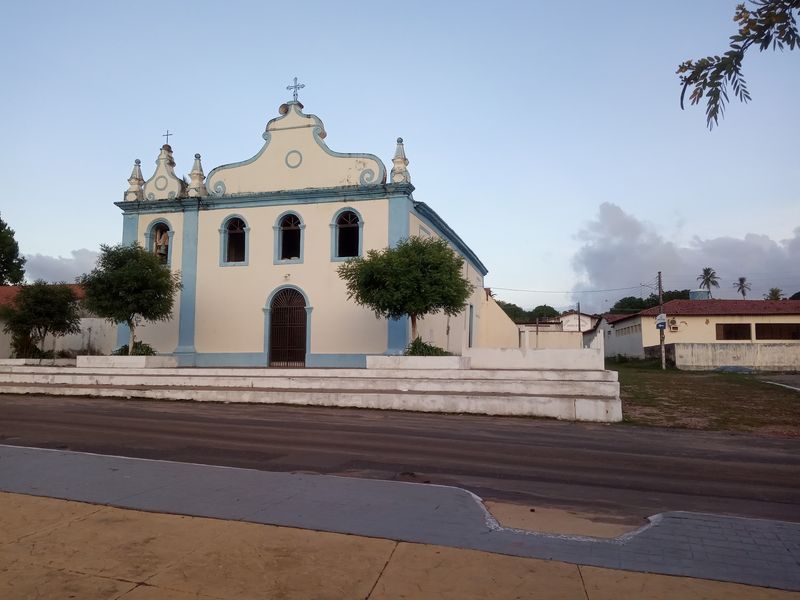
The island on which São Luis sits adds geographic context that makes the city’s unusual architecture suddenly make complete sense. Positioned between the Anil and Bacanga rivers and São Marcos Bay, the island shaped a settlement that had to adapt specifically to equatorial coastal conditions.
UNESCO notes that the city’s Portuguese architecture evolved with raised floors, shuttered verandas, inner patios, and azulejo-covered facades used both decoratively and as a practical form of insulation against persistent tropical humidity.
The result looks and feels quite different from the Baroque mining towns of southeastern Brazil. Where cities like Ouro Preto dazzle with gilded interiors and dramatic hilltop churches, São Luis impresses through the texture and repetition of its tiled streetscapes, which catch the light differently at every hour of the day.
Walking through the historic center in the late afternoon, when the tiles glow orange and blue against the fading light, is one of those travel moments that sticks.
São Luis also works as a cultural gateway into the broader state of Maranhão, where reggae culture, Afro-Brazilian traditions, and extraordinary seafood combine into a regional identity unlike anywhere else in Brazil. Visit Brasil identifies June through August as particularly favorable months, when drier conditions make exploring the city’s streets far more comfortable.
Trinidad, Paraguay
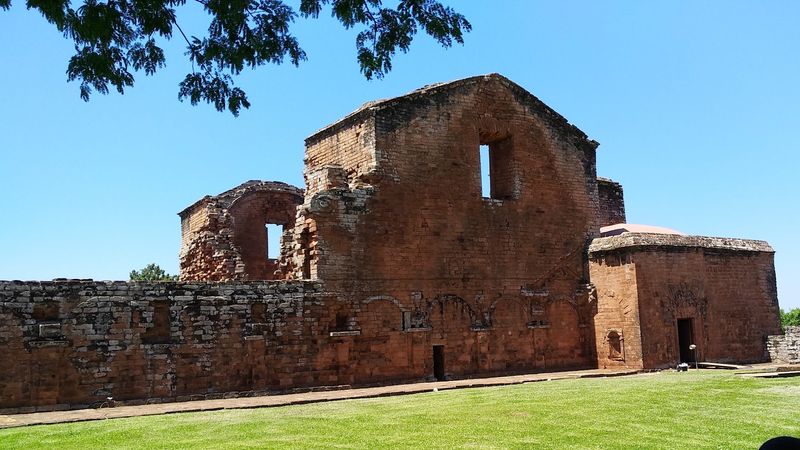
Trinidad gets mentioned alongside Jesus de Tavarangue, but it deserves a moment entirely its own. Founded in 1706, La Santisima Trinidad de Parana was the most ambitious of Paraguay’s Jesuit reductions, and its surviving ruins preserve the clearest urban plan of any mission in the country.
Spread across roughly eight hectares, the complex retains evidence of its principal church, a smaller chapel, school, cloister, cemetery, workshops, Indigenous housing, gardens, and the central square that organized community life.
The carved stonework at Trinidad is remarkable. Sandstone friezes depicting angels, vines, and geometric patterns decorate doorways and walls with a level of artistry that challenges assumptions about what was being built in 18th-century South America.
UNESCO notes that the Jesuits sought to Christianize Indigenous Guarani communities while simultaneously protecting them from the brutal Spanish encomienda labor system, creating a genuinely complicated historical situation that the ruins quietly document.
Indigenous traditions, including cultivation of yerba mate, continued within the mission system, and that cultural persistence is part of what makes Trinidad more than a straightforward colonial story. The site sits close enough to Encarnacion to visit comfortably as a day trip, but arriving early and staying until the afternoon light hits the stone walls is strongly worth the extra planning.
Share this story