Asia is home to some of the most breathtaking and spiritually powerful temples ever built. From jungle-covered ruins to mountain shrines still buzzing with daily worship, these sacred spaces tell the story of entire civilizations.
They were built by kings, monks, and devoted communities who believed architecture itself could connect the human world to something far greater. Whether you are a history lover, a curious traveler, or simply someone who appreciates jaw-dropping beauty, these 15 temples will leave you amazed.
Angkor Wat, Cambodia
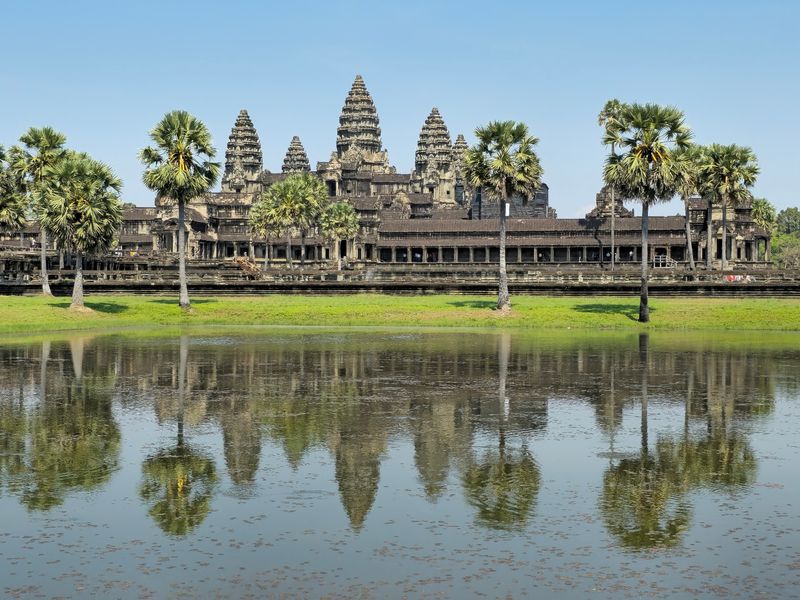
Covering roughly 400 square kilometers, the Angkor archaeological landscape is so enormous that early European explorers refused to believe humans had built it. Angkor Wat sits at its heart, rising in five lotus-shaped towers that have become one of the most recognized silhouettes on the planet.
Built in the 12th century, it began as a Hindu sanctuary before gradually transforming into a Buddhist pilgrimage site.
Walk along its main causeway at sunrise and you will understand immediately why millions of visitors travel here every year. The bas-reliefs stretching along its inner galleries are essentially an ancient comic strip, depicting epic battles, heavenly dancers, and mythological sea-churning scenes in extraordinary detail.
More than 2,500 square meters of carved stone tell stories that still captivate scholars today.
Angkor Wat was deliberately designed to represent the sacred universe in physical form, with its towers symbolizing the peaks of Mount Meru, home of the Hindu gods. The surrounding moat represents the cosmic ocean.
UNESCO considers it a masterpiece of Khmer architecture, and visiting in person makes that label feel like an understatement rather than praise.
Borobudur, Indonesia
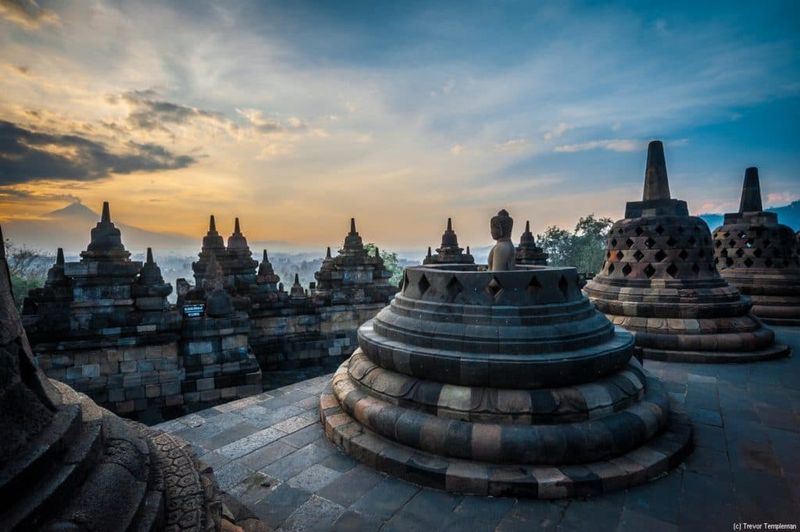
Imagine climbing a giant stone mountain that is actually a detailed map of the Buddhist path to enlightenment. That is essentially what Borobudur offers, and it does so with breathtaking style.
Built during the eighth and ninth centuries in Central Java, this monument rises through five square terraces before opening onto three circular platforms topped by a massive central stupa.
Every level you climb represents a stage of spiritual progress, moving from the world of earthly desire upward toward formlessness and liberation. The walls along the lower terraces carry more than 2,500 square meters of relief sculptures, making Borobudur one of the largest Buddhist narrative artworks anywhere on Earth.
Seventy-two perforated stupas on the upper levels each contain a seated Buddha statue visible through the stone latticework.
Borobudur was buried under volcanic ash and jungle growth for centuries before its rediscovery in the 19th century. A major international restoration project in the 20th century brought it back to its current remarkable condition.
Today it functions as both a UNESCO World Heritage Site and an active pilgrimage destination, especially during the Buddhist festival of Vesak, when thousands of monks and devotees gather at dawn.
Mahabodhi Temple, India
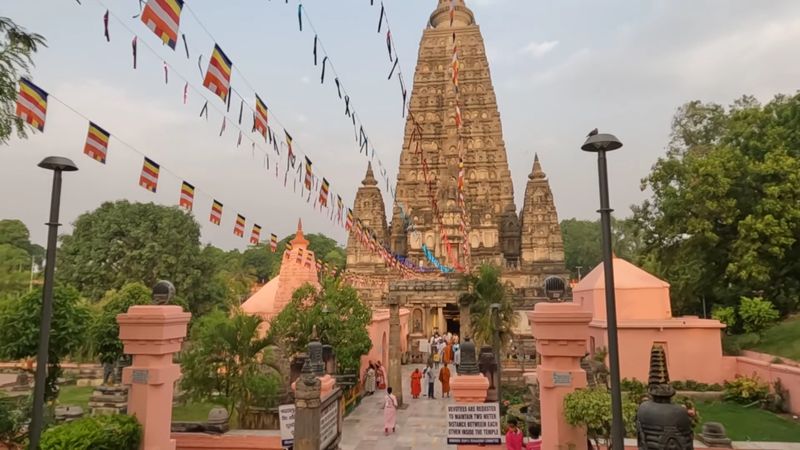
Of all the places on Earth connected to the story of Buddhism, Bodh Gaya carries the most weight. This is where, according to tradition, Siddhartha Gautama sat beneath a fig tree, refused to move until he understood the nature of suffering, and eventually became the Buddha.
The Mahabodhi Temple now marks that spot, and pilgrims from every Buddhist country in the world travel here to pray, meditate, and sometimes weep with quiet gratitude.
Emperor Ashoka built an early shrine here in the third century B.C., though the present soaring brick tower dates mainly from the fifth and sixth centuries. At roughly 50 meters tall, it is one of the oldest and best-preserved major brick temples still standing in India.
The Bodhi Tree growing beside the tower is believed to be descended from the original tree under which the Buddha sat.
What makes Mahabodhi genuinely moving is not just its age or architecture. Monks in saffron and maroon robes circle the grounds at all hours, candles flicker at shrines, and chanting drifts through the air constantly.
UNESCO recognized it as a World Heritage Site in 2002, but its deeper significance belongs entirely to those who arrive with folded hands and open hearts.
Prambanan, Indonesia
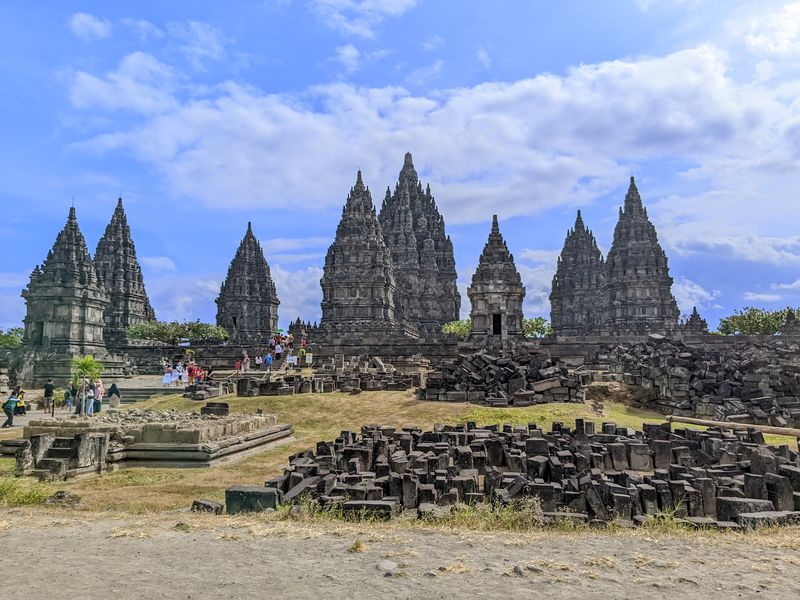
Sharp, soaring, and almost aggressive in their vertical ambition, the towers of Prambanan look like something designed to pierce the sky on purpose. Built during the ninth and tenth centuries in Central Java, this complex is Indonesia’s largest Hindu temple compound and one of the finest examples of Shivaite temple architecture in all of Southeast Asia.
Three central towers honor Shiva, Vishnu, and Brahma, accompanied by smaller shrines dedicated to their sacred animal companions.
Running along the inner walls of the main temples, detailed stone reliefs depict the Ramayana epic in a style that is distinctly Javanese rather than Indian, showing how local artists absorbed and transformed imported religious traditions. The wider archaeological park surrounding Prambanan also includes major Buddhist monuments, proof that Hindu and Buddhist communities once thrived in remarkable proximity on this island.
Earthquakes have repeatedly shaken the complex over the centuries, and restoration work has been ongoing since the early 1900s. A major quake in 2006 caused fresh damage, but the site has since been carefully stabilized.
Visiting Prambanan in the evening, when traditional Ramayana ballet performances are sometimes staged against its floodlit towers, is an experience that blurs the line between ancient story and living art.
Temple of Heaven, China
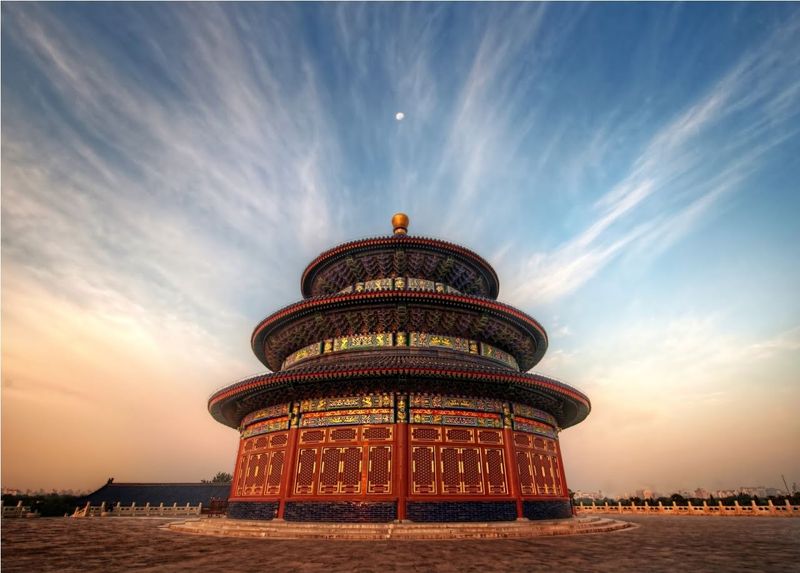
Most temples welcome ordinary worshippers through their gates. The Temple of Heaven in Beijing was different: only the emperor was allowed to perform its central rituals, because only he held the cosmic authority to communicate between humanity and the heavens above.
Built in the early 15th century and eventually covering about 273 hectares, this imperial ritual landscape is one of the most carefully designed symbolic spaces ever created.
The Hall of Prayer for Good Harvests is the complex’s most iconic structure, with its triple-tiered circular roof of deep blue tiles gleaming against the sky. Every measurement, color, and spatial arrangement was chosen deliberately to express the emperor’s role as mediator between the celestial and human worlds.
Circular shapes represent heaven; square shapes represent earth. The emperor’s annual sacrifices and prayers here were believed to guarantee a successful harvest for the entire nation.
Today the park surrounding the temple is wonderfully lively, filled with local residents practicing tai chi, playing traditional instruments, and gathering for group singing in the mornings. UNESCO recognized the complex as a World Heritage Site in 1998, praising it as a masterpiece of architecture and landscape planning rooted in Chinese cosmological thought.
It manages to feel both ancient and completely alive at the same time.
Horyu-ji, Japan
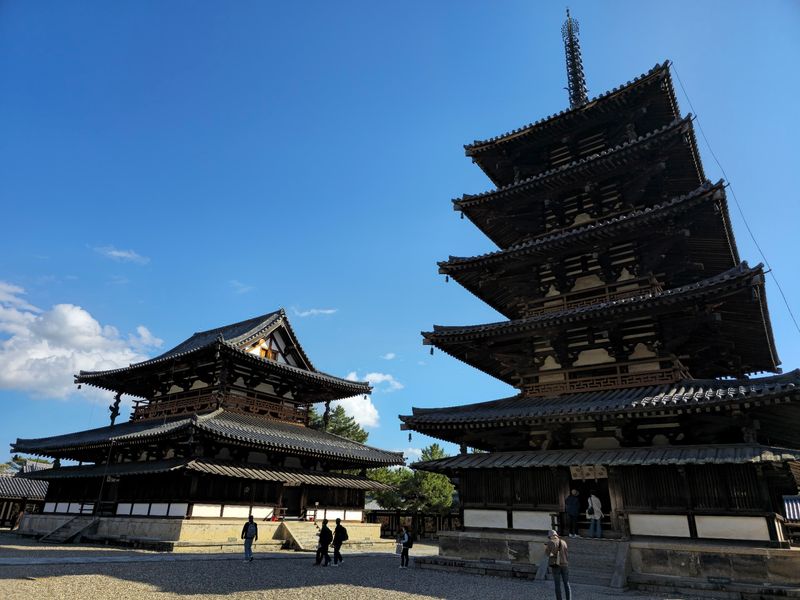
Wood is not supposed to last 1,400 years. And yet, the pagoda at Horyu-ji in Nara Prefecture is widely considered to be among the oldest surviving wooden structures on Earth, still standing after roughly 13 centuries of typhoons, earthquakes, and the general wear of time.
That is either a miracle of carpentry or a testament to the extraordinary care generations of monks have given this place, and probably both.
Buddhism arrived in Japan from the Korean Peninsula and China during the sixth century, bringing with it entirely new ideas about architecture, sculpture, and ritual. Horyu-ji preserves the physical evidence of that cultural transformation better than almost anywhere else.
Its roughly 48 historic structures include halls, gateways, and a treasury containing some of Japan’s most treasured early Buddhist sculptures and artifacts.
A fire destroyed the original temple buildings in 670, but reconstruction began almost immediately, and the surviving complex reflects that early rebuilding effort. UNESCO inscribed Horyu-ji as a World Heritage Site in 1993, recognizing its profound influence on the development of Japanese religious architecture.
Wandering through its quiet courtyards, with the five-story pagoda rising overhead, feels less like visiting a museum and more like stepping into a moment that never quite ended.
Dambulla Cave Temple, Sri Lanka
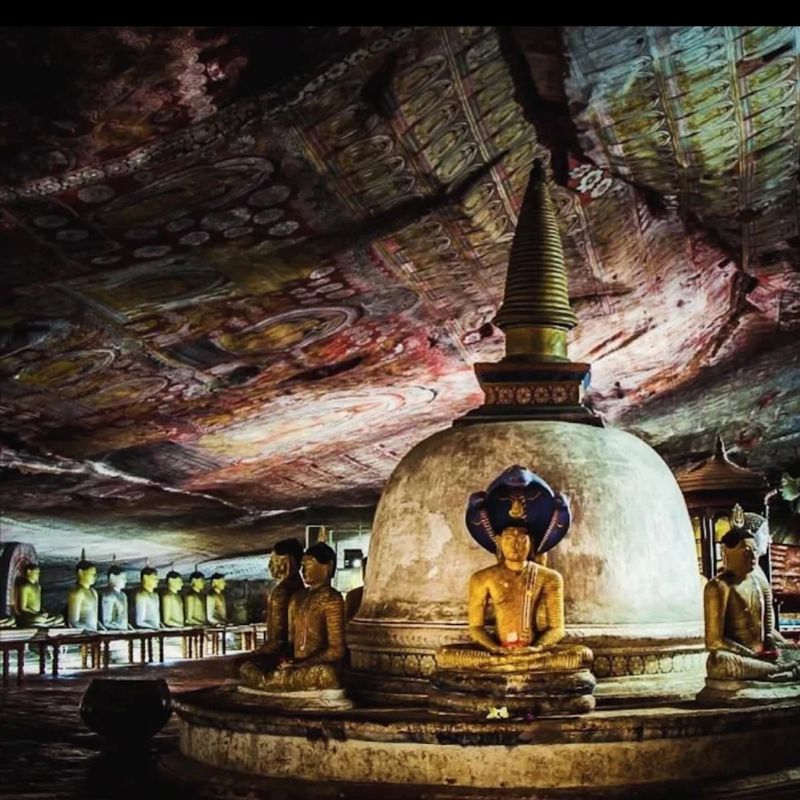
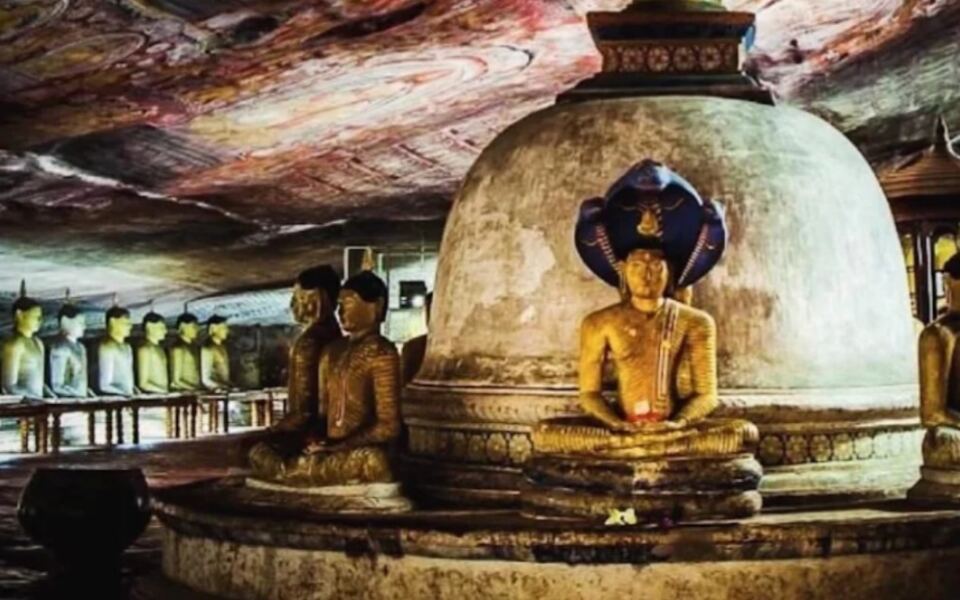
Somewhere around 2,300 years ago, monks found a series of natural caves in a massive granite outcrop in central Sri Lanka and decided they were perfect for meditation. They were not wrong.
Today, those same caves form the Rangiri Dambulla complex, Sri Lanka’s largest and best-preserved cave-temple site, and one of the most visually overwhelming Buddhist sanctuaries you can visit anywhere in Asia.
Five principal cave shrines contain 157 statues, ranging from small seated Buddhas to a breathtaking 15-meter reclining figure carved directly from the living rock. Buddhist paintings cover roughly 2,100 square meters of walls and ceilings, layered across centuries of renovation and artistic renewal.
The earliest paintings date back many centuries, while others were added or refreshed as recently as the 18th century, creating a rich visual record of evolving Sri Lankan Buddhist art.
Royal patrons played a major role in expanding and decorating the caves over time, including King Valagamba, who took refuge here in the first century B.C. after being driven from his throne. UNESCO inscribed Dambulla as a World Heritage Site in 1991.
Pilgrims still climb the rock barefoot every day, shoes in hand, joining a tradition of devotion that has continued without interruption for more than two millennia.
Bulguksa Temple and Seokguram Grotto, South Korea
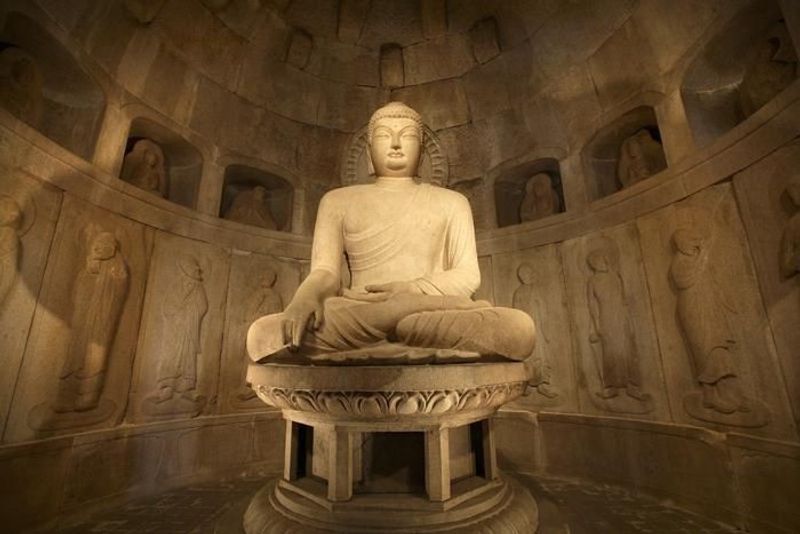
Built during the eighth century at the height of the Unified Silla Kingdom, Bulguksa and nearby Seokguram were conceived together as a single religious vision: a physical representation of the Buddha’s paradise brought down to earth on the slopes of Mount Toham. Few temple complexes in East Asia match their combination of sophisticated stone engineering and spiritual ambition.
Bulguksa’s wooden halls sit on elaborate stone terraces connected by staircases and bridges that pilgrims were traditionally required to climb in a specific ritual sequence. Two celebrated pagodas stand before the main worship hall, each representing a distinct architectural style.
Higher up the mountain, Seokguram is an artificial granite grotto housing a monumental seated Buddha of extraordinary serenity, surrounded by bodhisattvas, disciples, and guardian figures carved in relief across more than 360 stone slabs.
The grotto’s interior was designed with careful attention to light and geometry, so that morning sunlight enters at a precise angle to illuminate the Buddha’s face. UNESCO inscribed both sites together as World Heritage in 1995, calling them masterpieces of East Asian Buddhist architecture and sculpture.
Visiting on a quiet autumn morning, when the maple trees around Bulguksa blaze red and gold, is a genuinely unforgettable experience.
Brihadisvara Temple, India
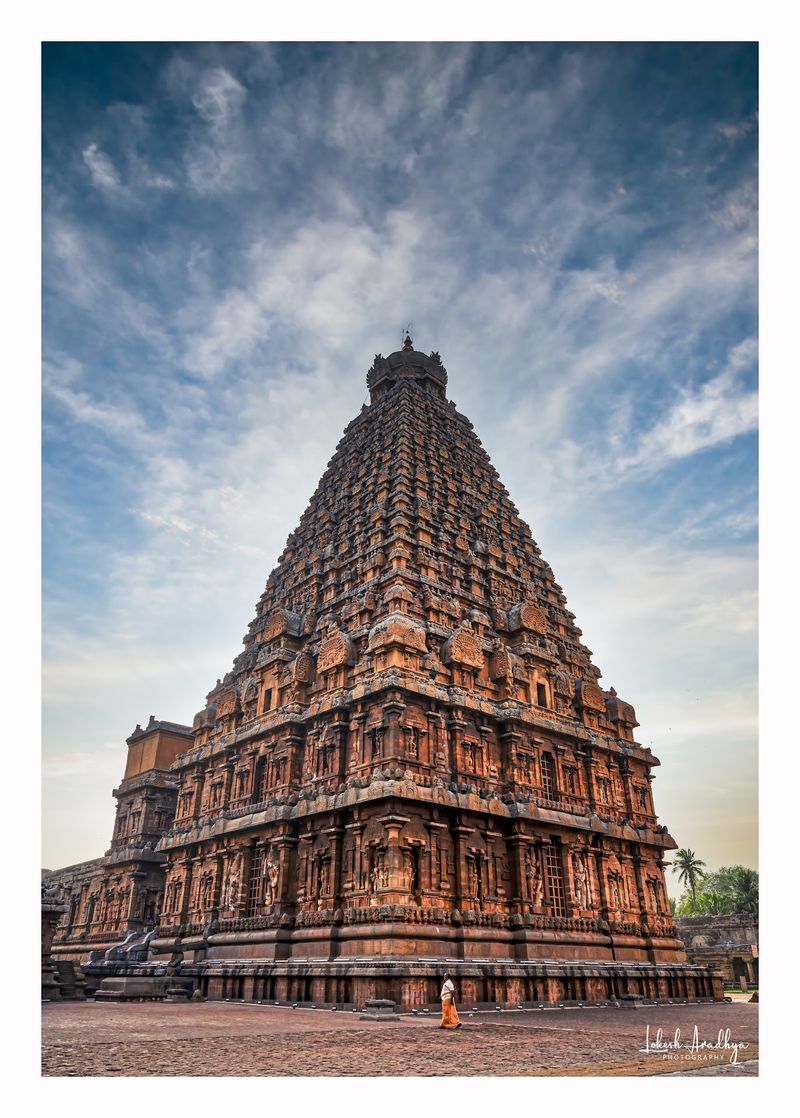
When King Rajaraja I of the Chola Empire decided to build a temple worthy of his power and devotion, he did not aim small. Completed around 1010 A.D., the Brihadisvara Temple in Thanjavur features a vimana tower that soars over 60 meters above the sanctuary, making it one of the tallest temple towers in India at the time of its construction.
A single granite capstone weighing an estimated 80 tons crowns the very top.
The engineering achievement alone would be remarkable, but Brihadisvara is also a treasure chest of Chola art. Its walls carry sculptures of Shiva in various forms, celestial dancers, and detailed narrative panels.
Paintings inside the corridors, some dating from the original construction period, represent some of the oldest surviving examples of Chola fresco work. UNESCO groups Brihadisvara with two other great Chola temples as the Great Living Chola Temples, and that word living matters enormously.
Priests still perform daily rituals here following traditions that have continued for over a thousand years. The smell of incense, the sound of temple bells, and the sight of devotees receiving blessings connect the present moment directly to the Chola imperial era.
Architecture and living faith are completely inseparable at this remarkable site.
Khajuraho Temples, India
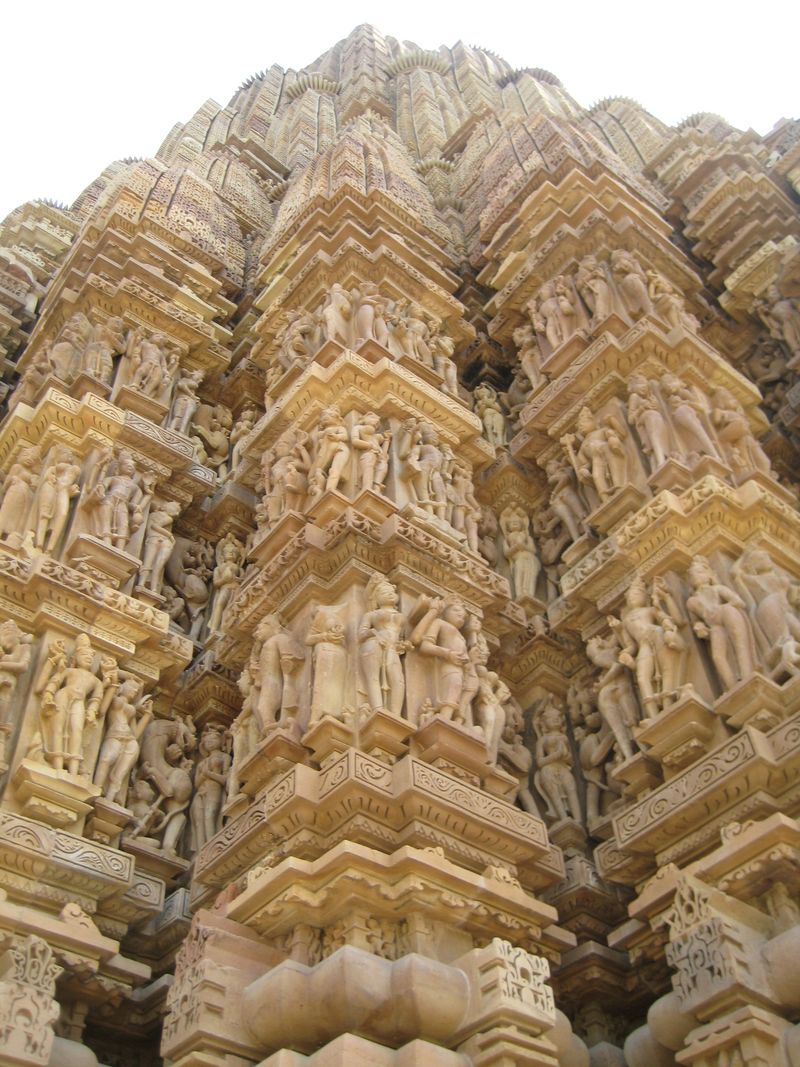
Khajuraho has a reputation that often arrives before the temples themselves do. Yes, some of the exterior carvings depict couples in intimate embrace, and yes, those images have been making visitors blush and grin simultaneously for centuries.
But reducing Khajuraho to its erotic sculpture would be like visiting a symphony and only commenting on one instrument.
Built largely between 950 and 1050 A.D. under the Chandella dynasty, about 20 temples survive from what was once a much larger complex. They belong to both Hindu and Jain traditions, demonstrating the cultural openness of the dynasty that commissioned them.
Their Nagara-style towers rise in clustered compositions deliberately designed to evoke a range of sacred mountain peaks, and the effect from a distance is genuinely dramatic.
The exterior walls carry an extraordinary range of sculptural subjects: gods, goddesses, celestial musicians, devoted worshippers, scenes of daily life, animals, and yes, those famous intimate couples. Scholars interpret the complete sculptural program as a comprehensive vision of existence itself, encompassing the sacred, the worldly, and everything in between.
UNESCO inscribed Khajuraho as a World Heritage Site in 1986. Visiting with a knowledgeable guide transforms the experience from a sightseeing trip into a genuinely fascinating lesson in medieval Indian philosophy and artistic ambition.
Bagan, Myanmar
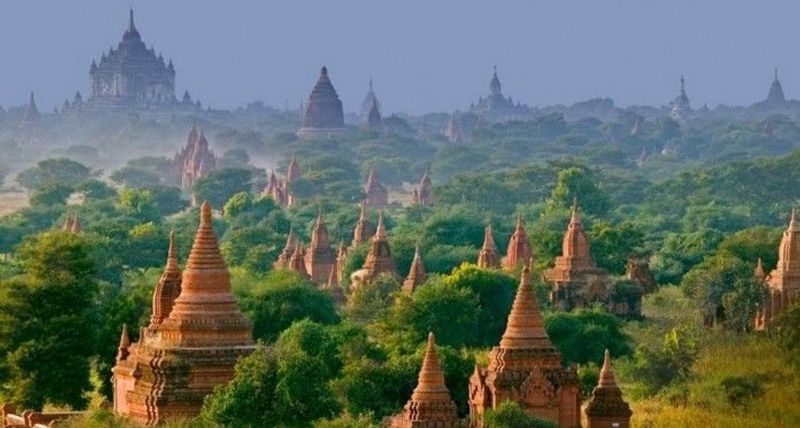
Standing on top of one of Bagan’s ancient temples at sunrise, watching hot air balloons drift silently over thousands of brick stupas stretching to the horizon, is one of those travel experiences that genuinely rearranges your sense of what human beings are capable of building. Bagan is not a single temple.
It is an entire sacred city, covering roughly 40 square kilometers and containing more than 3,500 surviving religious structures.
The city flourished especially between the 11th and 13th centuries, when it served as the capital of a powerful kingdom and Buddhist merit-making became the central engine of political and social life. Kings, nobles, merchants, and ordinary families all competed to commission temples, monasteries, and stupas, believing that religious donations would earn them better rebirths.
The result is a concentration of Buddhist architecture found nowhere else on the planet.
Frescoes inside many temples remain remarkably vivid, despite centuries of exposure to heat, humidity, and earthquake damage. UNESCO inscribed Bagan as a World Heritage Site in 2019 after years of negotiation around conservation concerns.
Exploring the site by bicycle or horse-drawn cart, stopping to peer into small brick shrines where gilded Buddhas sit in quiet darkness, reveals a world where faith was literally written into the landscape.
Itsukushima Shrine, Japan
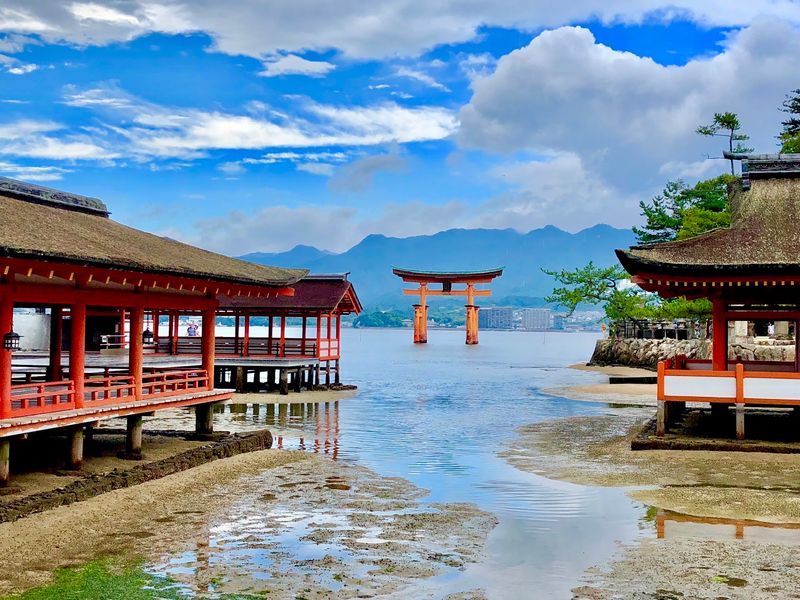
There is something almost playful about the way Itsukushima Shrine was designed. Its corridors, halls, and famous vermilion torii gate are built right at the edge of the sea on Miyajima Island, so that at high tide the entire complex appears to float above the water.
The effect looks like a stage set for a dream, and it was absolutely intentional.
The island of Itsukushima has been considered sacred since ancient times, and the Shinto belief that the island itself is a deity meant that ordinary people were once forbidden from setting foot on its shores. Shrine buildings were therefore constructed over the water to allow worship without touching the sacred ground.
The present layout is associated with the powerful 12th-century warlord Taira no Kiyomori, who became a devoted patron of the shrine.
UNESCO inscribed Itsukushima as a World Heritage Site in 1996, praising the deliberate relationship among architecture, sea, and the forested peak of Mount Misen behind it. Wild deer wander freely around the island, occasionally photobombing tourist pictures with complete indifference.
The torii gate, which requires periodic replacement due to tidal erosion, has stood in various forms for centuries and remains one of Japan’s most photographed and beloved landmarks.
Pashupatinath Temple Complex, Nepal
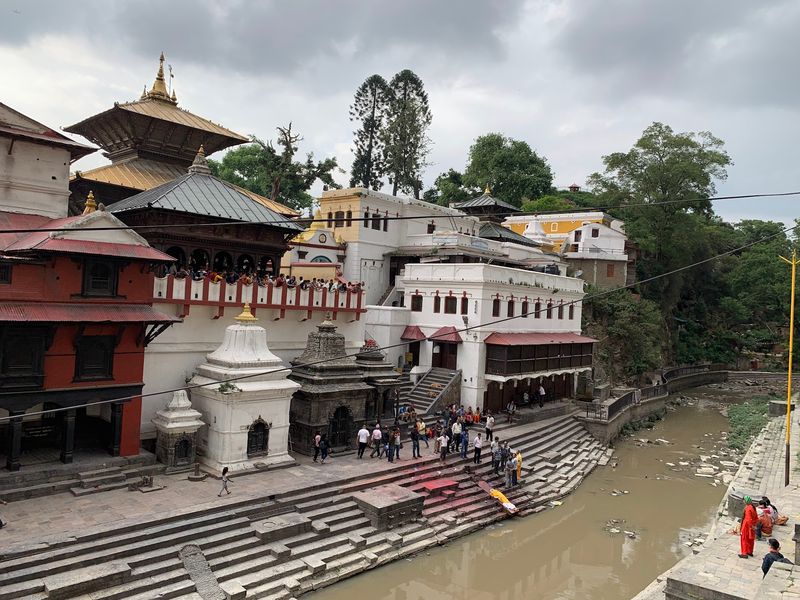
Pashupatinath is not a temple you visit from behind a velvet rope. It is a living, breathing religious world spread along the banks of the sacred Bagmati River in Kathmandu, where cremation fires burn on the riverside ghats, sadhus with painted faces sit in meditation, and pilgrims move through courtyards with genuine urgency and devotion.
For Hindus, this is one of the most important shrines to Shiva anywhere on Earth.
The main pagoda-style temple, with its gleaming gilded roofs, dates in its current form to the 17th century, though the site’s sacred history stretches back far earlier. Non-Hindu visitors are not permitted inside the main temple, but the surrounding complex of smaller shrines, terraced ghats, and forested hillsides is entirely open and endlessly fascinating to explore.
The Bagmati River, considered sacred here, connects Pashupatinath to broader Hindu pilgrimage networks across the subcontinent.
UNESCO inscribed the Kathmandu Valley, including Pashupatinath, as a World Heritage Site in 1979. The valley’s Hindu and Buddhist monuments developed distinctive artistic styles over centuries of creative interaction between the two traditions.
Watching the evening aarti ceremony at Pashupatinath, with oil lamps swaying above the river as priests chant ancient hymns, is a profoundly human and moving experience regardless of your own beliefs.
Longmen Grottoes, China
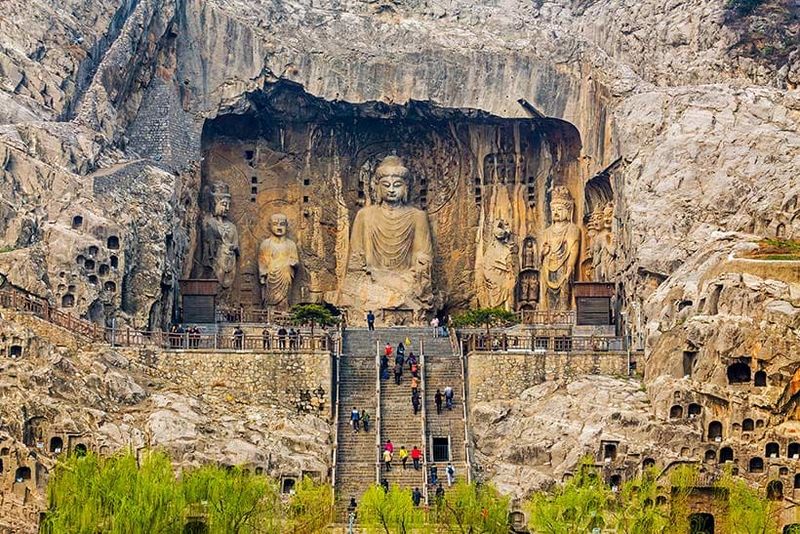
Carving an entire religion into the side of a cliff takes ambition, patience, and a very long time. At Longmen, beside the Yi River near Luoyang in central China, that carving project began in the late fifth century and continued for several hundred years, producing more than 100,000 Buddhist figures across thousands of niches and caves.
The result is the largest and most impressive surviving collection of Chinese Buddhist art from the Northern Wei and Tang dynasty periods.
The scale of individual works ranges from tiny votive figures a few centimeters tall to the colossal Vairocana Buddha at Fengxian Temple, whose face alone is roughly four meters from chin to hairline. That giant figure, commissioned by Tang Empress Wu Zetian in the seventh century, gazes out across the river with an expression that manages to convey both absolute serenity and enormous power simultaneously.
Earlier caves at Longmen preserve very different proportions and artistic styles, making the site a visible timeline of Chinese Buddhist sculpture.
UNESCO inscribed the Longmen Grottoes as a World Heritage Site in 2000. Many figures were damaged or had their heads removed by art thieves during the 19th and 20th centuries, and some stolen pieces have since been repatriated from overseas museums.
Walking the cliff-face path connecting the caves, with the river below and centuries of devotion carved into the rock beside you, is quietly extraordinary.
Kiyomizu-dera, Japan
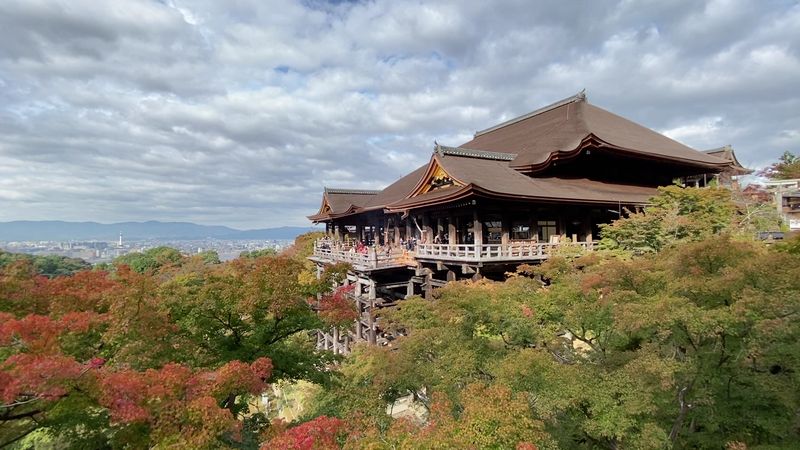
No nails. That is the most quoted fact about Kiyomizu-dera’s famous wooden stage, which projects dramatically over a forested hillside on the eastern slopes of Kyoto supported by 139 interlocking wooden pillars assembled entirely without metal fasteners.
Whether or not that claim is fully accurate in every detail, standing on that platform and looking out over the treetops toward the city below genuinely makes you appreciate what skilled carpenters could achieve without modern technology.
Kiyomizu-dera, whose name translates roughly as Pure Water Temple, takes its name from the Otowa waterfall flowing beneath the main hall. Visitors traditionally drink from three separate streams of the waterfall, each believed to grant a different blessing: longevity, success in studies, and luck in love.
The queues for the ladles can be long, but nobody seems to mind.
The temple is part of the UNESCO-listed Historic Monuments of Ancient Kyoto, a World Heritage property covering 17 sites across a city that served as Japan’s imperial capital for over a thousand years. The current buildings date from a 1633 reconstruction ordered by Tokugawa Iemitsu.
Visiting in cherry blossom season or autumn, when the surrounding hillside turns brilliant shades of red and gold, reveals exactly why this temple has been one of Japan’s most beloved pilgrimage destinations for centuries.
Share this story