Arkansas’ oldest surviving bridge came remarkably close to being lost. Built in 1874, the Springfield Des Arc Bridge endured major floods, decades of traffic, abandonment, vandalism, and years of deterioration before preservationists found a way to save it.
The solution was extraordinary. The 146-foot iron bridge was removed from its original crossing, dismantled, restored, and relocated to Beaverfork Park in Conway.
Today, visitors can walk across a piece of Arkansas transportation history that once carried travelers along an important 19th-century road. Its journey from working bridge to endangered relic to restored pedestrian crossing may be even more fascinating than the structure itself.
A New Home at Beaverfork Park
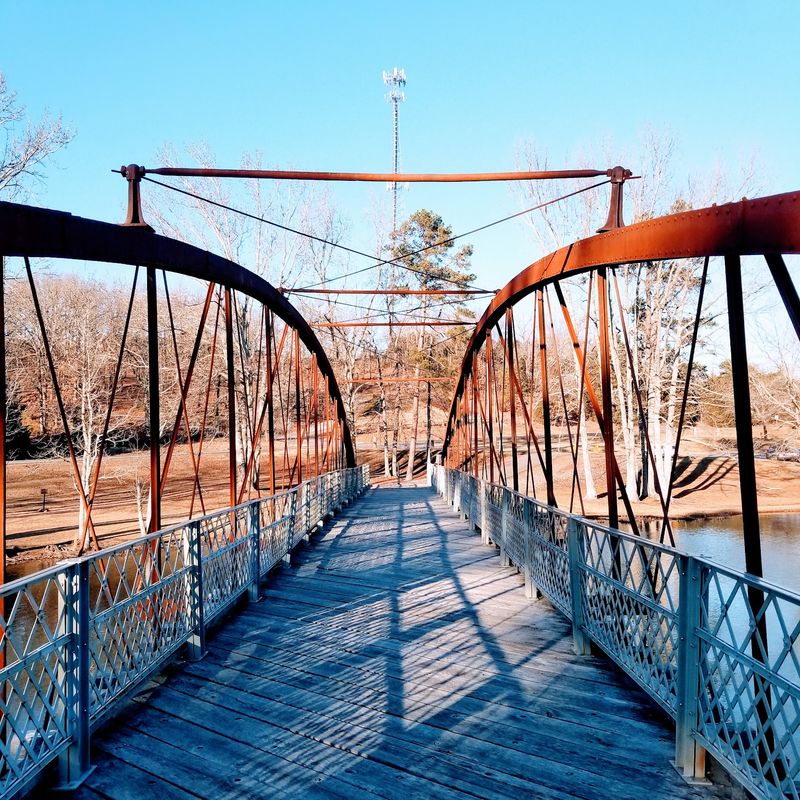
Most people do not expect to find the oldest bridge in Arkansas tucked inside a family-friendly park, but that is exactly where the Springfield Des Arc Bridge now lives. The bridge currently resides at Beaverfork Park, located at 200 Beaverfork Road in Conway, Arkansas 72032, in Faulkner County, near Greenbrier.
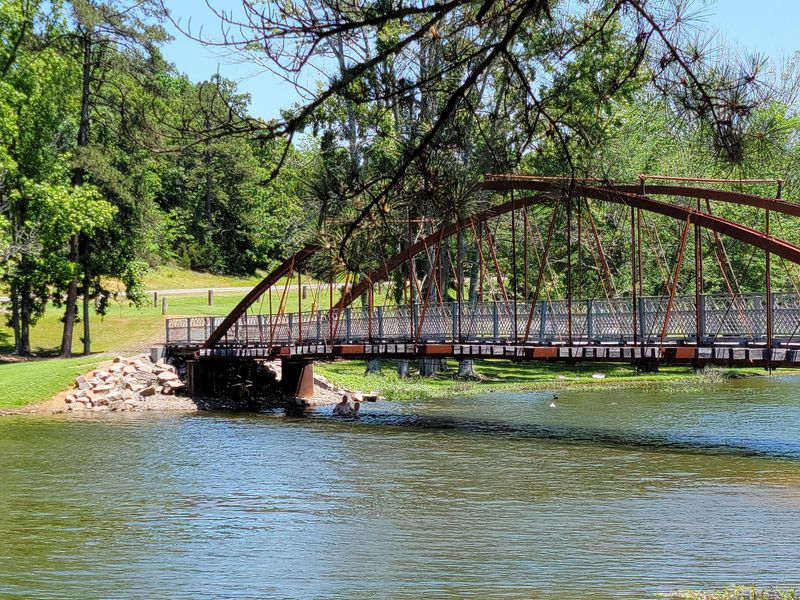
Rather than crumbling along a forgotten country road, this 146-foot iron structure now gracefully spans a tranquil cove on Beaverfork Lake, serving as a pedestrian walkway open to all visitors. The setting is genuinely beautiful, with calm water stretching out on either side and tall trees framing the view.
My first walk across it was one of those quietly memorable moments where history and nature meet in a way that feels almost accidental. The bridge connects different sections of the park, so visitors naturally find themselves crossing it without even realizing they are walking over a nationally significant piece of American engineering history.
Born in 1874: The Bridge That Connected a Growing State
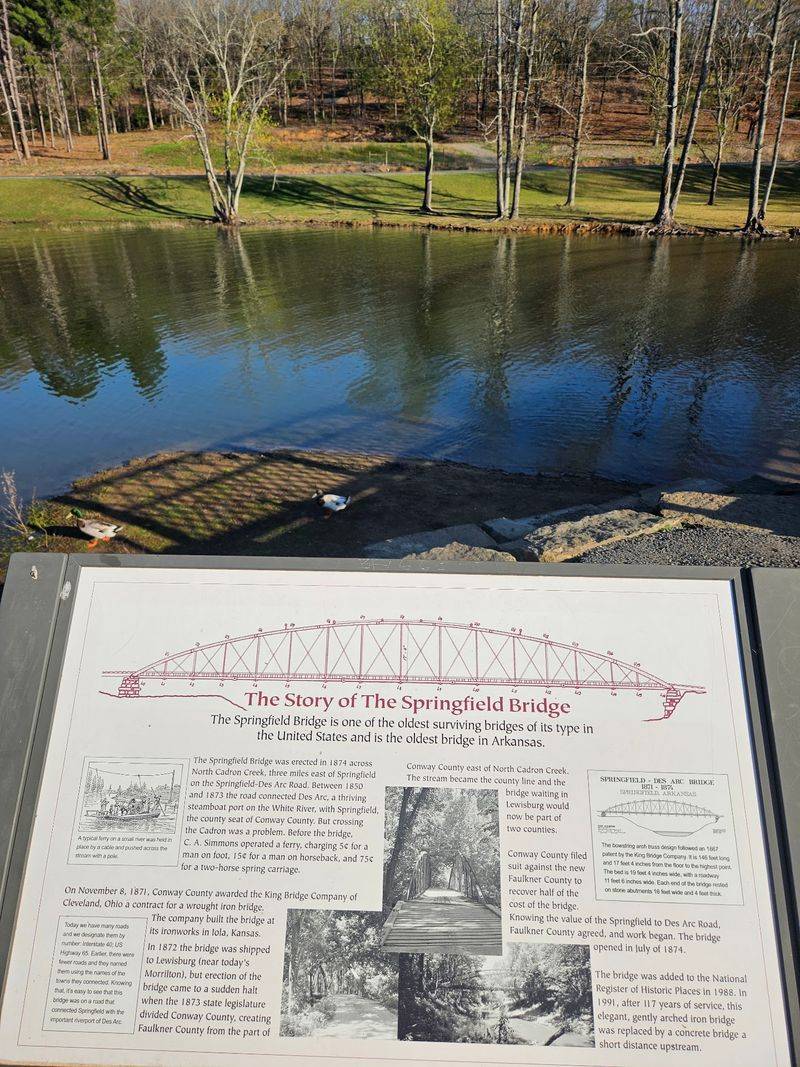
Conway County had big ambitions in the years following the Civil War, and this bridge was one of the clearest signs of that forward-thinking spirit. The Springfield Des Arc Bridge was completed in July 1874, arching over the North Cadron Creek roughly three miles east of the small settlement of Springfield in Conway County, Arkansas.
It served a critical stretch of the Springfield-Des Arc Road, a major east-west route connecting Springfield, then the county seat, with Des Arc, a busy steamboat port on the White River. Before the bridge existed, travelers relied on a ferry operated by C.
A. Simmons, who charged anywhere from five cents for a pedestrian to seventy-five cents for a two-horse spring carriage.
Conway County awarded the construction contract to the King Bridge Company of Cleveland, Ohio, on November 8, 1871, and the components were fabricated at their ironworks in Iola, Kansas. The ambition behind this project speaks volumes about what the region hoped to become.
The King Bridge Company and a Patented Design
Not every bridge earns the distinction of being called a masterpiece of its era, but the Springfield Des Arc Bridge comes remarkably close. Its bowstring arch truss design was patented in 1867 by Zenas King of the King Bridge Company, a firm that would eventually grow into the largest highway bridgeworks in the entire United States.
The design is named for the way the arching upper chord resembles a strung bow, offering impressive strength while using a relatively modest amount of iron. The Springfield Des Arc Bridge measures 146 feet long, rises 14 feet 7 inches from floor to its highest point, and spans 19 feet 4 inches wide with an 11-foot 6-inch roadway.
What makes this particular example so valuable to historians is its age. It stands as one of the oldest surviving bowstring arch truss bridges in the entire country, and it showcases design features that predate later, more standardized King Bridge Company construction.
That rarity is a big part of what made preservationists fight so hard to save it.
Floods, Logs, and a Bulldozer: The Bridge That Refused to Quit
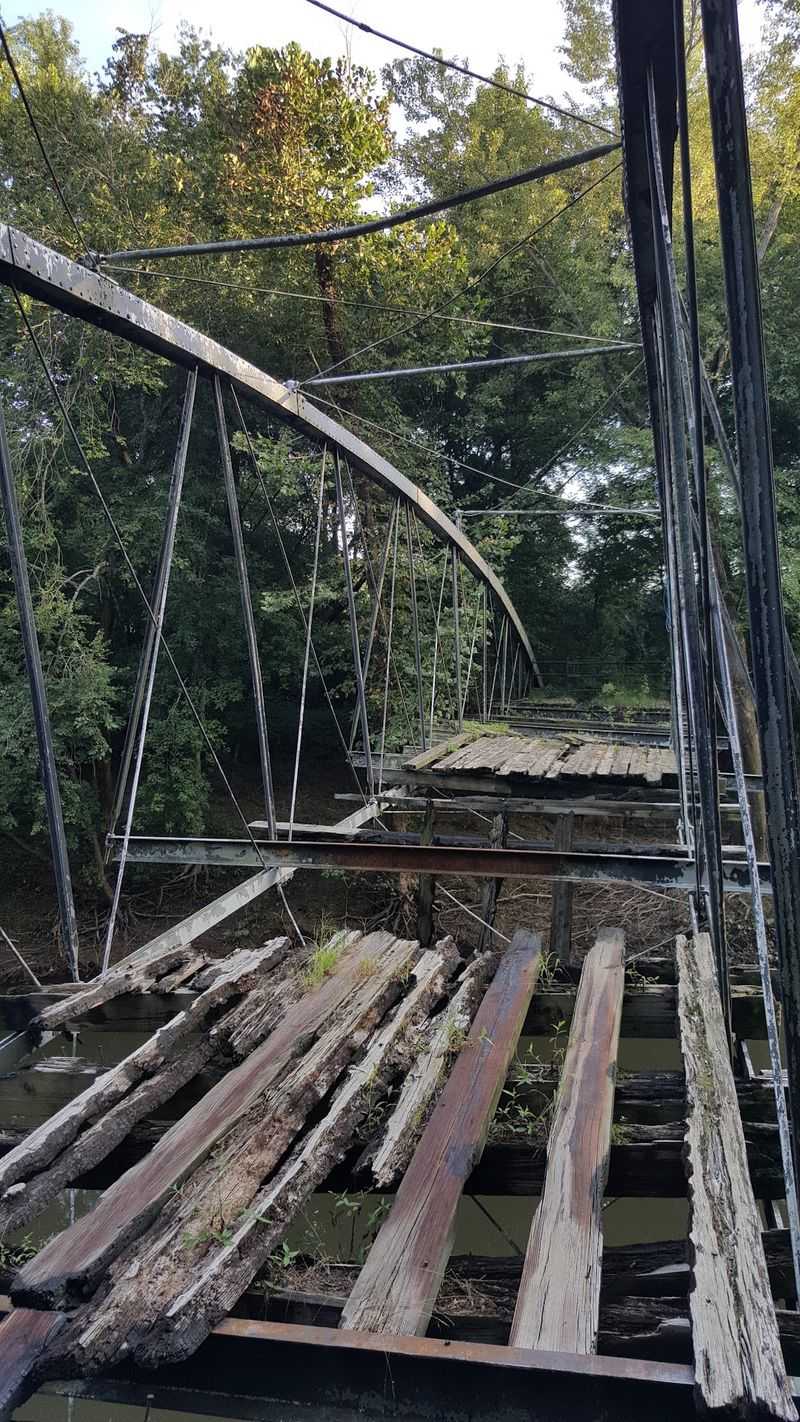
If resilience could be measured in iron, this bridge would be off the charts. Throughout its operational life over Cadron Creek, the Springfield Des Arc Bridge faced a relentless series of challenges that would have finished off a lesser structure long before its time.
Floods were its most persistent adversary. On May 25, 1882, the Arkansas Gazette reported that floodwaters stretched more than a mile wide and ran deep enough to sweep over the bridge floor entirely.
During the catastrophic Flood of 1927, residents attached wire cables to the bridge and tied them to nearby trees just to keep it from washing away entirely.
As late as December 1982, the bridge was submerged again by rising waters. Beyond floods, a heavy log truck once plunged through its wooden floor, and a bulldozer met a similar fate after ignoring posted weight limits.
Each of these events left a mark, but none of them finished the job. The bridge kept standing, which is honestly more than most of us could say.
From Active Road to Abandoned Relic
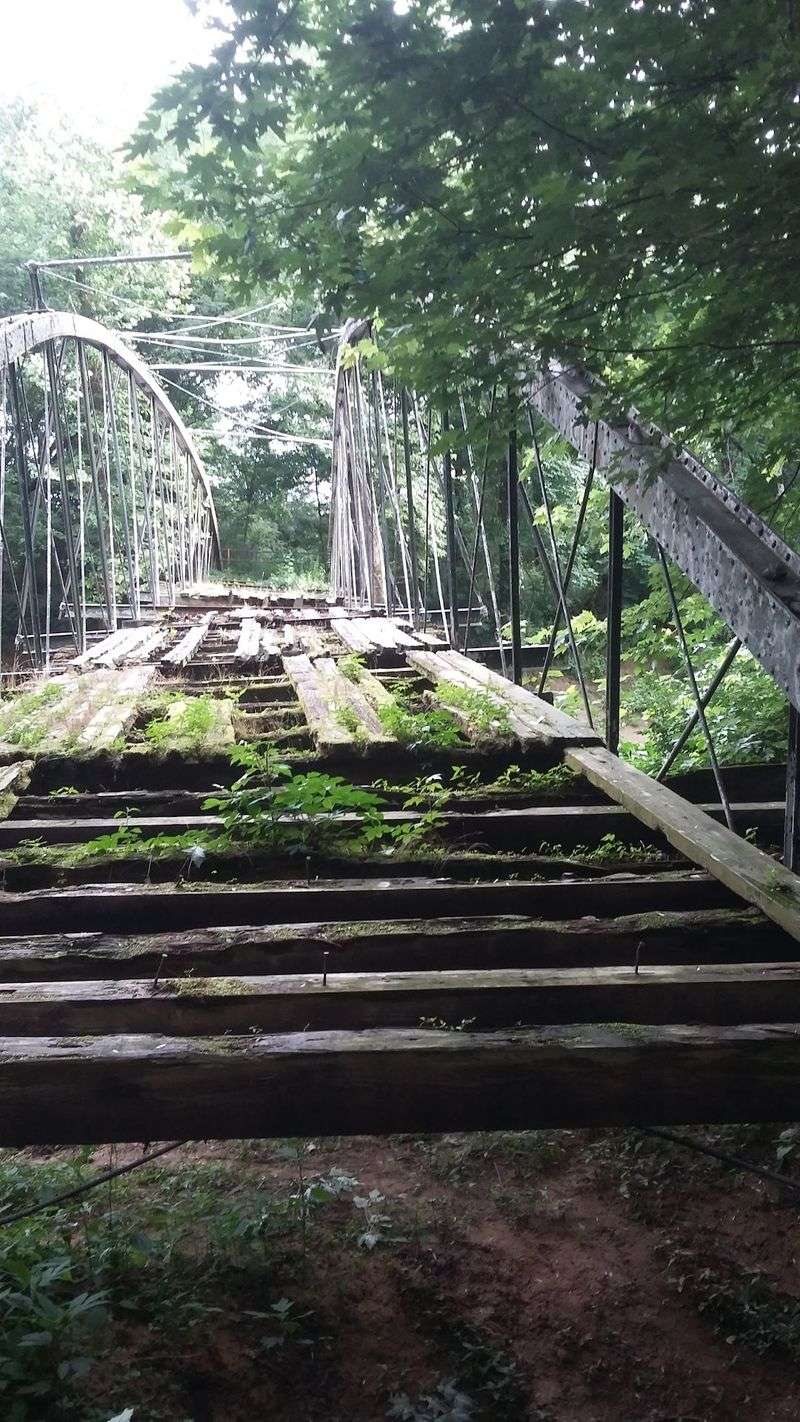
Progress has a way of leaving its most faithful servants behind, and the Springfield Des Arc Bridge learned that lesson the hard way. As railroads expanded and modern highways like old U.S.
Highway 65 drew traffic away from older routes, the bridge’s role as a vital crossing slowly diminished over the decades.
The Arkansas Highway Department maintained it into the 1970s, but by then it was used mostly by local farmers with narrower equipment. The final chapter of its active service came in 1991 when a new concrete bypass bridge was built upstream, and concrete barriers were placed at the entrances of the old iron bridge, effectively ending its life as a public crossing.
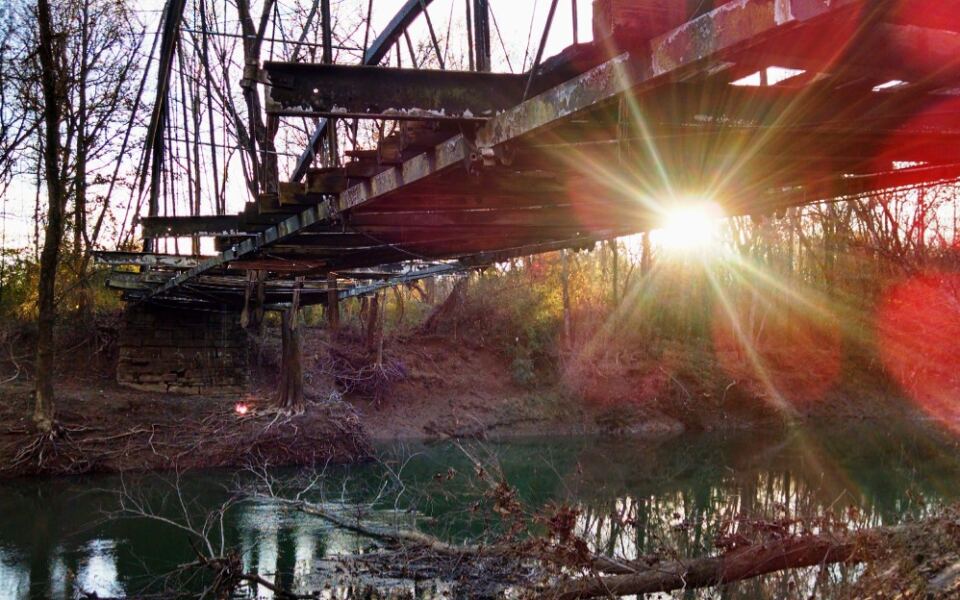
What followed was a painful period of neglect. Weeds, vines, and saplings began weaving through the ironwork, and vandals tagged the structure with graffiti and caused further damage with fire.
By 2015, the bridge had earned a spot on Arkansas’s Most Endangered Historic Properties list, a sobering status for something so genuinely irreplaceable. The clock was ticking loudly.
The 2015 Wake-Up Call That Changed Everything
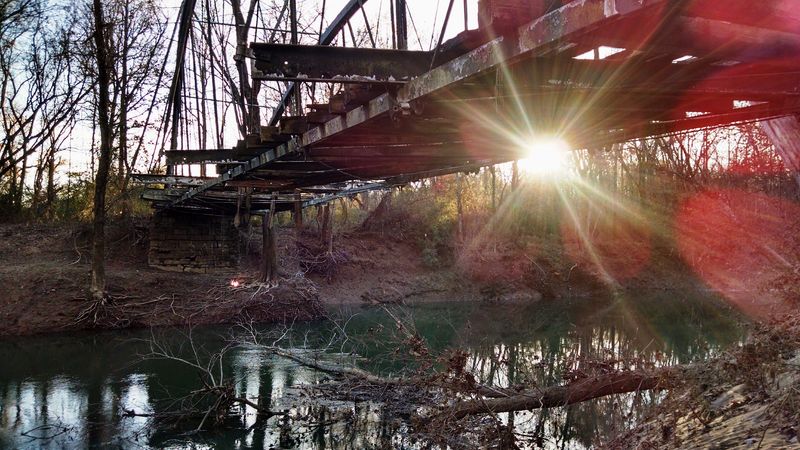
Sometimes it takes an official warning to shake people into action, and for this bridge, that warning arrived in 2015. The Historic Preservation Alliance of Arkansas placed the Springfield Des Arc Bridge on its list of the Eight Most Endangered Historic Properties in Arkansas, a designation that carried real urgency.
The listing drew attention from the Faulkner County Historical Society and Workin’ Bridges, a non-profit organization specializing in the restoration of historic iron bridges. These groups lobbied local authorities, raised public awareness, and made a compelling case for why this particular structure deserved saving rather than simply fading into the landscape.
Their efforts found a willing partner in the City of Conway, which agreed to take ownership of the bridge and commit to a full preservation project. That decision changed everything.
Without it, the Springfield Des Arc Bridge would almost certainly have continued its slow collapse into the creek bed, taking 150 years of Arkansas history with it. The community’s response showed what is possible when people refuse to accept that something important is simply gone.
The Remarkable Relocation: Moving a 146-Foot Iron Bridge
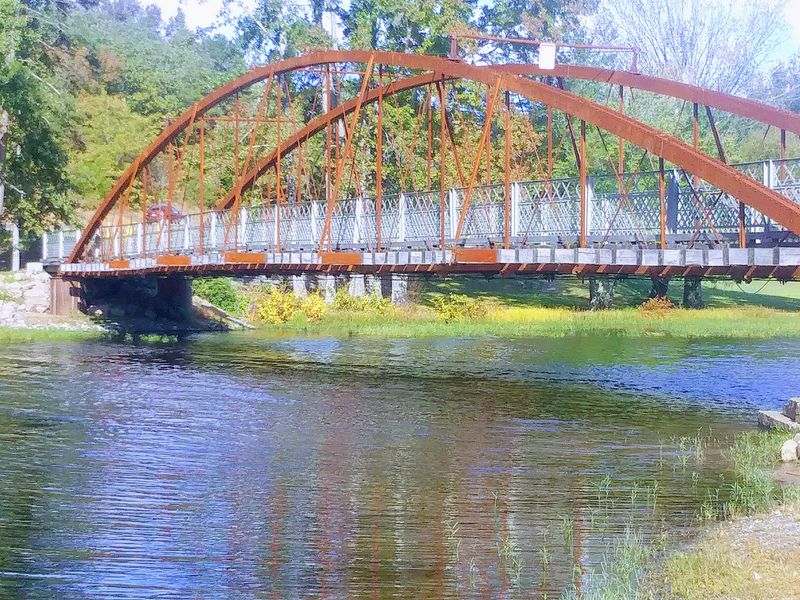
Moving a 146-foot iron bridge built in 1874 is not something that happens every day, and the operation that began in November 2016 was as impressive as it sounds. The bridge was carefully lifted from its original stone abutments over Cadron Creek using large cranes, then lowered onto a specially constructed gravel pad nearby.
From there, the painstaking process of disassembly began, with each iron component carefully taken apart and catalogued before being trucked to Little Rock for professional cleaning and refinishing. The entire operation was documented by the PBS television show “Ultimate Restorations,” which gave the project national exposure and highlighted just how complex the undertaking truly was.
One charming detail emerged during the process: a construction error from the original 1874 build was discovered, where the first vertical on the west arch was off by a full foot. Restorers addressed this during reassembly, returning the bridge to its intended design.
The whole relocation saga reads less like a civic project and more like a rescue mission, which is exactly what it was.
Reassembly and Restoration: Putting History Back Together
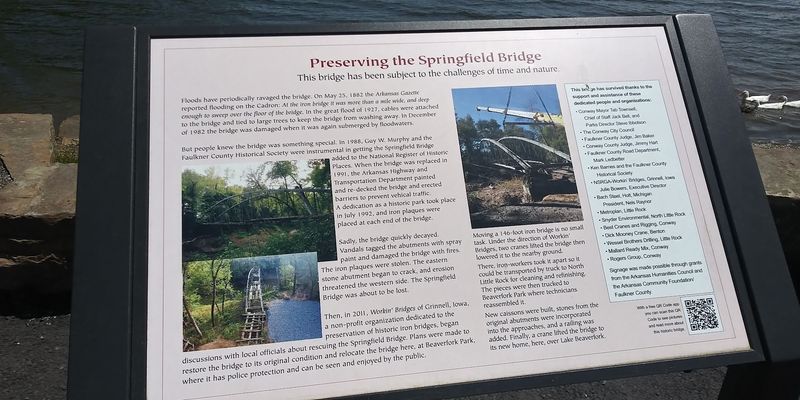
After its components were cleaned, refinished, and trucked to Beaverfork Park, the real work of bringing the Springfield Des Arc Bridge back to life began. New caissons were constructed to provide a stable foundation in its new lakeside setting, ensuring the restored bridge would stand securely for generations to come.
In a detail that any history lover would appreciate, stones from the bridge’s original locally quarried abutments were salvaged and incorporated into the new approaches at Beaverfork Park. That small decision creates a tangible physical link between the bridge’s original home over Cadron Creek and its current home beside the lake.
The restored bridge was left unpainted in its new location, allowing the natural texture and character of the wrought iron to show through. A new railing was added, a feature absent in the original rural setting, making it safer for pedestrian use.
The dedication ceremony took place in September 2017, marking the successful completion of a project that many had once feared was impossible. It was a genuinely proud moment for Conway and for Arkansas.
What It Feels Like to Cross It Today
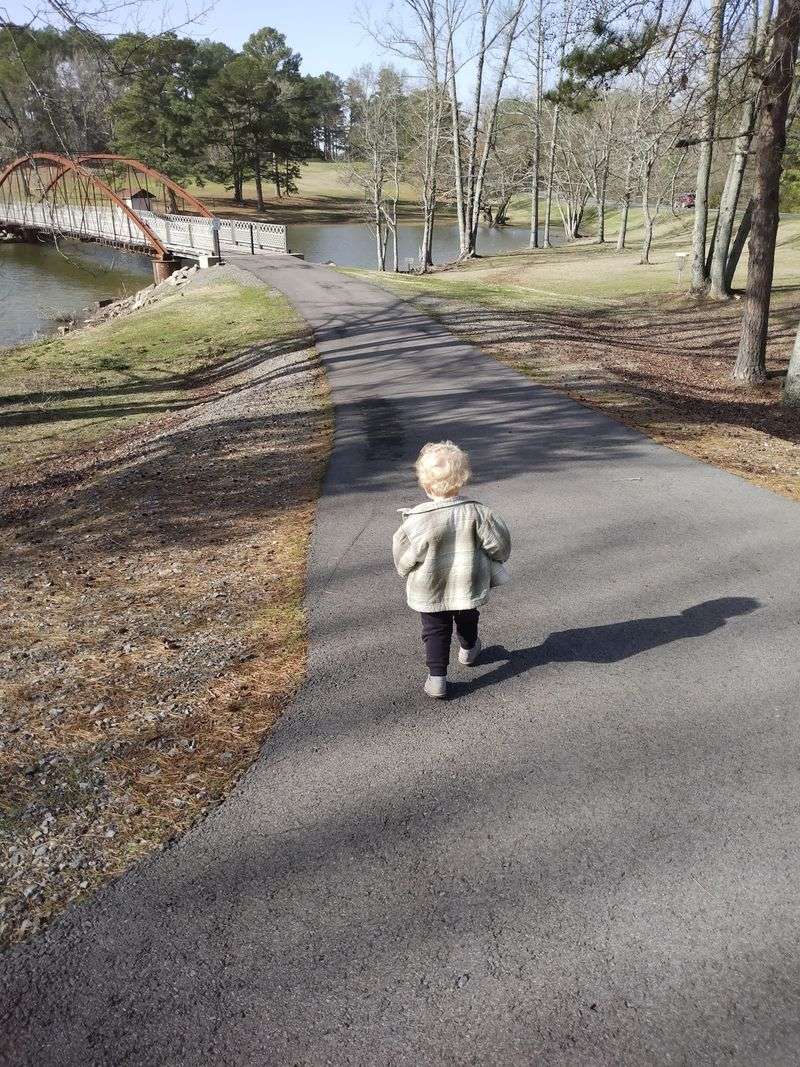
There is a particular kind of quiet that settles over you when you walk across a bridge that has been standing since 1874. The Springfield Des Arc Bridge, now a pedestrian-only crossing at Beaverfork Park, offers exactly that kind of experience, unhurried, atmospheric, and surprisingly moving for something that looks, at first glance, like just an old iron structure.
The views from the bridge are genuinely lovely. Beaverfork Lake stretches out on either side, and on calm mornings the water reflects the surrounding trees in a way that makes the whole scene feel almost impossibly peaceful.
Locals use it for early morning walks, fishing from nearby areas, bike rides through the park, and photography sessions at sunrise and sunset.
The bridge also sits near a disc golf basket, which means you might find players casting curious glances at the historic ironwork between throws. Restrooms, parking, and picnic areas are all nearby, making a visit comfortable and easy for families.
The experience is quiet, unhurried, and genuinely unlike anything else in central Arkansas.
Tips for Your Visit and What to Bring
A visit to the Springfield Des Arc Bridge at Beaverfork Park is easy to plan and genuinely rewarding, especially if you come prepared to spend a bit of time exploring. The park is free to enter, and parking is plentiful, so there is no need to stress about logistics before you even arrive.
Comfortable walking shoes are a practical choice since the park has paved paths suitable for jogging, biking, rollerblading, and skateboarding in addition to casual strolling. Photographers should consider visiting at sunrise or sunset, when the light catches the bridge’s iron arches at an angle that makes the whole structure glow warmly against the water.
A historical marker placed near the bridge by the Faulkner County Historical Society offers helpful context about the bridge’s origins, construction, and relocation, so take a few minutes to read it before or after your crossing. Families with young children will also find a playground nearby.
The park accommodates a wide range of activities, meaning you can easily turn a quick bridge visit into a full afternoon outing worth remembering.
Share this story