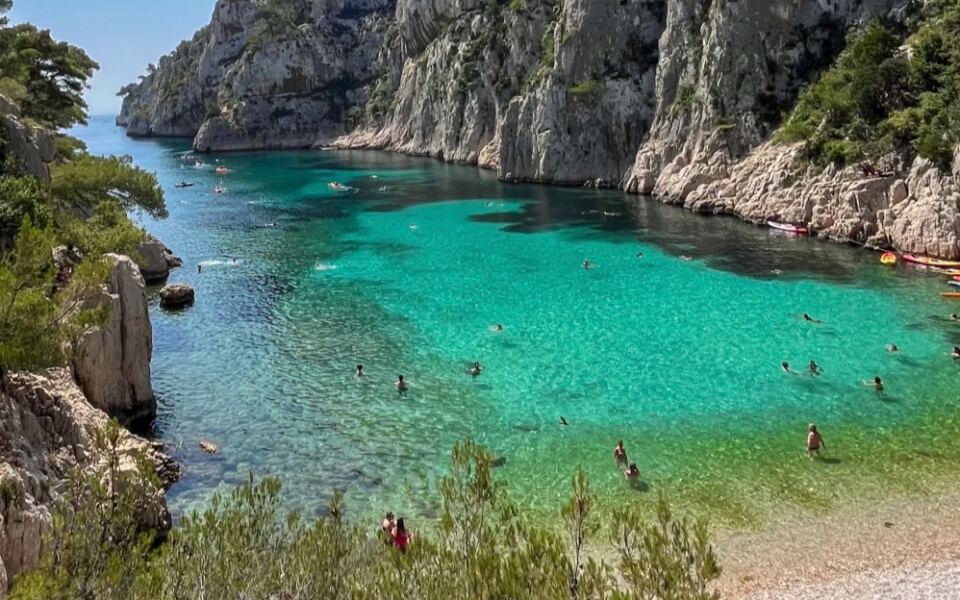
France has a coastline for every kind of beach lover. Whether you prefer a tiny hidden cove with water so clear you can count the pebbles below, or a massive stretch of golden sand where the Atlantic waves roll in one after another, France has it.
The Mediterranean side dazzles with its bright turquoise color and limestone scenery, while the Atlantic coast impresses with sheer scale, dunes, pine forests, and powerful surf. Get ready to explore 15 of the most beautiful beaches France has to offer.
Calanque d’En-Vau, Provence
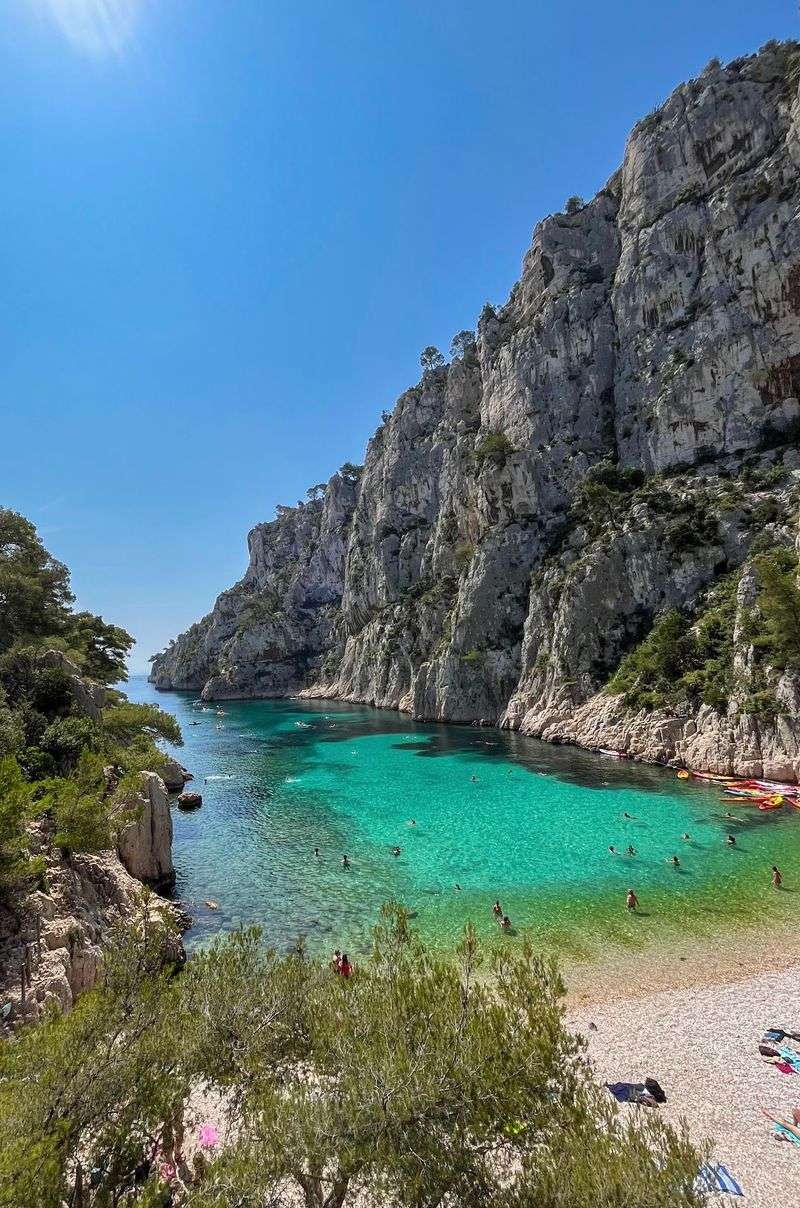
Squeeze through towering limestone walls, and suddenly the Mediterranean appears in a shade of turquoise that looks almost unreal. Calanque d’En-Vau, tucked between Marseille and Cassis, is one of those rare places where the journey to the beach is just as memorable as the beach itself.
Hikers, kayakers, and boat passengers all arrive with the same wide-eyed expression.
The cove is small, which is part of its charm. Pale rock towers overhead on both sides, filtering the light and making the water below glow.
Calanques National Park manages access to protect the fragile ecosystem, and during peak summer months, hiking permits may be required due to wildfire risk.
Always check the park’s official website before planning a visit, especially between June and September. Arriving by kayak from Cassis is a popular option that sidesteps trail closures.
Pack water, sunscreen, and sturdy shoes if you plan to hike. The reward at the end, that quiet turquoise cove framed by stone, is absolutely worth the effort.
Plage Notre-Dame, Porquerolles, Provence
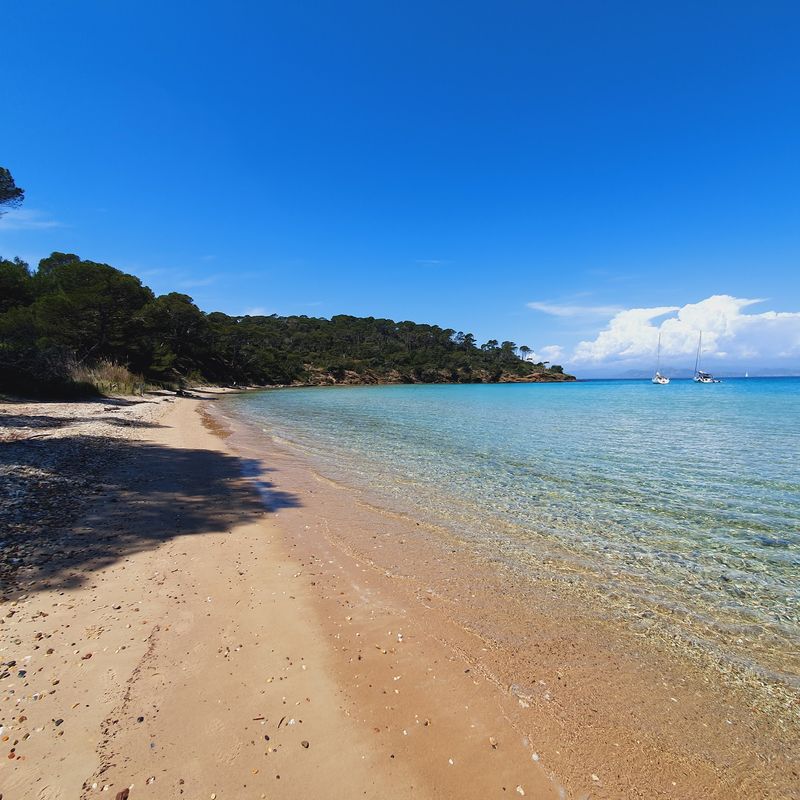
Porquerolles keeps a wonderful secret: one of the Mediterranean’s most beautiful beaches sits on an island where cars are almost nonexistent. Plage Notre-Dame stretches along the northern shore of Porquerolles, backed by a canopy of pine and oak trees instead of beach bars and souvenir shops.
The water is famously translucent, shifting from pale green near the shore to deep blue farther out.
Getting here is part of the experience. Take the short ferry from the Giens Peninsula, rent a bicycle at the village, and pedal through protected forest paths until the sand appears through the trees.
Much of Porquerolles falls under Port-Cros National Park protection, which is exactly why it still looks this good.
Arrive early in the morning to claim a quiet spot before the day-trippers arrive. There are no large hotels directly on the beach, so the atmosphere stays relaxed and natural.
Snorkeling is excellent in the shallows, where you can spot fish darting between patches of seagrass. This is Mediterranean France at its most unspoiled and genuinely lovely.
Palombaggia, Corsica
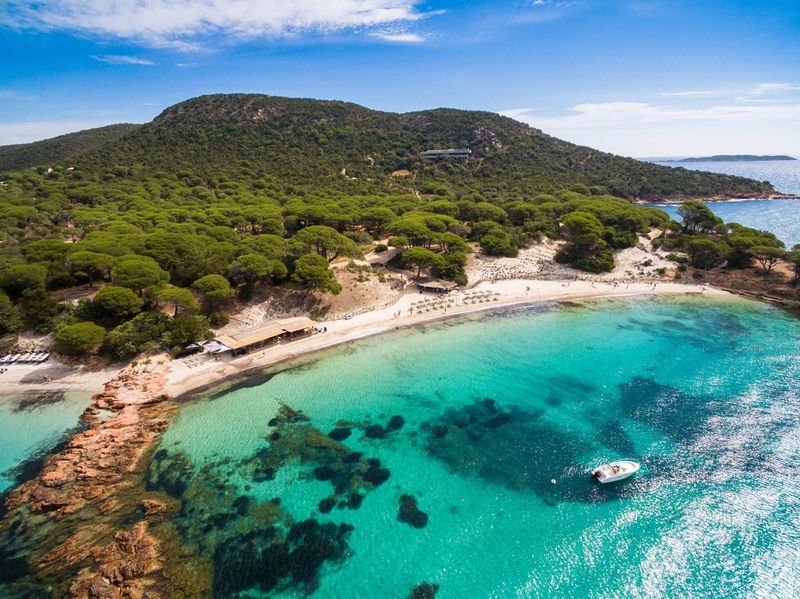
Red granite boulders, white sand, umbrella pines, and water the color of a swimming pool: Palombaggia delivers all four at once, and it genuinely looks like a travel poster come to life. Located south of Porto-Vecchio, this beach is one of the main reasons Corsica earned its reputation for Caribbean-style Mediterranean scenery.
The peninsula curves through a series of coves, each one slightly different from the last.
The full stretch runs for more than 1.5 kilometers, giving visitors room to spread out even during the busy summer months. Views toward the Cerbicale Islands add a scenic backdrop that photographers love.
Snorkeling around the granite rocks reveals colorful underwater life sheltered by the clear, calm water.
Parking fills quickly in July and August, so an early start pays off. Several beach restaurants operate seasonally along the shore, offering everything from simple snacks to full Corsican meals.
The combination of pine shade, pale sand, and that extraordinary water color makes Palombaggia one of the most visually striking beaches anywhere in France, Mediterranean or otherwise.
Santa Giulia, Corsica
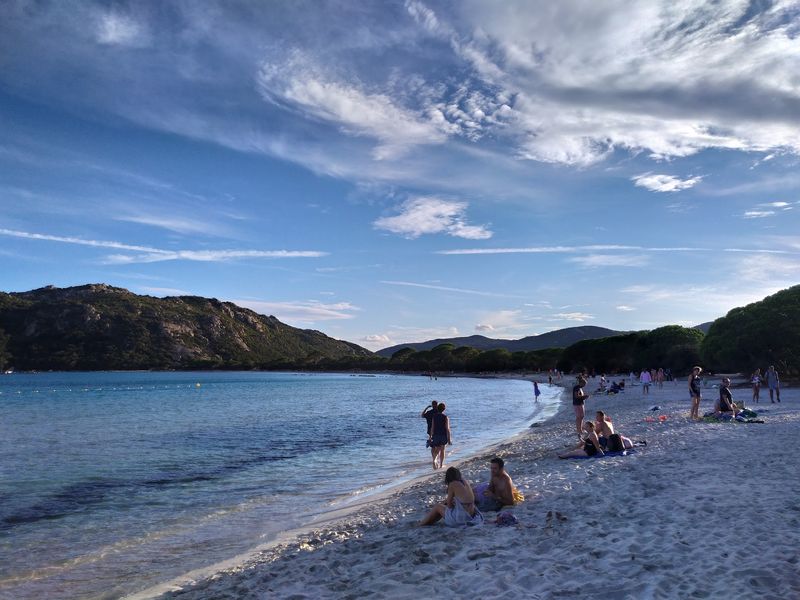
Santa Giulia looks less like a beach and more like someone flooded a meadow with the clearest water on earth. The bay curves around a broad lagoon south of Porto-Vecchio, where the water stays so shallow and calm that you can wade out a surprising distance before it reaches your waist.
Mountains rise sharply behind the shore, creating a backdrop that feels almost theatrical.
Those sheltered conditions make Santa Giulia a top choice for families with young children, paddleboarders, and anyone who prefers swimming in flat water over battling Atlantic swells. Kayak and paddleboard rentals are available on the beach throughout the summer season.
The lagoon’s sandy bottom keeps the water bright and reflective, intensifying that famous Corsican turquoise color.
Arrive before 10 a.m. to find parking without stress. The beach gets busy in peak season because word has spread about how good it is.
A short walk around the southern headland leads to quieter coves for those seeking more privacy. Santa Giulia is one of those places where the photographs honestly do not exaggerate how beautiful it actually is in person.
Rondinara, Corsica
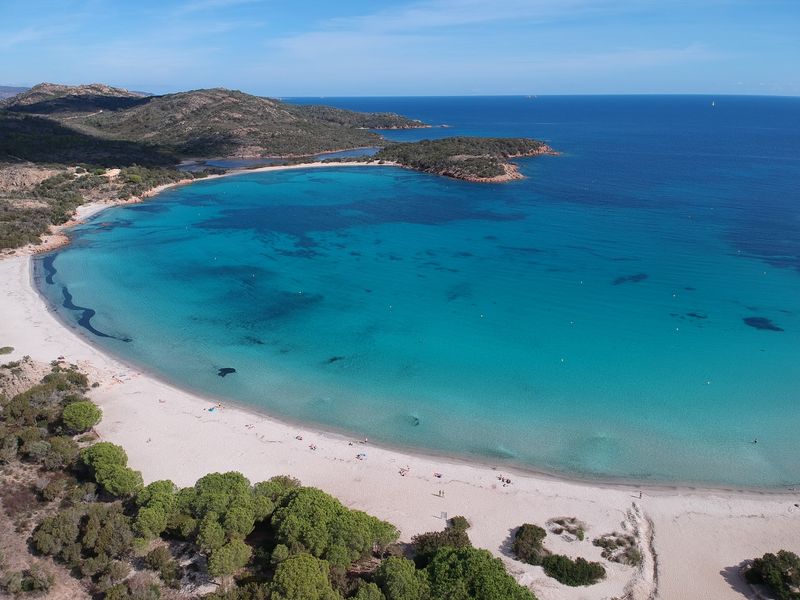
Geographers occasionally use the phrase “near-perfect circle” when describing Rondinara, and standing at the water’s edge, you understand why. Two rocky headlands reach toward each other until only a narrow gap remains, enclosing the bay like a natural harbor.
The water inside sits almost completely still, turning a brilliant turquoise that reflects the surrounding limestone and pine.
Located about 18 kilometers north of Bonifacio along a winding secondary road, Rondinara rewards the extra effort required to find it. The beach sits within the Bouches de Bonifacio nature reserve, a protected area that extends across the strait between Corsica and Sardinia.
That protected status keeps the surroundings in excellent condition.
Fine sand slopes gently into the water, making entry easy for swimmers of all ages. The bay’s sheltered shape means even moderate winds elsewhere on the coast leave Rondinara relatively calm.
Snorkeling along the rocky edges of the headlands is a popular activity, as the clear water makes it easy to spot sea urchins, small fish, and starfish. Arrive early or late in the day to avoid the busiest crowds.
Plage des Grands Sables, Ile de Groix, Brittany
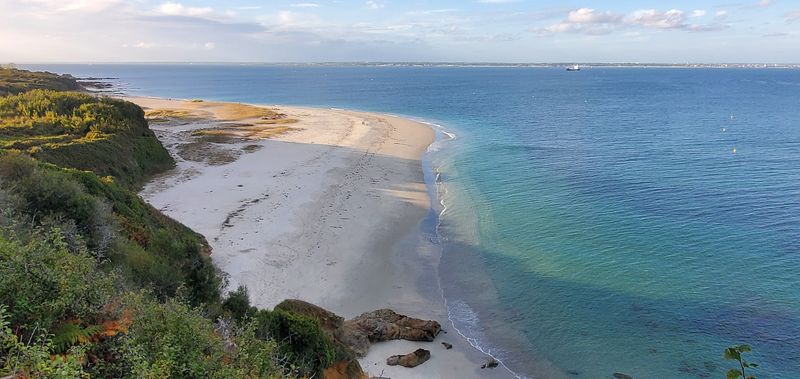
Most people assume clear turquoise water is a Mediterranean privilege, but Grands Sables on the Ile de Groix politely disagrees. On a bright summer day, the Atlantic here turns a transparent blue-green that rivals anything the south of France can offer.
The sand itself is a geological curiosity, containing garnet minerals that give it a faint reddish sparkle alongside the pale grains.
The beach spans roughly 800 meters and carries the unusual distinction of being convex rather than the usual concave crescent shape. Sediment currents slowly shift the beach’s position over time, earning it the nickname “the wandering beach” among locals.
Reaching Groix requires a 45-minute ferry from Lorient, which immediately filters out casual day-trippers.
Cycling around the island is the best way to explore beyond Grands Sables, as the coastline changes dramatically between the sheltered south and the wilder northern cliffs. The island has a charming village, good seafood restaurants, and a geology museum dedicated to explaining those unusual minerals underfoot.
For anyone who thinks Brittany means only grey skies and rugged rocks, Grands Sables is a very pleasant surprise.
La Baule, Pays de la Loire
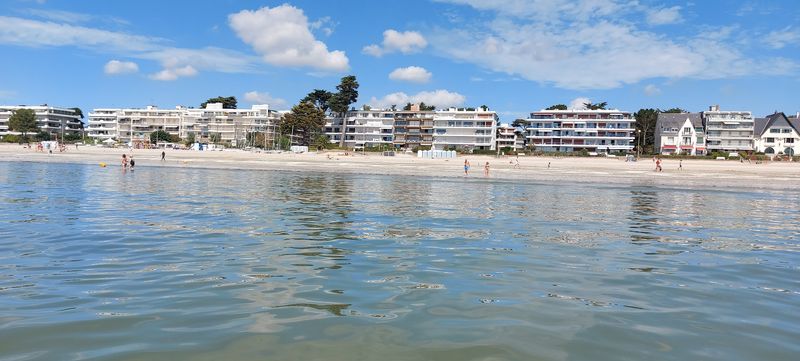
Nine kilometers of fine sand curving in one smooth arc: La Baule does not do things by halves. This is one of Europe’s most celebrated resort beaches, and its scale is genuinely impressive when you stand at one end and try to see the other.
The bay sweeps between Pornichet and Le Pouliguen with the kind of confident elegance that only comes from over a century of practice.
At low tide, the Atlantic retreats to reveal an enormous expanse of flat wet sand ideal for walking, jogging, and beach sports. Sailing schools, paddleboard rentals, and beach volleyball courts line the promenade during summer.
Behind the waterfront, a remarkable collection of Belle Epoque and Art Deco villas recalls the early 20th century, when wealthy Parisians arrived by train to spend their summers here.
La Baule works well as a base for exploring the surrounding area, including the salt marshes of Guerande and the medieval walled town nearby. The resort has a full range of restaurants, markets, and accommodations at different price points.
For sheer scale combined with a lively seaside atmosphere, very few Atlantic beaches in France can match what La Baule consistently delivers.
Plage de la Corniche and Dune du Pilat, Nouvelle-Aquitaine
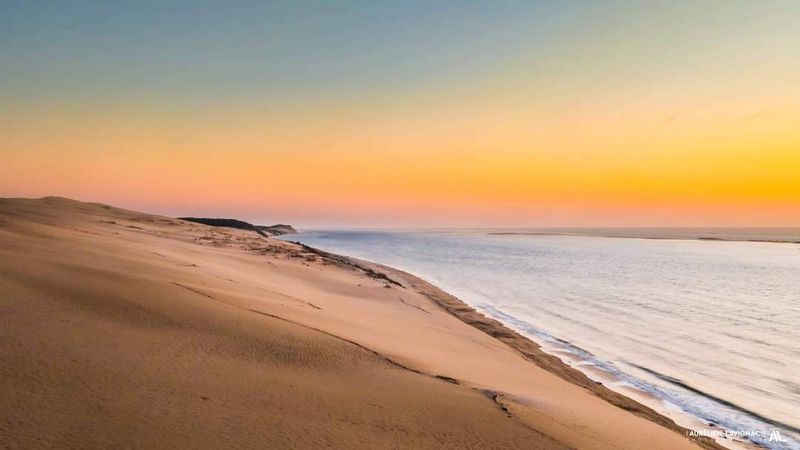
Standing on top of the Dune du Pilat feels like standing on the edge of two completely different worlds. On one side, the Atlantic stretches to the horizon.
On the other, the Landes pine forest runs inland as far as the eye can see. Between them, roughly 109 meters below your feet, Plage de la Corniche curves along the water’s edge.
Europe’s tallest sand dune measures about 2.7 kilometers long and 500 meters wide, though those numbers shift slightly as wind constantly reshapes it. The climb up the wooden stairway is steep enough to make your legs notice, but the panoramic view from the summit justifies every step.
Banc d’Arguin nature reserve sits just offshore, visible as a pale sandbank in the bay.
The beach below is excellent for swimming and surfing when conditions cooperate. Paragliders sometimes launch from the dune’s crest, adding movement and color to the view.
Visiting outside of July and August makes the experience noticeably more peaceful. The Arcachon Basin nearby offers oyster tastings, boat trips, and the charming village of Cap Ferret, rounding out a genuinely spectacular stretch of the French Atlantic coast.
Hossegor, Landes
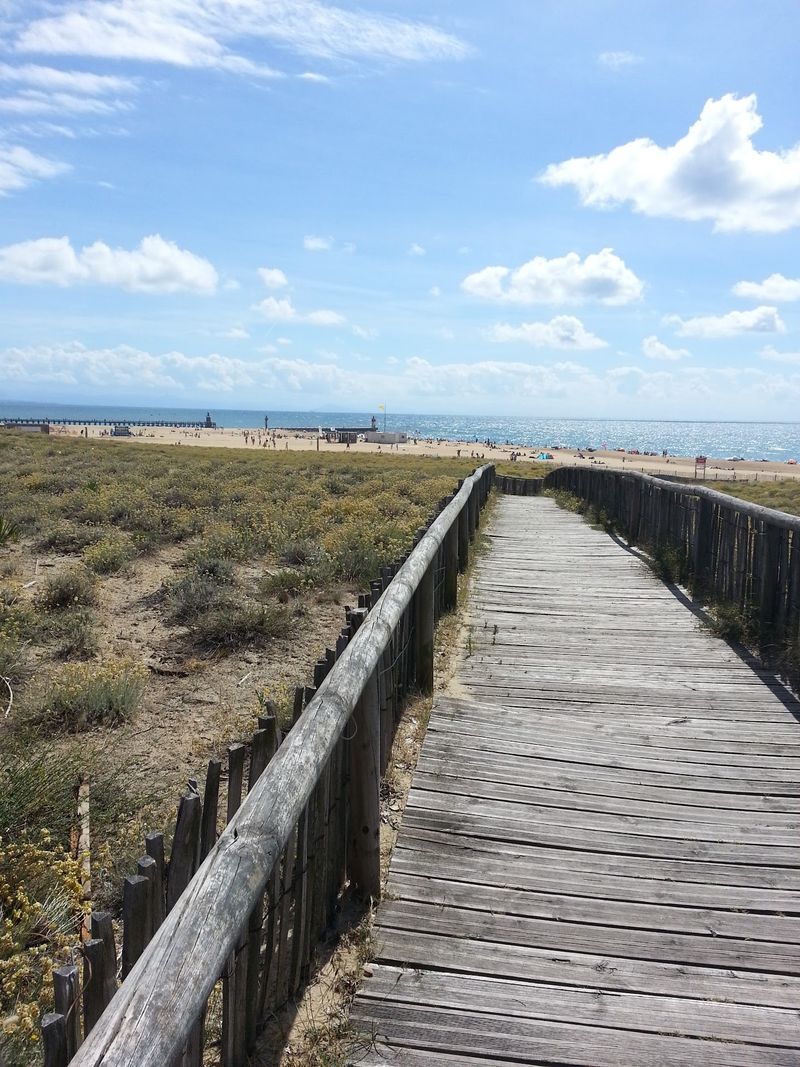
Hossegor has a reputation that travels far beyond France. Surfers from Australia, California, and Brazil all know the name because the Atlantic swells that arrive here are among the most powerful and consistent in Europe.
Shifting underwater sandbanks create hollow, fast-breaking waves that professional surfers describe with unconcealed enthusiasm.
The beaches run along a straight coastline backed by dunes and the enormous Landes pine forest, one of the largest planted forests in Europe. The Quiksilver Pro France competition has drawn the world’s best surfers to Hossegor for years, turning the town into a hub of surf culture, board shops, and beachside cafes.
Non-surfers find plenty to enjoy too, from long walks along the shore to cycling through pine-shaded paths.
Hossegor’s inland marine lake provides a calmer water option for paddleboarding and swimming when the ocean feels too wild. The nearby towns of Capbreton and Seignosse share the same continuous coastal environment, each with its own character.
Evening markets, fresh seafood, and a lively social scene make Hossegor as enjoyable off the beach as it is on the waves.
Cote des Basques, Biarritz
Surfing arrived in France right here. In 1957, screenwriter Peter Viertel rode the waves at Cote des Basques while filming a movie in Biarritz, and a small group of local enthusiasts who watched him immediately wanted to try.
That moment launched what became one of Europe’s most vibrant surf cultures, and the beach has never looked back.
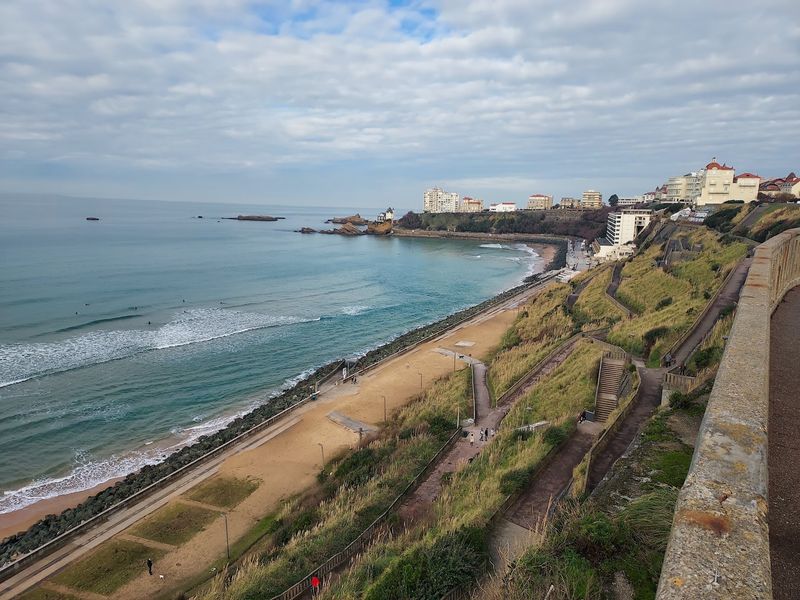
The setting is dramatic in a way that photographs struggle to fully capture. Steep cliffs frame the beach on the eastern side, with Villa Belza sitting on a rocky promontory at the southern end like something from a gothic novel.
At low tide, the Atlantic retreats to reveal a broad sandy beach perfect for surfing lessons and casual swimming.
High tide changes things considerably, as much of the sand disappears beneath the waves. The cliff-top promenade above offers one of the best viewpoints on the entire Basque coast, looking south toward the Pyrenees on clear days.
Biarritz itself adds elegant architecture, excellent restaurants, a covered market, and a lively year-round atmosphere. Cote des Basques earns its place as both a historical landmark and a genuinely exciting place to spend a day by the ocean.
Grande Plage d’Hendaye, French Basque Country
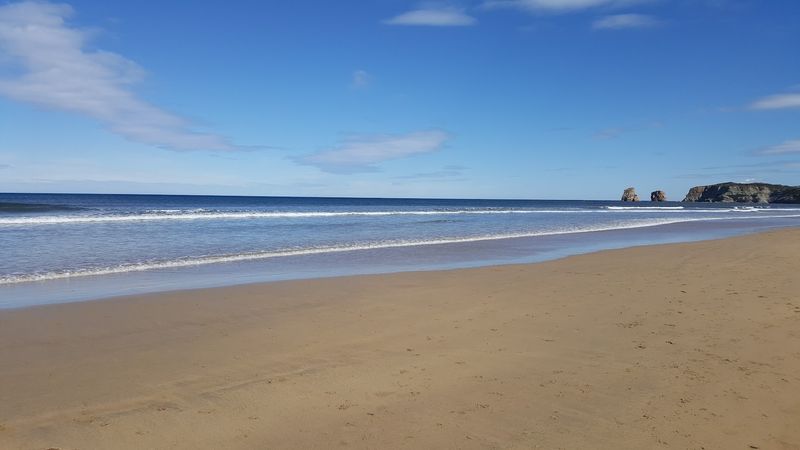
Hendaye sits at the very tip of France, close enough to Spain that on a clear day you can see across the bay without squinting. The Grande Plage stretches for around three kilometers of fine sand, making it one of the longest beaches along the entire Basque coast.
That extra length gives it a relaxed, unhurried quality that smaller beaches nearby cannot quite match.
The waves here are generally friendlier than at Biarritz or Hossegor, which makes Hendaye popular with families and beginner surfers looking for manageable conditions. Two distinctive rock formations called Les Deux Jumeaux, or “The Twins,” sit just offshore and give the bay an instantly recognizable silhouette.
The coastal path heading north toward Saint-Jean-de-Luz passes through cliffs, coves, and viewpoints that show how quickly the Atlantic landscape transforms.
Hendaye town itself has a pleasant old quarter, a marina, and a train station connecting directly to San Sebastian in Spain, which is only 20 minutes away. That cross-border convenience makes Hendaye a smart base for exploring both French and Spanish Basque culture.
The beach, however, is reason enough to visit on its own terms.
Saint-Jean-de-Monts, Vendee
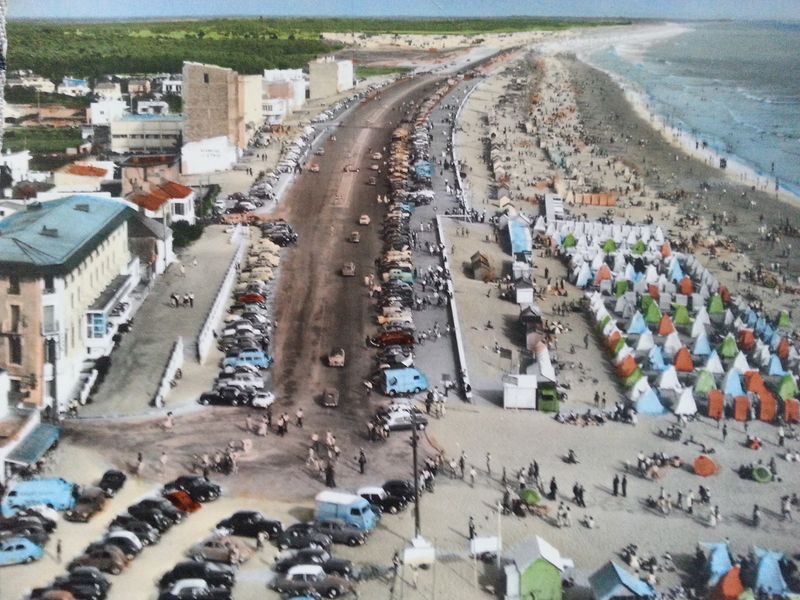
Eight kilometers of golden sand backed by dunes and pine trees: Saint-Jean-de-Monts is the kind of beach that makes you feel small in the best possible way. The Vendee coast has a generous tidal range, which means low tide transforms the already wide beach into something almost absurdly spacious.
You could walk for an hour and still not reach the end.
That open, windswept character makes it ideal for activities that need room to breathe. Land sailing, known locally as char a voile, is one of the Vendee coast’s signature pursuits, and Saint-Jean-de-Monts is among the best spots to try it.
Kite flying, sandcastle building, and long barefoot walks are equally popular with visitors of all ages.
The resort town behind the dunes has a good range of restaurants, ice cream shops, and a lively summer market. Cycling paths connect Saint-Jean-de-Monts to neighboring coastal towns through pine forest, making it easy to explore the area without a car.
For families looking for a classic French Atlantic holiday with plenty of space and fresh sea air, this stretch of the Vendee coast ticks every box without effort.
Les Sables-d’Olonne, Vendee
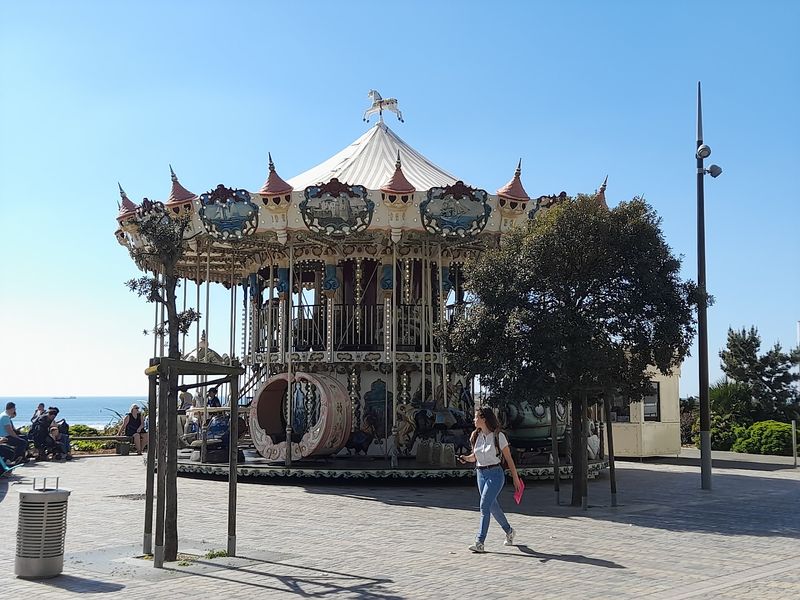
The name translates simply as “the sands of Olonne,” and this town has built its entire identity around that beach for well over a century. The Grande Plage runs along the Cote de Lumiere, a stretch of coast named for its famously bright Atlantic light, which painters and photographers have chased here for generations.
Belle Epoque architecture lines the promenade behind the sand, giving the seafront a nostalgic elegance.
Every four years, Les Sables-d’Olonne becomes the center of the sailing world when the Vendee Globe race begins and ends here. Solo sailors depart for a nonstop circumnavigation of the globe and return months later to an enormous crowd lining the harbor.
That maritime soul gives the town a character that purely recreational beach resorts rarely develop.
Visitors can explore the old fishing quarter of La Chaume across the channel from the main town, reached by a small ferry that runs throughout the day. Fresh seafood is excellent here, particularly oysters and local fish.
The beach itself is broad and well-maintained, with lifeguards on duty during summer. Les Sables-d’Olonne rewards those who look beyond the sand and discover the fascinating harbor life behind it.
Saint-Jean-de-Luz, French Basque Country
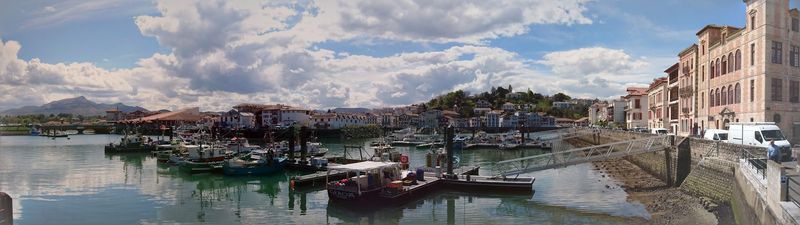
In 1660, King Louis XIV of France married Maria Theresa of Spain in Saint-Jean-de-Luz, and the town has been quietly proud of that fact ever since. The Church of Saint-Jean-Baptiste where the ceremony took place still stands in the town center, a short walk from a beach that offers something genuinely rare on the Atlantic coast: calm, sheltered water ideal for swimming.
The bay curves in a protected arc, shielded from the full force of the ocean by a pair of jetties built in the 17th century. That engineering decision made the town safe for fishing boats and, centuries later, created ideal conditions for family swimming.
The water on a sunny day turns a lovely blue-green that hints at the Basque coast’s surprising beauty.
Traditional Basque architecture in red, white, and green lines the streets behind the beach, and the covered market is one of the best places in the region to find local cheese, ham, and Basque pastries. The fishing harbor remains active, and fresh tuna is a local specialty worth seeking out.
Saint-Jean-de-Luz combines history, culture, excellent food, and a genuinely pleasant beach into one very satisfying package.
Ile d’Yeu, Pays de la Loire
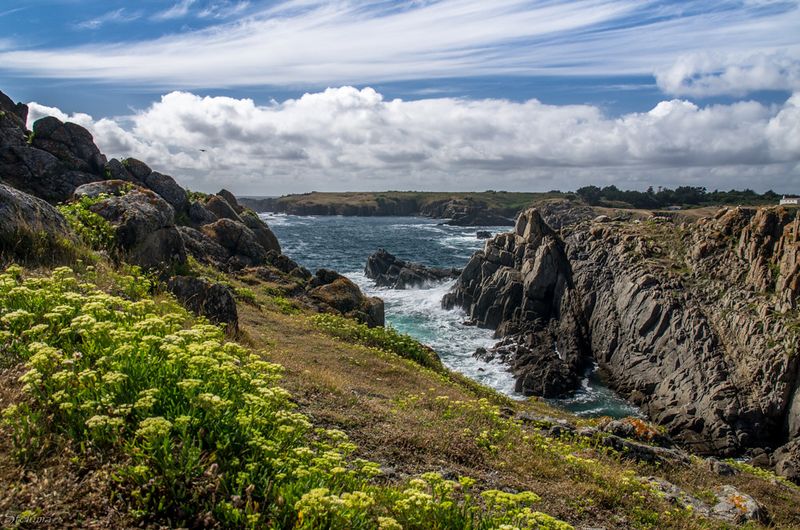
Packed into just 23 square kilometers, the Ile d’Yeu somehow manages to contain two completely different coastlines. The northern shore faces the open Atlantic with rocky cliffs and dramatic wave action.
The southern side hides a series of sandy coves among dunes and pines, where the water can turn a surprisingly clear turquoise on calm summer days.
That southern color is a genuine revelation for first-time visitors expecting purely grey Atlantic conditions. The sheltered coves trap clear water over sandy bottoms, producing a visual effect closer to Corsica than to the Vendee mainland just a short ferry ride away.
Cycling is the ideal way to move between the island’s contrasting landscapes, and rental bikes are available near the port.
The island has two small ports, a medieval castle ruin on the western cliffs, traditional fishing cottages painted in bright colors, and almost no traffic. Cars are limited, which keeps the atmosphere quiet and the roads safe for cyclists and walkers.
Fresh lobster and local fish are served at small restaurants near the harbor. The Ile d’Yeu is the kind of place people visit once and spend the next decade trying to get back to.
Share this story