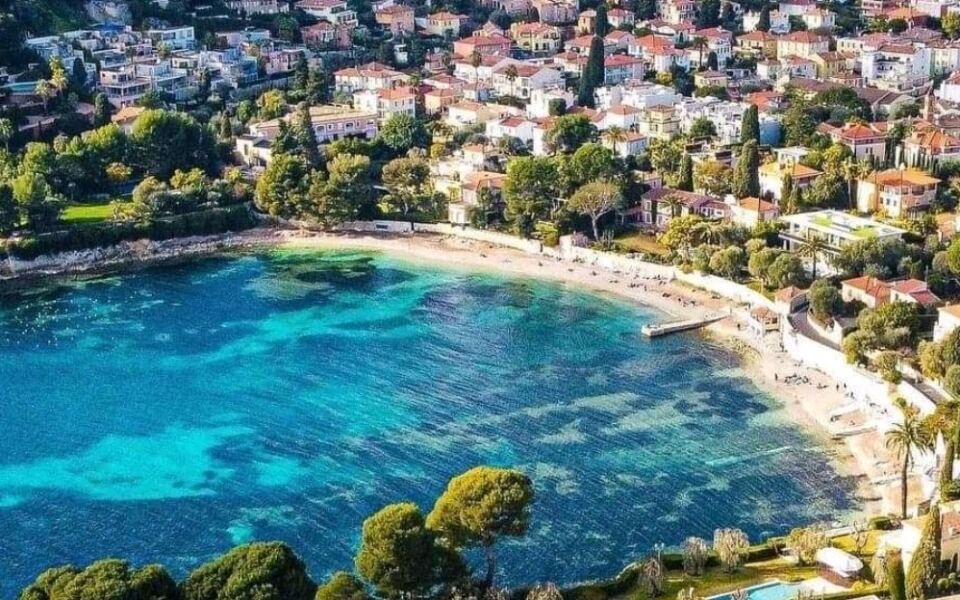
France’s Côte d’Azur is one of those places that sounds almost too good to be true, yet it delivers every time. Stretching along the Mediterranean from Menton near the Italian border all the way west to the Var, this sun-drenched coastline packs in medieval hilltop villages, fragrant perfume towns, forested islands, and glamorous promenades within a surprisingly compact region.
Whether you are drawn by world-class art museums, secluded coves, or fresh seafood markets, the Riviera has a version of itself for every kind of traveler. These 15 stops reveal just how much variety is hiding behind the famous postcard image.
Nice
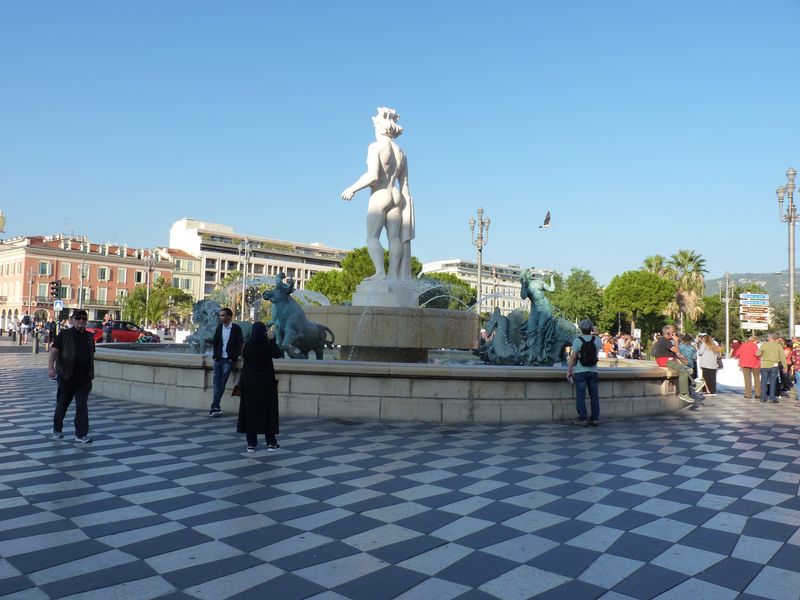
Seven kilometers of pebble beach, a candy-colored old town, and world-class museums all packed into one city: Nice is the Riviera’s unbeatable opener. The Promenade des Anglais is the obvious star, curving beside the sea with the kind of effortless elegance that makes afternoon strolling feel like an Olympic sport.
Below Castle Hill, Vieux Nice rewards wanderers with Baroque churches, morning markets bursting with socca and fresh produce, and narrow lanes painted in shades of saffron and terracotta.
Nice only became French in 1860, and the Italian and Savoyard fingerprints are still all over its architecture and cuisine. The Musée Matisse and Musée Chagall sit up in the leafy Cimiez neighborhood, offering genuine artistic depth beyond the beach scene.
Roman ruins at Cimiez add yet another layer of history to a city that somehow feels both grand and completely approachable.
Trains from Nice make the rest of the eastern Riviera easy to reach without a car, which makes it the smartest base for first-time visitors. Come for the promenade, stay for the markets, and leave already planning your return.
Villefranche-sur-Mer
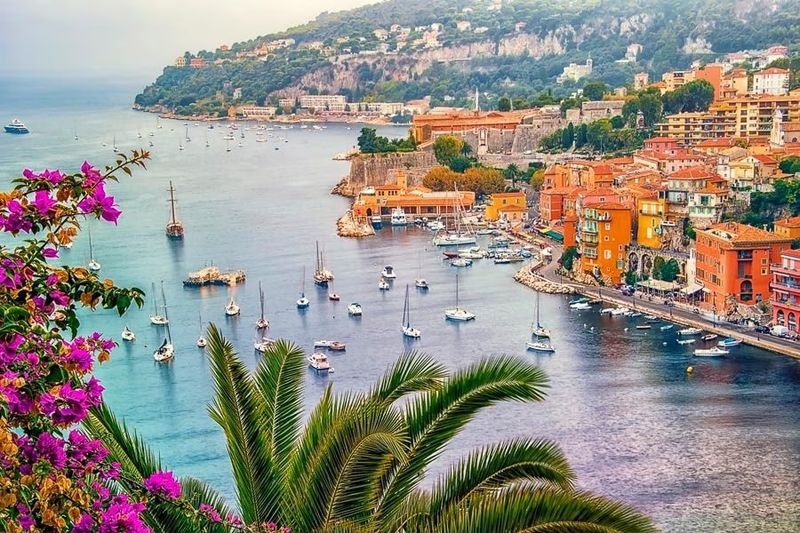
Tucked just east of Nice, Villefranche-sur-Mer wraps around one of the deepest natural harbors in the entire Mediterranean, which is exactly why warships used to anchor here and why cruise ships still do today. The pastel-colored houses stacked above the Port de la Santé look almost too pretty to be real, yet every one of them is lived in, which gives the place an authenticity that purpose-built resorts can only dream about.
History lovers should not skip the Rue Obscure, a partially covered medieval passage running underneath the old buildings like a secret corridor from another century. Jean Cocteau added a more recent artistic chapter when he decorated the tiny Chapelle Saint-Pierre with striking maritime frescoes.
The chapel is small, but the impact is outsized.
Plage des Marinières curves gently along the bay and is far less crowded than the beaches in Nice, making it a favorite with locals who know better than to fight the tourist crowds. The old citadel above town offers sweeping views over the harbor and the surrounding hills.
Villefranche proves that great things genuinely do come in small packages.
Saint-Jean-Cap-Ferrat
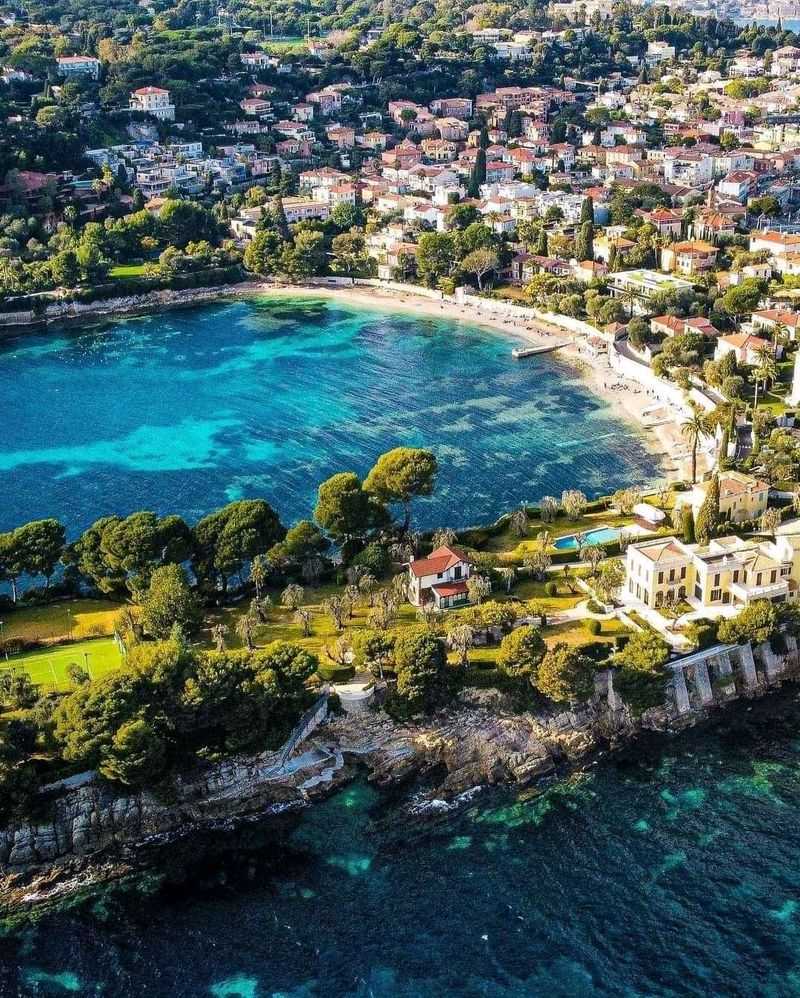
Saint-Jean-Cap-Ferrat is the kind of place where European aristocrats once built their winter palaces, and walking around the peninsula today, it is easy to understand why they chose this particular patch of the Riviera. The cape juts into the Mediterranean between Villefranche and Beaulieu-sur-Mer, draped in pine trees and ringed by around eight kilometers of coastal walking trails that alternate between rocky shoreline and glimpses of grand estates hidden behind high walls.
The Villa Ephrussi de Rothschild is the undisputed highlight: a rose-pink Belle Époque mansion surrounded by nine themed gardens, each one dramatically different from the last. The Provençal garden, the Japanese garden, and the stone-terraced Spanish garden all compete for attention against a backdrop of sea views stretching toward Nice and Monaco.
It is theatrical in the best possible way.
Smaller beaches like Paloma, Passable, and Fossettes tuck into coves around the cape, offering calm, clear water without the crowds of larger resort towns. The full circuit walk around the tip of the cape takes about two hours at a relaxed pace and delivers some of the most satisfying coastal views on the entire Côte d’Azur.
Èze
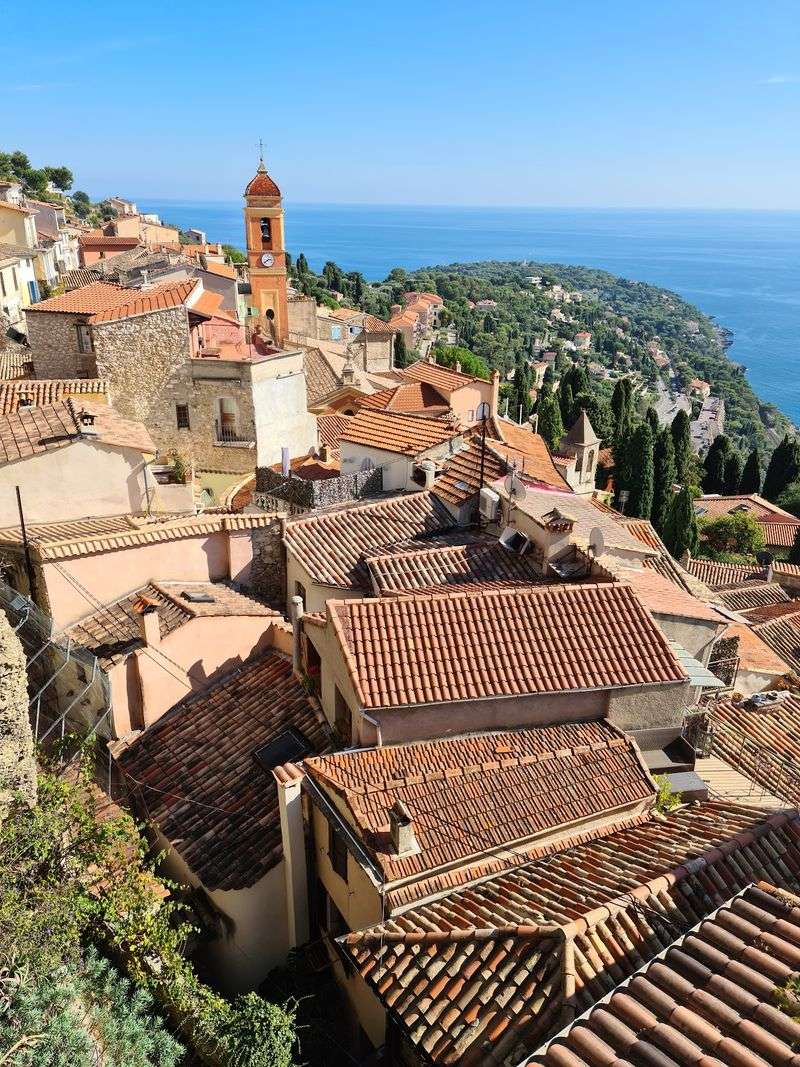
Perched at 429 meters above the sea, Èze is the kind of village that makes you question how medieval builders ever managed to haul stone up there in the first place, let alone build an entire fortified settlement. The answer, presumably, is sheer determination and a spectacular view as a reward.
Every steep lane through the village opens onto a fresh angle of the coast below, and the higher you climb, the more jaw-dropping the panorama gets.
At the very top, the Jardin Exotique fills the ruins of the old castle with cacti, succulents, and sculptures arranged around viewpoints that look almost directly down to the sea. It is genuinely vertiginous in the best way.
Below the village, Fragonard operates a perfume factory where visitors can learn how raw flowers are transformed into the fragrances sold around the world.
Èze actually has three distinct levels: the medieval hilltop village, a lower modern section along the main road, and Èze-sur-Mer down at the water’s edge, connected by a steep footpath once famously walked by philosopher Friedrich Nietzsche. Taking that path downhill after exploring the village rewards you with sea-level swimming and a cold drink at the bottom.
Menton
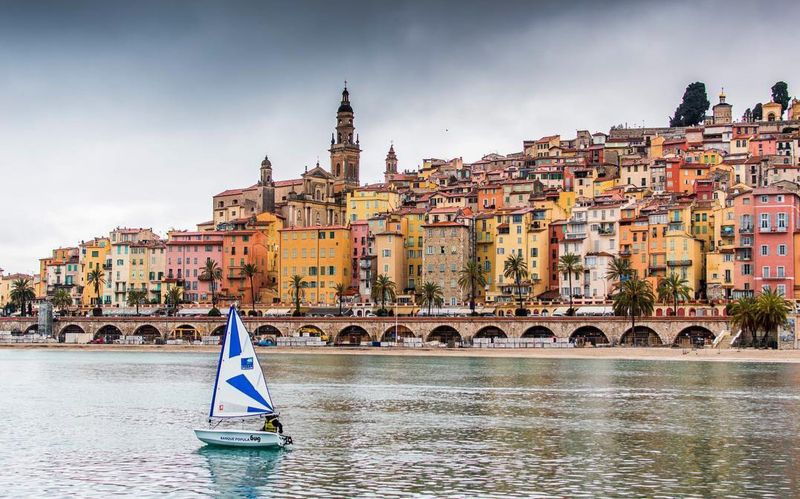
Menton sits so close to Italy that the border is just a few minutes away, and the town’s personality reflects that proximity in the most delicious way. The old town stacks up in layers of warm ocher, yellow, and pink above the harbor, crowned by the Basilique Saint-Michel-Archange, which glows golden in the afternoon sun.
Wandering the steep lanes here feels less like the French Riviera and more like stumbling into a Ligurian coastal town, which is no accident given the shared history.
The city’s unusually mild microclimate, sheltered by the Alps behind it, made it a magnet for 19th-century European aristocrats seeking winter warmth. That same climate turned Menton into a capital of citrus and garden culture.
The Fête du Citron every February transforms the town into an extraordinary outdoor sculpture park built entirely from lemons and oranges, drawing hundreds of thousands of visitors.
Garden enthusiasts can easily spend two full days visiting Val Rahmeh, Serre de la Madone, and the Palais Carnolès with its collection of over 130 citrus varieties. The Jean Cocteau Museum, housed in a striking building designed by Rudy Ricciotti, adds a strong contemporary arts dimension to this quietly underrated town.
Roquebrune-Cap-Martin
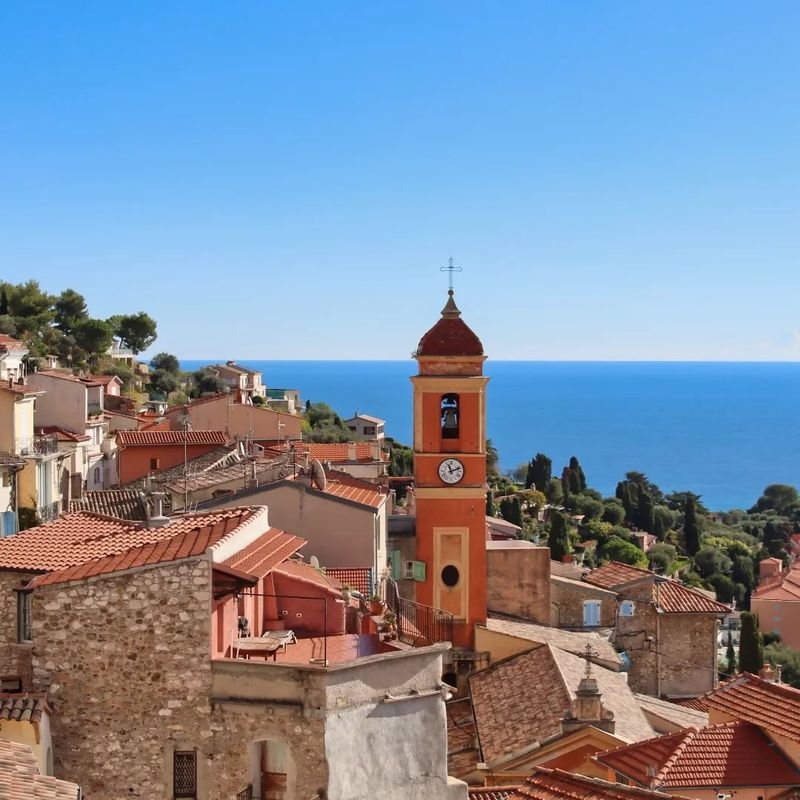
Sandwiched between Monaco and Menton, Roquebrune-Cap-Martin is one of those places that rewards travelers who bother to look beyond the obvious headline destinations. The medieval village grew around a feudal castle that dates back to the 10th century, making it one of the oldest in France.
Vaulted passages, stone steps, and narrow lanes wind through the village in ways that feel genuinely ancient rather than restored for tourism.
The views from the village toward Monaco are extraordinary, particularly at dusk when the principality’s lights begin to flicker on across the water. Down on Cap Martin, the mood shifts entirely.
The coastal path here passes rocky coves, fragrant Mediterranean scrub, and the occasional glimpse of grand villas hidden behind mature gardens.
Architecture enthusiasts have a specific reason to make the trip: Le Corbusier’s tiny Cabanon, a modest wooden cabin he built for himself in 1952, sits near the water alongside his other small modernist structures. The whole ensemble is now a UNESCO World Heritage Site, which makes the contrast between its extreme simplicity and the surrounding luxury of Cap Martin all the more striking.
Le Corbusier died here in 1965 while swimming in the sea.
Antibes
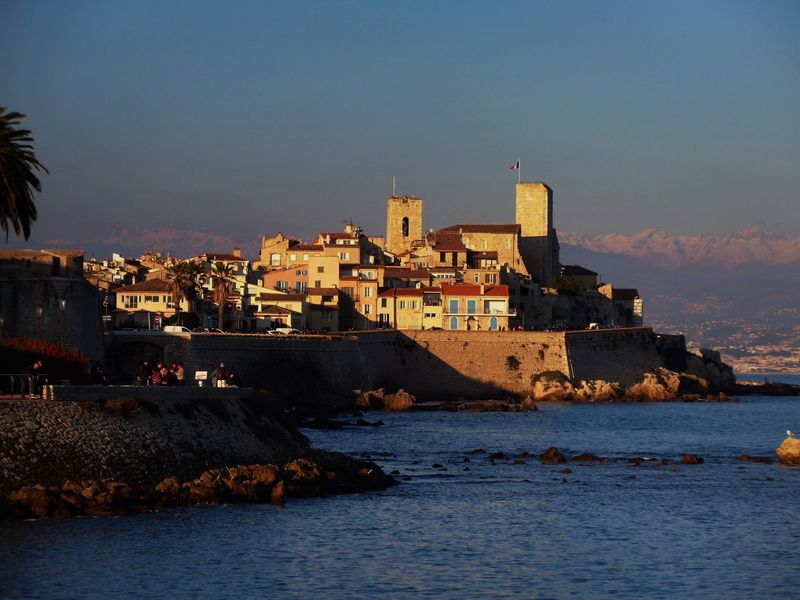
Antibes has a secret weapon that many coastal towns lack: it is genuinely great even when you are not at the beach. The old town sits inside 16th-century ramparts, and its Provençal market under the covered hall is one of the best on the Riviera, piled high with olives, cheeses, fresh fish, and lavender honey that makes you want to buy a house here immediately.
The ramparts themselves offer a breezy walk above the sea with the Alps glittering on the horizon on clear days.
The former Grimaldi castle overlooking the water now houses the Musée Picasso, built around the collection of works Picasso created here in 1946 when the castle was offered to him as a studio. He was extraordinarily productive during that stay, and the museum’s terrace sculpture garden alone is worth the admission price.
Works by Nicolas de Staël and Miró add further depth to the collection.
South of town, the Cap d’Antibes coastal trail winds past rocky coves and the gates of extraordinary villas, eventually reaching the Garoupe lighthouse and chapel. Port Vauban, one of the largest yacht harbors in the Mediterranean, provides an entertaining backdrop for an evening stroll and a reminder that the Riviera’s appetite for luxury has a very long history.
Cannes
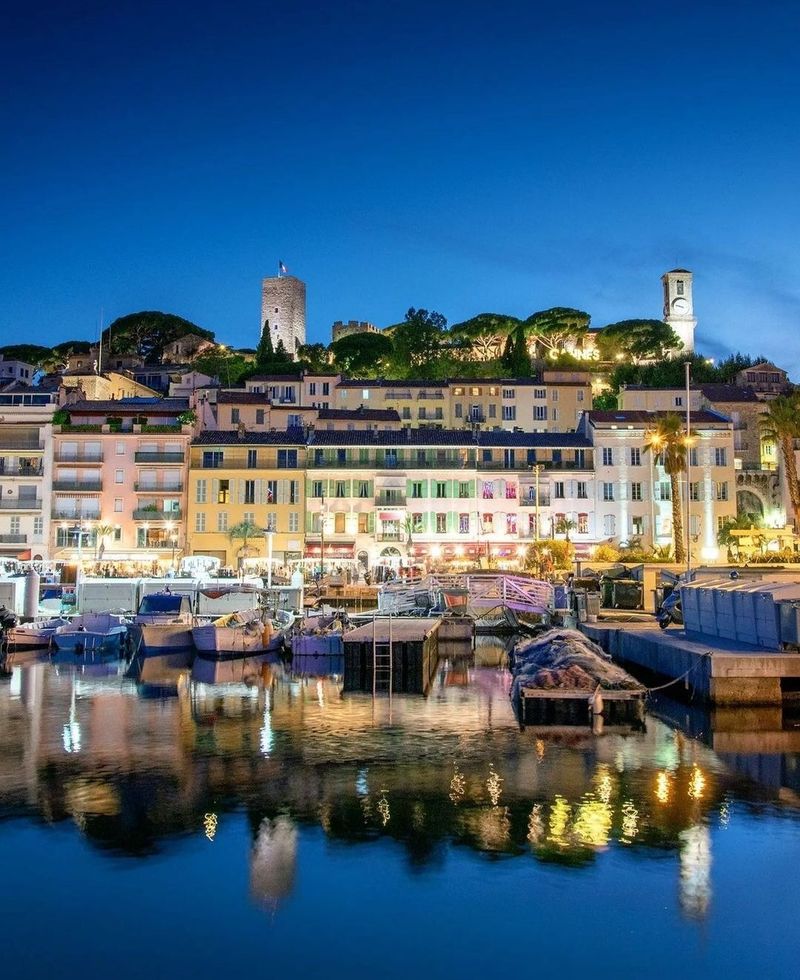
Cannes is famous for a film festival it hosts for just 12 days a year, but the city is worth visiting during the other 353 days too. The Croisette sweeps along the bay in a satisfying curve of palm trees, beach clubs, grand hotels, and boutiques that range from aspirational to absolutely unhinged in terms of price.
Walking it on a sunny morning with a coffee from a side-street café is one of the Riviera’s simple pleasures, no VIP pass required.
Le Suquet, the old quarter on the hill above the port, tells a completely different story. Narrow lanes climb toward a 12th-century tower and a hilltop church with panoramic views over the bay.
This was Cannes before the movie industry and the luxury tourism arrived, and it still feels like a real neighborhood rather than a set piece.
Marché Forville, a short walk from the old port, operates most mornings and is where local chefs shop for the day’s ingredients. Cannes works best when you stop treating it purely as a luxury destination and start exploring its older, more human-scaled side.
The Lérins Islands visible from the beach are also well worth the short boat ride, covered separately in this list.
Lérins Islands
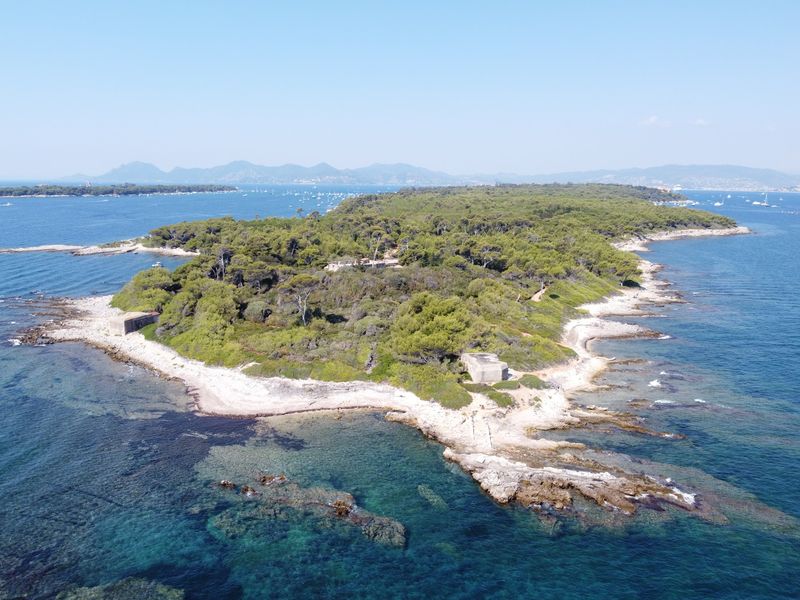
Fifteen minutes by ferry from the chaos of the Croisette and you are suddenly in a pine forest listening to birds. The Lérins Islands sit just offshore from Cannes and offer one of the most effective escapes on the entire Riviera without requiring a long journey. Île Sainte-Marguerite is the larger of the two main islands, covered in fragrant pine and eucalyptus that keep temperatures noticeably cooler than the mainland even in midsummer.
Fort Royal on Sainte-Marguerite is where the mysterious prisoner known as the Man in the Iron Mask was held for over a decade in the late 17th century. His true identity was never officially confirmed, which naturally made him a legend.
The fort’s museum covers the island’s history and the fascinating surrounding speculation. An underwater eco-museum just offshore displays sculptures by artist Jason deCaires Taylor visible through clear, shallow water.
Smaller Saint-Honorat has been home to a Cistercian monastery since the 5th century, and the monks there still produce wine, lavender honey, and liqueurs sold in the island’s small shop. Beaches on both islands are calm, clear, and far less crowded than anything on the mainland.
Pack a picnic, take the early boat, and plan to stay most of the day.
Saint-Paul-de-Vence
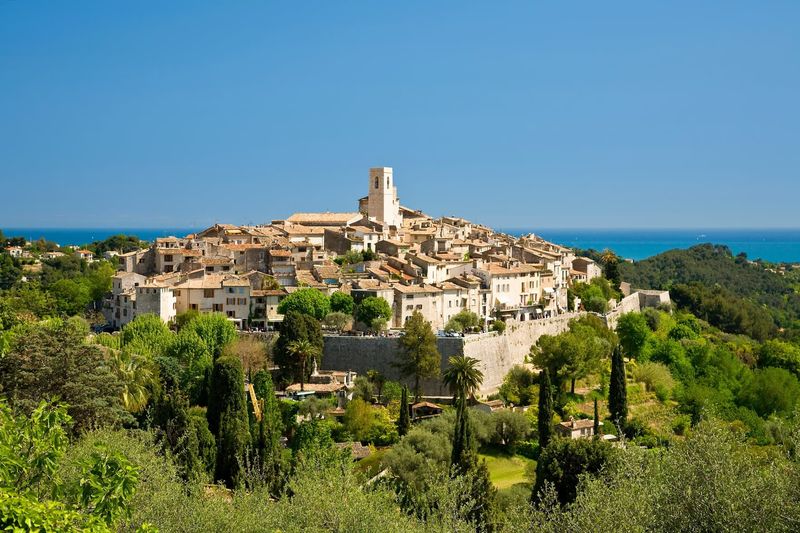
Saint-Paul-de-Vence has been attracting artists for about a century, and walking through its medieval walls today, it is not hard to see why. The stone lanes are lined with galleries, sculpture courtyards, and workshops that range from serious contemporary art to cheerful Provençal paintings of lavender fields.
Marc Chagall lived nearby for decades and is buried in the village cemetery, making it a quiet pilgrimage site for fans of his luminous, dreamlike work.
Just outside the walls, the Fondation Maeght is one of the finest modern art foundations in Europe. Opened in 1964, it was designed by architect Josep Lluís Sert in close collaboration with artists including Miró, Giacometti, Braque, Calder, and Léger.
The result is a building where art and architecture are genuinely inseparable, with sculptures integrated into the gardens, terraces, and pools in ways that feel both playful and completely intentional.
The foundation’s permanent collection spans around 13,000 works, and temporary exhibitions are consistently strong. Combine a morning exploring the village with an afternoon at the Fondation and you have one of the most satisfying cultural days on the Riviera.
Café de la Place, right inside the village gates, is the classic spot to finish with a pastis and a game of pétanque.
Grasse
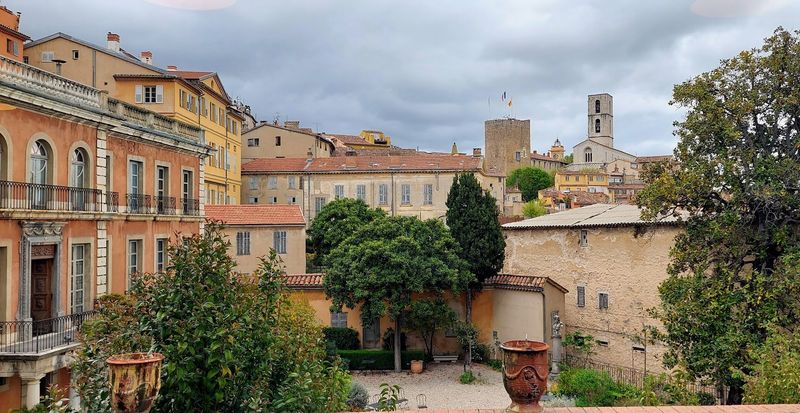
Grasse smells like nowhere else on earth, and that is entirely the point. Perched above the coast in the hills behind Cannes, the town has been the global capital of perfume for roughly five centuries.
The combination of warm climate, reliable sea breezes, and fertile soil made the surrounding countryside perfect for growing jasmine, rose, orange blossom, tuberose, and violet, the raw materials that built an industry with worldwide reach.
Historic perfume houses Fragonard, Galimard, and Molinard all offer factory tours that explain the production process from harvested flower to finished bottle. The International Perfume Museum goes deeper, covering the chemistry, history, and design of fragrance in a genuinely engaging way.
Workshops where visitors can blend their own perfume under the guidance of a trained nose are available at several houses and make for an unexpectedly creative afternoon.
The old town itself is worth exploring beyond the perfume angle. Steep lanes, a covered market, and a cathedral containing three paintings by Rubens give Grasse a historical substance that many visitors overlook in their rush to buy a bottle of something floral.
Grasse is listed as a UNESCO Intangible Cultural Heritage site for its perfume-making traditions, a recognition that feels completely deserved once you have spent a day breathing it all in.
Théoule-sur-Mer and the Corniche d’Or
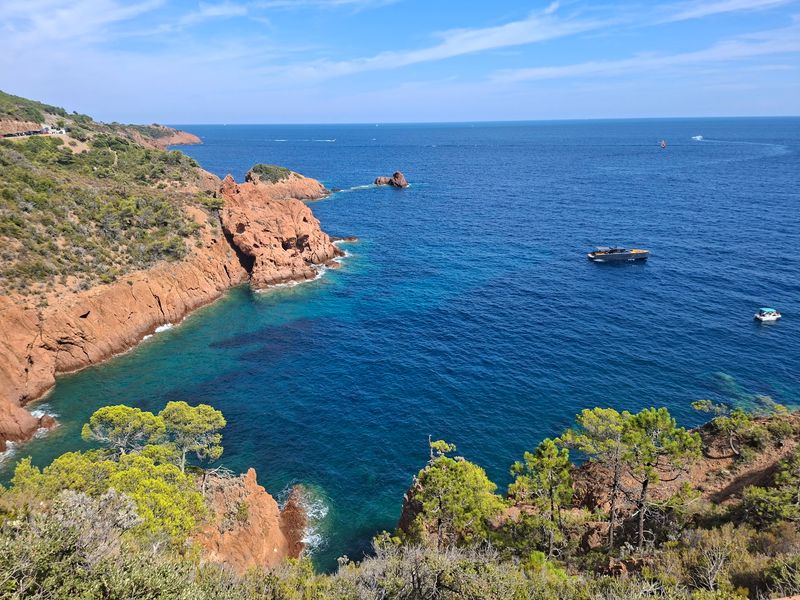
The moment the red rocks of the Estérel Massif start rising out of the sea west of Cannes, it becomes obvious that the Côte d’Azur is not just one landscape. The volcanic rock here is an extraordinary shade of rust-red that contrasts almost violently with the turquoise water below, creating a color palette that looks more like a painting than a coastline.
Théoule-sur-Mer sits right at the beginning of this dramatic stretch and makes an excellent base for exploring it.
The Corniche d’Or was completed in 1903 specifically to open up this wild stretch of coast, running for about 30 kilometers between the Cannes area and Saint-Raphaël. The road repeatedly dips toward small calanques and coves with water so clear you can see the bottom from the road above.
Pulling over at any of the viewpoints is highly recommended, even if it means stopping every five minutes.
Hiking trails from Théoule climb into the Estérel above town, offering elevated views over the coast and access to some of the massif’s quieter terrain. The beaches below the red cliffs are pebbly and less crowded than those further east, and the water quality here is consistently excellent.
For sheer visual drama, this stretch of coast is hard to beat anywhere on the Riviera.
Saint-Raphaël
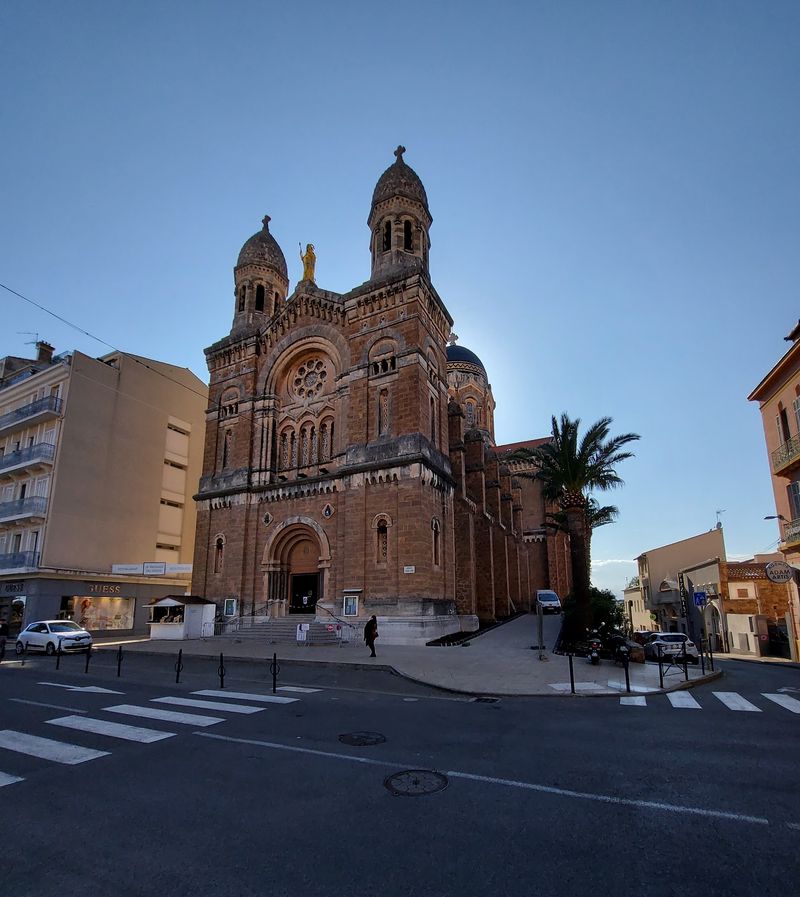
Saint-Raphaël has the unusual distinction of being a proper working town with a real market, a genuine old quarter, and 36 kilometers of coastline that stretch through some of the most dramatic scenery on the western Riviera. It sits right where the developed resort coast meets the wild Estérel, which means you can eat breakfast at a pavement café on the promenade and be hiking through red volcanic rock before lunch.
The old quarter around the medieval church of San Raféu has the kind of lived-in authenticity that larger resort towns often lose. The Provençal market fills the streets several mornings a week with local produce, olives, cheese, and fish.
The late-19th-century Notre-Dame-de-la-Victoire Basilica, built in a Byzantine-influenced style with a striped campanile, reflects the town’s expansion as a fashionable winter resort during the Belle Époque.
East of town, the Corniche d’Or leads to some of the most secluded calanques on the coast. The district of Agay is particularly appealing, tucked into a sheltered bay ringed by red hills where the water turns a deep, satisfying shade of blue-green.
Agay has a low-key charm that feels like a reward for travelers willing to explore a little beyond the main resort centers.
Saint-Tropez
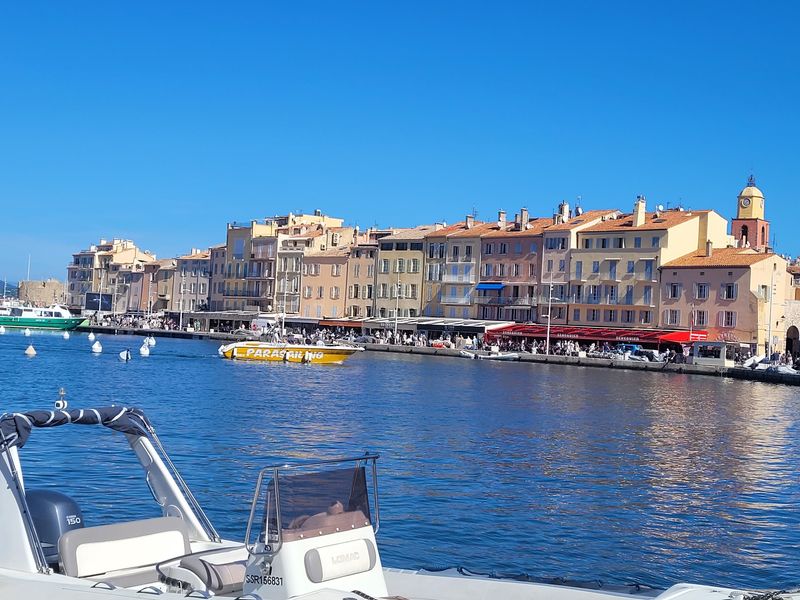
Long before anyone had heard of Brigitte Bardot, Saint-Tropez was a quiet fishing and trading port where artists came for the extraordinary quality of the light. Paul Signac arrived by sailboat in 1892, fell completely in love with the place, and told everyone he knew.
Within a decade, painters associated with Pointillism and Fauvism were making regular pilgrimages here, and the Musée de l’Annonciade now houses a remarkable collection of their work in a converted chapel right on the port.
The Vieux Port remains the magnetic center of town, lined with café terraces, fishing boats, and yachts of increasingly implausible size. Behind the waterfront, narrow streets climb through the old quarter past flower-draped houses and small squares where the pace of life slows noticeably.
The 17th-century Citadel above town offers a maritime museum and views over the gulf that remind you why sailors and artists were drawn here in the first place.
Place des Lices keeps the traditional Provençal rhythm alive with its twice-weekly market and near-constant pétanque games. Saint-Tropez is most rewarding when visited outside of July and August, when the town reclaims something of its original character.
Arriving by boat from Port Grimaud or Sainte-Maxime is the most atmospheric approach.
Porquerolles
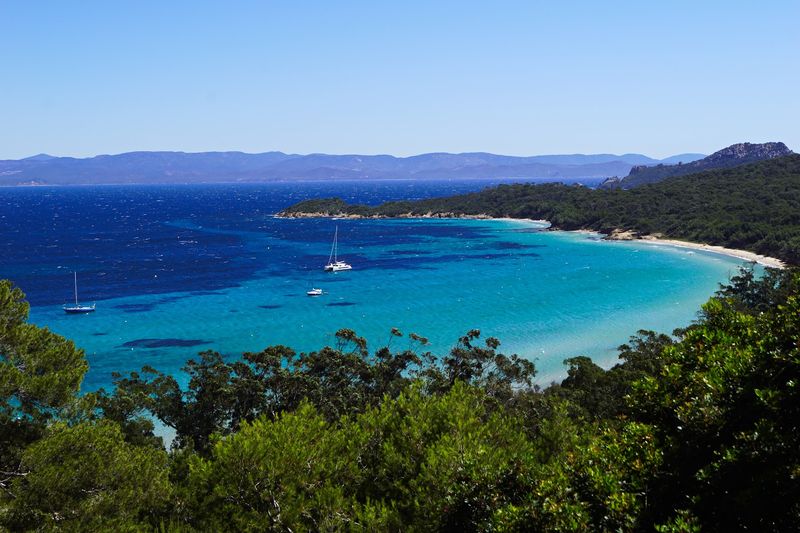
No cars, no crowds, and water so clear it looks computer-generated: Porquerolles is the kind of island that makes you wonder why you ever bother going anywhere else. The largest of the Îles d’Hyères sits just 20 minutes by boat from the Giens Peninsula, yet it feels a world away from the developed Riviera coast.
Private vehicles are banned from most of the island, so cycling and walking are the only real ways to explore, which suits the pace of the place perfectly.
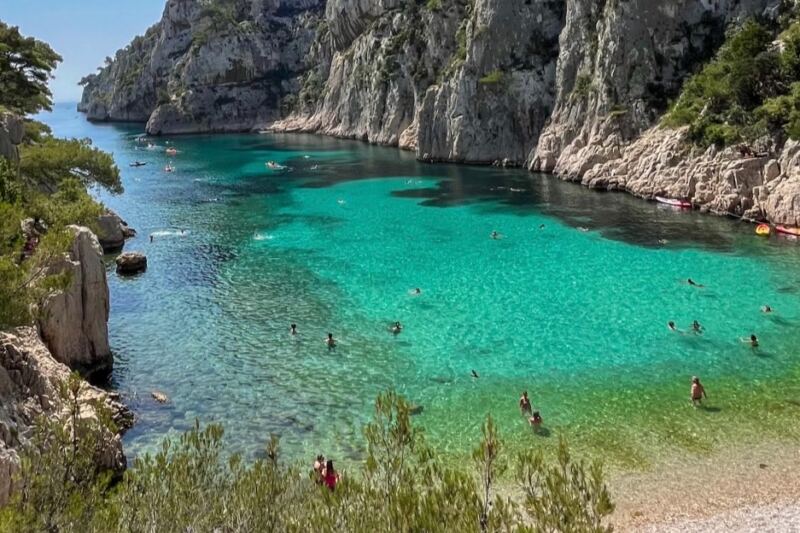
The northern coast holds the island’s best beaches: Notre-Dame, La Courtade, and Plage d’Argent are long, sandy, and sheltered, with water that shifts from pale turquoise in the shallows to deep blue further out. The southern coast is wilder, with cliffs, rocky calanques, and trails that require more effort but deliver serious solitude.
Much of the island falls within Port-Cros National Park, protecting both the landscape and the marine environment.
The small village at the center of the island has a handful of restaurants, a church, a lighthouse, and a square shaded by eucalyptus trees where life moves at a refreshingly unhurried pace. Vineyards near the village produce wines under the Porquerolles appellation.
Take the first boat, rent a bicycle at the port, and plan to stay until the last departure of the day.
Share this story