Some amusement parks have been making people scream, laugh, and reach for cotton candy for well over a century. Long before digital ride reservations and superhero-themed lands, these parks were already packing in crowds with wooden coasters, hand-carved carousels, and the simple magic of a fun day out.
Many of them still charge nothing just to walk through the gate, keeping alive a tradition that modern mega-parks have mostly left behind. From a Danish woodland park older than the United States to a Tokyo gem that started as a flower garden, these 15 old-school amusement parks prove that the classics never really go out of style.
Bakken, Klampenborg, Denmark
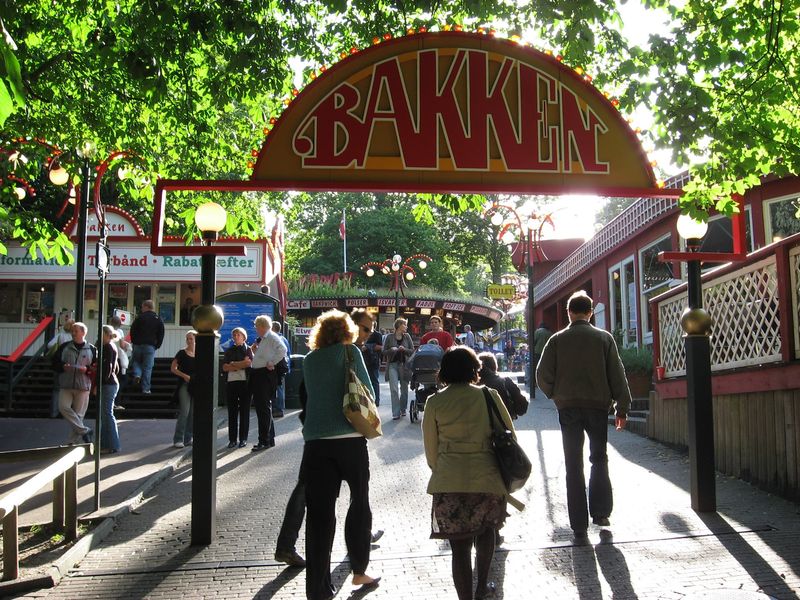
Opened in 1583, Bakken holds the Guinness World Record for being the oldest operating amusement park on the planet, and yes, that means it was already entertaining crowds before Shakespeare finished writing Hamlet. Nestled inside Dyrehaven, a royal deer park north of Copenhagen, the grounds feel more like a woodland festival than a modern theme park.
Admission is completely free, and individual rides and attractions are scattered throughout the trees.
The star of the show is the Rutschebanen, a wooden roller coaster built in 1932 that still rattles along with an actual human brake operator riding aboard every train. That alone makes it worth the trip.
The park mixes centuries-old pleasure-ground traditions with restaurants, live music, carnival games, and a handful of newer thrill rides. Visiting Bakken feels like stepping into an amusement culture that existed long before neon signs and app-based queues were even imaginable.
Few places on earth offer that kind of living history wrapped in pine trees and the smell of fried food.
Wurstelprater, Vienna, Austria
Back in 1766, Emperor Joseph II decided the imperial hunting grounds outside Vienna were too good to keep to himself, so he opened them to the public. Vendors, entertainers, and carousels quickly moved in, and the Wurstelprater amusement district was born.
Today it still occupies a corner of that enormous green park, operating without a single admission gate.
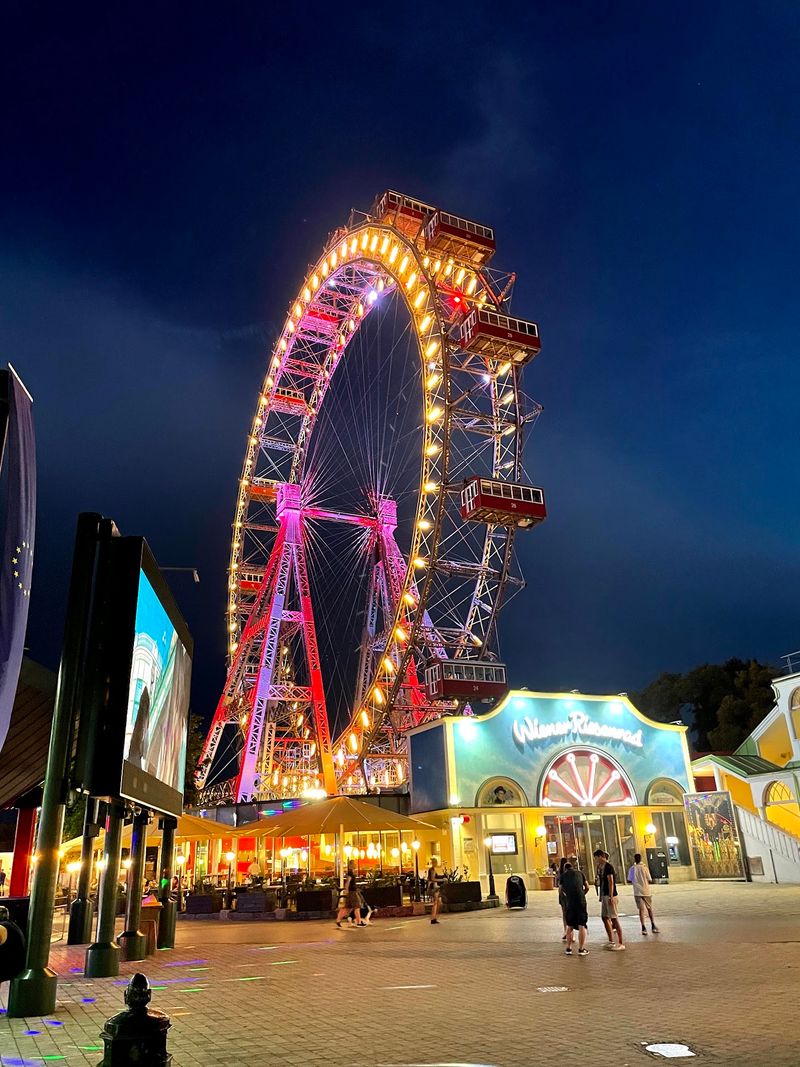
The most famous landmark is the Wiener Riesenrad, a giant Ferris wheel built in 1897 that offers sweeping views over Vienna and has appeared in more than a few classic films. Alongside it, historic ghost trains, grotto railways, chair-o-planes, and the old Hochschaubahn keep the nostalgic atmosphere alive.
Because each attraction runs independently, visitors can spend as much or as little as they like. Walking through Wurstelprater on a warm evening, with vintage rides lit up and the smell of roasted chestnuts in the air, delivers a sensory experience that no carefully scripted theme park could easily manufacture.
Tivoli Gardens, Copenhagen, Denmark
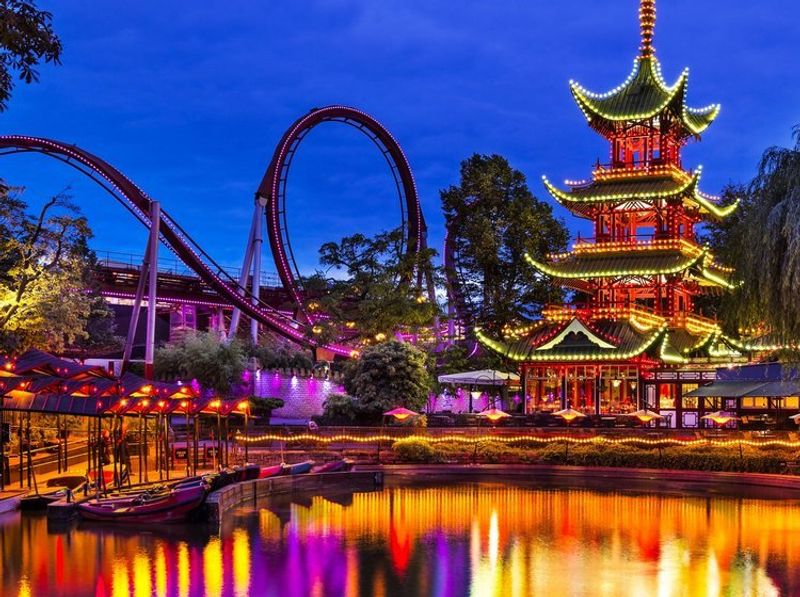
Hans Christian Andersen visited Tivoli Gardens not long after it opened in 1843, and if the fairy-tale author felt right at home there, that tells you something important about the place. Founder Georg Carstensen convinced the Danish king to approve an entertainment garden just outside Copenhagen’s old city walls, and the result became one of the most beloved amusement parks in the world.
Walt Disney himself reportedly drew inspiration from Tivoli when planning Disneyland.
The park’s most cherished vintage ride is Rutschebanen, a wooden roller coaster from 1914 that still carries a brakeman on every run. Historic structures like the Japanese Pagoda from 1900 and the Moorish-style Nimb building add architectural charm that newer rides cannot replicate.
Tivoli also layers in open-air concerts, gourmet restaurants, and seasonal festivals, making it feel like several different parks stacked into one. The nighttime illuminations alone are worth the entrance fee.
Tivoli has never erased its past; it simply keeps building around it, which is exactly why the park still feels magical more than 180 years after opening.
Lake Compounce, Bristol, Connecticut
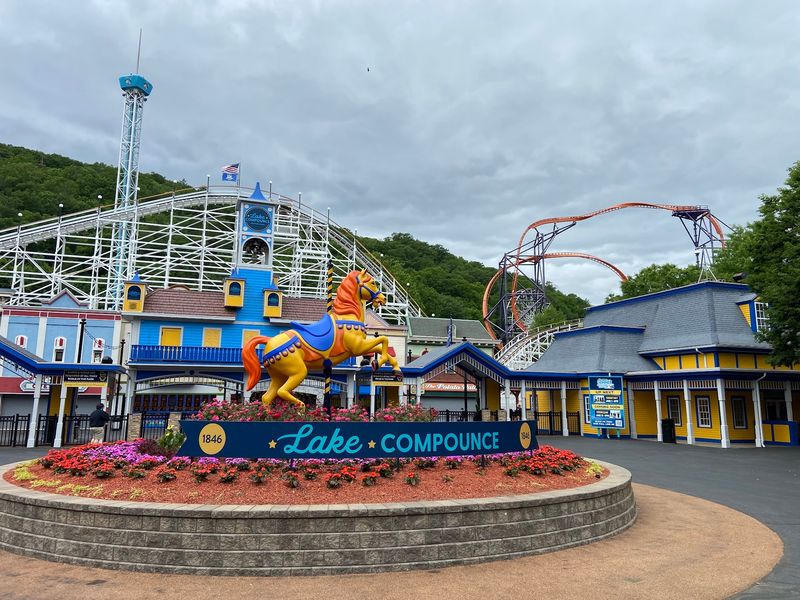
America’s oldest continuously operating amusement park did not start with roller coasters or Ferris wheels. Lake Compounce began in 1846 as a simple lakeside picnic spot in Connecticut, where families would spread out blankets and enjoy the scenery.
Rides and attractions gradually joined the party over the following decades, and the park has been running ever since without a single year off.
A carousel that first delighted riders here in 1911 is still spinning today, which means it has been making kids happy for well over a century. The modern side of Lake Compounce shows up in Boulder Dash, a wooden coaster that charges through the wooded mountainside and has repeatedly ranked among the best wooden coasters in the world.
The park now includes a water park and more than 50 attractions in total, but the lakeside setting remains the quiet heart of the whole experience. Very few American amusement destinations can trace an unbroken operating history back to the 1840s, a decade before the Civil War even began.
That kind of longevity is genuinely rare and worth celebrating.
Asakusa Hanayashiki, Tokyo, Japan
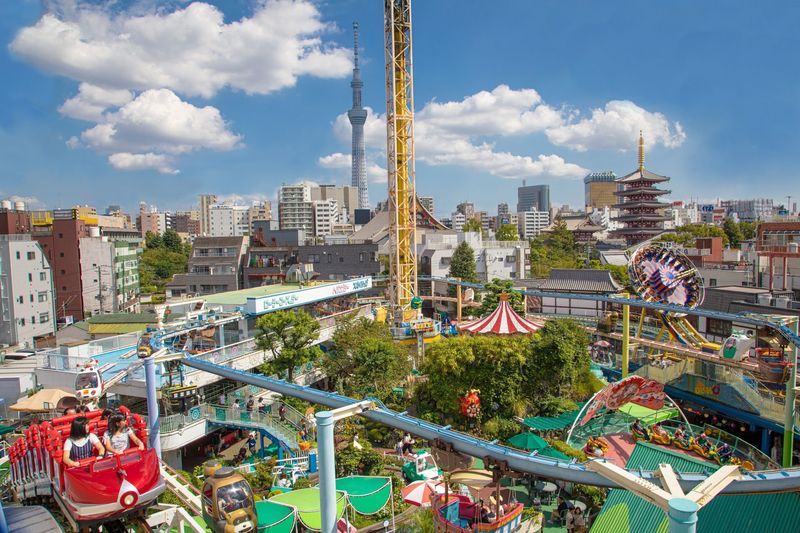
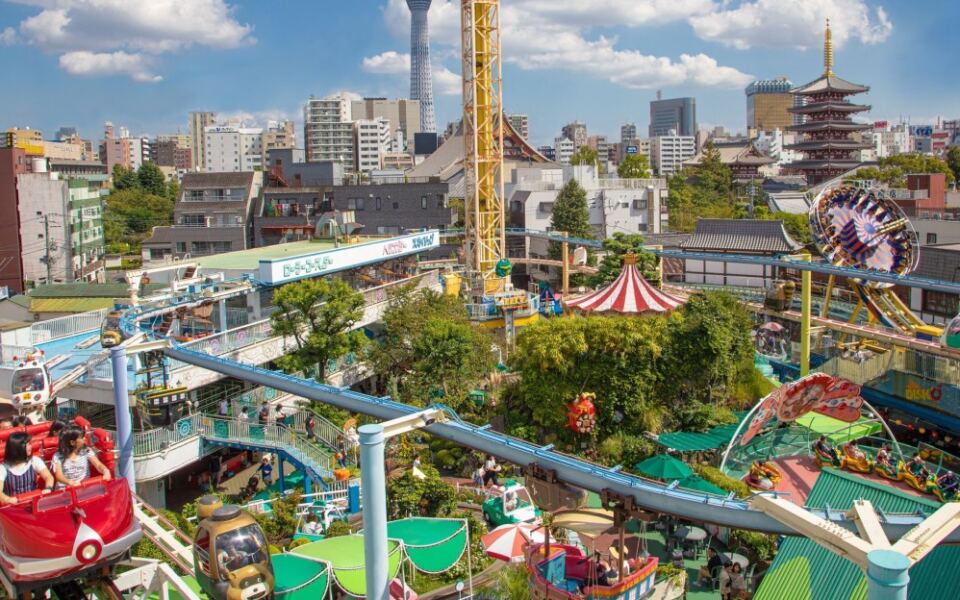
Before it became Japan’s oldest amusement park, Hanayashiki was simply a gorgeous flower garden filled with peonies and chrysanthemums, opening in 1853 during the final years of the Edo period. Sideshows and animals arrived later, and the compact urban park visitors find today beside the ancient Sensoji temple district slowly took shape over generations.
The retro charm here is completely genuine, not a design choice made by a marketing team.
The House of Surprises dates from 1947, and the park’s roller coaster opened in 1953, making it the oldest surviving coaster in Japan. Hanayashiki squeezes an impressive number of rides, carnival games, food stalls, and colorful structures into a footprint so small you could walk its perimeter in minutes.
That tight, almost chaotic layout is part of what makes it so endearing. Visiting feels like stumbling onto a neighborhood festival that never ended.
The park sits just steps from the famous Kaminarimon gate, so combining a morning at Sensoji with an afternoon at Hanayashiki makes for one of Tokyo’s most surprisingly fun days out.
Grona Lund, Stockholm, Sweden
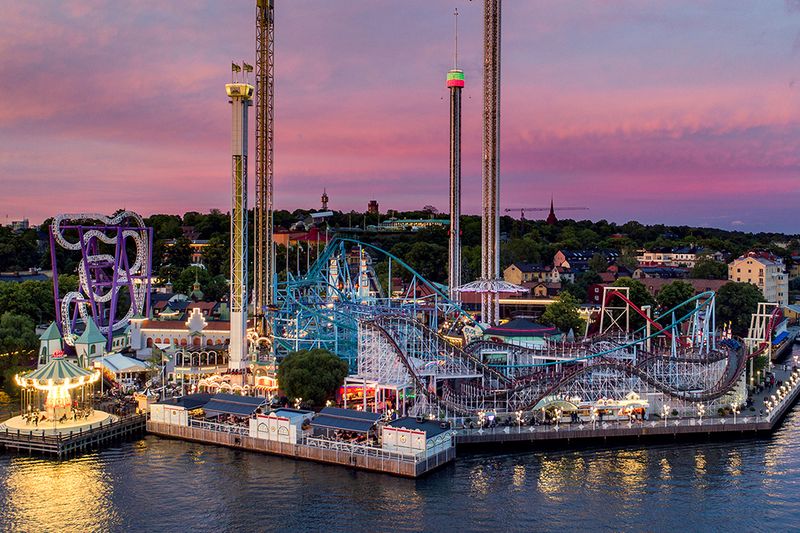
Squeezing a full-sized amusement park onto a small island in the middle of a capital city sounds like a logistical nightmare, but Grona Lund has been pulling it off since 1883. German-born Jacob Schultheis opened the original grounds on Stockholm’s Djurgarden island, starting with a two-level carousel powered by a horse walking on its lower floor.
That image alone captures how different the amusement world looked back then.
The park’s current Cirkuskarusellen carousel still incorporates animals from the late 19th century, including a carved horse dated to 1864. Modern steel coasters and towering drop rides now share the tiny waterfront property with those antiques, creating a genuinely unusual mix of old and new.
Narrow walkways wind between old wooden buildings, and the park’s long tradition of live music adds another layer of atmosphere. Grona Lund has hosted performers ranging from ABBA to Led Zeppelin on its outdoor stages.
The combination of a historic fairground, spectacular harbor views, and world-class concerts makes this compact park one of Scandinavia’s most distinctive warm-weather destinations.
Lagoon, Farmington, Utah
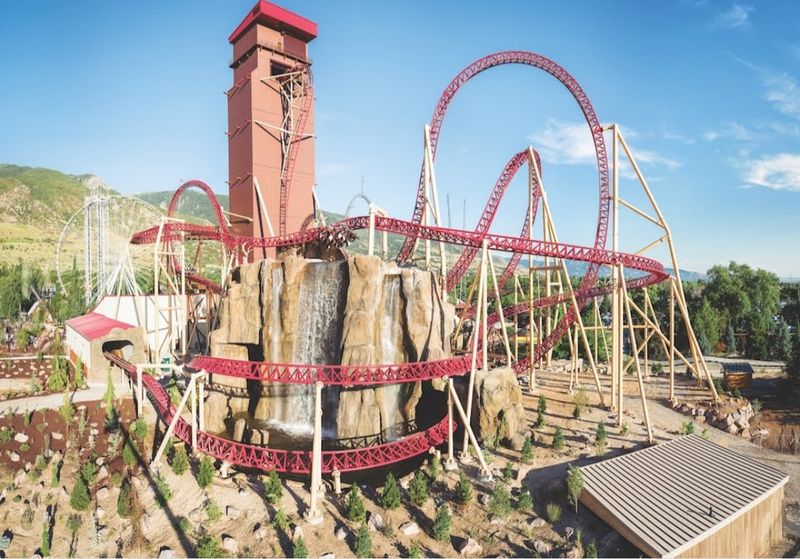
Lagoon started life as Lake Park in 1886, a lakeside resort on the Great Salt Lake where visitors could bowl, rollerskate, swim, and ride a mule-drawn merry-go-round. After the lake’s shoreline receded and made the original site less appealing, the whole operation relocated to Farmington, where a nine-acre pond inspired the park’s current name.
That backstory alone makes Lagoon more interesting than most parks that simply appeared one day with a parking lot already built.
Two surviving rides give the park serious historical credentials. The Victorian carousel was built in 1893, installed at Lagoon in 1906, and still carries riders on its beautifully hand-carved animals today.
The wooden Roller Coaster followed in 1921 and ranks among the oldest operating wooden coasters anywhere in the world. Modern steel rides now tower over both of those classics, but the contrast between old and new is part of what makes a day at Lagoon so interesting.
For a state that many people associate more with national parks than amusement parks, Utah’s Lagoon is a genuinely impressive piece of Western American entertainment history.
Blackpool Pleasure Beach, Blackpool, England
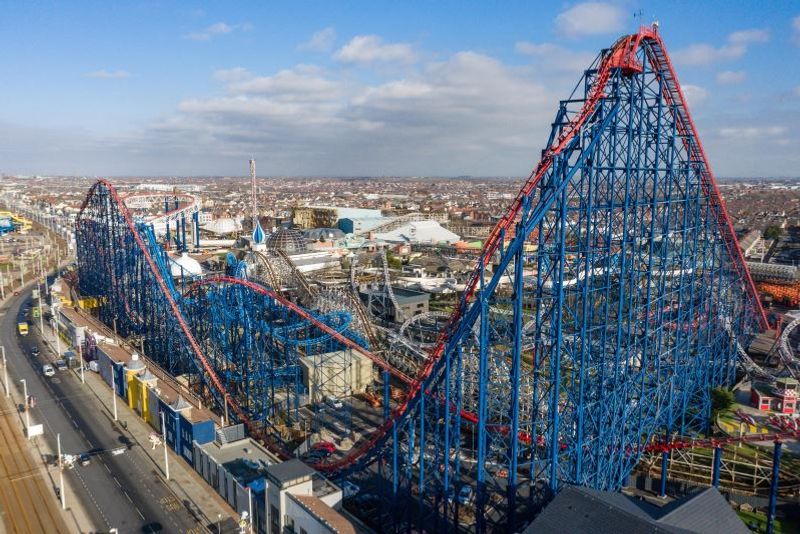
William George Bean founded Blackpool Pleasure Beach in 1896 with one specific goal: to create a place where adults could feel like children again. Over a century later, the same family is still involved in running the resort, which says something both about the power of that original vision and the loyalty it has inspired across generations of British holidaymakers.
Sir Hiram Maxim’s Flying Machines, introduced in 1904, are among the oldest operating amusement rides anywhere in the world and still swing riders outward over the Lancashire coast. Later classics like the Grand National wooden racing coaster and the Big Dipper added to the park’s remarkable collection of vintage machinery.
Art Deco-era structures dot the grounds, and the whole operation sits right beside England’s most famous seaside promenade. Blackpool Pleasure Beach does not pretend to be anything other than what it is: a loud, colorful, slightly windswept British funfair scaled up to epic proportions.
That honest, unpretentious personality has kept it one of the most visited amusement parks in the United Kingdom year after year.
Waldameer Park, Erie, Pennsylvania
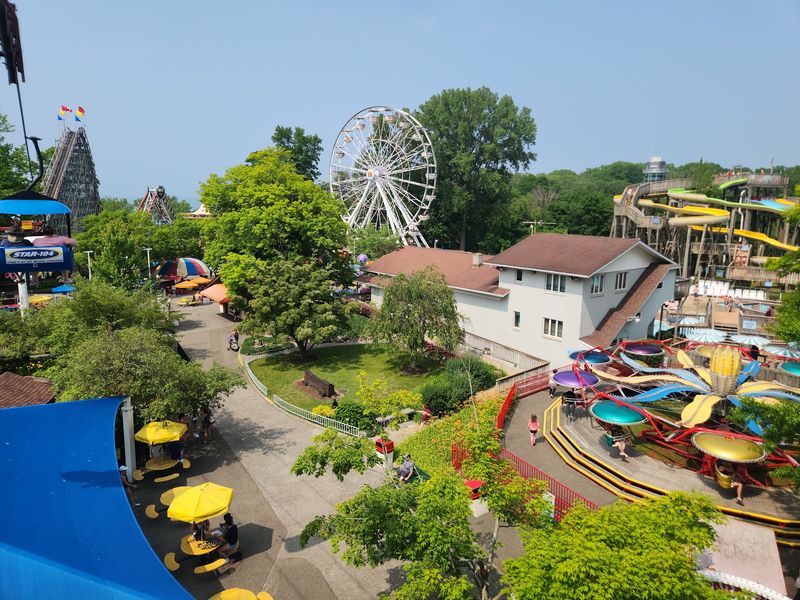
Trolley parks were everywhere in America around the turn of the 20th century, built by transit companies to give people a reason to ride the streetcar on weekends. Most of them are long gone.
Waldameer, which opened in 1896 as a lakeside picnic area connected to local trolley lines near Erie, Pennsylvania, is one of the rare survivors, and it has stayed in business without ever losing its regional, family-owned character.
The park leans into traditional amusement-park ingredients rather than elaborate theming. Picnic areas, midway games, family rides, a water park, and a solid lineup of coasters create the kind of uncomplicated fun day that once defined summer in mid-sized American cities.
The modern flagship coaster, Ravine Flyer II, revives the name of an earlier ride that operated at the park from 1922 to 1938, which is a nice nod to the park’s own history. Waldameer has now been running for more than 125 years, which puts it in increasingly rare company among American regional amusement parks.
Lake Erie glittering in the background does not hurt the atmosphere either.
Kennywood, West Mifflin, Pennsylvania
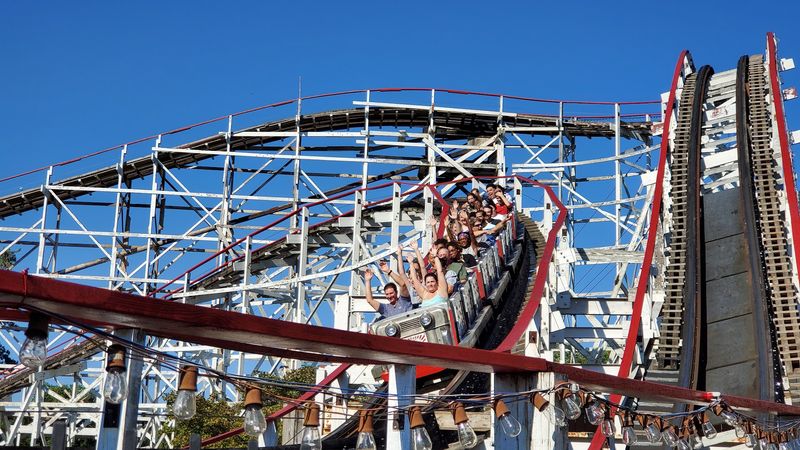
Getting designated a National Historic Landmark is not something that happens to many amusement parks. Kennywood earned that honor in 1987, and the recognition makes complete sense once you walk the grounds and realize how many genuinely old rides are still operating alongside newer attractions.
The park opened as a trolley park in 1898 on a bluff above the Monongahela River outside Pittsburgh, and it has never stopped running.
Jack Rabbit has been launching riders skyward since 1920. The coaster that eventually became Thunderbolt started life in 1924, and Racer followed in 1927.
That same year, the park acquired its Dentzel carousel, a beautifully carved machine with 64 animals including a lion and a tiger. Few amusement parks anywhere can offer visitors the chance to ride century-old wooden coasters back to back on the same afternoon.
Kennywood also keeps classic park foods like Potato Patch fries as part of its identity, proving that nostalgia is not just about the rides. The park successfully evolved through the decades without bulldozing its own history, which is exactly why it remains one of the most respected regional amusement parks in North America.
Tibidabo, Barcelona, Spain
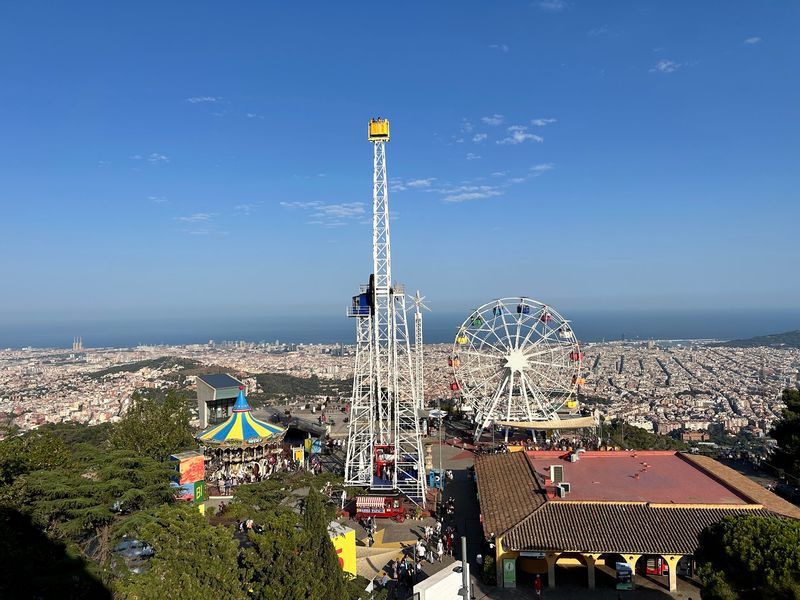
Perched on the highest peak overlooking Barcelona, Tibidabo celebrated its 125th anniversary in 2026, making it one of the oldest amusement parks in southern Europe. The park officially opened on October 29, 1901, alongside a funicular that whisked visitors up the mountain from the city below.
Early attractions were refreshingly modest: telescopes, mirrors, automata, shooting games, balloon ascents, and a café with an orchestra playing in the corner.
The location is simply extraordinary. On a clear day, views from Tibidabo stretch across Barcelona’s entire rooftop landscape all the way to the Mediterranean Sea.
The upper Panoramic Area preserves the park’s most historic attractions, giving that section a deliberately vintage character that feels honest rather than manufactured. The Avió ride, a vintage airplane attraction, has become one of the park’s most photographed icons.
Newer thrill rides occupy other sections of the grounds, creating a park that manages to be both a living museum and an active amusement destination at the same time. Arriving via the old funicular, with the city shrinking below you, is itself an experience that no flat-land theme park could ever replicate.
Santa Cruz Beach Boardwalk, California
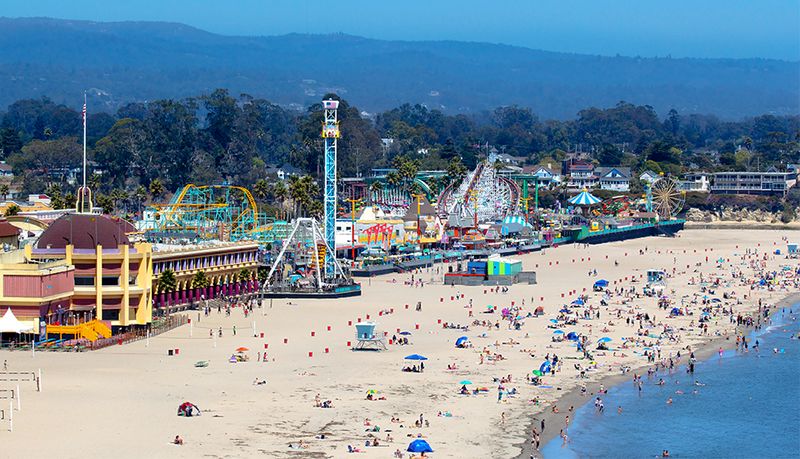
The smell of sunscreen, saltwater, and funnel cake hits you before you even see the rides. Santa Cruz Beach Boardwalk has been delivering that exact sensory combination beside Monterey Bay since 1907, making it one of the last great traditional seaside amusement parks still operating on the entire West Coast.
Walking the Boardwalk is free, keeping alive the old tradition of paying per ride rather than buying an all-day pass at the gate.
Two of its attractions hold National Historic Landmark status. The Charles I.D.
Looff Carousel arrived in 1911 and still operates its rare ring-toss system, letting riders grab for brass rings just like their great-grandparents once did. The Giant Dipper wooden coaster has been running since 1924, reportedly built in just 47 days, and has carried tens of millions of riders along its red-and-white track.
Both landmarks are genuinely thrilling to ride, not just impressive to look at. The Giant Dipper in particular delivers a surprisingly punchy ride for a coaster its age.
Combine that with beach access right next door, and the Santa Cruz Boardwalk offers a summer experience that feels timeless in the best possible way.
Luna Park Melbourne, Melbourne, Australia
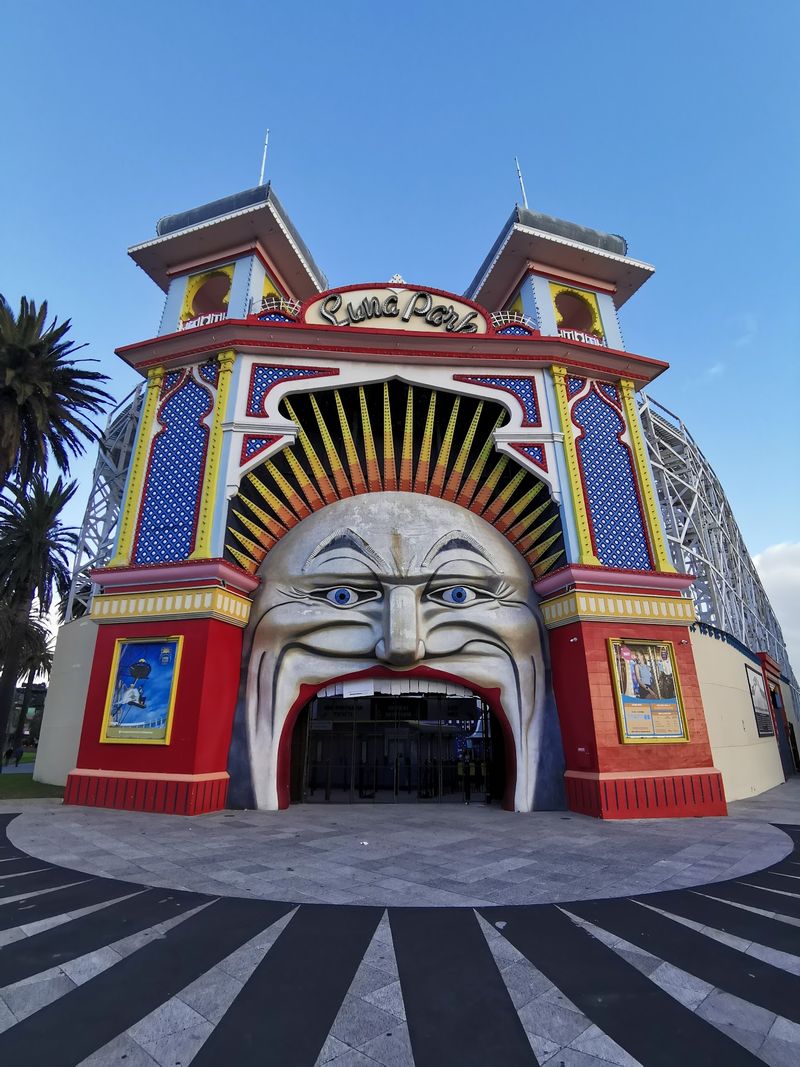
That giant grinning face at the entrance has been swallowing visitors whole since Luna Park Melbourne opened in St Kilda on December 13, 1912. The entire park is listed on the Victorian Heritage Register, and Luna Park describes itself as the best-preserved example of the Luna Park concept that spread across the world during the early 20th century.
It is hard to argue with that claim once you step inside.
The historic carousel was built by the Philadelphia Toboggan Company in 1913 and arrived at Luna Park in 1923. It still carries 68 original hand-carved horses and plays music through a rare band organ, which gives the ride a warm, slightly surreal atmosphere that modern carousels rarely achieve.
The Scenic Railway, a wooden roller coaster from the park’s opening era, also survives and still requires a brakeman to control speed on every run. Its compact St Kilda location, right beside Port Phillip Bay, adds a seaside energy to the whole experience.
Luna Park Melbourne manages to feel like a genuine piece of prewar amusement culture that somehow kept going, which makes it one of the most atmospheric parks anywhere in the Southern Hemisphere.
Idlewild and SoakZone, Ligonier, Pennsylvania
Mature trees, picnic tables, and the kind of unhurried pace that makes a summer afternoon feel twice as long as usual: Idlewild has been offering exactly that combination since 1878. As the third-longest continuously operating amusement park in the United States, it predates most of the country’s famous coasters, carousels, and boardwalks by decades.
Its roots lie in a rural recreation area rather than anything purpose-built for thrills.
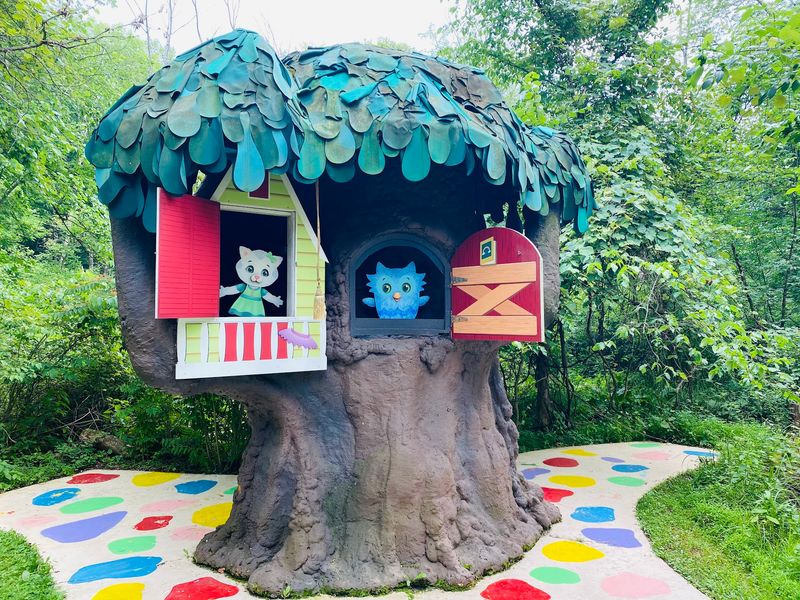
Idlewild has leaned into families with young children over the years, and that focus has actually helped preserve its old-fashioned character rather than pushing it toward the bigger-and-faster arms race. Story Book Forest, which opened in the 1950s, remains a beloved part of the park where kids wander through scenes featuring classic nursery rhyme characters.
Classic flat rides, live entertainment, traditional park food, and shaded picnic areas round out the experience. The park runs seasonally from late May through October each year.
Idlewild is not trying to compete with mega-resorts, and that self-awareness is part of its charm. It represents the kind of multigenerational, shaded amusement outing that once defined summer for families across hundreds of American towns.
Knoebels Amusement Resort, Elysburg, Pennsylvania
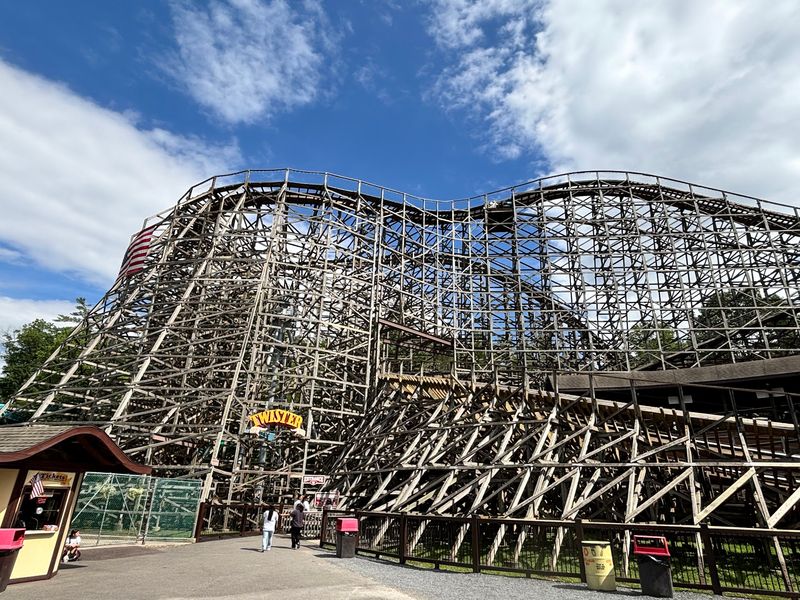
Free parking. Free admission.
Bring your own picnic. Knoebels Amusement Resort in Elysburg, Pennsylvania, operates on principles that sound almost radical in the modern theme-park industry, and yet the model has been working beautifully since the resort opened around a swimming hole in 1926.
Families can walk in, spread out under the trees, and pay only for the rides they actually want to take.
The Phoenix wooden coaster is one of the park’s most celebrated attractions, and its story is unusual even by amusement-park standards. The coaster was originally built elsewhere, then relocated to Knoebels, reflecting the park’s genuine commitment to preserving classic amusement machinery rather than scrapping it.
The Grand Carousel, a two-row beauty dating to 1913, also ranks among the finest surviving carousels in the country. Beyond the rides, Knoebels offers camping, a large outdoor pool, classic food stands famous for their pierogies and hand-dipped ice cream, and more than 100 rides and attractions spread beneath old-growth trees.
The overall atmosphere is less corporate resort and more extended family reunion, which is precisely why loyal visitors return year after year without needing much convincing.
Share this story