Cacti have a remarkable talent for making ordinary landscapes look like scenes from another planet. Some grow as towering columns taller than a two-story house, others form perfectly ribbed spheres armored in golden spines, and a few twist into shapes that no reasonable plant should attempt.
Around the world, botanical gardens have gathered these extraordinary plants into collections that can genuinely stop visitors in their tracks. From a volcanic quarry carved into a Canary Island hillside to a cliffside garden perched high above the Mediterranean, these 15 places combine rare plant forms, dramatic natural settings, and decades of careful cultivation.
A few have been growing their collections since the early 1900s, which means some specimens have reached sizes that simply have to be seen to be believed. If you have ever doubted that plants could be genuinely jaw-dropping, this list will change your mind completely.
1. Desert Garden at The Huntington, San Marino, California
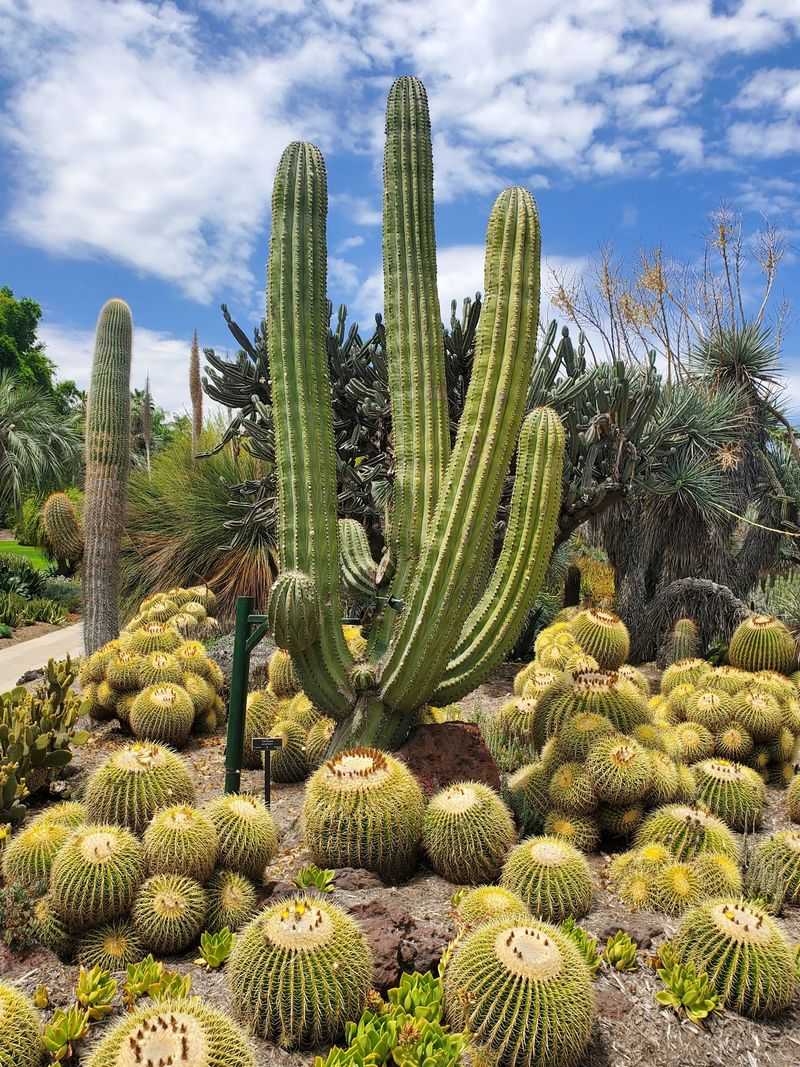
Few gardens anywhere can claim a 125-year-old plant weighing twenty tons, but The Huntington’s Desert Garden is not a place that does things modestly. William Hertrich began building this collection in 1907 after convincing a skeptical Henry Huntington that cacti were worth his land and money.
History has clearly sided with Hertrich.
Spread across more than 10 acres, the garden contains over 2,000 species arranged in 60 landscaped beds. Its collection of more than 500 golden barrel cacti, some over 85 years old, forms one of the largest displays of that species anywhere in the world.
The garden also holds the largest known Yucca filifera on the planet and one of the most significant aloe collections outside Africa. Some sections are so densely packed with unusual shapes that The Huntington itself describes the landscape as occasionally appearing otherworldly, which is a bold claim for an institution known for understatement.
2. Desert Botanical Garden, Phoenix, Arizona
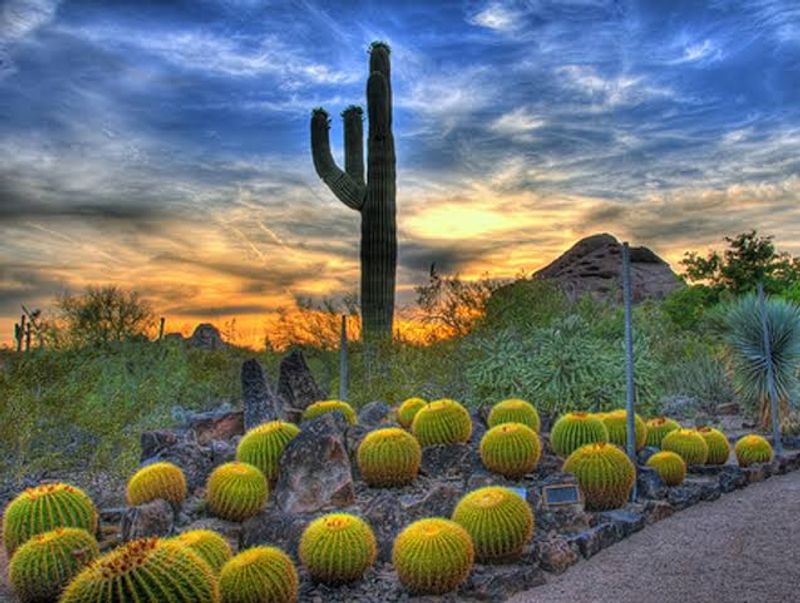
Nearly three-quarters of all known cactus species on Earth can be found in a single garden in Phoenix, which makes the Desert Botanical Garden either an extraordinary achievement or proof that cacti have been quietly planning world domination for years.
Founded in 1937 and set on 140 acres in Papago Park, the garden holds more than 50,000 plants representing over 4,000 taxa. Its Cactaceae collection, officially designated as the National Collection of Cactaceae, includes over 14,877 accessioned plants.
The Opuntioideae collection, covering prickly pears and chollas, is the most complete in the world.
Giant cardons and saguaros rise along the trails, while barrel cacti sit like enormous armored spheres beside the paths. The garden also holds the most prominent agave collection in the United States, displaying 171 of the 286 known Agave species.
Red rock formations surround the property, giving every view a naturally dramatic backdrop.
3. Jardin Exotique de Monaco, Monaco
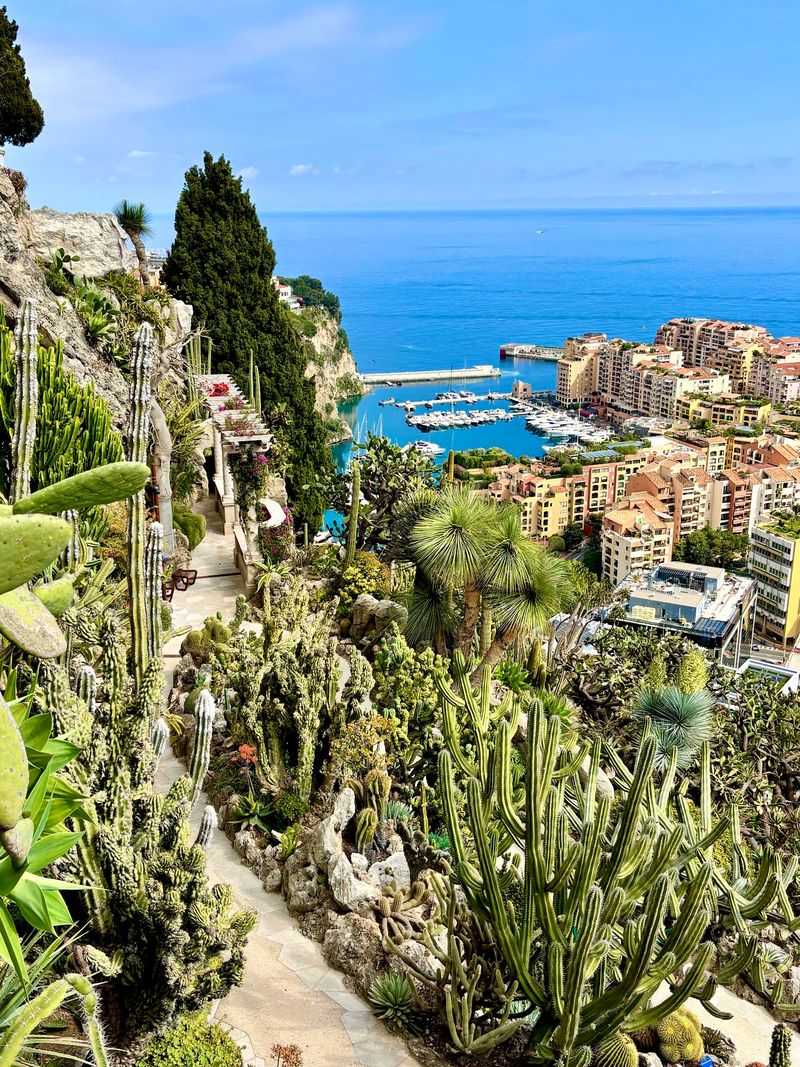
Monaco is not a place known for underplaying its assets, and its cliffside exotic garden follows that tradition faithfully. The original collection dates to the 1860s, when succulents were first brought from Mexico and planted on the Moneghetti slopes above the city.
After nearly six years of extensive renovation costing over 18 million euros, the Jardin Exotique reopened on March 30, 2026. The work involved stabilizing cliff faces, reinforcing structures, and modernizing the walkways, bridges, and terraces that wind through the collection.
Century-old specimens that have grown to enormous proportions are now better protected than ever.
The garden holds over 1,000 species of succulents and cacti from Mexico, southern Africa, Madagascar, and the Arabian Peninsula. Spiny columns and fleshy sculptural plants occupy the foreground while Monaco and the Mediterranean spread far below.
Below the garden, a natural cave with stalactite formations can be explored on guided tours.
4. Cactus Thiemann, Marrakech, Morocco
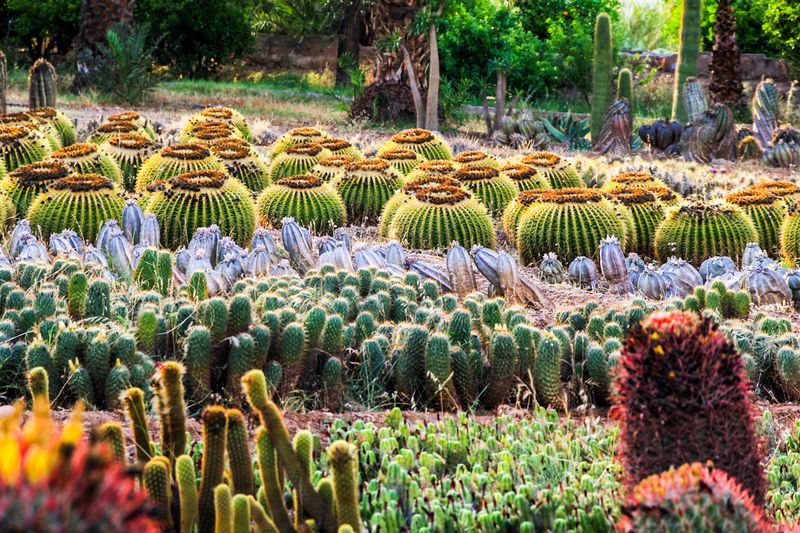
Hans Thiemann spent years growing cacti in German greenhouses before deciding that Marrakech’s climate was simply better suited to the job. He moved there in the 1960s and began establishing what would become one of the largest cactus farms in Africa.
Today the property covers about 7 hectares and contains thousands of specimens from Latin America, Africa, and Madagascar. Some of the columnar cacti have been growing for over 80 years and now reach heights of 8 to 9 meters.
An elephant cactus brought as a tiny plant in the 1960s now stands 26 feet tall, which is a useful reminder that patience is a genuine gardening strategy.
Thiemann passed away in 2001, and his family continues to manage the farm using sustainable methods without chemicals. The garden has supplied plants to other well-known Marrakech gardens, including the famous Jardin Majorelle.
Distant Atlas Mountain views complete a landscape that feels far larger than its coordinates suggest.
5. Arizona-Sonora Desert Museum Cactus Garden, Tucson, Arizona
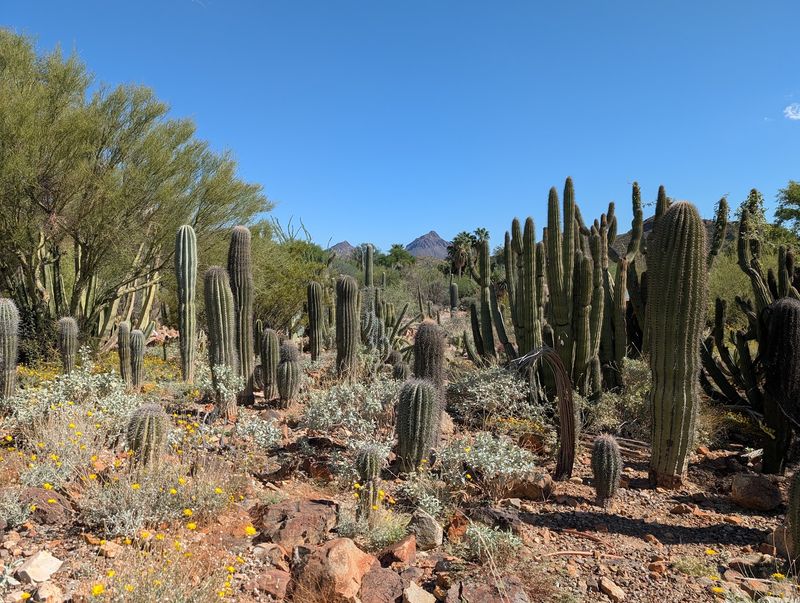
Combining a botanical garden, zoo, aquarium, and natural history museum into one desert landscape is an ambitious idea, and the Arizona-Sonora Desert Museum pulls it off with considerable style. The institution sits west of Tucson in terrain that already looks dramatic before a single cultivated plant appears.
The dedicated Haag Cactus Garden, established in 1965 in honor of “Cactus” John Haag, contains 138 cactus species, including rare and endangered examples. Recent additions since 2014 have increased the cactus density by over 40 percent, adding more than a thousand new specimens to the beds.
Across the wider 21-acre grounds, visitors can encounter over 1,400 kinds of plants representing 1,200 species. The garden includes a remarkable “river” of Creeping Devil cactus flowing through one section, along with Flying Saucer torch cacti and several endangered regional species.
Saguaros dominate many sightlines, making the cultivated garden feel like a continuation of the surrounding desert.
6. The Ruth Bancroft Garden, Walnut Creek, California
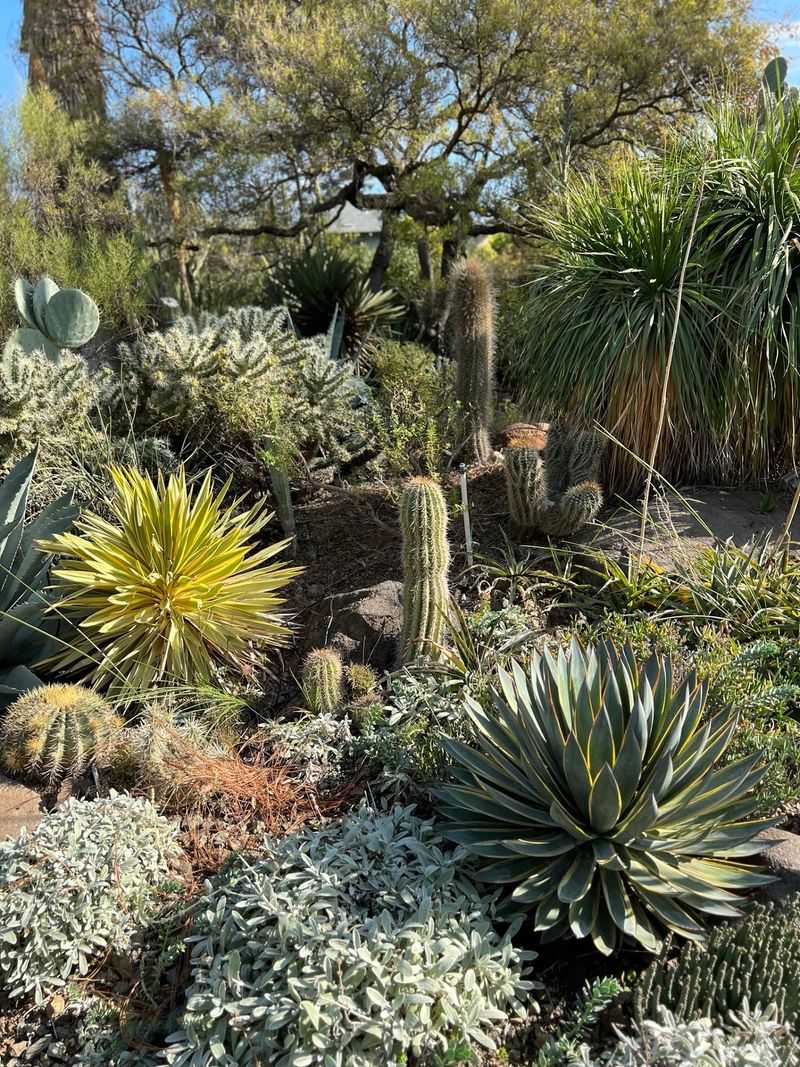
Ruth Bancroft’s first succulent purchase was an Aeonium in the early 1950s, and what followed over the next six decades was one of the most remarkable private plant collections in American horticultural history. By 1971, her husband had cleared 3.5 acres of family walnut orchard to give her space to plant properly.
The garden became the first in the United States to be preserved by The Garden Conservancy when it opened to the public in 1992. Today it holds over 2,000 species, cultivars, and hybrids of cacti, succulents, trees, and shrubs from around the world, all arranged without traditional botanical signs, in keeping with Ruth’s original artistic vision.
Much of the visual interest here comes from geometry rather than flowers. Spikes, rosettes, spheres, and twisting branches overlap in dense compositions that cast their own shadows in strong California sunlight.
An on-site nursery sells drought-tolerant plants for visitors who leave wanting to recreate a small piece of the experience at home.
7. National Cactus and Succulent Botanical Garden and Research Centre, Panchkula, India
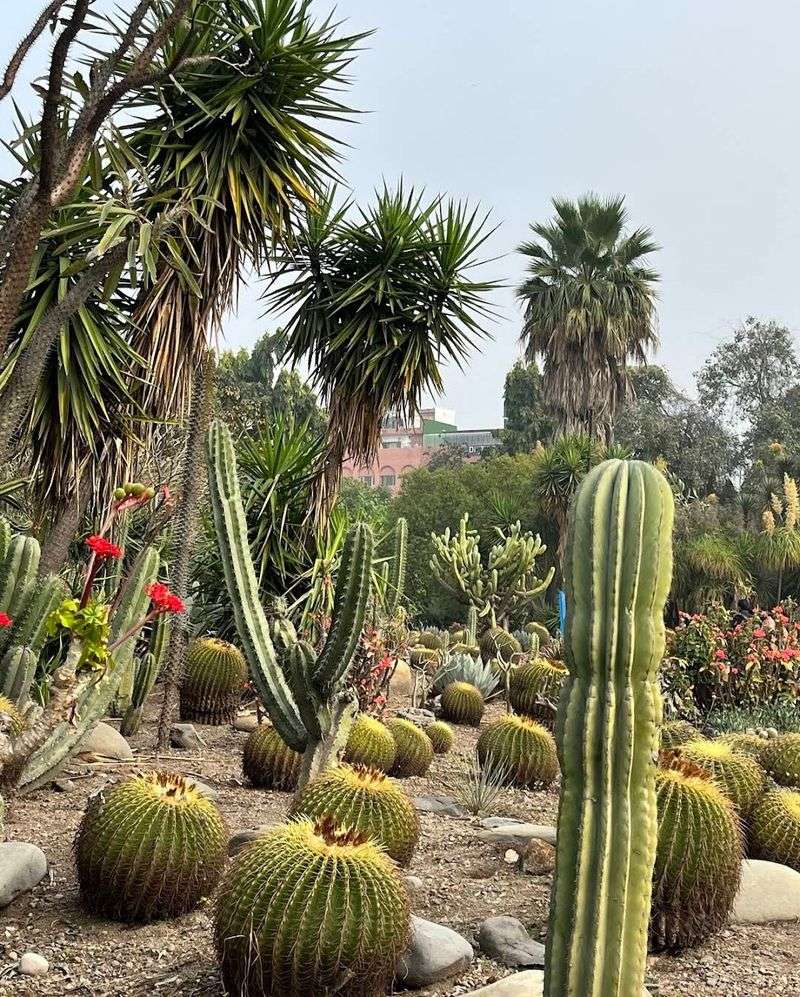
Asia’s largest outdoor landscaped cactus and succulent garden is not in a desert country, which makes Panchkula’s achievement all the more surprising. Established in 1987 and named after its designer Dr. J.S.
Sarkaria, the garden covers approximately 7 acres in Sector 5 of Panchkula, near Chandigarh.
The collection includes over 2,500 species of cacti and succulents, among them the world’s most comprehensive collection of Indian succulents, including a complete set of the genus Caralluma of Indian origin. Three greenhouses display genera that require more controlled conditions, while 20 raised ground features and four water bodies add variety to the outdoor layout.
Some display beds initially resemble conventional flower gardens until the plants themselves come into focus. Bulbous stems, unusual branching forms, and tightly packed succulents give certain sections the appearance of an outdoor curiosity cabinet.
The garden also holds an annual cactus show every March and maintains a bonsai collection of succulent plants alongside the main displays.
8. Boyce Thompson Arboretum Cactus and Succulents Garden, Superior, Arizona
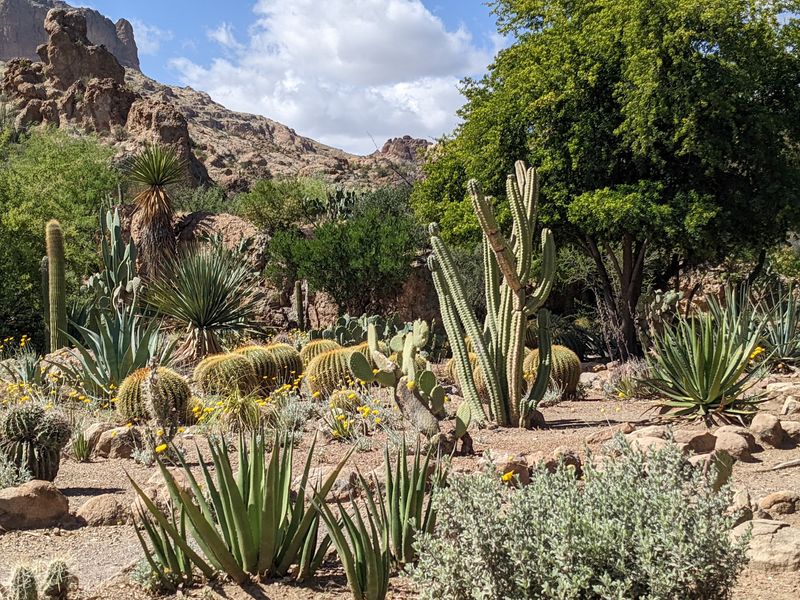
Arizona’s oldest botanical garden was founded in 1924 by mining magnate William Boyce Thompson, who wanted a desert plant research facility that doubled as a living museum. The Picketpost Mountain backdrop was apparently part of the deal from the start.
The dedicated Cactus and Succulents Garden spans six acres and contains around 1,500 plants arranged across 40 rock-bordered beds. Over 200 cactus species are represented, with more than a third threatened with extinction in the wild.
More than 20 barrel cactus species grow here, alongside 50 species of prickly pears and chollas ranging from small purple clumps to tree-sized specimens.
The garden’s boojum trees deserve particular attention. One wild-collected specimen from a 1925 Mexico expedition now stands over 30 feet tall with a three-foot girth, making it one of the largest in the United States.
Its improbable silhouette, resembling an upside-down carrot with thin branches, reliably stops visitors mid-stride.
9. Jardín Etnobiológico de Oaxaca, Oaxaca de Juárez, Mexico
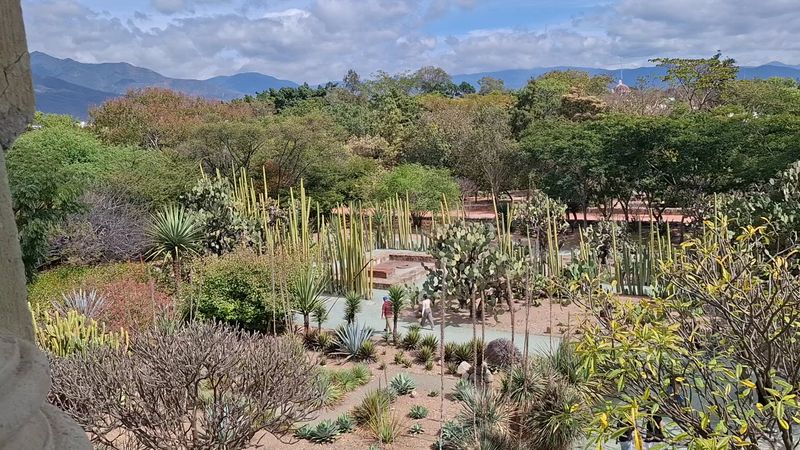
This garden exists partly because local activists refused to let a parking lot replace one of Mexico’s most biologically significant sites. In the 1990s, artist Francisco Toledo led the campaign to transform the former military base beside the Santo Domingo monastery into a living showcase of Oaxacan plant diversity.
Opened in 1998, the garden covers about 2.3 hectares and contains over 900 species, all collected exclusively from within Oaxaca state, which is Mexico’s most biologically diverse region. Plants are organized by altitude, region, and cultural function rather than standard taxonomy, making every section a lesson in how plants and people have shaped each other over centuries.
Rows of tall columnar cacti rise like green pillars from geometric stone-bordered beds set against historic walls. Agaves central to mezcal production, sacred ceiba trees, medicinal herbs, and a Toledo-designed fountain dyed red with cochineal are among the highlights.
All visits are guided, ensuring visitors receive the full cultural context behind each plant.
10. Jardín de Cactus, Guatiza, Lanzarote, Spain
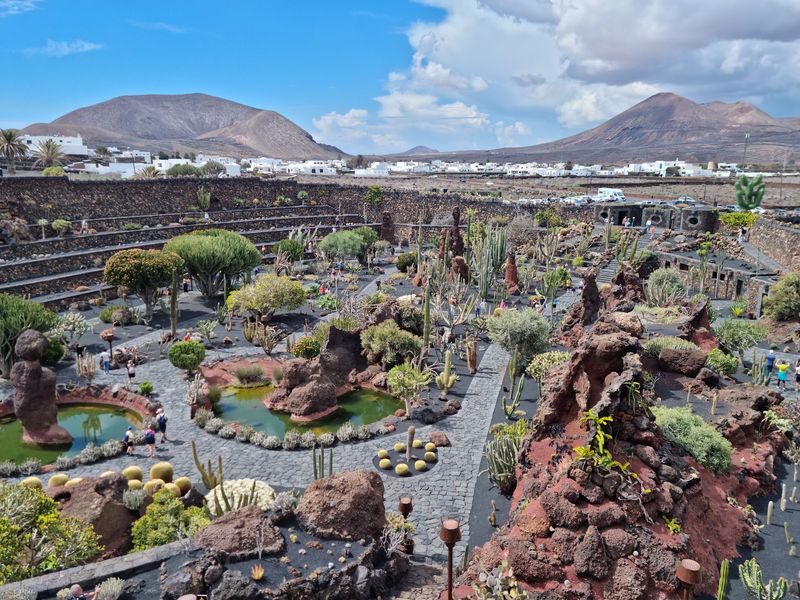
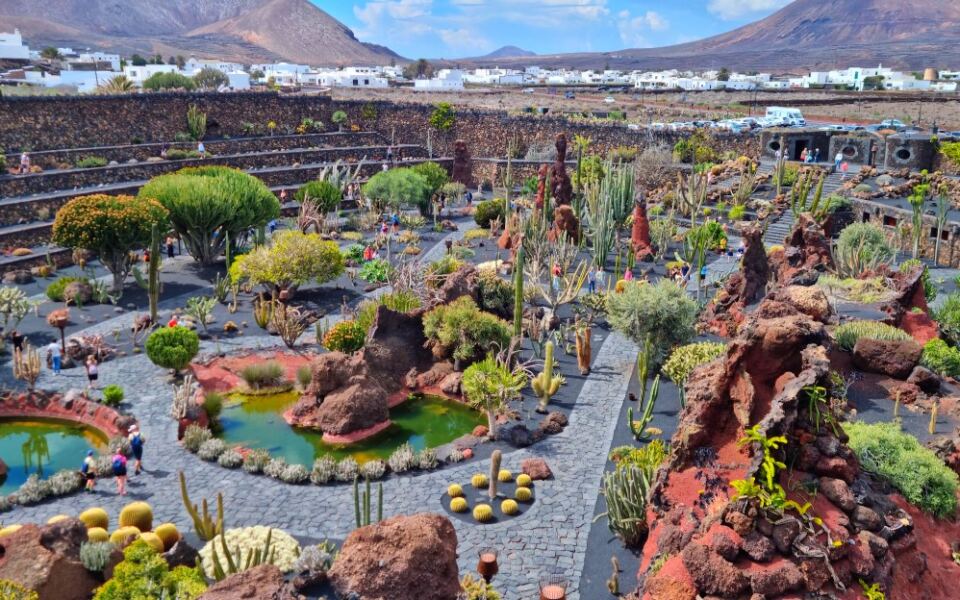
César Manrique had a gift for turning unlikely places into unforgettable ones, and a former volcanic quarry in Guatiza proved to be his greatest canvas. Inaugurated on March 17, 1990, the Jardín de Cactus was his final major project, and it is hard to imagine a more fitting farewell.
The garden holds over 7,000 cactus specimens representing more than 1,000 species from Peru, Mexico, Chile, Kenya, Madagascar, and beyond. All of them grow from concentric curved terraces built from dark volcanic material, creating a striking contrast of deep black rock and bright green plant forms.
A traditional Gofio mill stands at the highest point, looking down over the entire bowl-shaped layout. At the entrance, a large metallic cactus sculpture signals that this is no ordinary garden visit.
The sheltered quarry design also protects the plants from wind, which explains why so many have thrived here for decades.
11. Le Jardin Exotique d’Èze, Èze, France
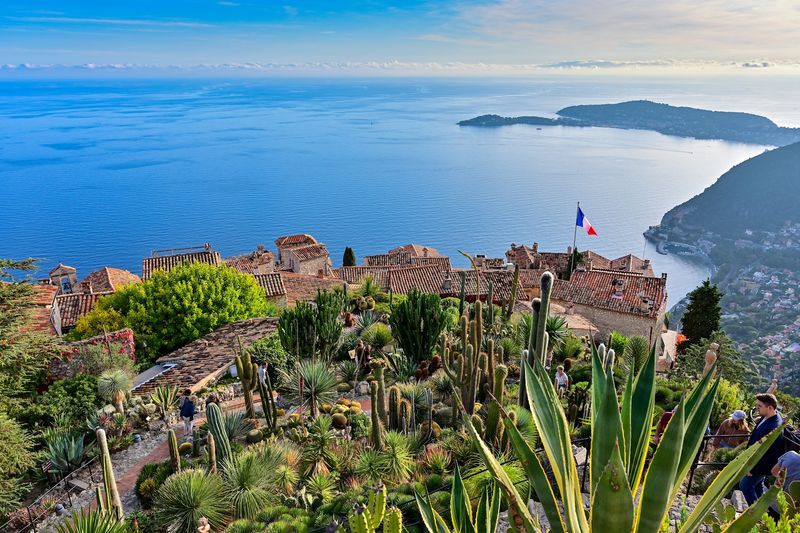
Perched near the summit of the medieval village of Èze, this garden occupies the ruins of an ancient hilltop fortress, which is arguably the most dramatic possible location for a cactus collection. The site was developed in 1949 by René Gianton, the mayor of Èze, in collaboration with Jean Gastaud, who had also helped create Monaco’s exotic garden.
Construction required manually hauling rocks and soil up the steep hillside to build the terraces where the plants now grow. A 130-year-old crown of thorns weighing half a ton is among the notable specimens, alongside massive agaves, prickly pears, and tall branching succulents from the Mediterranean region, Africa, and the Americas.
The garden blends exotic, Mediterranean, and Zen design themes across its terraced layout. The southern section focuses on succulents and cacti, while the northern area includes Mediterranean species and water features.
Bronze and crystal sculptures by artist Jean-Philippe Richard are placed throughout, adding an artistic dimension to an already visually layered landscape.
12. Karoo Desert National Botanical Garden, Worcester, South Africa
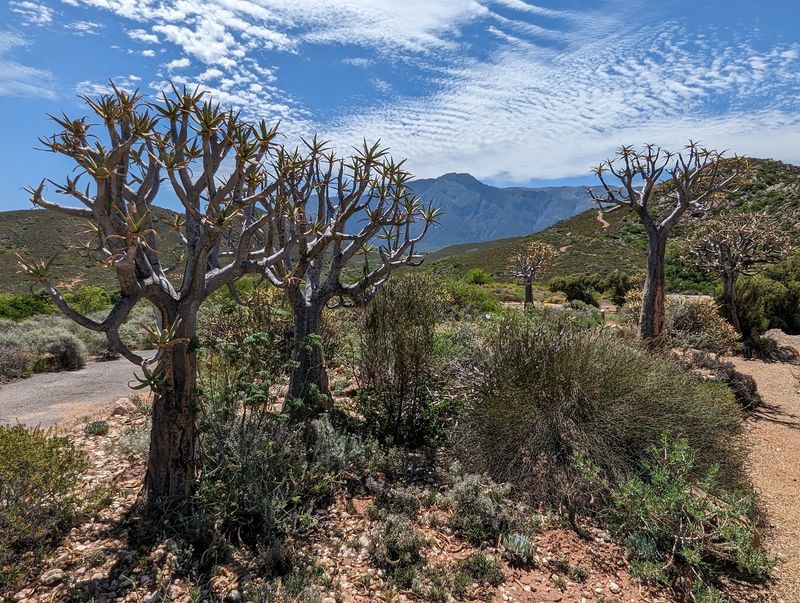
South Africa’s arid regions have produced some of the strangest plants on the planet, and the Karoo Desert National Botanical Garden in Worcester exists specifically to celebrate that fact. Recognized as the only true succulent garden in the Southern Hemisphere, it manages nearly 3,000 species across 11 cultivated hectares.
The remaining 143 hectares of the 154-hectare property preserve natural vegetation, including threatened Breede Shale Renosterveld plant communities, beneath the Hex River Mountains. The garden was originally established in 1921 near Matjiesfontein and relocated to Worcester in 1945, giving some of its oldest specimens, including quiver trees planted that same year, decades to establish themselves.
Those quiver trees now reach up to 9 meters tall and produce bright yellow flowers in winter. In spring, from August to October, carpets of vivid mesemb flowers cover sections of the garden in pink, red, orange, and yellow.
Hiking trails lead through the natural vegetation beyond the cultivated area, extending the experience well past the display beds.
13. The Living Desert Zoo and Gardens, Palm Desert, California
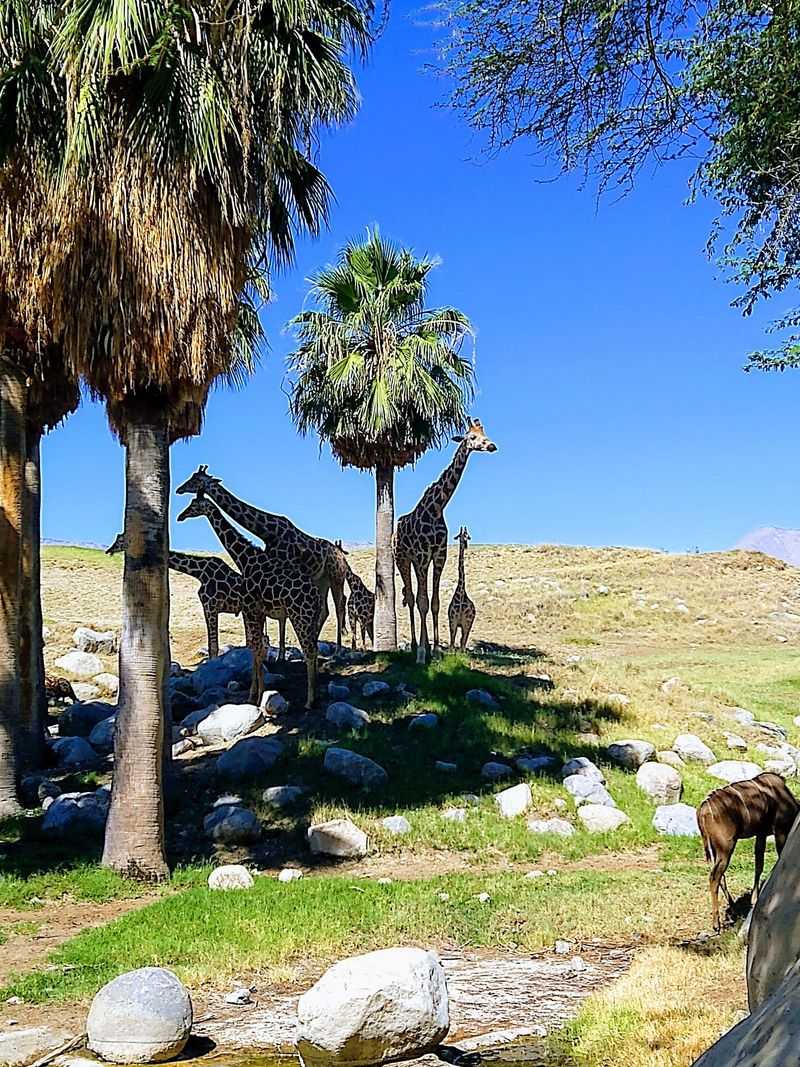
Most botanical gardens keep their plants in clearly labeled beds. The Living Desert in Palm Desert takes a different approach, weaving over 1,600 plant species into themed habitat zones that recreate distinct desert ecosystems from across the globe.
The result is a property where the garden and the landscape feel like one continuous thing.
The institution spans 1,200 acres, with 80 acres developed as zoo and garden spaces and the remainder preserved as natural desert. Distinct themed areas include a Mexican Columnar Cactus Garden, an Opuntia Garden, an Aloe Garden, and an East African Garden, among others.
Familiar saguaros, barrel cacti, and agaves appear alongside less common plants from Africa and the Arabian Peninsula.
The kokerboom, or quiver tree, is one of the garden’s most visually arresting residents. Native to Namibia and South Africa, its thick trunk and dichotomous branching pattern give it a silhouette that looks almost structurally improbable.
Rocky terrain and palms throughout the property reinforce the sense that suburban Southern California is very far away.
14. Cactus House at Lalbagh Botanical Garden, Bengaluru, India
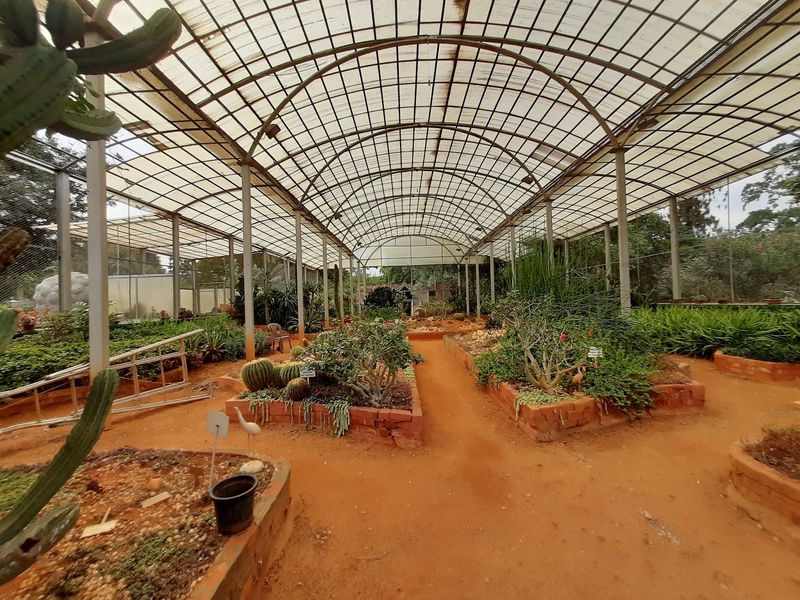
Lalbagh Botanical Garden has been one of Bengaluru’s most significant green spaces since Hyder Ali established it in 1760. Tipu Sultan later expanded the grounds and imported exotic plants from around the world, setting a precedent for ambitious collecting that continues today in an unexpected corner of the property.
The Cactus House is a 6,000-square-foot glasshouse modeled after London’s Kew Gardens, and it holds what some sources describe as the second-largest collection of cacti and succulents in the world. Its displays include various cactus genera alongside haworthias, aloes, and gasterias, with rare and endangered species gathered specifically for botanical research.
The contrast the Cactus House delivers is its defining quality. After walking through Lalbagh’s lush tropical greenery, which includes over 1,800 plant species and trees more than a century old, suddenly encountering prickly, swollen, and geometrically structured desert plants inside the glasshouse creates a genuinely disorienting shift in botanical scenery.
It is one of those moments where a garden surprises you completely.
15. Kate O. Sessions Cactus Garden, San Diego, California
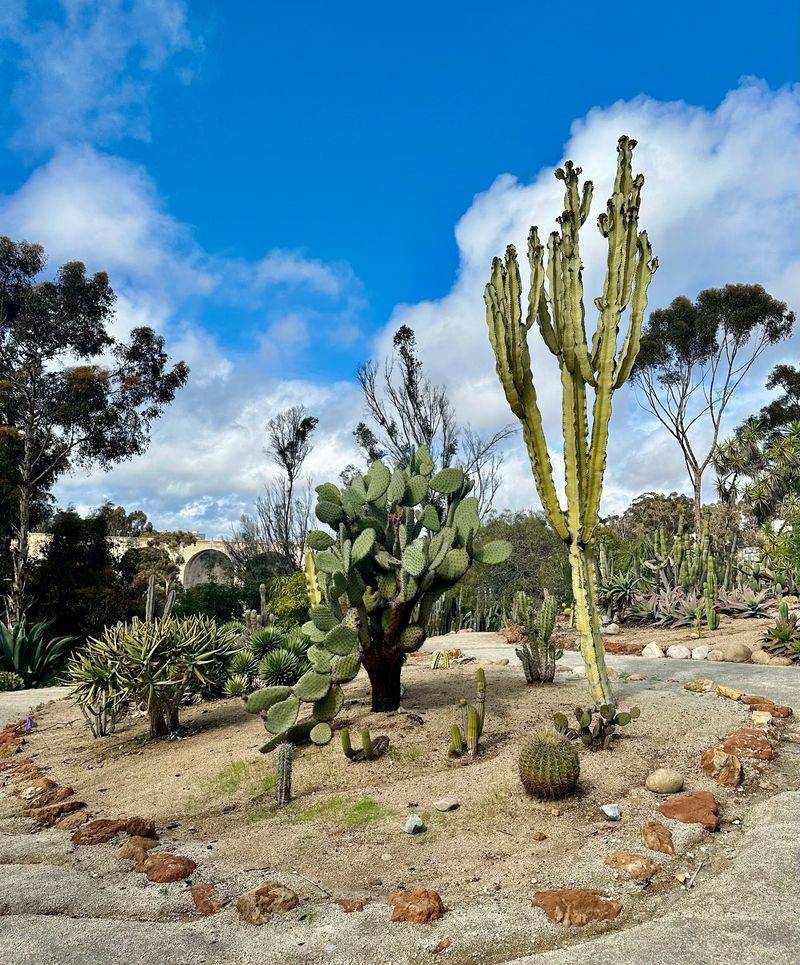
Behind the Balboa Park Club, away from the park’s more formal plazas and busy pathways, sits a garden that most visitors walk straight past without knowing it exists. That oversight is entirely their loss, because the Kate O.
Sessions Cactus Garden contains some of the largest and most mature cactus specimens anywhere in Balboa Park.
The garden was developed under Sessions’ direction for the 1935 California Pacific International Exposition, an idea she had been promoting since 1918. Sessions, widely known as the Mother of Balboa Park, also introduced jacaranda, poinsettia, and bougainvillea to the San Diego region through her broader horticultural work, so her plant judgment was clearly reliable.
Tall saguaro columns rise beside sprawling prickly pears and sculptural succulents, creating excellent silhouettes against San Diego’s famously reliable blue skies. The collection also includes exotic African and Australian Protea plants alongside the desert specimens.
Recent revitalization work has widened the pathways and refreshed the planting, giving this quietly confident garden a renewed sense of purpose.
Share this story