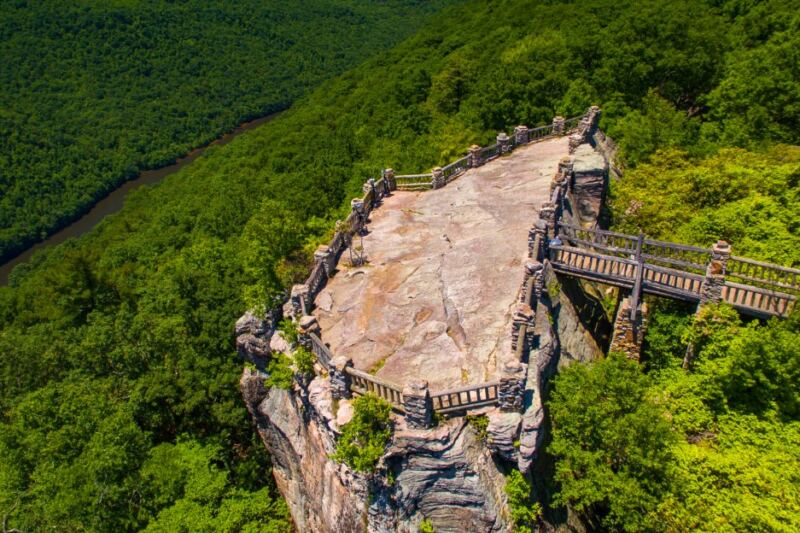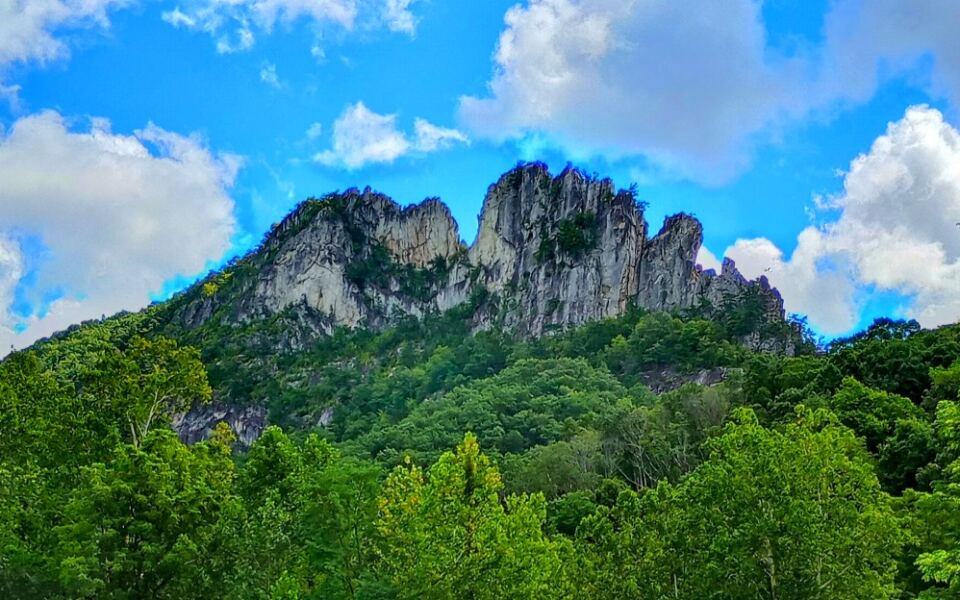
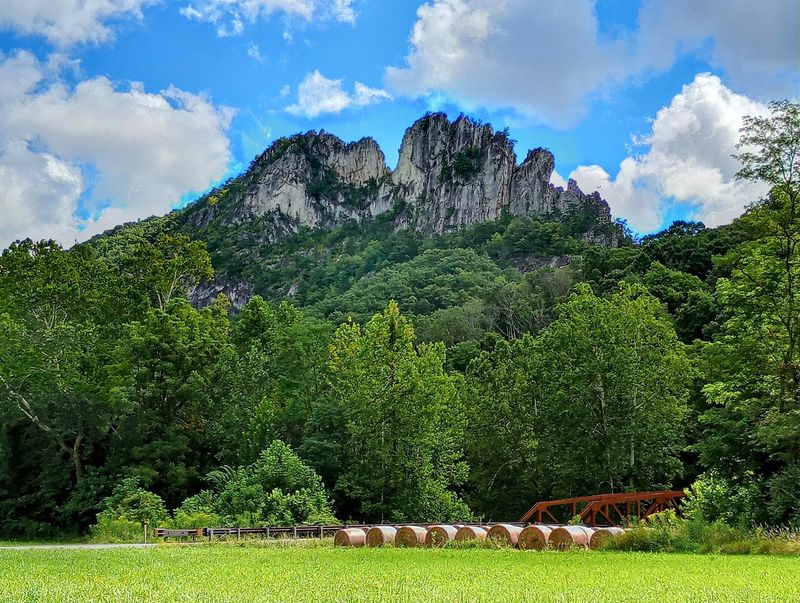
Seneca Rocks rises dramatically above the North Fork River valley, but the view is only part of what makes this West Virginia landmark worth a stop.
At its base, the Seneca Rocks Discovery Center gives visitors the story behind the formation before they head onto the trails. Exhibits cover more than 400 million years of geology, Indigenous history, the area’s climbing legacy, and the U.S.
Army soldiers who trained on these cliffs during World War II.
The center also serves as the starting point for the roughly 2.6-mile round-trip trail to the observation deck, a climb that gains about 900 feet before reaching sweeping views across the surrounding Monongahela National Forest.
That combination makes the Discovery Center more than a place to pick up a map. It is the easiest way to understand what you are looking at before heading out to experience Seneca Rocks for yourself.
A Grand Welcome at the Base of Giants
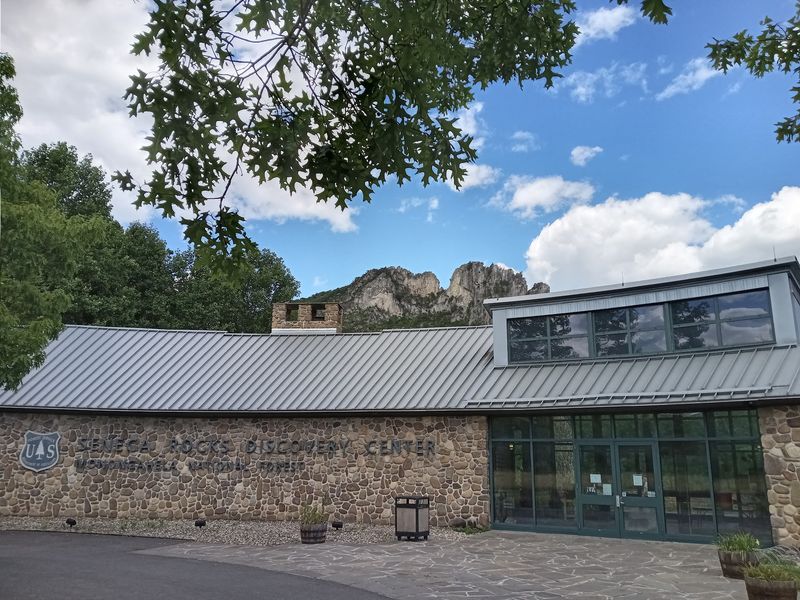
Few visitor centers come with a view this dramatic built right into their front yard. The Seneca Rocks Discovery Center sits at WV-28, Seneca Rocks, WV 26884, nestled within the Monongahela National Forest, with the towering quartzite fins of Seneca Rocks rising boldly just beyond its windows.
The moment you arrive, the scale of the landscape hits you immediately. Large plate-glass windows behind the help desk frame an unobstructed panorama of the rock formation, making the building itself feel like a living gallery.
Rangers are stationed and ready to answer questions, hand out trail maps, and offer personalized suggestions based on your fitness level and interests.
Parking is free and generally plentiful, though it fills quickly on busy weekends, so an early arrival is always a smart call. The center is open Thursday through Monday from 9:30 AM to 5 PM and is closed on Tuesdays and Wednesdays.
You can reach the staff at 304-567-2827 before your trip to confirm seasonal hours.
Geology Carved Over 440 Million Years
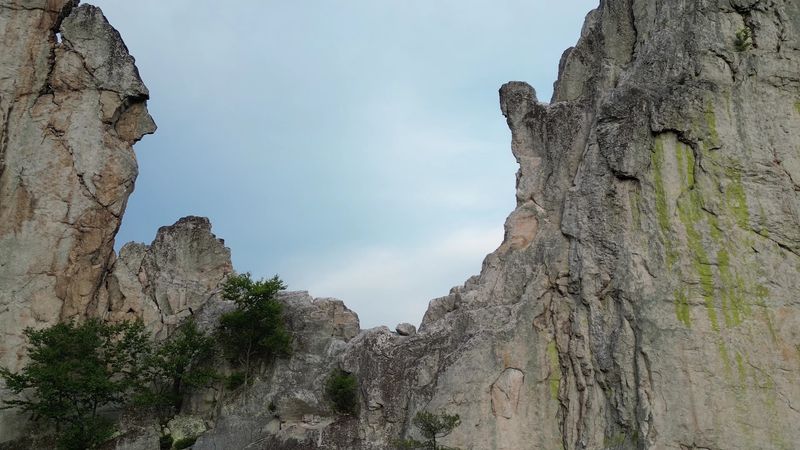
The rocks themselves are the real headliners here, and the Discovery Center does a remarkable job of explaining exactly how they came to be. Seneca Rocks is composed of Tuscarora quartzite, a rock that began as fine sand grains deposited on the edge of the ancient Iapetus Ocean approximately 440 million years ago.
Over time, those sediments were buried, compressed, and transformed into incredibly hard stone. Then, more than 200 million years ago, massive geological forces folded and tilted the rock layers a full 90 degrees, creating the dramatic upright fins visible today.
Softer surrounding rock eroded away over millions of years, leaving only the erosion-resistant quartzite standing tall.
Inside the center, a detailed relief map helps visitors visualize this process in a way that feels tangible rather than abstract. Short films and illustrated displays bring the timeline to life without overwhelming you with scientific jargon.
By the time you finish the exhibits, those pale cliffs outside start to feel like old friends with a very long story to tell.
Indigenous History Rooted in the Valley
Long before any European explorer set eyes on these cliffs, the valley beneath Seneca Rocks was home to thriving Indigenous communities. Archaeological evidence uncovered during the construction of the Discovery Center itself revealed two ancient village sites, one of which flourished approximately 700 years ago.
Nations including the Seneca, Shawnee, Delaware, Cherokee, Algonquian, and Tuscarora peoples used this corridor for hunting, trade, and travel. The Great Indian Warpath, locally called the Seneca Trail, followed the Potomac River right through this valley, making it a well-traveled artery of communication between nations for centuries.
The Seneca people reportedly called the rocks by a name meaning “Little people live there,” reflecting the spiritual significance they attached to the formation. The Discovery Center honors this deep history through its exhibits, weaving Indigenous narratives into the broader story of the landscape.
Picking up the Cherokee folklore book available in the gift shop adds another thoughtful layer to the experience for anyone who wants to read more after the visit.
World War II Soldiers Who Trained on the Cliffs
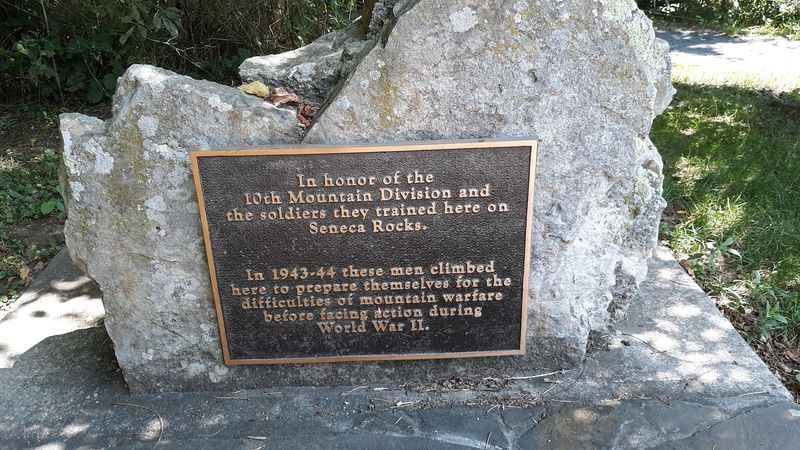
One of the most surprising chapters in the Discovery Center’s exhibits involves the United States military. In 1943 and 1944, the 10th Mountain Division of the U.S.
Army used Seneca Rocks as a training ground for assault climbing, preparing soldiers for the rugged mountain warfare they would face in Italy’s Apennine range during World War II.
A continuous film running inside the center covers this military history in engaging detail, and it is genuinely worth the time to watch. The soldiers left behind an estimated 75,000 soft iron pitons hammered into the rock, many of which remain embedded in the quartzite to this day.
One section of the cliff face earned the nickname “The Face of a Thousand Pitons” as a direct result of their intensive training sessions.
This history adds a powerful human dimension to what might otherwise feel like a purely natural attraction. Standing at the base of the rocks while knowing that soldiers once scaled those same walls to prepare for combat gives the landscape a weight and meaning that lingers long after you leave the valley.
The Trail to the Observation Deck
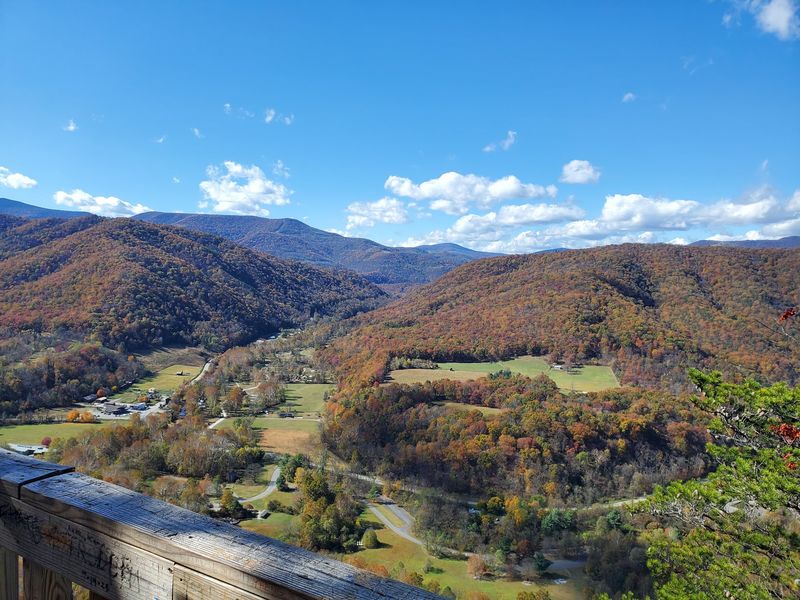
The trail to the observation deck starts directly behind the Discovery Center, making it incredibly easy to transition from exhibits to the outdoors without any extra driving or navigation. The path covers approximately 2.6 miles round trip and gains around 900 feet in elevation through a series of steady switchbacks and carved stone steps.
Rangers at the center recommend budgeting about two hours for the round trip, though many visitors take longer to enjoy the views along the way. Benches and rest areas are spaced throughout the trail, which makes the climb feel manageable even if you are not an experienced hiker.
Interpretive signs along the route share geological and ecological facts that keep your mind engaged while your legs do the work.
The observation platform at the top delivers sweeping views across the North Fork River valley and the surrounding ridges of the Monongahela National Forest. From that vantage point, you can watch rock climbers working the vertical faces below you, which adds a thrilling live element to an already spectacular panorama.
Sturdy footwear is strongly recommended for the rocky, uneven terrain.
Rock Climbing Routes That Draw the World’s Best
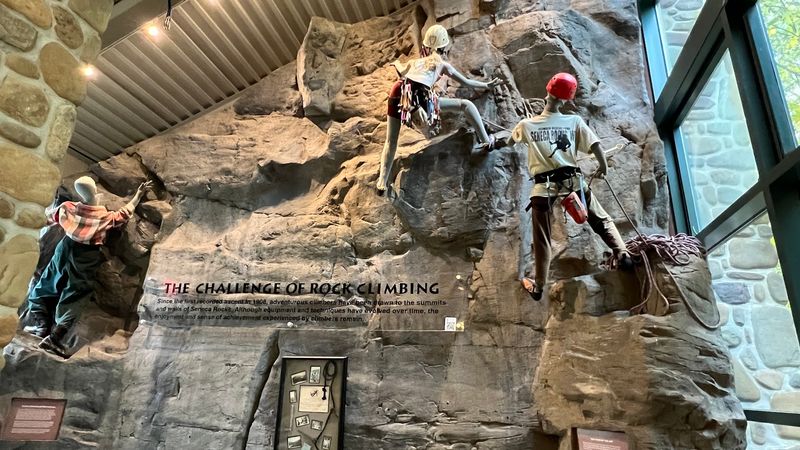
Seneca Rocks holds a revered place in the rock climbing world, and the Discovery Center tells that story with obvious pride. The formation offers between 375 and 500 mapped climbing routes, ranging in difficulty from beginner-friendly grades all the way up to extremely technical climbs rated at 5.14b on the Yosemite Decimal System.
The first documented roped ascent of the North Peak took place in 1935, achieved by Paul Bradt and Florence Perry. An inscription found in 1939 bearing the date September 16, 1908, suggests someone may have reached the summit even earlier, possibly a surveyor named Bittenger.
The tradition of climbing here has never slowed down, and today Seneca Rocks is widely regarded as one of the premier traditional climbing destinations in the entire eastern United States.
Binoculars are a worthwhile addition to your pack when visiting, since watching climbers navigate the sheer faces from the valley floor or the observation deck is genuinely captivating. The center staff can point you toward local guide services if you want to try climbing yourself for the first time.
The Sites Homestead and a Peek into Pioneer Life
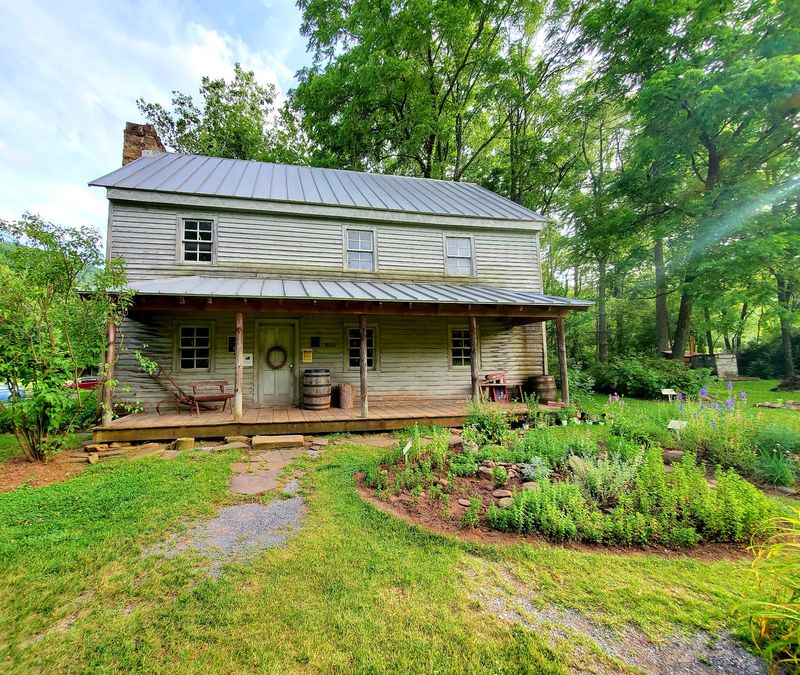
A short walk from the Discovery Center leads to one of the area’s quieter treasures: the Sites Homestead, a farmhouse dating back to 1839. This carefully preserved property offers a grounded, human-scale contrast to the geological drama happening just up the hillside, and it rewards visitors who slow down enough to appreciate it.
During operational seasons, certified interpretive guides lead tours of the house and its surrounding gardens, sometimes dressed in period clothing to illustrate what frontier life looked like in the Appalachian highlands during the 19th century. Demonstrations of traditional crafts and agricultural skills bring the era to life in a way that static displays simply cannot replicate.
The homestead is not a polished museum piece kept behind velvet ropes. Instead, it feels lived-in and authentic, a place where you can genuinely imagine the daily rhythms of families who carved out their existence in this rugged landscape.
Pairing a visit here with the Discovery Center’s exhibits creates a satisfying loop of natural and cultural history that enriches the entire Seneca Rocks experience considerably.
Wildlife and the Wild Creatures of the Cliffs
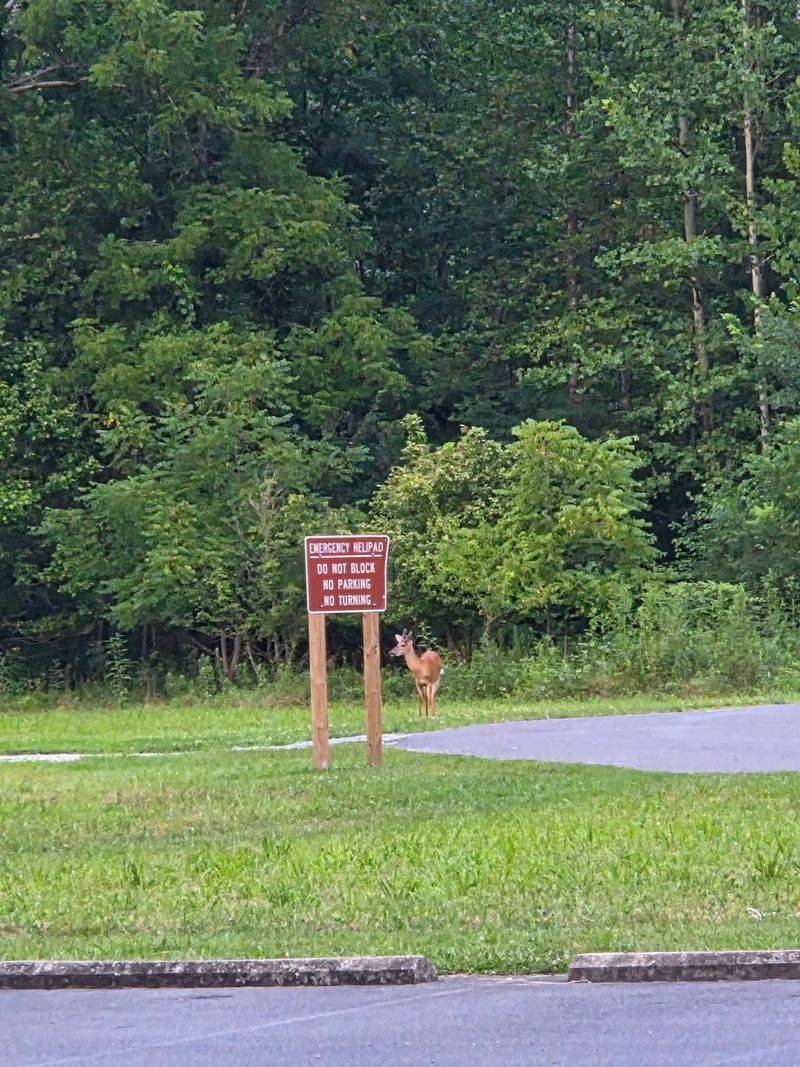
The cliffs of Seneca Rocks are not only a playground for human adventurers. They serve as critical nesting habitat for peregrine falcons, a species that was reintroduced to West Virginia in the 1980s after facing serious population declines.
Spotting one of these raptors riding a thermal above the peaks is a genuinely thrilling moment that requires zero hiking ability.
The broader Monongahela National Forest surrounding the rocks supports white-tailed deer, chipmunks, wild turkeys, and a rich variety of songbirds including warblers, woodpeckers, and orioles. Black bears are also part of the ecosystem, so the Discovery Center staff always encourages visitors to follow responsible outdoor practices and store food securely.
Seneca Creek and the North Fork of the South Branch of the Potomac River, which converge right at the base of the rocks, attract trout fishermen and birdwatchers in equal measure. The center’s wildlife exhibits provide helpful identification guides and habitat information that make casual nature observation feel much more rewarding.
Bringing binoculars is one of the best decisions you can make before setting out.
Accessibility, Amenities, and Practical Visitor Tips
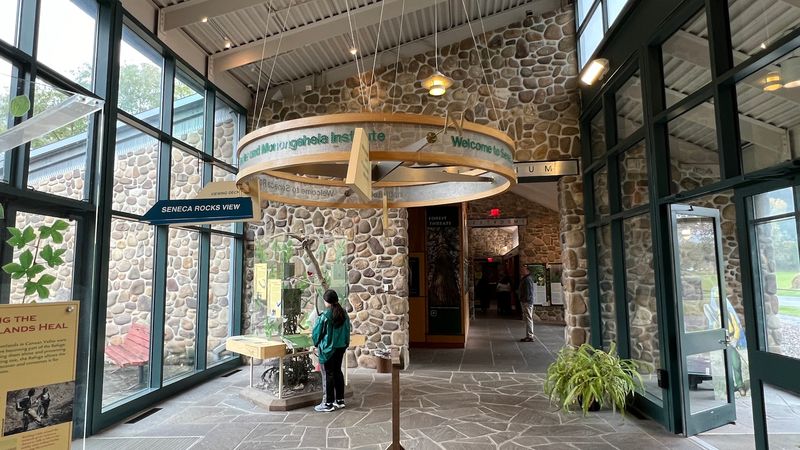
The Discovery Center earns its reputation as a genuinely welcoming starting point for all kinds of visitors. The building is fully handicapped accessible, with clean restrooms, vending machines, and a small but well-stocked gift shop offering quality apparel, regional books, stickers, and souvenirs.
There is even a dedicated corner where younger visitors can color, read, and match rocks for a small prize.
The center participates in the National Park Service’s B.A.R.K. Ranger program, which means leashed dogs are welcome to join in on the fun and can even take the B.A.R.K.
Ranger oath alongside their owners. Parking is free, though the lot fills quickly on fall weekends and holiday periods, so arriving before 9:30 AM gives you a real advantage.
Cell service in the area is limited, so downloading offline maps before you leave home is genuinely useful advice rather than just a polite suggestion. The center’s phone number, 304-567-2827, is worth saving in case you need to confirm hours or ask about current trail conditions before making the drive out to this corner of Pendleton County.
Fall Foliage and the Best Seasons to Visit
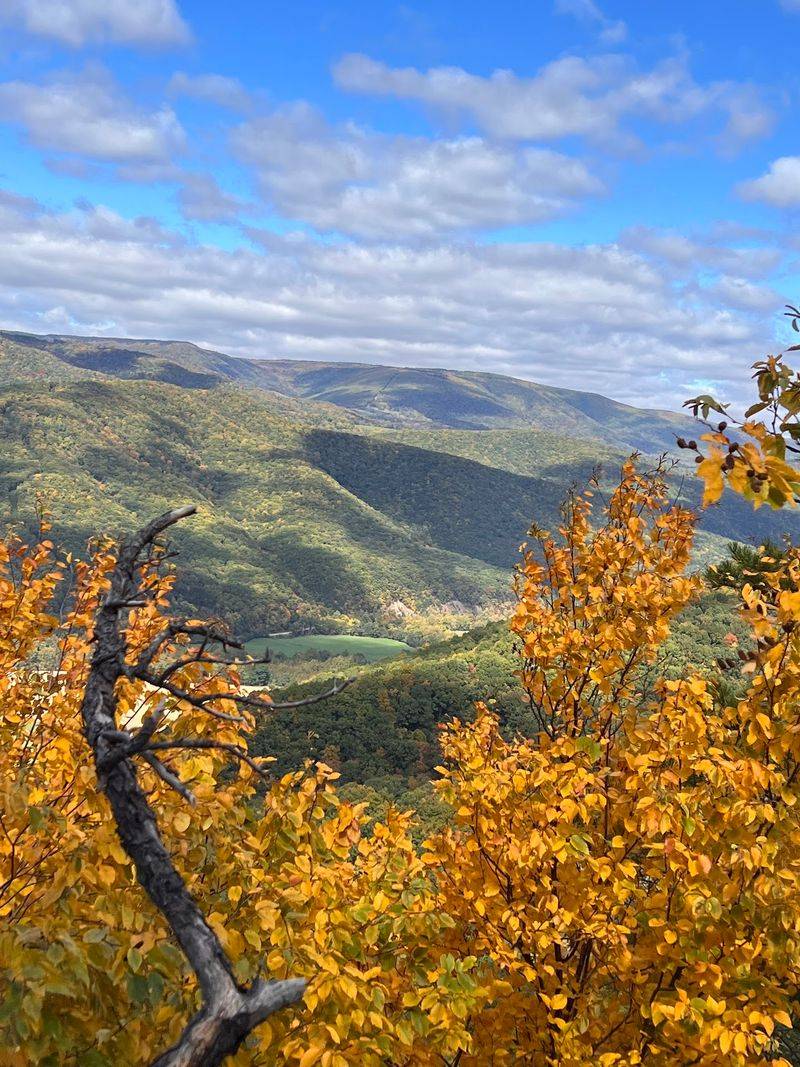
Autumn turns Seneca Rocks into something almost impossibly beautiful. From early to mid-October, the hardwood forests surrounding the formation shift into brilliant shades of red, orange, and gold, creating a vivid contrast against the pale quartzite cliffs that photographers and casual visitors alike find genuinely hard to leave behind.
The cooler fall temperatures make hiking the trail to the observation deck a comfortable and energizing experience, and the low-angle morning light creates ideal conditions for photography from the parking area and the overlook alike. Spring offers similarly pleasant hiking weather and is considered one of the best seasons for rock climbing, when the rock surface is dry and temperatures are moderate.
Summer draws families who enjoy the swimming hole near the Sites Homestead and the longer daylight hours for exploring the trails. Winter brings a quieter, more contemplative atmosphere, with snow-dusted cliffs and nearly empty parking lots for those who enjoy solitude.
The Discovery Center operates Thursday through Monday, 9:30 AM to 5 PM, during its seasonal window, so checking current hours before a winter or early spring visit is always a practical first step.
Share this story