Europe is home to some of the most breathtaking lakes on the planet, where snowmelt and glacial springs fill basins with water so clear it almost looks unreal. Framed by towering peaks, ancient forests, and rugged cliffs, these lakes offer scenery that stops you mid-sentence.
Whether you are planning an adventure-packed summer trip or simply dreaming from your couch, these ten lakes prove that nature still has a few jaw-dropping tricks up its sleeve.
Lake Oeschinen, Switzerland
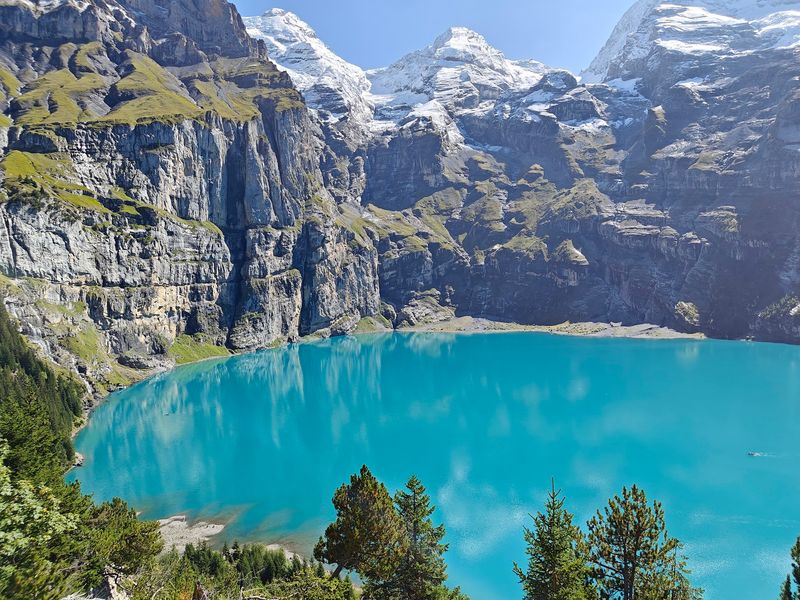
Tucked above the village of Kandersteg like a secret the Alps forgot to keep, Lake Oeschinen is the kind of place that makes you question whether photos can even do it justice. Sitting within the Swiss Alps Jungfrau-Aletsch UNESCO World Heritage region, the lake is cradled by the Bluemlisalp massif, whose glaciers and gray limestone walls tower overhead.
The contrast between the saturated turquoise water and the surrounding rock is almost theatrical.
Getting there is half the fun. A gondola from Kandersteg whisks you up the mountain, and from there a footpath leads to the shoreline.
Rowboats are available during warmer months for anyone who wants a water-level view of those dramatic cliffs.
Swimmers should know the water stays cold even in summer, so a quick dip is more of a refreshing shock than a leisurely float. From the higher trails, waterfalls streak down the cliff faces while snowfields gleam above.
Few mountain lakes in Europe pack this much visual drama into one compact basin, which is exactly why Oeschinen keeps appearing on every serious list of Alpine must-sees.
Lake Braies, Italy
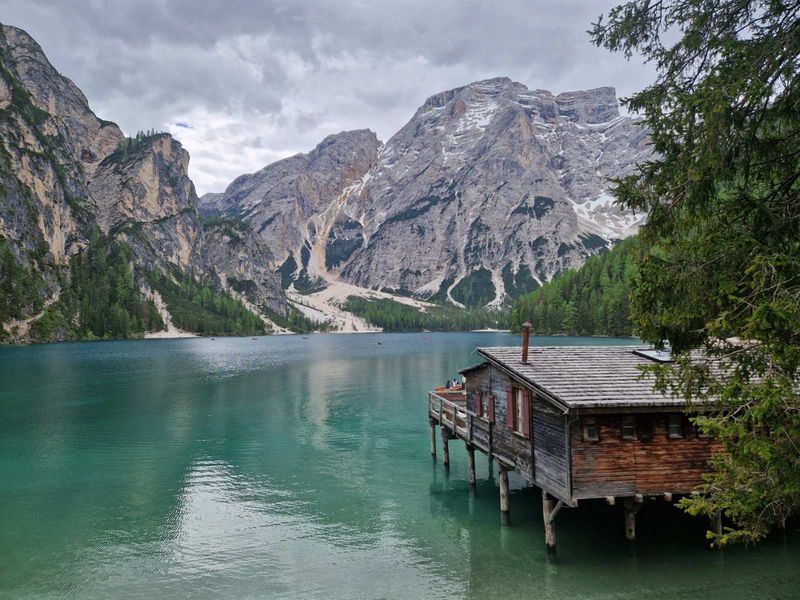
At 1,490 meters above sea level in South Tyrol, Lago di Braies sits inside one of the most dramatic geological settings on the continent. The Croda del Becco, rising to 2,810 meters, looms over the southern shore like a cathedral wall.
That combination of emerald water and vertical Dolomite rock has made this lake one of Italy’s most photographed natural spots, and honestly, the camera never lies here.
Here is a fun detail most visitors miss: the lake was not carved by a glacier. A massive landslide blocked the Rio Braies river and created the basin naturally.
That origin story gives the lake a slightly wild, accidental quality that fits perfectly with its rugged surroundings.
A footpath circles the entire 1.2-kilometer shoreline through dense fir forest, passing wooden boats that bob gently near the dock. The lake reaches more than 35 meters deep, giving the water its rich, layered color.
Summer crowds have grown intense enough that seasonal vehicle restrictions are now in place. Arriving early in the morning rewards visitors with calm water, soft light reflecting off the peaks, and far fewer people competing for the same view.
Lake Achensee, Austria
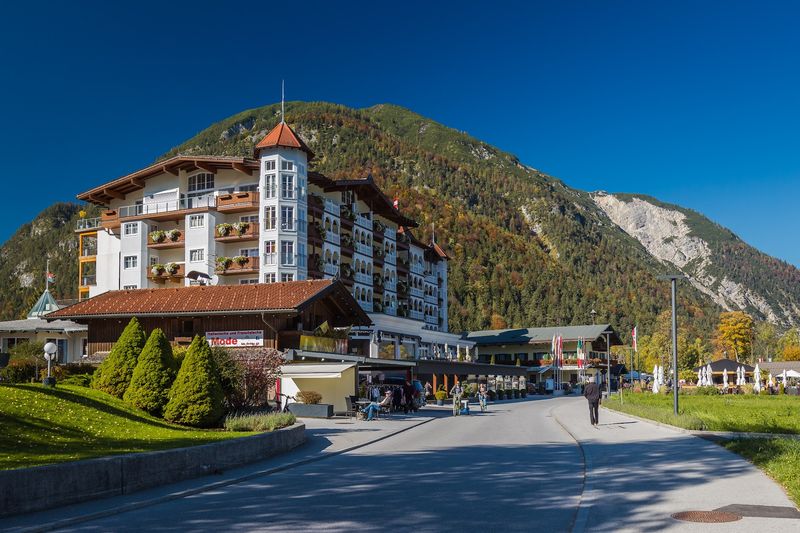
Locals sometimes call it the Sea of Tirol, and once you see the lake stretching nine kilometers between the Karwendel and Rofan ranges, the nickname starts to make complete sense. Achensee sits at 929 meters above sea level and reaches a maximum depth of 133 meters, giving it the kind of volume that creates its own microclimate.
Austria’s national tourism organization credits the surrounding limestone geology for the lake’s remarkable turquoise clarity.
What genuinely surprises first-time visitors is how warm the water gets. Summer temperatures can climb to around 20 to 22 degrees Celsius, which is unusually comfortable for a lake sitting this high in the Alps.
That warmth makes Achensee one of the few Alpine lakes where swimming feels like a genuine pleasure rather than a dare.
Sailing, paddleboarding, and windsurfing are popular across the surface, while a historic passenger-boat service connects villages along the shoreline. Hiking trails rise quickly from the water’s edge, and from higher elevations the long turquoise basin looks almost fjord-like between the steep slopes.
The combination of warm swimming water, mountain scenery, and a lively lakeside atmosphere makes Achensee stand out among Austria’s many excellent mountain lakes.
Lake Bohinj, Slovenia
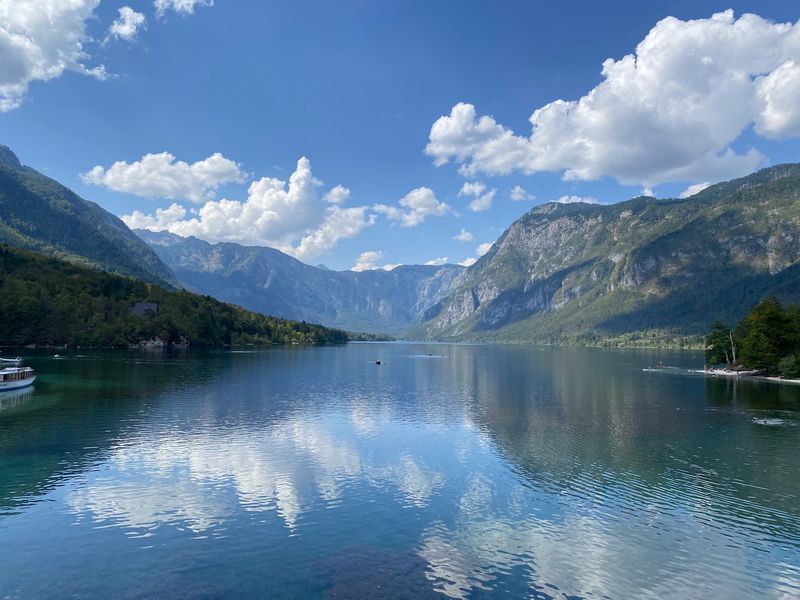
If Lake Bled is the famous sibling who always gets the attention, Lake Bohinj is the quieter one who turned out to be more interesting. Located deep inside Triglav National Park, it is Slovenia’s largest permanent natural lake, and the Julian Alps rise sharply at its western end with an immediacy that feels almost confrontational.
Forest presses right to the water’s edge along much of the shore, keeping the scenery raw and largely untouched.
The national park setting is the key to understanding why Bohinj looks so clean and undeveloped. Strict environmental rules limit construction and commercial activity, which means the lake has avoided the crowded resort development that surrounds many comparable European lakes.
That restraint shows in the water quality and the overall visual calm of the place.
Summer brings kayakers, paddleboarders, swimmers, and cyclists, but the crowds never reach the same intensity as Bled. From the Vogel cable car station above the southern shore, views stretch across the full length of the lake toward Slovenia’s highest peaks.
On a still morning, the reflection of those mountains in the clear water is the kind of sight that tends to stay with you for a long time after you leave.
Lake Annecy, France
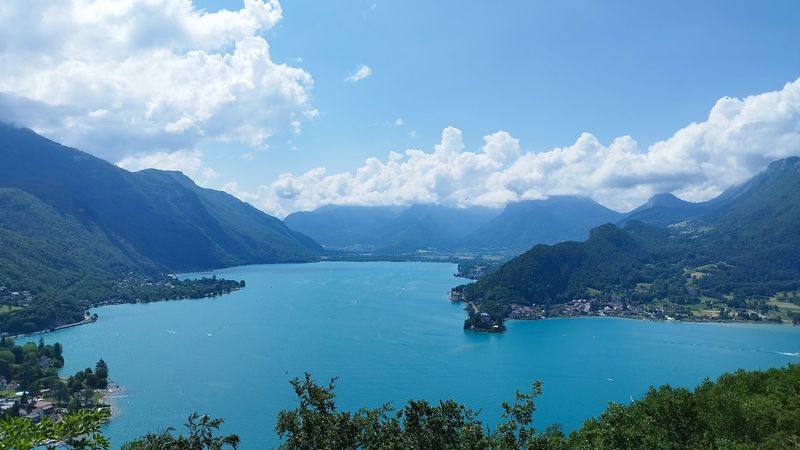
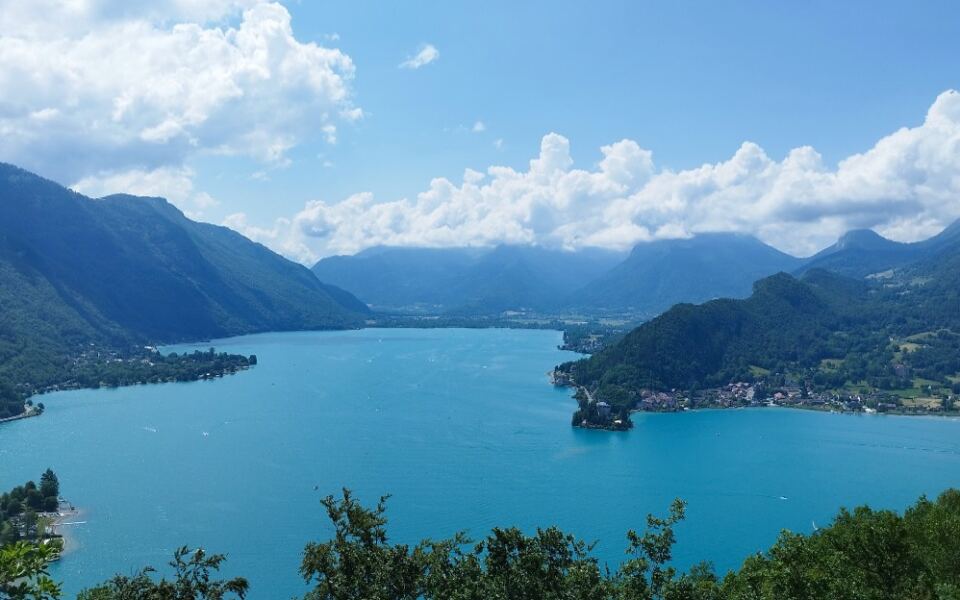
Calling Lake Annecy clean is an understatement. Environmental protection efforts that began in 1957 have made it widely regarded as one of the purest lakes in all of Europe, a reputation it has worked hard to earn and maintain over several decades.
Sitting at 447 meters above sea level, the lake is enclosed by the massifs of La Tournette, Semnoz, and the Bornes range, creating a mountain frame that changes color with the light throughout the day.
The Col de la Forclaz viewpoint above the eastern shore is where paragliders launch and where the full scale of the lake becomes clear. Watching a paraglider spiral down toward turquoise water with mountain walls on three sides is one of those experiences that feels almost absurdly cinematic.
What genuinely sets Annecy apart from more remote Alpine lakes is the historic city at its northern end. Canals, medieval streets, outdoor restaurants, and a castle sit minutes from swimming beaches and sailing clubs.
Travelers who want clean mountain water without sacrificing urban comfort find that Annecy solves that equation elegantly. Cycling paths circle the lake, water sports fill the summer calendar, and the mountain backdrop never lets you forget where you are.
Konigssee, Germany
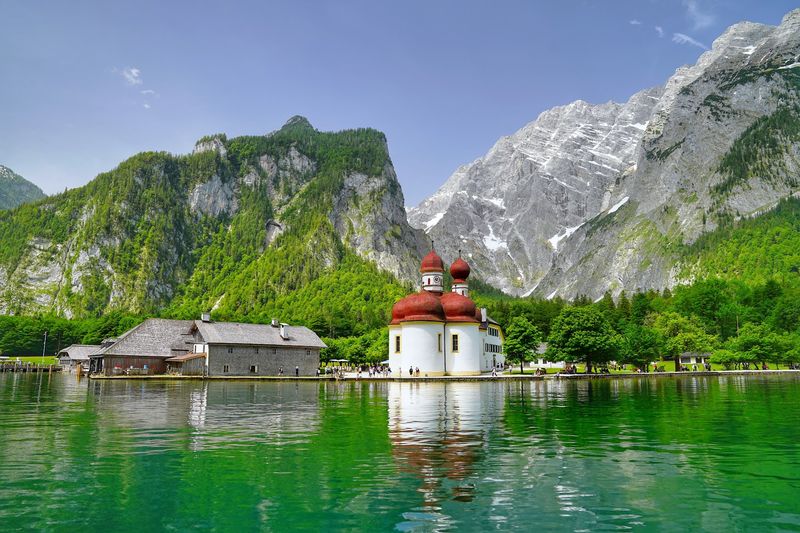
Most lakes have roads around them. Konigssee, tucked into the Berchtesgaden Alps of southeastern Bavaria, does not, and that single fact changes everything about the experience.
The absence of shoreline roads means the cliffs and forest descend directly to the water, giving the lake a sealed, otherworldly quality that feels more like a Norwegian fjord than anything you would expect to find in southern Germany.
The Watzmann massif, one of Germany’s most imposing mountain formations, drops its steep walls toward the lake’s western shore. Electric passenger boats, which have been operating on Konigssee since the 1900s to protect air and water quality, carry visitors across the surface in near silence.
Partway along the journey, the boatman traditionally plays a trumpet note toward the cliff, and the echo bounces back twice from the rock walls. Tourists love it every single time.
The destination for most boat trips is the pilgrimage church of St. Bartholoma, a striking red-domed building sitting improbably between water and mountain. Beyond it, trails climb into the high country toward Watzmann’s summit and the remote upper lake called Obersee.
Germany’s tourism authority highlights the emerald water and Alpine surroundings here as among the country’s finest natural scenery, and on that point there is very little room to argue.
Weissensee, Austria
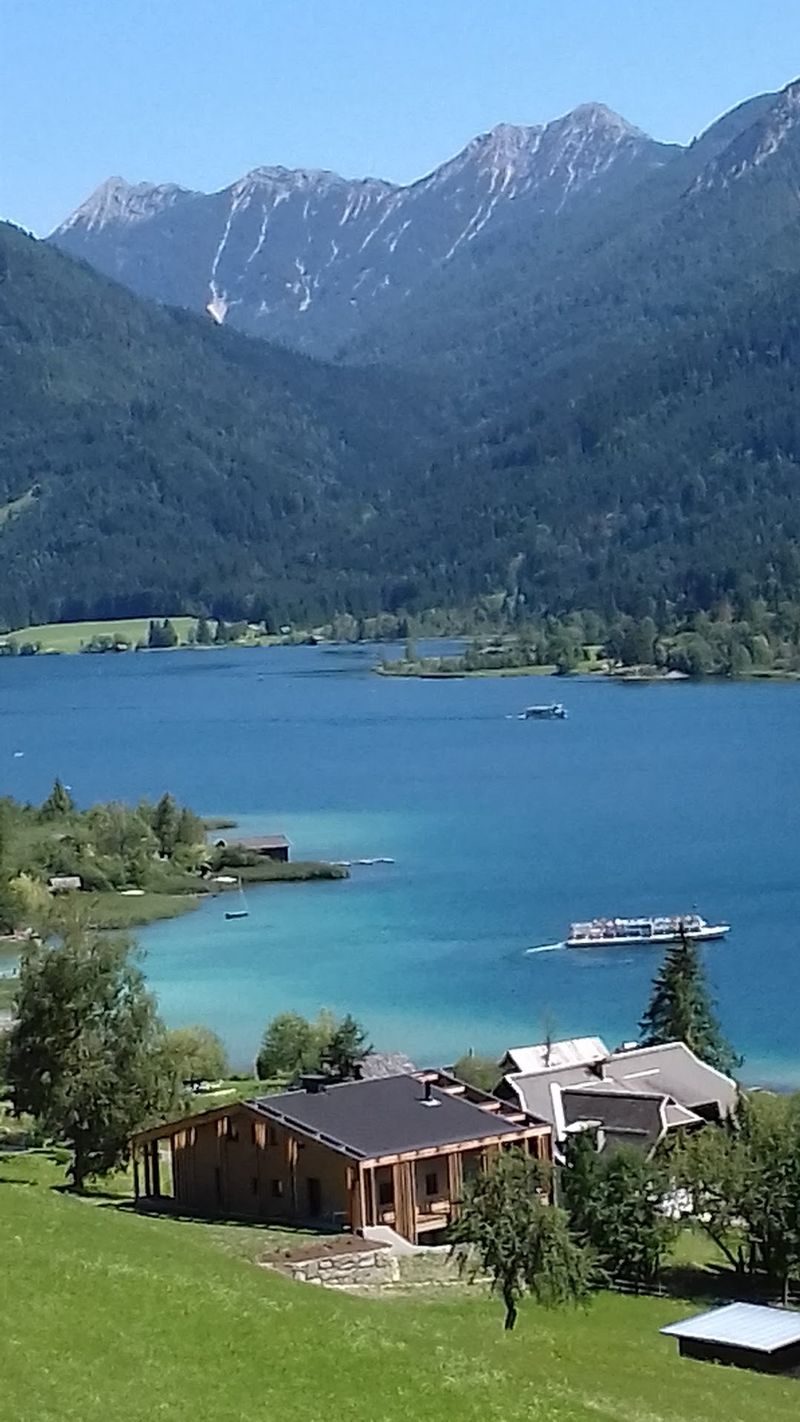
Carinthia’s best-kept secret is a narrow, emerald-green lake that stretches through the Gailtal Alps without a single large resort to interrupt the view. Weissensee sits at around 930 meters above sea level, and Austria Tourism specifically calls out its crystal-clear water as one of the defining reasons to visit.
The lake’s deliberate lack of heavy development is not an accident but a conscious choice that the surrounding communities have maintained for years.
In summer, the clear water and wooded shoreline attract swimmers, hikers, and cyclists who want alpine scenery without the crowds that descend on more famous Austrian lakes. Long stretches of the shoreline remain forested and car-free, which keeps the water quality high and the atmosphere genuinely relaxed.
The narrow shape of the lake means the mountain slopes are always close on both sides, creating a constant sense of being enclosed by the landscape.
Winter transforms Weissensee entirely. When temperatures drop far enough, the lake freezes to produce one of Europe’s finest natural ice surfaces, drawing skaters and ice cyclists from across the continent.
The same cold that makes the water so clear in summer creates those extraordinary winter conditions. For a lake that rarely makes international headlines, Weissensee delivers an impressive range of experiences across all four seasons.
Lovatnet, Norway
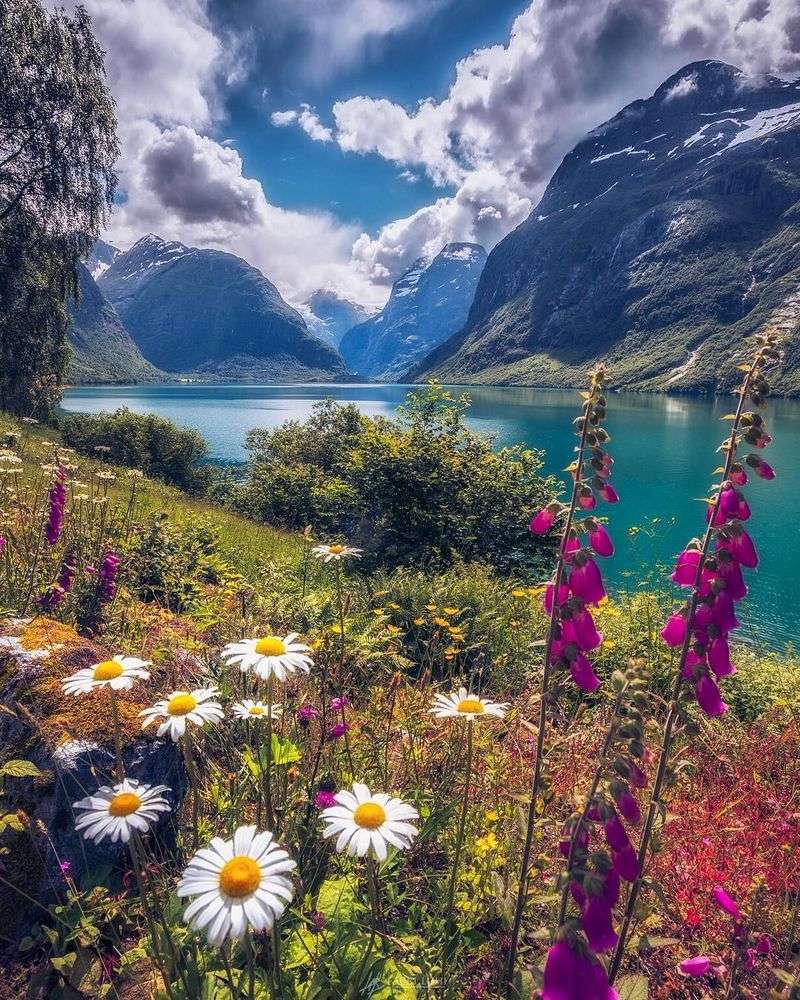
The color of Lovatnet stops people mid-sentence. Located in the Lodalen valley near Loen in western Norway, the lake holds water so intensely green that first-time visitors often assume the photos have been edited.
They have not. The color comes from glacially influenced water draining from the surrounding mountains and from arms of the Jostedalsbreen glacier, Europe’s largest mainland glacier, which rise above the valley in multiple directions.
Visit Norway notes that up to seven glacier arms are visible from the wider Lodalen valley, turning a simple lake visit into something closer to a full glacial landscape experience. Waterfalls pour down the steep slopes on both sides of the lake, and small farms occupy narrow strips of flat ground between the water and the rock.
The scenery is extraordinary, but the history here carries real weight.
In 1905 and again in 1936, massive rockslides from the surrounding mountainsides sent enormous waves crashing through Lodalen, killing local residents both times. The same dramatic geology responsible for the lake’s incredible scenery was also responsible for those disasters.
Understanding that history adds a layer of depth to visiting Lovatnet that goes beyond simple admiration of the view. The mountains here are genuinely powerful, and the lake reflects that fact in every sense.
Black Lake, Montenegro
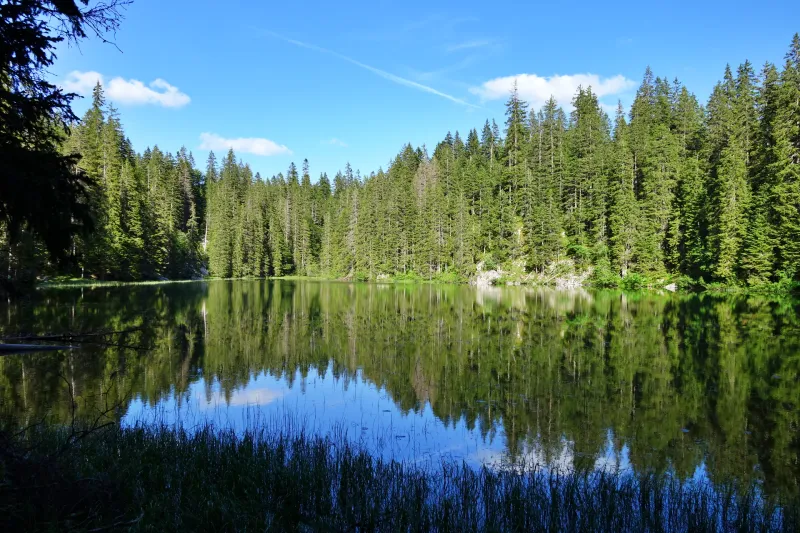
Montenegro’s Durmitor National Park contains dozens of mountain lakes, but one of them became so iconic that the country put it on its national brand. Crno Jezero, or Black Lake, sits near Zabljak at roughly 1,416 meters above sea level, enclosed by ancient black-pine forest and the limestone peaks of the Durmitor massif.
On still mornings, the dark forest and the rocky face of Mount Medved reflect so perfectly across the surface that the lake earns its symbolic status immediately.
The lake actually consists of two connected basins whose relationship shifts with seasonal water levels. In spring, higher water connects them into one larger body; by late summer, a narrow strip of land may separate them.
A well-marked walking trail circles the entire lake and takes roughly an hour at a relaxed pace, offering constantly changing views of the forest, mountains, and water.
Bobotov Kuk, Durmitor’s highest peak at around 2,523 meters, rises above the surrounding massif, and more demanding trails climb toward it from the lake area. Montenegro’s tourism authority describes the Durmitor lakes as the park’s famous mountain eyes, and Black Lake is the one that stares back hardest.
For a relatively small and accessible lake, it carries an atmosphere that feels genuinely wild and ancient.
Lake Bled, Slovenia
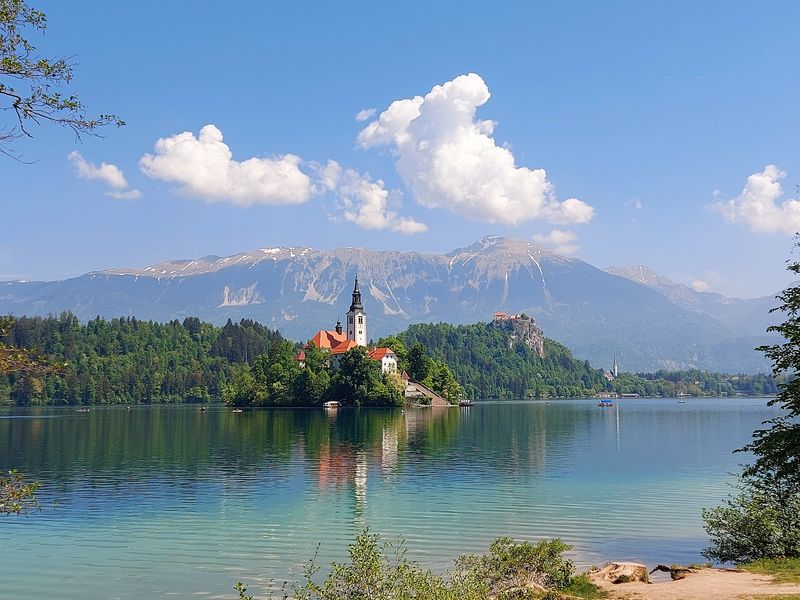
Few lakes on the planet have been photographed from as many angles, by as many people, with as many cameras, as Lake Bled. Slovenia’s most famous natural landmark combines clear Alpine water, a cliff-top medieval castle, and a small island with a church that visitors reach by traditional wooden pletna boats rowed by local boatmen.
The Julian Alps rise behind the scene, completing a composition that looks frankly unreasonable in its perfection.
The Church of the Assumption on the island has stood in various forms since the 12th century, and ringing its bell is said to bring good luck, a tradition that keeps the bell busy all summer long. Bled Castle, perched on a 130-meter cliff above the northern shore, has guarded this view since the 11th century and now houses a museum with genuinely interesting exhibits about the region’s history.
Viewpoints on Ojstrica and Mala Osojnica above the southern shore provide the elevated panorama that appears on most postcards. Swimming areas open in warmer months when lake temperatures can reach around 25 degrees Celsius, and the surrounding trails connect to the wider Julian Alps network.
Yes, Bled is busy. But the water is genuinely clear, the mountains are genuinely dramatic, and the overall effect is genuinely hard to argue with.
Share this story