India has been creating breathtaking sculptures for over two thousand years, and each one tells a story bigger than the stone or bronze it was made from. From towering granite figures to delicate temple carvings, these works capture gods, kings, myths, and everyday life in ways that still stop people in their tracks today.
They span dozens of dynasties, regions, and religions, yet all share one thing: the ability to turn raw material into something deeply meaningful. Get ready to meet ten sculptures that have shaped how the world sees Indian art and culture.
Lion Capital of Ashoka, Uttar Pradesh
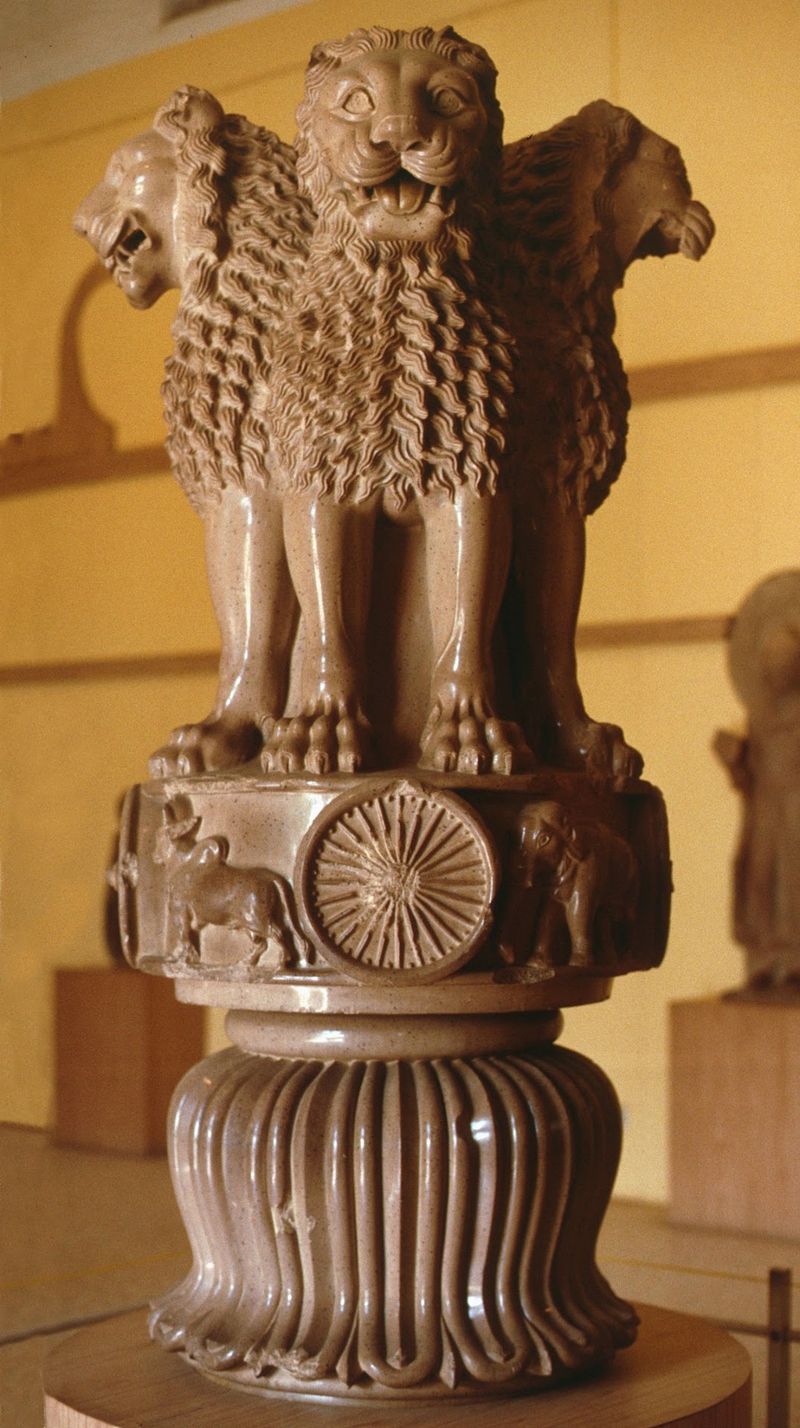
Before India had a flag or a constitution, it had this. The Lion Capital of Ashoka was carved in the third century B.C. for Emperor Ashoka’s pillar at Sarnath, one of Buddhism’s holiest sites.
Four lions stand back-to-back above an abacus decorated with animals and spinning Dharma wheels, all cut from gleaming polished sandstone.
What makes this sculpture truly extraordinary is what happened to it nearly 2,300 years later. When India became an independent republic in 1950, the government chose the Lion Capital as the official State Emblem.
The Dharma Chakra from the same capital was placed at the center of the national flag.
No other ancient sculpture in the world has been so directly written into a modern nation’s identity. The original capital sits in the Sarnath Museum in Uttar Pradesh, where visitors can stand just a few feet away from an object that shaped both ancient Buddhist India and the modern democratic republic.
It is, in a word, irreplaceable.
Didarganj Yakshi, Bihar
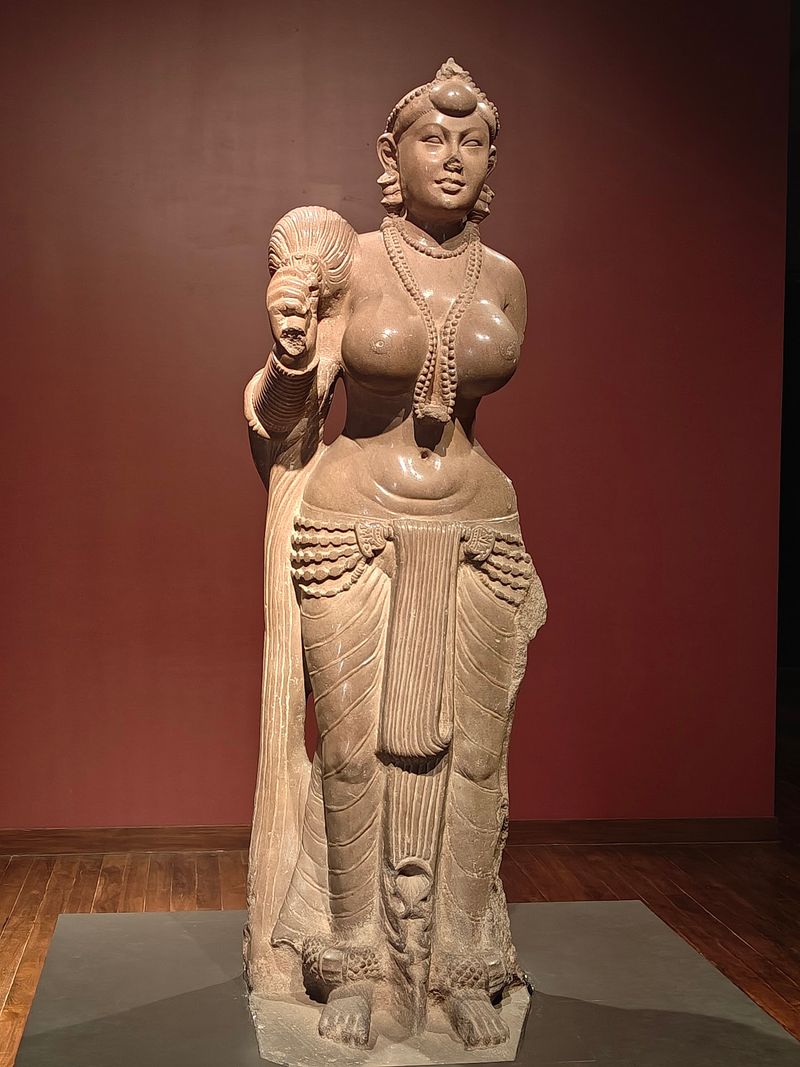
Discovered on the banks of the Ganges in Patna in 1917, the Didarganj Yakshi has been turning heads for over two thousand years. Standing about 5 feet 2 inches tall, this female attendant figure was carved from Chunar sandstone and polished to a finish so smooth it almost looks wet under museum lights.
She holds a chauri, a ceremonial fly-whisk, draped across her shoulder with effortless grace. Her body is adorned with elaborate jewelry, and her posture carries a quiet confidence that feels surprisingly modern.
Bihar Museum scholars date her to the third century B.C., placing her among the earliest great stone figures in Indian art.
What really sets her apart is that mirror-like surface. Ancient Indian stone carvers had mastered a polishing technique that gave Mauryan sculptures an almost magical glow.
The Yakshi is now permanently displayed at the Bihar Museum in Patna, where she remains one of the most visited and photographed objects in the entire collection. Seeing her in person, many visitors describe the experience as unexpectedly emotional.
Great Stupa Gateways at Sanchi, Madhya Pradesh
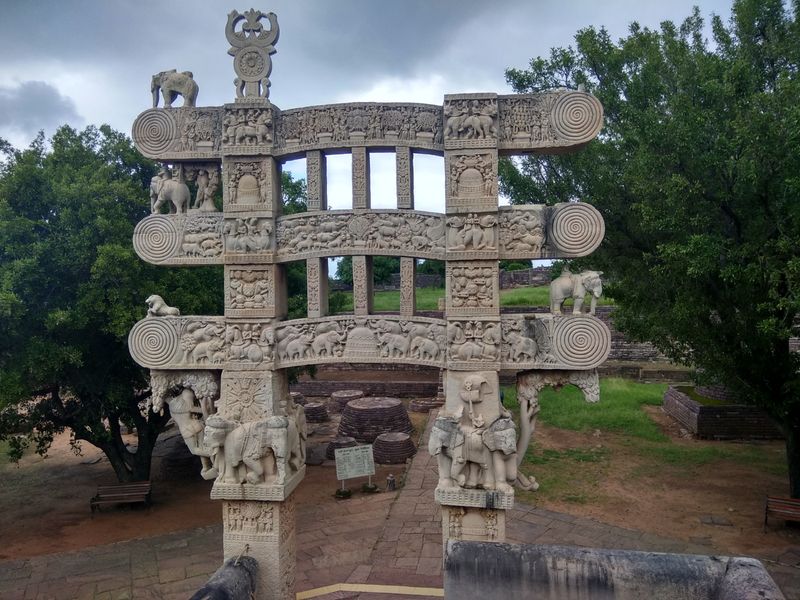
Sanchi’s gateways are essentially the world’s oldest comic books carved in stone. The four toranas surrounding Stupa 1 were built during the late centuries B.C. and early centuries A.D., and every inch of their surface is packed with stories: animals, worshippers, royal processions, celestial beings, and episodes from the Buddha’s previous lives.
Here is the twist that makes art historians genuinely excited: the Buddha himself never appears as a human figure in these carvings. Instead, artists represented him through symbols like an empty throne, a pair of footprints, the Bodhi tree, or the Dharma wheel.
This symbolic approach documents a fascinating early stage in Buddhist visual storytelling before human depictions became standard.
UNESCO describes the sculptural decoration at Sanchi as an incomparable artistic achievement, and that is not an overstatement. The gateways survived centuries of neglect and rediscovery, and today they stand in Madhya Pradesh as one of the best-preserved early Buddhist monuments on Earth.
Spending time studying each panel feels like reading a very old, very beautiful novel written entirely in stone.
Arjuna’s Penance, Tamil Nadu
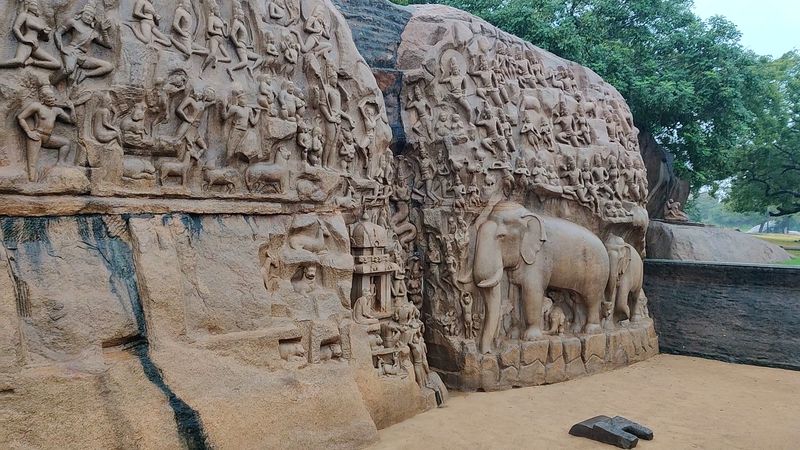
Imagine an entire granite cliff face turned into a single, teeming scene of gods, animals, saints, and humans. That is exactly what you get at Mamallapuram on the Tamil Nadu coast.
Arjuna’s Penance is a seventh-century open-air relief carved across two enormous rock surfaces, and it remains one of the most ambitious compositions in all of Indian art.
The cast of characters is staggering. Pallava artists filled the stone with celestial beings descending from above, massive elephants moving with surprising grace, emaciated ascetics in meditation, and ordinary people going about their lives.
Everything gathers around a natural cleft in the rock, which artists cleverly incorporated into the design as a flowing river.
Scholars still argue about the main subject. Some read the scene as Arjuna performing penance to earn a divine weapon from Shiva.
Others interpret it as the sage Bhagiratha coaxing the river Ganges down from heaven. That unresolved debate has added a layer of mystery that keeps researchers and tourists equally fascinated.
UNESCO recognizes it as one of the outstanding sculptural achievements of the Pallava dynasty, and a visit proves that description entirely correct.
Trimurti of Elephanta, Maharashtra
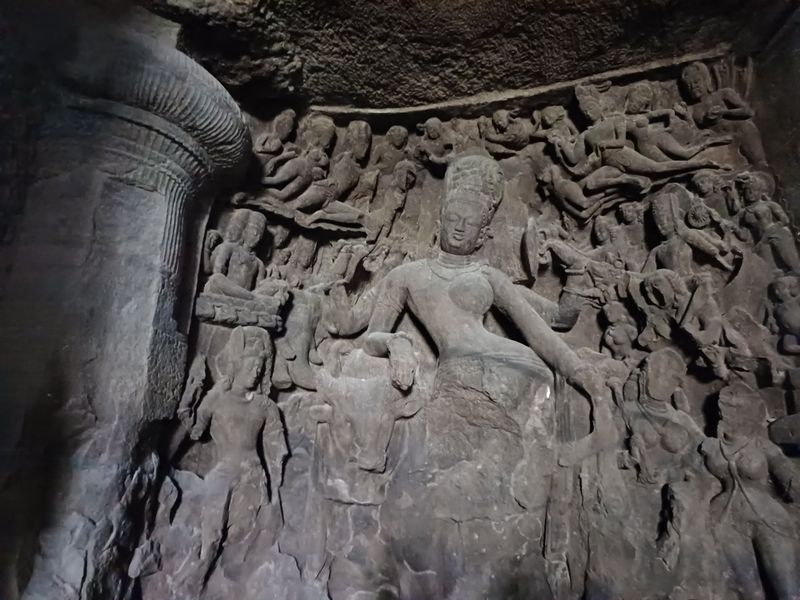
Step inside the main cave on Elephanta Island and the first thing you notice is the silence. Then your eyes adjust, and suddenly there it is: a three-faced image of Shiva rising nearly 20 feet from the floor of a cave carved out of solid rock around the mid-fifth to sixth centuries A.D.
Each face tells a different story. The central face radiates calm and cosmic authority.
One profile expresses fierce, destructive power, while the other radiates tender compassion. Together, they present Shiva not as a single personality but as a force that contains opposites simultaneously.
UNESCO ranks the Elephanta caves among the finest examples of Indian rock-cut art anywhere in the world.
The surrounding reliefs add even more drama. Shiva appears dancing the Tandava, marrying Parvati, defeating the demon Andhaka, and manifesting as Ardhanarishvara, the combined male-female form.
The cave effectively becomes a sculptural encyclopedia of Shaivite theology, all carved from one continuous mass of rock. Visitors arriving by ferry from Mumbai often say the cave feels like entering a different dimension of time entirely.
Ravana Shaking Mount Kailasa, Maharashtra
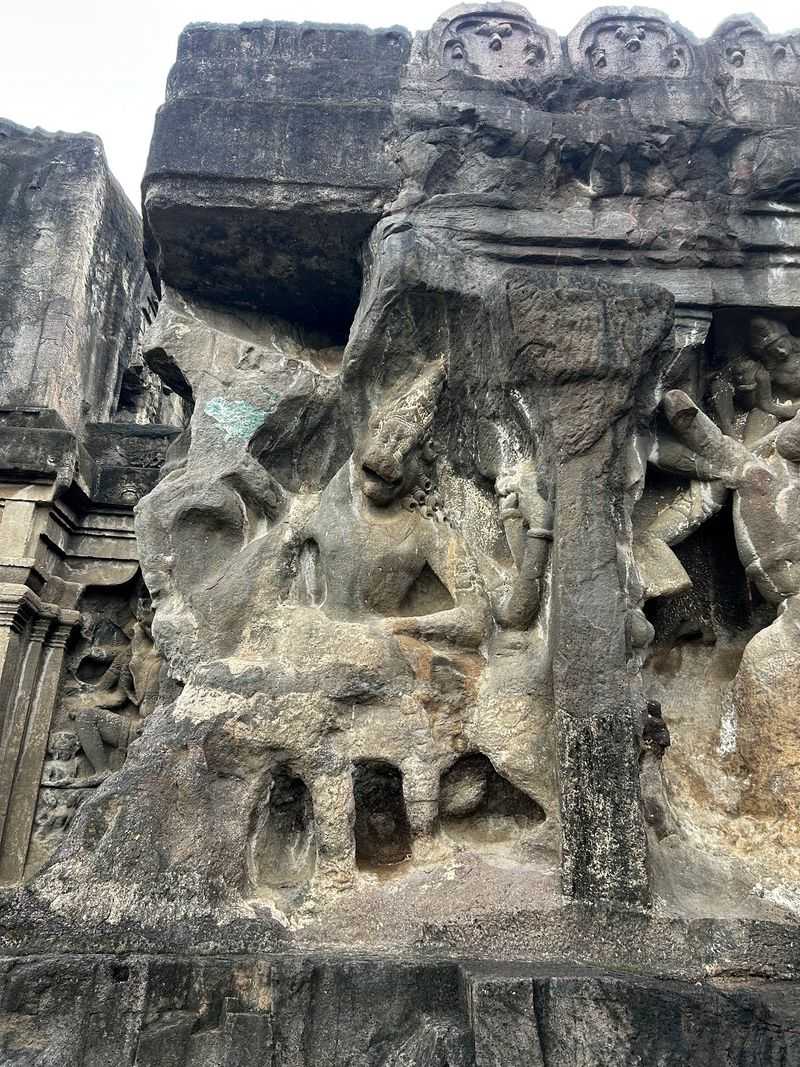
Somewhere between a sculpture and a special effect, the Ravana panel at Ellora’s Kailasa Temple is pure theatrical stone. Carved into Cave 16, this eighth-century relief shows the ten-headed demon king Ravana pressing his many arms against the base of Mount Kailasa, straining to shake the sacred peak while Shiva sits unmoved above him.
The physical tension carved into Ravana’s arms and faces is remarkable. You can almost feel the effort.
Meanwhile, Shiva above appears completely unrattled, one foot gently pressing the mountain back down. The contrast between violent struggle below and divine stillness above turns a mythological episode into a meditation on power and composure.
UNESCO calls the Kailasa Temple a technological exploit without equal, noting that the entire structure was carved downward from a single basalt cliff rather than built upward from the ground. The Ravana relief is specifically highlighted among the temple’s finest sculptural moments.
Considering that the whole complex was excavated from one rock mass, the detail and dynamism of this panel feel almost impossible. It is the kind of work that makes you want to check whether ancient sculptors had some secret the modern world has forgotten.
Kandariya Mahadeva Sculptures, Madhya Pradesh
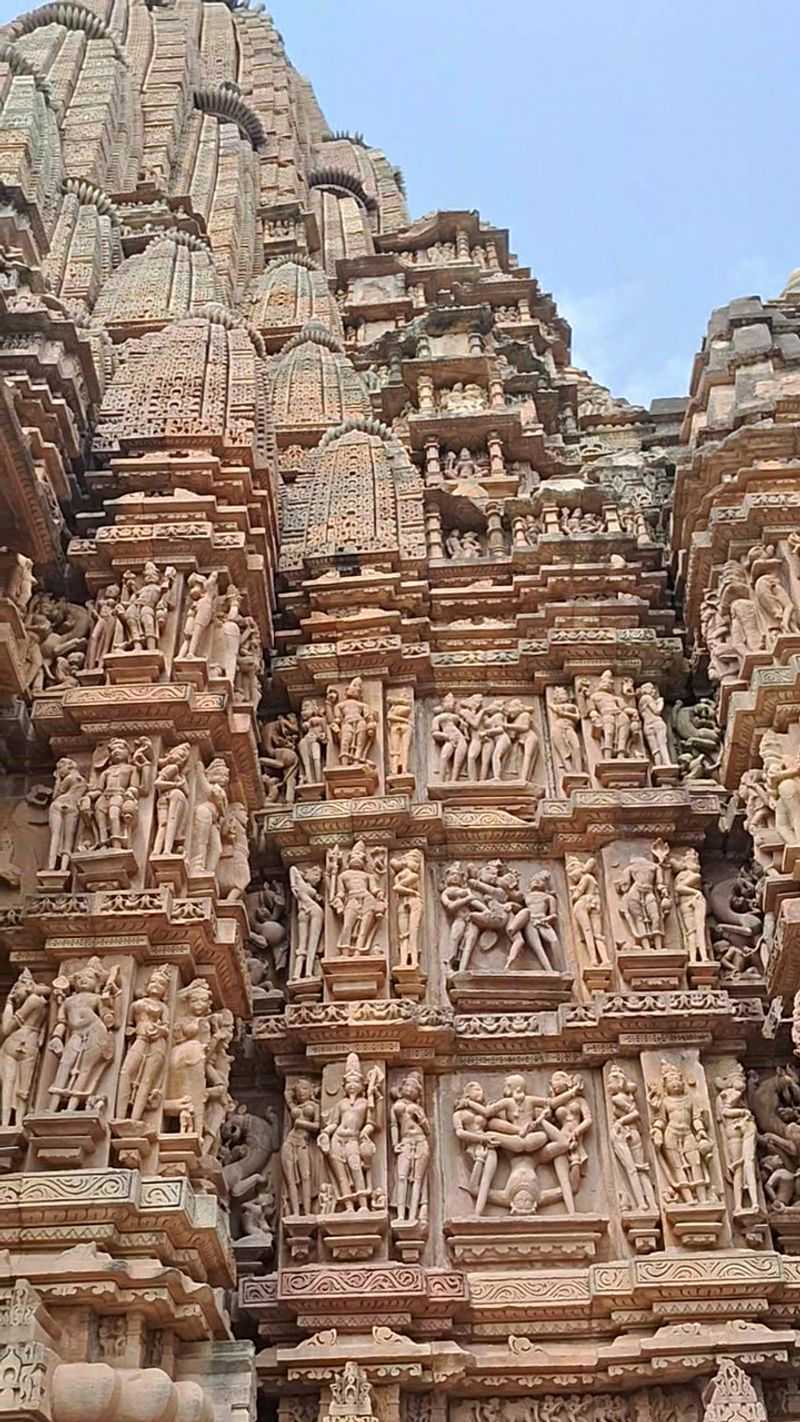
Khajuraho’s Kandariya Mahadeva Temple has been shocking and delighting visitors for about a thousand years, and it shows no signs of stopping. Built during the peak of the Chandella dynasty between roughly 950 and 1050, the temple’s exterior walls are so densely packed with carved figures that the stone itself seems to breathe.
Yes, the famous erotic carvings are there. But they account for only a fraction of the total sculptural program.
The walls also carry gods, goddesses, musicians striking playful poses, celestial dancers mid-spin, and scenes from ordinary domestic life. UNESCO describes the ensemble as the culmination of northern Indian temple art, emphasizing how sacred and everyday subjects were woven together without any sense of contradiction.
The result is a building that refuses to separate the spiritual from the human. Walking around the temple feels less like visiting a monument and more like flipping through an illustrated encyclopedia of medieval Indian life.
Researchers, artists, and curious tourists have spent decades trying to decode the full meaning of the carvings, and new interpretations still surface regularly. Some stone surfaces are better than a library for understanding a civilization.
Chola Nataraja, Tamil Nadu
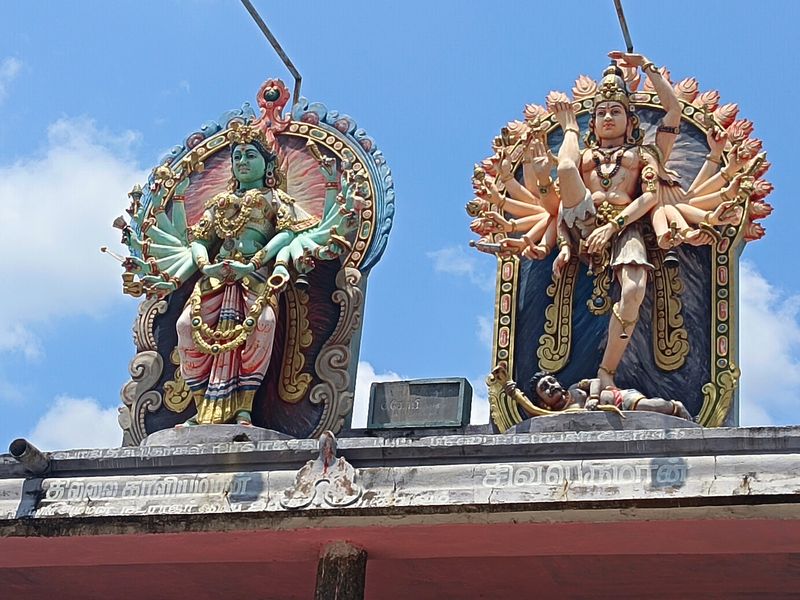
If Indian art had to send one ambassador to represent itself to the world, many scholars would vote for the Chola Nataraja. This bronze image of Shiva as the Lord of the Dance reached its most refined form under the Chola dynasty, whose craftsmen perfected the lost-wax casting process between the 9th and 13th centuries to a degree that has never really been surpassed.
The composition packs an entire philosophy into a single gesture. Shiva dances inside a ring of flames that represents the endless cycle of the universe.
One hand beats the drum of creation, another holds the fire of destruction, a third gestures fearlessness, and a raised foot promises liberation to devotees. Beneath his dancing feet lies Apasmara, the demon of ignorance.
UNESCO specifically identifies Chola bronze casting as one of the defining artistic achievements associated with the Great Living Chola Temples. Museums from Paris to New York display versions of the Nataraja, making it arguably the most internationally recognized work of Indian sculpture.
The physicist Carl Sagan once used the image to illustrate cosmic cycles in his television series Cosmos, which tells you something about how far this bronze has traveled from its Tamil Nadu origins.
Gommateshwara Bahubali, Karnataka
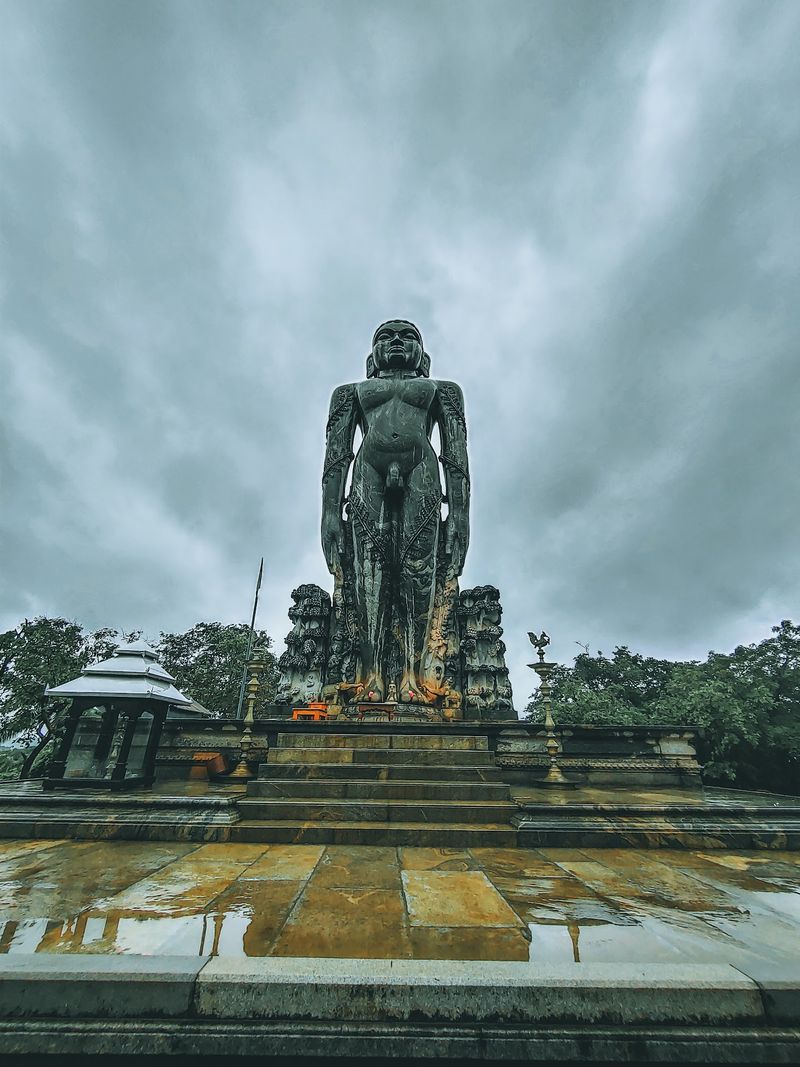
Standing nearly 58 feet tall on top of Vindhyagiri Hill, Gommateshwara Bahubali is the kind of sculpture that makes your neck ache just from looking up at it. Carved from a single granite mass in A.D. 981 under the patronage of the Ganga minister Chavundaraya, it ranks among the largest monolithic sculptures anywhere on Earth.
What gives this colossus its unusual emotional power is its absolute stillness. Bahubali stands in the Jain kayotsarga posture, unclothed and completely motionless, his arms hanging at his sides without touching his body.
Vines wind up his legs, suggesting he has stood so long in meditation that nature has started to reclaim him. The symbolism of detachment from worldly life could not be clearer.
Every twelve years, the statue becomes the center of the Mahamastakabhisheka ceremony, when priests and pilgrims pour milk, saffron, turmeric, and flower petals over the enormous figure from scaffolding erected above. The ritual draws hundreds of thousands of Jain devotees from around the world, making Bahubali not just an ancient monument but an actively worshipped presence.
A thousand-year-old sculpture still generating that kind of devotion is genuinely remarkable.
Lakshmi Narasimha of Hampi, Karnataka
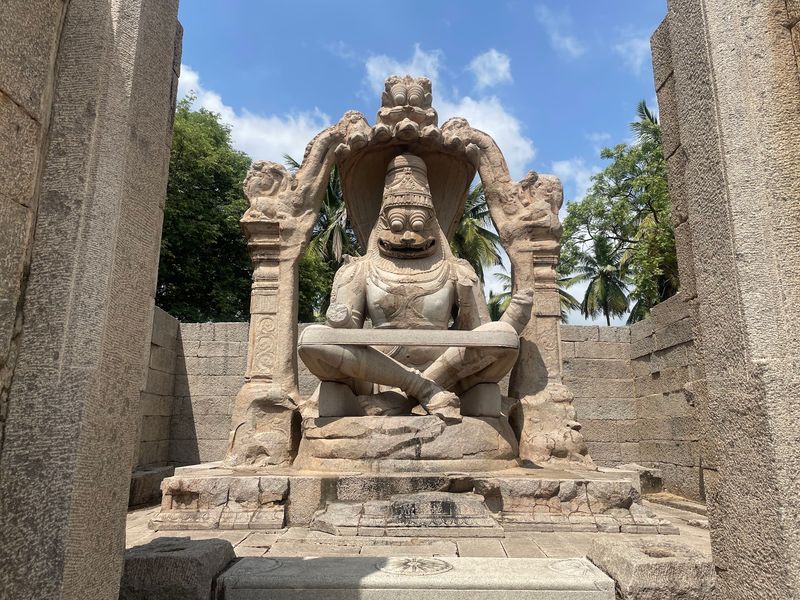
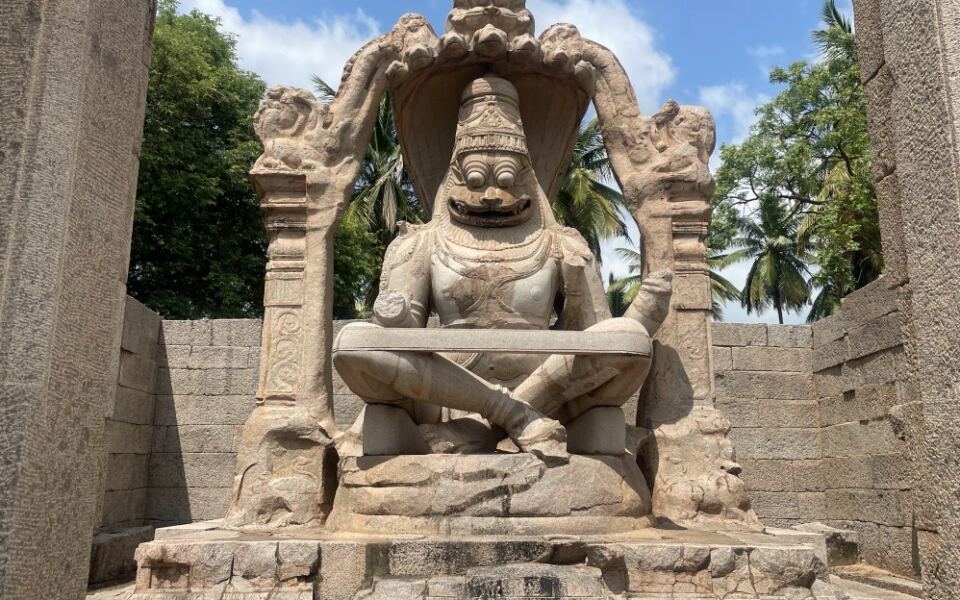
Hampi’s Narasimha does not ease you in gently. Bulging eyes, a broad lion-mane chest, and a sheer scale of 6.7 meters carved from a single stone announce themselves the moment you round the corner toward the sculpture.
Built during the height of the Vijayanagara Empire, this is the largest surviving monolithic statue in the entire former capital.
Vishnu’s lion-headed incarnation sits cross-legged on the coils of the cosmic serpent Adishesha, whose seven hoods spread above the deity like a protective umbrella. The posture is meditative rather than aggressive, which creates an interesting tension with the fierce lion features.
Originally, Lakshmi sat on Narasimha’s lap, explaining the sculpture’s traditional combined name.
The story of its damage is sobering. When Vijayanagara fell after the Battle of Talikota in 1565, the city was sacked and many of its monuments were destroyed or damaged.
Lakshmi’s figure was separated from the main composition during this upheaval. Even in its incomplete state, the Narasimha carries enormous sculptural authority.
Visiting Hampi, where this figure sits among the ruins of what was once one of the world’s largest cities, is a powerful reminder of how quickly great civilizations can change.
Share this story