Woolly Hollow State Park combines a 40-acre lake, forest trails, swimming, camping, and an original log cabin built in 1882. Just north of Greenbrier, it offers far more than its relatively small footprint suggests.
Lake Bennett is especially unusual. The lake was created in the 1930s as an early federal soil conservation project, while nearby trails lead through the woods to the historic Woolly Cabin and deeper into the park.
Add kayaking, fishing, mountain biking, and lakeside camping, and this quiet Arkansas park becomes an easy place to turn a few hours into an entire weekend.
Where It All Begins: Address, Location, and First Impressions

The moment you turn off the main road and follow the signs toward 82 Woolly Hollow Rd, Greenbrier, AR 72058, something shifts. The trees close in on both sides, the road narrows just enough to feel deliberate, and the noise of everyday life simply fades.
Woolly Hollow State Park sits in Faulkner County, roughly 50 miles north of Little Rock, making it a genuinely easy day trip from the capital without feeling like a suburb of it. The park covers approximately 440 acres of Ozark foothill landscape, and its setting feels far more remote than the drive time suggests.
No entrance fee greets you at the gate, which is a welcome surprise for budget-conscious visitors. The park office opens at 8 AM daily, and staff there are known for going out of their way to help guests plan their time well.
That kind of genuine hospitality sets a warm tone before you even reach the lake.
The Lake That Changed American Conservation History
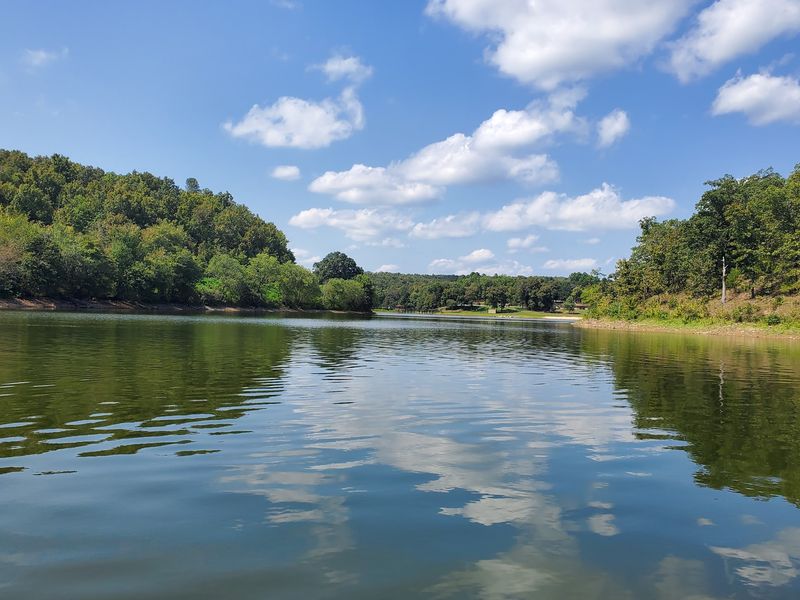
Lake Bennett does not look like a scientific landmark. It looks like a postcard, with glassy water mirroring the surrounding hardwoods and the sky sitting perfectly still above it all.
But this 40-acre lake carries a distinction that most visitors never realize they are standing beside.
Built in 1935 through the combined efforts of the Civilian Conservation Corps and the Works Progress Administration, Lake Bennett became the very first U.S. Soil Conservation Service watershed project in the United States.
Its construction was designed specifically to study water runoff, silt movement, and erosion control, research that would go on to shape how the entire country manages its land and waterways.
The lake was named for Dr. Hugh H. Bennett, the first director of the U.S.
Soil Conservation Service, whose work championed responsible stewardship of American soil at a national level. Gazing out across the water, knowing all of that history is quietly humming beneath the surface, gives the view an extra layer of meaning that no photograph can fully capture.
Summer on the Water: Swimming, Kayaking, and Pedal Boats
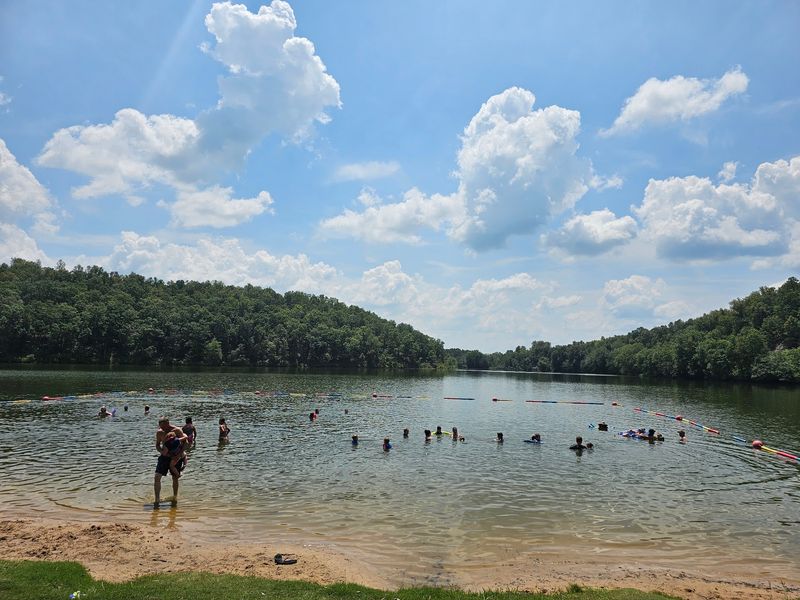
When temperatures climb in central Arkansas, Lake Bennett becomes the park’s most popular attraction, and it earns that reputation without any fanfare. A sandy swimming beach operates seasonally, generally from Memorial Day through Labor Day, with lifeguards on duty to keep things safe for families with young kids.
A $5 per person daily fee applies to the swimming area, which is a fair price for a well-maintained beach with clean facilities nearby. For those who prefer to stay dry but still want to be on the water, the park rents flatbottom fishing boats, canoes, kayaks, and pedal boats from the snack bar building adjacent to the beach.
Kayak rentals are especially popular, and visitors consistently mention how peaceful it feels to glide across the lake in the early morning before the crowds arrive.
Visitors who bring their own canoe or kayak can use the free boat launch ramp, though only electric motors are allowed on the lake, a rule that keeps the water calm and the atmosphere quiet throughout the day.
Casting a Line on a Quiet Arkansas Morning
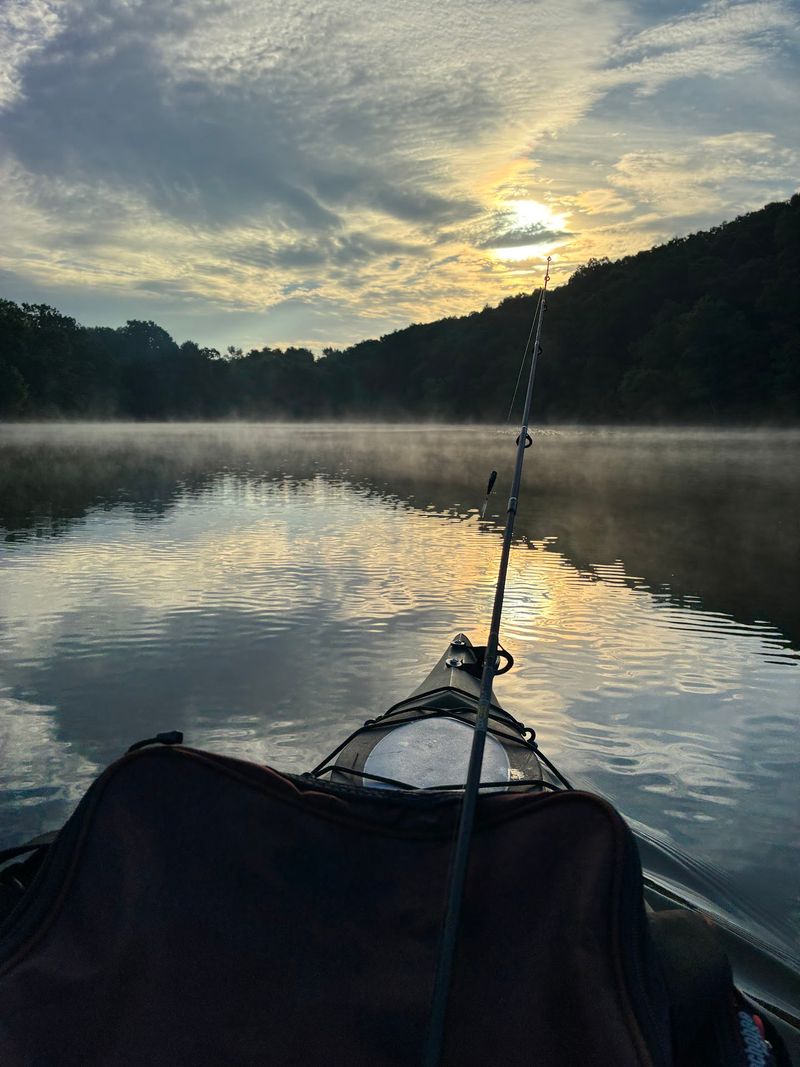
Fishing at Woolly Hollow has a particular kind of charm that seasoned anglers recognize immediately. The lake is stocked with bass, crappie, bream, and catfish, giving visitors a solid range of targets regardless of their preferred technique or skill level.
Early mornings are the sweet spot. The lake sits mirror-smooth before the swimmers arrive, and the only sounds are the occasional splash of a fish breaking the surface and the distant call of birds moving through the tree canopy overhead.
Shore fishing spots are easy to find along the bank, and the flatbottom rental boats give access to quieter coves where fish tend to linger.
A valid Arkansas fishing license is required for anyone 16 and older, so packing one in advance saves a trip back to town. The park does not have a bait shop on site, so bringing your own gear and tackle is the smarter move.
Still, with a lake this well-stocked and this peaceful, a slow morning with no bites at all somehow still feels like time well spent.
The 1882 Log Cabin That Tells a Pioneer Family’s Story
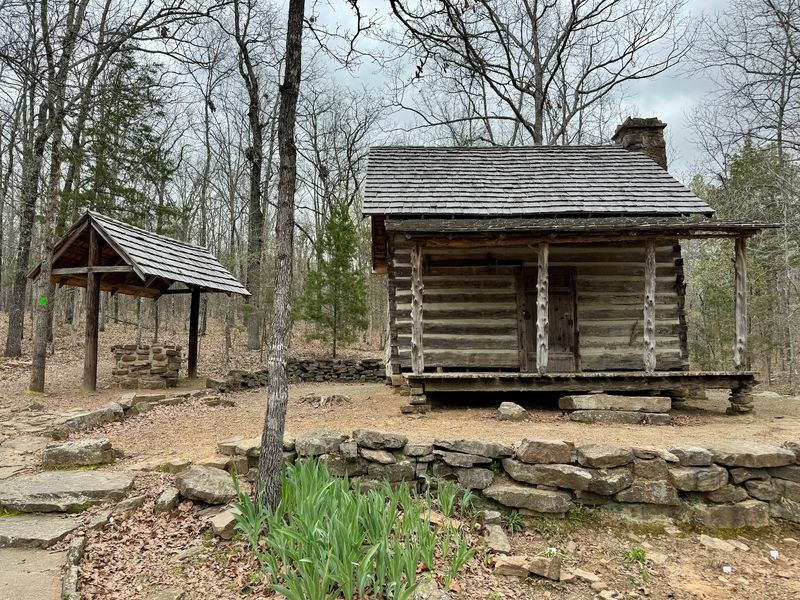
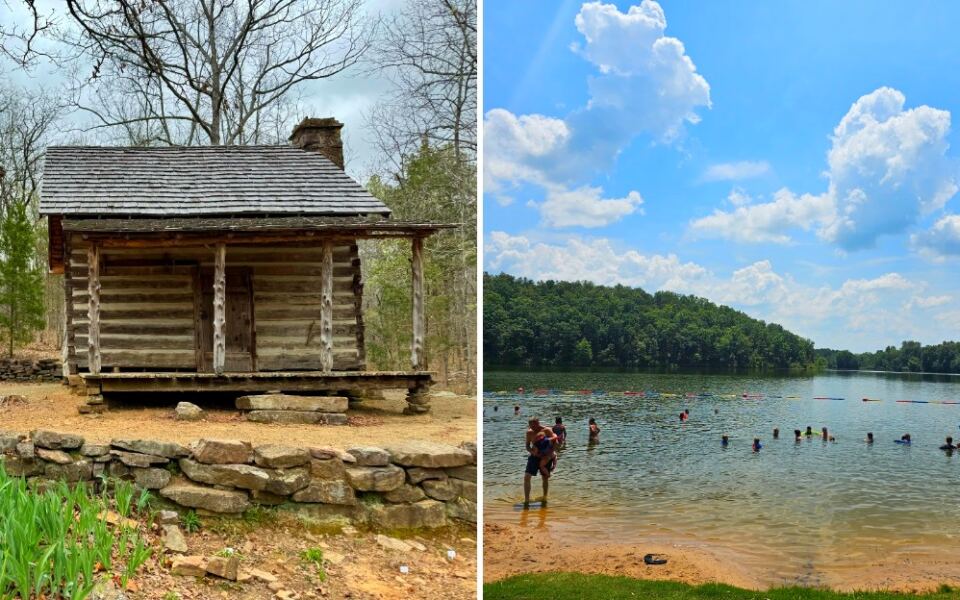
The Woolly Cabin is not a replica or a reconstruction built for tourism. It is the real thing, a one-room log home built in 1882 by Martin Alfred Woolly, whose family gave this entire hollow its name.
Martin was the son of William Riley Woolly, who brought his family from Waynesboro, Tennessee, to Arkansas in 1851, and Martin himself claimed land in the hollow in 1859.
The cabin originally stood less than a mile from its current location. In 1975, it was carefully relocated and restored so that future visitors could experience it firsthand rather than read about it in a museum display case.
Up close, the craftsmanship is simple and honest, hand-hewn logs fitted together by people who built things meant to last through hard winters and harder times.
Park interpreters occasionally lead guided tours of the cabin during summer months, adding context that makes the visit far richer than a solo walk-around. The Cabin Trail, a short 0.5-mile spur off the Huckleberry Trail, leads directly to it through shaded oak and hickory woods, making the approach feel appropriately unhurried.
The Huckleberry Nature Trail: Three and a Half Miles of Pure Arkansas Forest
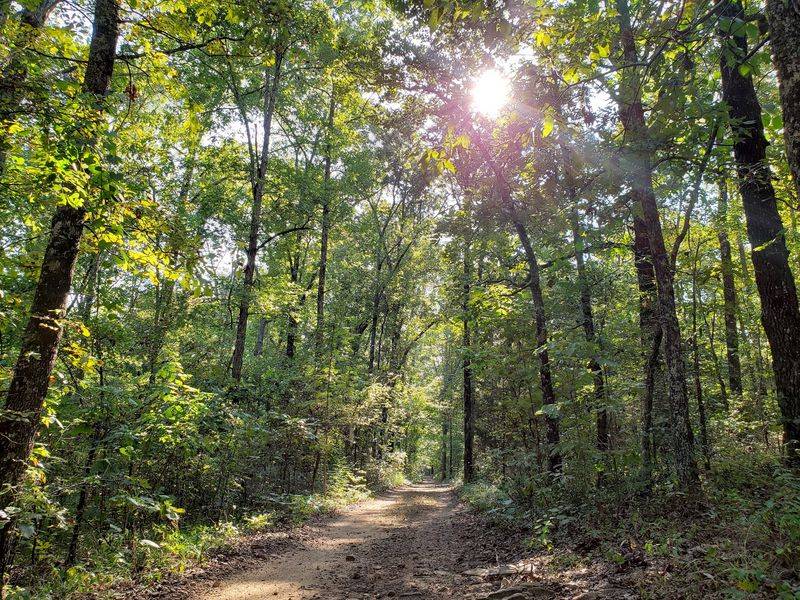
The Huckleberry Nature Trail is the backbone of the park’s trail system, a 3.5-mile loop that circles the entire perimeter of Lake Bennett and delivers a steady stream of lake views through the trees. It is rated moderate, which is honest without being discouraging, the kind of trail that rewards a steady pace rather than a sprint.
Built originally by the Civilian Conservation Corps in the mid-1930s and restored by the Youth Conservation Corps in 1981, the trail carries its own quiet history beneath every footstep. The path winds through a mix of deciduous woodland, crossing small drainages and climbing gentle ridges before dropping back toward the water’s edge.
Birdwatchers find this trail especially productive in the early morning hours, when songbirds move actively through the canopy and waterfowl rest along the lake’s quieter coves. Photographers love the intermittent lake overlooks that frame the water through layers of foliage.
The trail connects to the Cabin Trail spur, so it is easy to weave a visit to the historic homestead into the same outing without adding much extra distance.
Beyond the Main Loop: Biking Trails and Hidden Creek Paths
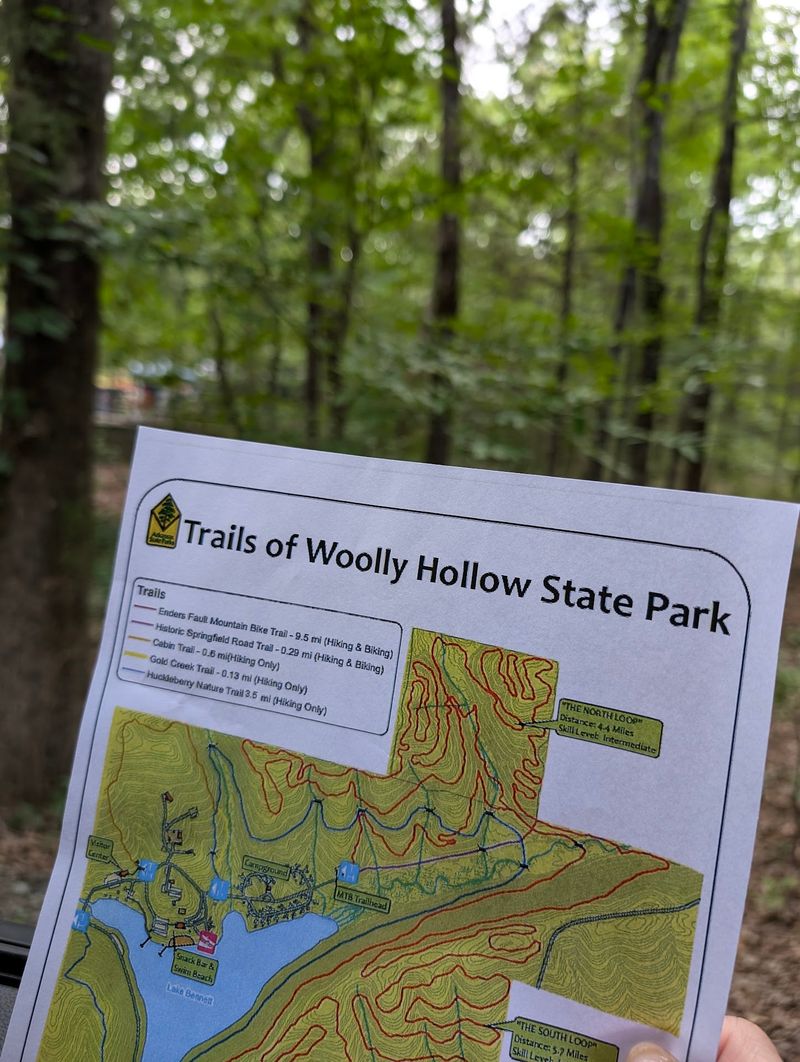
The Huckleberry Trail gets most of the attention, but the park’s trail network runs deeper than most visitors initially expect. The Enders Fault Mountain Bike Trail stretches between 9.4 and 10 miles in total, split into a North Loop of 4.4 miles and a South Loop of 5.7 miles, both rated intermediate in difficulty.
Hikers are welcome on the mountain bike trails as well, and the terrain offers a noticeably different experience from the lake loop, with more varied elevation changes and fewer lake views but a stronger sense of moving through true Ozark woodland. The Historic Springfield Road Trail adds another 0.29 miles of combined hiking and biking, connecting different sections of the park in a way that rewards explorers who take the time to wander.
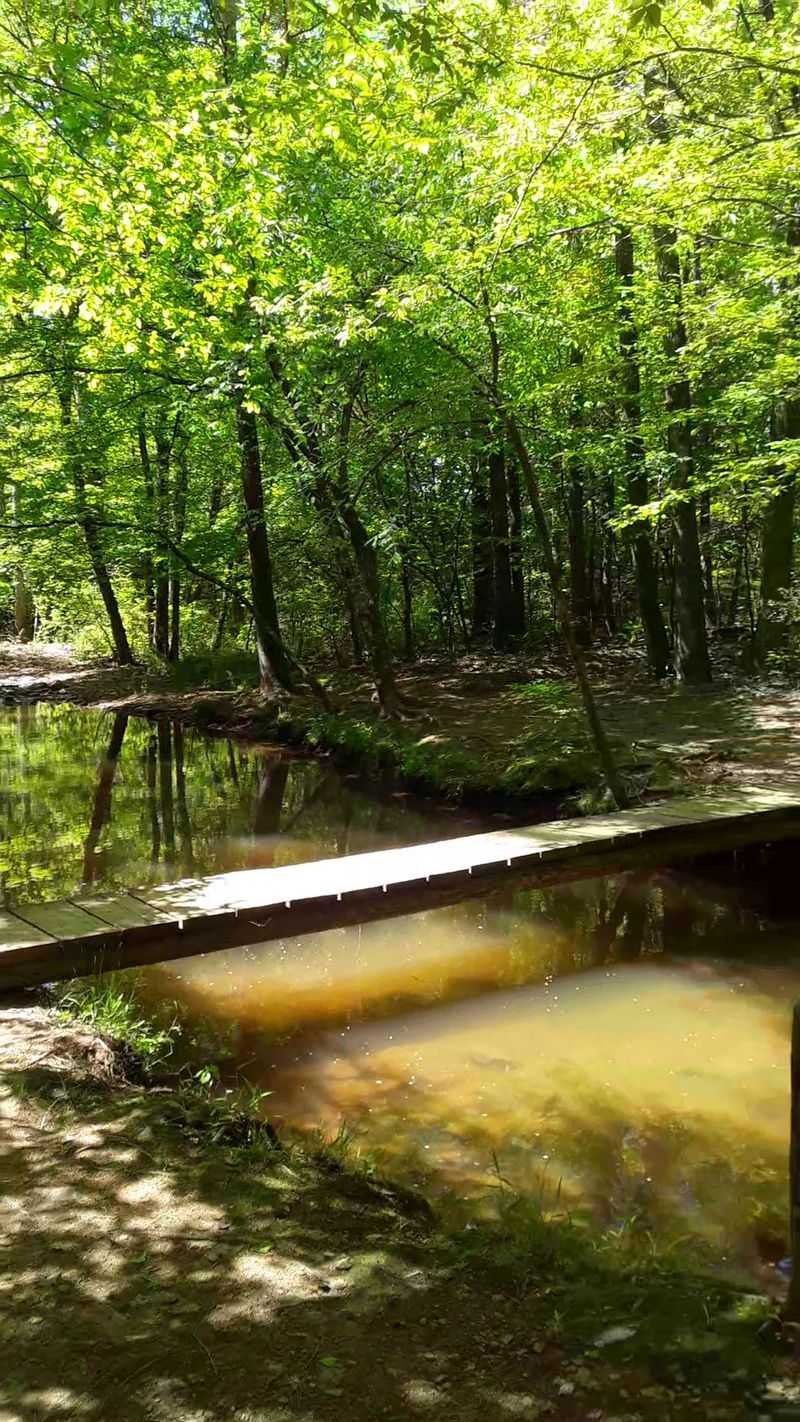
The Gold Creek loop is a short, nearly one-fifth-mile detour that follows a section of Gold Creek through particularly lush vegetation, offering a calm, shaded contrast to the more open stretches of the other trails. It is a small thing, but those few minutes beside the creek have a way of quietly becoming the highlight of the day.
Camping With Character: From Full Hookups to Tent Sites by the Water
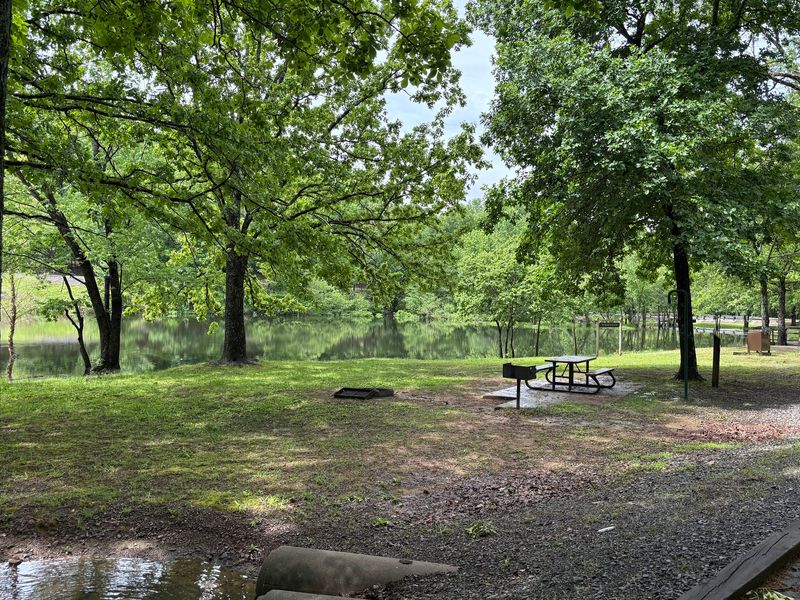
Spending the night at Woolly Hollow is a genuinely different experience from a day visit, and not just because the park empties out and the quiet deepens. The campground offers 30 Class AAA sites with full water, dual-electric, and sewer hookups, each equipped with a picnic table and a grill, making them comfortable for RVs and campers of most sizes.
For visitors who prefer a simpler setup, ten Class D tent sites sit closer to the water’s edge, with community water spigots nearby and a rawer connection to the surrounding landscape. Campers consistently mention waking up to the sound of birds on the lake and the particular stillness of an Arkansas morning before the rest of the world switches on.
Modern bathhouses with hot showers serve both camping areas, and the facilities are regularly cited as clean and well-maintained. Reservations are strongly recommended, particularly for summer weekends and holidays, as the more desirable lakefront-adjacent sites fill up quickly.
One visitor even discovered an artesian spring right beside campsite number one, a detail that feels almost too good to be true.
Picnics, Playgrounds, and a Snack Bar That Hits the Spot
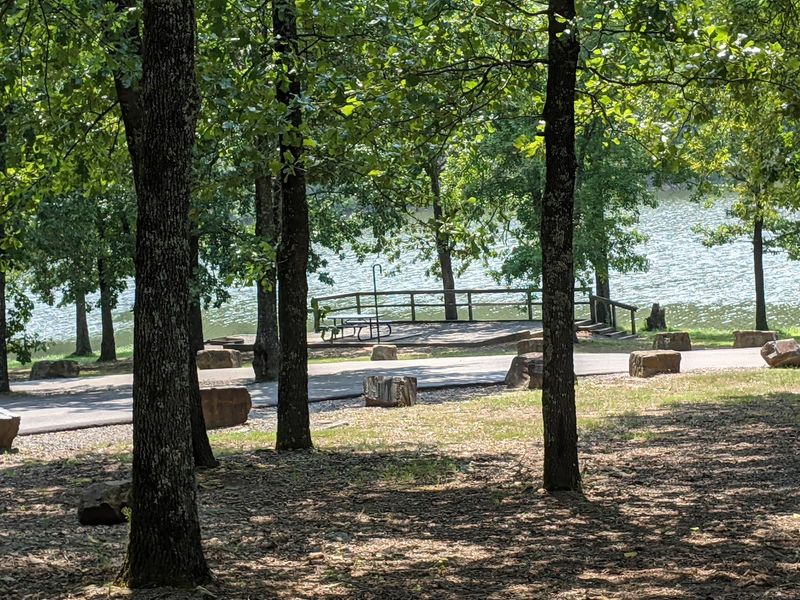
Not every great park visit involves a hike or a paddle. Sometimes the best version of a day outdoors is a shaded picnic table, a charcoal grill, and a view of the water while kids run off energy on a nearby playground.
Woolly Hollow delivers exactly that, with 13 shaded picnic sites scattered throughout the park, many positioned with direct sightlines to the swimming beach.
Each site comes equipped with a table and a charcoal grill, making it easy to pack a meal and stay as long as the afternoon allows. A reservable pavilion accommodates larger groups and family reunions, giving organized gatherings a dedicated space without crowding the rest of the park.
Volleyball and basketball areas add another layer of activity for groups that want more than a quiet afternoon.
The snack bar, conveniently located next to the swimming beach, serves food and refreshments throughout the swimming season, and the prices are consistently described as reasonable. It is not a gourmet setup, but after a few hours on the water or the trail, a cold drink and a quick bite from the snack bar tastes remarkably satisfying.
Seasonal Visits: What Changes and What Stays Perfect Year-Round
Spring and early summer are the obvious peak seasons at Woolly Hollow, when the forest is dense and green, the swimming beach is open, and the lake is warm enough to enjoy without hesitation. Wildflowers appear along the trail edges in April and May, and the park fills with birdsong from migrating and resident species moving through the Ozark foothills.
Fall brings a different kind of beauty, with the hardwoods turning through their full range of color and the crowds thinning noticeably after Labor Day. Trail conditions are typically excellent in autumn, and the cooler air makes longer hikes far more comfortable than the humid Arkansas summer allows.
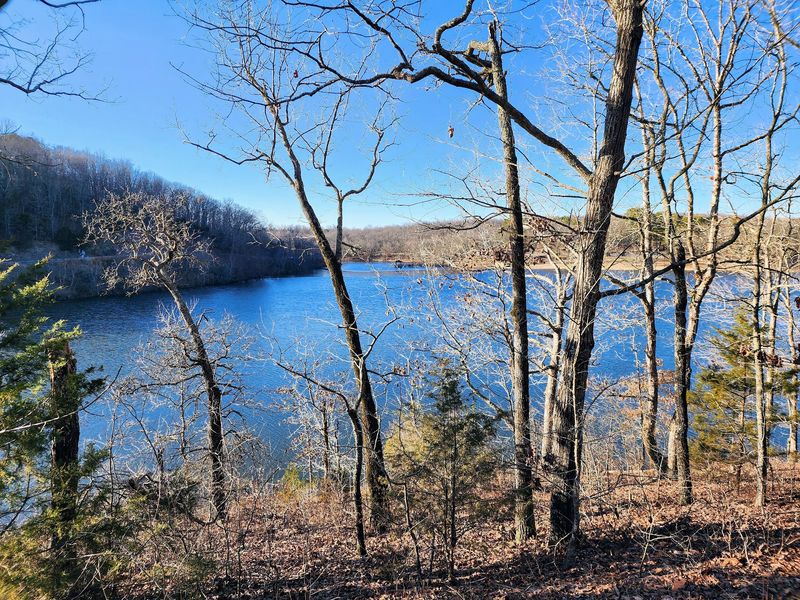
Winter is the park’s best-kept secret. With the leaves gone, the lake loop trails open up dramatically, revealing long views across Lake Bennett that are simply not possible during the warmer months.
The trails are quiet, the air is crisp, and the park takes on a meditative quality that feels almost private. Birdwatching in winter is particularly rewarding, with waterfowl resting on the lake and woodland species easier to spot through the bare canopy above the trail.
Practical Tips Before You Pack the Car
A few practical details can make the difference between a smooth visit and an avoidable headache at Woolly Hollow. Day use is free, with no parking or entrance fee, but the $5 per person swimming fee applies at the beach.
Dogs are welcome throughout the park’s outdoor areas and trails, provided they stay on a leash no longer than six feet and owners clean up after them.
Cell reception inside the park is spotty, which is either a problem or a selling point depending on your perspective. Downloading offline maps before you arrive is a smart move, particularly for the mountain bike trails where trail markers can be spaced further apart.
Bug spray is not optional from late spring through early fall, and ticks are a real consideration on any of the wooded trails, so checking thoroughly after a hike is worth building into your routine.
The park phone number is +1 501-679-2098 for reservation questions or general inquiries. Arriving early on summer weekends secures better parking and quieter trail conditions, and for campers, booking well in advance is the only reliable way to land one of the more desirable lakeside spots before they disappear.
Share this story