Most airports keep landing planes far from beaches, mountains, and busy streets. A few do the opposite, and the final seconds of a flight become a real show.
Some jets skim over sand, others twist through valleys or drop steeply over city rooftops. Here are 11 airports where the view from the ground or the window is hard to forget.
Princess Juliana International Airport, Sint Maarten
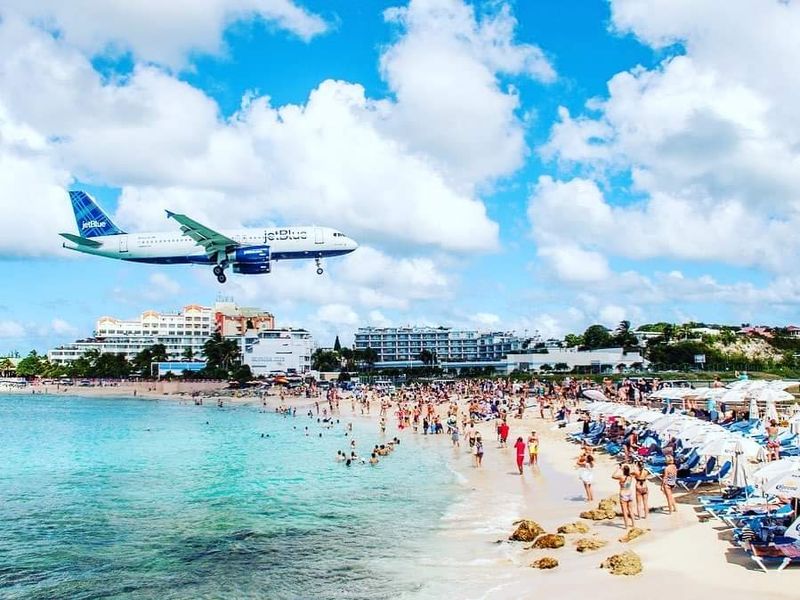
Hold onto your hat, because the jets here do not politely stay overhead. Arriving planes bound for Runway 10 cross Maho Beach at less than 100 feet before reaching the runway threshold.
That close pass has turned a small strip of sand into a world famous plane-spotting stop. Big jets seem to brush the heads of beachgoers, then touch down only moments later.
Cameras click, kids cheer, and towels flutter.
Do not mistake this for a quirky side airport. Princess Juliana is a busy gateway with nonstop service to 35 international destinations across North America, Europe, Latin America, and the Caribbean.
Here is the catch that every visitor should know. Departing jets blast out powerful exhaust, and it can knock adults off their feet and throw sand and debris.
Warning signs and barriers are there for a reason.
Stand back, watch from a safe spot, and enjoy the landings. The arrivals give you the thrill, and the departures are best admired from a distance.
A cold drink at a beach bar nearby makes the wait for the next jet even better, and arrival schedules help you time your visit well.
Skiathos Alexandros Papadiamantis Airport, Greece
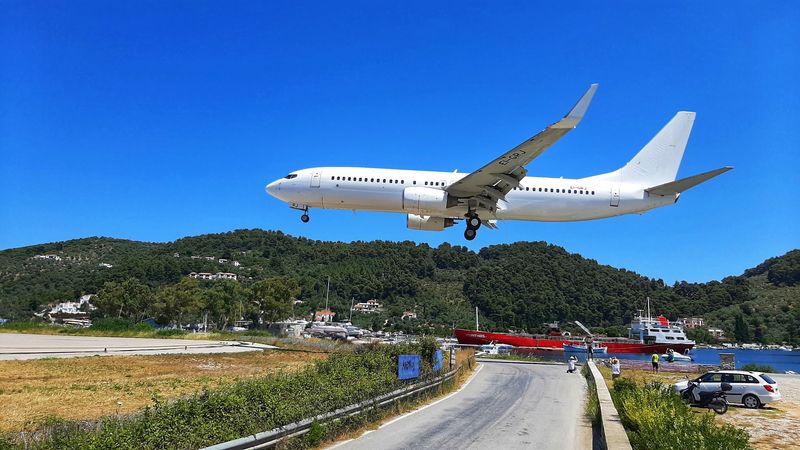
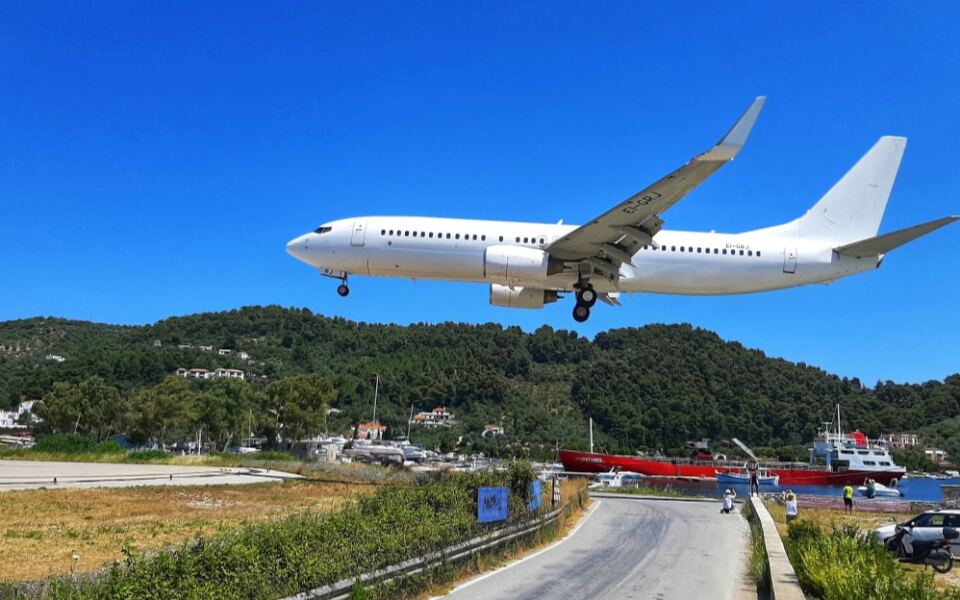
Greece has its own answer to the famous Caribbean beach show. On Skiathos, the runway is only 1,628 meters long, with blue sea waiting beyond both ends.
Visitors gather near the runway boundary to watch jets glide in remarkably low. Summer afternoons bring a steady parade of aircraft from across Europe, and the crowd often claps after a smooth landing.
The airport opened in 1972 and can handle aircraft as large as the Boeing 757-200, according to the Hellenic Civil Aviation Authority. That means real passenger jets, not just small island hoppers.
Short runways ask a lot from pilots, who must land precisely and stop in good time. Watching them do it calmly is part of the fun.
Safety matters here too. Standing behind departing jets to feel the engine blast is dangerous, and local tourism officials ask spectators to be careful.
Pick a spot to the side, bring sunscreen, and let the planes do the dramatic part.
Bring snacks, arrive early, and enjoy the island sunshine while you wait for the next arrival.
Paro International Airport, Bhutan
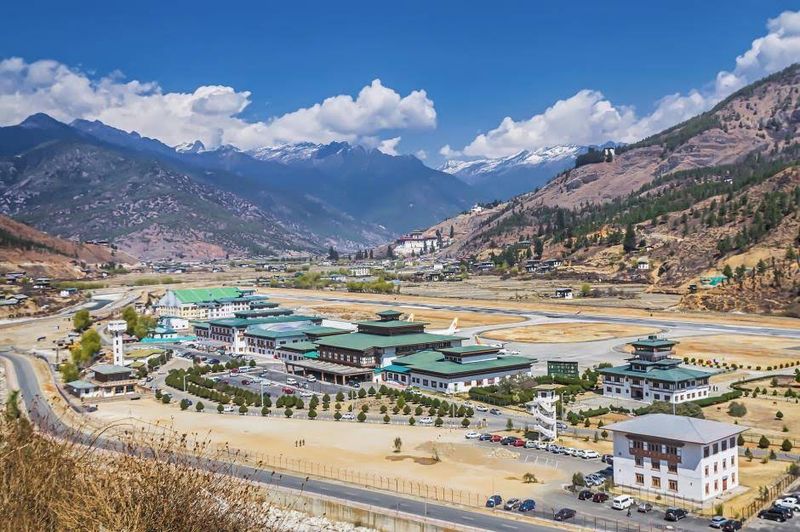
Mountain walls rush past the window, and suddenly the cabin gets very quiet. Paro sits at 2,235 meters above sea level in a deep valley ringed by peaks rising to around 4,900 meters.
Drukair describes operations here as entirely visual. Only a small number of commercial pilots are qualified to fly into Paro, and they train specifically for its tricky terrain.
Passengers often say the hillsides look close enough to touch. The plane threads the valley, banks carefully, and lines up with the runway late in the approach.
Do not picture tiny propeller planes, either. Drukair flies Airbus A319s and added the A320neo to its fleet in 2020, while Bhutan Airlines operates A319s on scheduled international services.
If you ever go, try for a window seat and keep your camera ready. Clear mornings give the best views of terraced fields, white temples, and pine-covered ridges.
The landing is a highlight of the trip, not just a way to arrive. Many travelers clap when the wheels touch down, and locals smile knowingly at the applause.
Gibraltar International Airport, Gibraltar
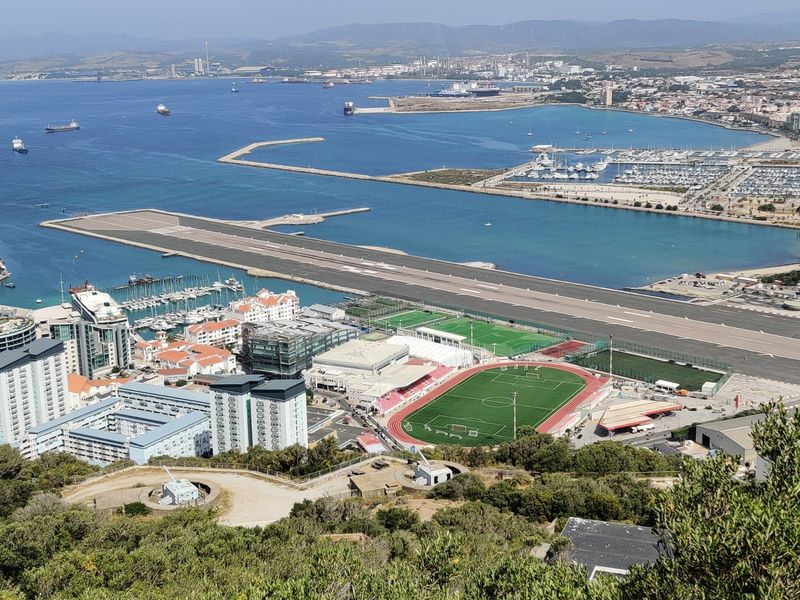
Picture a runway squeezed between a giant rock and the sea. Gibraltar’s single strip sits on a narrow piece of land between the Mediterranean and the Bay of Gibraltar.
Jets from British Airways and easyJet still fly scheduled services here in 2026, including routes from Heathrow, Gatwick, Manchester, Bristol, and Birmingham. Arriving pilots descend between water and rock, and the runway appears almost right after the shoreline.
The airport earned fame for a road that once crossed the runway. Winston Churchill Avenue needed traffic barriers every time a plane moved across it, and drivers waited patiently while jets rolled by.
A new road tunnel has now removed normal through traffic from that crossing. Even so, the airport remains tightly woven into the small city around it.
Walk a few minutes from the terminal and you are in the heart of town. That closeness makes Gibraltar feel less like an airport on the edge of a place and more like a part of it.
Look up at the Rock as you leave, because it watches every landing.
Cristiano Ronaldo Madeira International Airport, Portugal
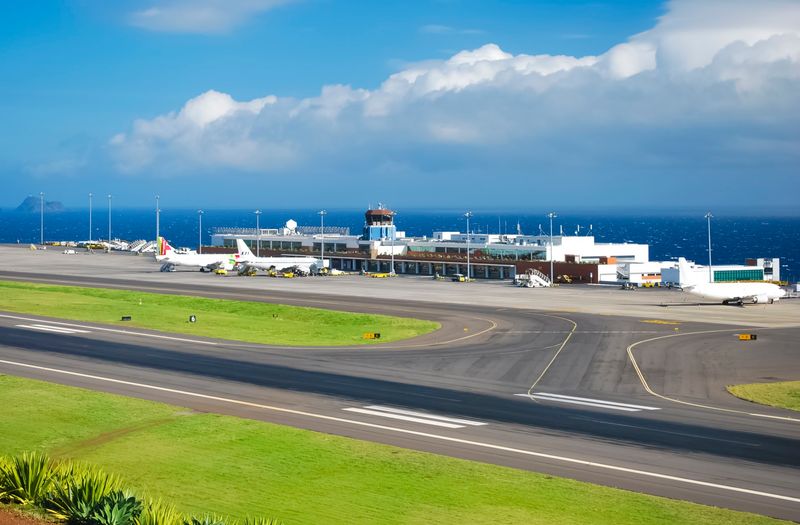
Steep green cliffs on one side, open ocean on the other, and a runway stretched between them. Madeira Airport feels far more confined than the usual landing over flat ground.
Runway 05/23 has a landing distance of 2,481 meters. Part of the extended runway platform projects out over the coastline, which gives the airport its unmistakable look from the air.
The approach to Runway 05 is especially unusual. Portugal’s current aeronautical publication describes a curved lead-in lighting system that runs 1,583 meters along the shore, helping guide aircraft toward the runway instead of a simple straight line.
Mountains and Atlantic winds can make flying here demanding. That is why approaches are carefully planned and procedural, not improvised, even though they look thrilling from the window.
Travelers often remember the last minute of the flight more than the whole trip. Sit on the side facing the coast if you can, and watch the island grow from a dark shape into a detailed landscape.
Bring patience for windy days, since delays can happen, and enjoy the scenery either way.
London City Airport, England
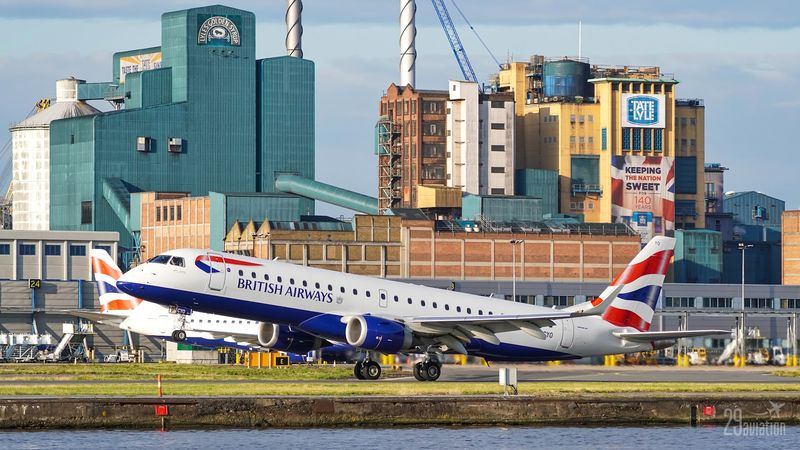
Tall towers, tight streets, and a plane dropping in fast. London City Airport sits in the middle of East London, surrounded by offices, homes, and docks.
Because of all those obstacles, arriving jets use an unusually steep path. The current instrument approach has a 5.5-degree glide slope, compared with roughly three degrees at most commercial airports.
From your seat, the nose tips down more than you expect. Canary Wharf glides by while the runway waits below, which makes the landing feel sharp and sudden.
Not every aircraft can do this. Airlines and planes need special steep-approach certification before they are allowed to use the airport.
Change is on the way. In 2026 the airport was consulting on an additional 4.49-degree approach for approved newer aircraft such as the Airbus A320neo, while the 5.5-degree procedure stays in use for most flights.
The upside of all this effort is convenience. Travelers can step off a plane and reach the city center in very little time.
Innsbruck Airport, Austria
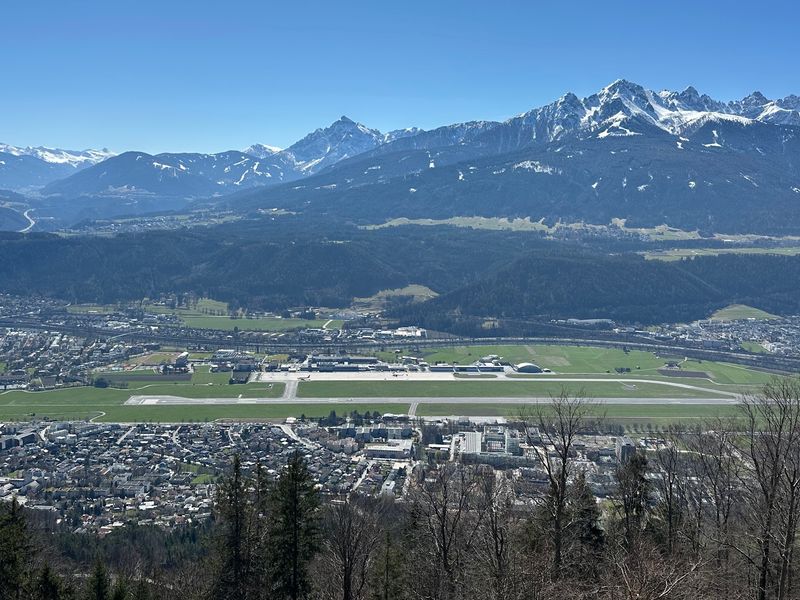
Snowy peaks fill both windows, and the valley floor seems almost too narrow for a jet. Innsbruck Airport lies directly in the Inn Valley, with mountains rising steeply above the runway on each side.
Instead of crossing open plains, arriving planes follow the valley with the Alps all around. It is a scenic ride, and pilots treat it with serious respect.
The airport’s own pilot information lists special procedures for mountain weather. In Föhn wind conditions, approaches from the east can follow a route along the Nordkette mountain range to reduce turbulence, while visual approaches from the west follow the upper Inn Valley toward Runway 08.
This is a busy jet airport, not a relic. Schedules in 2026 include Airbus A320-family aircraft, Boeing 737s, and Embraer E195s flown by carriers such as easyJet, Eurowings, Transavia, and Austrian Airlines.
Ski season brings plenty of travelers with boots and bags. If you land on a clear day, the white slopes outside feel like a welcome sign.
Queenstown Airport, New Zealand
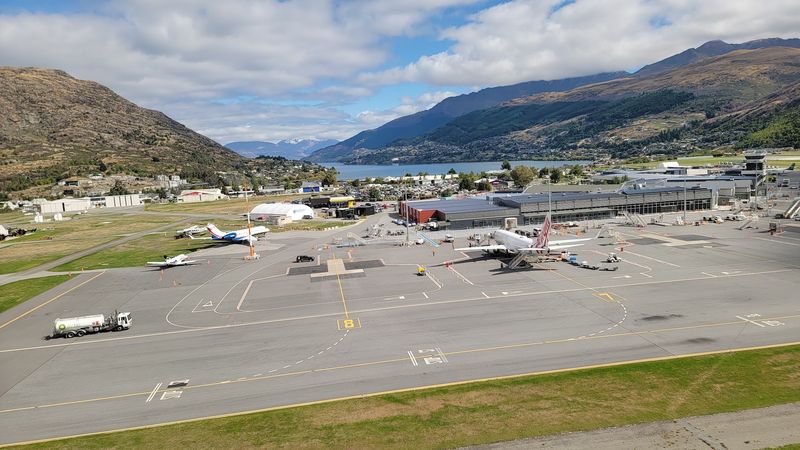
Lake, mountains, and a jet sliding between them: that is Queenstown in a sentence. The runway sits beside Lake Wakatipu amid rugged peaks, making one of the most striking jet approaches in the Southern Hemisphere.
The terrain is complicated enough that the airport became an early adopter of RNP-AR precision navigation. Specially equipped aircraft can follow very accurate curved paths through the mountains.
Queenstown says all four airlines operating jet services use these procedures. Pilots receive special training, and the aircraft systems can follow prescribed tracks with very little deviation.
Earlier airport documentation notes that the most precise RNP authorization allows aircraft to navigate within approximately 280 meters of the intended path. That is tight, and it is exactly the point.
For passengers, the payoff is a close-up look at snowy ridges, deep valleys, and sparkling water. Grab a window seat when you book, and keep your phone charged for photos.
Adventure fans often say the trip starts the moment the plane descends. Few airports deliver that much scenery before you even collect your bags.
St Helena Airport, Saint Helena
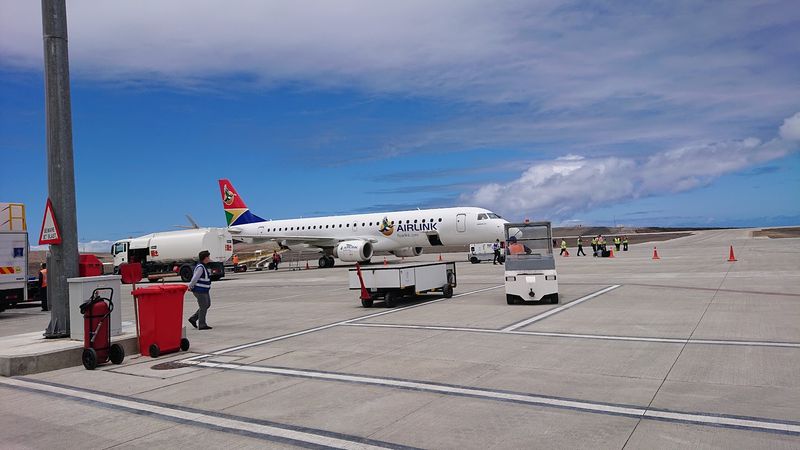
Out in the South Atlantic, an airport sits on a plateau with cliffs dropping away nearby. St Helena is one of the most isolated inhabited islands on Earth, and its runway environment reflects that.
Scheduled Airlink passenger services connect the island to the outside world. For many residents, that link changed daily life, replacing long sea journeys with a flight.
The approach brings aircraft close to rugged edges and open ocean. Wind plays a big role here, so pilots watch conditions carefully and plan with care.
Travelers step off the plane onto a place that feels far from everything. Steep hills, old stone forts, and quiet roads wait beyond the airport gates.
History fans will love the island’s past, including its famous exile of Napoleon. Nature fans will enjoy the dramatic coastline and unusual wildlife.
If you ever visit, pack a sense of patience and curiosity. The trip is long, but the landing is a proud reward for making it so far.
Hong Kong Kai Tak Style Approaches at Other Urban Airports
City rooftops below, wheels down, and laundry lines waving hello. Urban approaches put ordinary life right beneath a landing jet.
Airports in dense cities must route planes over homes, schools, and roads. Careful noise rules, set flight paths, and strict altitude limits help keep operations orderly.
Pilots train for these approaches in simulators and real flights. They follow published procedures and stay in steady contact with controllers.
For passengers, the treat is a window view of streets and neighborhoods in close detail. Cars look like toys, parks look like postage stamps, and busy markets become colorful patches.
Plane spotters love these places too. Hills, rooftops, and public viewing areas give safe spots to watch jets glide in.
Bring binoculars if you like details, and check airport rules before setting up. A good view is great, but safety and respect for neighbors always come first in places where planes and people live so close together.
Lukla Style Mountain Gateways

High peaks, thin air, and a short strip of pavement. Mountain gateways demand skill, patience, and plenty of planning.
Weather changes fast in the mountains. Clouds can close a valley within minutes, so flights often wait for a clear window.
Crews study terrain maps closely and follow set routes. Training, aircraft limits, and weather rules all shape every approach.
Passengers enjoy sweeping views of ridges, rivers, and villages tucked into the slopes. Seats by the window become prized real estate.
Travelers should allow extra days in their schedule. Delays are common and usually a sign that the system is working carefully, not failing.
Pack warm layers, even if the departure city feels hot. Altitude brings chill, and a calm mind makes the journey more fun.
When the wheels finally touch down, a small cheer is common. Few arrivals feel quite as earned as these.
Share this story