Picture a road squeezed so tightly between two mountains that the rock walls seem to lean in for a chat. New Hampshire has plenty of these narrow passes, called notches, and each one carries its own personality.
Some come with a paved parkway, a waterfall, and a snack stop nearby. Others ask you to lace up your boots and hike past ponds, boulders, and quiet forest before the payoff appears.
The White Mountains hold most of them, but a few sit far to the north or tucked into the Squam range. Some hold famous cliffs, some hold historic railroad tracks, and one even holds a cliff-top rock table with a view that stops conversation.
In the list ahead, you will find drives, short walks, and long hikes, along with practical details like which roads close for the season and which trails lead to the best overlooks. Grab a map, charge your camera, and get ready to meet eleven passes that prove the Granite State knows how to make an entrance.
1. Crawford Notch, Hart’s Location, New Hampshire
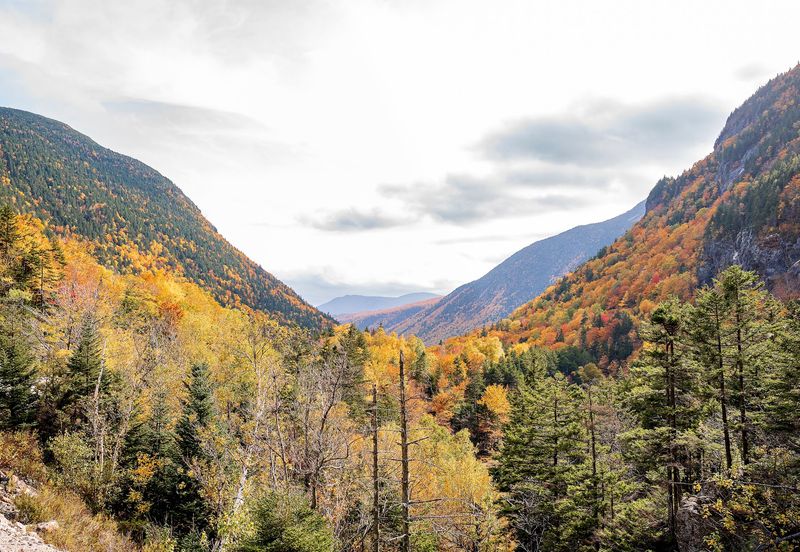
Space is tight in this pass, and the road, river, and railroad tracks all have to share it. U.S.
Route 302 threads through the steep corridor beside the young Saco River, with cliffs rising on both sides.
Crawford Notch State Park keeps a visitor presence here, and the historic Crawford Notch Station stands as a recognizable landmark. Railroad fans often stop just to photograph the old depot.
Hikers who want a bigger view can climb Mount Willard. The trail is a moderate walk, and it ends at a ledge that looks straight down the length of the notch.
The overlook shows the valley shaped like a giant letter U, a reminder that glaciers carved this pass long ago. Many visitors say it is one of the best rewards for the amount of effort in the White Mountains.
Plan your visit for October if you enjoy fall color, but expect company on weekends. Early mornings usually offer easier parking and calmer trails, which gives you more time to enjoy the view at your own pace.
2. Pinkham Notch, Pinkham’s Grant, New Hampshire
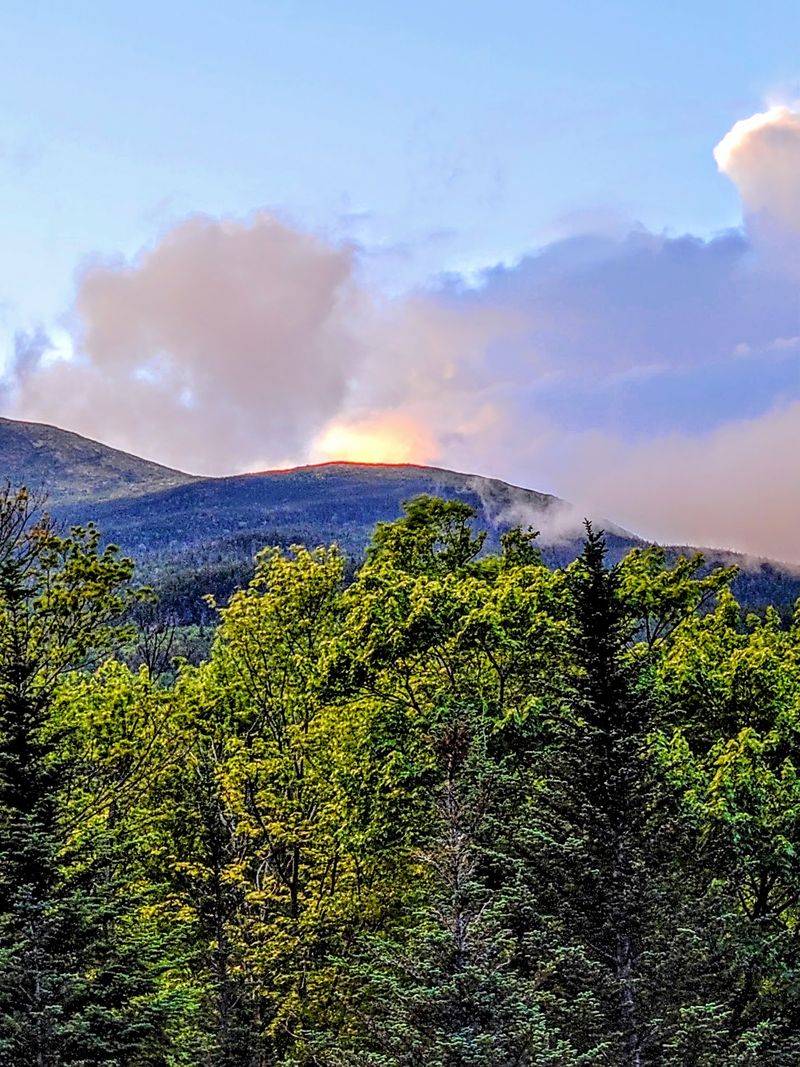
Some notches are pretty, but this one is simply big. Mount Washington and the Presidential Range tower above the valley, giving the pass a bigger scale than most roadside stops farther south.
Route 16 runs straight through, so you do not need a summit plan to enjoy the mountains. Pull into a lot, look up, and the high country is right there.
Forested slopes rise sharply from the valley floor. Trailheads along the road open the door to some of the most celebrated terrain in the White Mountains.
Families can choose short walks, while experienced hikers can set off toward higher ridges. Weather changes fast in this area, so packing an extra layer is a smart habit even on sunny mornings.
The visitor center near the trailheads is a handy place to check conditions and pick up a map. Staff can point you toward routes that match your energy level, which makes planning much easier.
Stop by in different seasons if you can. Summer brings green slopes, and autumn brings color that spreads across the whole valley.
3. Dixville Notch, Dixville, New Hampshire
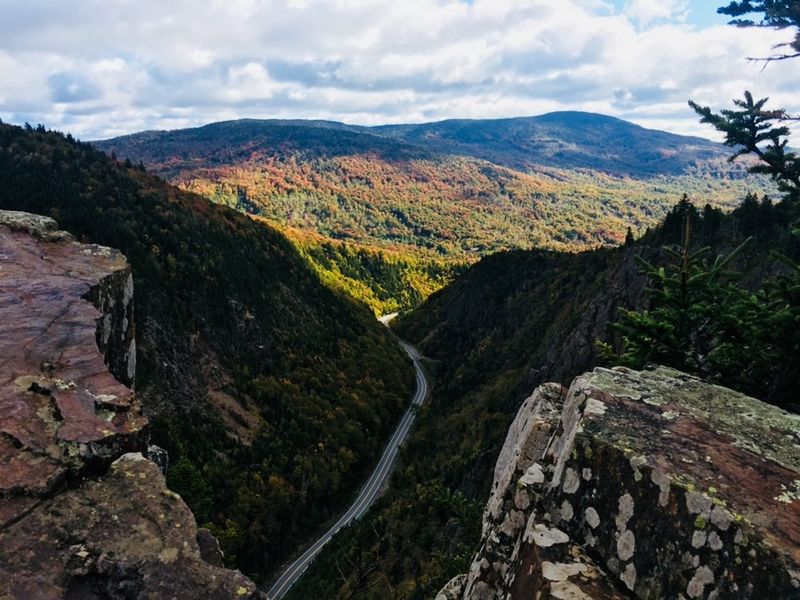
Way up north, far from the busy White Mountain crowds, a small pass packs in a surprising amount of drama. Dixville Notch State Park surrounds the Route 26 corridor with steep slopes, waterfalls, trails, and rocky ground.
Visitor reviews often mention how rugged the area feels. That rough character is part of the charm, since the cliffs seem close enough to touch from the roadside.
Table Rock is the signature viewpoint. This narrow ridge of rock looks out across the notch and the northern forest, and it takes some care to walk along, so sturdy shoes are a good idea.
Fall is an especially good time to visit. Lake Gloriette and the wooded hillsides join in one broad sweep of color that brightens the whole region.
Because the notch sits so far from major cities, it stays quieter than many others on this list. That makes it a good choice for travelers who like open road and fewer cars.
Bring a picnic and plan for a slow afternoon. The short trails and waterfalls fit nicely into a day of driving through the north.
4. Kinsman Notch, Woodstock, New Hampshire
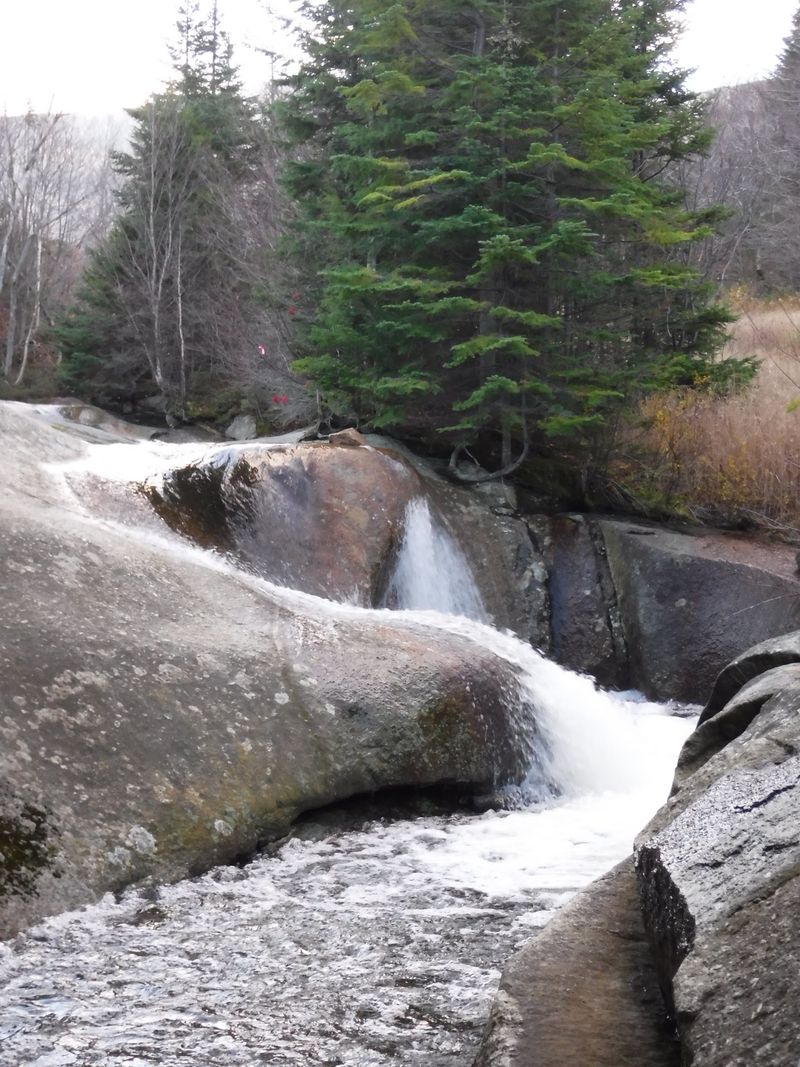
Traffic jams are rare on this side of the White Mountains, and that is a big part of the appeal. Route 112 carries drivers between Mount Moosilauke and Kinsman Ridge, creating a quieter western gateway to the range.
Beaver Pond sits near the height of land and gives the peaks a calm foreground for photos. The Appalachian Trail crosses right through the notch, so you may meet a thru-hiker taking a snack break.
Nearby, the terrain grows steeper around Lost River. The slopes beside the road become more dramatic, and many travelers pull over to take a look.
Compared with Franconia Notch, Kinsman feels less hurried. There is room to stop whenever a view catches your eye, which suits people who like to travel at a relaxed pace.
Short trails start close to the road, so even a quick stop can turn into a small walk. Early autumn is a lovely time to go, when the leaves begin to shift but the crowds have not yet arrived.
Check road conditions in winter, since this route can be affected by heavy snow.
5. Bear Notch, Bartlett, New Hampshire
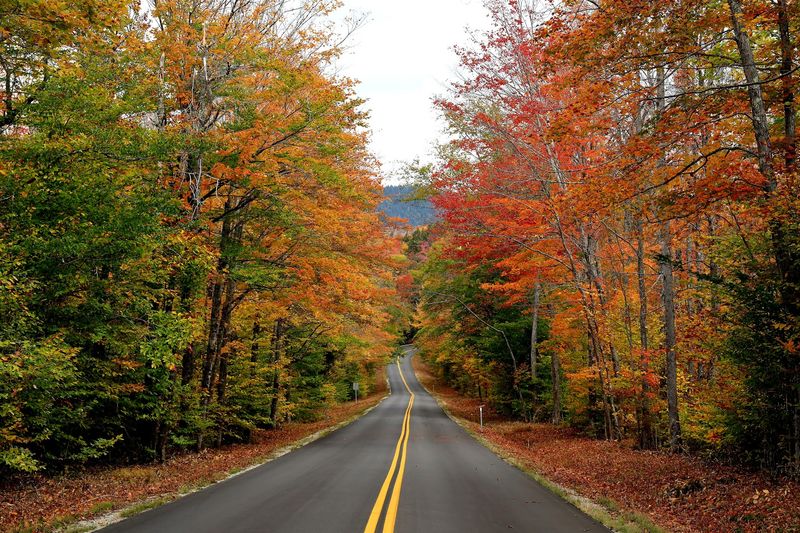
A road that disappears each winter deserves a little respect. Bear Notch Road climbs above Bartlett and links Route 302 with the Kancamagus Highway, but it is a seasonal route that closes when snow arrives.
The forest here offers a quieter option than some of the region’s busier corridors. Travelers who want mountain scenery without heavy traffic often choose this shortcut.
Fall is the star season. The road becomes a tunnel of red, orange, and gold, with occasional mountain views breaking through the trees.
Because the road is a connector, it works well as part of a loop. You can pair it with the Kancamagus Highway and turn a simple drive into a full day of leaf watching.
Bear Notch Ski Touring Center is nearby and remains a local favorite with visitors. In colder months, it gives cross-country skiers a place to enjoy the snowy woods.
Check the seasonal closure dates before you go. A quick call or look at local road updates can save you from a surprise detour.
6. Franconia Notch, Franconia, New Hampshire
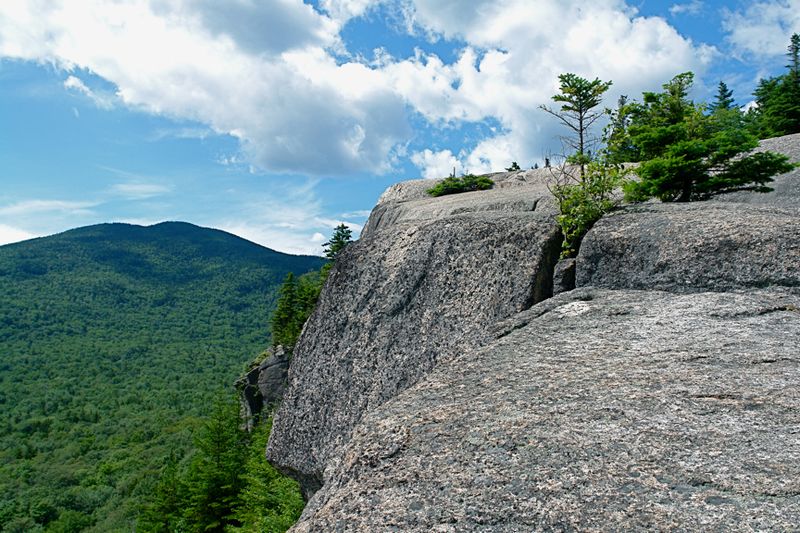
Here is a road trip fact that surprises people: the highway through this notch is only one lane in each direction. Congress passed a special act so the parkway could carry Interstate 93 without widening the pass.
The corridor runs about eight miles through Franconia Notch State Park, with Cannon Mountain on one side and Mount Lafayette on the other. Echo Lake covers roughly 38 acres, and visitors can rent kayaks and pedal boats to paddle around it.
The Flume Gorge is a paid attraction with an 800-foot chasm. Wooden boardwalks and covered bridges guide you past granite walls that stand 70 to 90 feet tall, and Avalanche Falls is one of the stops along the way.
The famous Old Man of the Mountain profile collapsed in 2003, yet its story lives on. Profiler Plaza along Profile Lake uses steel outlines that line up with the cliff to recreate the face, and a small museum at the tramway base tells the full history.
Hikers can reach the Franconia Ridge Loop and parts of the Appalachian Trail from here. A bike path runs the length of the notch, separate from the parkway, and camping is available at Lafayette Place.
7. Jefferson Notch, Thompson and Meserve’s Purchase, New Hampshire
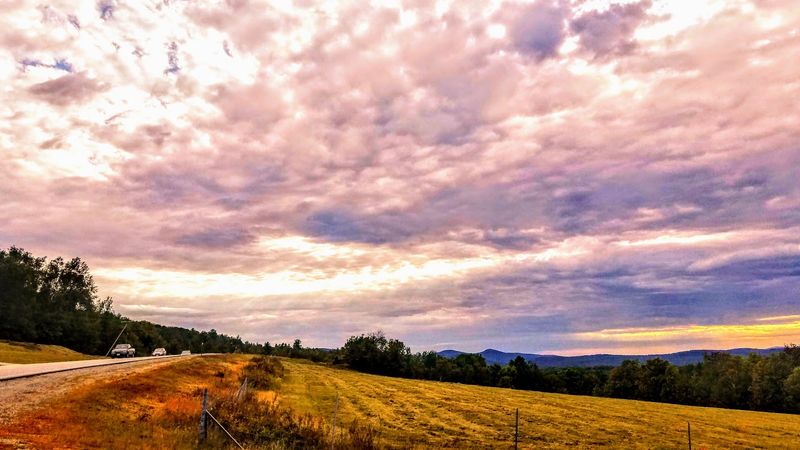
Paved scenic highways are nice, but some travelers want gravel and a little adventure. Jefferson Notch Road climbs through deep forest beneath the Presidential Range and leaves the polished roads far behind.
The Caps Ridge Trail Head along the road is a well-known starting point for Mount Jefferson. Its active visitor listing shows how many hikers use it each season.
The road is seasonal, which adds to its backcountry personality. When it is open, drivers should expect narrow stretches and slower speeds.
A high-clearance vehicle is not always required, but caution helps. Take your time, watch for other cars, and pull over safely if you want photos.
The mix of mountain forest, trail access, and relative quiet makes this a memorable detour. Travelers who enjoy rustic roads tend to remember it long after the trip is over.
Bring water and snacks, since services are far away. A paper map is also useful, because cell signal can fade in the deep woods.
8. Carter Notch, Bean’s Purchase, New Hampshire
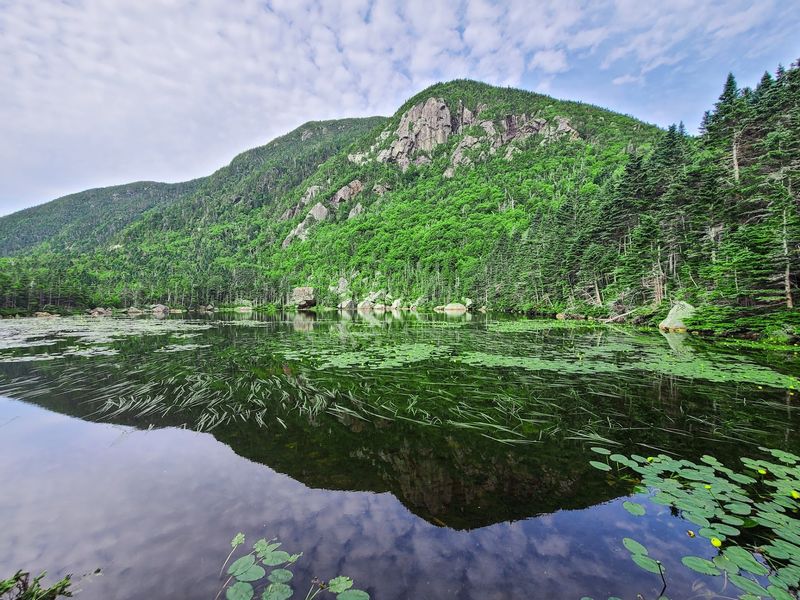
No windshield views here. This pass makes you earn the scenery, and the only way in is on foot along a hiking trail.
The notch sits between Wildcat Mountain and Carter Dome. High cliffs frame the space, and the whole area feels like a hidden bowl in the mountains.
Two small ponds rest on the floor of the notch. Nearby, the huge boulders of the Ramparts give hikers something to scramble around and photograph.
AMC Carter Notch Hut sits close by and keeps an active visitor listing. It works as a base for overnight stays, and it makes the remote corner a recognizable destination.
Plan for a real hike, with sturdy boots and plenty of water. The trail can be rocky, so allow extra time for breaks.
Reservations at the hut fill up in busy months, so booking early is a smart move. Day hikers can still enjoy the ponds and boulders and return before dark with a well-planned start.
9. Sandwich Notch, Sandwich, New Hampshire
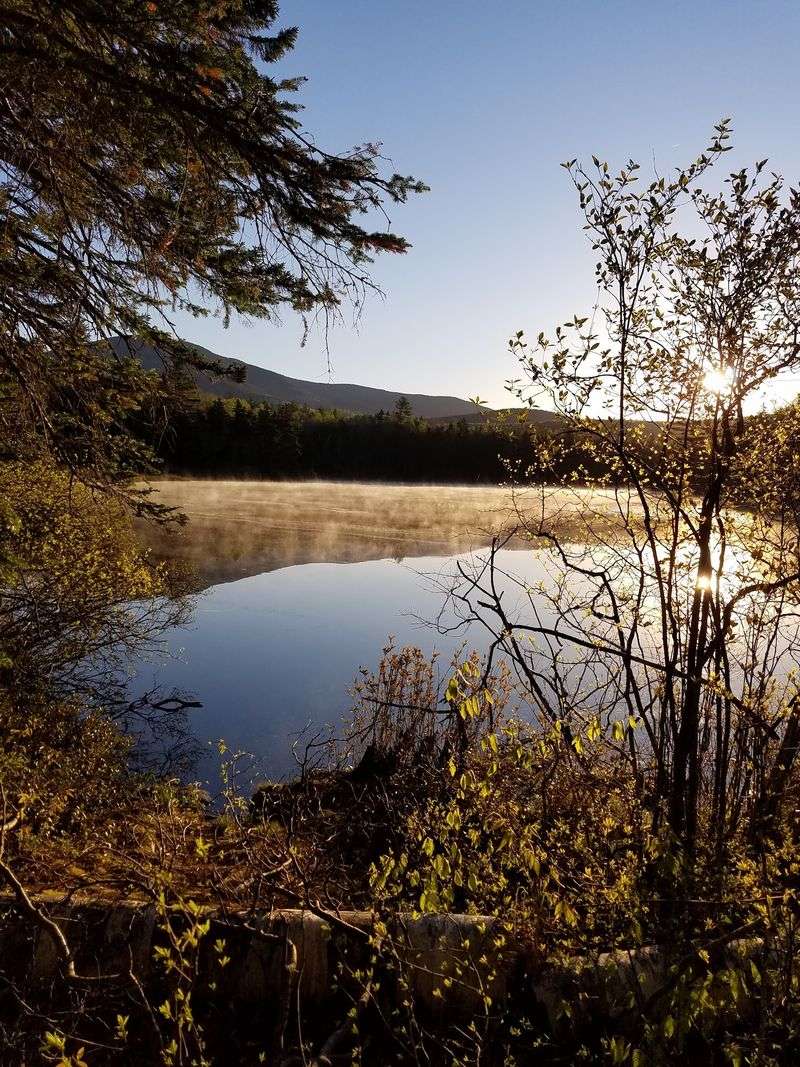
Long before highways, travelers used narrow woodland roads like this one to cross the hills. Historic Sandwich Notch Road follows that older style of New Hampshire travel through heavily wooded country.
The notch sits at roughly 1,370 feet in the Squam Mountains. That height is modest next to the White Mountain giants, and so is the traffic.
Beede Falls gives visitors another reason to stop. Recent reviewers praise its peaceful setting and easy woodland access, which makes it a fine choice for a short walk.
The drive has a back-road quality that many travelers enjoy. Expect narrow stretches, so keep speeds low and be ready to pull aside for oncoming cars.
A cool late-summer or autumn day suits this route well. The tree cover keeps the drive comfortable, and the colors begin to show in September.
Stop in the village of Sandwich before you go. Its old-fashioned center makes a pleasant start or finish to the trip.
10. Mad River Notch, Livermore, New Hampshire
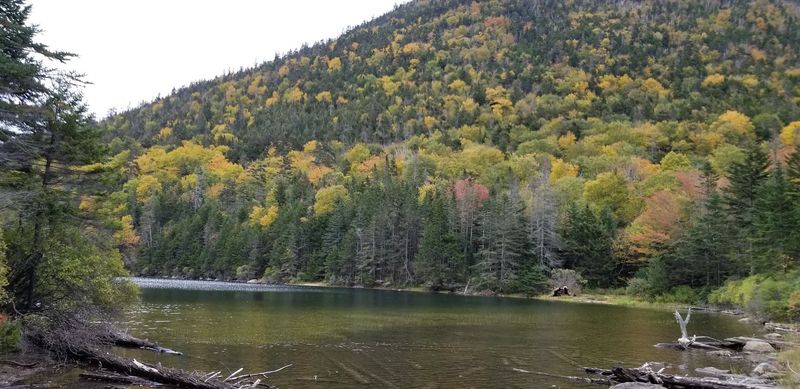
Anyone who prefers boots to brakes will feel at home here. This roadless notch is meant for walking, and the trail rewards you with a peaceful mountain setting.
It lies between Mount Osceola and a ridge of Mount Kancamagus. Upper and Lower Greeley Ponds sit inside the notch, framed by steep slopes.
The forest is especially significant. Portions of it escaped the intensive logging and fires that reshaped much of the White Mountains in the early 20th century.
That history means some of the trees are older than in surrounding areas. Hikers often notice the difference in the size and spacing of the woods.
Today the combination of old forest, still water, and steep mountain walls gives the notch a secluded character. It rarely feels crowded, even in busy summer weeks.
Start with the trail from the Kancamagus Highway side for an easier approach. Pack a lunch, since the ponds make a great rest stop.
11. Zealand Notch, Bethlehem and Lincoln, New Hampshire
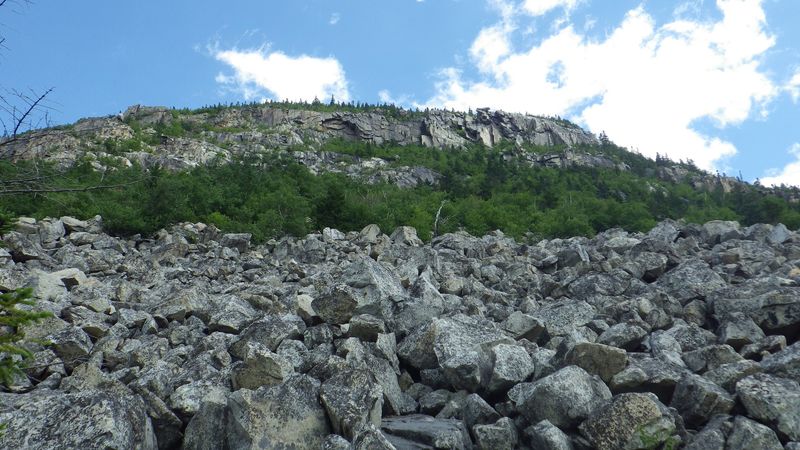
Leave the pavement behind and the White Mountains open up in a different way. This notch lies in the heart of White Mountain National Forest, between Bethlehem and Lincoln, and it belongs firmly to hikers.
It is listed among New Hampshire’s established mountain passes, though you will not find a scenic overlook off a highway. Instead, the view builds slowly along the trail.
The landscape includes forest, streams, wetlands, and mountain ridges. Each part changes with the season, so a spring visit looks quite different from an October one.
Relative isolation is a large part of the appeal. The area feels far removed from the busy roads only a few valleys away.
Bring a map, extra water, and rain gear, since conditions can shift. Wet sections of trail are common, so waterproof footwear helps.
Plan a full day if you want to enjoy the notch without rushing. The quiet is worth the extra planning.
Share this story