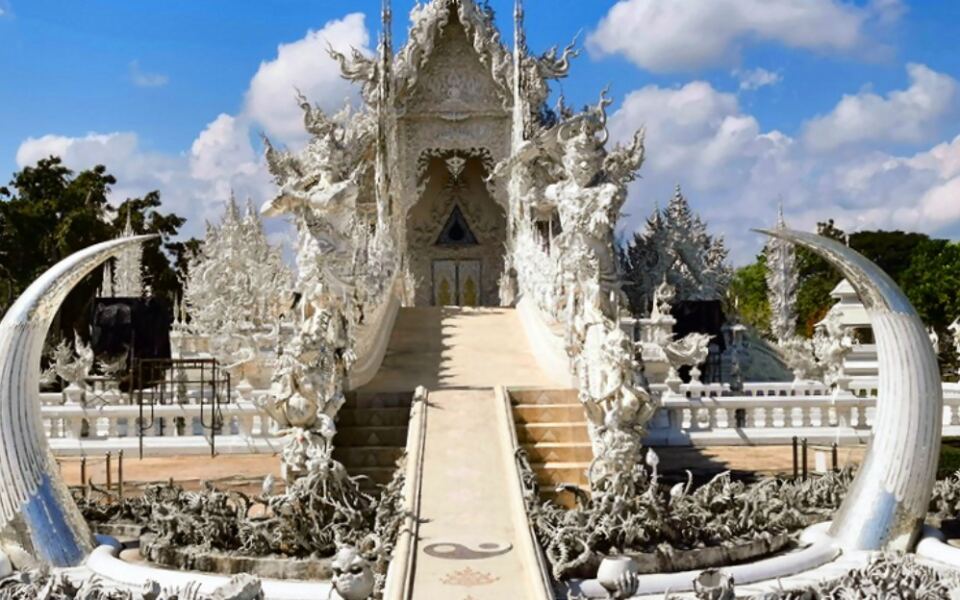
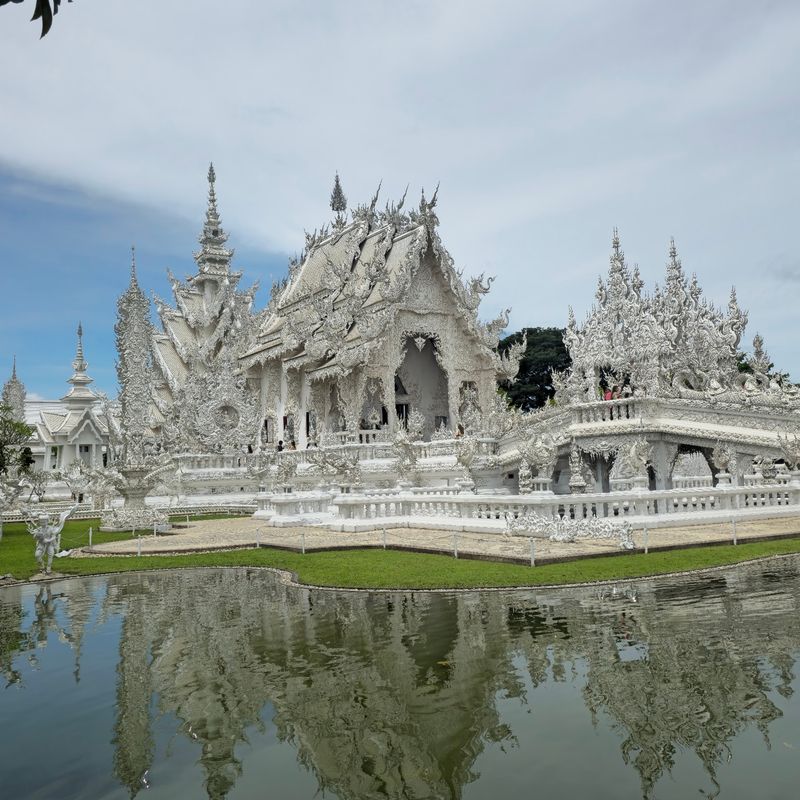
Wat Rong Khun in northern Thailand looks like a frosty palace that wandered out of a dream. It is a modern temple packed with mirrors, dragons, and a few surprise guests from movies.
Millions of people travel to Chiang Rai just to see it. Here are some facts that show why this place is so special.
A Temple Built by an Artist
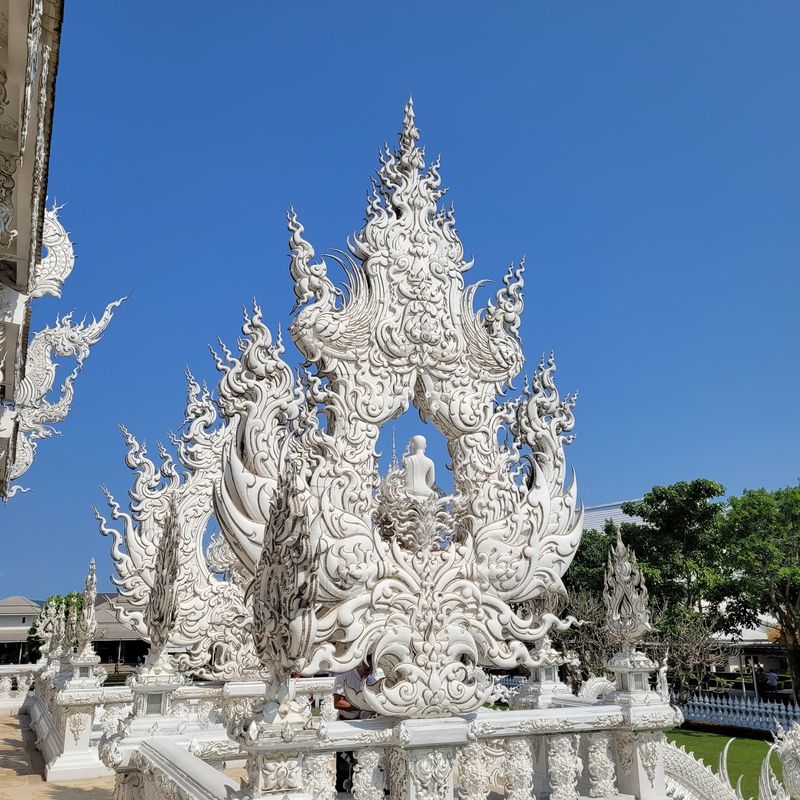
Most old temples were shaped by centuries of builders. Wat Rong Khun was shaped mainly by one man with a big imagination, the Thai artist Chalermchai Kositpipat.
He designed it as a personal gift to Buddhism and to his hometown.
The artist did not want a copy of any old temple. He wanted something fresh, bold, and full of meaning.
Every curve, statue, and wall carries his own creative stamp.
Because one mind guided the whole project, the place feels like a single giant artwork. You can spot his style from the front gate to the back garden.
Even the tiny details look planned.
Visitors often say it feels more like an art exhibit than a normal temple. That is exactly the point.
Walk slowly and look closely, because the artist tucked clever ideas into almost every corner.
Think of it as a gallery you can walk through, with a golden surprise or two waiting just around the bend. Bring a camera and plenty of curiosity.
Pure White for a Reason
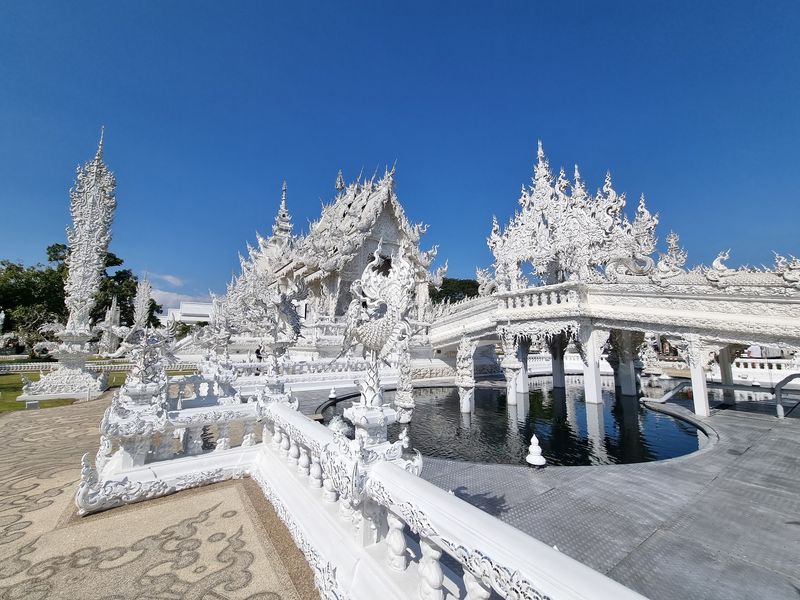
Squint a little, because this place glows. The all-white color is no accident.
It stands for the purity of the Buddha and his teachings.
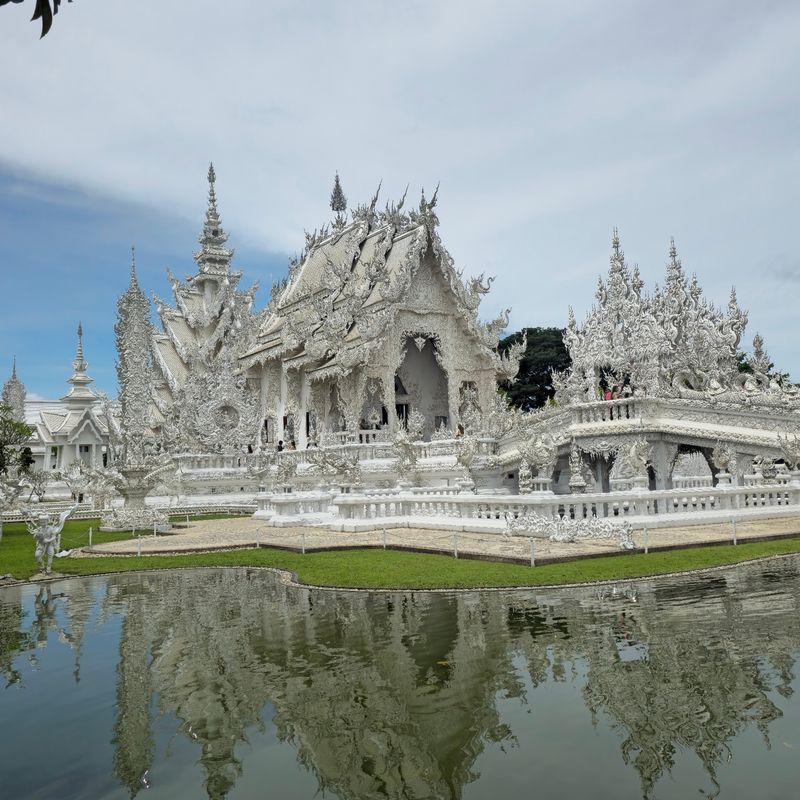
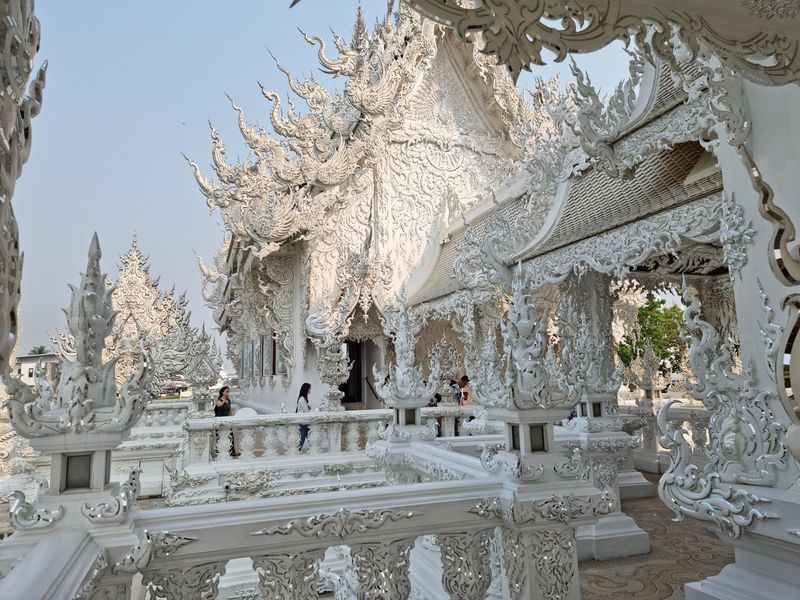
White paint and plaster cover nearly every surface, from the roof edges to the railings. Against the Thai sky, the effect is almost blinding at midday.
Sunglasses are a smart packing choice.
Some visitors expect carved marble, but the building is mostly plaster and concrete shaped with great care. That does not make it less impressive.
It simply shows how much skill went into the sculpting.
The color also makes the temple stand out from the golden and red temples found across Thailand. Nothing else nearby looks quite like it.
That bold choice is a big reason it became famous around the world.
For softer photos, aim for the morning or late afternoon. The light is gentler then, and the white looks creamy instead of harsh.
Thousands of Tiny Mirrors
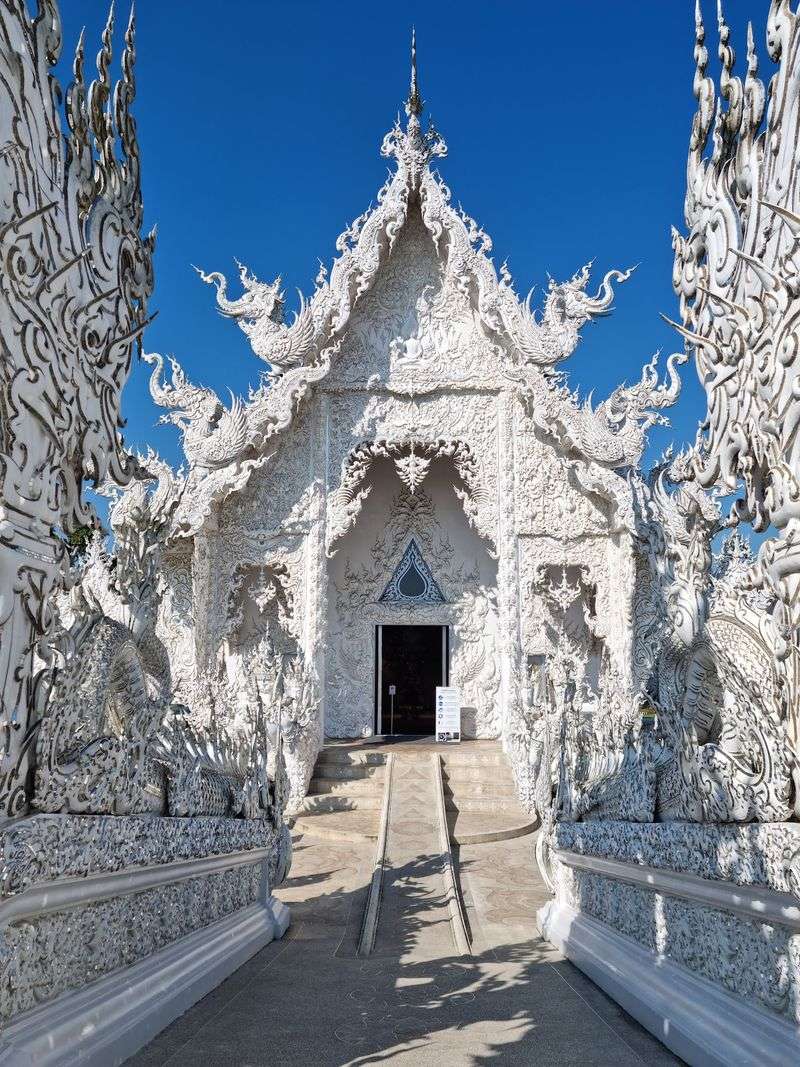
Sparkle is built right into the walls here. Small pieces of mirrored glass are set into the white surface, and they flash when the sun hits them.
Walking past feels like strolling beside a frozen glitter storm.
The mirrors carry meaning too. They stand for the Buddha’s wisdom shining out in every direction.
The glow is a visual reminder of clear thinking.
One long-time visitor remembered the walls glittering like diamonds in the evening sun, even when the temple was much smaller years ago. That magic has only grown.
Today the effect covers a huge area.
Try looking at the walls from several angles. The sparkle changes as you move, and sometimes a single patch lights up like a camera flash.
It is a fun game for kids and adults alike.
Cloudy days are calmer and less sparkly, but the details are easier to see. Sunny days give you the wow.
Pick whichever mood you like.
The Bridge of Reaching Hands
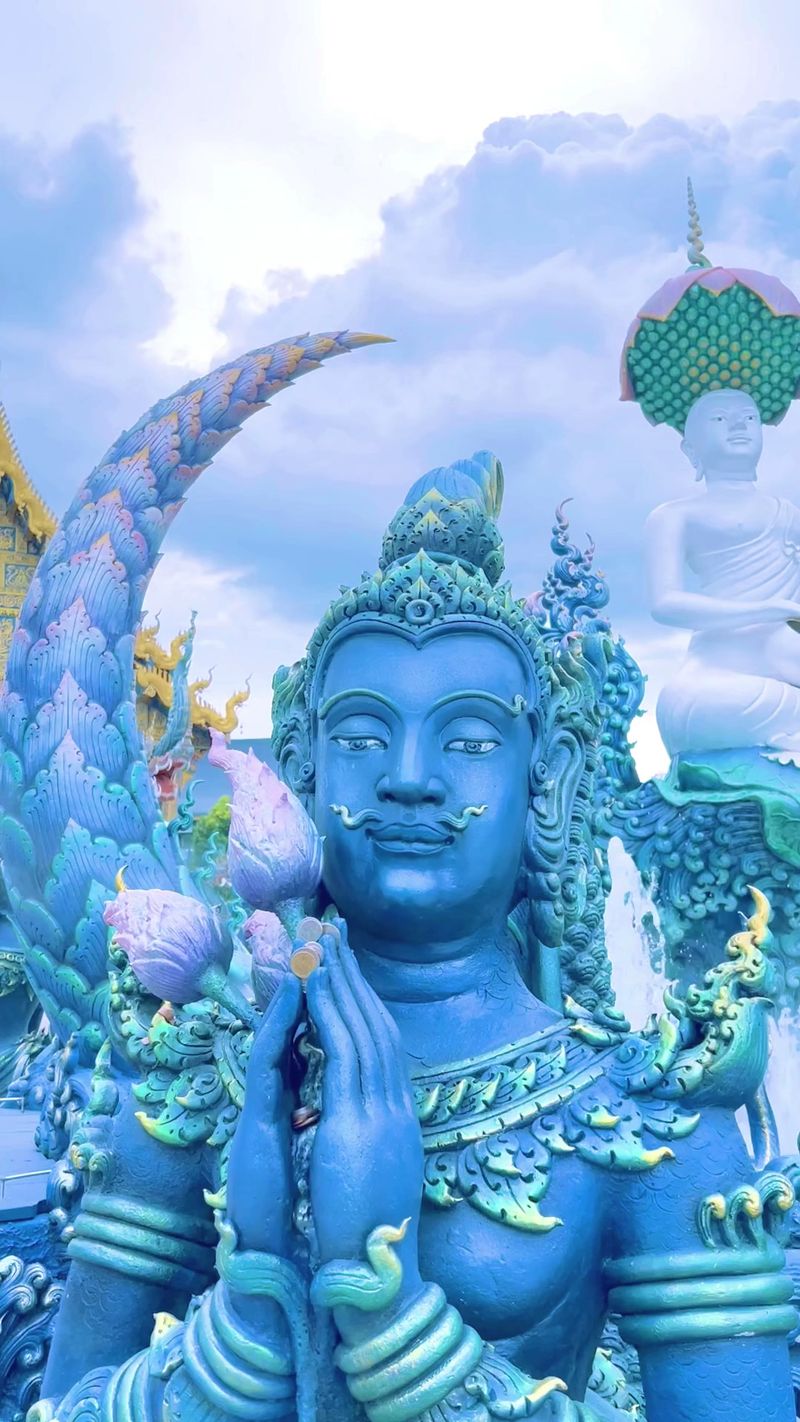
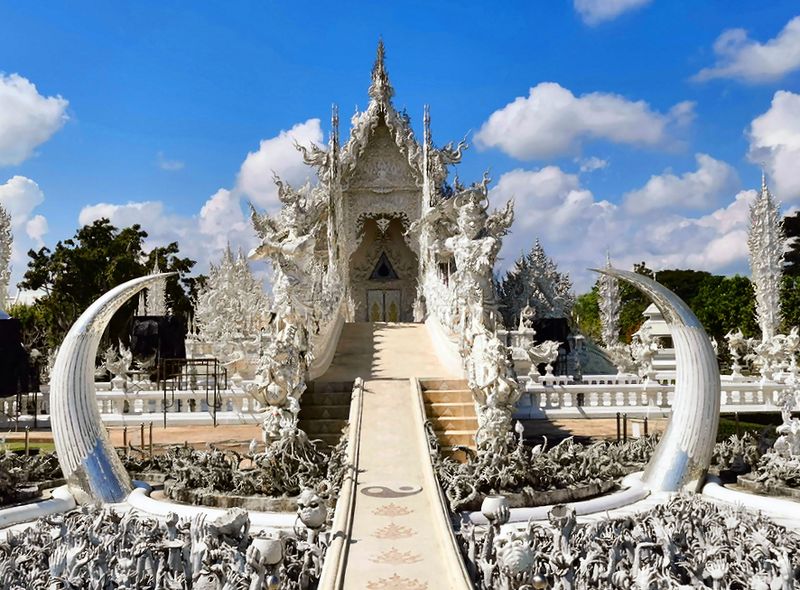
Goosebumps are common right at the entrance. Hundreds of pale hands rise from the ground, stretching toward the bridge as if begging for help.
It is one of the most talked-about scenes in the whole complex.
The hands stand for human desire and suffering. Crossing the bridge shows leaving those cravings behind to step toward a purer place.
The idea is simple but strong.
Below the hands, you may spot grimacing faces and other eerie figures. They add to the feeling of passing through a test.
Then the bright temple appears ahead as the reward.
This is also the busiest spot for photos. Crowds can bunch up here, so be patient and keep moving so others can have a turn.
Early visits make it much easier.
Take a moment to simply look before you lift your phone. The sight hits harder when you let it sink in first.
Pop Culture Hidden in Holy Art
Plot twist: a famous temple that hides movie monsters. Inside the main hall, murals mix Buddhist teachings with modern characters.
Visitors have reported spotting superheroes, aliens, and cartoon turtles.
The artist used these familiar faces to show how good and evil clash in today’s world. It makes old ideas feel current.
Some people find it playful, while others find it a bit odd.
Opinions are split, and that is part of the fun. One traveler said it felt more like a theme park, while another called it thought-provoking.
Both agree it is memorable.
Photos are not allowed inside the main hall, so the images exist only in your memory and the postcards. Staff watch closely, and rules are firm.
Put the phone away and just enjoy the view.
Go in with a sense of humor and an open mind. Hunting for hidden characters can turn a quiet walk into a treasure hunt.
A Young Temple With Big Fame
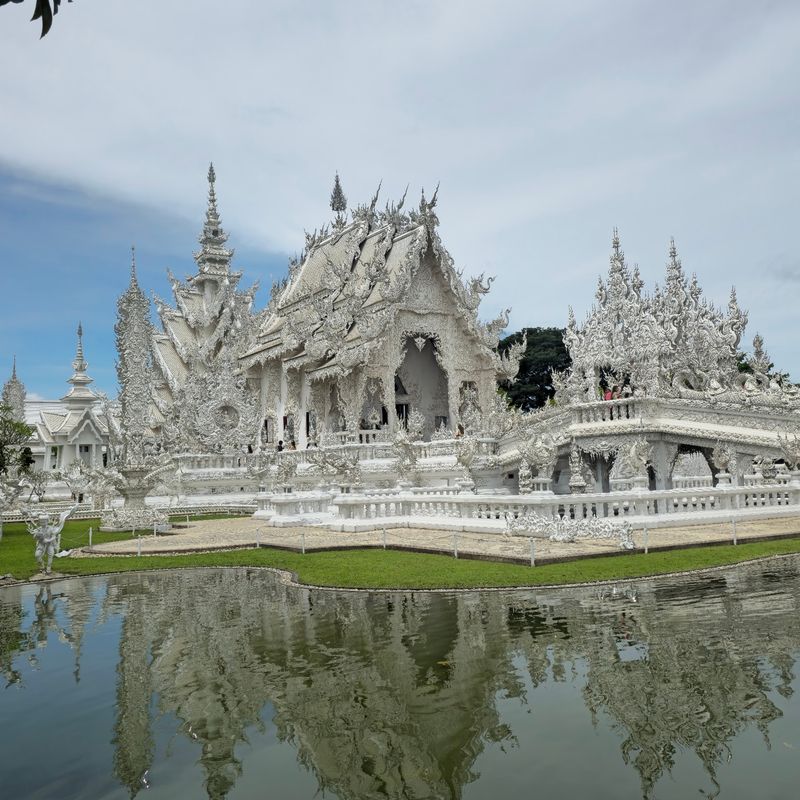
Here is a surprise for history fans: this temple is quite new. Construction began in 1997, so it is only a few decades old.
Many travelers assume it has stood for centuries.
The site was in poor shape before the artist stepped in. He used his own money and effort to rebuild it into something grand.
Work has continued over the years, with new buildings being added.
Because it is still growing, no two visits are exactly alike. One visitor came back after sixteen years and found fountains and a park that had not been there before.
Returning guests get fresh sights.
Being new also means everything is in great shape. Paint is crisp and details are sharp.
Cleaners and staff work hard to keep it that way.
It is proof that a place does not need ancient age to feel special. Sometimes a bold idea is enough to make history.
Golden Restrooms Worth a Photo
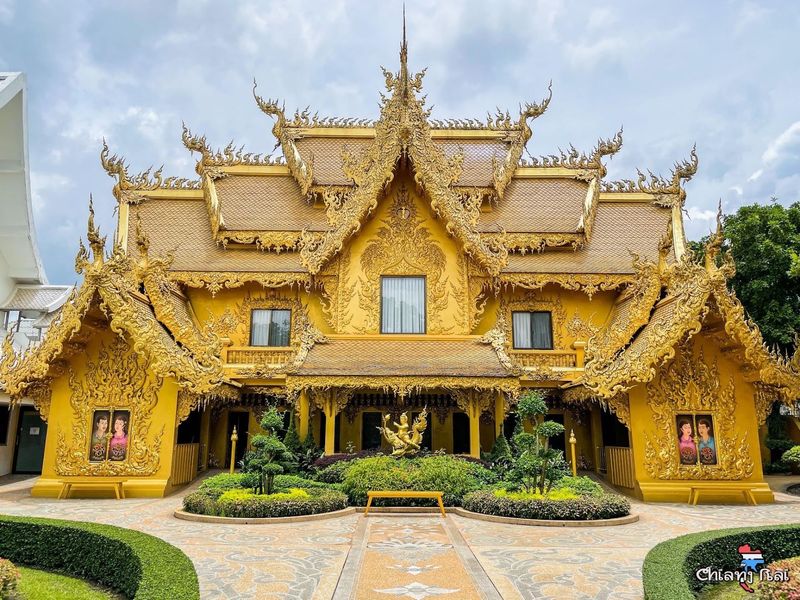
Nobody expects to gush about a bathroom, yet here we are. The golden restroom building at the temple is a showpiece.
Reviewers keep calling the washrooms stunning and spotless.
The gold color stands out against the white main temple on purpose. In Thai Buddhist ideas, gold represents the body, while white represents the mind.
The restrooms sit in the golden zone to match.
Inside, everything is clean and nicely kept. That is a big relief after a hot walk across the grounds.
Some visitors even say the toilets are a work of art.
It is a fun stop for a quick photo, so take one if the line is short. Just remember it is still a working facility, so be kind to the people waiting.
A quick snap is plenty.
Not many places make a restroom break feel like a sightseeing stop. This one does.
The Gloomy Cave of Art
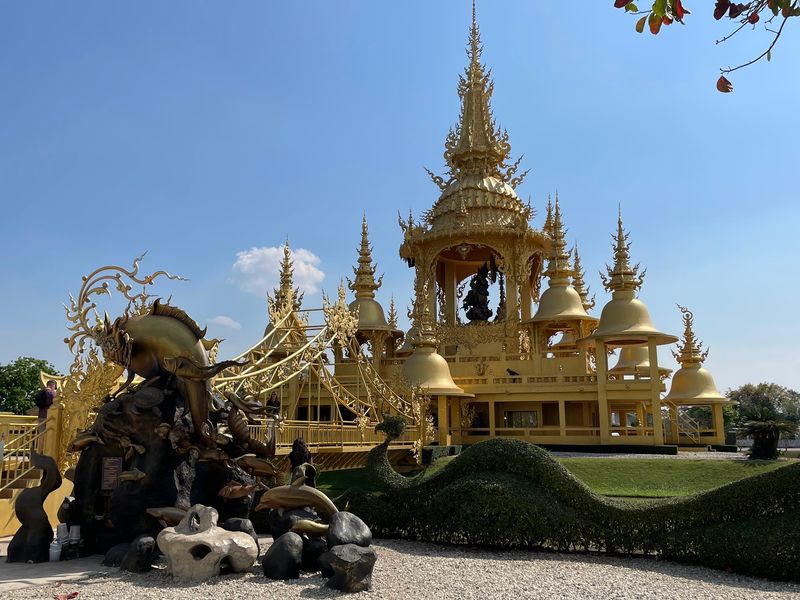
Behind the main temple lurks a spooky surprise. A cave-like art area leads visitors through dim passages filled with strange and scary images.
One traveler compared it to a haunted house.
The theme is the dark side of human nature, the urges that keep people from peace. Skulls and angry faces appear along the way.
Younger children may find it a little creepy.
Some guests loved it. Others felt it was more of a puzzle of obscure references than deep art.
The experience varies by taste.
There can be an extra charge for entry, so check at the gate before you go. Plan a few minutes inside, not an hour.
It is more of a short thrill than a long tour.
After the shadows, step back outside and enjoy the sunshine. The contrast makes the white temple feel even brighter.
The Golden Hall Next Door
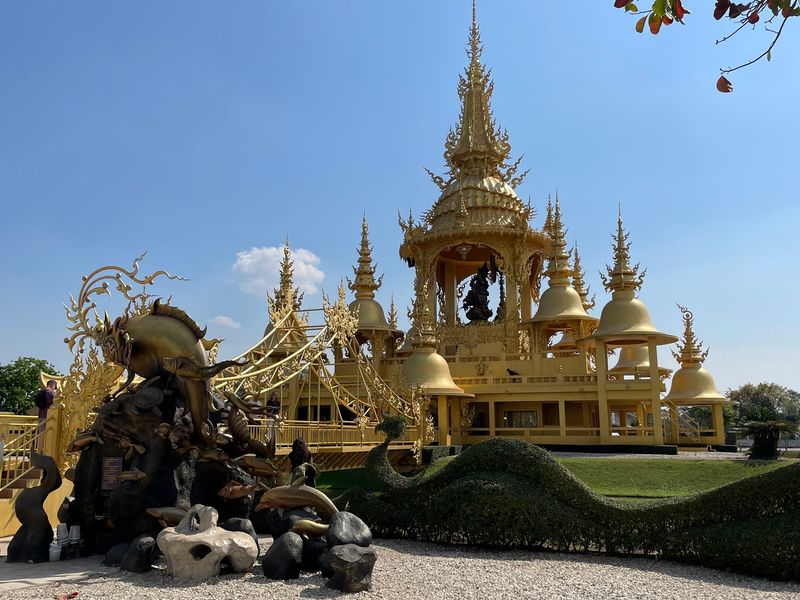
After all that white, a flash of gold feels like a drumroll. A shining golden building stands nearby, and it looks stunning in afternoon light.
Visitors often rush toward it with cameras ready.
Gold stands for the physical body, in contrast to the temple’s white mind. The artist placed them close so the idea is easy to see.
It is a quiet lesson in color.
The detailing here is as busy as the main hall. Tiny patterns cover walls, doors, and roof edges.
You could study one section for ten minutes and still miss things.
One reviewer also pointed out a golden shrine for the elephant-headed god Ganesha within the complex. It is a nice reminder that the grounds hold more than one surprise.
Keep exploring beyond the first big view.
Walking from white to gold is like switching from a calm song to a lively one. Both are lovely in their own way.
Dragons and Fantasy Creatures Everywhere
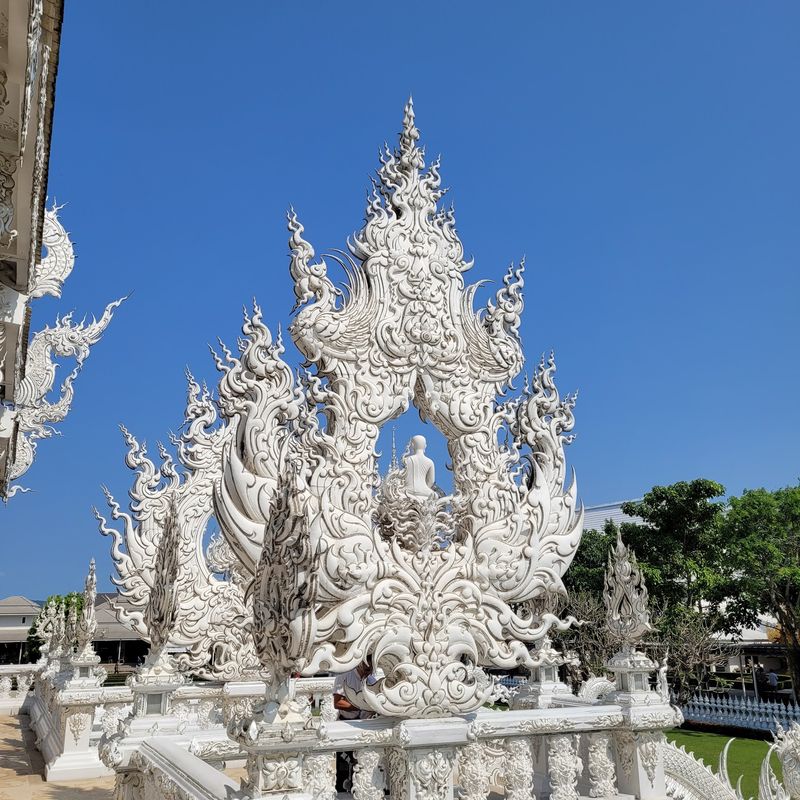
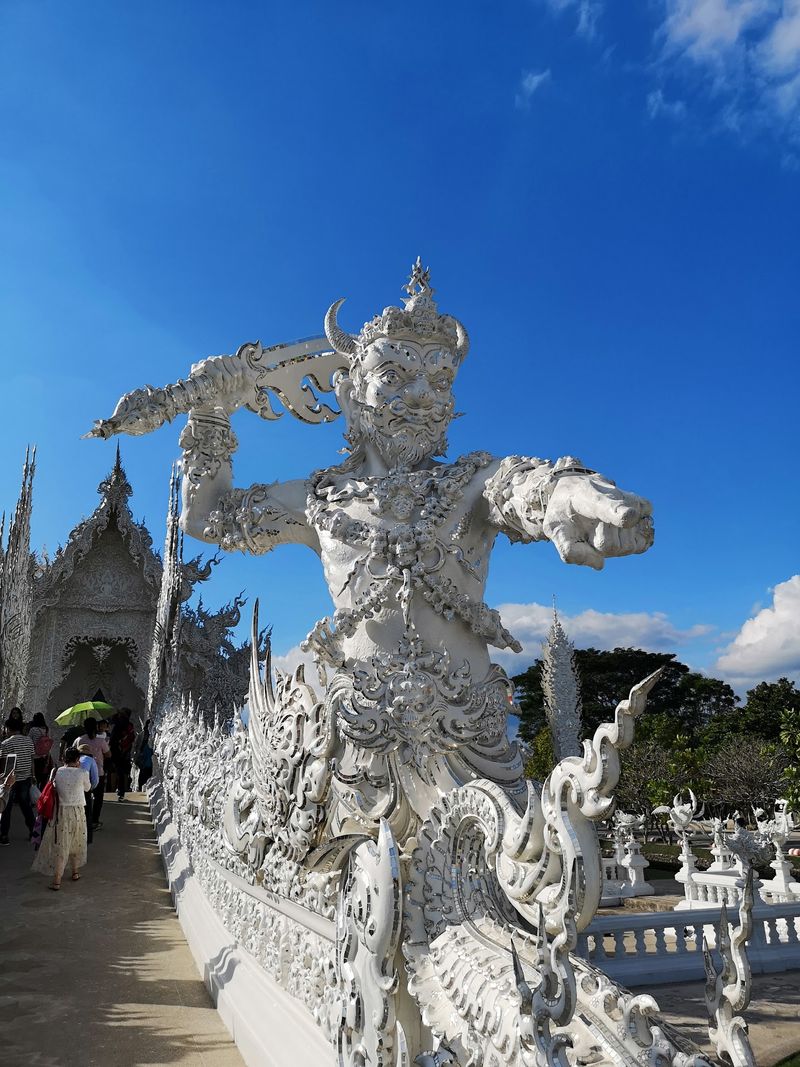
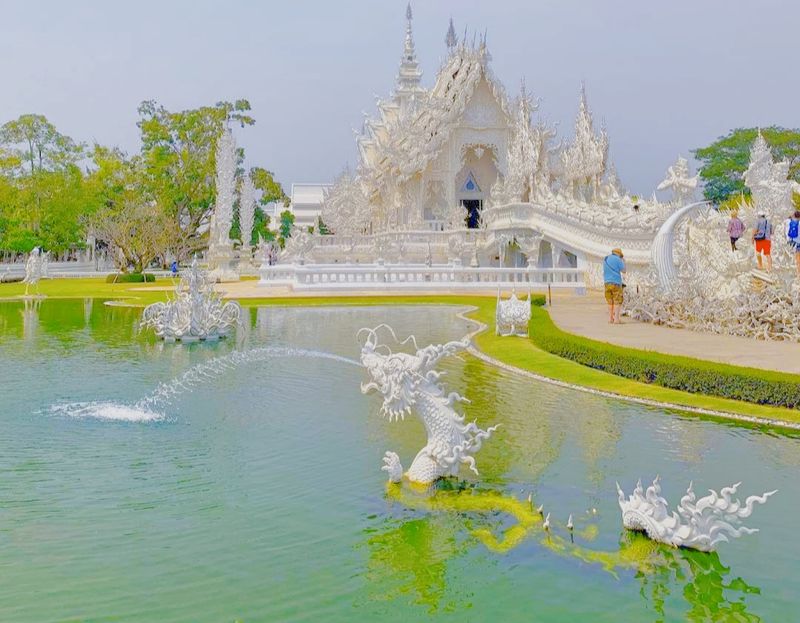
Keep your eyes peeled, because dragons are lurking. Sculpted serpents and mythical beasts curl along railings, walls, and rooflines.
They give the temple a storybook feel.
Many of these creatures come from Buddhist and Thai folklore. Others come from the artist’s own imagination.
Together they create a busy, magical scene.
One reviewer noted dragon details everywhere and loved the mosaics on the floor too. Look down as well as up, because the art does not stop at eye level.
Some patterns hide in the pathways.
The sculptures are carved in layers, so they cast shadows that change during the day. Morning light shows one mood, and late afternoon shows another.
A return trip at a different hour is rewarding.
Try counting how many creatures you can find. Kids tend to love this game, and adults usually get hooked too.
A Wish Well and Fish Feeding
Got a spare coin and a hopeful heart? The grounds include a wishing well where visitors make a wish.
It is a cheerful pause between the heavier art themes.
There is also a pond where you can feed the fish. A small machine dispenses food, and a traveler suggested bringing 10 baht coins.
The fish crowd in quickly, which makes it a hit with children.
Fountains and a small park have been added beside the temple over the years. They give the area a relaxed feel.
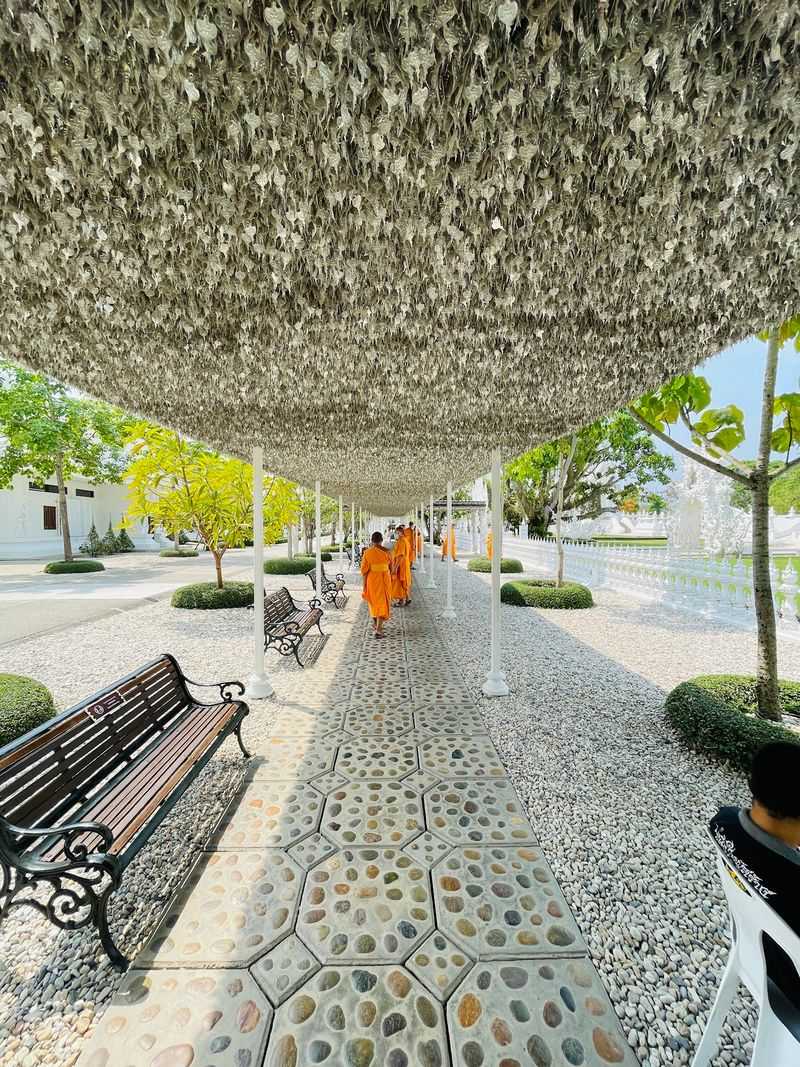
Benches under shade invite you to rest.
These small touches make the visit feel less like a museum and more like a day out. You can wander, snack, and sit.
No one expects you to rush.
Bring small change so you are ready. A handful of coins can buy a surprising amount of fun.
Entry Costs and Opening Hours
Money talk first: foreign visitors usually pay 200 baht to enter, while Thai visitors enter free. Fees have changed over time, so older blogs may list less.
Check the latest price before you go.
The temple is open daily, with Google listing hours from 8 am to 5 pm. Some visitors reported slightly different times, so arriving early is wise.
You will not want to miss the closing bell.
Most travelers say the fee feels fair for the amount to see. Many spent between one and two hours exploring.
A few stretched it longer with snacks and photo breaks.
Souvenir shops sit near the exit, but one reviewer found better prices in town. Save your shopping money for the local markets.
You will get more for your baht.
The temple is about 15 kilometers from central Chiang Rai. Taxis, tours, and ride apps can all get you there.
Beat the Crowds and the Heat
The sun here does not play nice. Midday can be scorching, and the white surfaces bounce light everywhere.
Sunscreen, water, and an umbrella are your best friends.
Crowds are the other challenge. Many visitors recommend arriving right at opening for fewer people in photos.
Others found a quiet window late in the afternoon or on a cloudy weekday.
Low season, outside the busiest travel months, can feel far calmer. One traveler said it was a superior experience with room to breathe.
Planning your timing pays off.
Shaded benches around the grounds are handy for cooling off. Take breaks instead of pushing through.
A rested visitor sees more details.
Remember that a few hours can change everything. A little planning beats a long wait on the bridge.
Dress Code and Temple Manners
Shorts that are too short will not get you far. Because Wat Rong Khun is a sacred site, visitors must dress respectfully.
Cover your shoulders and knees, and skip plunging necklines.
Photography is not allowed inside the main hall. Staff enforce this firmly, and some visitors found the constant reminders stressful.
Following the rule makes things smoother for everyone.
Listen to guides and signs. One traveler urged people not to do things they are not allowed to.
Respect keeps the place lovely for the next group.
Keep voices low near the main building and avoid blocking walkways for long photo sessions. A bit of patience goes a long way on the busy bridge.
Smile and take turns.
A scarf or light jacket in your bag can save the day if your outfit falls short. It is easy to carry and easy to use.
Tasty Stops Just Outside the Gate
Hungry after all that sightseeing? Good news: food waits close by.
A visitor raved about the chicken khao soi at a spot across from the entrance gate.
Khao soi is a creamy curry noodle soup that northern Thailand does especially well. It is rich, a little spicy, and very satisfying.
A bowl here is a great way to taste local flavor.
Another reviewer found a smoothie cafe near the temple entrance. It is a cool place to sit and think about what you just saw.
A fresh fruit shake is perfect on a hot day.
Prices outside the grounds are usually friendlier than those at tourist shops. Eating on the road also lets you see everyday Chiang Rai life.
It is a bonus after the dreamlike temple.
Plan a snack break before or after your visit. Your feet and your stomach will thank you.
Getting There From Chiang Rai and Chiang Mai
The road to the White Temple is easy. It sits about 15 kilometers from central Chiang Rai, and the drive takes roughly 15 to 20 minutes.
Taxis and ride apps both work well.
Staying in Chiang Mai? A day trip is popular, and the drive takes about three hours each way.
Local tours often bundle the temple with other sights in the area.
One visitor easily booked a ride home using the Grab app after an early morning visit. That kind of flexibility is handy.
Just make sure you have data or a plan.
The temple is also near other famous spots, so combine them if you can. A full day in Chiang Rai can include more art, markets, and views.
Pack light and wear comfy shoes.
Whichever way you travel, aim to arrive with energy. The grounds are bigger than many expect, and you will want to explore.
Share this story