Crumbling walls can tell big stories. Hidden in these ruins are clues about how mighty societies built cities, moved water, traded goods and honored their gods.
From mountain citadels to desert capitals, each site on this list opens a window into a world that once ruled its region. Get ready to meet thirteen places where the past still speaks loudly.
Machu Picchu, Peru
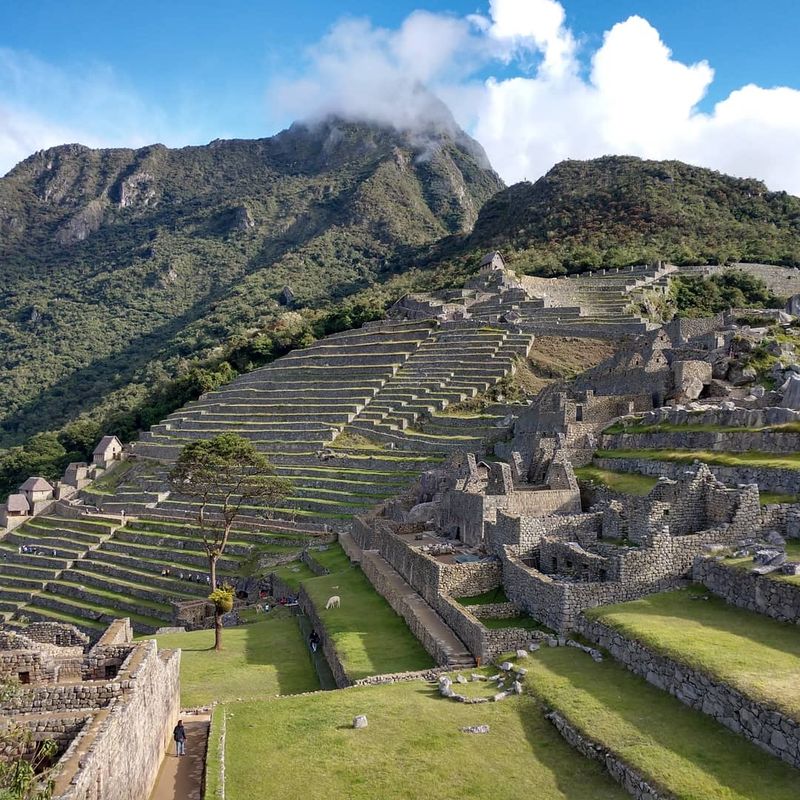
Clouds drift through the stone doorways here like polite visitors. Machu Picchu sits about 2,430 meters above sea level, where the Andes tumble toward the Amazon Basin.
Few city views anywhere can match it.
The Inca built this 15th-century complex with stones cut so well that they fit snugly together. Farming terraces step down the slopes, and hidden drainage channels keep rain from washing the whole place away.
Planners clearly thought about every drop of water.
Nobody knows its exact purpose for certain. Many experts believe it served elite rulers and religious life, and the careful layout supports that idea.
Temples, stairways and homes all share the same mountain stage.
The protected sanctuary around it covers more than 32,000 hectares. That means the ruins are wrapped in forest, wildlife and peaks.
Visitors often say the hike feels like walking into a secret the Inca left behind on purpose.
Tip for travelers: go early. Morning light turns the stones golden, and the crowds are thinner.
Angkor, Cambodia
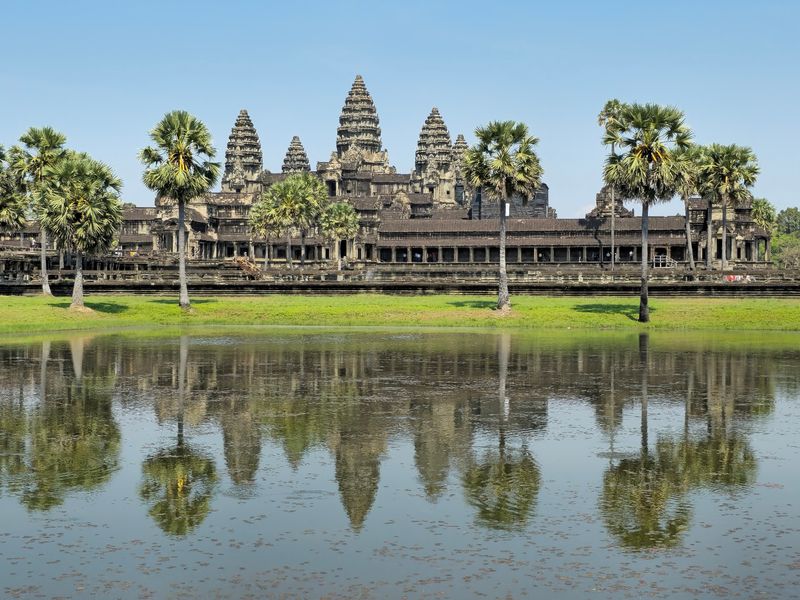
Ask ten people about Angkor and nine will picture one temple. The truth is much bigger.
This protected zone covers roughly 400 square kilometers and holds the remains of Khmer capitals from the 9th through the 15th centuries.
Angkor Wat gets the fame, but the supporting cast is amazing. Reservoirs, canals, embankments and roads show how the Khmer Empire handled water and moved people across the land.
That network helped feed a huge population.
Then there is Angkor Thom, a monumental walled city. At its center stands the Bayon, where giant carved faces gaze out in every direction.
Sculptures across the temples connect kingship with religion, so the art doubles as political messaging.
Walking among the roots and towers, you can see how rulers wanted to be remembered. They built not just for gods but for power, order and the daily needs of a empire.
Plan more than one day. The deeper you go, the more the infrastructure starts to steal the show.
Petra, Jordan
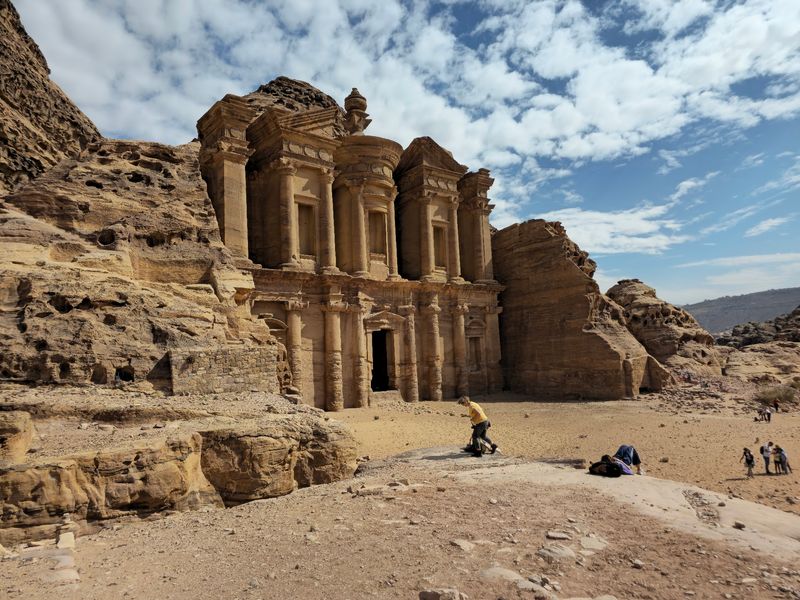
Rose-red cliffs glow at sunset, and suddenly a carved palace appears. That is the drama of arriving at Petra.
The Nabataeans built their capital where trade roads linked Arabia with Egypt, Syria and the Mediterranean.
Caravans hauled incense, spices and other costly goods through town, and the city grew rich. Its famous facades were carved straight into sandstone.
The Treasury, Royal Tombs and Deir mix Hellenistic style with Nabataean tradition.
The hidden star is water. In a dry land, the Nabataeans built channels, diversion dams, cisterns and reservoirs to catch seasonal rain.
That clever system let a large population live in the desert.
So Petra is more than pretty rock. It shows a trading power that grew strong by mastering commerce and plumbing at the same time.
Bring comfortable shoes. The site is huge, and the best views often wait at the top of long stone stairways.
Tikal, Guatemala
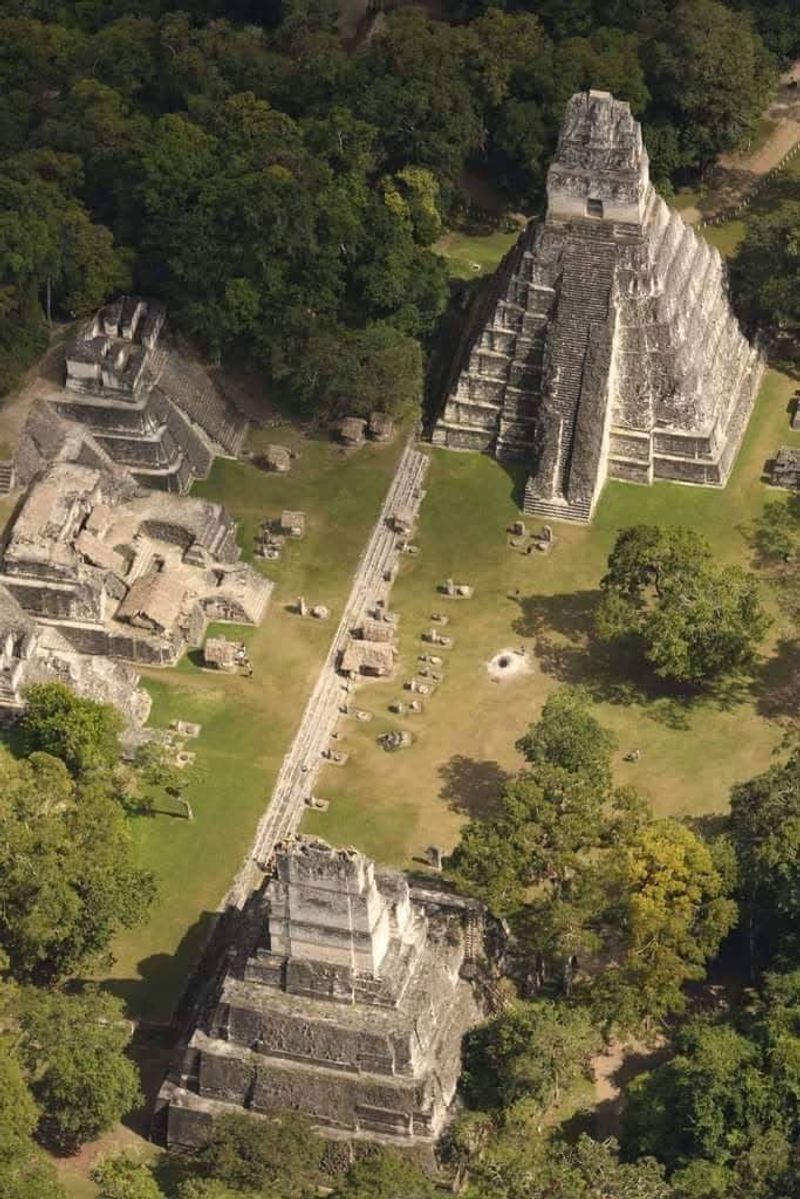
Howler monkeys provide the soundtrack at Tikal, and they are very good at it. Tall Maya temples poke above the jungle canopy here, as if the forest tried to hide them and failed.
This city was a major power of the Maya lowlands. People lived here from about the 6th century BCE into the 10th century CE.
Over time they raised temple pyramids, palaces, plazas and neighborhoods in what is now northern Guatemala.
Carved stone slabs called stelae record rulers, big events and political ties. They work like history books written in rock.
Beyond the ceremonial core, evidence shows a large urban society with reservoirs, causeways and farmland.
Tikal is also unusual because UNESCO honors it for both culture and nature. You get ancient architecture and living rainforest in one visit.
Many travelers climb a temple before sunrise. Watching the mist lift over the treetops is a memory that tends to stick.
Persepolis, Iran
Picture a king hosting the world’s biggest party, and you are close to Persepolis. Darius I founded it around 518 BCE as a ceremonial center of the Achaemenid Persian Empire, one of the largest of the ancient world.
Later rulers kept adding to the great terrace. Monumental staircases lead to audience halls and royal palaces.
Every step was designed to impress.
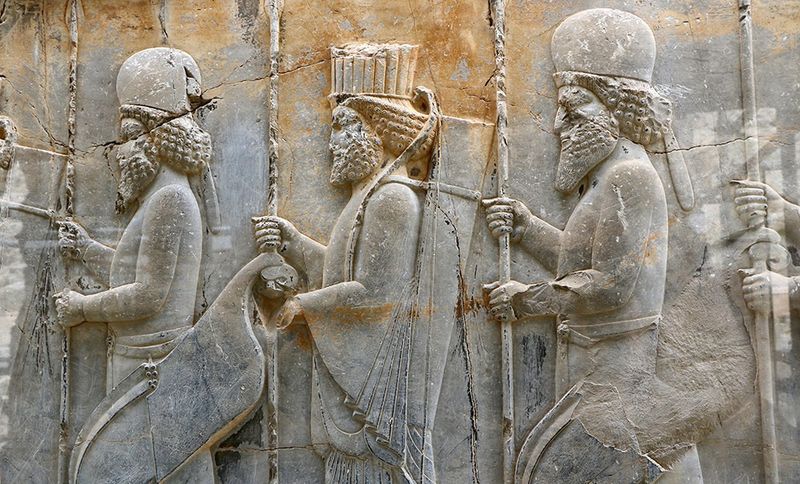
The Apadana reliefs steal the spotlight. They show delegations from many peoples bringing gifts or tribute, each in their own clothing.
Together they present the empire’s wide reach in carved stone.
Experts note that Persepolis was less an everyday capital and more a stage for royal authority and imperial ceremony. That makes its sculptures priceless evidence of how Persian kings wanted to look powerful.
Spend time near the staircases. The small details, from hats to animals, reveal how many cultures stood under one crown.
Pompeii, Italy
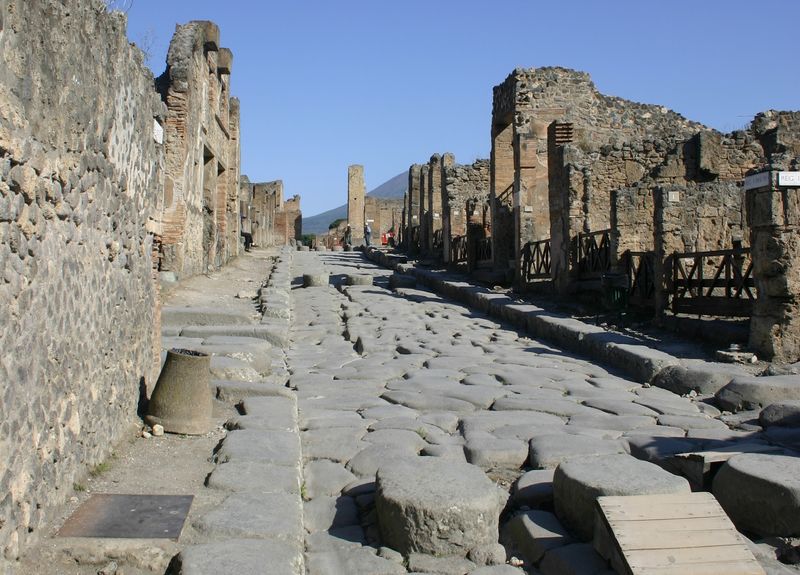
Somewhere in Pompeii, a bakery is still waiting for customers. Catastrophe froze this Roman city in time when Mount Vesuvius erupted in AD 79 and buried it under volcanic material.
Streets, houses, shops, baths and temples survived beneath the ash. So did wall paintings, political slogans and domestic gardens.
Archaeologists have even uncovered elaborate private villas.
Most ruins show kings and gods. Pompeii shows neighbors.
You can see how residents ate, worked, decorated their homes and did business in a busy Roman town.
UNESCO treats Pompeii, nearby Herculaneum and the villas at Torre Annunziata as an exceptional record of Roman society in the early Empire. The value is in the everyday details as much as the grand buildings.
Look closely at the street stones. Deep grooves from cart wheels still mark the roads, a small clue that real traffic once filled them.
Great Zimbabwe, Zimbabwe
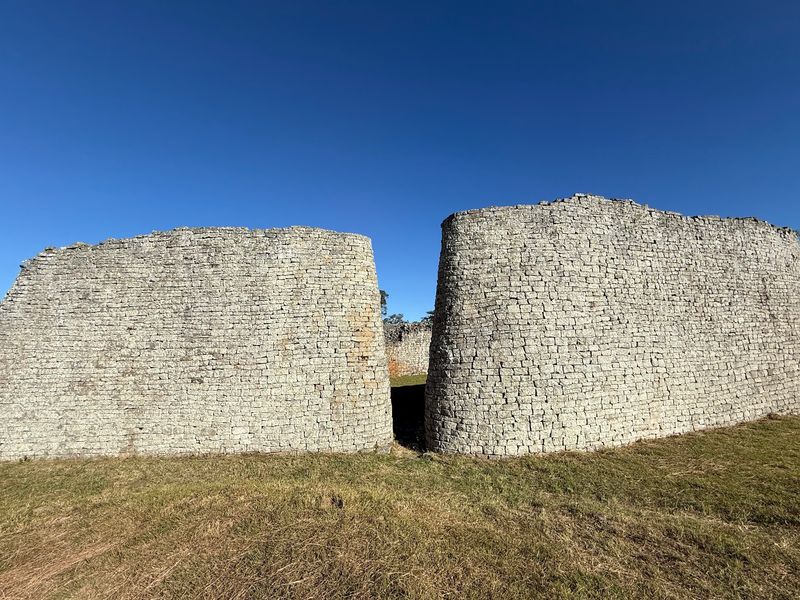
Stone walls taller than a house, and not a drop of mortar. That is the first surprise at Great Zimbabwe.
Builders fitted granite blocks together so carefully that the walls still stand.
The settlement rose mainly between the 11th and 15th centuries. Ancestors of the Shona peoples built it, and it became the center of a powerful trading state.
Early outsiders once claimed foreigners must have built it, a view modern research rejects.
The Great Enclosure is the best-known structure. UNESCO lists the Hill Ruins, Great Enclosure and Valley Ruins as the main parts of the site.
Finds here include imported goods, which point to links with Indian Ocean trade networks. Gold and ivory trade likely helped fuel its growth.
The message is clear. Complex politics, long-distance commerce and expert stonework thrived in southern Africa centuries before European colonization.
Hampi, India
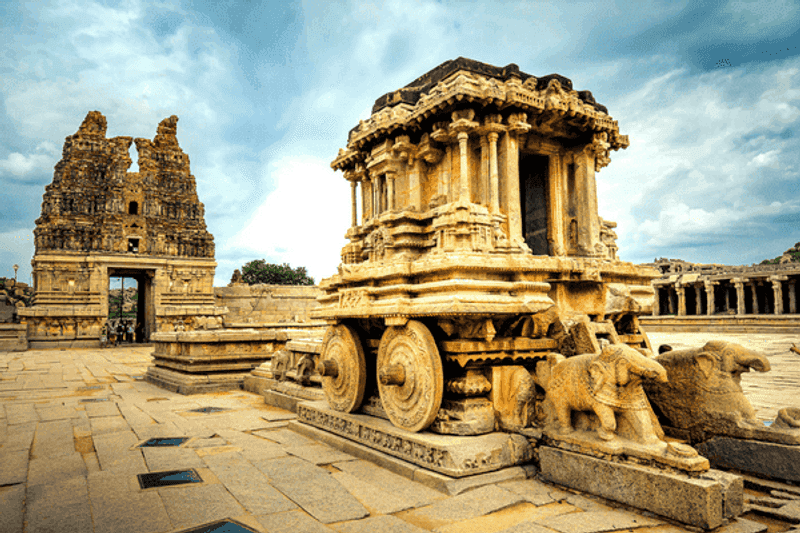
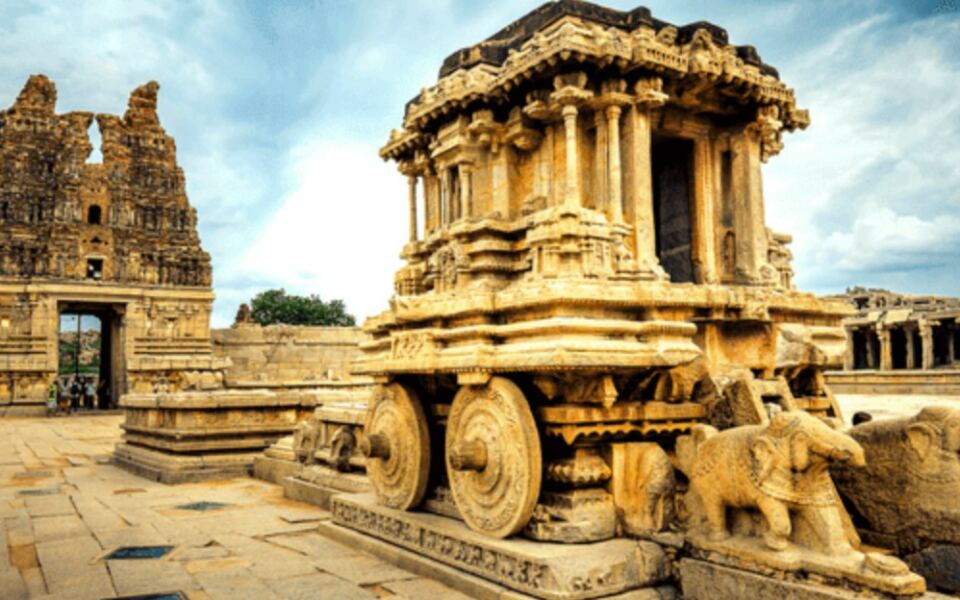
Giant boulders pile up around Hampi as if a giant forgot to tidy. Among them lie the remains of Vijayanagara, capital of a powerful southern Indian state between the 14th and 16th centuries.
More than 1,600 structures survive. They include temples, markets, royal complexes, waterworks, defensive walls, gateways and stables.
The Tungabhadra River flows right beside the stony landscape.
Foreign travelers once described the city’s huge wealth and scale. Its rulers built major Dravidian temples and detailed urban systems.
Then, in 1565, a confederacy of Deccan sultanates defeated the city and pillaged it.
What remains shows two sides of imperial life. There is sacred architecture for worship, and there is practical planning that kept a large capital fed, guarded and supplied.
Renting a bicycle is a popular way to explore. The ruins are spread out, and pedaling lets you discover quiet corners.
Chichén Itzá, Mexico
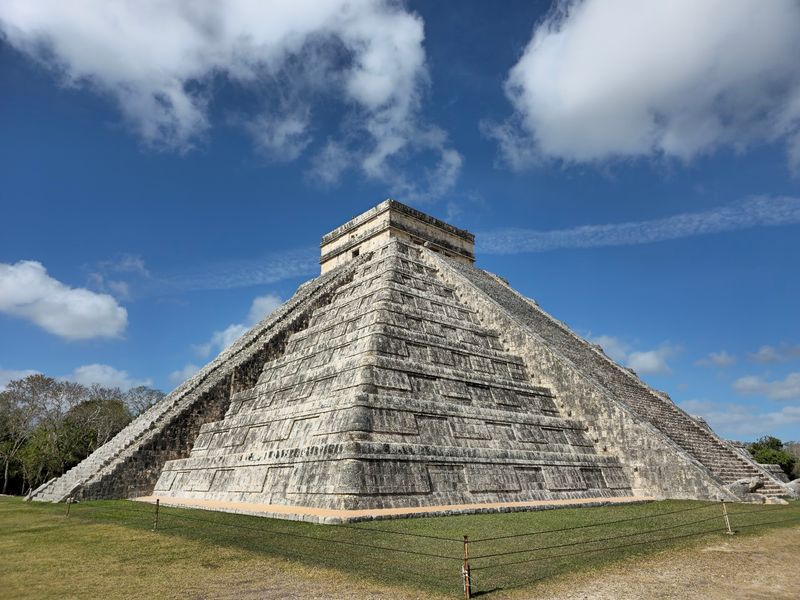
Clap your hands at the base of El Castillo, and the pyramid seems to chirp back. Guides love showing off that echo at Chichén Itzá, one of the most influential Maya centers in the northern Yucatán.
The architecture mixes Maya traditions with strong ties to central Mexico, especially in later years. Besides El Castillo, visitors admire the Temple of the Warriors and the round building called El Caracol.
Water explains the location. The city grew near natural sinkholes called cenotes, which supplied needed water where surface rivers are scarce.
Different peoples shaped the site across nearly a thousand years. That left a layered record of political and religious change.
So Chichén Itzá is not one isolated style frozen in stone. It shows cultures meeting, borrowing and building together.
Visit early to enjoy the plazas before the heat and crowds arrive.
Teotihuacan, Mexico
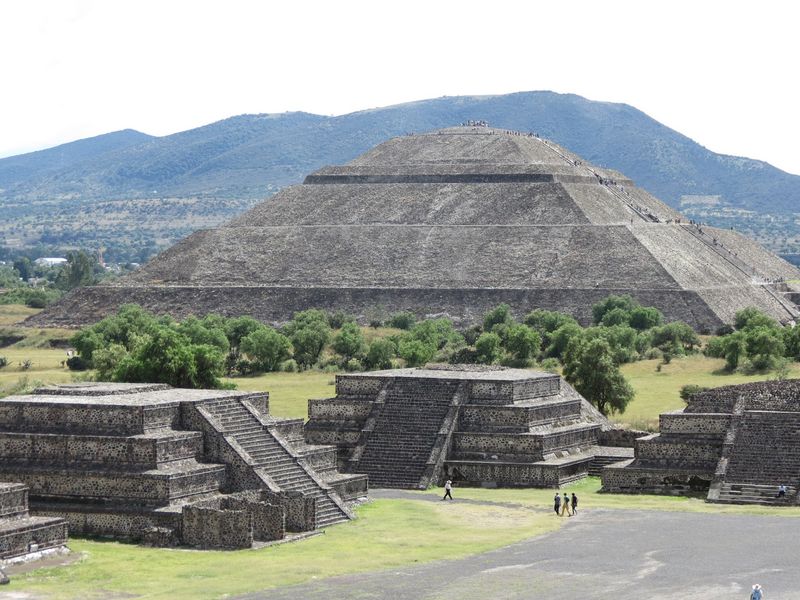
Even the Aztecs treated this place as ancient. Teotihuacan was already a ruin when they found it, yet it had once been among the largest and most influential cities in Mesoamerica.
Builders worked mainly between the 1st and 7th centuries CE. They organized the city along a straight axis now called the Avenue of the Dead.
Along it stand the Pyramid of the Sun, the Pyramid of the Moon and the Temple of the Feathered Serpent.
UNESCO stresses the geometric plan and the wide reach of the city’s cultural influence. Its style and goods traveled far across the region.
Who founded and governed it is still not fully understood. Yet excavations reveal residential compounds, workshops and international connections, all signs of a complex urban society.
Climbing the Pyramid of the Sun is a workout, but the view along the avenue repays every step.
Mohenjo-daro, Pakistan
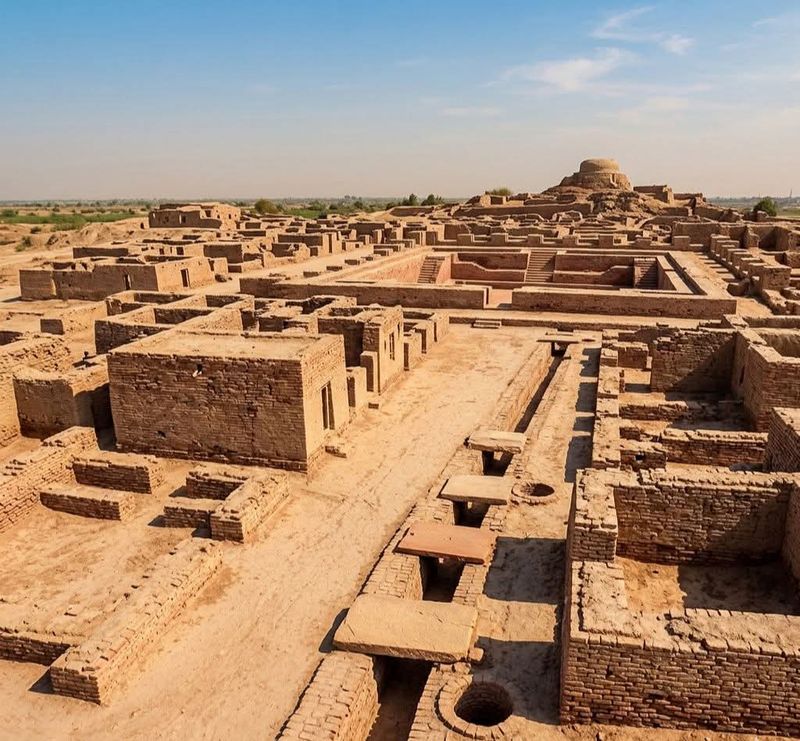
Four thousand years ago, this city already had working drains. Mohenjo-daro shows how advanced town planning was in South Asia during the 3rd millennium BCE.
The Indus Valley city features organized streets, baked and unbaked brick buildings and carefully planned neighborhoods. Drainage channels ran through it, and homes had impressive sanitation systems for their era.
The Great Bath is its most famous structure. Large public buildings and residential blocks fill the rest of the site.
UNESCO calls it the best-preserved urban settlement in South Asia from the early 3rd millennium BCE.
There is a puzzle, though. The Indus script has never been deciphered, so no one can read the city’s own words.
That makes the ruins themselves the main witness. Their layout, bricks and pipes tell us how this organized civilization functioned, one street at a time.
Palmyra, Syria
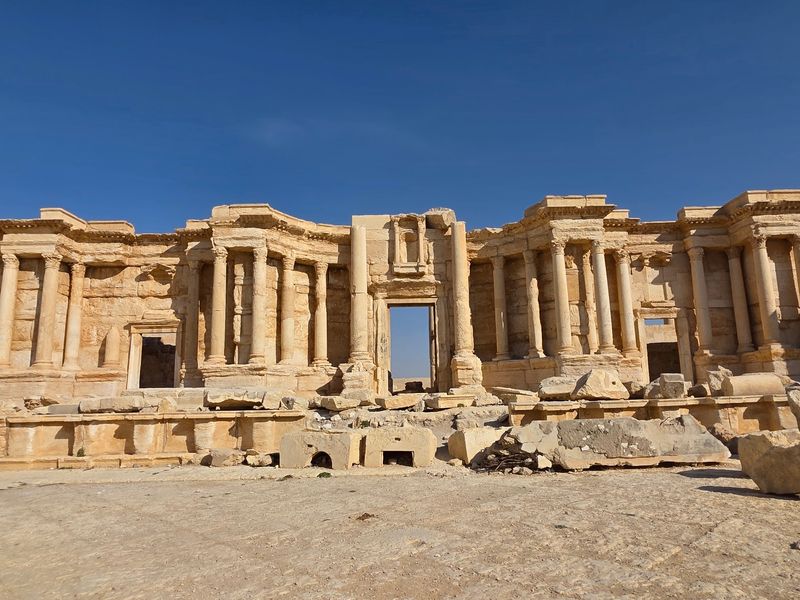
A green oasis in a sea of sand gave Palmyra its big break. The city sat on caravan routes linking the Roman Mediterranean with Persia and lands farther east.
In the 1st and 2nd centuries CE, it became a rich commercial and cultural hub. Its architecture blended Greco-Roman forms with local and Persian influences.
Long colonnades, temples, funerary towers and public buildings showed off the wealth that trade created.
Palmyra is also tied to Queen Zenobia, who briefly challenged Roman authority in the 3rd century. Her story adds drama to the dusty stones.
Sadly, the site suffered deliberate destruction during Syria’s modern conflict. UNESCO still lists it as World Heritage in Danger.
Even so, the surviving remains document one of antiquity’s most cosmopolitan trading cities, a place where many cultures traded, worshiped and built side by side.
Leptis Magna, Libya
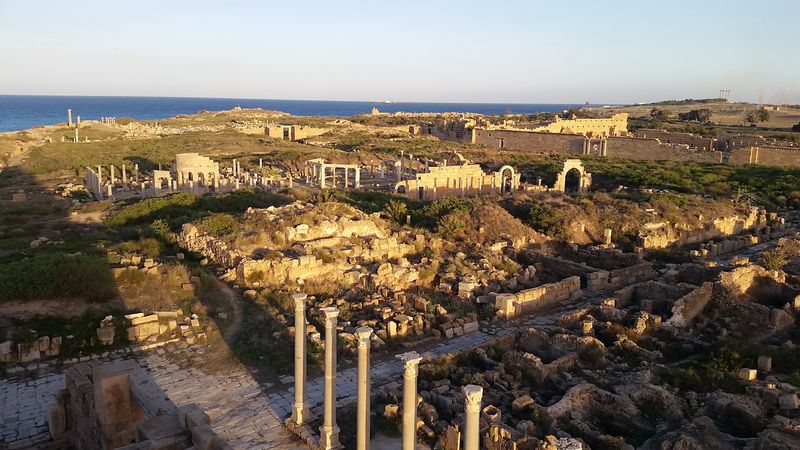
A hometown hero can change a city fast. When Septimius Severus, born at Leptis Magna, became emperor in AD 193, the place got a grand makeover.
It began as a Phoenician trading settlement and expanded dramatically under Roman rule. New additions included the Severan Forum, a basilica and a triumphal arch.
Earlier builders had already left baths, a theater, markets and harbor facilities.
UNESCO praises the engineering, especially the artificial harbor basin and the systems that managed the nearby wadi, a seasonal river.
Many ruins lean heavily on temples or palaces. Leptis Magna also keeps warehouses, shops and commercial spaces beside its imperial monuments.
That mix gives an unusually broad picture of city life, from emperors’ showpieces to busy storerooms where goods changed hands. It stands as one of the most complete portraits of a Roman provincial city.
Share this story