You can see the Missouri River and across into Kansas from a single overlook at Weston Bend State Park, and visiting costs nothing. Located about 40 minutes north of Kansas City, this 1,133-acre park offers blufftop views, wooded hiking trails, and an easy escape from the city.
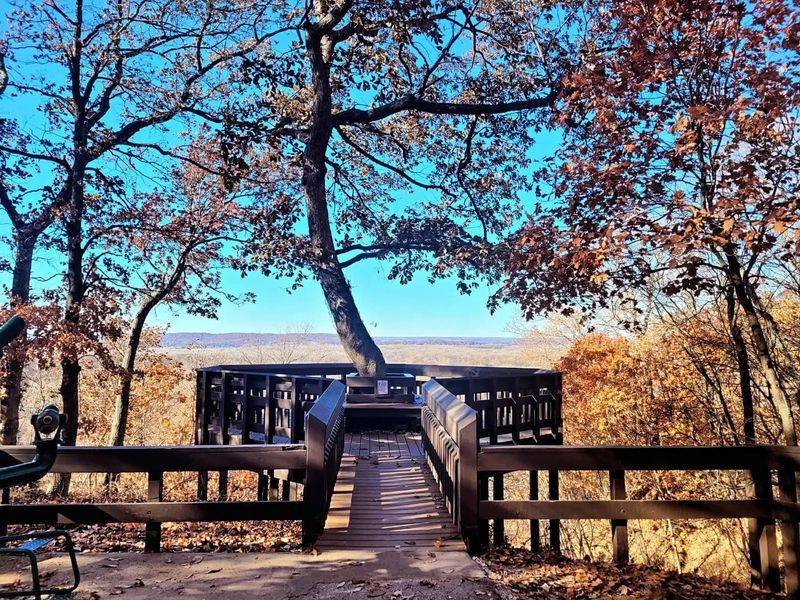
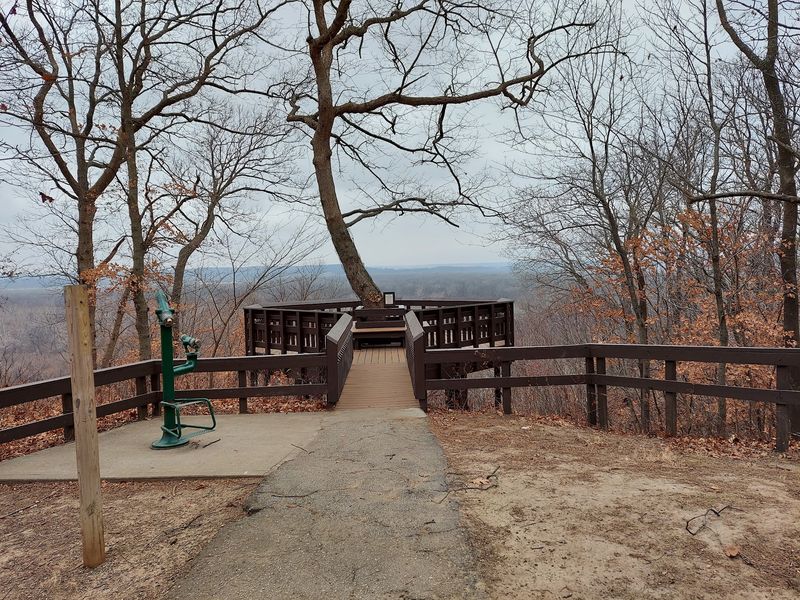
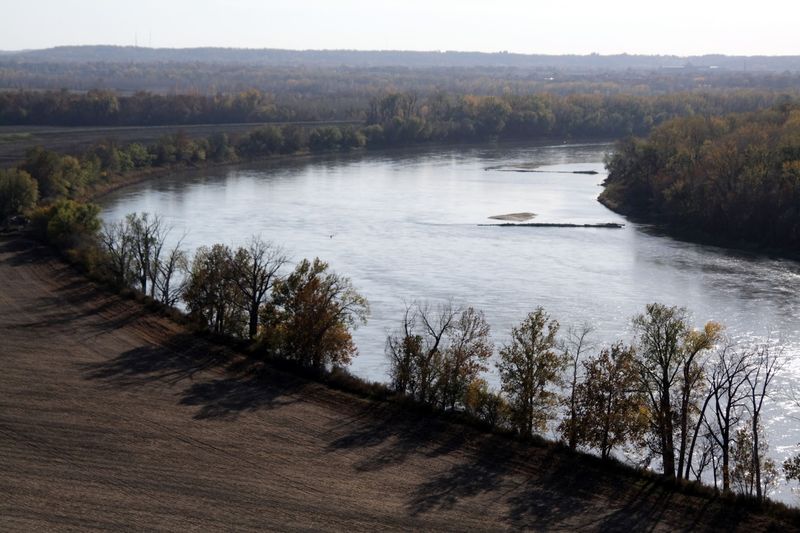
The scenic overlook is one of the biggest attractions. A short, accessible path leads to a viewing platform above a sweeping bend in the Missouri River, with views toward Fort Leavenworth on the Kansas side.
There is plenty more beyond the viewpoint. The park has over 10 miles of trails, a paved loop for walking and cycling, camping facilities, and a historic tobacco barn that now serves as a reservable shelter.
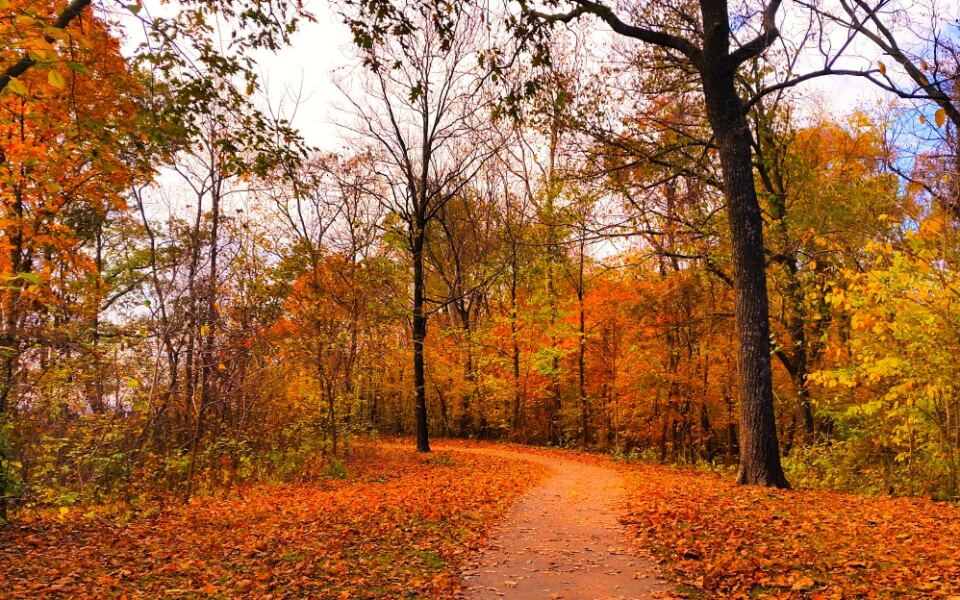
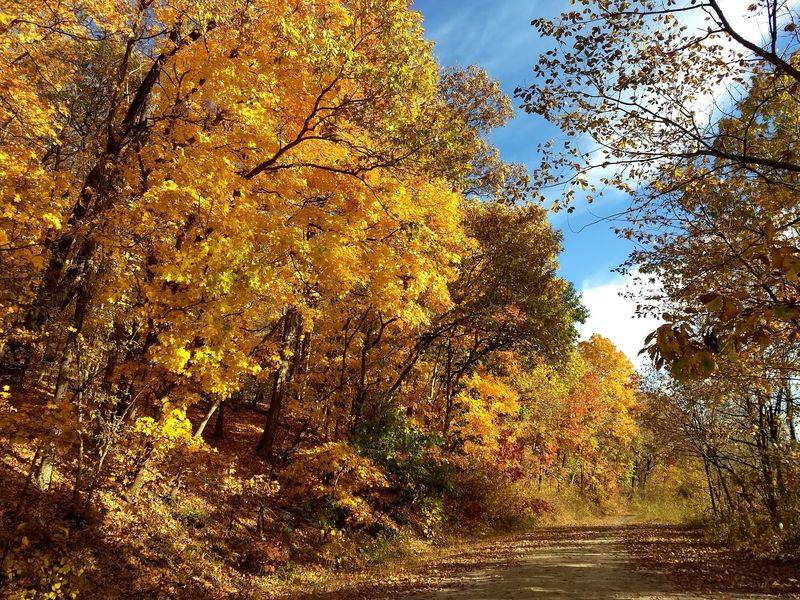
Fall brings another reason to visit, when the wooded bluffs turn shades of red, orange, and gold. With historic downtown Weston just a few miles away, the park makes an easy day trip that combines river scenery, outdoor recreation, and local history.
A Balcony Above the Big Bend
Some parks make you work for the payoff, but this one hands it over almost right away. Weston Bend State Park sits at 16600 MO-45, Weston, MO 64098, in Platte County, Missouri, United States.
The park covers about 1,133 acres on the east bank of the Missouri River. It is roughly three miles south of downtown Weston and about 40 minutes north of Kansas City.
The name tells you exactly what to expect. Here the river makes a long, sweeping curve, and the park perches on the bluffs right above it.
My first stop was the scenic drive, which winds through quiet forest and open fields. I spotted a deer slipping into the trees before I even parked.
Getting in is easy on the wallet too, since Missouri state parks charge no entrance fee. That left more money for snacks in town later.
Of course, a bluff is only as good as the view it serves up. The overlook comes next, and it earned its reputation fast.
The Overlook That Peeks Into Kansas
Two states fit into one glance from the scenic overlook. Across the water, the bottomland forests of Fort Leavenworth stretch six to eight miles into Kansas.
The platform is built to be accessible for visitors with disabilities. A short, easy path leads right to the railing, so nobody misses out.
I stood there longer than planned, tracing the river with my eyes as it wandered off toward the horizon. Trains rumble along tracks near the water, adding a little motion to the scene.
Timing matters here. Early morning often brings clearer air, and sunset paints the water in warm gold and pink tones.
Late summer and early fall are also lovely, when the valley starts to shift color. Bring a camera with a zoom lens, because the details far below are fun to capture.
Crowds can gather on the first cool fall weekends. A weekday visit gave me the railing almost to myself.
Gazing down at that water, I kept wondering who floated past first. The answer involves two famous explorers.
Where Lewis and Clark Paddled Past
In 1804, Meriwether Lewis and William Clark pushed upstream along this exact stretch of the Missouri River. Their crew saw these same bluffs from the water.
That thought hit me while I stood on the ridge. The forests have changed over two centuries, yet the shape of the bend still looks much like the land they described in their journals.
Long before the expedition, this valley was home ground for Native American tribes. The Kansa, Iowa, Sac, and Fox people all lived and traveled along this fertile river corridor.
The river gave them food, travel routes, and rich soil. Standing above it, I could easily see why this spot mattered so much.
Kids enjoy this history when you make it a game. Ask them to picture a wooden boat fighting the current below, then find the spot where they would have camped.
The explorers were not the last newcomers to notice this land. A busy frontier trader soon set up shop, and his story is a lively one.
A Creek With a Frontier Nickname
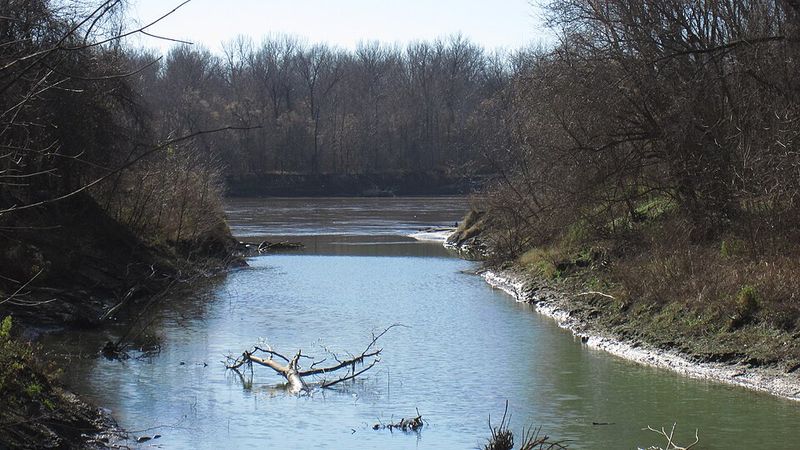
Here is a fun bit of trivia: a creek in the park still carries the name of a French Canadian trader called Pensineau. He left his mark in the most lasting way possible.
Between 1832 and 1838, Pensineau ran a trading post inside what is now the park. His customers included soldiers from nearby Fort Leavenworth and local Native American communities.
Business boomed, maybe a little too much. The U.S. government eventually folded the area into a military reserve to rein in his trading.
Today Pensineau Creek flows quietly through the woods. It is easy to walk past without knowing the story, so I paused for a moment when I crossed it.
I like spots where history hides in plain sight. A name on a map can open up an entire chapter of the past.
Trade did not end with Pensineau, though. A completely different crop soon took over these hills, and one barn from that era still stands in the park today.
The Barn That Tells a Tobacco Tale
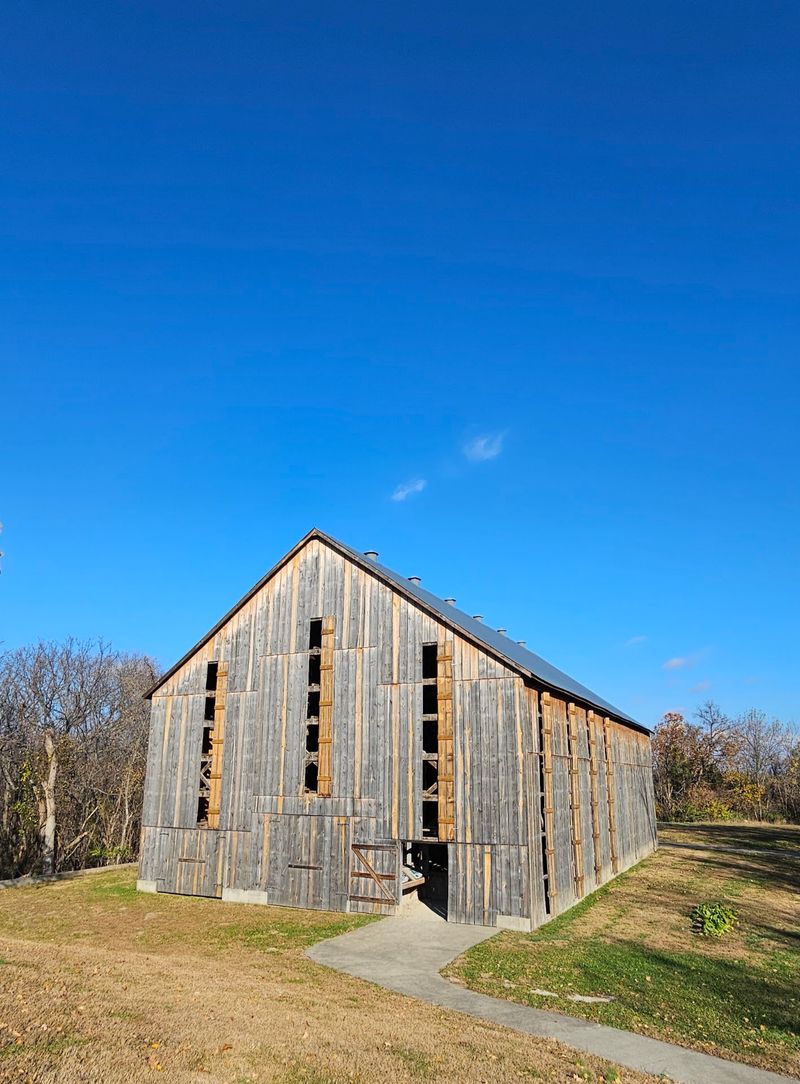
Tall, weathered, and full of character, the old tobacco barn became my favorite surprise of the day. Five tobacco barns once stood inside the current park boundaries.
One original barn survives and now serves as a reservable enclosed shelter. Next to it, an interpretive display explains how tobacco shaped life in this region.
Platte County was a major farming area for both tobacco and hemp. By 1858, nearby Weston was called the largest hemp port in the world, thanks to busy river trade.
I read every panel and learned how farmers hung leaves to cure inside barns like this one. The slatted walls let air move through, which was key to drying the crop.
This stop works well on a cold morning too. A short walk from the parking area brings you right to it.
Groups can book the barn for parties or reunions. After all that history, though, my legs were ready to move, and the trail map was calling.
Ridge Walking on the West Ridge Trail
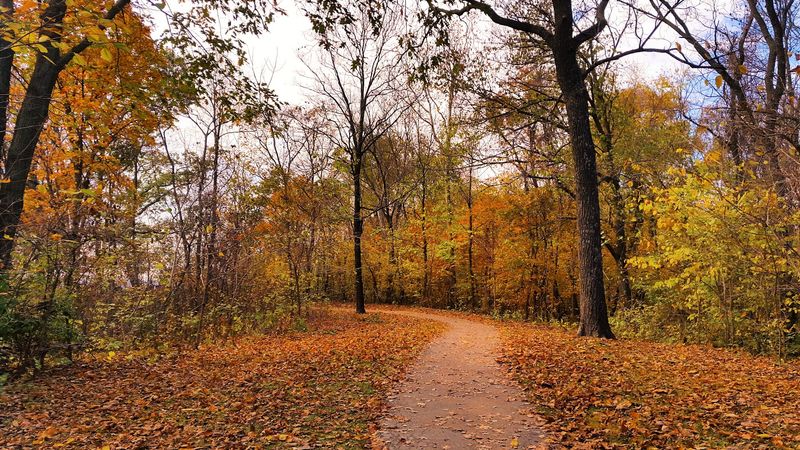
Ask locals for the best river views on foot, and many will point you to the West Ridge Trail. It hugs the edge of the bluffs and opens up wide looks across the valley.
I found it mostly easy, at roughly 2.5 miles. A few steep climbs bumped it toward moderate, but hiking poles were not needed.
Part of the loop is paved, which surprised me. The rest feels more like a classic forest path, with leaves crunching underfoot in the fall.
The park has over 10 miles of trails overall. You can combine paths for a short one-mile loop or build a hike of about five miles.
The Missouri River and Bear Creek trails are wide gravel and grass walks through forest. Each ends with a similar river view, so pick whichever fits your time.
Wear real shoes, and carry water. Then save some energy, because the paved loop up next is hillier than it looks on a map.
Rolling Hills on the Paved Loop
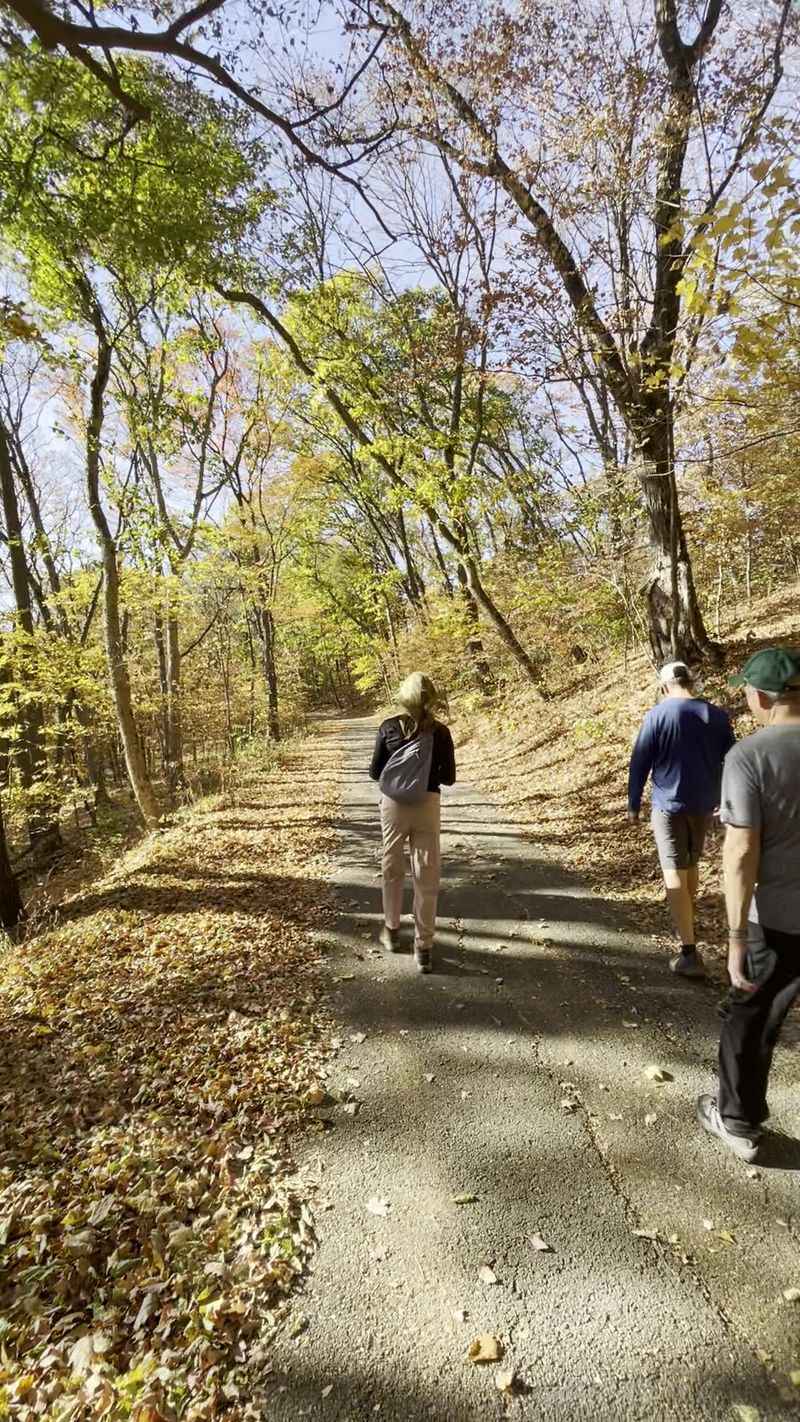
Bikes, strollers, and walkers all share the paved trail, a loop close to three miles long. It winds through mature hardwood forest packed with cottonwood, sycamore, and maple trees.
Fair warning: it is hilly. The pavement can feel a little rough in spots, and wheelchair users may find some grades tough.
I walked it at a relaxed pace and enjoyed every curve. Locals jog and bike it often, and everyone I met was friendly and polite.
Families like this loop because it is easy to follow. Bring a bike with good gears if you plan to ride the climbs.
Some visitors use the park to train for bigger hikes elsewhere. Those hills make a solid workout without feeling like a chore.
Another option skips the hills entirely. The gravel Weston Bluffs Trail runs low along the river and railroad tracks and links straight to downtown Weston.
Check conditions after heavy rain, since lowland paths can flood. Now, about those flashes of wings I kept noticing in the trees.
Hawks, Eagles, and a Hundred-Plus Species
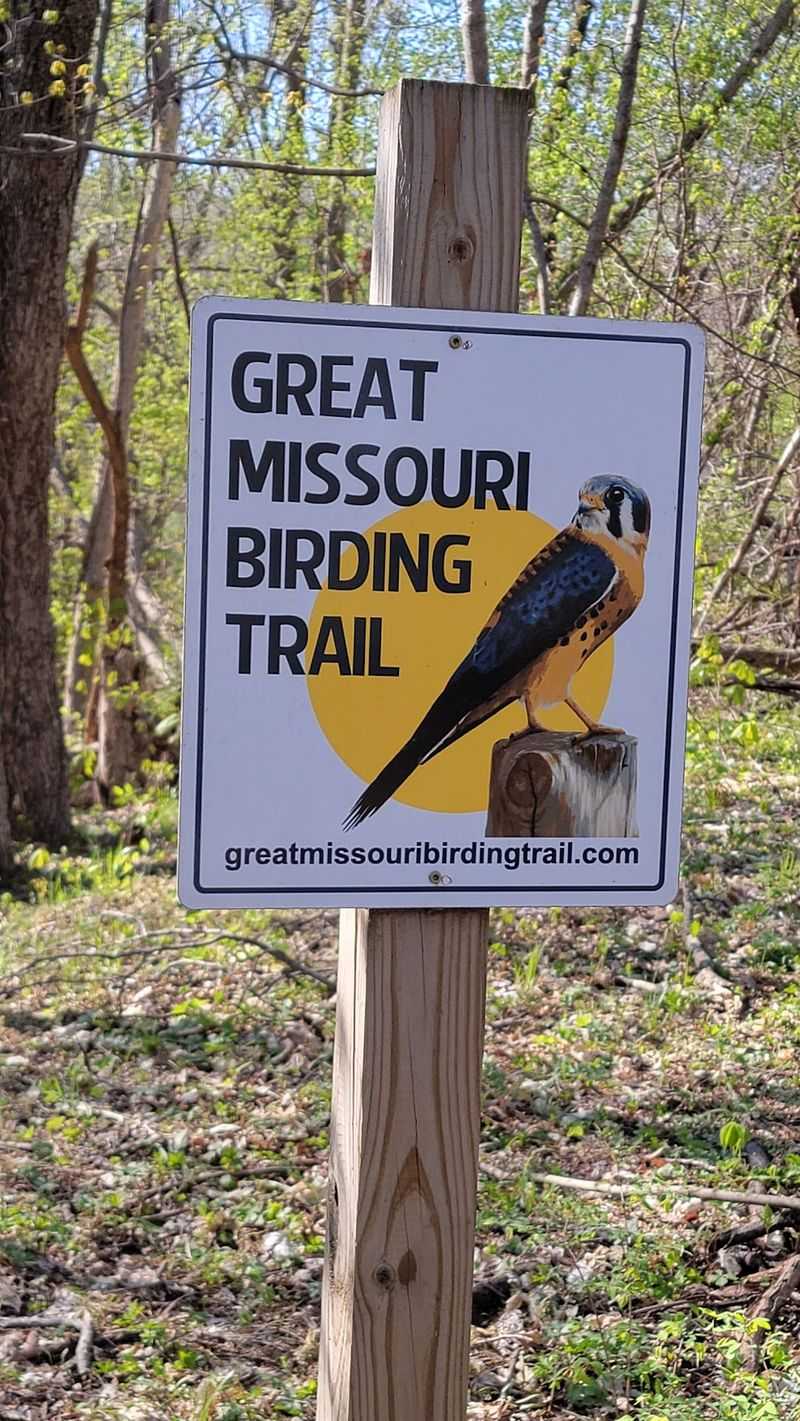
Birders, pack your binoculars. The park is recognized as an Important Bird Area, and more than 100 species have been recorded here.
The forested river corridor works as a natural travel route for migrating birds. Spring and fall bring the busiest action, with songbirds filling the trees.
Near the overlooks, I watched hawks ride warm air currents above the valley. Bald eagles also show up, especially along the river in colder months.
My tip is simple: go slow. I stopped every few minutes on the trail and heard far more birds than I saw at first.
A field guide app on your phone helps match calls to names. Early mornings are often the liveliest time, before the trails get busy.
Even casual visitors get hooked here. I came for the river and left with a short list of new birds I had never noticed before.
Watching the sky made me want more time outdoors. Happily, the campground lets you stretch a visit into several days.
Camping on the Ridge Top
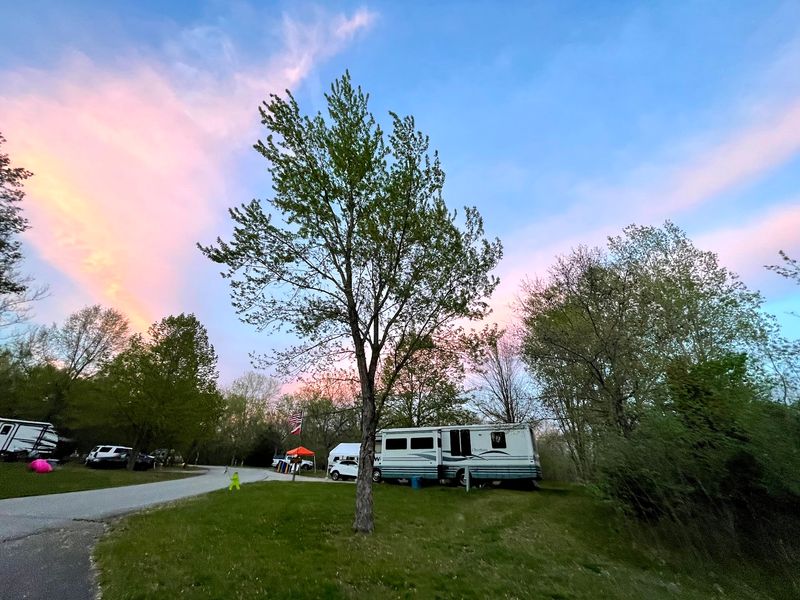
Waking up on a ridge with valley views beats any alarm clock. The campground offers basic, electric, and full-hookup sites, plus roomy family sites.
Many spots sit along the ridge top and enjoy plenty of shade. Some newer sites have level concrete pads that make backing in a trailer much easier.
Modern restrooms, hot showers, and laundry facilities keep things comfortable. Water and showers usually run seasonally, from April 15 through October 31.
Off-season campers should bring their own water. A frost-free spigot at the entrance is typically available.
Reservations open up to 12 months ahead, and weekends fill quickly. Double-check your dates after booking online, since mix-ups can happen.
The camp hosts here earn steady praise for being warm and helpful. First-time trailer owners especially appreciate their patience.
A dump station and honor-system firewood round things out. Before my campfire, though, I wanted to see where the kids and dogs were having all the fun.
Playgrounds, Picnics, and Paws
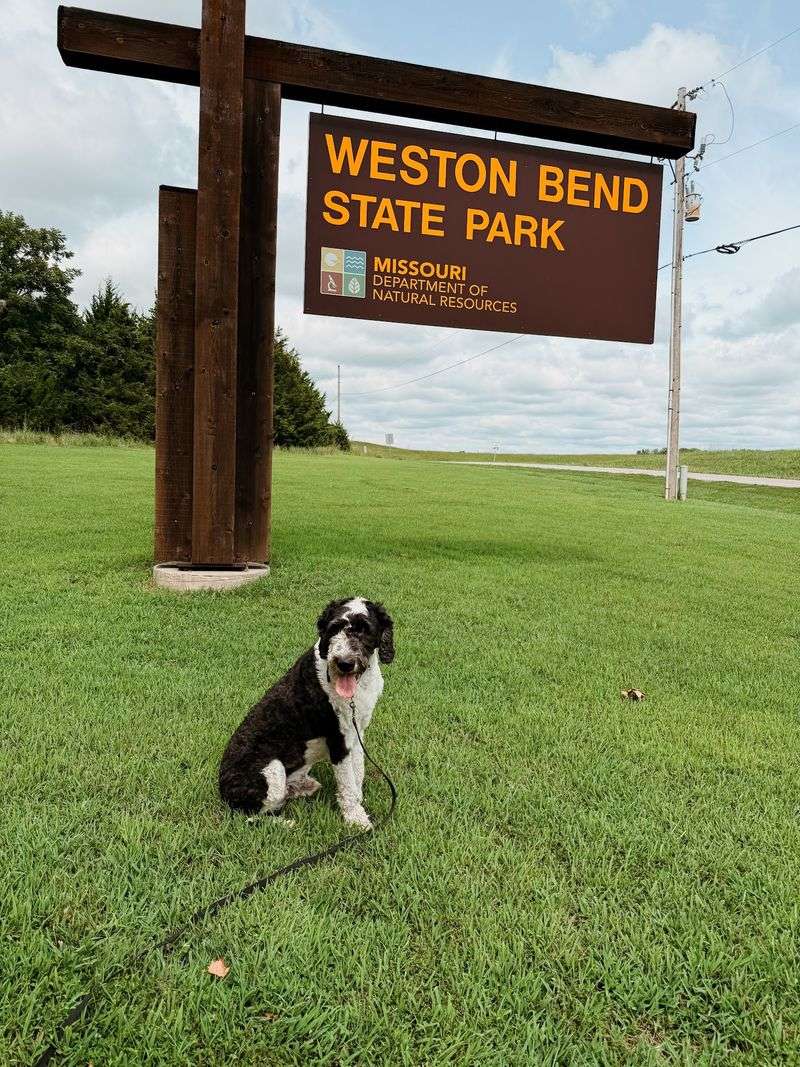
Happy tails were wagging everywhere I looked. The park includes a 1.75-acre off-leash dog park where pups can run free and make new friends.
Leashed dogs are welcome on the trails too. My pup-loving heart was very pleased.
Families get a playground with equipment for little ones. It is a handy spot to let kids burn energy after a hike or before lunch.
Picnic tables and grills are spread throughout shaded areas. Some sit in quiet corners, which made my sandwich feel like a fancy outdoor meal.
For bigger gatherings, the park offers shelters you can reserve, including that historic barn. Reunions and birthday parties fit right in here.
Plenty of parking keeps things simple, even on busier days. Pack trash bags and leave your spot cleaner than you found it.
All this fun is great any time of year. One season, however, turns the whole park into something truly special, and I timed a return trip around it.
When the Hills Turn Orange
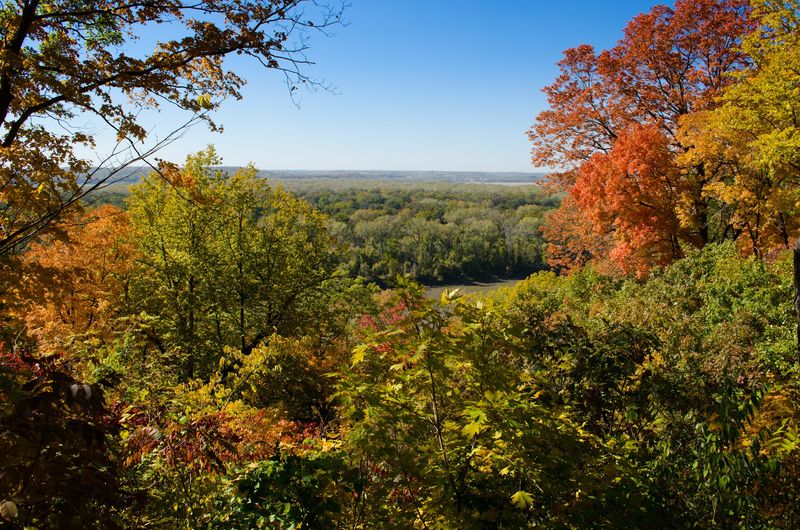
Fall is when these bluffs really show off. Maples and oaks blaze red, orange, and gold above the shining river.
I hiked the ridge in October and kept stopping for photos. The cool air made the hills feel easy, and the leaves crunched with every step.
Spring is lovely too, with mild weather and fresh green forests. Summer brings shade under the thick canopy, and winter offers clearer views through bare trees.
Winter mornings can dip into the 20s, so dress warm. A frosty sunrise at the overlook is quiet and beautiful.
The first cool fall weekends draw big crowds. Arrive early, or plan a weekday trip, for a calmer leaf-peeping experience.
Hiking beats driving for fall color here. The trails reveal much more than a quick loop by car.
After a full day of leaves and views, I had worked up an appetite. Luckily, a charming old river town waits just a few miles up the highway.
A Short Hop to Historic Weston, Plus Smart Tips
Main Street in Weston feels like a page from the 1800s. Brick storefronts hold antique shops, boutiques, and cozy cafes just three miles from the park.
The Weston Historical Museum covers the town’s steamboat days and Civil War ties. I also grabbed a warm drink at Weston Coffee Roastery and browsed for local treats.
Weston Orchard offers seasonal fruit picking, which pairs well with a fall hike. Hikers can even reach town on the Weston Bluffs Trail.
A few tips made my trip smoother. Wear sturdy shoes, bring water and snacks, and carry binoculars for birds.
Cell service can be spotty in parts of the park. Download a trail map before arriving, and call 816-640-5443 with questions.
Check trail conditions after rain, since river-level paths can flood. Remember, campground water runs seasonally.
By sunset, I had covered history, hawks, hills, and a historic town. That bend in the river kept pulling my gaze back, and I already know I will return for another look.
Share this story