British food has a reputation for being plain, but a closer look at the menu tells a more interesting story. Long before refrigerators arrived in most homes in the 1950s, cooks had to use every part of an animal and make food last through winter.
That practical thinking produced dishes built on blood, organ meats, seaweed, and animal fat. Some recipes date back to medieval kitchens, while others became famous through Victorian cookbooks, wartime rationing in the 1940s, or clever advertising campaigns.
Many of these ingredients were once common in America too, before supermarkets and processed foods changed shopping habits in the twentieth century. A dessert can contain beef fat.
A pie can stare back at you. Those facts sound odd until you learn the history behind them.
The list ahead covers breakfast staples, pub snacks, holiday treats, and coastal specialties from England, Scotland, and Wales. Each one comes with its origin story, the ingredient that surprises American diners, and the reason it has stayed on British plates for generations.
By the end, you will know what to expect if you ever see these dishes on a menu, and you might even feel brave enough to order one.
1. Black Pudding, Blood and Oatmeal
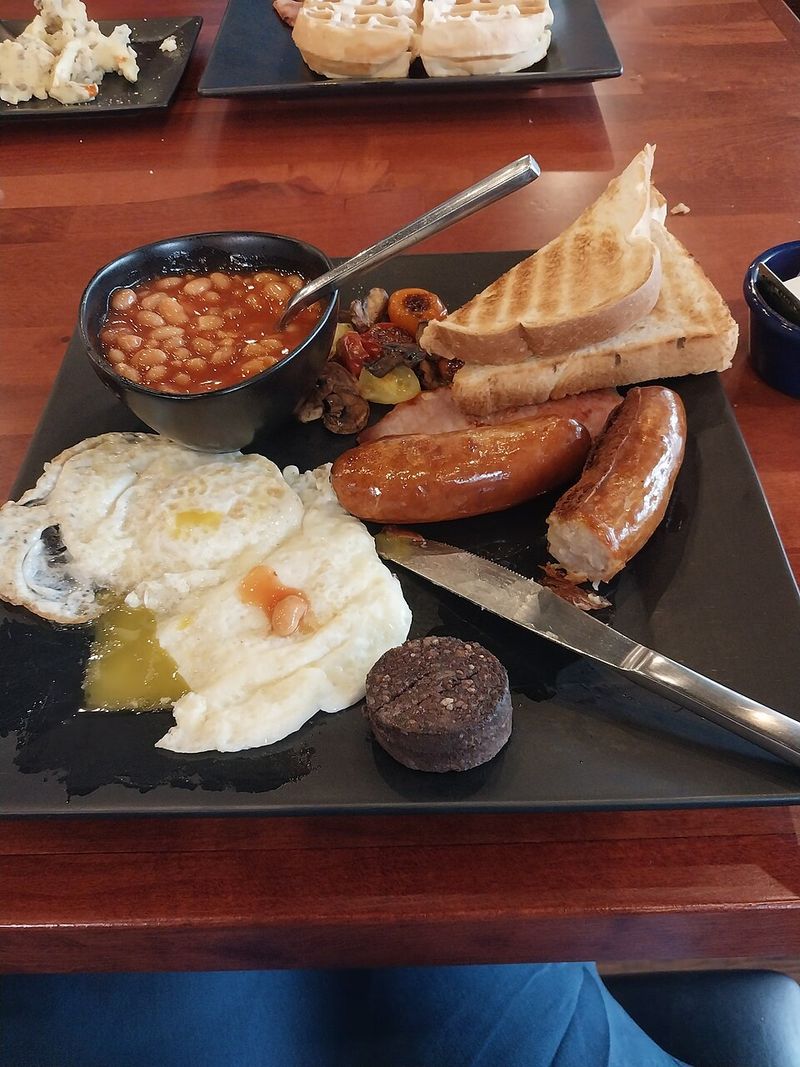
Homer mentioned a blood sausage in the Odyssey around 800 BC, so this breakfast item has a very long resume. British black pudding carries that ancient idea right onto modern plates.
The main ingredient is blood, usually from pigs. Cooks mix it with pork fat and a grain such as oatmeal or barley, then add herbs like thyme and mint.
The mixture goes into a casing and is boiled until firm.
Why blood? It spoils fast, so turning it into sausage was a smart way to avoid waste after butchering season.
Farm families and even King Henry VIII enjoyed it.
Today it shows up in the full English and full Scottish breakfast. Slices are usually fried until crisp at the edges.
Despite the name, it is not a dessert. In Britain, the word pudding can describe savory dishes too.
Tip for first-timers: try a thin, well-fried slice before committing to a whole round.
2. Stargazy Pie, Fish Heads Looking Through the Crust
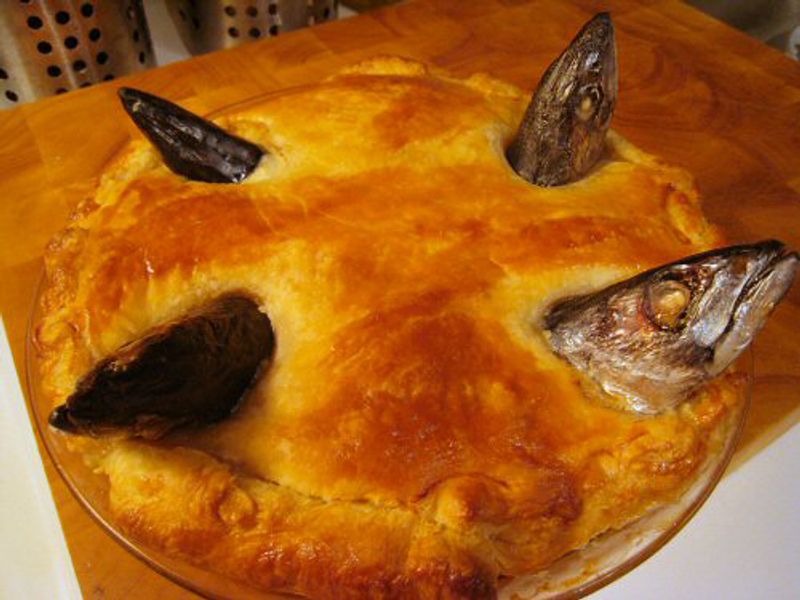
Most pies keep their fillings a secret. The stargazy pie from Mousehole, a fishing village in Cornwall, puts its cards on the table, or rather its fish heads.
Whole pilchards, a kind of sardine, are baked with eggs and potatoes under pastry. Their heads poke up through the crust as if staring at the sky.
One popular explanation says this proved the pie really contained fish.
The dish belongs to Tom Bawcock’s Eve, held every December 23. Local legend says Tom sailed out during stormy weather and brought home enough fish to feed the hungry village.
Historians cannot confirm the details, but Mousehole keeps the tradition alive.
The story reached a wider audience through Antonia Barber’s 1990 children’s book, The Mousehole Cat.
For American diners, eating sardines is not the shocking part. Seeing a dozen little faces looking up from dinner is.
Visitors can try it in Mousehole each December.
3. Steak and Kidney Pie, Beef Kidneys
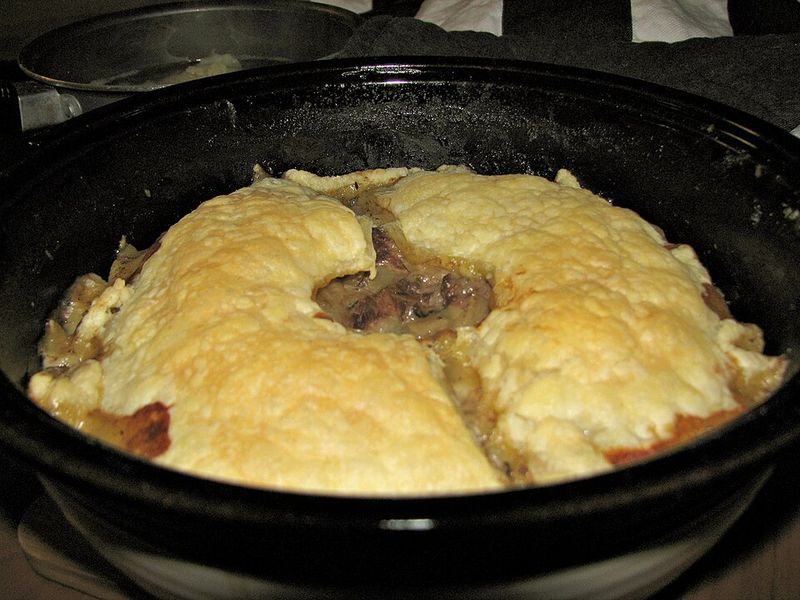
Order a steak pie in America and you get beef. Order one in a British pub and you might get a bonus organ.
Steak and kidney pie mixes chunks of beef with kidney from cattle, lamb, or pigs. Everything simmers in thick gravy beneath a pastry crust.
The kidneys add a bold, earthy flavor that plain beef cannot match.
Organ meats were valued for good reasons. They cost less than prime cuts, packed plenty of nutrition, and kept households from wasting edible parts of an animal.
Victorian cookbooks helped turn the pie into a national comfort food.
Preparation takes care. Kidneys must be trimmed and soaked before cooking, or the flavor can turn harsh.
Americans do eat liver and giblets, especially around Thanksgiving. Kidney, however, rarely appears on mainstream menus.
Want a gentle start? Ask for a version with smaller kidney pieces, which many pubs now serve.
4. Faggots, Pork Offal Wrapped in Caul Fat
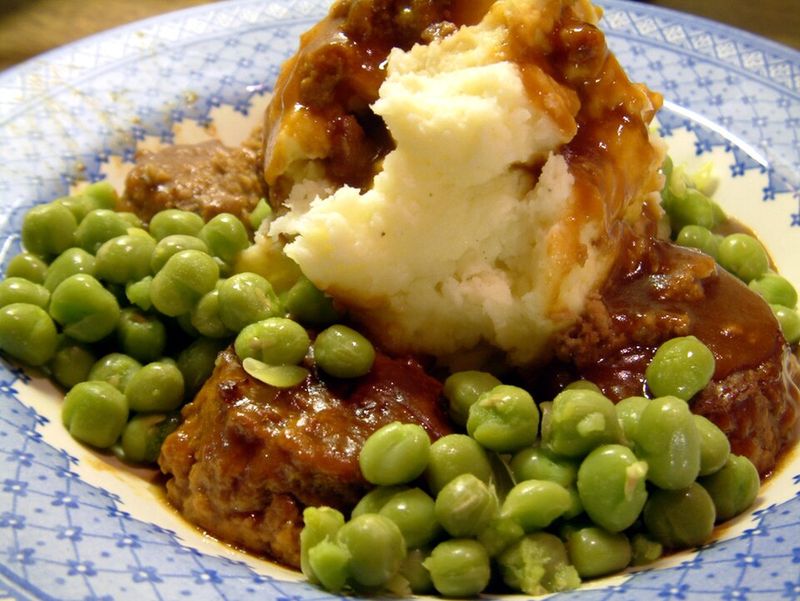
Thrifty farm cooks in western England invented a big meatball that wasted nothing. The name startles Americans, but in Britain it simply means a bundle.
Faggots are made from minced pig liver and heart, sometimes with belly meat. Onions, breadcrumbs, sage, and mace are mixed in.
Each ball gets wrapped in caul fat, a thin lacy membrane from around an animal’s organs that keeps the meat moist.
The dish spread to South Wales during the industrial growth of the 1800s, feeding busy mining and factory towns. During rationing in the 1940s, offal was easier to find than steak, so faggots gained new fans.
A classic plate includes mashed potatoes, peas, and onion gravy. In Yorkshire, a similar dish goes by a friendlier name, savoury ducks.
Frozen versions remain in British supermarkets today, proving that an old wartime staple can still earn freezer space.
5. Jellied Eels, Eels Set in Their Own Cooking Jelly
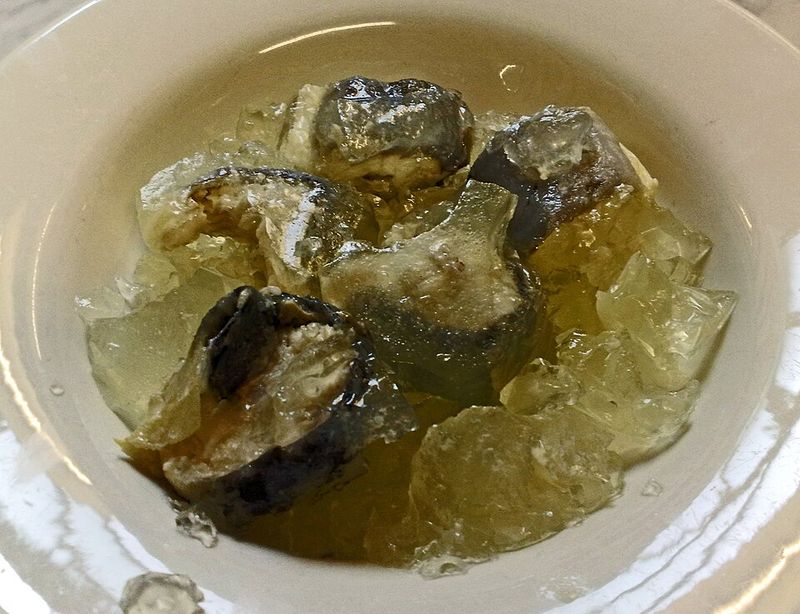
Workers in Victorian London had a cheap protein swimming right through the middle of town. The River Thames was full of eels, and East End cooks knew exactly what to do with them.
Eels are chopped into pieces and boiled in seasoned water. As the liquid cools, natural gelatin from the fish sets it into a clear jelly around the chunks.
The dish is eaten cold, often with chili vinegar.
By the 1800s, street stalls sold jellied eels by the bowl. Pie-and-mash shops made them a regular menu item for generations of Londoners.
Eating habits shifted after World War II, and eel populations dropped. Fewer shops serve the dish today, but a handful still keep it going.
Eel itself is popular in Japanese cooking. What surprises Americans is the cold serving and the wobbly jelly.
Fans suggest a splash of vinegar for beginners.
6. Laverbread, Cooked Seaweed
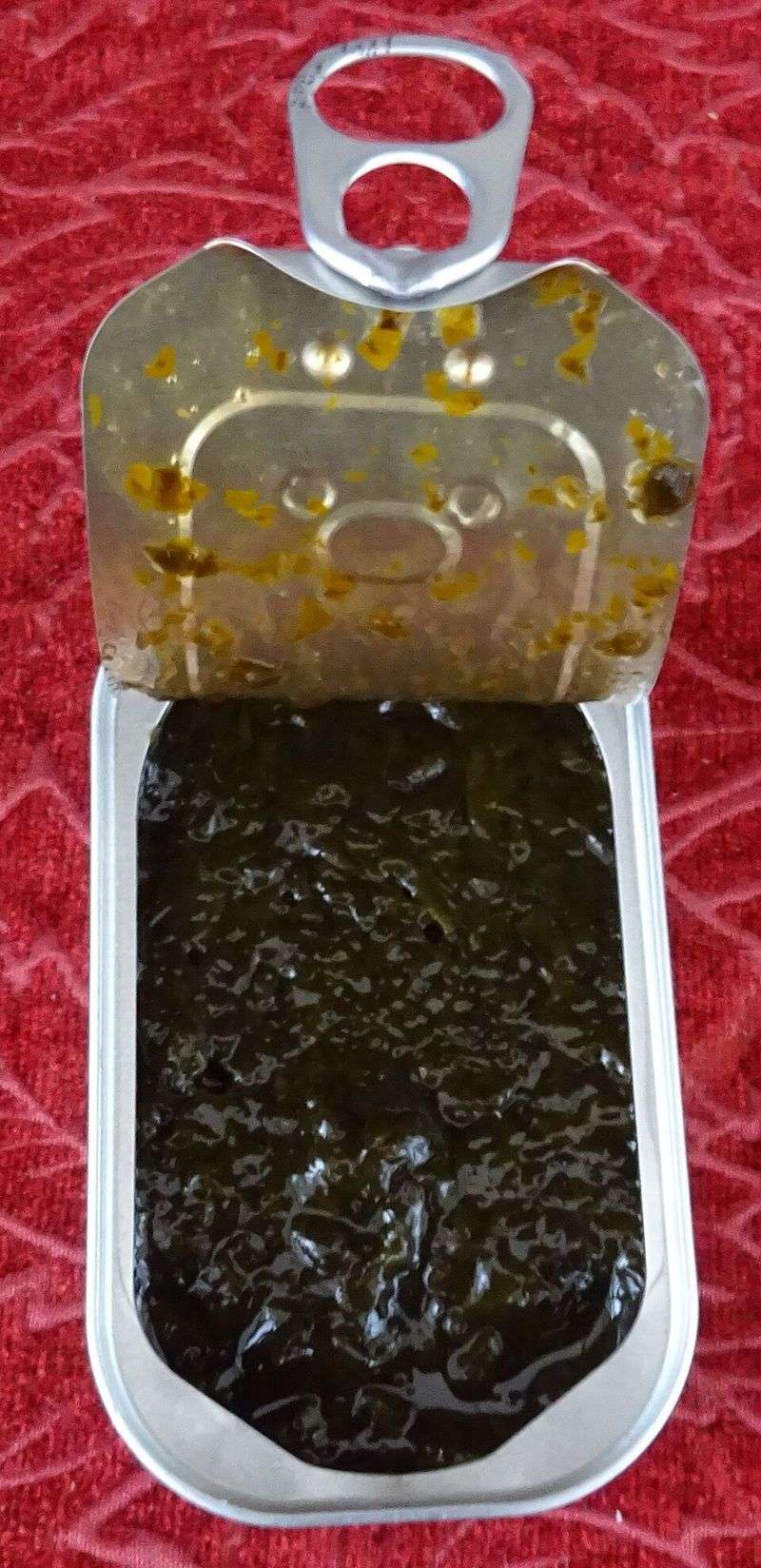
Actor Richard Burton called it Welshman’s caviar. That is high praise for something that contains no bread at all.
Laverbread comes from laver, an edible seaweed growing on the rocky coasts of Wales. The seaweed is washed and boiled for hours until it turns into a soft, dark paste.
Cooks serve it plain or mix it with oatmeal and fry it into small cakes.
Written records mention it in Pembrokeshire as early as the 12th century. Coal miners in South Wales relied on it as a cheap breakfast full of iron and iodine.
A traditional Welsh breakfast pairs laverbread with bacon and cockles, a type of small clam. In 2017, Welsh laverbread earned protected status, similar to famous European cheeses.
Americans know seaweed from sushi and snack packs. A hot seaweed paste next to eggs is a much bigger surprise.
Try it fried in oatmeal first.
7. Marmite on Toast, Concentrated Yeast Extract
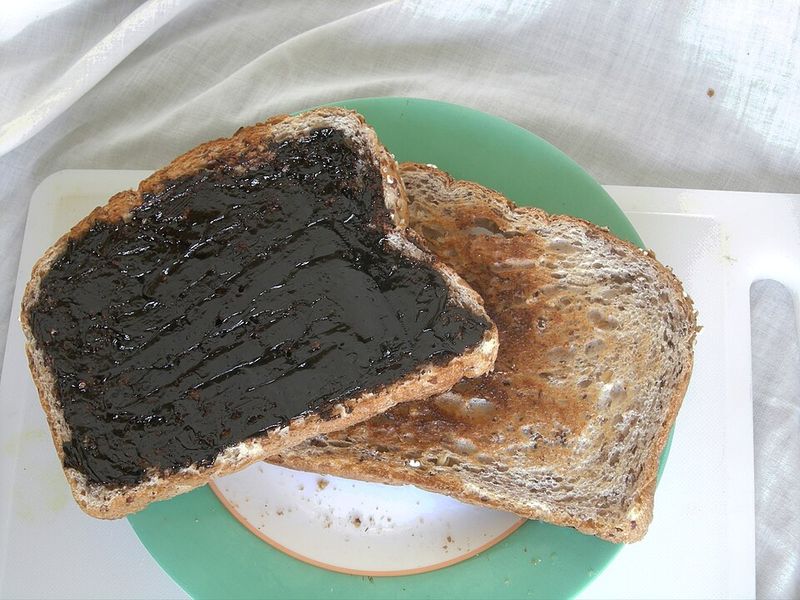
Leftover yeast from industry became a breakfast legend in 1902. That year, a factory in Burton upon Trent began turning brewing byproducts into a sticky brown spread called Marmite.
It looks like dark syrup. It tastes nothing like syrup.
Marmite is concentrated yeast extract with a strong salty, savory flavor. It is also rich in B vitamins, which made it a useful ration for British soldiers during World War I.
The key rule is quantity. Brits spread it paper thin on buttered toast.
Americans used to peanut butter often scoop on a thick layer, and that first bite can be a shock.
Advertisers leaned into the reaction. Since the 1990s, Marmite campaigns have used the slogan Love it or hate it.
The phrase became so popular that Brits now call any divisive topic a Marmite issue.
Start with a tiny scrape, and add more only if you like it.
8. Christmas Pudding, Suet and Dried Fruit
Medieval cooks started with a savory porridge containing beef, mutton, prunes, and spices. Over several centuries, that meaty mush slowly transformed into a sweet holiday dessert.
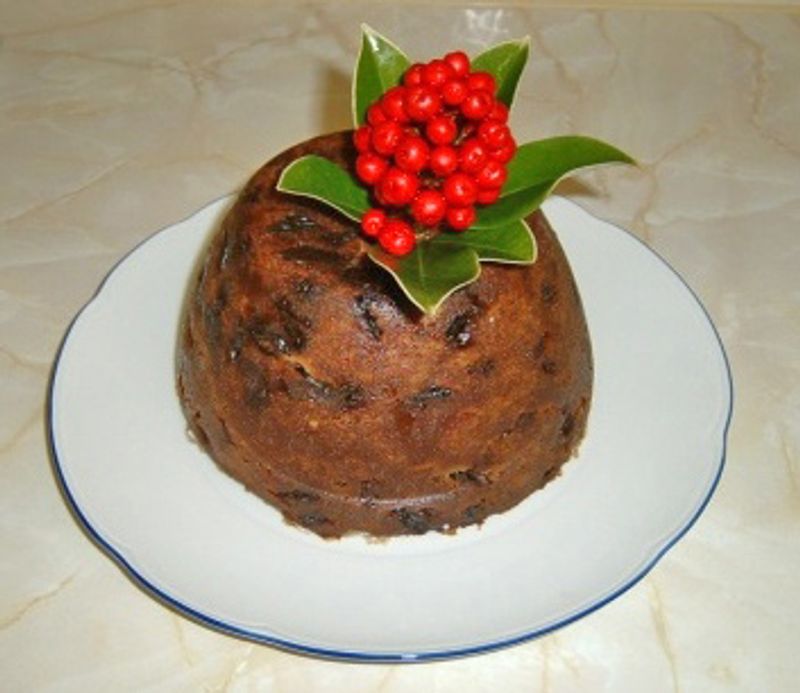
Modern Christmas pudding mixes dried fruit, spices, sugar, breadcrumbs, and suet. Suet is hard fat from around the kidneys of cattle or sheep.
It gives the pudding its dense, moist texture.
Writer Eliza Acton published a recipe called Christmas pudding in 1845. Charles Dickens boosted its fame in A Christmas Carol, published just two years earlier.
Families traditionally mix the batter on Stir-up Sunday, about five weeks before Christmas. Everyone takes a turn stirring and making a wish.
The pudding is steamed for hours, then rests for weeks.
On Christmas Day, it arrives topped with holly and served with custard or cream. For Americans, beef fat in a dessert is the surprise.
Vegetarian suet versions exist for anyone hesitant.
9. Mince Pies, A Dessert With a Meaty Past
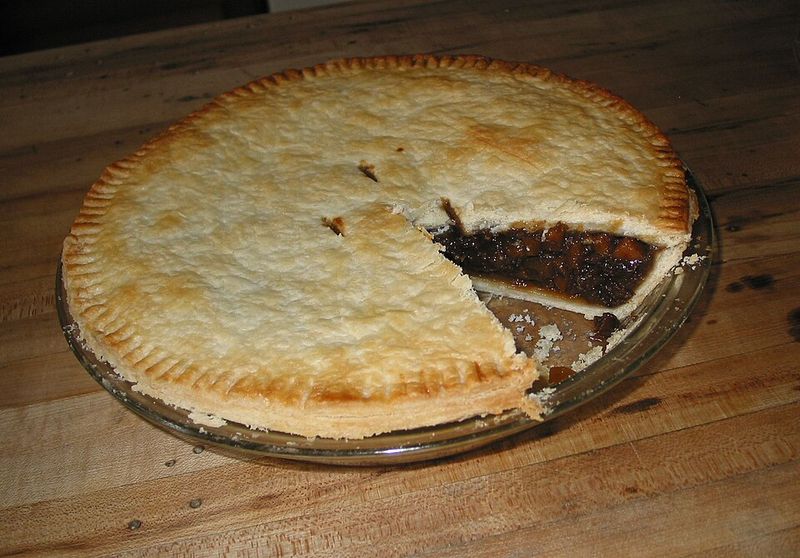
Ask a British child what is inside a mince pie and the answer will be fruit. Ask a cook from the 1500s and the answer would include mutton.
Today’s mince pies are small tarts filled with mincemeat. Despite the name, the filling is mostly raisins, currants, apples, citrus peel, sugar, and spices.
Many recipes still include suet.
Centuries ago, mincemeat truly held chopped meat. Medieval and Tudor cooks happily blended beef or mutton with fruit and spices.
Mixing sweet and savory was normal back then, and spices were a sign of wealth.
By the Victorian era, meat had mostly disappeared from recipes. The name stayed put, confusing visitors ever since.
A fun tradition says eating one mince pie on each of the twelve days of Christmas brings good luck for the year ahead. Many Brits also leave one out for Father Christmas on Christmas Eve.
10. Haggis, Sheep’s Offal and Oatmeal
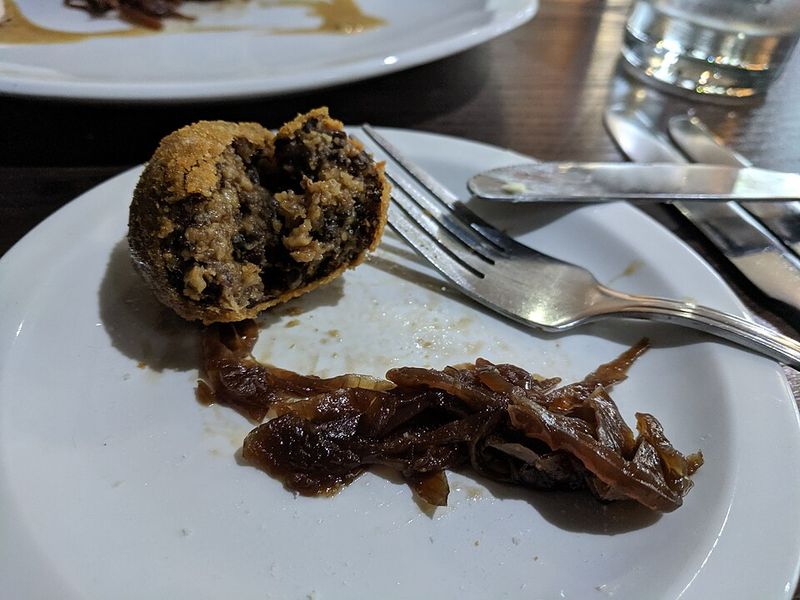
A poem made this dish famous. In 1786, Robert Burns wrote Address to a Haggis, and Scotland has been celebrating the meal ever since.
Haggis combines sheep’s heart, liver, and lungs, a set known as the pluck. These are minced with oatmeal, suet, onions, and pepper.
Traditionally, the mix was cooked inside a sheep’s stomach, though most modern versions use manufactured casings.
The dish is not uniquely Scottish in origin. A written English recipe appears around 1390, and similar foods existed across Europe.
Every January 25, Burns Night suppers serve haggis with neeps and tatties, meaning turnips and potatoes. Someone usually recites the famous poem before slicing it.
Here is the twist for Americans. United States rules ban sheep’s lungs in human food, so traditional haggis cannot be legally imported.
That explains why many Americans know haggis by reputation alone. Lung-free versions are sold in the US for curious eaters.
11. Pork Scratchings, Fried Pig Skin
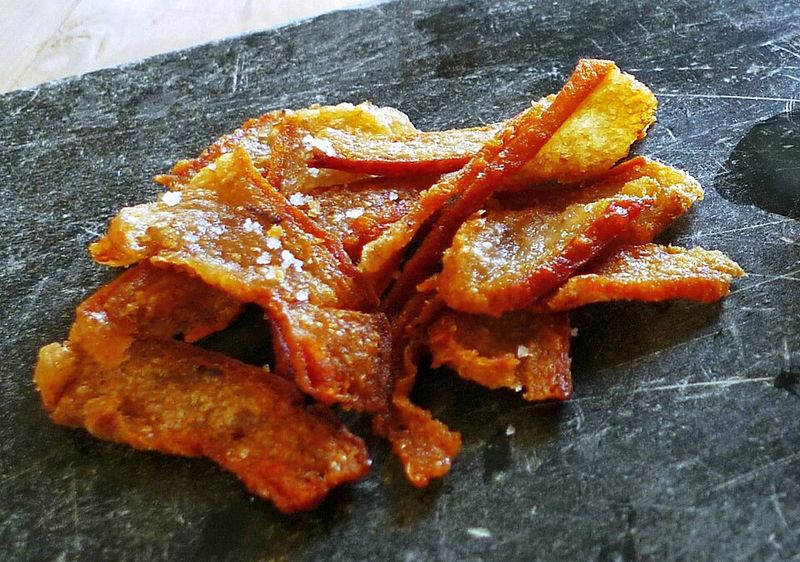
Peanuts and pretzels have serious competition in English pubs. Since the 1800s, workers in the Black Country of the West Midlands have snacked on crunchy pieces of pig skin.
Pork scratchings are made by cooking pig skin, often with a layer of fat attached, until it turns hard and crisp. The pieces are heavily salted.
American pork rinds are puffed and airy. British scratchings are dense and very firm.
First-timers are often warned to chew carefully.
The snack began as a way for families to use every part of a home-raised pig. Factory-packaged versions appeared in the mid-1900s and spread to pubs nationwide.
Food fans now debate the best brands the way Americans argue over potato chips. Some modern makers sell lighter, crispier versions called crackling for people who prefer an easier crunch.
Pick those if you want a gentle introduction to this salty tradition.
12. Spotted Dick, Suet and Currants
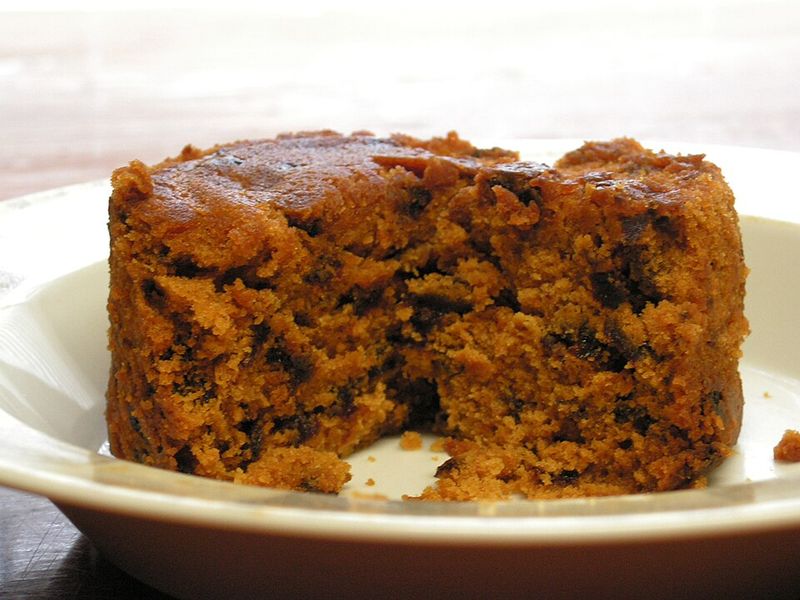
Few desserts get as many giggles from American visitors. The name looks odd on a menu, but the history is surprisingly ordinary.
Spotted dick first appeared in print in 1849, in a cookbook by French chef Alexis Soyer. The spotted part refers to currants or raisins dotted through the pale dough.
Dick was likely an old regional word for pudding, possibly linked to the word dough.
The recipe uses flour, sugar, dried fruit, and suet. It is steamed for a long time, creating something closer to a dense cake than a creamy dessert.
Warm custard is the standard topping. School cafeterias across Britain served it for decades, making it a familiar memory for many adults.
In 2009, one supermarket briefly renamed it Spotted Richard after customers felt awkward asking for it. Shoppers complained, and the original name returned.
Canned versions are sold in some US import shops.
13. Cock-a-Leekie Soup, Chicken and Prunes
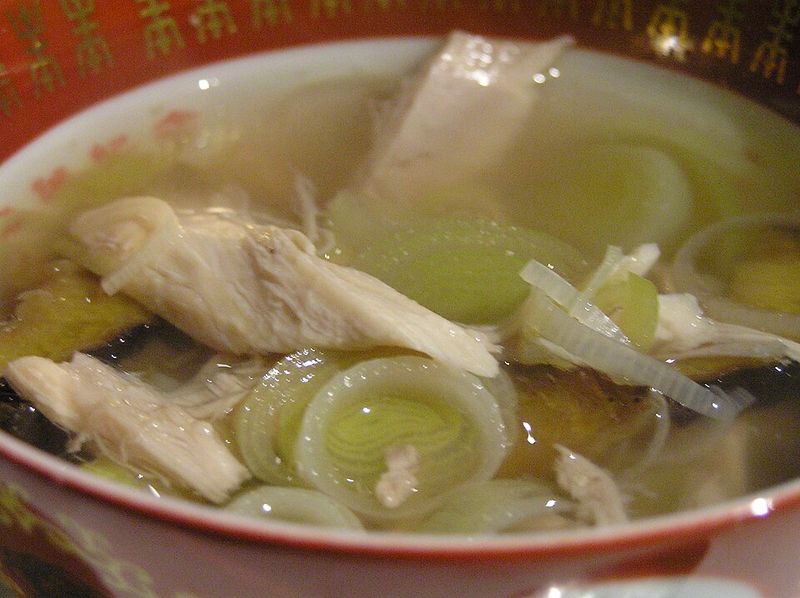
Here is a chicken soup recipe with a plot twist. The Scottish version adds prunes.
Cock-a-leekie soup combines chicken and leeks in a clear broth. Some cooks add rice or barley.
Older and more traditional recipes drop in a handful of prunes, which give the broth a mild sweetness.
The name is simple. Cock refers to the chicken, and leekie refers to the leeks.
Recipes appear in Scottish cookbooks from the 1700s, and the soup often shows up at Burns Night suppers and Hogmanay, the Scottish New Year.
Using dried fruit in meat dishes was once common across Europe. Moroccan and Persian cooking still does it today.
Many modern Scottish cooks leave the prunes out, and the debate continues in family kitchens. If you make it at home, add two or three prunes per bowl.
That way, the flavor stays balanced and the surprise stays pleasant.
14. Potted Shrimps, Brown Shrimp Preserved Under Butter
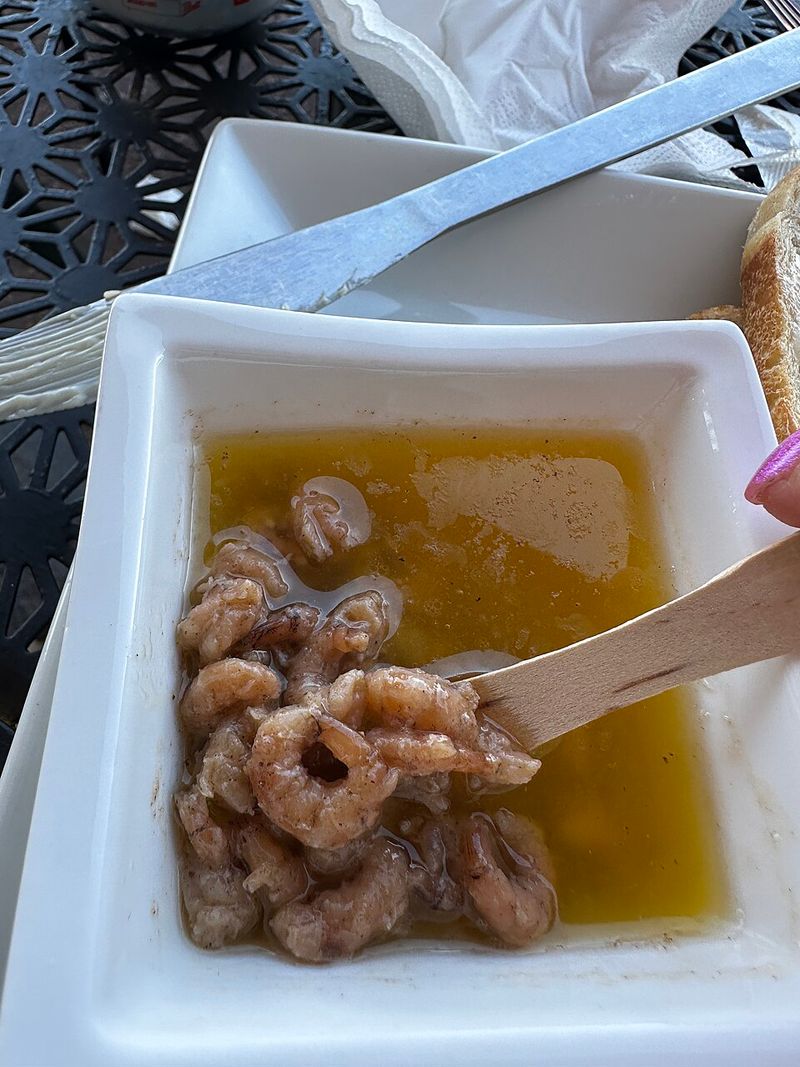
Long before refrigerators, northwest England had a clever trick for keeping seafood. Seal it under butter.
Potted shrimps come mainly from Morecambe Bay in Lancashire. Fishermen there have harvested tiny brown shrimp for centuries.
The shrimp are cooked in butter seasoned with mace, a spice from the same plant as nutmeg.
Next, the shrimp are packed into small pots. A layer of clarified butter goes on top, blocking air and keeping the contents fresh a little longer.
The dish became fashionable in the 1800s, when railways carried Morecambe Bay seafood to cities like London. It even earned protected status in 2013.
Diners usually warm the pot slightly and spread the buttery shrimp on hot toast. Americans picture shrimp as cocktail appetizers or fried baskets.
Eating them as a spread under butter feels very different. Try it at a seaside cafe in Lancashire for the classic experience.
Share this story