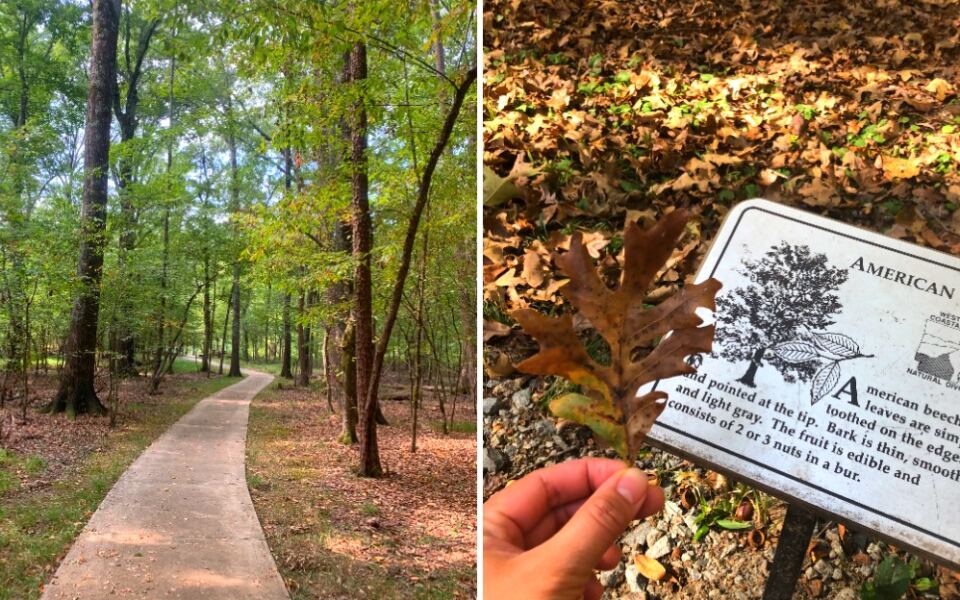
A single paved loop just west of Little Rock lets you sample the forests of an entire state in well under an hour. The trail is only about six-tenths of a mile long.
Yet the trees along it represent the major natural regions of Arkansas, from mountain ridges to swampy lowlands.
Many of those trees wear labels. Small signs name the species and explain where each one grows across the state, so a casual stroll turns into a quiet science lesson.
I like places that teach without lecturing, and this one does it with shade, benches, and a creek winding through the woods. Kids can roll along the concrete, and older dogs can take their time.
There is also a cypress-lined river view waiting near the far side of the loop. Getting there takes less effort than you might expect.
A Small Arboretum Inside a Big State Park
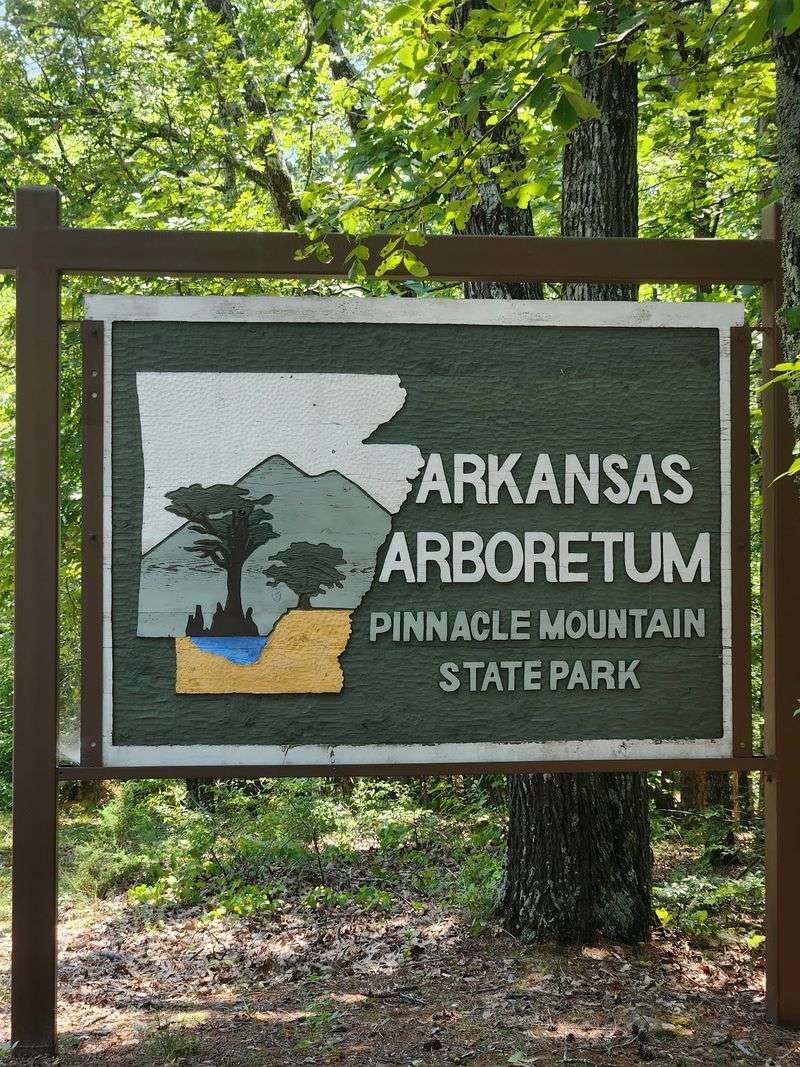
The Arkansas Arboretum sits inside Pinnacle Mountain State Park, at 12820 Pinnacle Valley Road in Little Rock, Arkansas. It is a woodland garden rather than a formal flower garden, and trees are the whole point.
That setting matters. Pinnacle Mountain State Park is known for its steep climbs and rocky summit trail, so the arboretum offers a calmer side of the same park.
I find that contrast appealing. You can spend the morning tackling a hard hike, then cool down on a level paved path among labeled trees in the afternoon.
Arkansas State Parks does not charge an entry fee for parks like this one. That makes the arboretum an easy choice for a spontaneous outing, a lunch-break walk, or a family trip on a tight budget.
The Arkansas Arboretum is open daily from 6:30 a.m. until one hour after sunset, year-round. Closing times vary with the seasons, so check the official Arkansas State Parks website before visiting.
Parking sits close to the trailhead, so you won’t spend much energy just reaching the start. The real question is what those trees are trying to teach you, and that comes next.
Six Natural Regions on One Short Walk
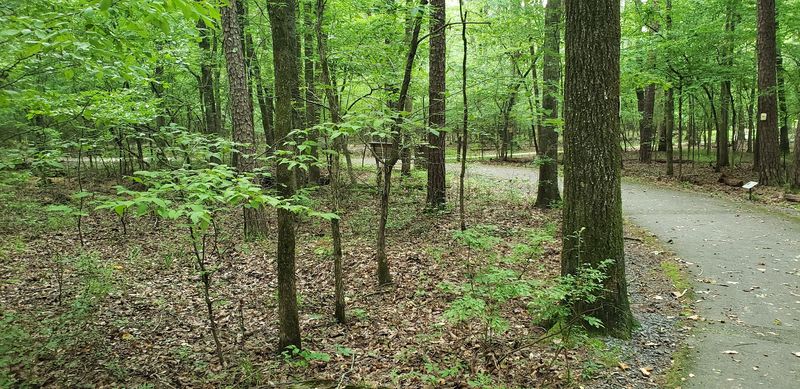
Arkansas is a state of very different landscapes. The Ozark Plateau, the Ouachita Mountains, the Arkansas River Valley, the Gulf Coastal Plain, the Mississippi Delta, and Crowley’s Ridge all grow their own mix of plants.
The arboretum was designed to show off that variety. As you move along the loop, the plantings and signs point to trees tied to these different parts of the state.
Think of it as a geography class you can walk through. Instead of memorizing a map, you get to see which trees belong where and notice how they differ.
Signs along the trail explain where various species naturally grow in Arkansas. That helps the information stick, especially for kids who learn better by looking than by reading a textbook.
I’d suggest slowing down at each sign rather than rushing the loop. The trail is short, so there’s plenty of time to read, look up, and compare bark or leaves.
A quick tip for students working on science projects: bring a notebook or snap photos of the signs. You’ll leave with a homemade field guide to Arkansas trees, which pairs nicely with the labels covered next.
Trees That Introduce Themselves
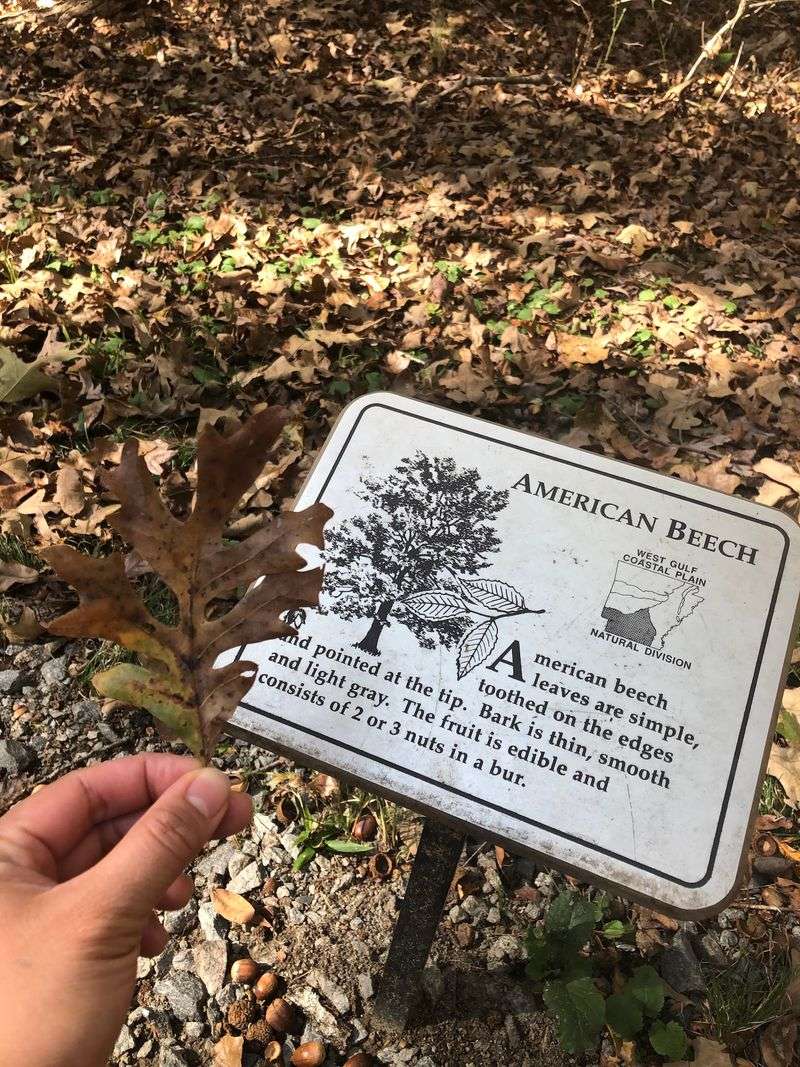
Ever walked past a tree and wondered what it was called? Here, many of them answer that question for you.
Trees along the paved loop carry identification labels. Some signs also share details about the leaves and where the species grows across Arkansas.
That small touch changes how you walk. Instead of seeing a wall of green, you start noticing differences in bark, branching, and leaf shape.
Parents can turn it into a game. Have kids find a tree label, read the name out loud, then spot another tree of the same kind without peeking at a sign.
Leaf shapes make good clues. Pick up a fallen leaf and match it to the nearby label, which works especially well in autumn when the ground is covered.
I’m a fan of learning that happens without anyone noticing. A child who can name a few native trees by the end of a walk has picked up something real.
The labels also help adults who grew up in Arkansas but never learned the names of the trees in their own backyard. Next, let’s look at the path itself, because it is friendlier than most forest trails.
Concrete Underfoot, Forest All Around
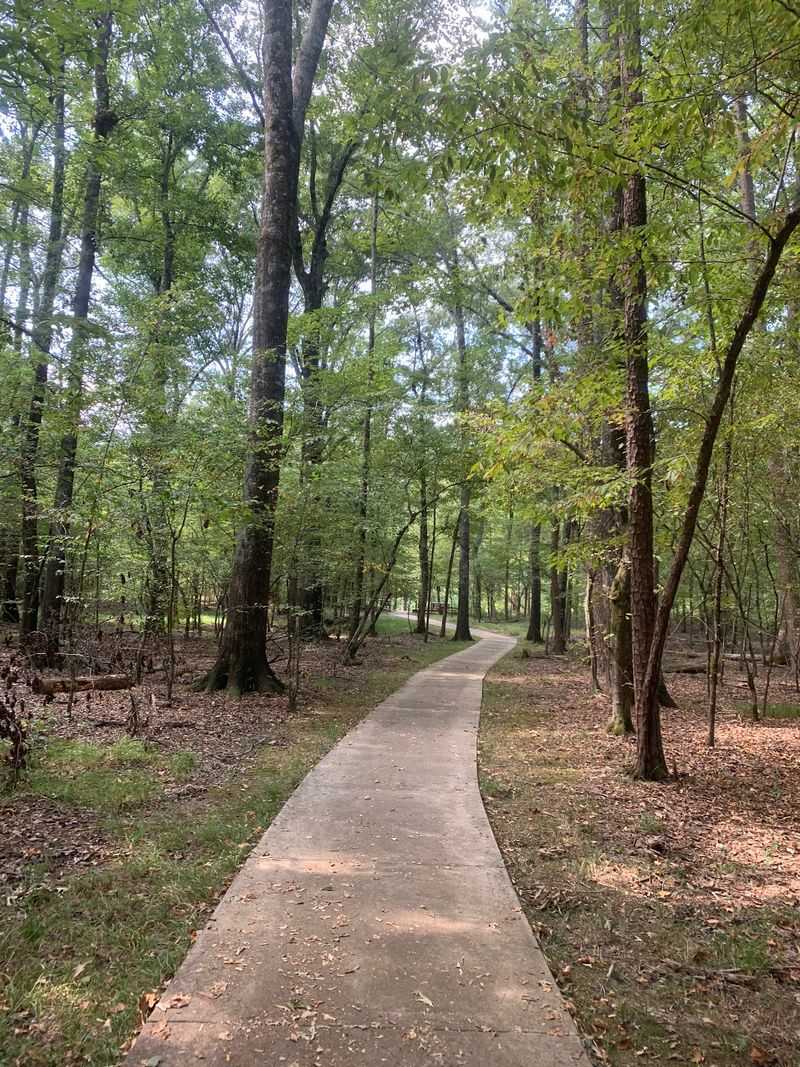
Smooth concrete is not what most people expect from a woodland walk. At the arboretum, though, the main loop is paved and mostly level, which opens it up to many more visitors.
Wheelchairs and strollers can handle the route. Kids on roller skates or scooters can roll along it too, as long as they stay courteous to walkers.
The loop runs roughly six-tenths of a mile. That’s long enough to feel like a real outing but short enough for small children and older adults.
There are a few gentle inclines, so it isn’t completely flat. Still, the grade is easy compared with the steep trails elsewhere in the park.
Wooden benches appear along the way. They make handy rest stops and good places to sit and watch the woods for a few minutes.
Shade is another quiet bonus. Tall trees cover much of the path, which helps a lot during Arkansas summers when open trails can feel like a frying pan.
Joggers and walkers use the loop for exercise, too. It’s an easy place to fit in steps without dodging roots or rocks, unless you choose the side paths waiting off the pavement.
Side Trails for the Curious
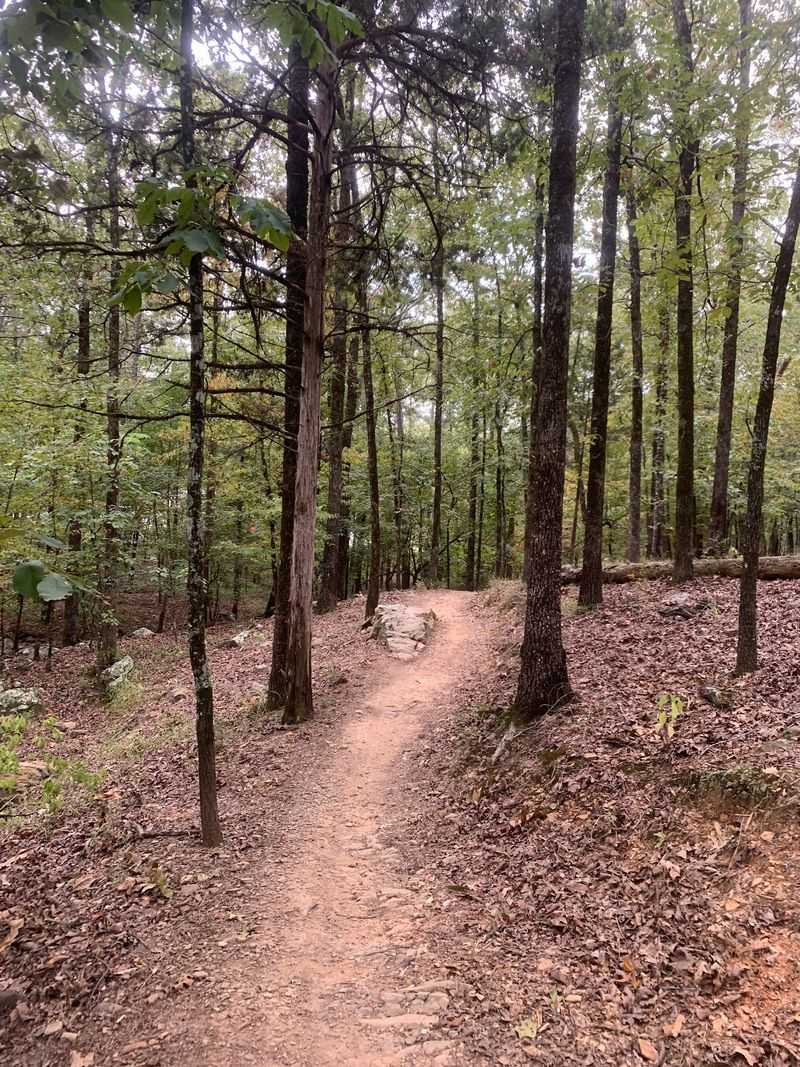
Paved paths are great, but some feet want dirt. Several unpaved spur trails branch off the main loop and head deeper into the woods.
These side paths are short detours, not big expeditions. Taking every spur can stretch a visit from well under a mile to roughly a mile and a half.
That flexibility is handy for families. Younger kids can explore a little extra when they have energy, then return to the pavement when they’re ready to head back.
Some spurs lead toward different habitats. One heads to a river overlook, and others pass through wetter, swampy areas worth a closer look.
Wear real shoes if you plan to explore. The dirt and gravel sections can be uneven, and they may get muddy after rain.
The arboretum also connects with other trails around Pinnacle Mountain State Park. If the loop feels too short, you can keep going and build a longer hike.
I like that the choice belongs to the walker. You can keep things simple or wander off the concrete, and one of those spurs leads to a view many people remember most.
Cypress Trees and the Little Maumelle River
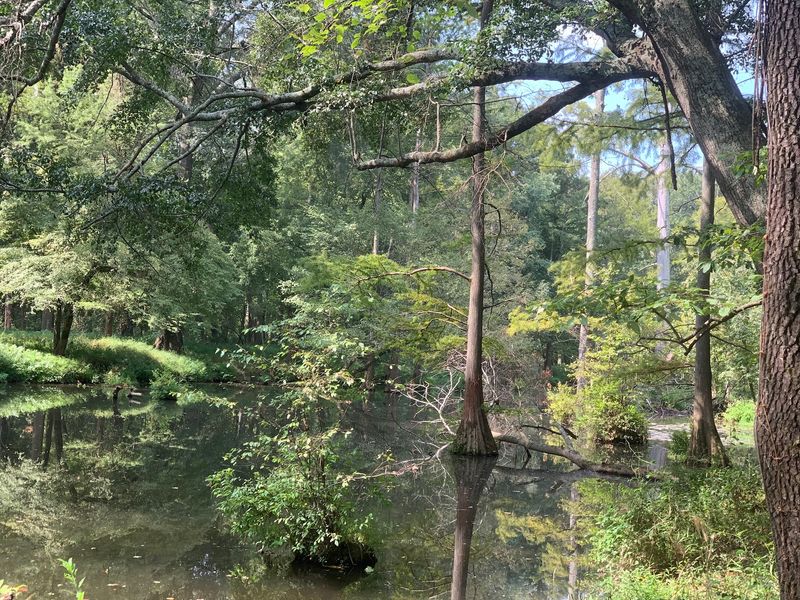
Bald cypress trees are a sign you’ve reached wet ground. Near the arboretum, they line a creek and the banks of the Little Maumelle River.
The River Overlook area gives walkers a view of the water. It’s a calm spot to sit, rest your legs, and take in a different side of the forest.
Small creeks also flow through the woods. Their trickle adds a soft soundtrack to the walk when water levels are up.
Water levels do change, though. During dry stretches, the creeks may run low and some pools can look still and murky, so set expectations accordingly.
The Little Maumelle is popular with kayakers in the area. You may spot paddlers drifting past if you time your visit right, although that’s never guaranteed.
Cypress trees grow those famous knobby knees that poke up from the ground near water. Kids tend to find them fascinating, and they make a fun thing to count.
From the right spots in the park, Pinnacle Mountain itself also comes into view. That pairing of river and peak is part of what gives this corner of Arkansas its character.
Squirrels, Songbirds, and the Occasional Surprise
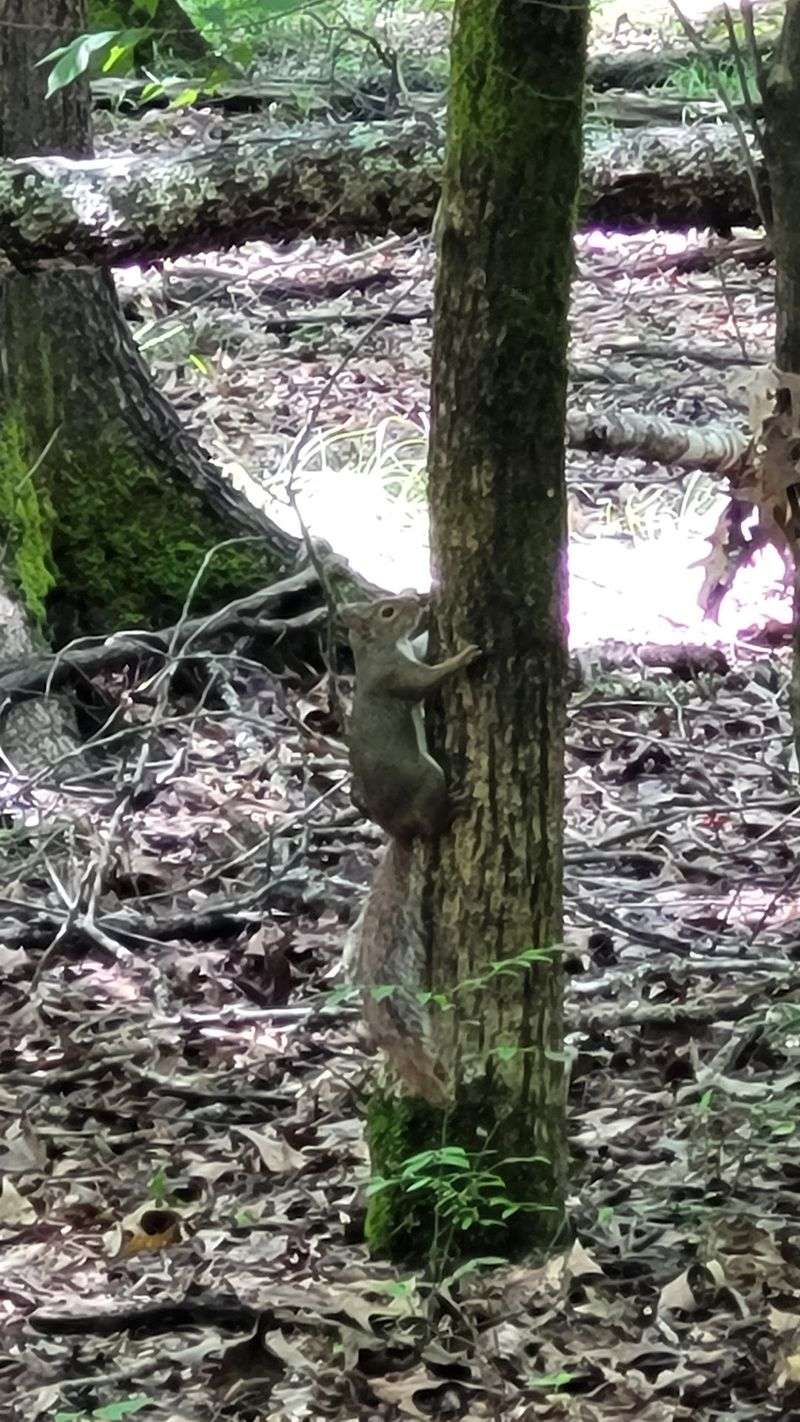
Squirrels run this place, or at least they act like it. They dart across the path and scramble up trunks along much of the loop.
Birds are busy here too. Listen closely and you’ll likely hear several different calls overhead, which makes the walk a good warm-up for beginning birders.
Bigger surprises happen now and then. Armadillos and snakes, including king snakes, have been spotted crossing or near the trails.
Don’t panic about the snakes. The best move is to give any wildlife plenty of space and let it continue on its way.
This woodland is their home, after all. Staying on the trail and keeping your voice low tends to make sightings more likely anyway.
Binoculars are a smart addition to a daypack. Kids can track a woodpecker or squirrel without needing to chase it.
I’d also pack a simple bird or animal guide for the region. Matching what you see to a picture adds another layer of learning to a place already full of labels.
Early morning, close to the 7 a.m. opening time, may bring a livelier forest. Just remember that some tiny creatures need attention for different reasons.
Ticks, Water, and Other Smart Prep
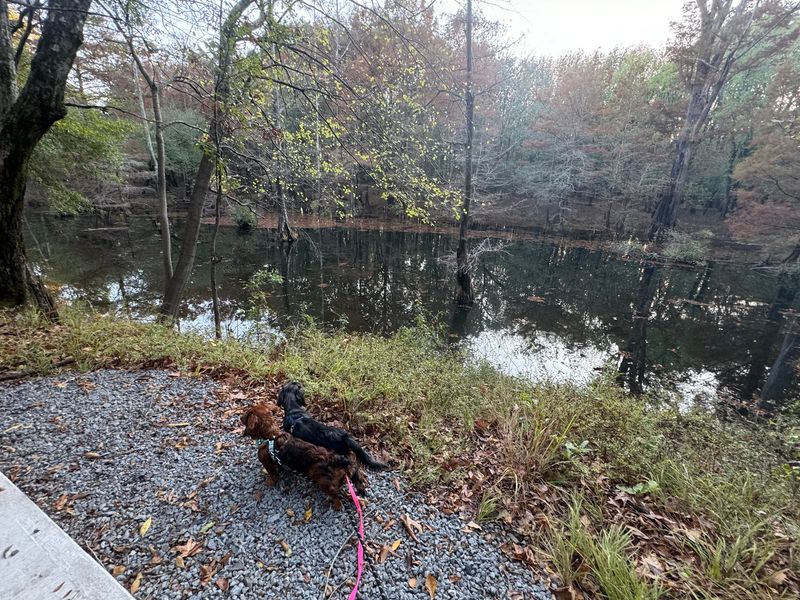
Here’s the unglamorous part. Ticks live in Arkansas woods, and visitors have reported picking them up at the arboretum.
Use insect repellent before you start walking. Afterward, check yourself, your kids, and your dog carefully once you get home.
Staying on the paved loop helps reduce contact with brush. Long pants are also a good idea if you plan to explore the dirt spurs.
Bring your own water. Drinking fountains on site may not be turned on, so don’t count on refilling bottles during the walk.
Restrooms are limited. A portable toilet has sometimes been placed near the parking area, but it isn’t always there, so plan a stop beforehand.
Trash cans sit along the trail, which helps keep the woods clean. Still, packing out anything you bring is a good habit.
Noise from a nearby highway can drift into parts of the trail. If you want maximum quiet, try heading deeper onto the side paths.
None of this should scare anyone off. A little planning simply makes the visit smoother, especially for families bringing four-legged members along.
Leashed Dogs and Little Legs Welcome
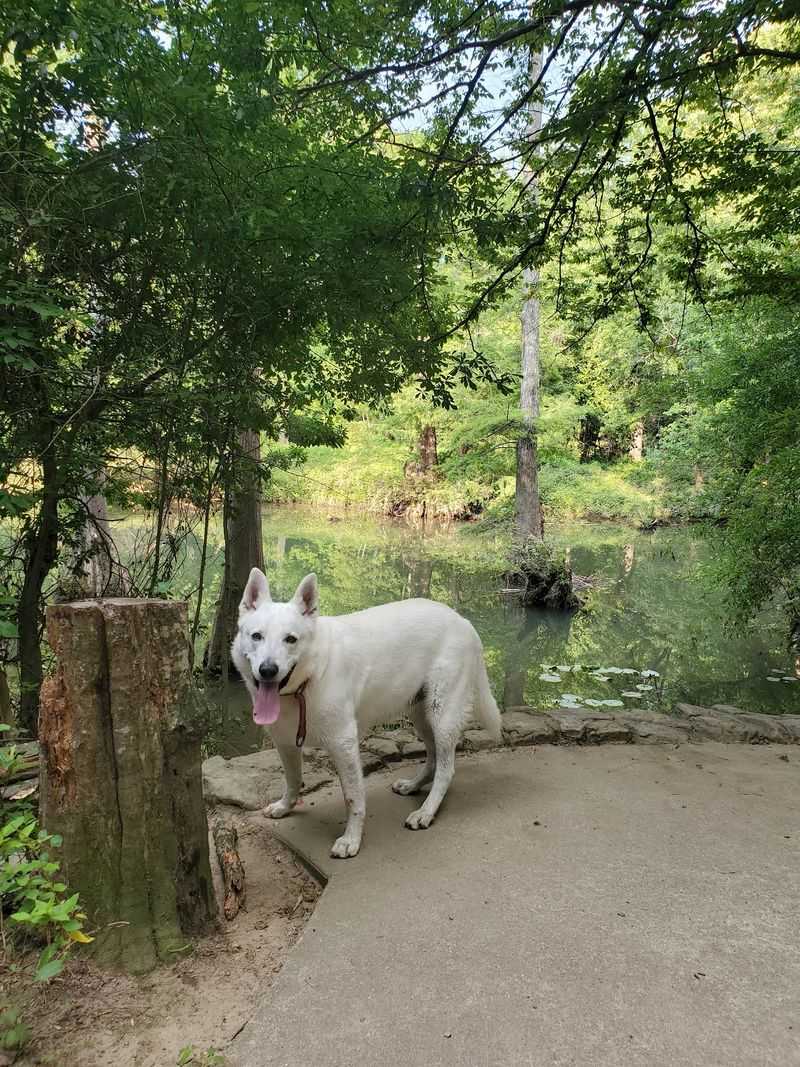
Older dogs deserve good walks too. The arboretum’s smooth, shaded loop suits pups that can no longer handle rocky climbs.
Dogs are welcome as long as they stay on a leash. That rule protects wildlife and keeps the path friendly for everyone else.
Young kids do well here for similar reasons. The distance is short, benches allow breaks, and tree labels give them something to hunt for.
One parent walked every spur with a four-year-old and covered about a mile and a half. That shows how far small legs can go when the trail keeps things interesting.
Picnics are another easy add-on. Pack sandwiches and enjoy them in the park before or after your walk.
Here’s a fun extra for gamers: the loop has several Pokemon Go gyms and stops. It might be just the motivation a reluctant tween needs.
Bring bags for dog waste and fresh water for pets. With no reliable fountains, a collapsible bowl comes in handy.
The mix of easy access and real nature makes this a low-stress outing. It also changes noticeably depending on when you go.
Every Season Tells a Different Story
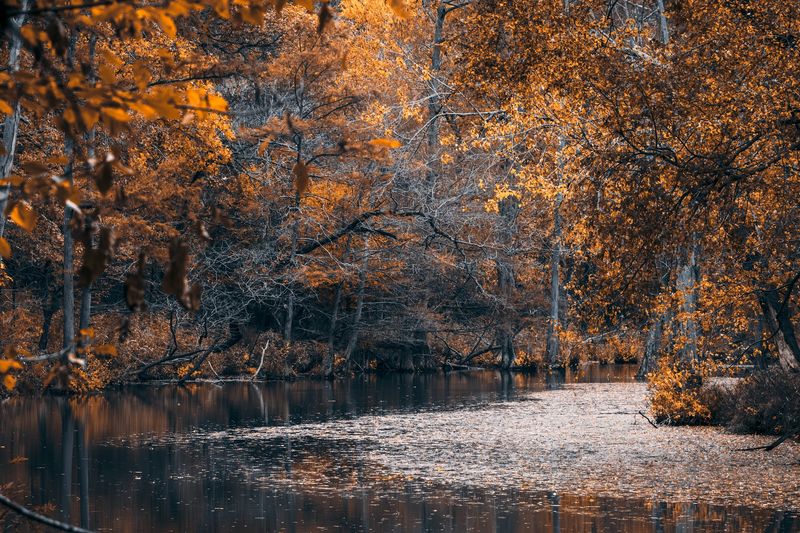
A tree labeled in spring looks like a different plant by November. That’s one reason repeat visits to the arboretum pay off.
Spring brings fresh leaves and plenty of bird activity. It’s an easy time to compare new leaf shapes against the labels.
Summer heat in central Arkansas can be intense. The thick tree cover helps, and an early start near opening time keeps things more comfortable.
Fall is when the native hardwoods show their colors. Fallen leaves make identification fun, since you can hold one up beside its labeled tree.
Bald cypress trees are worth watching in autumn too. Unlike most cone-bearing trees, they shed their needles each year, which surprises many people.
Winter strips the branches bare. That’s a great season to study bark and tree shape, and views through the woods open up.
Even a drizzly day can work on the paved loop. The concrete stays manageable while dirt spurs may get slick.
I’d honestly pick one tree and visit it across all four seasons. Watching a single native Arkansas tree change over a year is a simple lesson that sticks, and this short trail makes it easy.
Share this story