A famous architect once looked at a family’s favorite waterfall and decided the house should sit right on top of it. That’s not a legend.
It’s a real home in Pennsylvania, and you can still tour it today.
The surprises keep coming once you start looking. One man built himself a concrete castle and covered it in handmade tiles.
A university put its classrooms inside a Gothic tower that climbs 42 stories. A prison was designed with cellblocks spreading out like the spokes of a wheel.
So grab a map and a full tank. Which of these unusual buildings would you visit first?
1. Fallingwater, Mill Run, Pennsylvania
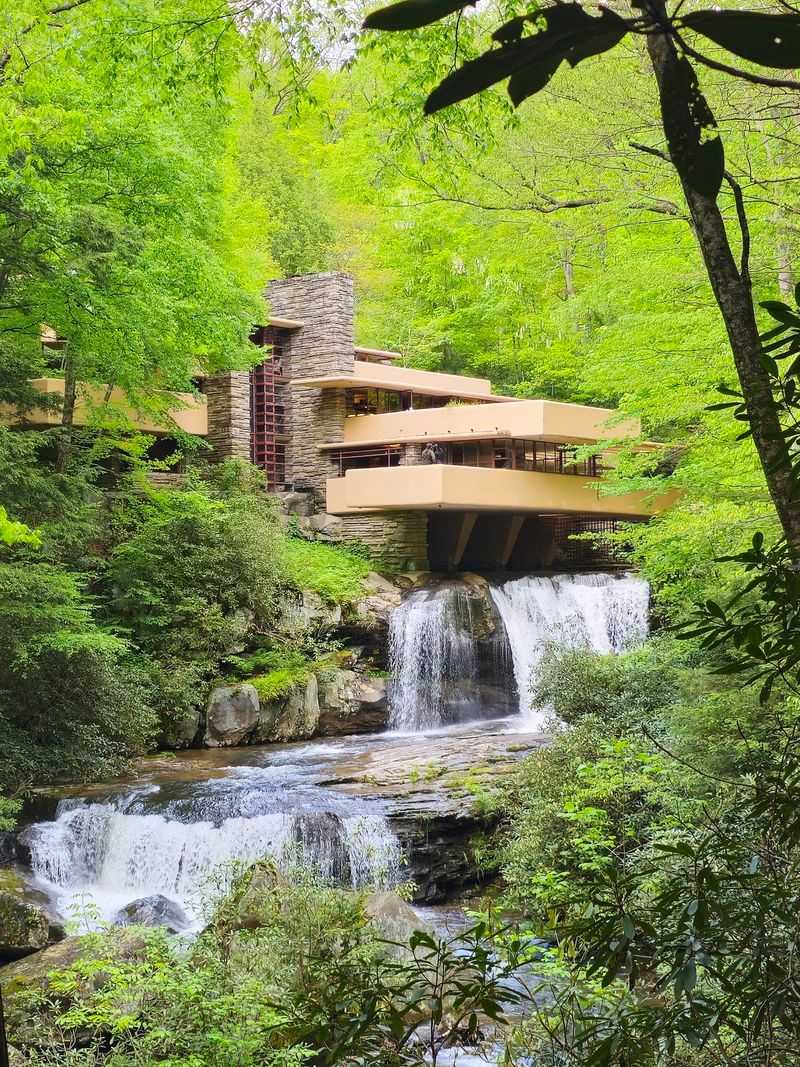
Most people would build a house with a nice view of a waterfall. Frank Lloyd Wright put the house right over the falls instead.
Edgar and Liliane Kaufmann, a Pittsburgh department store family, hired Wright in the 1930s. The home was finished in 1939 and stretches its concrete terraces out over a stream called Bear Run.
Wright wanted nature to be part of the building, not just scenery outside the windows. Local sandstone forms the walls, and a boulder from the site pokes up through the living room floor near the fireplace.
The Kaufmanns’ son gave the house to the Western Pennsylvania Conservancy in 1963. Since then, it has welcomed visitors as a museum with much of the original furniture still in place.
Tours sell out, so book online before you leave home. Afterward, walk to the downstream viewpoint for the famous photo that shows the house floating above the water.
Address: 1491 Mill Run Road, Mill Run, PA 15464
2. Fonthill Castle, Doylestown, Pennsylvania
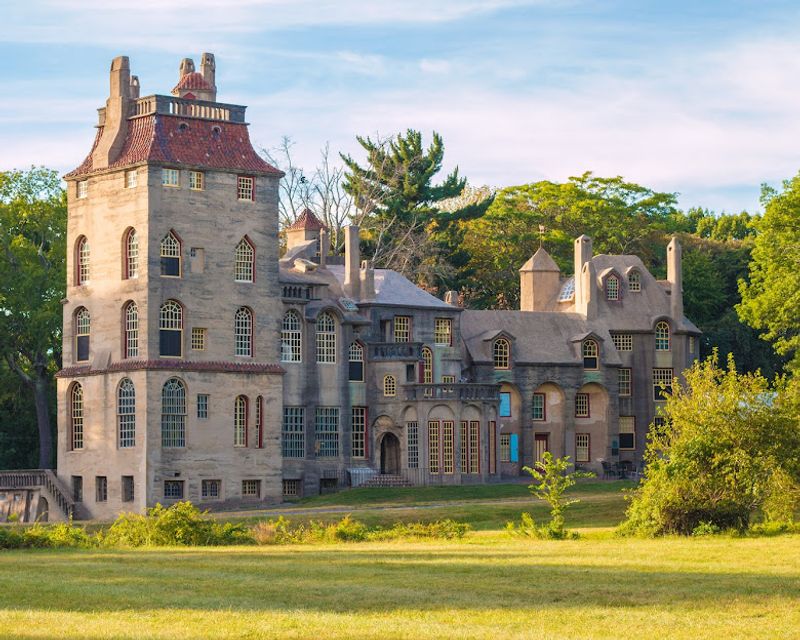
Forty-four rooms, more than 200 windows, and 18 fireplaces. Henry Chapman Mercer built all of it out of poured concrete between 1908 and 1910.
Mercer was an archaeologist, a tile maker, and a man with strong opinions about design. He didn’t start with detailed blueprints, which helps explain why the towers and hallways twist in such surprising directions.
The real treat is inside. Ceilings, walls, and columns are covered in decorative tiles, many made at his own Moravian Pottery and Tile Works next door.
Mercer also set antique tiles from around the world into the concrete. Spotting where old pieces meet his own designs turns a tour into a fun treasure hunt.
Guided tours are the way to see the castle, and they move through narrow stairways and small rooms. Wear comfortable shoes and reserve ahead, especially on weekends.
Tile fans can stop at the pottery works too, where tiles are still made using Mercer’s methods.
Address: 525 East Court Street, Doylestown, PA 18901
3. Pennsylvania State Capitol, Harrisburg, Pennsylvania
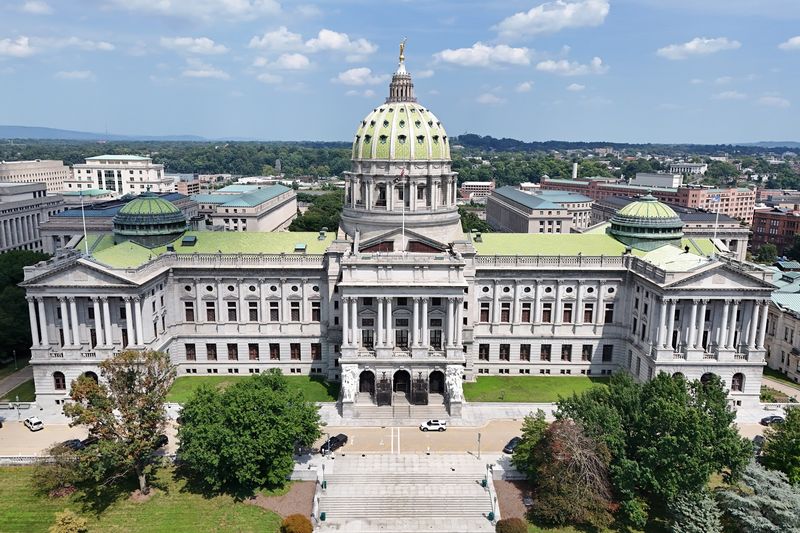
President Theodore Roosevelt showed up for the dedication in 1906 and called it the handsomest building he’d ever seen. Once you walk in, that compliment makes sense.
Architect Joseph Miller Huston designed the Capitol with a giant dome inspired by St. Peter’s Basilica in Rome. Below it, the rotunda’s grand staircase was modeled after the one in the Paris Opera House.
Look down as well as up. Henry Chapman Mercer, the same man behind Fonthill Castle, created hundreds of tile mosaics in the floor that tell stories from Pennsylvania history.
Artist Violet Oakley painted murals for the building, which was rare for a woman at the time. Her work fills the Senate chamber and the Governor’s Reception Room.
Free guided tours run on most weekdays, and they lead you through the chambers when lawmakers aren’t using them. Bring an ID, since you’ll pass through security at the entrance.
Address: 501 North 3rd Street, Harrisburg, PA 17120
4. Eastern State Penitentiary, Philadelphia, Pennsylvania
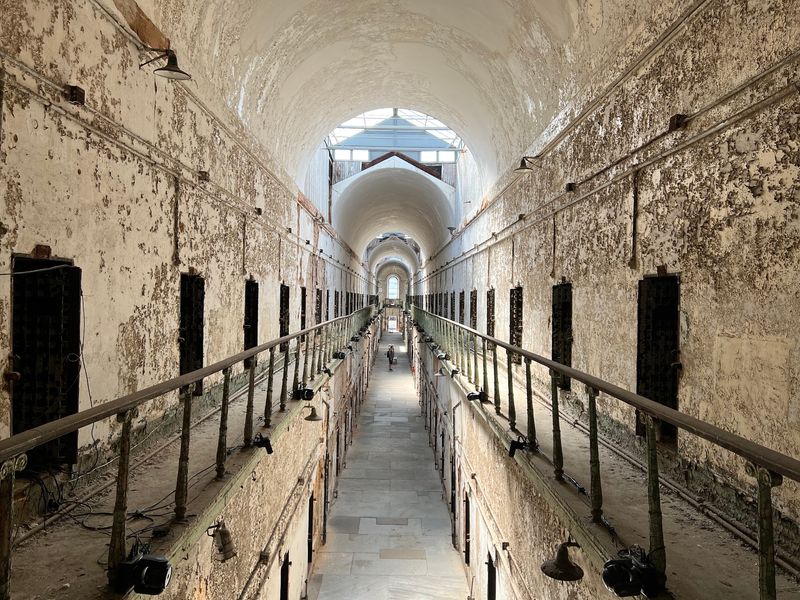
When Eastern State opened in 1829, it was one of the most expensive buildings in America. Architect John Haviland gave it castle-like walls on purpose, hoping the look alone would discourage crime.
The layout was the bold part. Cellblocks spread out from a central hub like spokes on a wheel, so guards could watch long hallways from one spot.
Each cell had a skylight that reformers called the Eye of God. The idea was that quiet and isolation would lead people to reflect and change.
Hundreds of prisons around the world copied the design. Even famous gangster Al Capone spent time here, and his surprisingly comfortable cell is still on display.
The prison closed in 1971 and has worked as a museum since 1994. Today the crumbling halls are kept in a state of preserved ruin.
The audio tour, narrated by actor Steve Buscemi, is included with admission. It mixes architecture with real stories about prison life.
Address: 2027 Fairmount Avenue, Philadelphia, PA 19130
5. Cathedral of Learning, Pittsburgh, Pennsylvania
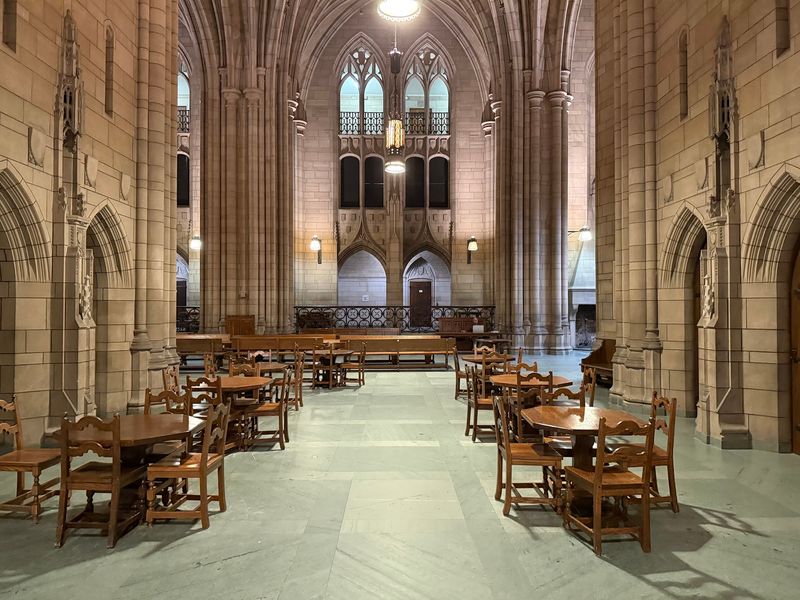
How many college students get to attend class inside a Gothic skyscraper? At the University of Pittsburgh, that’s just a regular Tuesday.
The Cathedral of Learning stands 42 stories and about 535 feet tall. Construction began in the late 1920s, and it remains one of the tallest educational buildings in the Western Hemisphere.
Head to the ground floor Commons Room first. Its stone arches soar four stories high, and students study there at long wooden tables.
Then explore the Nationality Rooms, which are more than 30 working classrooms. Each one was designed and paid for by local cultural groups to honor a different country’s traditions.
You might sit in a room styled like an ancient Chinese courtyard or a Scottish hall. Most rooms are still used for real classes during the school year.
Tour options change with the university calendar, so check ahead. Around the holidays, many rooms get decorated with their own cultural traditions.
Address: 4200 Fifth Avenue, Pittsburgh, PA 15260
6. Mercer Museum, Doylestown, Pennsylvania
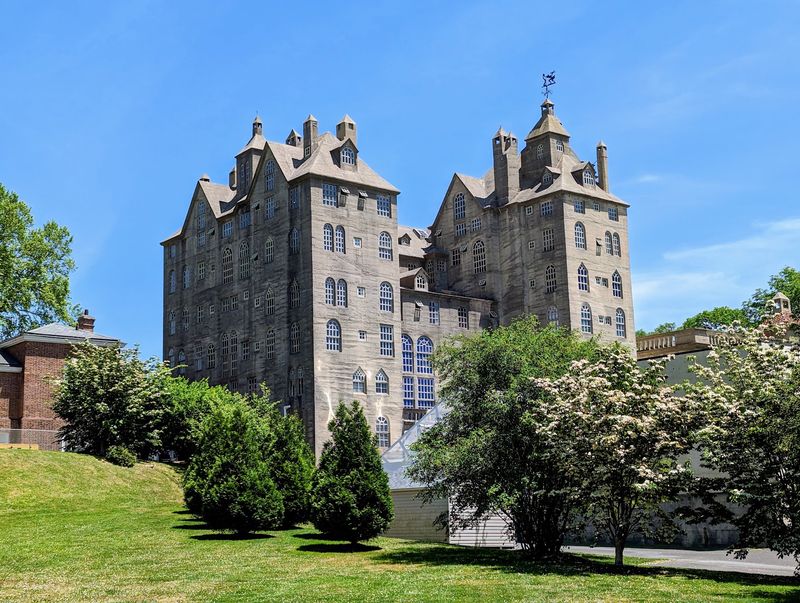
A wooden whaling boat hangs in midair. So do wagons, chairs, and a sleigh, all suspended above a six-story central court.
Henry Chapman Mercer finished this museum in 1916, just a few years after his castle. He built it from concrete too, partly because he worried about fire destroying his collection.
And what a collection it is. Mercer gathered tens of thousands of tools and everyday objects from the days before factories took over American life.
You’ll see items used by blacksmiths, coopers, farmers, and printers. Many displays sit in small alcoves around the edges of the central court, so climbing higher reveals more.
The building itself is part of the exhibit. Its towers and odd angles make it look like a castle that wandered into downtown Doylestown.
Fonthill Castle is only about a mile away, and combination tickets make it easy to see both. Give yourself a full day if you want time for lunch in town.
Address: 84 South Pine Street, Doylestown, PA 18901
7. Phipps Conservatory and Botanical Gardens, Pittsburgh, Pennsylvania
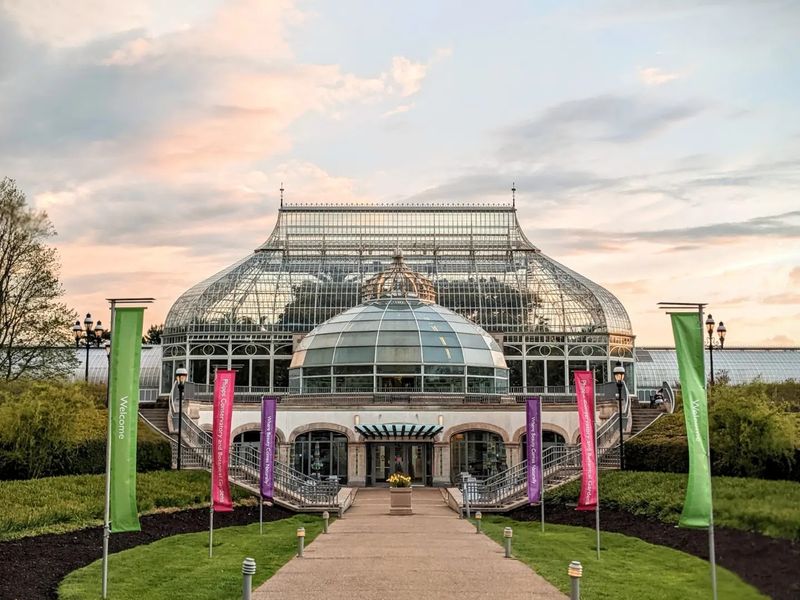
Steel businessman Henry Phipps gave Pittsburgh a glass palace in 1893. His only request was that it bring education and enjoyment to the city’s residents.
The Victorian glasshouse sits in Schenley Park, built with metal frames and curved glass roofs. Inside, more than a dozen connected rooms hold palms, orchids, desert plants, and tropical forests.
Seasonal flower shows change the displays several times a year. A holiday show brings lights and decorated trees, while spring fills rooms with bulbs and blooms.
The newer side of Phipps is just as interesting for building fans. Its Center for Sustainable Landscapes was designed to produce its own energy and treat its own water.
That building earned some of the toughest green certifications in the world. Seeing it beside a 19th-century glasshouse shows how ideas about design have changed.
Plan to visit on a cold day if you can. Stepping from a Pittsburgh winter into a tropical room is a pretty great trade.
Address: One Schenley Park, Pittsburgh, PA 15213
8. Beth Sholom Synagogue, Elkins Park, Pennsylvania
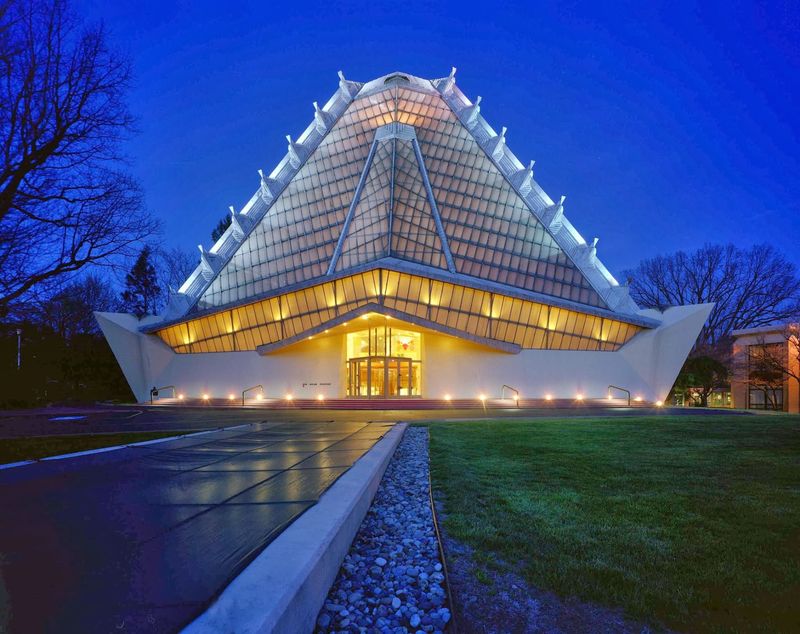
Frank Lloyd Wright designed only one synagogue in his long career. You’ll find it in a Philadelphia suburb, looking a bit like a glowing mountain.
Rabbi Mortimer J. Cohen worked closely with Wright on the plans.
The rabbi wanted the building to suggest Mount Sinai, and the tall pyramid-shaped roof answers that idea.
The roof is made of translucent panels instead of solid walls. During the day, natural light pours into the sanctuary without the need for regular windows.
Triangles show up all over the design, from the floor plan to the light fixtures. Wright loved repeating a shape until it tied a whole building together.
The synagogue was dedicated in 1959, a few months after Wright passed away. It became a National Historic Landmark in 2007.
It’s still an active congregation, so you can’t just wander in. Book a guided tour through the synagogue’s visitor program, and check dates in advance.
Address: 8231 Old York Road, Elkins Park, PA 19027
9. Bryn Athyn Cathedral, Bryn Athyn, Pennsylvania
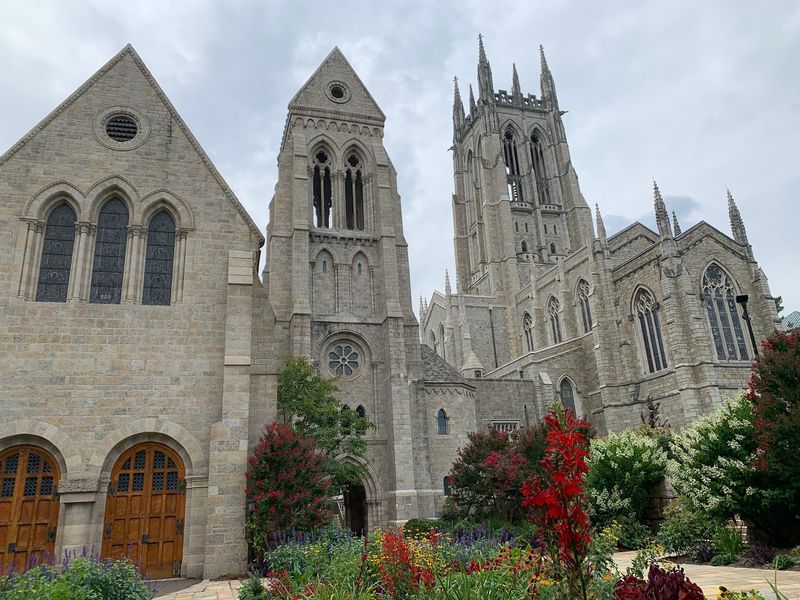
Medieval cathedral builders didn’t work from finished blueprints, and neither did the people who built this one. Raymond Pitcairn wanted it made the old-fashioned way.
Construction began in 1913, with funding from his father, John Pitcairn. Craftsmen worked in on-site shops, and designs were often tested with full-size models before stones were cut.
That hands-on method explains a lot. Walls lean slightly and lines curve gently, details meant to make the stone look less rigid and more alive.
The stained glass was also made right there, using techniques studied from medieval windows. Metalwork and wood carvings came from the same workshops.
The cathedral serves the General Church of the New Jerusalem, and it’s still used for worship. Free guided tours are offered on a regular schedule, so check times first.
Nearby Glencairn Museum, once the Pitcairn family home, shares the same building style. Seeing both gives a fuller picture of this family’s big vision.
Address: 900 Cathedral Road, Bryn Athyn, PA 19009
10. Longwood Gardens Conservatory, Kennett Square, Pennsylvania
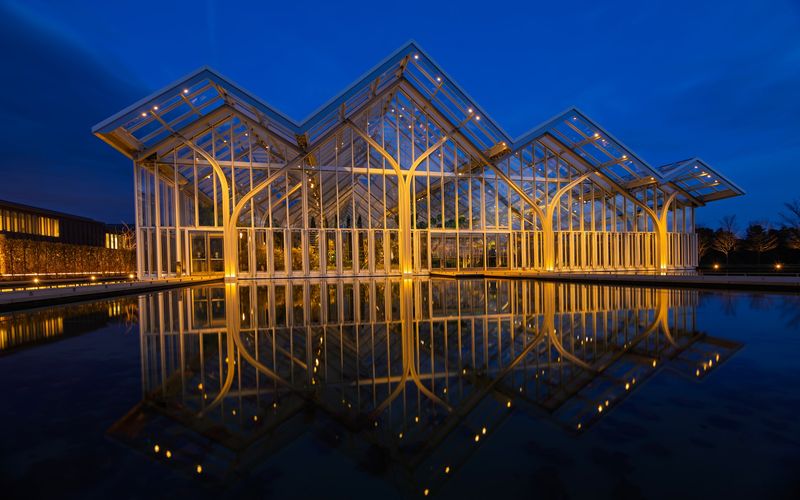
Pierre S. du Pont had big ideas about plants, and he wanted a building big enough to match. His Main Conservatory opened at Longwood in 1921.
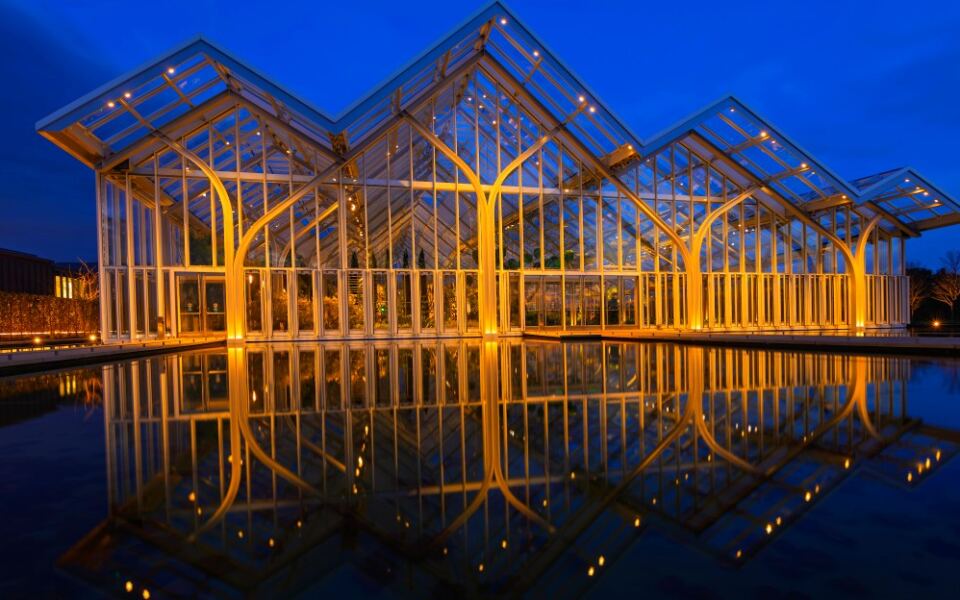
The glass halls hold lawns, fountains, and changing flower displays all year long. One famous feature is the Exhibition Hall, which has a sunken floor that can be flooded with water for reflections.
In 2024, Longwood opened a major expansion called Longwood Reimagined. Its showpiece is the new West Conservatory, designed by the architecture firm Weiss/Manfredi.
The modern glasshouse features a Mediterranean garden with paths that wind around pools. Comparing it to the 1921 building is like reading two chapters of the same story.
Outside, there are acres of gardens and fountain shows during warmer months. The holiday light display is a big draw in winter.
Timed tickets are required, so reserve before you go. Give yourself several hours, because the walk between gardens adds up fast.
Address: 1001 Longwood Road, Kennett Square, PA 19348
11. Philadelphia City Hall, Philadelphia, Pennsylvania
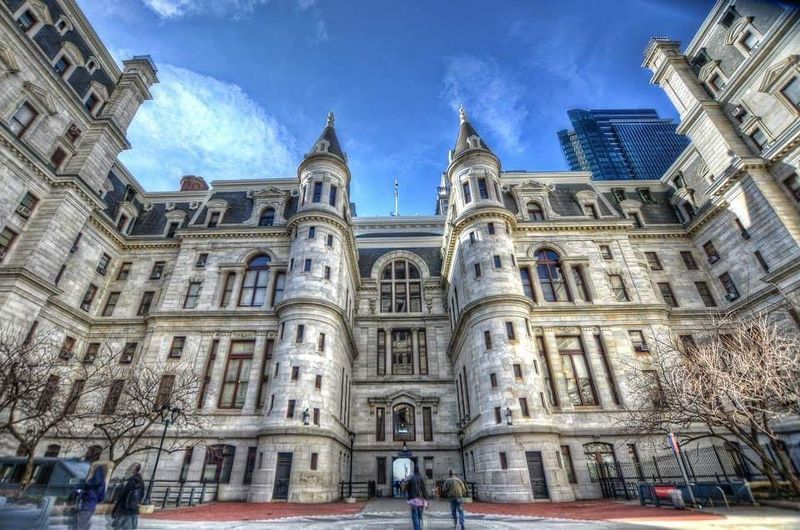
William Penn stands 37 feet tall on top of City Hall, and he’s been watching over Philadelphia since the 1890s. Sculptor Alexander Milne Calder created the bronze figure.
Architect John McArthur Jr. designed the building in the Second Empire style. It took about 30 years to build and was completed in 1901.
For a short time, City Hall was the tallest habitable building in the world. A gentleman’s agreement once kept other city buildings from rising above Penn’s hat.
That rule ended in the 1980s, and skyscrapers now surround the tower. Still, no other building in town has this much carved detail.
Look closely and you’ll spot about 250 sculptures, including faces, animals, and figures representing different parts of the world. It’s a lot to take in.
Tours of the building and the tower observation deck are offered on weekdays. Tower visits have limited space, so plan ahead for that view.
Address: 1400 John F. Kennedy Boulevard, Philadelphia, PA 19107
12. Grey Towers National Historic Site, Milford, Pennsylvania
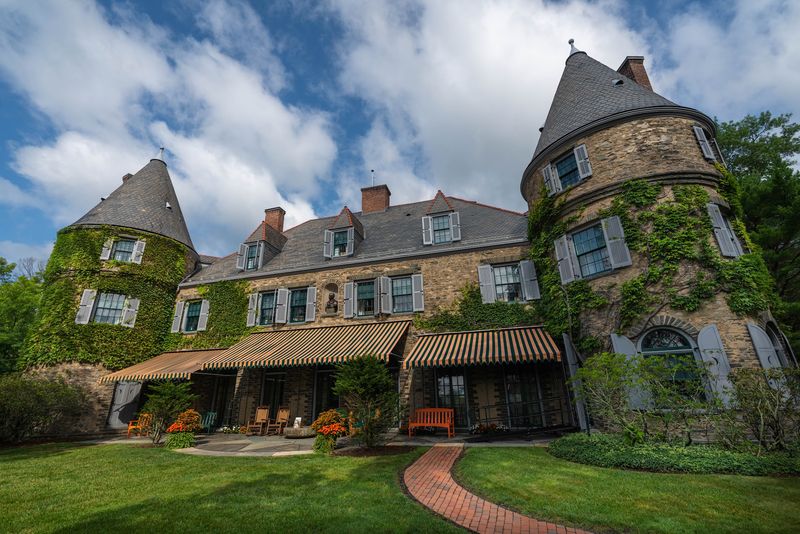
Three round stone towers rise above the hills near Milford, giving this mansion the look of a French castle. Richard Morris Hunt, who also worked on the Biltmore estate, designed it.
James and Mary Pinchot finished the house in 1886 as a summer home. Their son Gifford would grow up to change how America cares for its forests.
Gifford Pinchot became the first chief of the U.S. Forest Service in 1905.
He later served two terms as governor of Pennsylvania.
Today, the Forest Service manages Grey Towers, and it remains tied to conservation work. The home and grounds share the story of how protecting public land became a national goal.
Don’t miss the Finger Bowl, an outdoor dining table surrounded by water. Guests would float serving bowls across the pool to one another.
The grounds are open for exploring, while mansion tours run on a seasonal schedule. Check dates before heading out.
Address: 151 Grey Towers Drive, Milford, PA 18337
Share this story