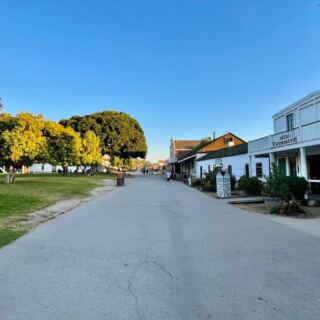
Downtown Tucson has a turquoise line painted on its sidewalks, and it is there on purpose. Follow it, and it leads you on a loop through the heart of the city.
The starting point is a Spanish fort where Tucson began, long before Arizona became a state. Read on to learn how a small museum, a few cannons, and a painted line can tell the story of a whole city.
A Fort on Court Avenue
Tucson did not start as a city of highways and shopping centers. It started inside adobe walls built by Spanish soldiers.
The Presidio San Agustín del Tucsón Museum sits at 196 N Court Ave, Tucson, AZ 85701, in the downtown core of southern Arizona. The site is known as the birthplace of Tucson, and today it holds displays on the city’s early history.
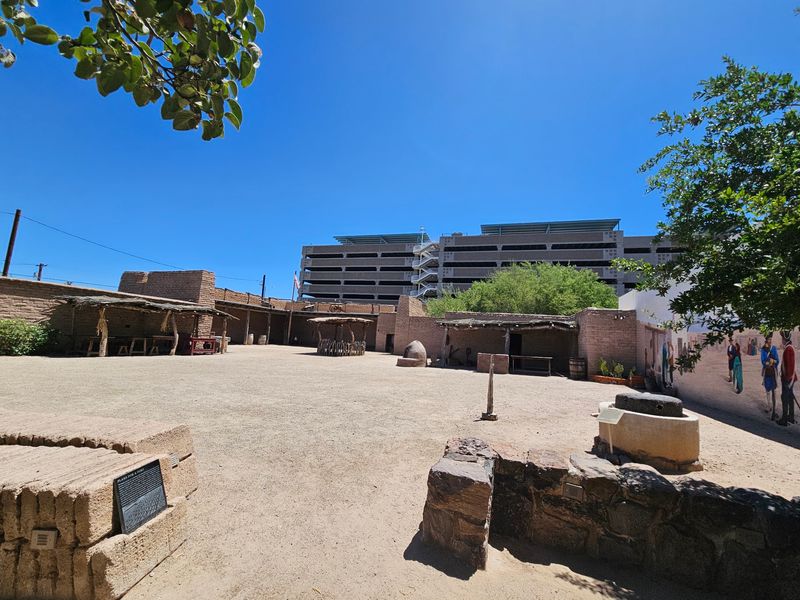
The museum is a reconstruction of part of the original fort. That detail matters, because the walls you see help show how the settlement was laid out and defended in its earliest days.
Small in size but large in story, the museum works as a starting point for understanding everything else downtown. Many people spend about an hour inside, then keep exploring the nearby streets.
It is a compact stop that rewards curiosity, and it sets the stage for a walk that stretches far beyond its gates.
Roots Deeper Than Statehood
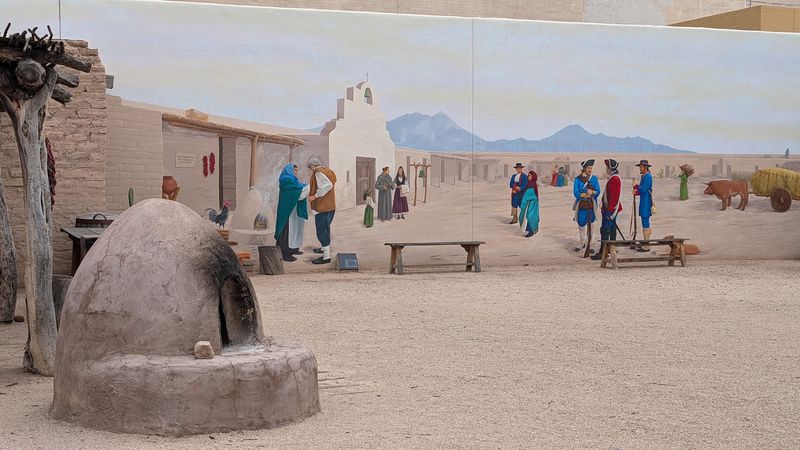
Arizona became a state in 1912. The story told at this fort reaches back much further than that date.
The exhibits cover a broad stretch of time. They begin with indigenous peoples who lived in the area roughly 2,000 years ago, then move through the Spanish, Mexican, and American periods.
Displays touch on Native American inhabitants, European settlers, religion, agriculture, and trade. Together, they explain how a military outpost slowly turned into a growing town.
The museum even displays some original architecture from before Spanish colonization. Seeing those remains helps connect the reconstructed fort to the people who were here first.
For a history fan, this layered approach is the real draw. Each era builds on the one before it, so the timeline feels connected rather than scattered.
By the end, the phrase “older than Arizona” stops sounding like a slogan and starts sounding like simple math.
The Turquoise Line Begins Here
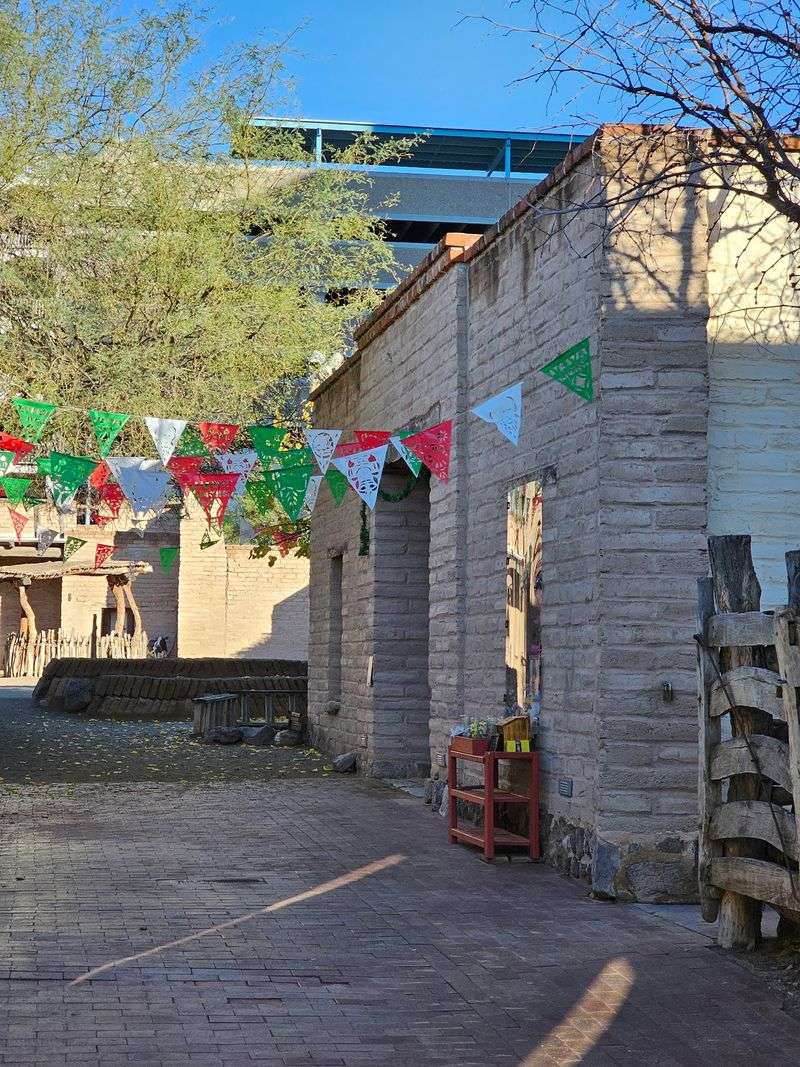
Some walking tours need a guide with a flag. This one just needs you to look down.
The Turquoise Trail is a self-guided walk that starts at the Presidio. A painted turquoise line on the sidewalk marks the route, which makes it simple to follow even without a map.
The trail is an easy walk with plenty to see along the way. It passes numbered stops tied to downtown history, and the museum offers both a written brochure and a Turquoise Trail app to explain them.
A useful tip: the paper map is available at the museum, so arriving during open hours helps. Early birds can still follow the painted line, but they may miss the details behind each numbered stop.
The line turns a stroll into a story. Grab the brochure first, and the sidewalk becomes a timeline you can walk on.
Docents Who Know Every Brick
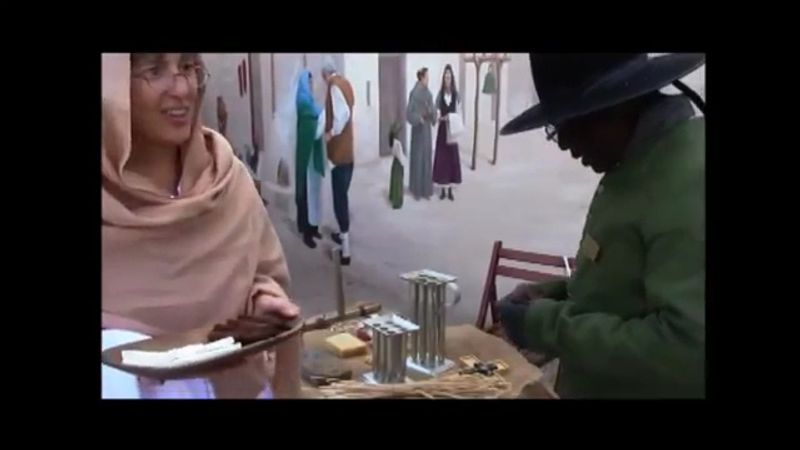
Good history needs a good storyteller, and the Presidio has plenty of them.
Docents and volunteers are a big part of the experience here. The staff are known for being knowledgeable and friendly, and many appear to be passionate local volunteers who care deeply about Tucson’s past.
A docent-guided tour adds details that are easy to miss when wandering alone. Guides explain how the fort worked, what daily life looked like, and why certain features were built the way they were.
The museum guarantees docent tours twice a week. Docents are often on hand at other times too, so a guided walk may be possible even on a regular day.
Even when no full tour is running, a volunteer will often share a short overview. That personal touch turns quiet displays into real conversations, and it is one of the main reasons people leave with more than they expected.
A Courtyard Hiding Behind the Shop
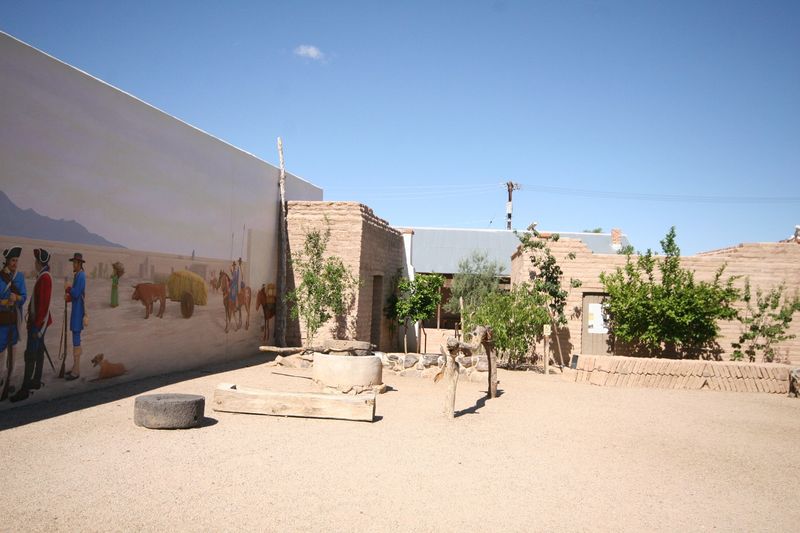
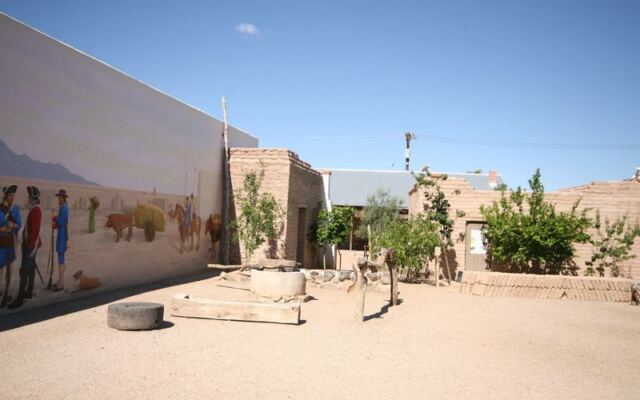
From the front, the entrance looks modest. Then the small shop opens onto a large, interesting courtyard, and the scale of the place suddenly changes.
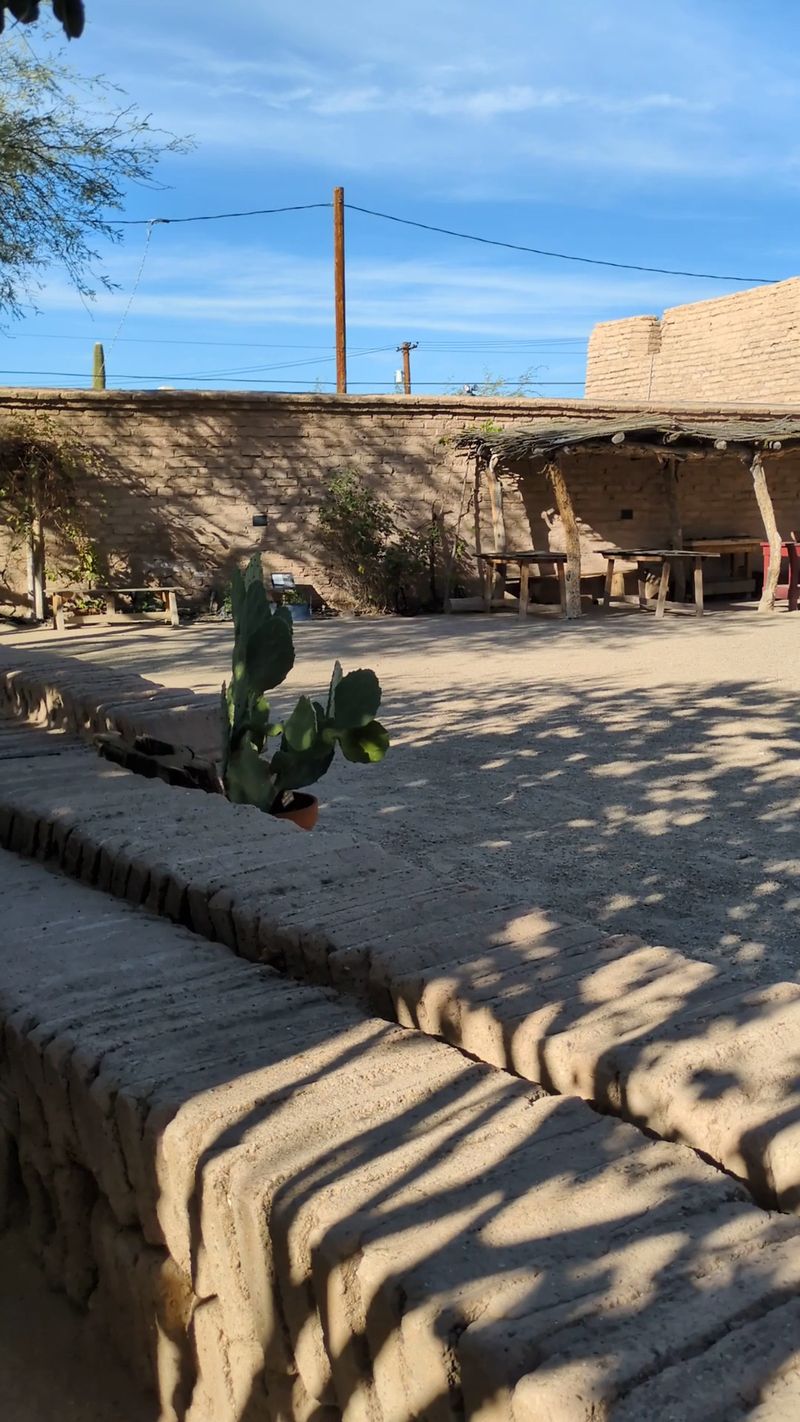
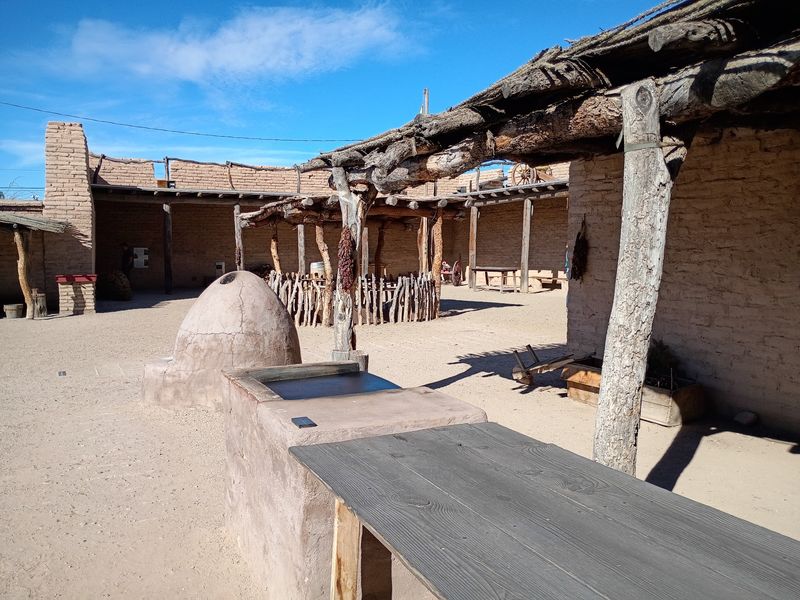
That surprise is part of the fun. The courtyard holds outdoor exhibits that cover a slice of Tucson’s history and culture, and some people enjoy these outdoor displays even more than the indoor rooms.
Wandering the courtyard gives a clearer sense of how the fort was arranged. Walls, open space, and exhibits sit together, so the layout makes sense in a way a diagram cannot match.
Beyond the restored section, parts of the original Presidio footprint extend into the surrounding area. Some locals like to walk around those outer edges after finishing the courtyard.
It is easy to underestimate this spot from the sidewalk. Step past the gift shop, and the fort reveals itself one wall at a time.
Cannons, Muskets, and Living History
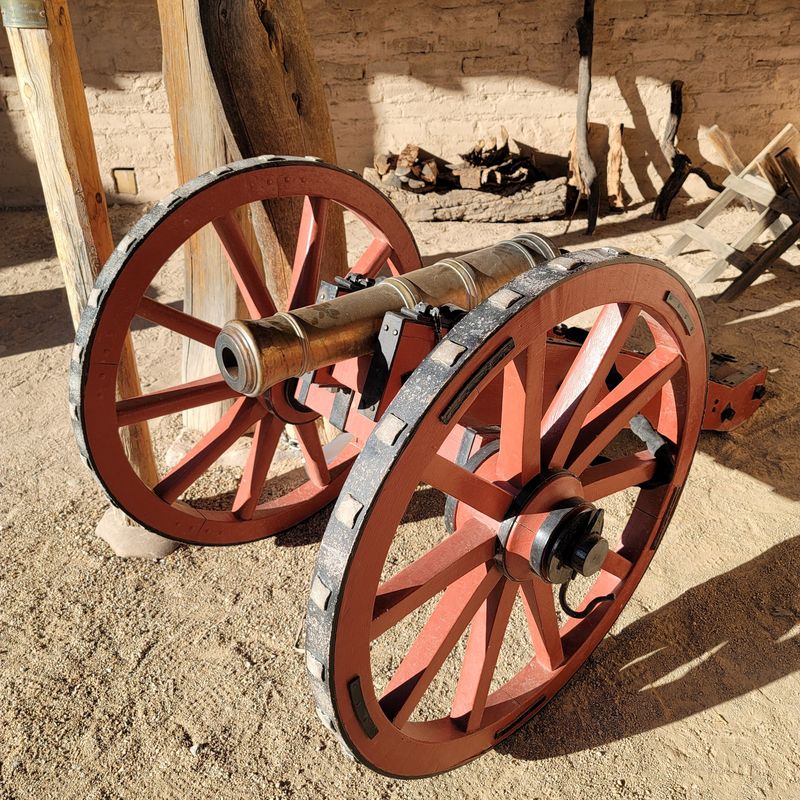
Quiet museums have their place. Every so often, though, this one gets loud on purpose.
Living History Days bring the fort to life with demonstrations. Cannon firing and musket demonstrations are highlights, and they tend to be the moments people remember most.
These events run on the second Saturday of each month from October through April. Each season features new themes and activities, so the museum website is the place to check what is coming up.
Past events have included homemade bread and tortillas for sampling. Hands-on moments like these help explain everyday life in the settlement alongside the military side.
School field trips sometimes get a similar experience on weekdays. The museum points out that Living History Days offer the same energy without needing to work around a class of students.
Plan for the second Saturday, and the history lesson comes with a boom.
Costumes and Family Snapshots
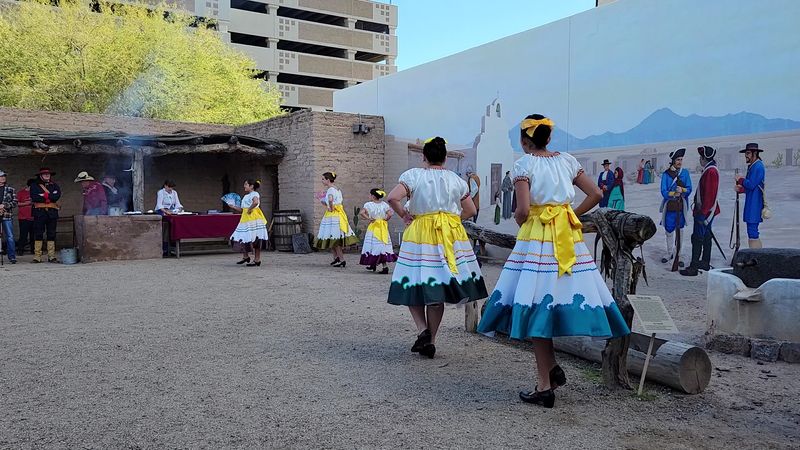
Kids who groan at the word “museum” may change their tune once the costumes come out.
Families can let children try on costumes for photos. It is a simple activity, but it gives younger guests a way to step into the past without reading every panel.
The museum is kept clean and in good condition, which helps parents relax. A guide who walks the whole family through the grounds can make the history easy to follow for different ages.
The compact size also works in favor of families. About an hour covers the main exhibits, so attention spans are not stretched too far.
Many families treat it as a Saturday outing. Pair it with lunch nearby or a short stretch of the Turquoise Trail, and the day fills up nicely.
A dress-up photo at a Spanish fort beats another selfie at the mall by a wide margin.
Murals Beyond the Walls
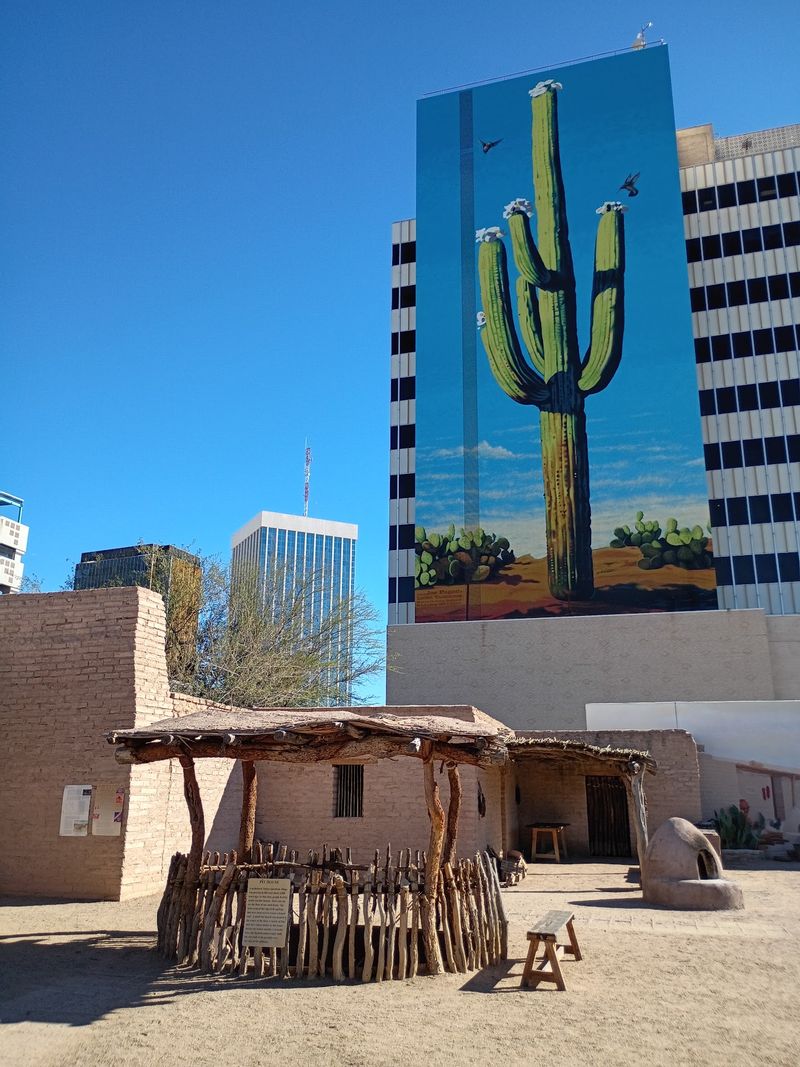
History at the Presidio does not stop at adobe. The museum also runs walking tours that explore the city’s public art.
Options include the Mainly Murals Walking Tour and the Public Art and Murals Walking Tour. One mural tour lasts around two hours and covers a good stretch of downtown.
Guides on these walks are known for their passion. They share stories about the artists, point out the best spots to view each piece from a distance, and know downtown streets extremely well.
That enthusiasm makes a real difference. A mural is just paint until someone explains who made it and why.
The full list of walking tours is posted on the museum website. Booking one is a smart way to connect the old fort with the modern, creative side of Tucson, proving the city still has plenty to say on its walls.
Music in an Old Fort
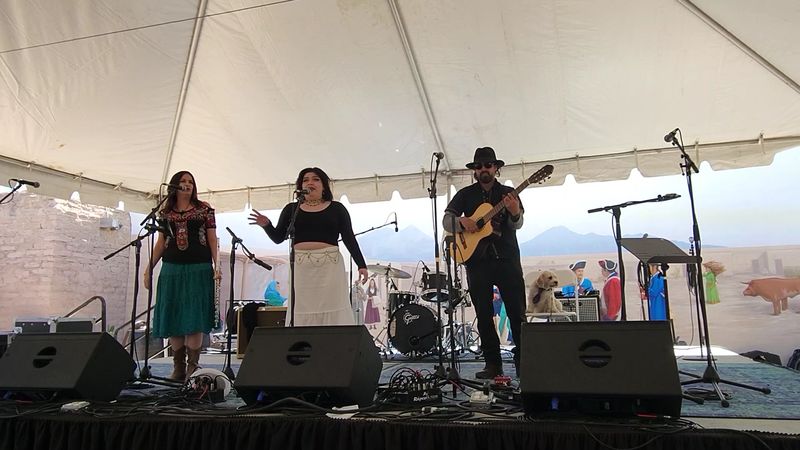
Few stages come with walls this historic. The Presidio courtyard has hosted live performances that turn the fort into a gathering place.
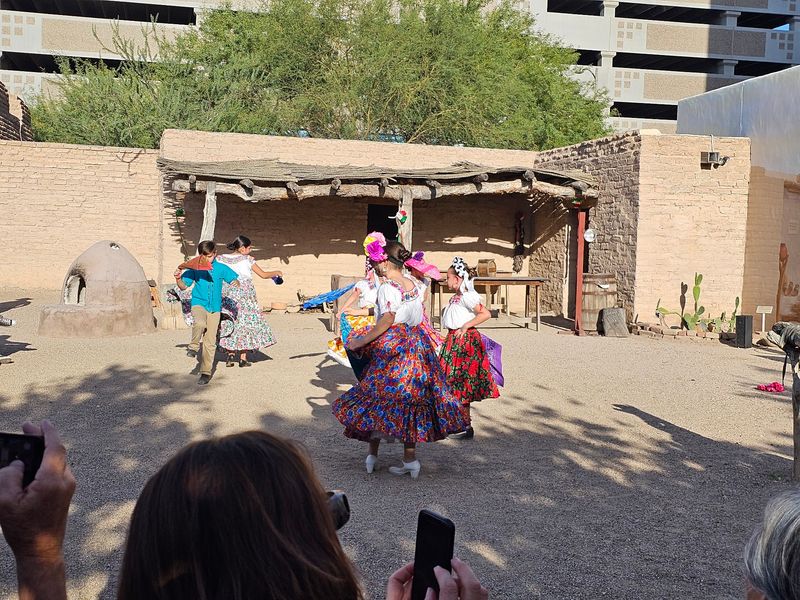
The Tucson Folk Festival has used the site as one of its stages. Crowds have filled the courtyard for these shows, and the setting adds a sense of place to every set.
Folklórico and mariachi performances have also taken place in the courtyard. These events tie the fort to the living culture of the region, not just its past.
Festival days can mean less time for exhibits. Many people who come for the music plan a return trip to explore the indoor displays properly.
Checking the museum website for special events is worthwhile before a visit. A planned concert or celebration could shape the whole day.
On the right afternoon, the old fort hums with new energy.
Who Will Love It Most
Not every museum needs to be enormous. Some of the best ones are small enough to finish before lunch.
History lovers are the obvious audience. Anyone curious about the American Southwest, Spanish forts, or how cities begin will find plenty to think about here.
Travelers short on time will appreciate the size. A quick but informative visit fits easily into a downtown day.
Locals also use the museum as a regular stop. Some grab a coffee at nearby Dandelion Cafe and stroll the outdoor exhibits again and again.
Families, art fans, and music lovers each have their own entry point, through costumes, mural tours, or festivals. That range is unusual for a place this compact.
Those wanting huge galleries and hours of indoor content may find it brief. For everyone else, the scale feels just right.
Hours Worth Double-Checking
Timing matters here more than at most attractions. The museum keeps a short weekly schedule.
Current listed hours are Thursday through Saturday, 9 AM to 3 PM. The museum is closed Sunday through Wednesday.
Seasonal changes do happen. Summer hours have been shorter in the past, and online listings have not always kept up.
The best move is to check the official website, tucsonpresidio.com, before heading over. The museum itself recommends the site for accurate hours and costs.
Late arrivals sometimes get a pleasant surprise. Those showing up within roughly 45 minutes of closing have been admitted free, though that is a policy worth confirming rather than counting on.
A morning arrival gives the most flexibility. It leaves time for the exhibits, a chat with a docent, and the Turquoise Trail afterward, all before the gates close in the afternoon.
Admission at a Friendly Price
History does not have to strain a travel budget. Admission here stays modest.
Adult tickets have been around $9. Seniors pay about $6, and county residents have been listed at $6 as well.
Because prices can change, the official website is the place to confirm current rates. The museum encourages guests to rely on it for up-to-date costs.
For the price, the value is solid. Guided talks, outdoor exhibits, and the courtyard all come with the visit, and the paper Turquoise Trail map is available at the museum.
The gift shop sits near the entrance. It is the first space you pass through before reaching the courtyard, so a browse on the way out is easy.
Many people leave feeling the ticket was well spent. A small fee unlocks a big chunk of Tucson’s backstory, which is a fair trade by any measure.
Finding Your Way Downtown

Getting to the fort is part of the adventure, sometimes more than expected.
The museum sits in a downtown area with narrow roads and one-way streets. Road reconstruction has also affected the area at times, so finding the entrance can take some patience.
Allowing a little extra time helps. A quick look at a map before leaving can save a few loops around the block.
Once there, the location pays off. Several places to eat and shop sit directly across the street, and many people spend another hour exploring after their visit.
El Charro, a well-known restaurant, is just a short walk away. Dandelion Cafe is another nearby stop favored by locals.
The Turquoise Trail also begins right here. Park once, see the museum, then let the painted line guide the rest of your afternoon on foot.
A Small Fort With a Long Reach
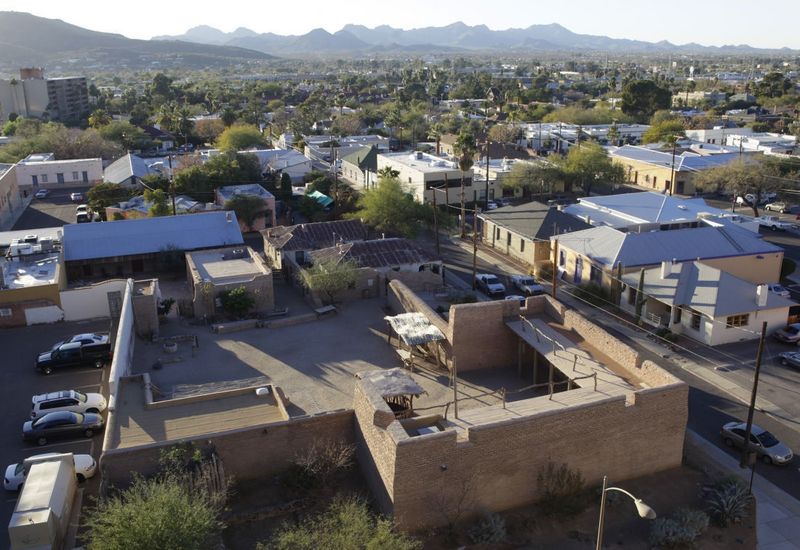
Plenty of cities claim deep roots. Tucson can point to the exact corner where its story began.
The Presidio San Agustín del Tucsón Museum packs a lot into a compact space. Friendly docents, a surprising courtyard, and lively special events give it a personality bigger than its footprint.
Its strongest feature may be how it connects to everything around it. The Turquoise Trail, the mural tours, and the nearby shops all start or circle back here.
Hours are limited, so planning ahead is essential. Check the website, arrive early, and consider timing a trip with a second-Saturday Living History Day between October and April.
An hour inside will not cover all of Tucson’s history. It will, however, give you the foundation for understanding the rest of downtown.
Follow the turquoise line out the door, and the city keeps the conversation going.
Share this story