Pointed arches, soaring spires, and stained glass once told Europeans that their cities were rich, proud, and a little bit competitive. Many of those towers still stand today, and they shape how whole cities look from far away.
Some places keep their medieval look in a big way, with walls, belfries, churches, and merchant houses all working together. Pack your curiosity, because these 15 cities are ready to show off.
Tallinn, Estonia
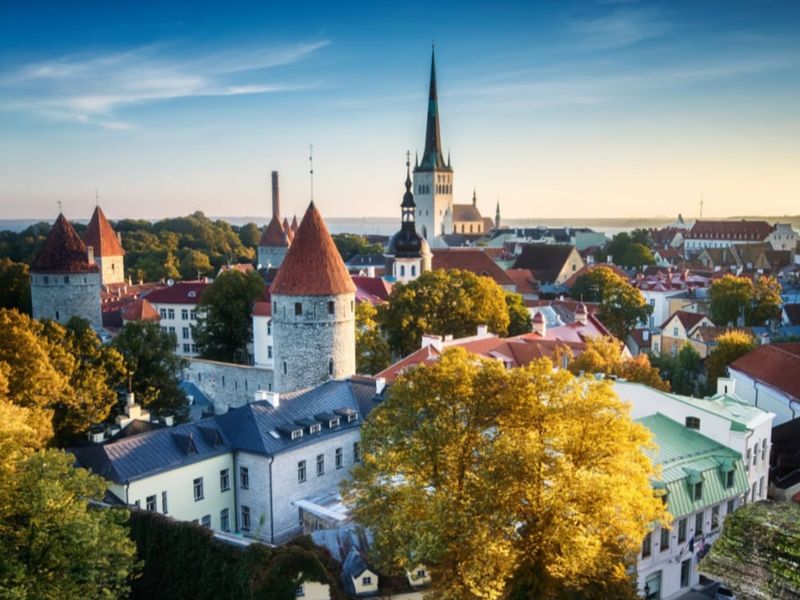
Red roofs, stone towers, and church spires crowd together in Tallinn like a storybook that refused to close. UNESCO calls the Old Town one of the best preserved trading cities in northern Europe.
Walk up to the higher district and you will see why.
St. Olaf’s Church, St. Nicholas’ Church, and the Church of the Holy Spirit poke above the rooftops. The 15th-century Gothic Town Hall adds its own slim tower to the group.
Together they give the skyline plenty of pointy personality.
Much of the street layout dates back to the 13th and 14th centuries, so your map is basically medieval. Parts of the old fortifications still rise more than 15 meters high.
Climbing a tower on the wall is a fun way to spot the churches all at once.
Visitors often say the town feels surprisingly lived in, not frozen in time. Cafes tuck into old merchant houses, and cobbled lanes bend in ways no modern planner would dare.
Wear sturdy shoes, because those stones are charming but bumpy.
Prague, Czech Republic
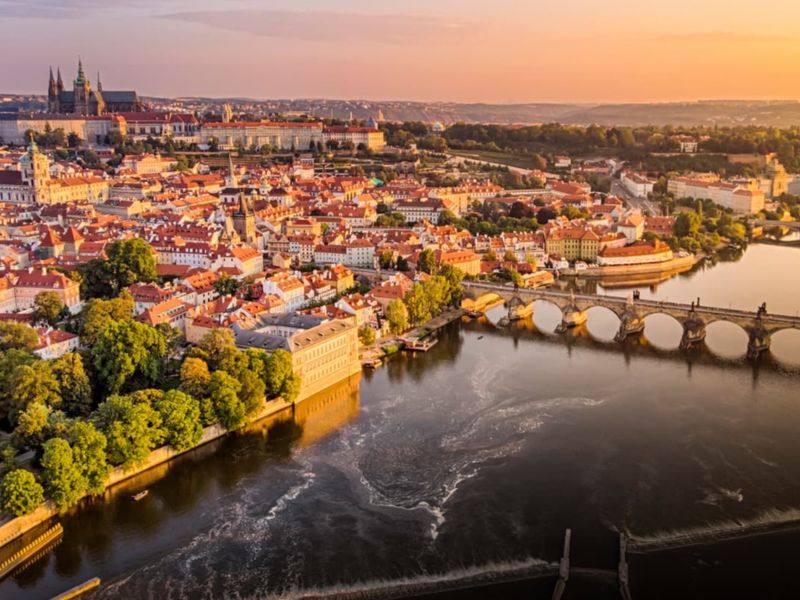
Here is a number to chew on: the Old Town Hall tower in Prague stands about 70 meters tall, and its construction began in 1338. That kind of age sets the tone for the whole city.
Prague has Baroque and modern buildings too, but the Gothic ones still steal the show.
Much of the credit goes to Emperor Charles IV in the 14th century. His big building plans gave the city St. Vitus Cathedral, Charles Bridge, and many major churches.
UNESCO says Prague’s Gothic style shaped architecture across Central Europe.
For a great view, stand by the Vltava River and look across the water. Dark pointed towers rise over the packed rooftops of the historic districts.
It is a skyline that looks like it was drawn with a very sharp pencil.
In Old Town Square, the twin spires of the Church of Our Lady before Tyn loom over everything. Inside the Old Town Hall, you can still find Gothic rooms worth a peek.
Go early in the morning for fewer crowds and softer light.
Bruges, Belgium
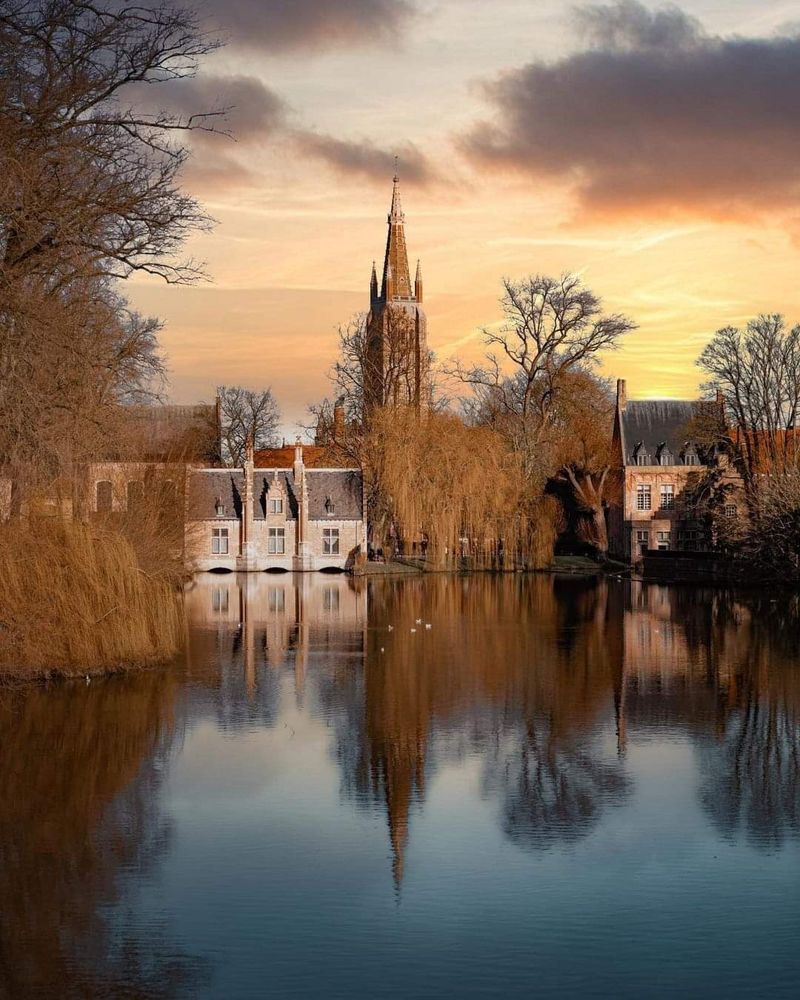
Bruges got rich, and it built like it wanted everyone to know. During the Middle Ages it was one of Europe’s busiest trading centers.
That money turned into brick towers, canals, and churches that still look wonderfully original.
The star is the 83-meter Belfry. Builders added to it in stages between the 13th and 15th centuries, and it stood as a proud sign of the city’s independence.
If you are up for it, climbing its stairs rewards you with a wide view of red roofs and winding water.
UNESCO notes that original Gothic construction is still central to the historic center. Bruges also helped shape Brick Gothic across northern Europe.
Towers from the cathedral, churches, and civic buildings rise above the maze of old streets.
Later Neo-Gothic restoration work did not erase the medieval mood. It actually strengthened it.
Take a slow canal boat ride, and you will see the skyline from the angle merchants once knew.
Ghent, Belgium
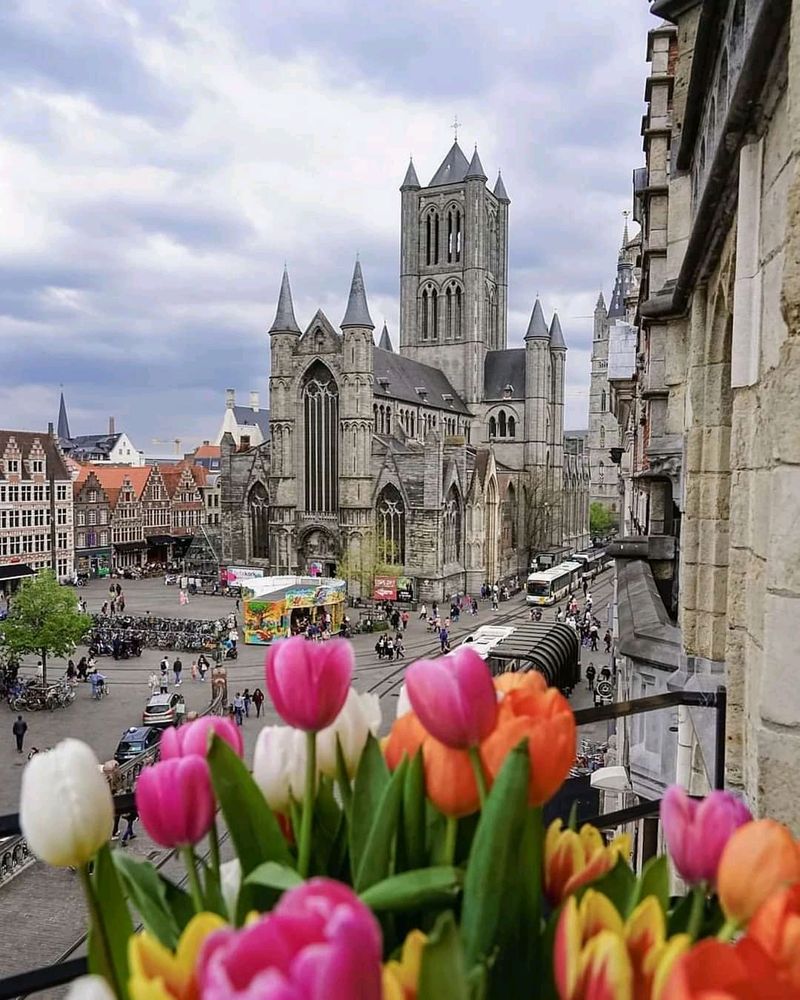
Three towers, one view, and a whole lot of rivalry. Stand on St. Michael’s Bridge in Ghent and you will see them lined up almost like a trio posing for a photo.
St. Nicholas’ Church, the Belfry, and St. Bavo’s Cathedral define the skyline.
St. Nicholas’ began in the 13th century and is a major example of Scheldt Gothic. St. Bavo’s grew from an older Romanesque church into a grand Gothic building during the 15th and 16th centuries.
Both are sturdy, tall, and impossible to miss.
The Belfry sits right between them, and it tells a different story. It stood for the power of the citizens, not the church.
That means religious and civic leaders were basically competing for the sky.
The best time for photos is around sunset, when the stone glows warm. Cross the bridge slowly and look back.
You will notice how each tower has its own shape, even though they stand so close together.
Siena, Italy
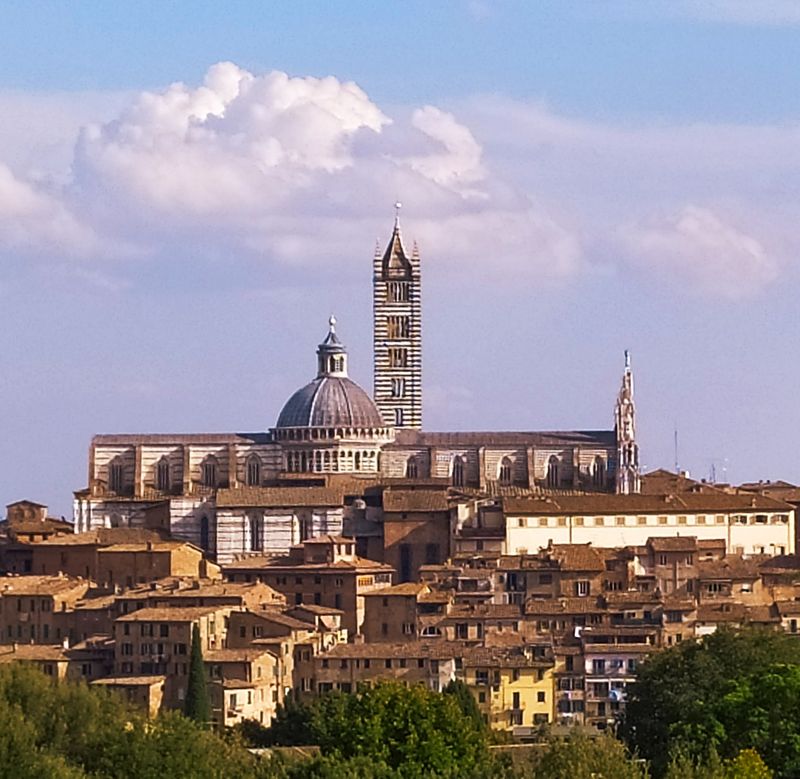
While other Italian cities rushed toward the Renaissance, Siena simply kept its Gothic look. UNESCO calls the historic center the embodiment of a medieval city.
Residents held onto the style created between the 12th and 15th centuries.
The Cathedral of Santa Maria Assunta wears dramatic stripes of black and white marble. Nearby, the slim Torre del Mangia shoots up beside the Palazzo Pubblico.
Brick palaces climb the hills around them like an audience.
What makes Siena special is that no single building does all the work. Streets, churches, public halls, and even the surrounding countryside fit together as one big picture.
Walking through it feels like moving through a carefully planned stage set.
Head to Piazza del Campo, the shell-shaped square, and sit on the bricks for a while. Then climb the tower if your legs are willing.
From the top, the Gothic city spreads out in every direction.
Lübeck, Germany
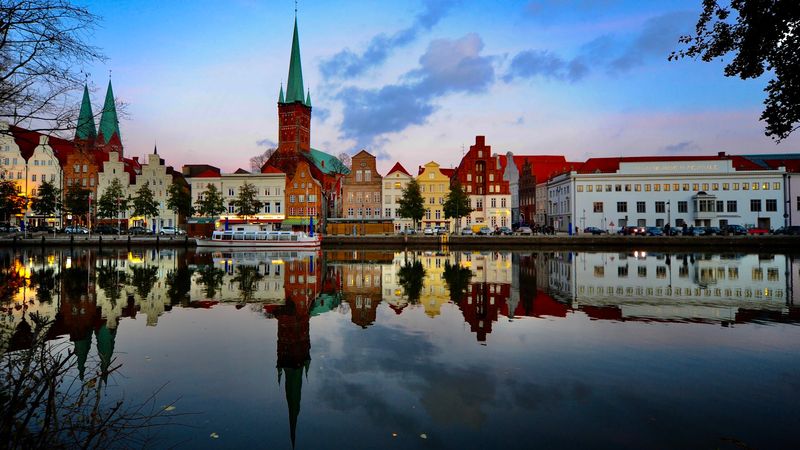
Count the spires in Lübeck and you will usually land on seven. That famous set of church towers is the city’s signature.
Five big Gothic brick churches lead the pack: St. Mary’s, St. Peter’s, St. James’, St. Giles’, and Lübeck Cathedral.
St. Mary’s became a model for Brick Gothic churches all around the Baltic region. Builders in other towns copied its style again and again.
Not a bad legacy for a pile of red bricks.
Lübeck grew mighty as the leader of the Hanseatic League, a network of trading towns. UNESCO recognizes the surviving merchant houses, salt warehouses, churches, and street layout as proof of that wealth.
The Old Town sits on an island, which makes the skyline easy to admire from the water.
World War II caused severe damage here. Careful rebuilding saved the historic silhouette that had defined the city for centuries.
Try a walk around the island’s edge and watch the spires shift as you go.
Strasbourg, France
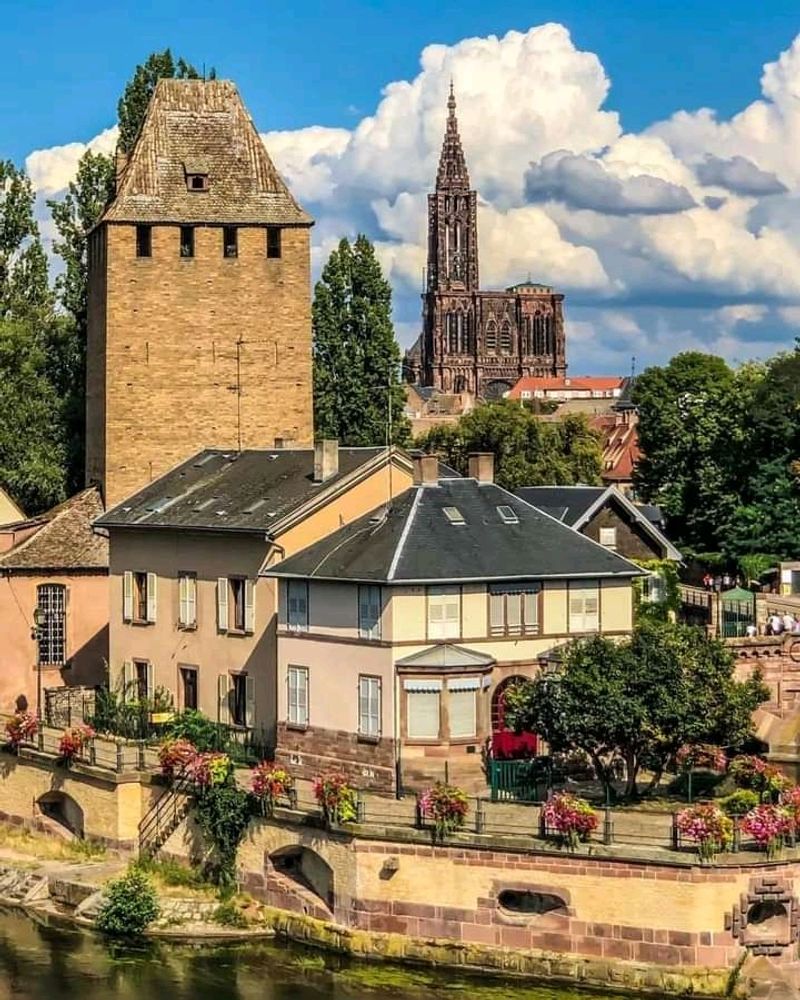
One spire, one very confident cathedral. Strasbourg Cathedral rules the city with a lopsided, lacy tower that you can spot from nearly anywhere.
UNESCO says its Gothic outline organizes the whole Grande-Île.
The building took centuries to finish. Its western facade is packed with fine stone detail, and the single soaring spire made it a famous vertical landmark in medieval Europe.
Stand close and tilt your head back; it takes a moment to take it all in.
Around the cathedral, narrow streets hold late medieval and Renaissance houses. Many sit on the old plots of land laid out long ago.
Canals bend between them and give the old center a cozy, watery feel.
Later, the city picked up French and German building styles, especially in the Neustadt district. Even so, the cathedral still controls the center of the view, just as it did in the Middle Ages.
Walk along the river at dusk and watch the spire glow pink.
York, England
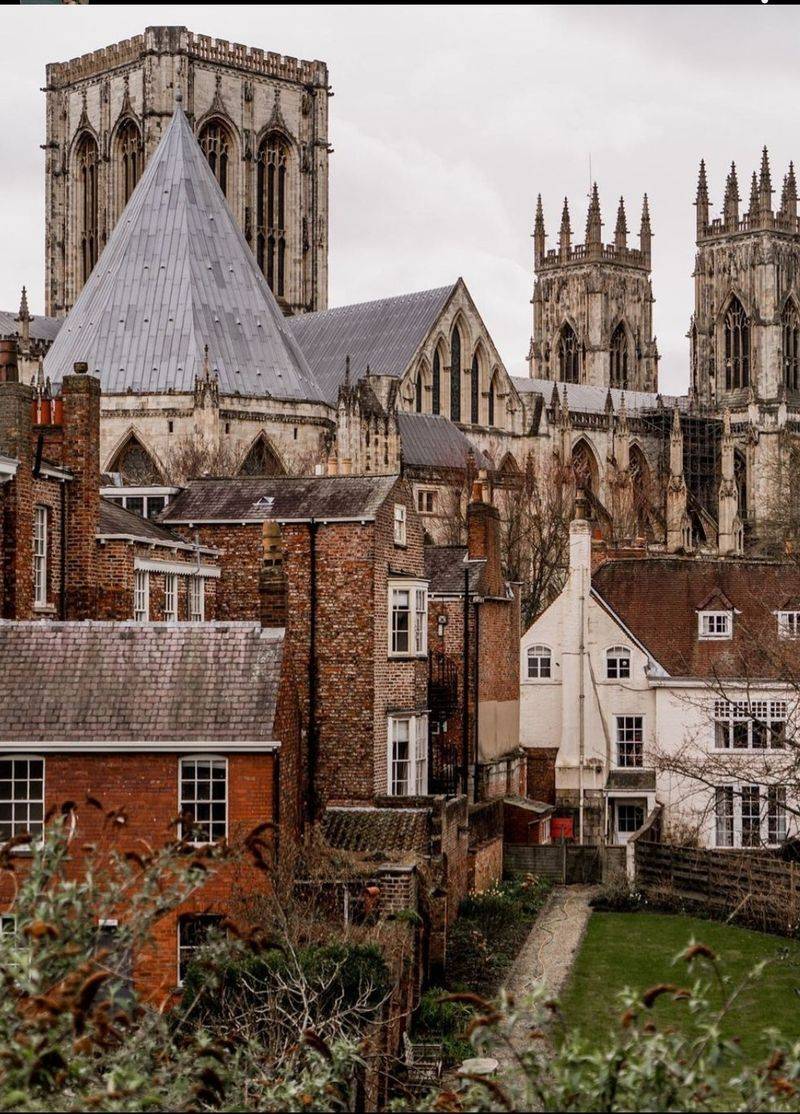
Finished in 1472, York Minster took centuries to build and still looks ready for another few. It is one of the largest medieval cathedrals in northern Europe.
English Gothic design shows off here in tall towers and huge windows.
Speaking of windows, the Great East Window is a showstopper. John Thornton created it between 1405 and 1408, and it is among the best surviving medieval stained glass anywhere in Europe.
Sunlight through it is a real treat.
The Minster’s towers appear from streets, walls, and approaches all across the center. You can walk along the old city walls, among the best preserved in England, and keep spotting them.
It is like a game of hide and seek that the cathedral always loses.
York is more than one big church. Medieval parish churches, guild buildings, and narrow lanes fill the center.
Underneath lie traces left by Romans, Anglo-Saxons, Vikings, and Normans, so every step crosses a few centuries.
Ávila, Spain
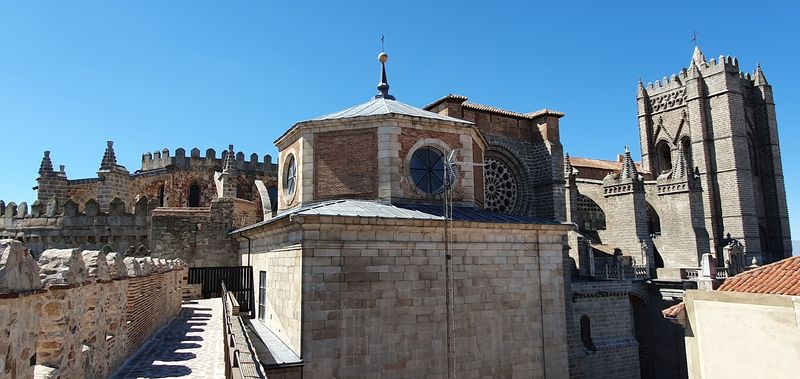
Nine gates, dozens of towers, and a wall that wraps the whole old city like a stone hug. Ávila looks tough because it was built to be. UNESCO describes its defenses as the most complete in Spain.
Here the skyline is as much about soldiers as saints. Crenellated walls rise beside church roofs, and the effect is wonderfully stern.
From viewpoints outside town, it looks like a fortress that grew a city inside.
The Gothic cathedral adds a clever twist. Its fortified apse was built right into the defensive wall.
Church and fortress share the same stones, which is rare to see so clearly.
Walk part of the wall for a bird’s-eye look at rooftops and the plain beyond. The Castilian plateau stretches out wide and open, and the town feels even sturdier against it.
Visit near sunset, when the granite turns golden and the shadows grow long.
Regensburg, Germany
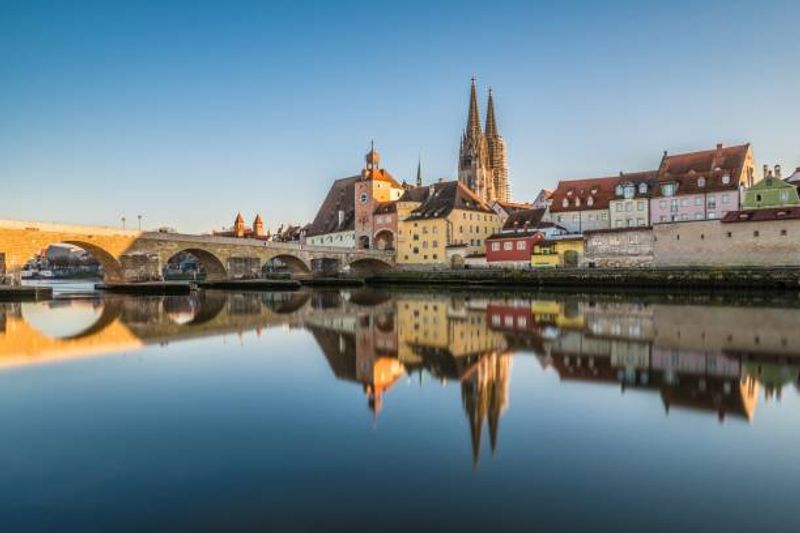
A bridge from the 12th century still carries people across the Danube in Regensburg. The Stone Bridge is one of the city’s great survivors, and it sets the mood for the old town.
Medieval trade left its mark all over this place.
St. Peter’s Cathedral is the Gothic highlight. Its twin spires rise above a sea of roofs whose layout has stayed mostly the same since the 14th century.
From the riverbank, they look sharp and proud.
UNESCO points to the mix of Romanesque and Gothic buildings, narrow lanes, fortified structures, and patrician tower houses. Monasteries and churches round out the picture.
Those tower houses were status symbols, built by wealthy merchants who liked to show off.
Regensburg mattered in the Holy Roman Empire and linked western Europe with Italy, Bohemia, and routes farther east. You can feel that busy past in the lanes.
Grab a snack by the river and watch the spires while you eat.
Toledo, Spain
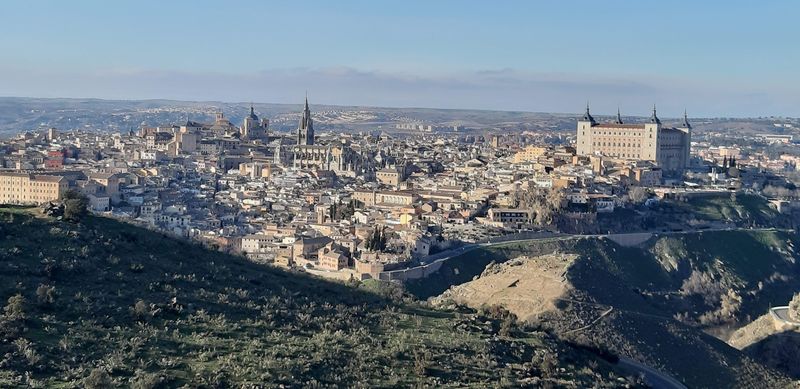
Toledo sits on a rocky hill almost ringed by the Tagus River, which makes for a dramatic first look. The huge Gothic cathedral stands out as one of the city’s tallest landmarks.
Still, it is only part of the story.
This city’s medieval character is a blend of Christian, Jewish, and Islamic buildings. UNESCO highlights more than 2,000 years of urban history here.
Narrow streets hold churches, synagogues, mosques, gates, and Mudejar structures.
The cathedral and San Juan de los Reyes are key examples of late medieval Christian architecture. Meanwhile, Mudejar brickwork shows how Islamic building traditions kept shaping local styles.
Look closely at the patterns in the brick and you will spot them.
Few European cities show cultural mixing so clearly in a single skyline. Walk the winding lanes without a strict plan, since getting a little lost is part of the fun.
For the best photo, head to a viewpoint across the river.
Kutná Hora, Czech Republic
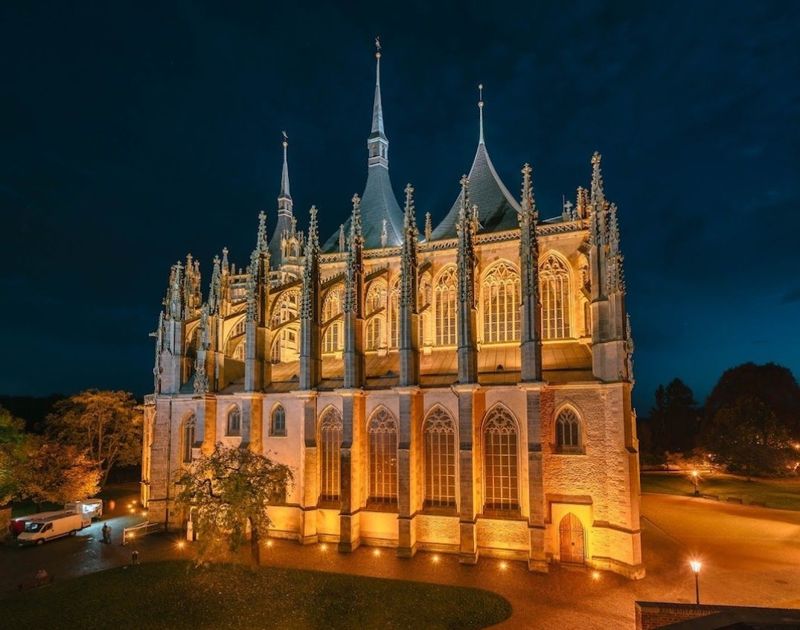
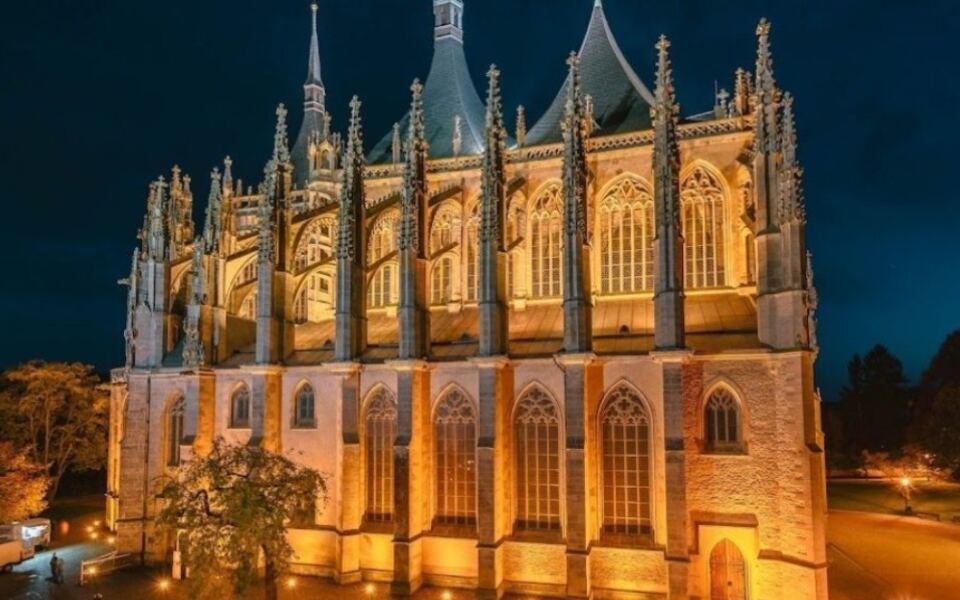
Silver built this skyline. After rich deposits were mined from the late 13th century, Kutná Hora turned into one of the wealthiest towns in the region.
The money went straight into spectacular late Gothic buildings.
The Church of St. Barbara is the headliner. Its exterior buttresses spread out like stone ribs, and its roofline peaks in a tall, tent-like shape.
Nearby, the Gothic Church of St. James adds another strong tower.
UNESCO also points to the Italian Court, the medieval street plan, and surviving Gothic homes. All of these show how much economic muscle the town once had.
Mint workers and miners once bustled through these lanes.
Baroque touches arrived later, yet the town still looks like a medieval mining city. The skyline was clearly meant to show off wealth and faith at the same time.
Walk up toward St. Barbara’s and turn around for a lovely view of the valley.
Burgos, Spain
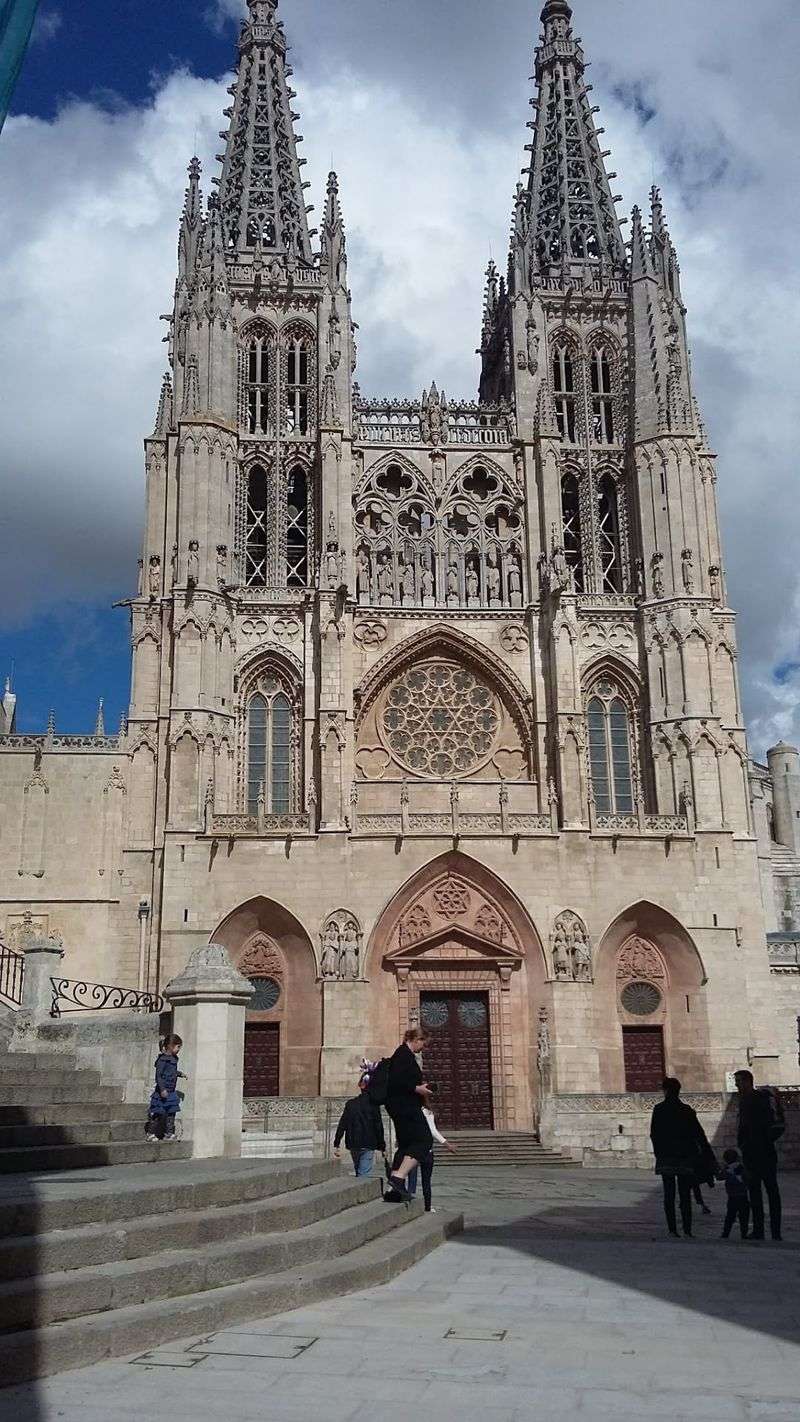
Burgos Cathedral started in 1221, and builders kept adding to it for centuries. Early plans borrowed heavily from French Gothic models.
Later work in the 15th and 16th centuries brought lacy openwork spires, chapels, and a lavish crossing.
UNESCO sees the building as an unusually complete record of how Gothic art developed. You can almost read the changing styles like chapters in a book.
Each era left its own fancy signature in the stone.
The twin western towers and their pointed pinnacles rise sharply above the old center. They are visible from many roads leading into town.
Travelers have been spotting them from afar for hundreds of years.
Burgos also lies on the Camino de Santiago, the great pilgrimage route. Pilgrims, artists, craftsmen, and ideas moved along it across Western Europe, and the cathedral grew richer for it.
If you visit, bring a camera with a wide lens, because the facade is huge.
Chartres, France
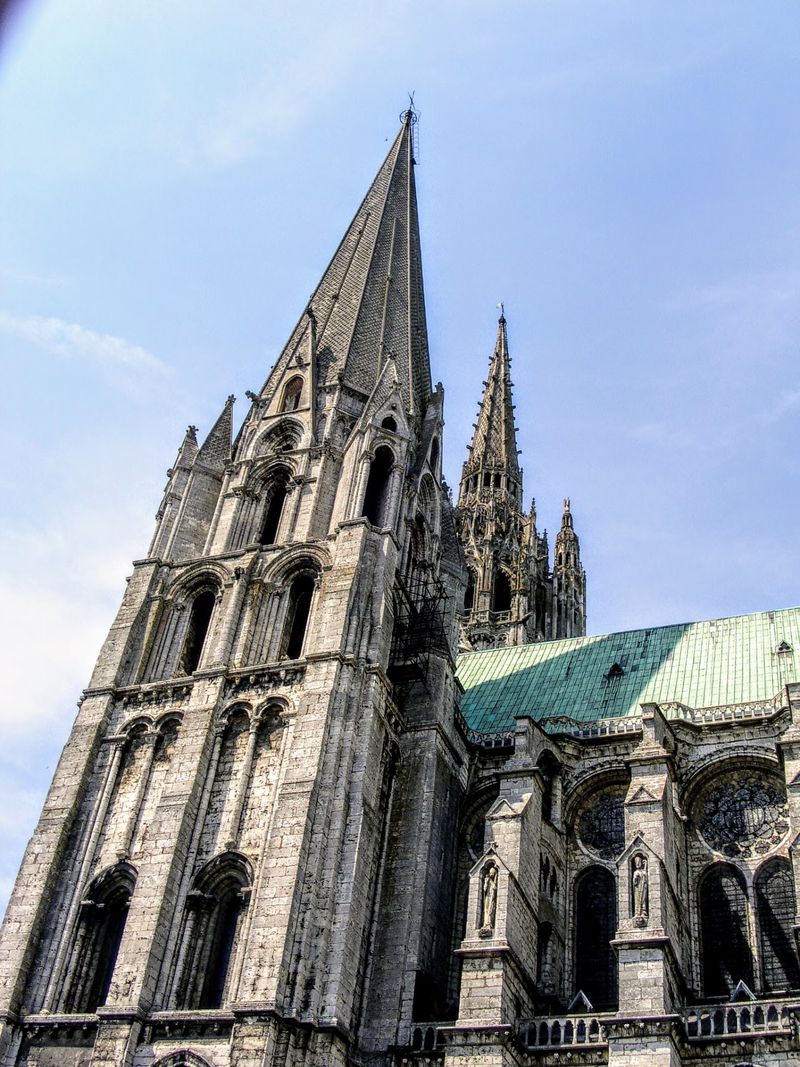
Spot those two mismatched spires from miles away, and you will know you are near Chartres. They rise over flat farmland like a signal flag.
Medieval pilgrims used them the same way, as a guide toward the city.
A fire in 1194 destroyed much of the earlier church. Builders then rebuilt the cathedral quickly, with the main structure finished by 1221.
UNESCO views it as one of the clearest and most influential examples of mature Gothic architecture.
The two towers do not match, and that is part of the charm. The southern spire reaches about 103 meters.
The later Flamboyant Gothic northern tower climbs to around 112 meters.
Down below, the upper and lower towns keep cobbled streets, half-timbered houses, medieval churches, and old passages. No matter where you wander, your eyes drift back to the cathedral.
Try walking down to the river and looking up for a fresh angle.
Nuremberg, Germany
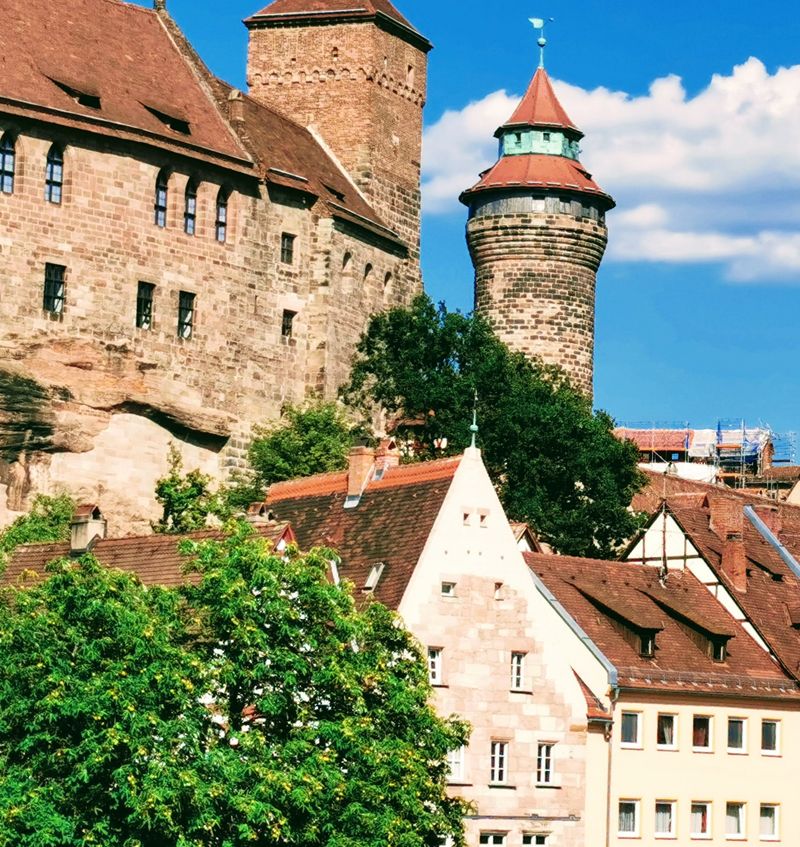
Nuremberg has a different kind of medieval story. World War II destroyed much of the city, so the look you see today includes careful rebuilding.
Even so, Gothic architecture again shapes the Old Town skyline.
Three major churches lead the way: St. Lorenz, St. Sebald, and the Church of Our Lady. They stand among reconstructed streets, city walls, and towers.
Up above it all, the Imperial Castle watches from its hill.
St. Sebald began around 1215 as a late Romanesque basilica. It was later reshaped in Gothic style.
The Church of Our Lady came along in the 14th century.
The restored ensemble brings back the tall, church-centered look of one of medieval Germany’s key imperial cities. Climb up toward the castle for a wide view of the rooftops and spires.
It is a good reminder that cities can heal and still keep their old character.
Share this story