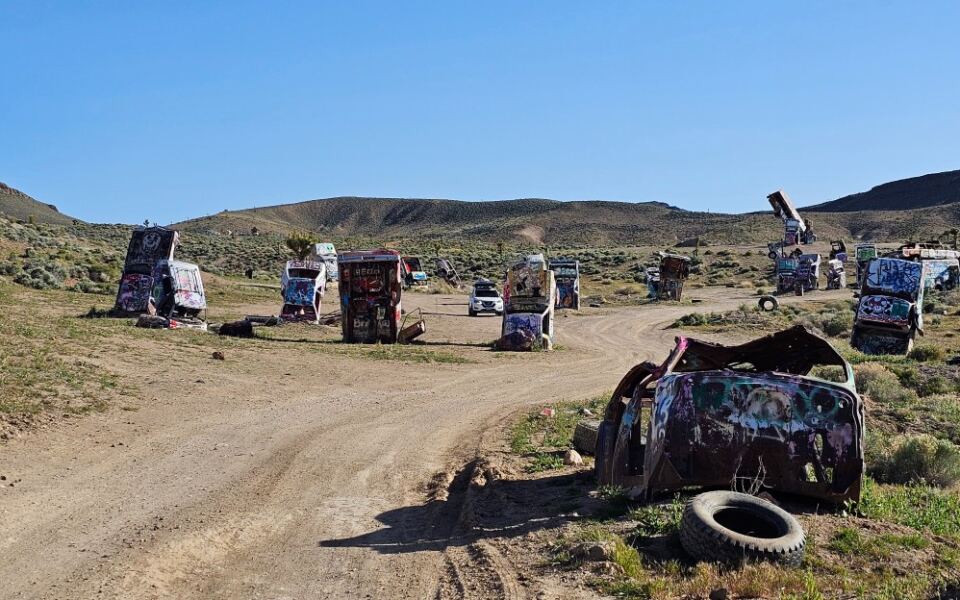
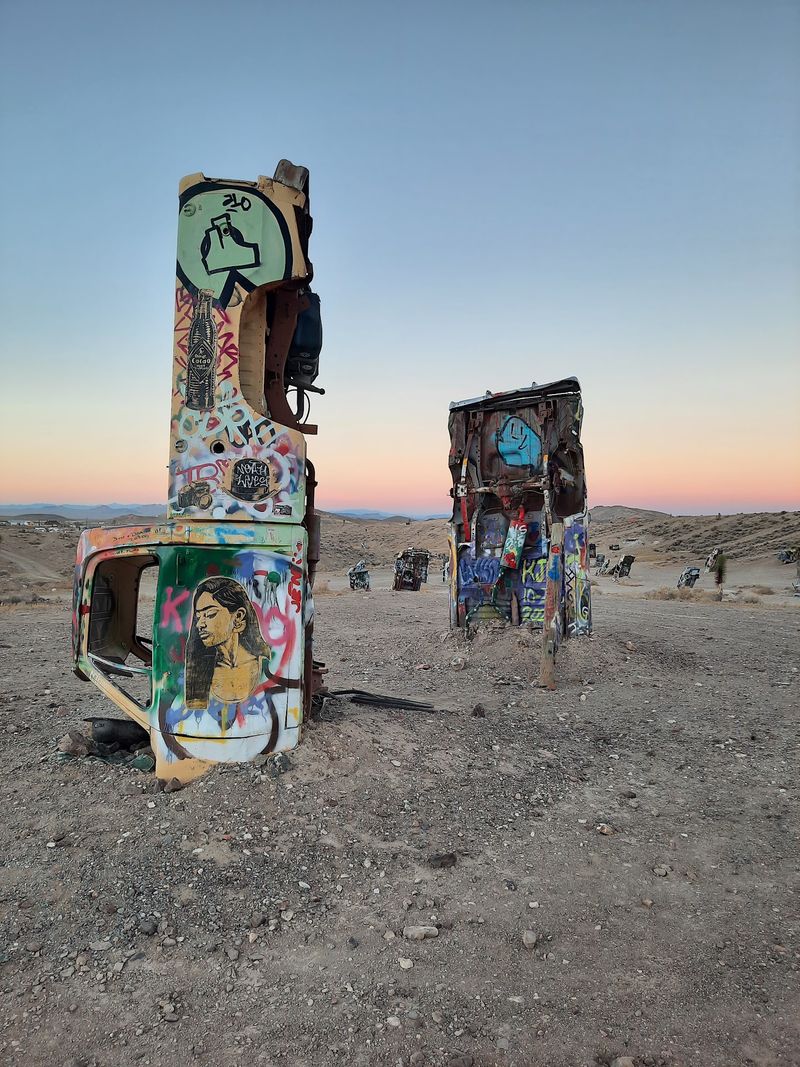
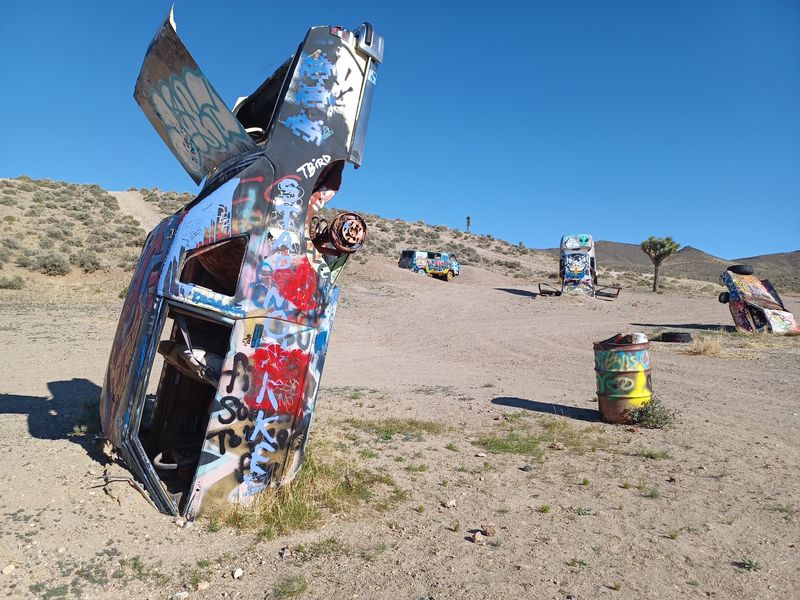
Out in the Nevada desert, dozens of old cars and even school buses stand on their noses, pointing at the sky like they fell from space. Some are buried bumper first, others tilt at odd angles, and nearly all of them are covered in bright paint.
A sign at the entrance invites artists to add their own touch. I drove a rough dirt road to find this strange field myself, and it was far bigger than I expected.
Here is what you should know before you go.
A Field Where Cars Point at the Sky
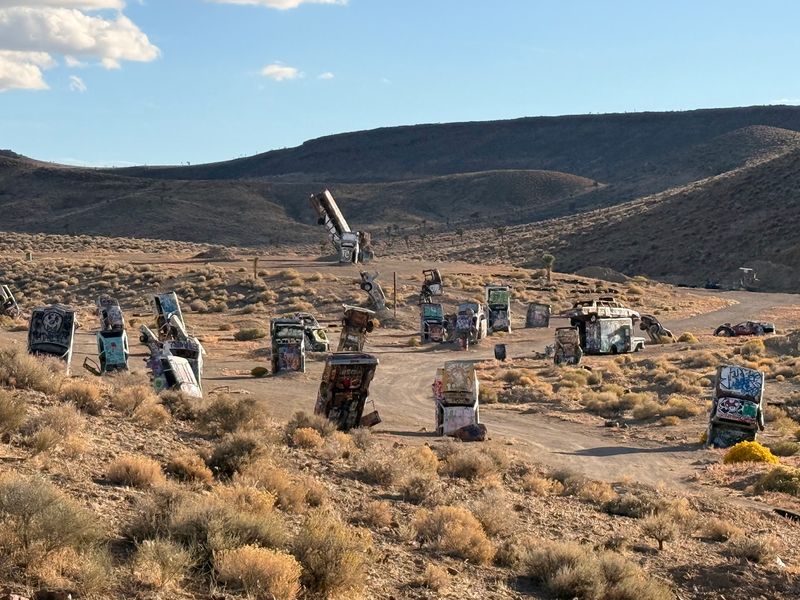
The first thing that hits you is the angle. Cars are planted nose-first in the dirt, with their back ends aimed straight up at the sky.
Some lean sideways, and a few stand almost perfectly upright.
From the top of a hill, the whole field looks like a crowd of metal creatures frozen mid-dive. I stood still for a minute just to take it in.
There were far more vehicles than I guessed from the road.
Many are old sedans and wagons, but you will also spot buses jutting out of the earth. Their long bodies make them the tallest pieces in the field.
Bring a camera with a wide lens, because a phone screen struggles to capture the scale. The open desert around the cars gives each one plenty of space, so every angle feels like a new scene waiting to be photographed.
Finding the Spot in Goldfield
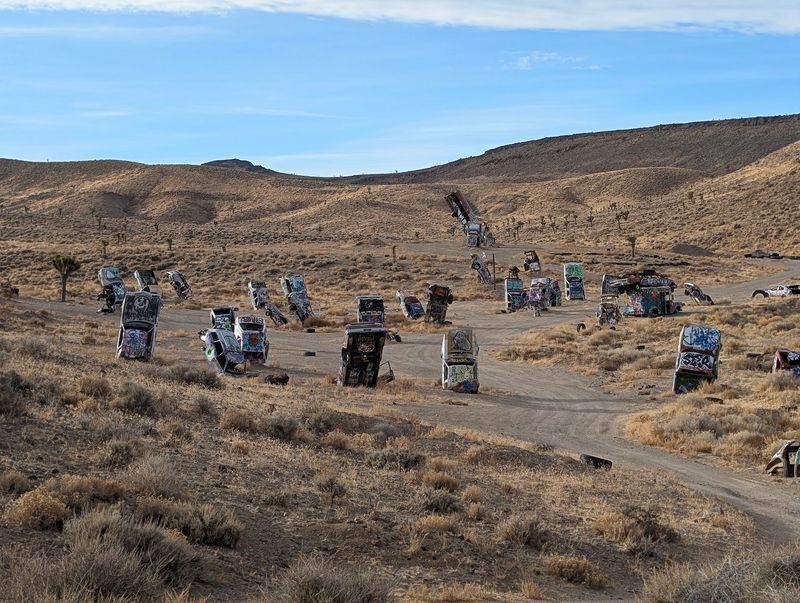
The name on the map is The International Car Forest of the Last Church, and the address is 1111 East Crystal Avenue, Goldfield, Nevada, United States. It sits just outside the small mining town of Goldfield, along the highway between Las Vegas and Reno.
Getting there is simple, though the last stretch takes some care. You leave the pavement and follow Crystal Avenue for a short way on a dirt road.
It is rutted in places, so drive slowly.
The site is open around the clock, which means sunrise and sunset visits are possible. Goldfield itself is worth a slow drive, too.
Old buildings and quiet streets give the town a faded, lived-in feel. If you take a wrong turn, as some travelers do, you will simply see more of the neighborhood.
Keep your eyes open for the first painted car, because it tells you that you have arrived.
School Buses Standing on End
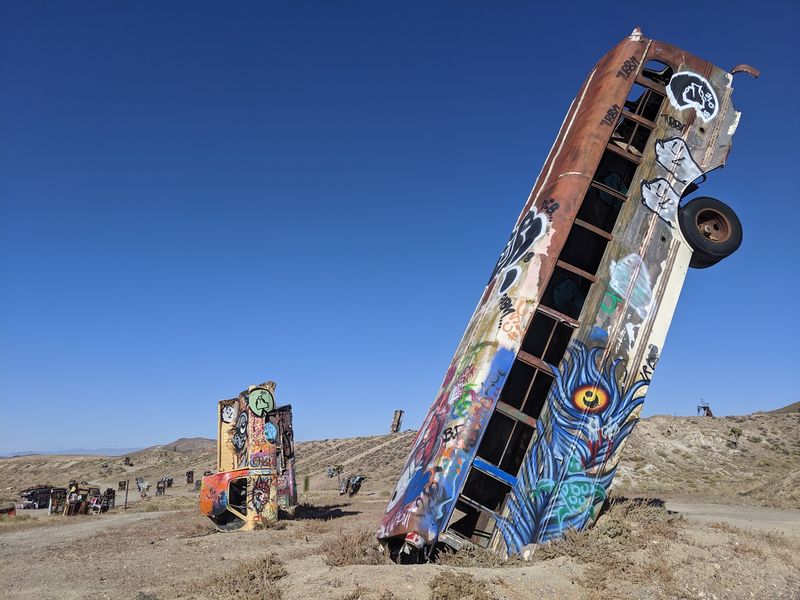
Cars are strange enough, but the buses steal the show. Several school buses are driven nose-first into the ground, with their rear ends climbing toward the clouds.
Standing next to one makes you feel small.
Their size gives the field a different kind of drama. A bus is long, wide, and covered in windows, so the paint on it spreads out like a giant canvas.
Some have murals running along the whole side.
Look closely at the metal, and you will see how weather has shaped it. Sun has faded the older colors, and fresh layers of paint sit over them.
I walked a full circle around one just to read all the markings. It is the kind of detail that makes a short stop turn into a long wander.
Take your time here, because the buses are a highlight many visitors remember most.
An Open-Air Art Gallery
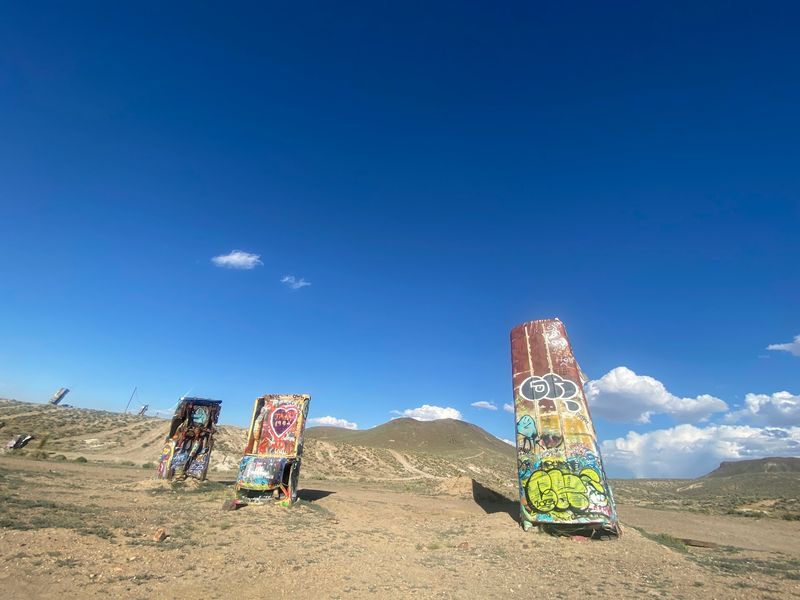
Paint is everywhere here. Hoods, doors, roofs, and windshield frames are layered with murals, patterns, names, and bold color.
No two cars look alike.
The site works like a gallery with no walls and no ticket booth. You wander at your own speed and choose what to stop for.
Some pieces are careful and detailed, while others are quick bursts of color.
I liked how the art keeps changing. A car that looked plain on one visit might be covered in new designs the next.
That gives people a reason to return, and photographers will find fresh material each time. The bright colors also stand out sharply against the tan desert and blue sky.
For the best photos, look for cars where the paint catches low sunlight. Warm light makes every layer pop, and the shadows add depth to the swirling designs.
Bring Paint and Add Your Mark
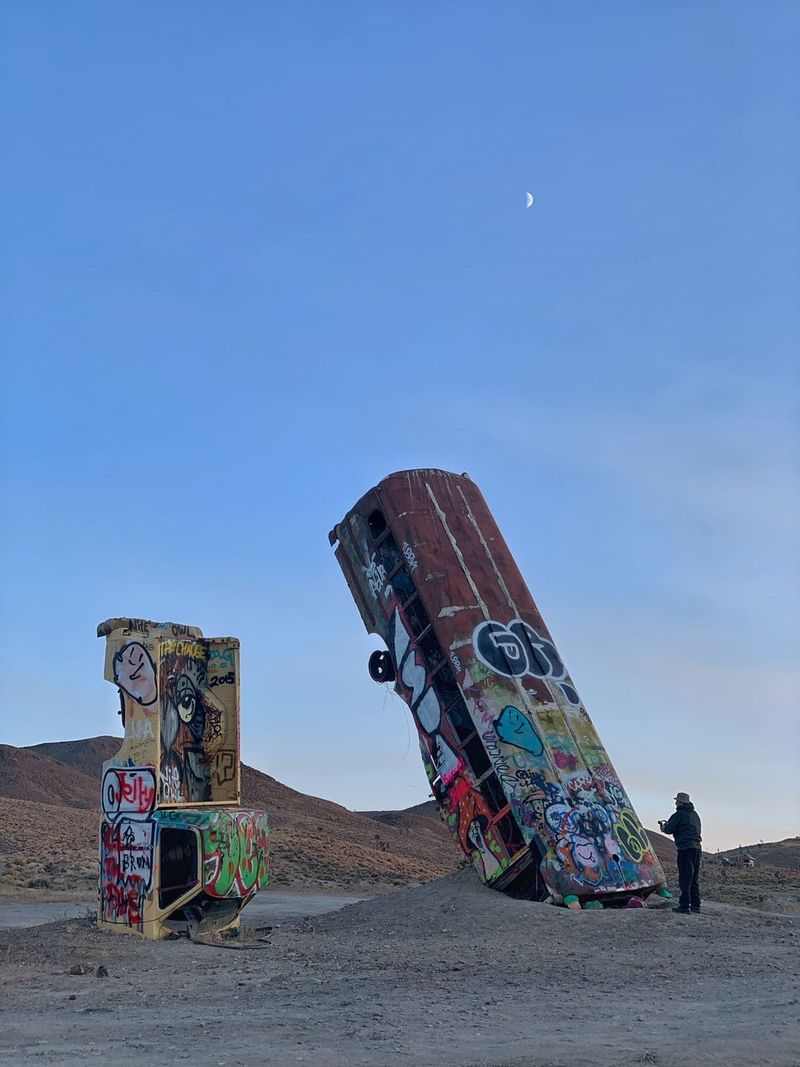
Here is the part that surprises first-time visitors. You can paint the cars yourself.
A sign at the entrance welcomes artists, and visitors are encouraged to find an empty spot and leave something behind.
Pack a few cans of spray paint or even a thick marker, since I wish I had. Look for a surface that is open, and work around the existing art rather than covering someone else’s piece.
Artists are welcome, and the spirit of the place is creative.
New cars are added from time to time, giving fresh canvases for visitors to fill. That means there may be bare metal waiting when you arrive.
Wear old clothes, because paint travels. Bring gloves, too, since the metal can be rough.
Even if you do not paint, watching others work adds energy to the visit and shows how the forest keeps growing.
Roads, Hills, and What to Drive
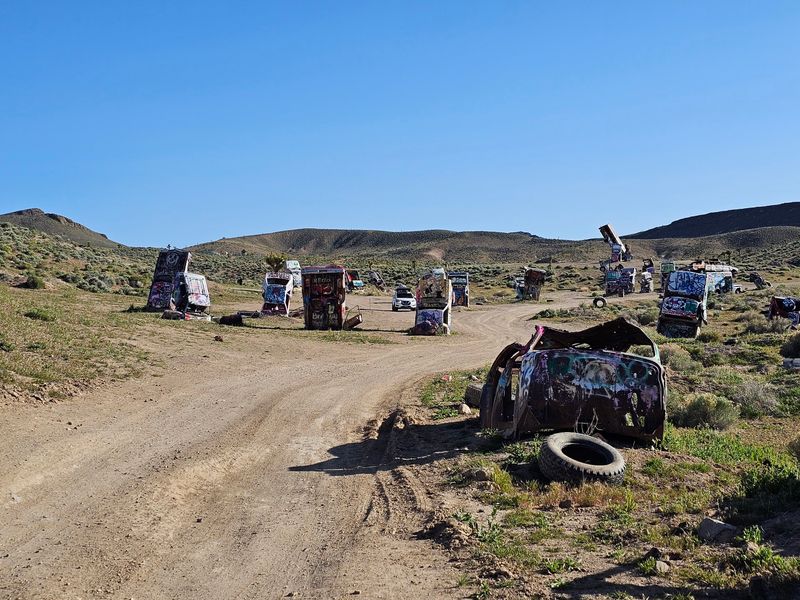
Plan your ride before you go. The dirt roads wind over hills, and some sections are rough with deep ruts.
A high-clearance SUV or truck makes the trip more comfortable, though careful drivers in regular cars often manage.
Many people drive through the site, stopping at their favorite cars. Others park and walk.
Because of the hills, keep your speed low and watch for people on foot who may appear suddenly over a rise.
The area is spread out, so there are several tracks to explore. Some lead to the upper road, and others drop down to where most cars sit.
If you are not sure which way to go, take it slowly and head toward the highest cluster of vehicles. Bring a full tank of gas and a sense of patience, and the bumps will feel like part of the adventure.
Desert Quiet and Wildlife
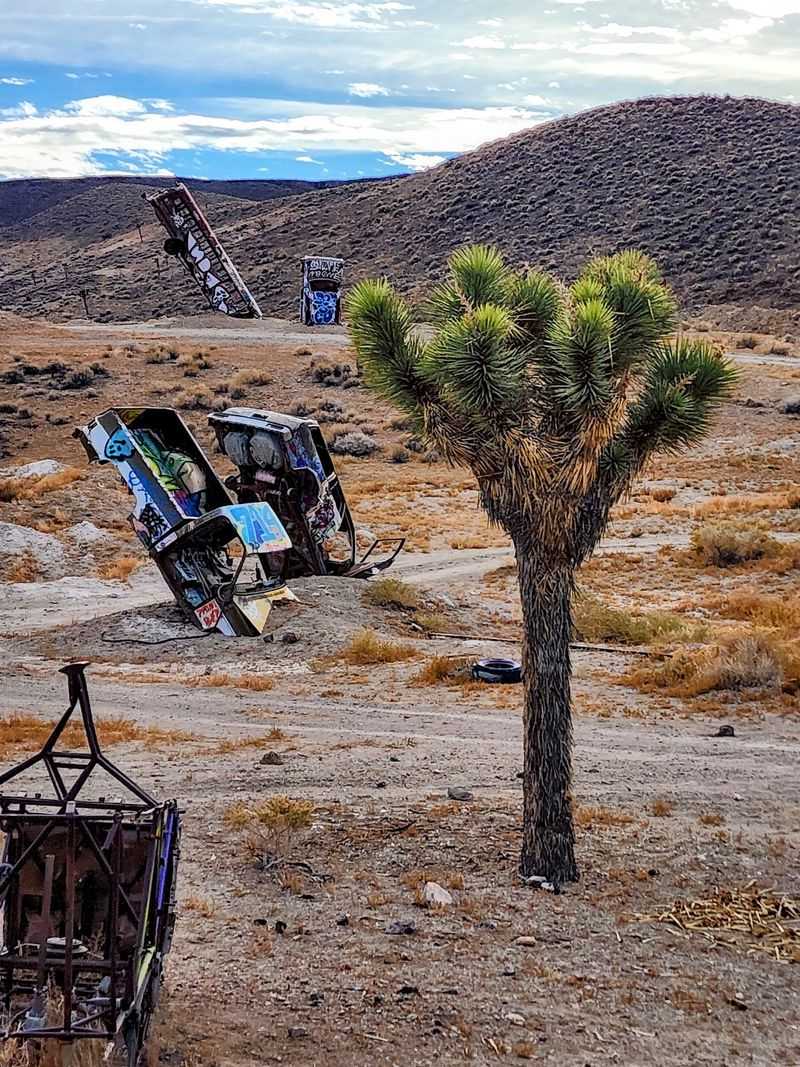
Silence is a big part of the experience. On many visits, only a handful of people are around, and the wind is the loudest sound.
It gives the place a calm, slightly eerie mood that suits the strange scenery.
The desert is alive, though. Visitors have spotted jackrabbits bounding between the cars, and donkeys can sometimes be heard far off.
Lizards also dart across the dirt.
Because of that, wear sturdy shoes or boots. The ground is uneven, and wild animals share the space.
Watch where you step and keep your hands out of dark gaps in the metal. Dawn and dusk are lovely times to visit, when the light softens and the air cools.
Midday can be scorching, so bring water, a hat, and sunscreen. A little preparation keeps you comfortable while you linger among the cars.
Free Entry and Simple Rules
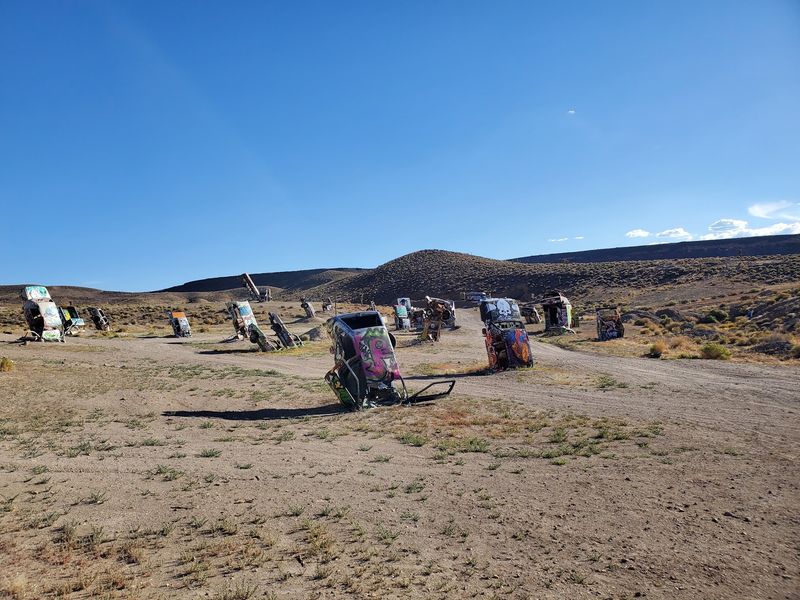
There is no ticket price. You simply arrive and explore, which makes this an easy add-on to any road trip.
The website mentions that donations are welcome, though I did not see a drop-off spot on site.
Facilities are basic. There are no restrooms, so plan ahead in town.
Bring snacks, water, and anything else you need, since nothing is sold at the site.
A few simple habits help the place stay enjoyable. Take your trash with you, drive carefully, and respect the art that others have made.
Treat the cars gently, because the metal edges can be sharp and some pieces are fragile. Visiting this way keeps the forest interesting for the next traveler.
It also means you leave with great photos and nothing more than dust on your shoes.
Goldfield as a Ghost Town Stop
Before or after the cars, take a short stroll through Goldfield. It is a former mining town, and its quiet streets and aged buildings fit the mood of the car field nearby.
The town feels paused in time. Some homes are clearly lived in, yet the streets can be so still that you hardly meet anyone.
Old street signs and weathered storefronts make for good photos.
Many travelers pair the stop with a long drive between Las Vegas and Reno, and Goldfield makes a handy place to stretch your legs. Spending a half hour here helps the car forest make more sense.
Both places share a rugged, offbeat spirit. After visiting each, you start to understand why the desert draws people who like unusual things.
Bring a camera, and wander slowly.
Make It a Road Trip of Odd Stops
This stop works best as part of a bigger drive. Tonopah sits farther along the highway and has attractions that suit people who enjoy quirky places, including a clown-themed motel and an old cemetery that travelers often photograph.
Plan for plenty of daylight. Distances in Nevada are long, and services can be far apart.
Fill your gas tank, carry water, and check your route before you leave.
Visiting the car forest first sets the right tone. It reminds you that the best stops on a road trip are often the ones you did not expect.
Once you have seen cars standing on their noses, other roadside oddities feel like old friends. I left with dusty shoes, a full camera roll, and a list of other strange places to explore across the American West.
Maybe your own list starts here.
Share this story