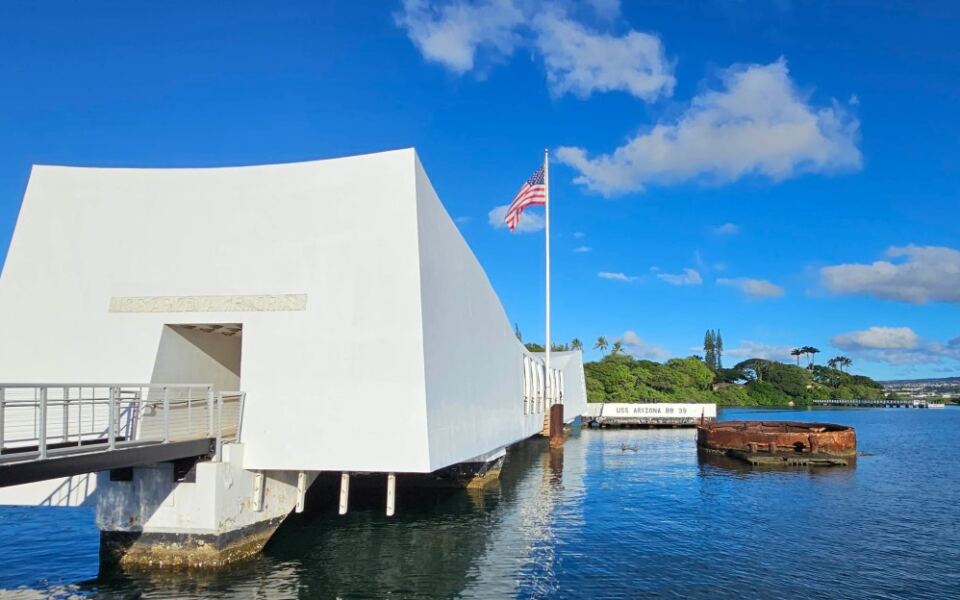
A white building floats over the water in Hawaii, and it never touches the ship beneath it. That ship went down in 1941 and still rests on the harbor floor, right where it settled.
Oil still rises to the surface in slow, shiny drops. Getting out there takes a short boat ride, a bit of planning, and a quiet mind.
Here is what I learned before I went and what surprised me once I arrived.
A White Structure Built Over the Ship
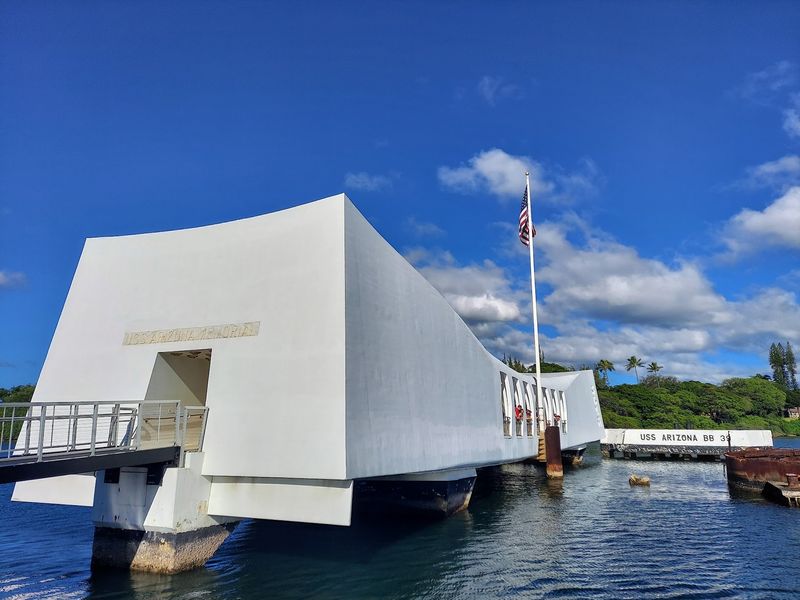
The first thing that grabbed me was the shape. A long white building sits over the water, dipping low in the middle and rising at each end.
It rests on a support beam, so it never touches the ship below.
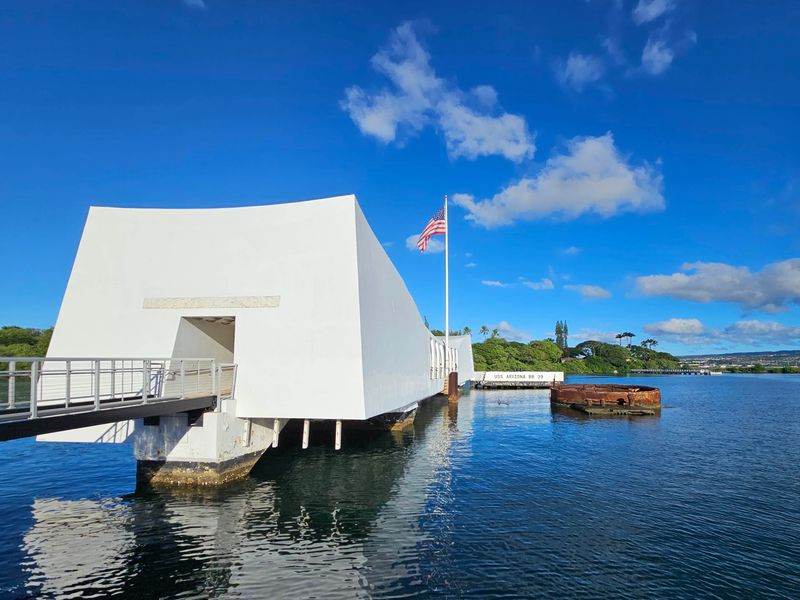
The ship is the USS Arizona, a battleship that sank on December 7, 1941. It still lies on the harbor floor, and the memorial was built right above it so visitors can look down at the spot.
From the dock, the structure looks small and calm against the sky. Up close, it feels bigger than I expected.
The design was meant to be simple, with open windows along the sides and the roof.
Keep that low center in mind as you ride out. It makes the whole place feel humble, and it gave me a reason to walk slowly once I stepped inside.
Finding the Place on Oahu
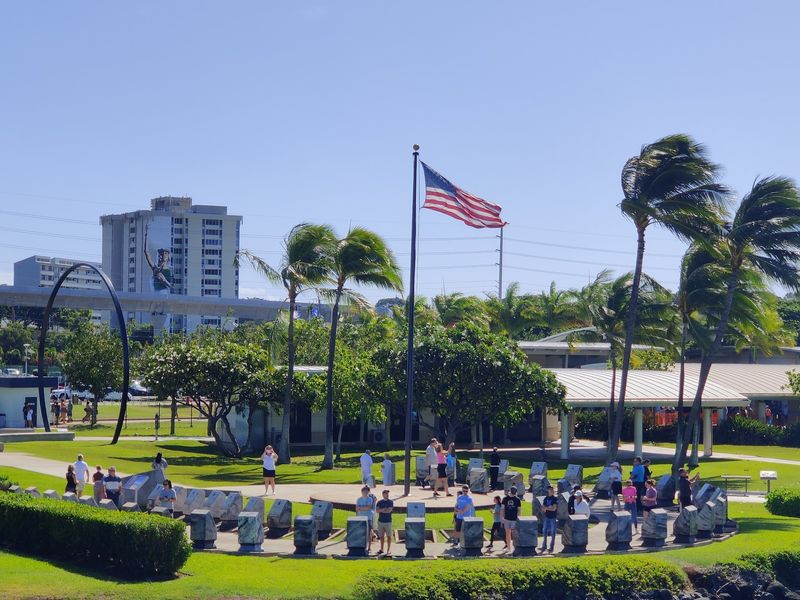
Now for the name of the place. I visited Pearl Harbor National Memorial, found at 1 Arizona Memorial Pl in Honolulu, Hawaii, United States.
It sits close to the Honolulu airport, which makes it easy to fit into a travel day on Oahu. Driving there took very little effort, and the signs are easy to follow.
The grounds hold a visitor center, a small museum, a theater, and a courtyard. Everything feels spread out and open, with trade winds moving through the walkways.
Plan on more than a quick stop. I found that the site rewards slow wandering, and the boat to the memorial is only one piece of the day.
Before heading out on the water, though, there is a short film you will want to see first.
The Short Film Before the Boat
Before the boat ride, I sat down for a short film about the attack. It gave me the background I needed, and it made the memorial feel more personal once I got there.
The film plays at set times through the day, so I checked the schedule when I arrived. Some visitors told me they planned their walk around it.
The room is cool and quiet, which helps after standing outside in the Hawaiian sun. People settle in without much chatter.
I left the theater with a clearer sense of what happened that morning. That context changed how I looked at the water later.
Watching the film first is a smart move. It turns the boat ride from a simple trip into something you understand while you are living it.
The Boat Ride Across the Harbor
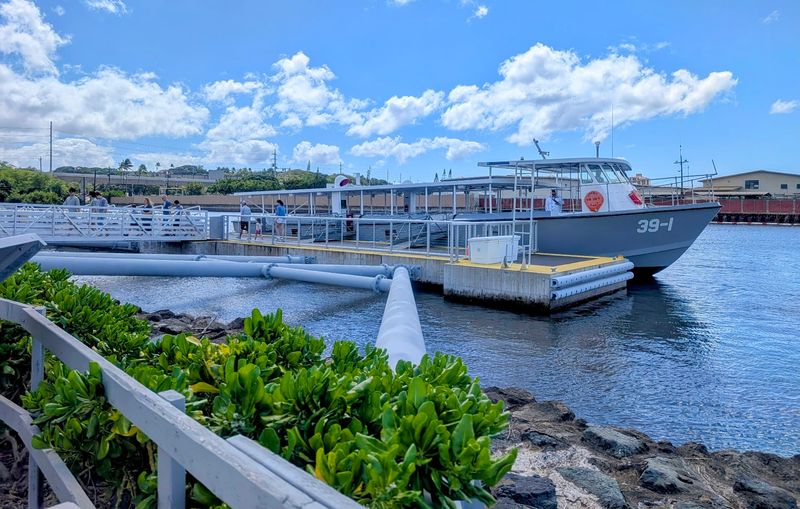
A Navy boat carries visitors out to the memorial, and the ride is short. Everyone sits together, and the mood is calm from the start.
Timed groups keep things orderly. When your slot comes up, you walk down to the dock and board with the group.
I watched the harbor slide by, with other ships and the island in the background. The water looked smooth and dark, and the memorial grew larger as we approached.
You will not get unlimited time once you arrive. The boat comes and goes on a schedule, so each group has a set window to look around.
Use that time well. I walked in, took a breath, and tried to notice as much as I could before heading back.
Tickets and the Standby Line
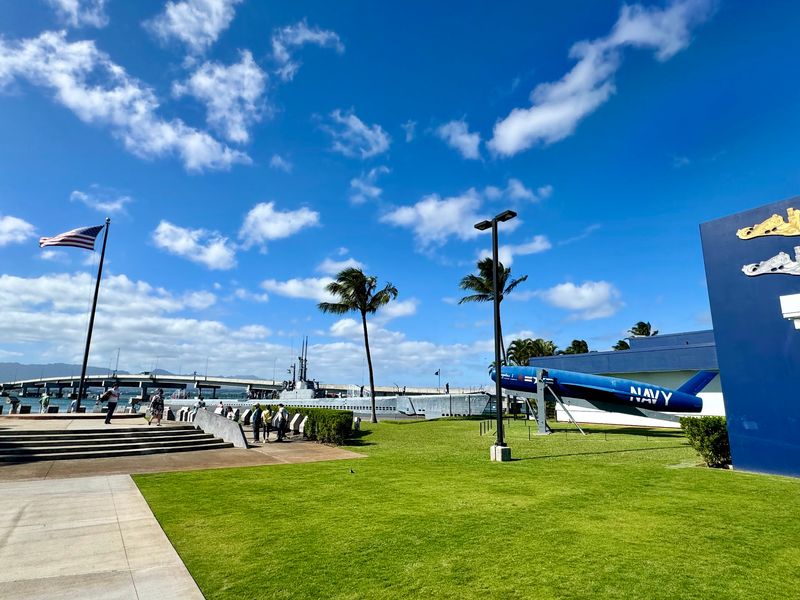
Tickets for the memorial boat can disappear fast. Reservations open online ahead of the visit, so setting a reminder helps a lot.
If you miss out, there is a backup. A standby booth on site lets you sign up, and groups fill open seats as they come available.
Some visitors said they got a text and boarded in about twenty minutes.
Tours run often during the day, which gives standby guests more chances. I would still book ahead if you can, since it removes the guesswork.
One detail trips people up. Memorial boat tickets are separate from other paid sites on the grounds, so check what each ticket covers before you buy.
A little planning here saves time and keeps the rest of your day relaxed.
Looking Down at the Ship
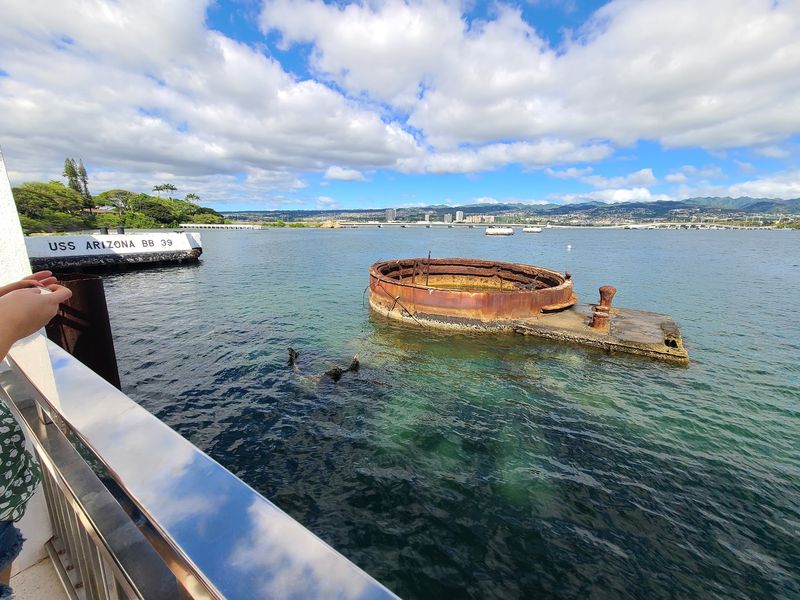
Inside the memorial, an open section in the floor lets you look straight down. Below the water, the shape of the ship can be seen when the harbor is clear.
Clarity changes with the weather. One visitor told me the water was murky after heavy storms and the ship was hard to see.
Mine was clearer, and I could make out parts of the hull.
Small drops of oil sometimes rise to the surface. People call them the tears of the Arizona, and watching them drift up was a quiet moment.
The room stays hushed. Most people lean on the railing and say little.
Give yourself a minute to look before you take photos. The view below is the reason the memorial exists.
The Wall of Names
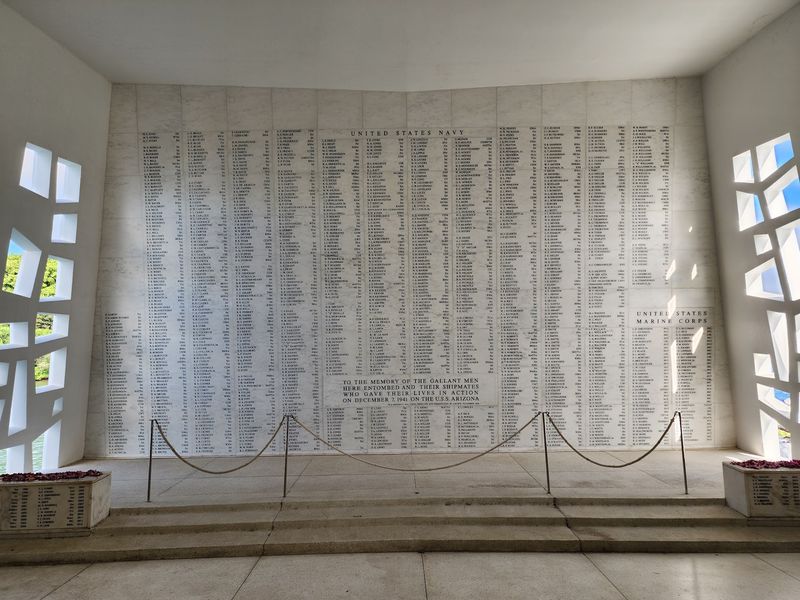
At the far end of the memorial stands a marble wall. Names are carved into it, listing those who were lost on the ship that morning.
I read a few of them slowly. The letters are clean and even, and the stone feels cool in the humid air.
A handful of names belong to men who served alongside their brothers. Learning that made the list feel less like a record and more like families.
People often pause here longer than anywhere else. Some say a quiet prayer, and others simply stand with their hands folded.
Take your time at the wall, even with the boat schedule in mind. It is the heart of the visit, and a few extra seconds there mean a lot.
Rules for a Quiet Place
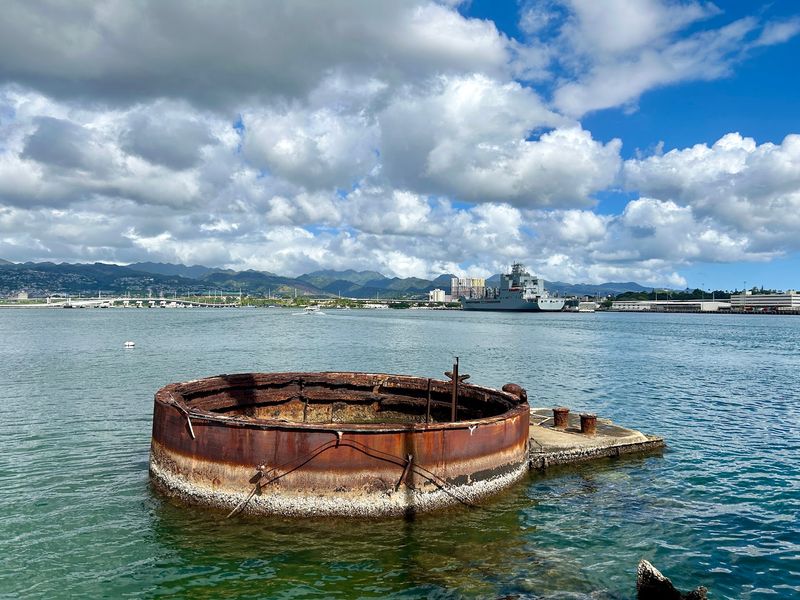
The memorial is also a grave site, so the rules are firm. Visitors are asked to speak softly and skip phone calls while out on the structure.
Bags are limited too. Only clear bags or small coin purses are allowed, and backpacks, purses, and umbrellas are not.
Water bottles are fine, and a phone and wallet can go in your pocket.
If you bring a bag by mistake, there is a storage spot near the entrance. The fee was about seven dollars per bag when I checked, so travel light and save the money.
Keep your ticket handy as well. Staff may check it more than once.
Following the rules is easy once you know them. Spending a minute on this before you leave your hotel saves you stress at the gate.
The Courtyard Anchor
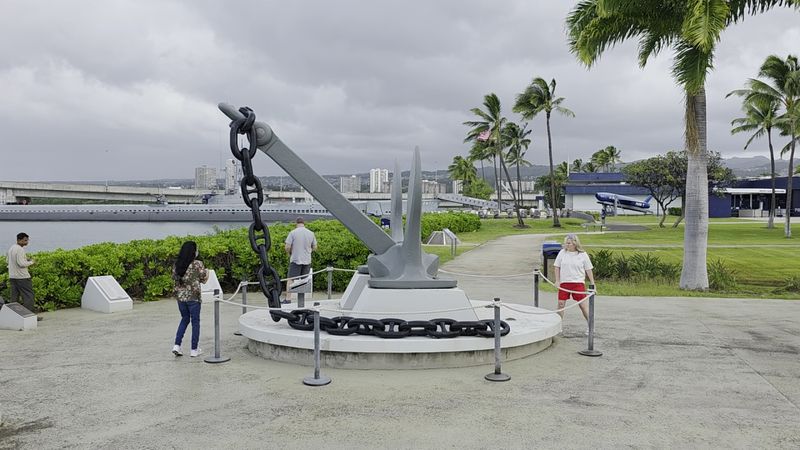
Out in the courtyard sits one of the quieter details many visitors rush past. An original anchor from the USS Arizona is on display there.
It is large and heavy, with a rough surface that shows its age. Standing next to it gave me a sense of the size of the ship it once belonged to.
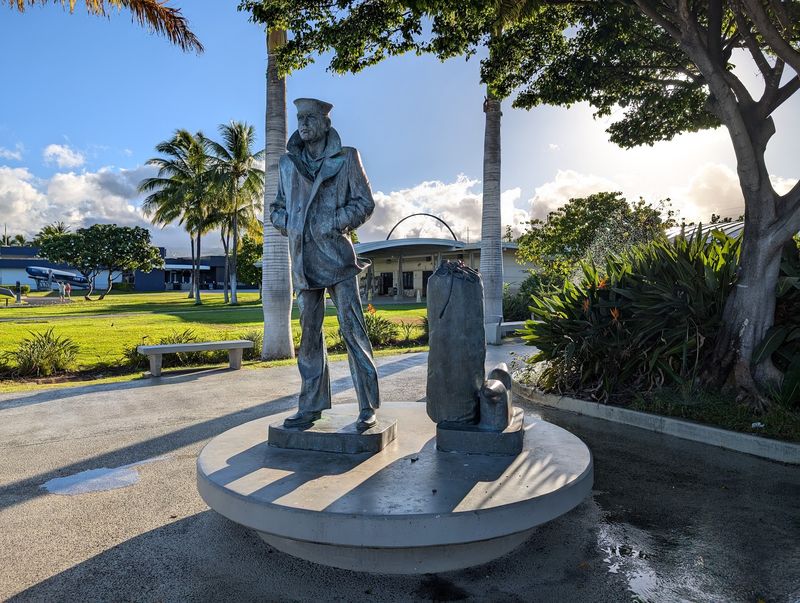
Nearby, statues and open paths make the area good for slow walking. I used this space to wait for my boat time, and it kept me from feeling rushed.
Shade can be limited, so bring a hat and drink water. A few visitors mentioned the heat while waiting.
Stop at the anchor before you leave the grounds. It is a solid, real piece of the story you can see up close.
Museums and Galleries on Site
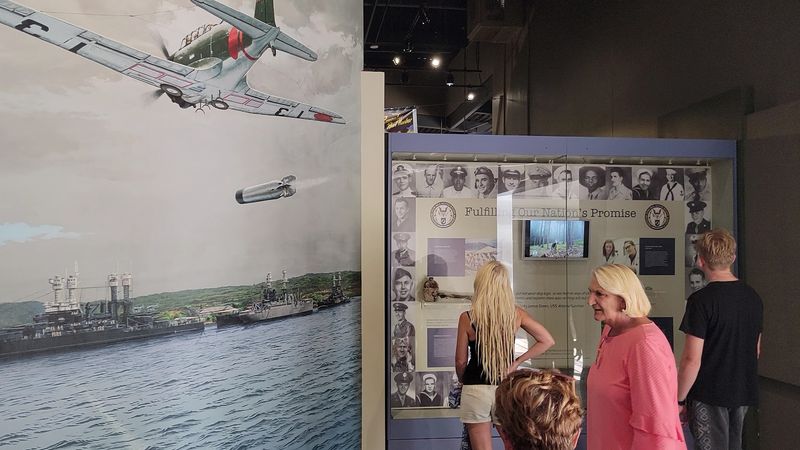
Two museum galleries sit on the grounds, and they cover far more than the Arizona. Displays explain how the attack unfolded and which ships were in the harbor that morning.
I spent a good while reading the panels. They also cover the planes, small submarines, and ships used by the other side, which gave me a fuller picture.
The galleries are free to enter at the visitor center, so they make a good first stop. Take your time, because it is easy to lose track of the clock.
Photographs of young sailors stood out to me the most. Many were teenagers when they joined up.
If you like history, set aside a couple of hours here. I walked out with a lot more than I came in with.
Battleship, Submarine, and Aircraft Stops
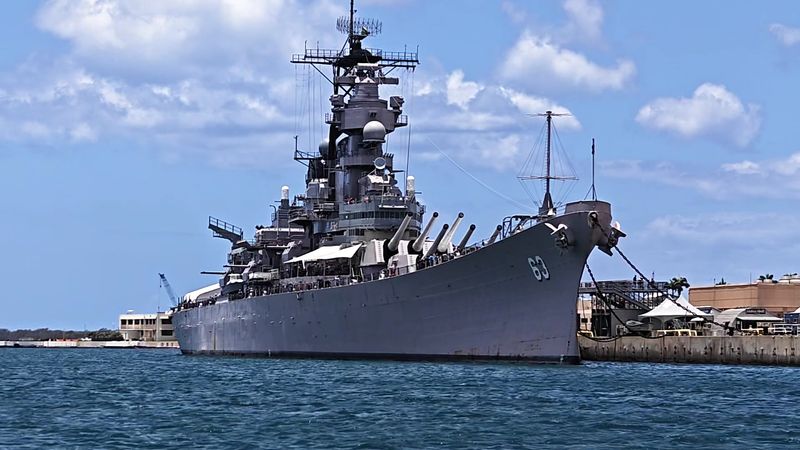
The memorial is only part of the larger Pearl Harbor area. Nearby sites include the battleship USS Missouri, a submarine, and an aviation museum.
These attractions are separate from the memorial and are ticketed on their own. Some visitors buy a combined passport, and one family told me they spent about seven hours using it.
The Missouri is a big, gray ship you can walk across. Its decks give a new sense of scale after seeing the Arizona below the water.
The submarine is a tight, narrow space, so expect to move single file.
Plan a full day if you want to see them all. Starting early and wearing comfortable shoes made the schedule far easier to manage.
Tips for Families and Young Visitors
Kids can take part too, and the park makes it simple. At the visitor center, you can ask for a free Junior Ranger activity booklet.
It leads children through age-appropriate tasks and helps them understand what they are seeing. Finishing it earns a Junior Ranger badge, which one family said made the day more memorable.
Older children often connect with the film and the museum photos. Younger ones may need reminders to stay quiet on the memorial itself.
Pack water and sunscreen, and use any shade you find while waiting. The lines can be long and the sun is strong.
A little preparation goes a long way here. I would tell any parent to talk about the visit beforehand, so the children arrive ready to listen.
Planning Your Day and What to Explore Next
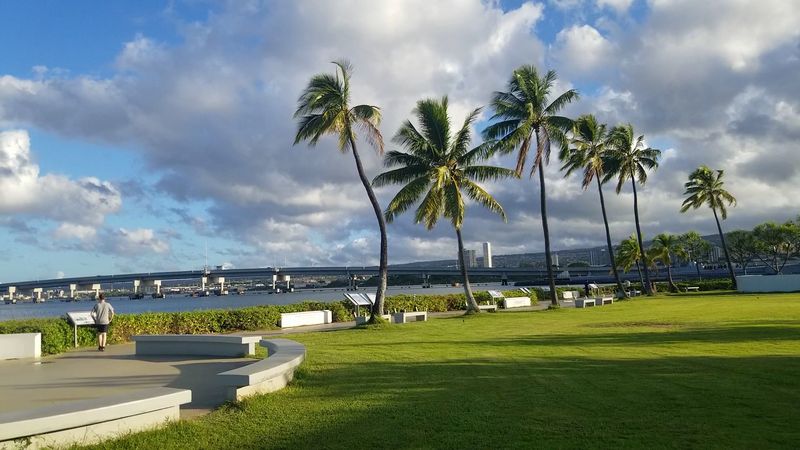
The site opens at 7 am and runs until 5 pm daily, so an early start gives you the best chance at shorter lines and cooler air. Parking was simple, with a QR code for payment, and I made sure to remember my license plate number.
Many visitors take a tour bus to skip parking and ticket worries. Either choice works, as long as you book the memorial boat in advance.
Leave room in your schedule to sit and think after the boat ride. I found that the quiet walk back through the courtyard stayed with me longer than any photo.
Once you finish here, more of Oahu is waiting nearby, from other historic sites to scenic coastlines. I plan to return someday when the water is clear again.
Share this story