Every autumn, Michigan puts on a color show that pulls hikers out of their houses and onto the trails. Sugar maples turn red, oaks go bronze, and beech trees switch to gold while the evergreens stay put.
The timing moves like a slow wave, starting in the Upper Peninsula in late September and rolling south through October. That gives you weeks to chase the leaves instead of just one lucky weekend.
This list covers fourteen trails that earn their spot in fall. Some climb rocky ridges high above lakes.
Others lead to waterfalls with root beer colored water, a lighthouse you can climb, or pine trees older than the state itself. A few sit close enough to Detroit for an after-school or after-work stroll.
For each one, you will find trail length, difficulty, the best time to visit, and a handy fact or two. Pack a snack, charge your phone for photos, and keep reading to find the trail that fits your legs and your schedule.
1. River Trail at Tahquamenon Falls State Park, Paradise, Michigan
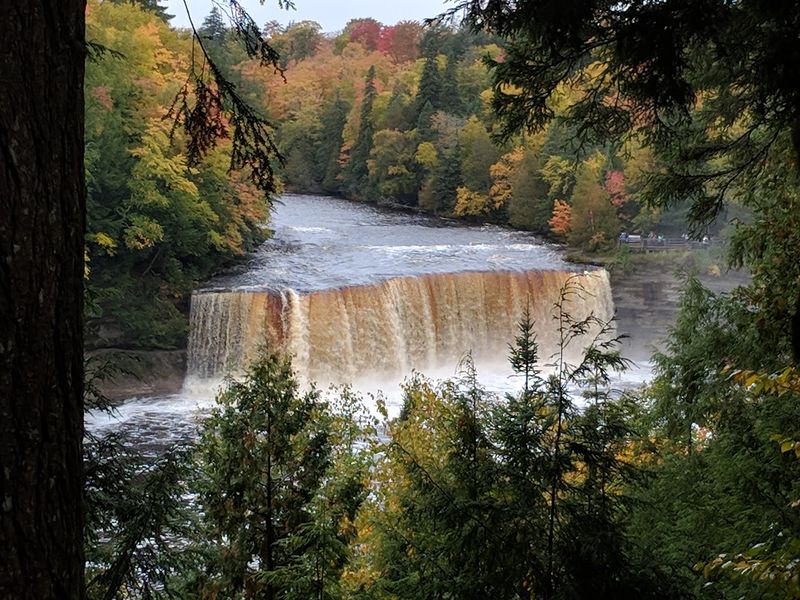
Root beer colored water is not a prank. Tannins from cedar and hemlock swamps give the Tahquamenon River its famous amber color, and fall leaves make it pop even more.
The River Trail links the Upper and Lower Falls in about 4 to 4.5 miles one way. Round trip, you are looking at 8 miles or more.
This one is rated difficult, and for good reason. Exposed roots, hilly stretches, and plenty of staircases keep your legs busy the whole way.
Many call it the most scenic trail in the park. You pass giant cedars and hemlocks while the river changes shape beside you.
Good news for tired feet. A seasonal shuttle can carry hikers between the two falls, so a one-way trek is possible.
Fun fact for trail collectors: this path is part of the North Country Trail. That means you can say you hiked a piece of a route that crosses several states.
2. Old Growth Forest Trail, Grayling, Michigan
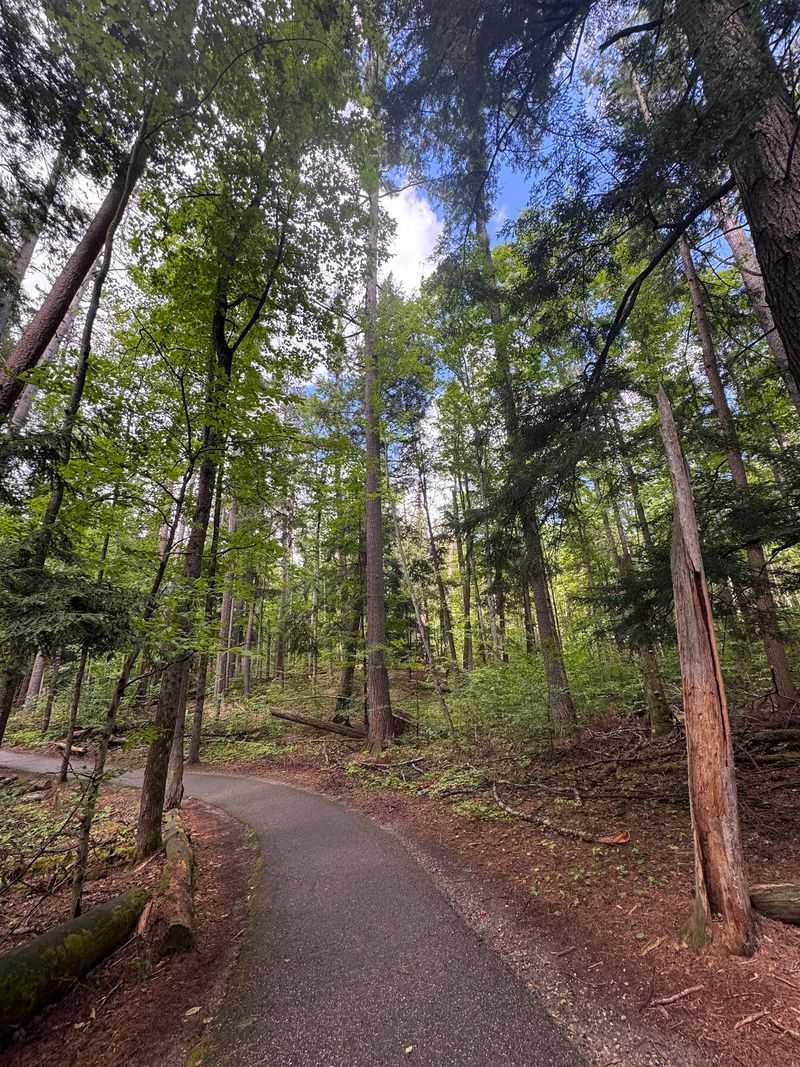
Some of these trees were already tall before Michigan became a state. Hartwick Pines State Park protects one of the most important old-growth white pine stands left in Michigan.
The Old Growth Forest Trail is a paved 1.25-mile loop. It is rated easy, though two steep grades will remind you that paved does not always mean flat.
Fall adds a fun contrast. Bright hardwoods stand out against the dark green pines, so your photos get plenty of variety.
Wheelchairs are available to borrow, which makes this a great pick for groups with mixed abilities.
History fans should save time for the Hartwick Pines Logging Museum. The Civilian Conservation Corps built it in the 1930s.
Inside the camp area, you can explore a bunkhouse, cook shack, mess hall, and blacksmith shop. Seeing how loggers lived makes the surviving pines feel even more special.
3. Lighthouse Trail at Ludington State Park, Ludington, Michigan
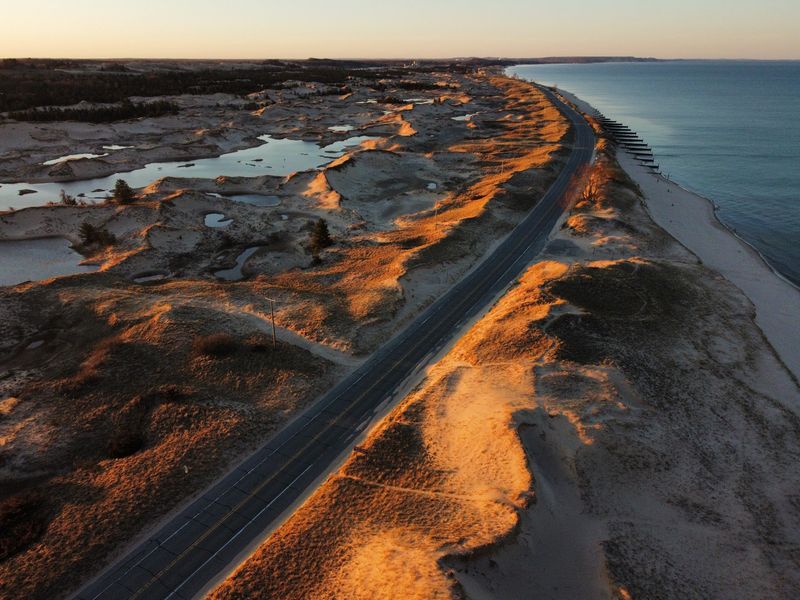
Cars are not allowed at the finish line, and that is part of the fun. Big Sable Point Lighthouse can only be reached on foot or by bike.
The Lighthouse Trail covers about 3 miles as it weaves over and through wooded and open dunes. Plan on roughly two hours.
Prefer something simpler? Lighthouse Road offers a 1.8-mile one-way route on hard-packed sand and gravel from the main parking area.
Autumn mixes colorful trees with sandy paths and wide Lake Michigan views. Inland waterways in the park often reflect the leaves, too.
The black and white striped tower stands 112 feet tall. Climbing it means tackling 130 steps, which many visitors call the hardest part of the day.
Tower climbs run from May through October. Early fall visits let you catch both the colors and the view from the top before the season closes.
4. Empire Bluff Trail, Empire, Michigan
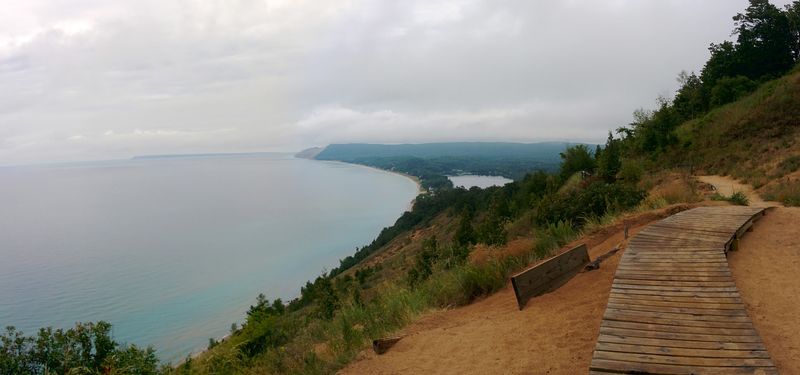
Under an hour of walking buys you a view from about 400 feet above Lake Michigan. That is a pretty good deal for anyone short on time.
Empire Bluff Trail is about 1.5 miles round trip through a beech-maple forest. In October, those trees put on a serious color show.
Rated moderate, the path includes a few hill climbs and built-in stairs. Families still love it, and kids usually handle it just fine.
Boardwalks lead to an observation platform at the top. From there, you can spot South Bar Lake, distant dunes, and the famous double-dune shape along the shore.
Bring cash or a pass, because this trail sits inside Sleeping Bear Dunes National Lakeshore. An entry fee is required.
The trailhead has a vault toilet and a small picnic area. Packing lunch for after the hike turns a short walk into a full afternoon outing.
5. Sugarloaf Mountain Trail, Marquette, Michigan
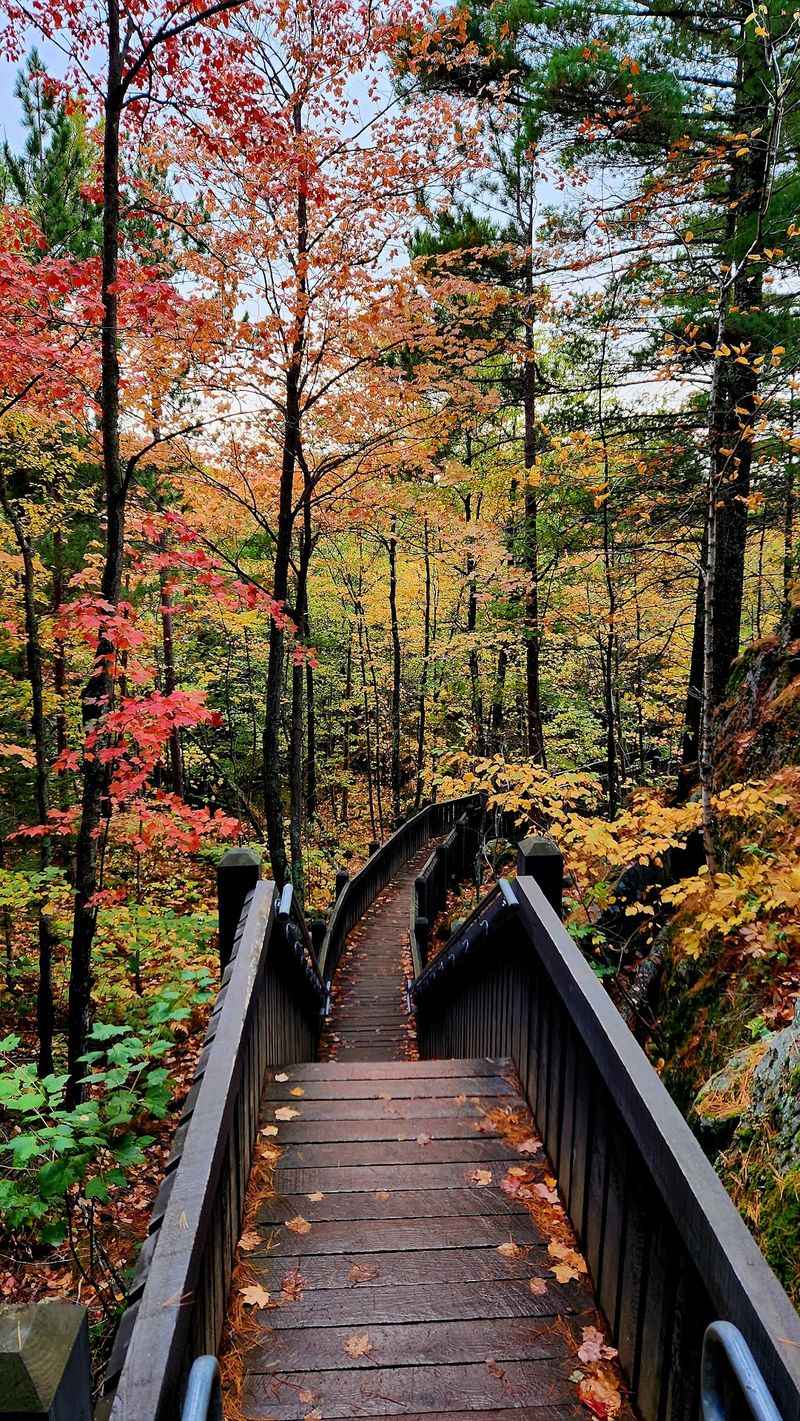
Short climb, big payoff. Sugarloaf Mountain might be the best effort-to-view ratio in the Marquette area.
Two routes reach the top. The so-called easy trail is about 0.9 to 1.1 miles out and back and gains 250 to 300 feet.
Plenty of staircases help with the climb. Most people finish in 15 to 45 minutes, depending on how many photo breaks they take.
Observation platforms at the summit look out over Lake Superior and miles of forest. Look for Presque Isle Park, Little Presque Isle, Hogsback Mountain, and even the wooden Superior Dome.
Colors here usually start by late September. They tend to peak by the end of the second week of October.
Up top, a stone obelisk honors Bartlett King, who founded a local Boy Scout troop.
Leashed dogs are welcome, so your four-legged hiking buddy can enjoy the view too.
6. Dune Climb Stairway Trail at P. J. Hoffmaster State Park, Norton Shores, Michigan
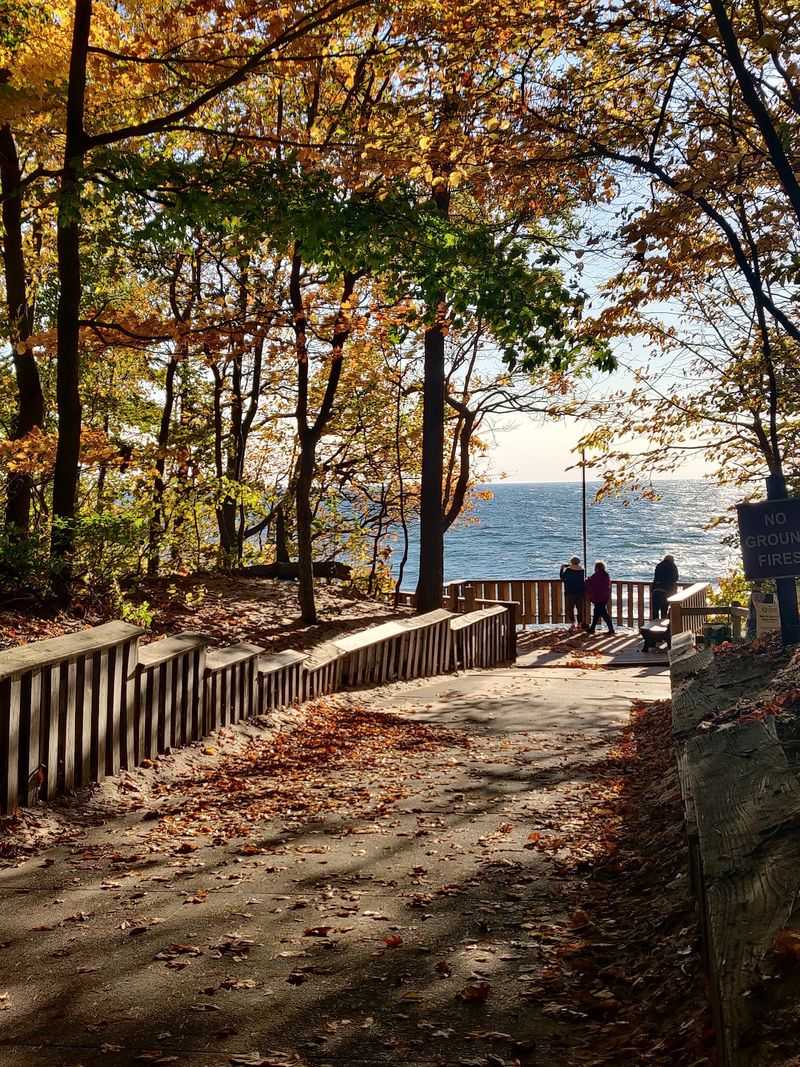
Count the steps if you want a challenge, though people never seem to agree on the number. Estimates range from 193 to 220 stairs to the top.
The Dune Climb Stairway at P. J.
Hoffmaster State Park is only about a half mile round trip. It climbs through wooded dunes to an observation deck roughly 190 feet above Lake Michigan.
Benches sit along the way for anyone who needs a breather. There is no shame in using every single one.
In fall, maple, oak, and beech trees add color around the sandy slopes. From the deck, you see the lake, the forest canopy, and the big dunes all at once.
Save time for the Gillette Sand Dune Visitor Center afterward. Its exhibits explain how Michigan dunes formed and what lives on them.
Kids especially enjoy the hands-on displays after burning energy on the stairs.
7. Escarpment Trail, Ontonagon, Michigan
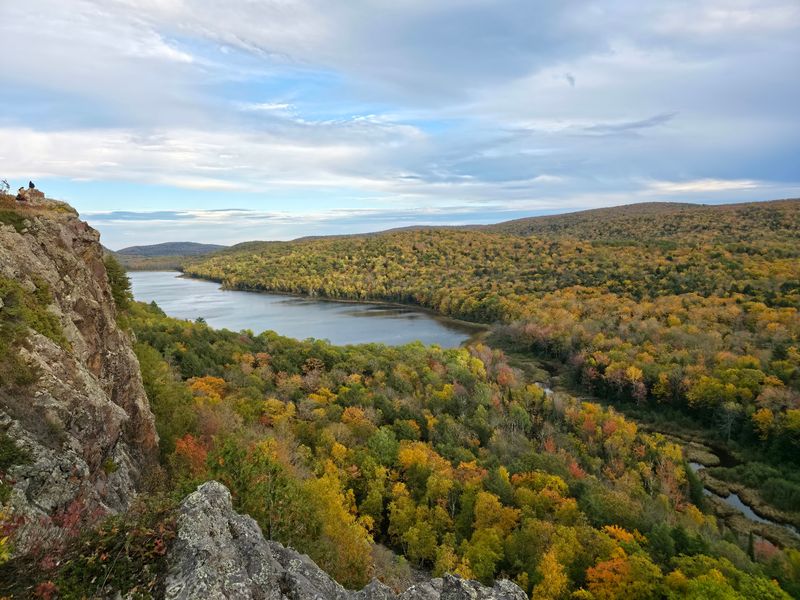
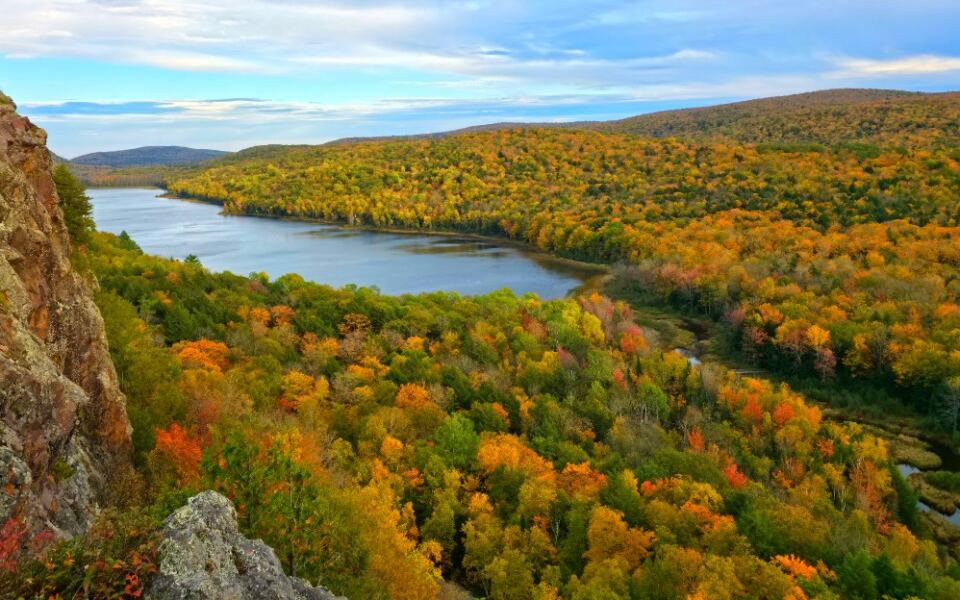
Lake of the Clouds gets most of the attention, but the trail above it steals the show. The Escarpment Trail runs along a rocky ridge in Porcupine Mountains Wilderness State Park, with cliff-top views around nearly every bend.
The route is about 4 miles one way, so plan on roughly 8 miles if you walk out and back. Expect exposed rock, uneven ground, and real climbs past Cuyahoga Peak and Cloud Peak.
Sugar maples cover the valley below in a solid sweep of color. Peak timing often lands between September 28 and October 6, which makes this one of the earliest color shows in the state.
Here is a smart move. Most visitors crowd the main overlook platform and leave.
Hikers who keep going along the ridge get quieter spots and new angles on the lake.
Wear sturdy boots with good grip. The rocks can be slick after rain, and the ridge has drop-offs that deserve your full attention.
8. Penosha Trail, Brighton, Michigan
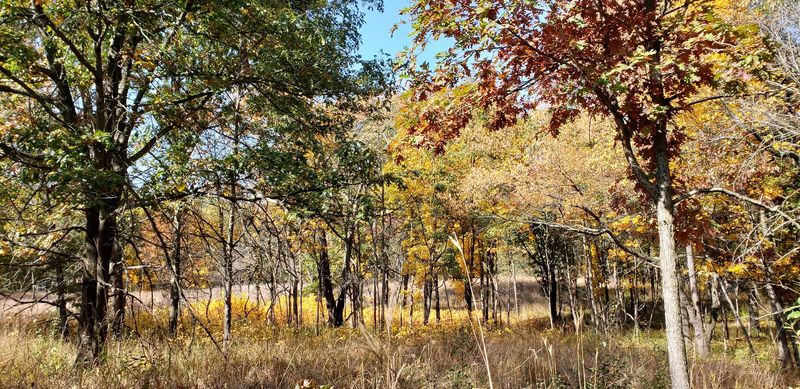
Penosha comes from a Chippewa word meaning long. At about five miles, the name fits nicely.
Southeast Michigan hikers do not have to drive north for great October color. The Penosha Trail at Brighton Recreation Area loops through rolling hills and thick hardwood forest.
Maple, hickory, and oak trees provide the color. You also pass ponds, wetlands, and patches of prairie, so the scenery keeps changing.
Reported loop lengths range from 4.75 to 5.1 miles. The trail is rated moderate, with roots, rocks, and some sections hikers call intermediate to advanced.
Bikes are not allowed here, since it is designated for hikers.
The land has an interesting past. Farmers struggled with the glacial soil and wetlands, and many farms were abandoned.
The state bought the property in the 1930s and 1940s. Today, those old fields have become one of the best fall hikes near Detroit.
9. Nature Trails at Stony Creek Metropark, Shelby Township, Michigan
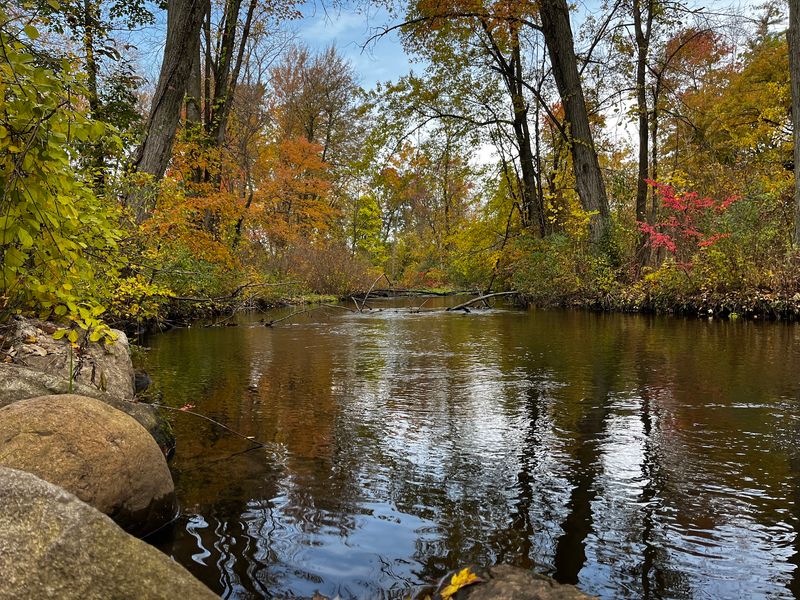
Options are the specialty at Stony Creek Metropark. With 4,461 acres to explore, nobody leaves bored.
Start with the nature trails, which come in many sizes. The Reflection Trail is 0.5 miles, the Landscape Trail is 1 mile, and the Osprey Trail is 1.75 miles.
Want more? The Habitat Trail runs 2.5 miles, and the East Lake Trails stretch 3.5 miles.
An 8-mile paved path loops around the 500-acre Stony Creek Lake. It works well for strollers, bikes, and anyone who prefers smooth ground.
Hikers looking for a workout can try 14 miles of hilly, wooded dirt trails. Just watch for mountain bikers, who share these routes.
The park also has woodlands, wetlands, and tallgrass prairie. More than 10 miles of park roads make a scenic fall drive, which is handy for grandparents who want the colors without the steps.
10. Woodland Trails at Maybury State Park, Northville, Michigan
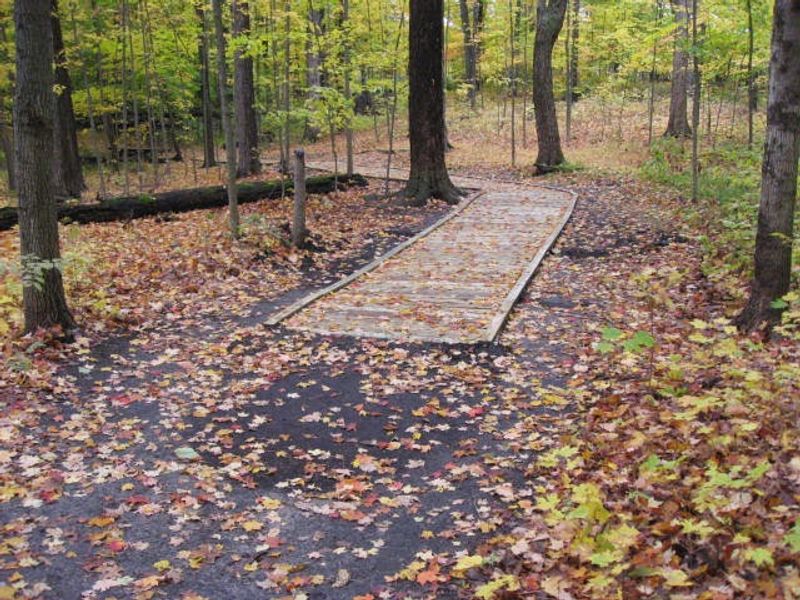
Patients once came here to rest and recover. From 1919 to 1969, the land held the Maybury Sanatorium, a treatment center for tuberculosis.
Interpretive signs along the trails share that history today. Reading them adds a meaningful layer to an easy walk.
Maybury State Park offers a 4-mile paved multi-use trail and 6 miles of wooded hiking paths. A 6.3 to 7-mile mountain bike trail adds even more ground to cover.
Most routes are rated easy to intermediate. That makes the park a solid choice for beginners and families.
Sugar maple, oak, and beech trees bring the color. Peak often arrives around October 22, with the best window from about October 17 to 27.
Accessibility is a real strength here. Along with paved sections, the park offers Action Track Chairs, which are all-terrain chairs for visitors with mobility challenges.
11. Forest Trails at Saugatuck Dunes State Park, Holland, Michigan
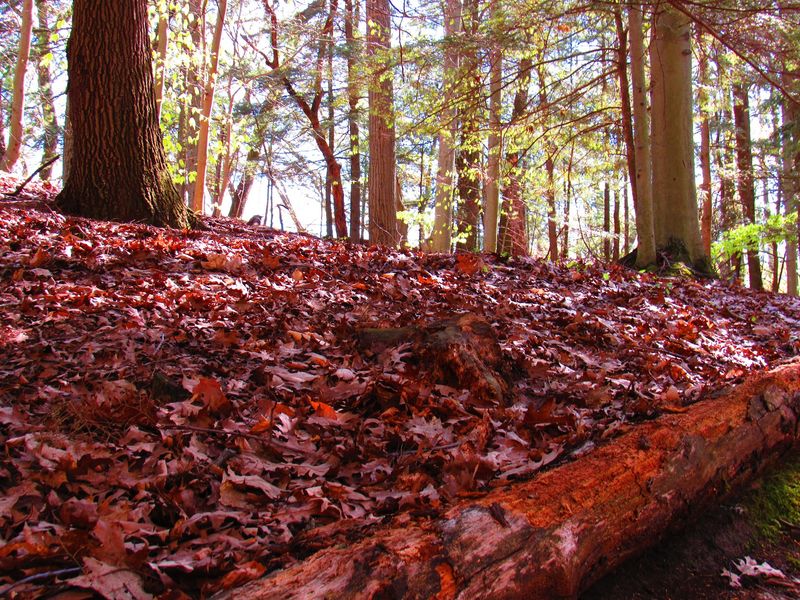
Beaches in October? Absolutely.
Saugatuck Dunes State Park proves the shore is not just a summer thing.
Its trail network covers 13 to 14 miles across three main loops: North, Beach, and South. Colorful hardwoods frame sandy paths before the trails open onto dunes and the lake.
The Livingston Trail Loop is a popular pick at 3.4 miles. It mixes open dunes with stands of hardwoods and pines.
Short on time? The 0.75-mile Beach Trail heads straight to the water.
Terrain is rolling and sandy, rated easy to moderate. Sand does slow you down, so plan a little extra time.
The park spans 1,000 acres, with 2.5 miles of quiet beach and the 300-acre Patty Birkholz Natural Area.
Leave the bikes at home, since they are not allowed. A vehicle entry permit or annual state park pass is required.
12. Trails at Warren Dunes State Park, Sawyer, Michigan
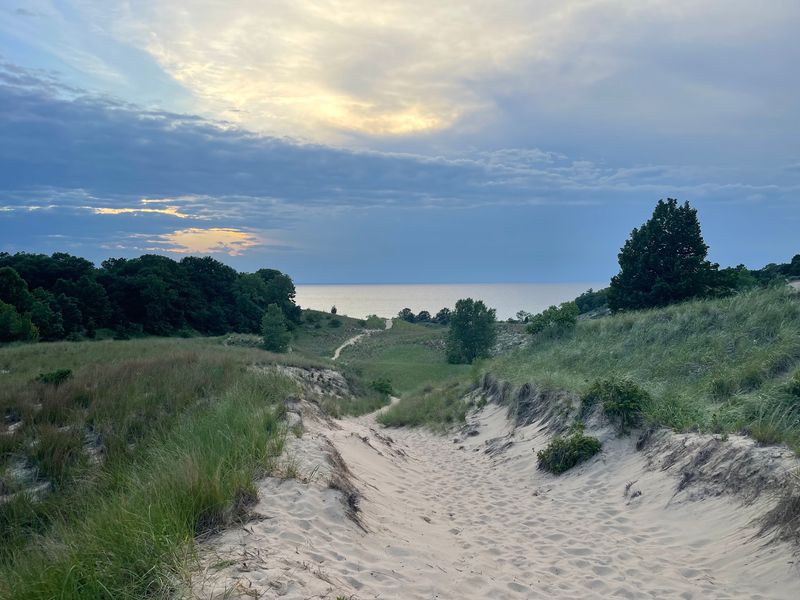
Sand plus hills equals a leg workout nobody forgets. At Warren Dunes State Park, some dunes rise about 260 feet above Lake Michigan.
The park has six miles of hiking trails, and most are moderately difficult. Cooler fall weather makes those sandy climbs much easier to handle.
The Mt. Randall Loop is 2.1 miles with a 347-foot elevation gain.
Its steep climb up one of the tallest dunes is tough but worth it.
For a longer outing, the Warren Dunes Trail covers 4.8 miles with a 265-foot gain.
Expect forested dunes, wide open sand, and wetlands tucked between the hills. Autumn color lines the wooded sections.
Bird watchers, take note. The park sits on a major migration route, so fall brings plenty of feathered travelers.
Dogs on leashes are welcome on most trails and a special two-and-a-half-mile stretch of beach.
13. Au Sable River Foot Trail, Grayling, Michigan
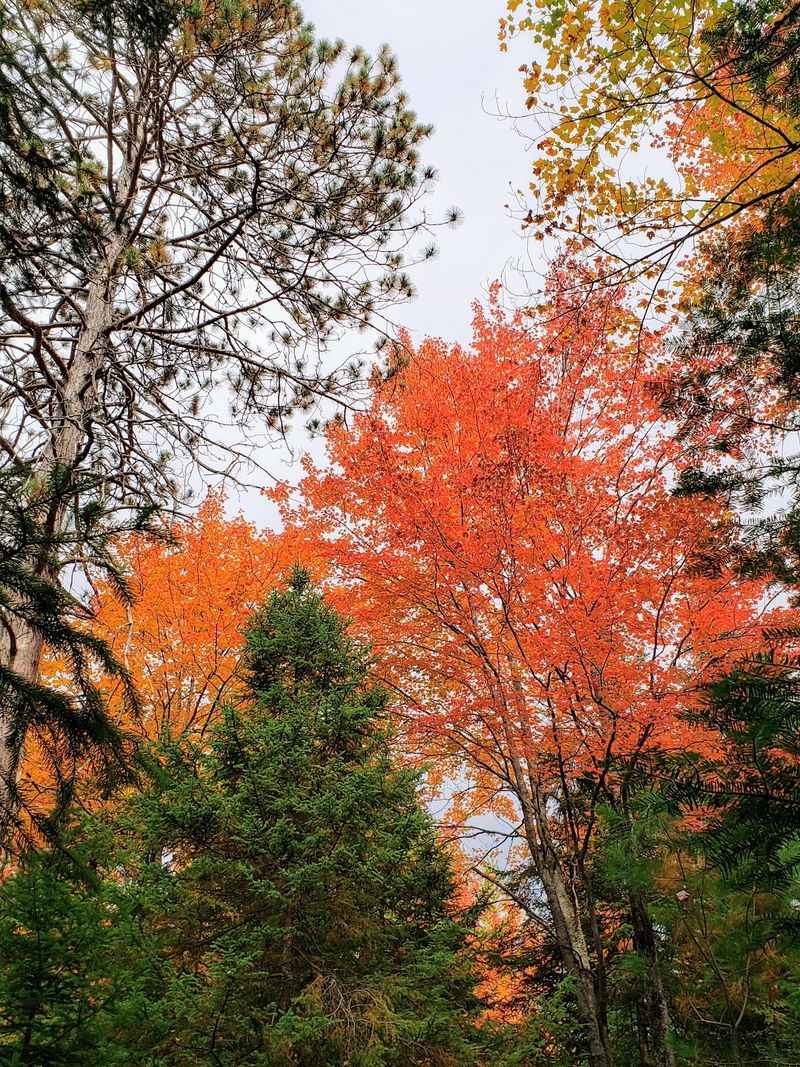
Not every great fall hike at Hartwick Pines State Park involves its famous old-growth pine forest. The Au Sable River Foot Trail takes visitors through a quieter part of the park, where colorful hardwoods, towering evergreens, and the East Branch of the Au Sable River make autumn especially rewarding.
The trail was originally designed as a loop of approximately 3 miles, but a section is currently closed indefinitely because of deteriorating footbridges. The Michigan Department of Natural Resources recommends a counterclockwise out-and-back hike along the portion that remains open.
Along the way, hikers can explore a forest landscape shaped by Michigan’s logging history. The river corridor also provides important habitat for trout and other wildlife, adding another reason to appreciate this protected area.
The trail is a good option for visitors who prefer a woodland hike over a steep climb, although uneven ground and potentially wet sections require appropriate footwear.
For a longer visit, explore the nearby Old Growth Forest Trail and Hartwick Pines Logging Museum. Just remember that the Au Sable River Trail cannot currently be completed as a full loop, and the state has not announced a reopening date.
Share this story