Some of the finest art in Massachusetts hangs where nobody asks for a ticket. There is no velvet rope, no cashier, and no rushed exit through a gift shop.
Instead, there are painted ceilings, marble stairs, a hidden courtyard with a fountain, and a reading room lined with green lamps that looks borrowed from a film set. Locals who know about it tend to drop by on rainy afternoons and lose track of the clock.
The best part is that the whole experience costs exactly nothing, and the story behind it is worth every minute of your time.
A Free Palace on Copley Square
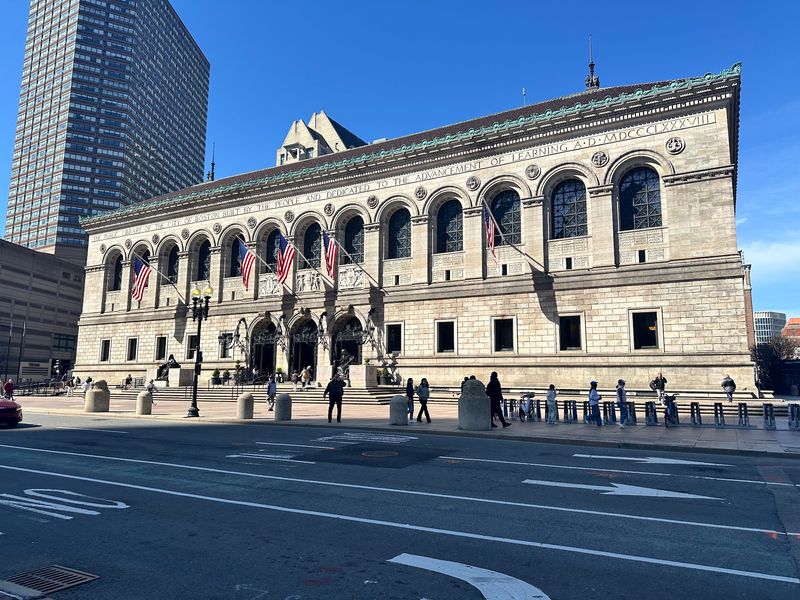
Plenty of cities have libraries, but few have one that doubles as a landmark. The Boston Public Library’s Central Library sits at 700 Boylston St, Boston, MA 02116, right on Copley Square in Massachusetts.
Its grand stone facade and long row of arches stand out even among the modern towers nearby. The building is a working public library, yet it is described as a monumental, Renaissance-style landmark with murals by John Singer Sargent and regular tours.
Admission costs nothing. Anyone can walk in, whether they hold a library card or have never borrowed a book in their life.
That open-door policy is a big part of the charm. Students study, families explore, and art fans roam the halls side by side.
For a Massachusetts local looking for an easy, low-cost outing, it is hard to beat a world-class building that asks only for a little curiosity and some comfortable shoes.
Two Buildings, One Story
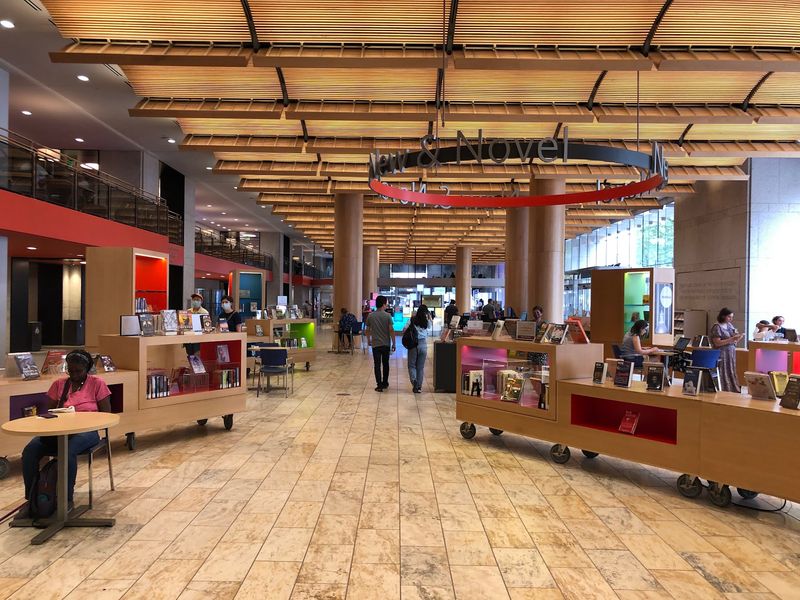
Here is a fun twist: the library is really two connected buildings. The historic McKim Building holds the famous halls and murals, while the newer addition handles much of the day-to-day bustle.
A 2016 renovation transformed the newer side. Heavy walls gave way to a bright, open space wrapped in floor-to-ceiling glass looking out onto Boylston Street.
That modern wing includes a teen gaming lounge, a busy children’s room, a tech center, a café, and plenty of seating. The WGBH News Studio broadcasts public radio right out of the lobby.
Moving between the two sides feels like crossing a century in a few steps. The old building whispers, and the new one hums with civic activity.
Many people arrive for the history and leave impressed by the clean, spacious, air-conditioned modern half. Seeing both is the only way to get the full picture.
Sargent’s Painted Galleries Upstairs
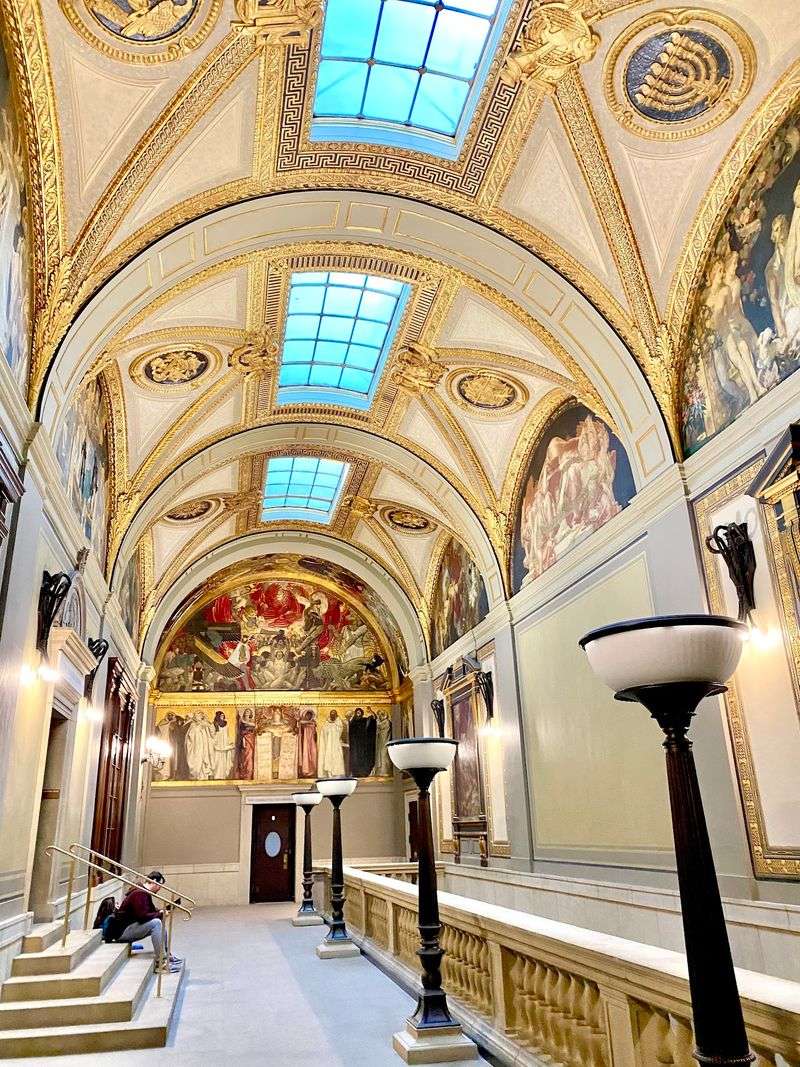
John Singer Sargent is best known for portraits, but in Boston he painted on a far bigger canvas. His murals fill an upper-floor gallery of the library, turning the hallway into something closer to a museum.
The artwork in the galleries explores religious, pagan, and mythological themes. Every surface seems to carry figures, patterns, and symbols worth a closer look.
Helpful touch: the library provides cards explaining the history behind each painting series. You can borrow them while standing in the room, which makes the art far easier to follow.
No glass cases separate you from the work. Nobody hurries you along either.
That freedom is rare for art of this caliber. Slow down, read the background cards, and the murals start telling their stories one panel at a time.
The Quest for the Holy Grail Room
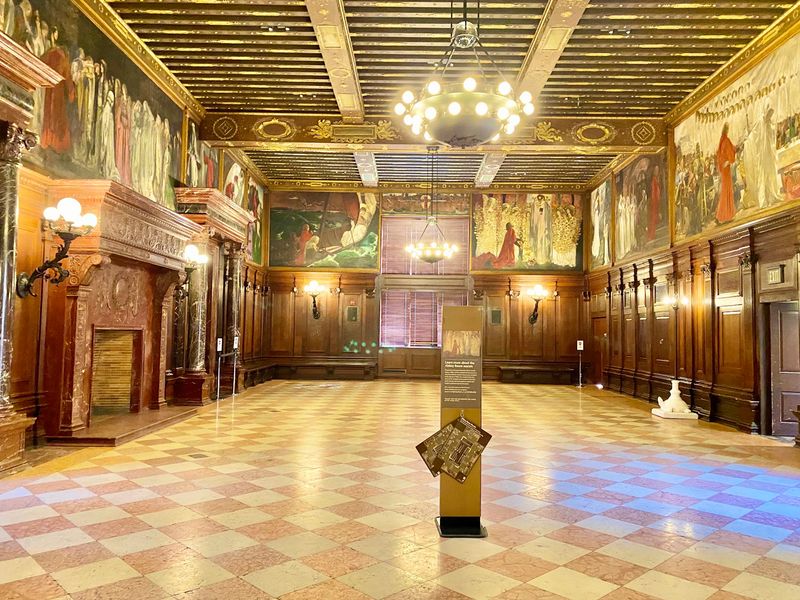
Knights, quests, and legends wait on the second floor. One room there features murals depicting the story of Sir Galahad and his search for the Holy Grail.
The panels wrap around the space, so following the tale means walking slowly around the room. It is a bit like reading a picture book designed for giants.
Kids who love adventure stories often connect with this room quickly. Adults tend to appreciate the craftsmanship and the way the narrative unfolds across the walls.
Painted scenes appear throughout the building, so this room is only one stop on a longer art trail. Even so, its storytelling focus makes it memorable.
Keep in mind that some rooms may close on certain days. Checking the schedule before your trip helps avoid missing a favorite.
Once inside, give Galahad a few patient minutes, and the legend practically narrates itself.
Green Lamps of Bates Hall
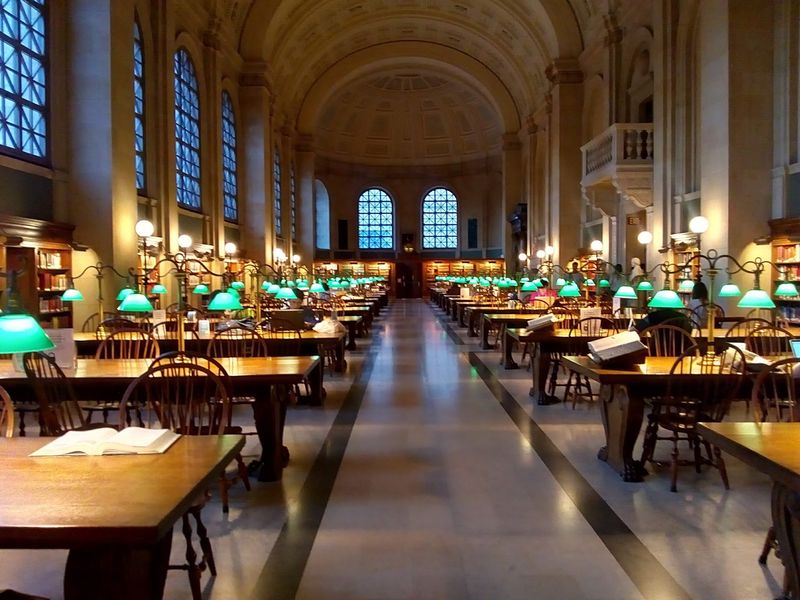
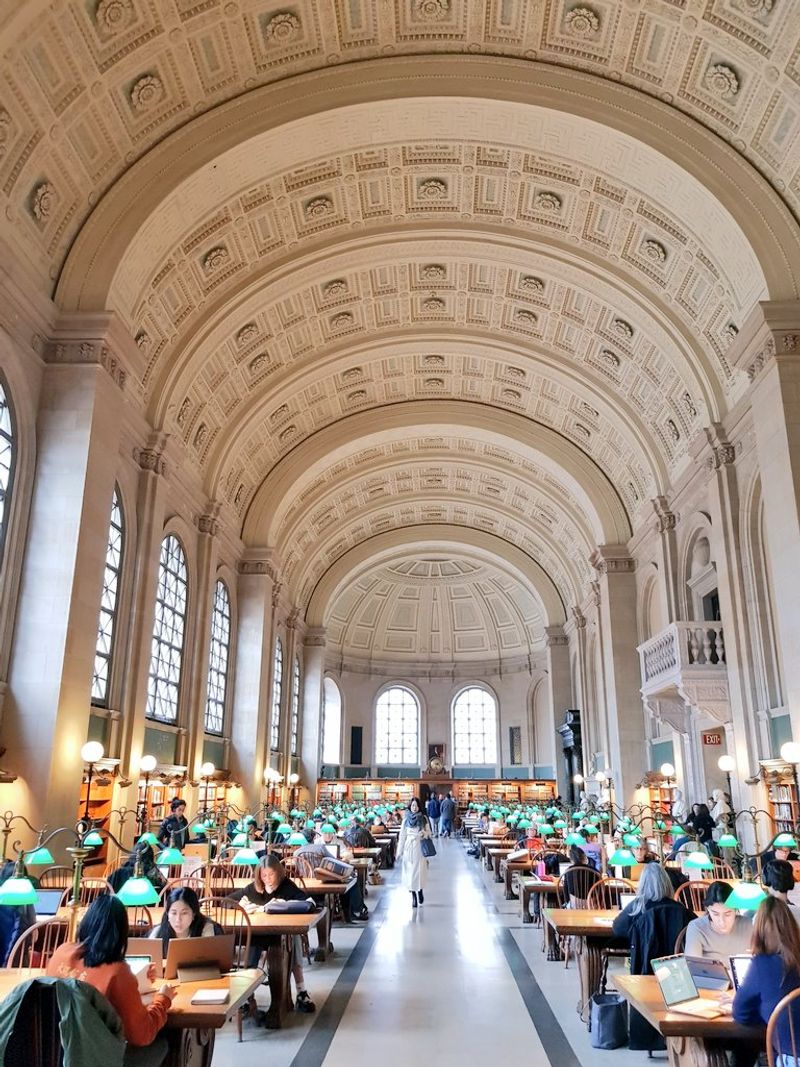
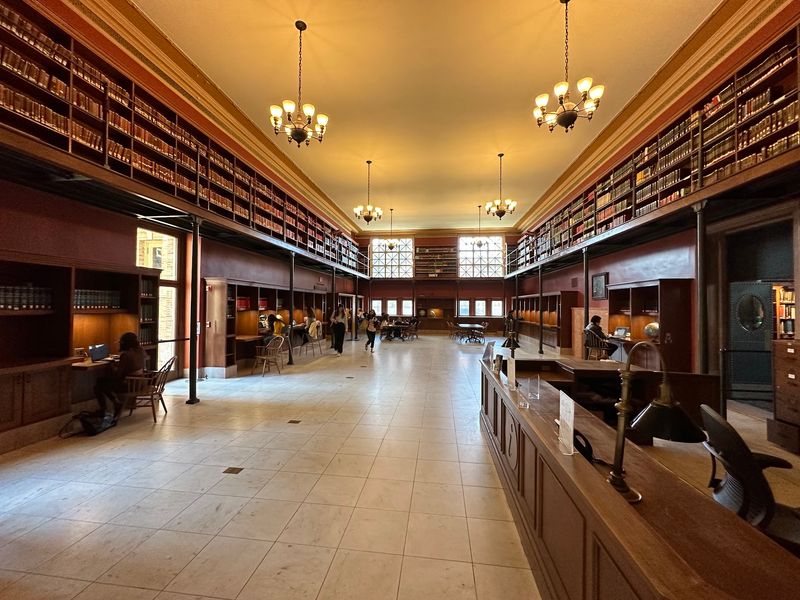
Few rooms in Massachusetts get photographed as often as this one. Bates Hall, the main reading room, stretches out with rows of matching wooden desks topped by classic green lamps.
Overhead, tall curved ceilings and stone arches rise far above the readers. Many compare the scene to a movie set, and some even call it very Harry Potter-like.
Remember, though, that real work happens here. Students and researchers fill the desks, so voices stay low and cameras stay discreet.
The room also makes a fine rainy-day retreat. Bring a book, find an open seat, and settle in for an hour or two.
Some people arrive for a quick photo and end up staying all afternoon. Bates Hall has a way of quietly rearranging your plans, and almost nobody complains about it.
An Italian Courtyard in the Back Bay
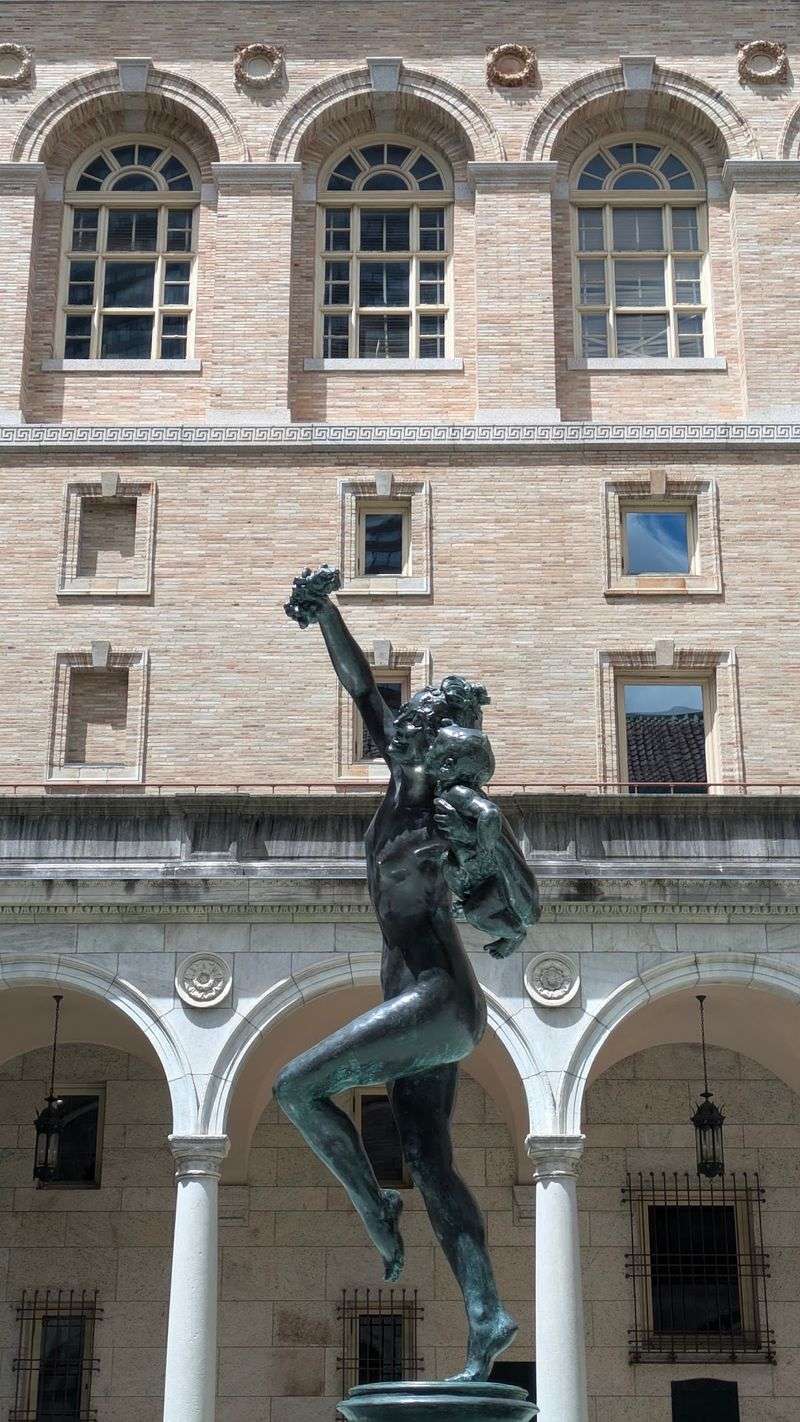
Tucked in the middle of the building is a surprise that many first-timers never expect. An open-air courtyard, modeled after the Palazzo della Cancelleria in Rome, sits inside the library walls.
A cloistered granite arcade frames a neat lawn, with a fountain and sculpture at the center. Benches and seating areas invite people to linger.
The courtyard is among the most talked-about spots in the entire building. It feels removed from the busy city streets just outside.
Readers bring books here. Others simply sit, stretch, and take a break between galleries.
On a mild fall afternoon, it might be the calmest seat in Boston. For locals who need a quick reset in the city, this hidden square of green delivers more peace than its size suggests.
Marble Stairs and Watchful Lions
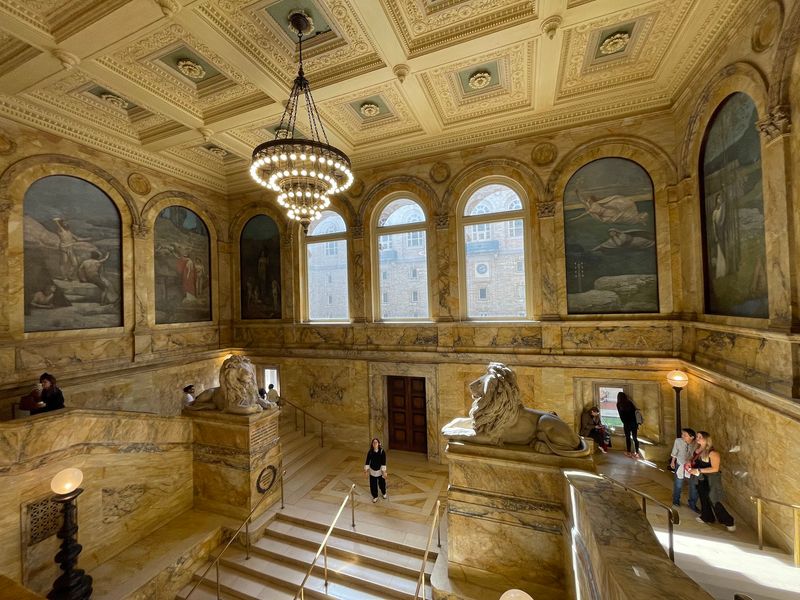
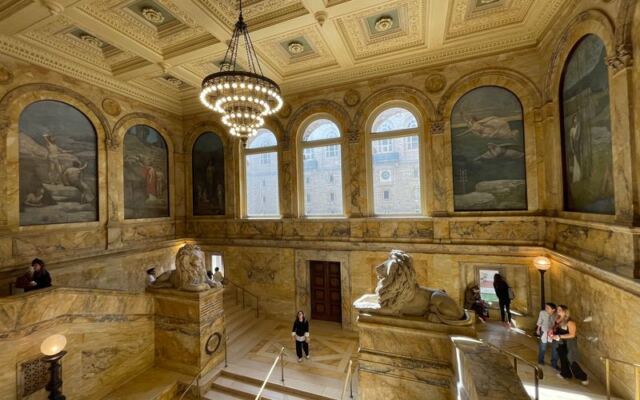
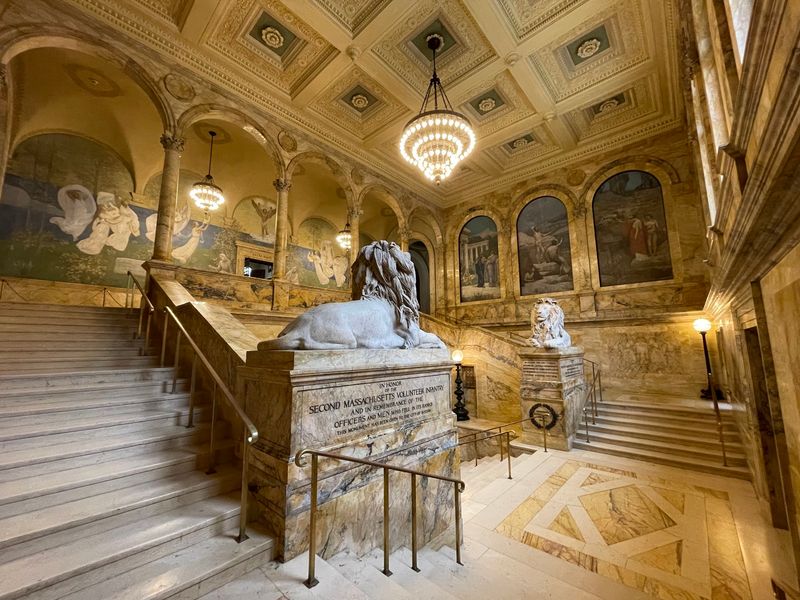
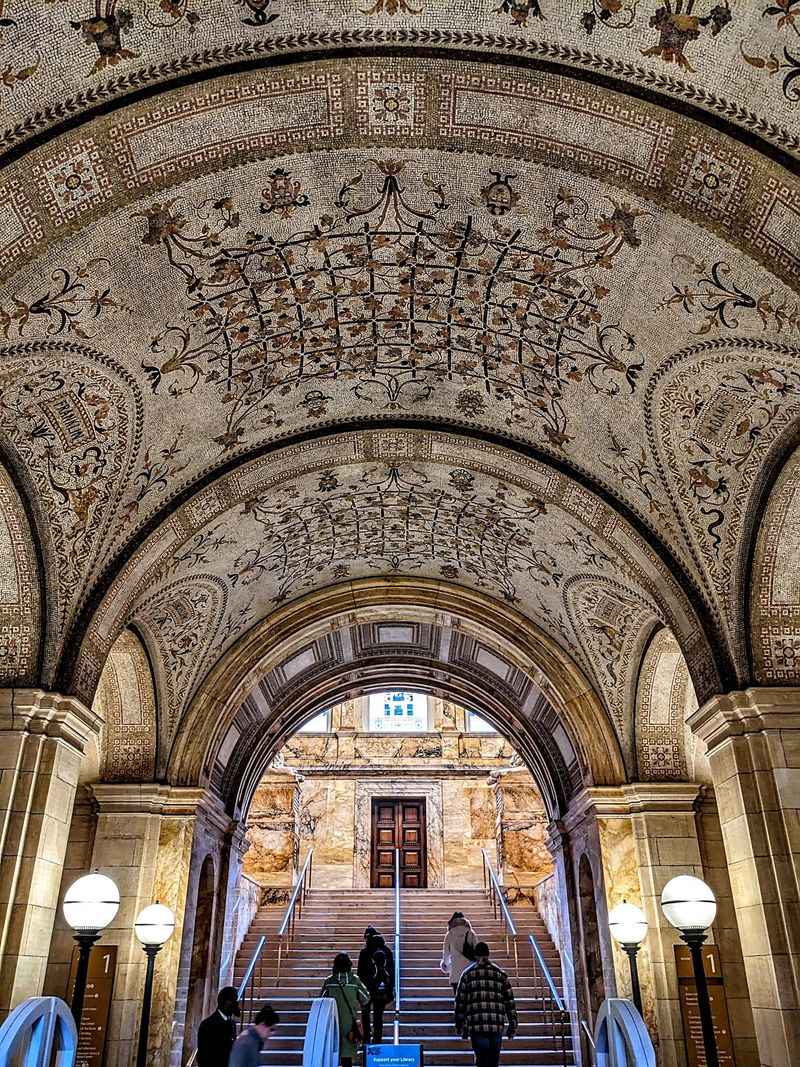
Guarding the main route upstairs, a pair of lion statues sets the tone. The grand marble staircase sweeps upward beneath painted walls in warm gold, tan, and soft brown tones.
Angelic paintings line the way, and arched openings frame views at every landing. Few people climb it without stopping at least once.
Marble appears throughout the older building, along with elegant woodwork and decorative ceilings. Details reward anyone who looks up.
Photographers love this area for good reason. Wedding couples often pose here, using the steps as a natural stage.
A second-floor balcony overlooks the courtyard nearby, adding another angle worth exploring. The staircase may technically be a way to get from one floor to the next, but treating it like a mere hallway would be a real missed opportunity.
Checkered Floors and Hidden Corners
Beyond the headliners, the library is packed with smaller showpieces. The Abbey Room stands out with its striking checkered floor and art-covered walls.
Hallways vary from one wing to the next. Some feature vaulted ceilings with intricate patterns, while others hold sculpture and decorative craftsmanship.
The building rewards wandering more than strict planning. Many people find themselves roaming for an hour across the old and new sections without running out of things to see.
A Map Room also exists within the complex. Schedules can change, and it may be closed on some days, so a quick check ahead is wise.
Quiet corners pop up everywhere for anyone needing a pause. Think of the building less as a checklist and more as an invitation to get pleasantly turned around.
Founding Documents and Rotating Exhibits
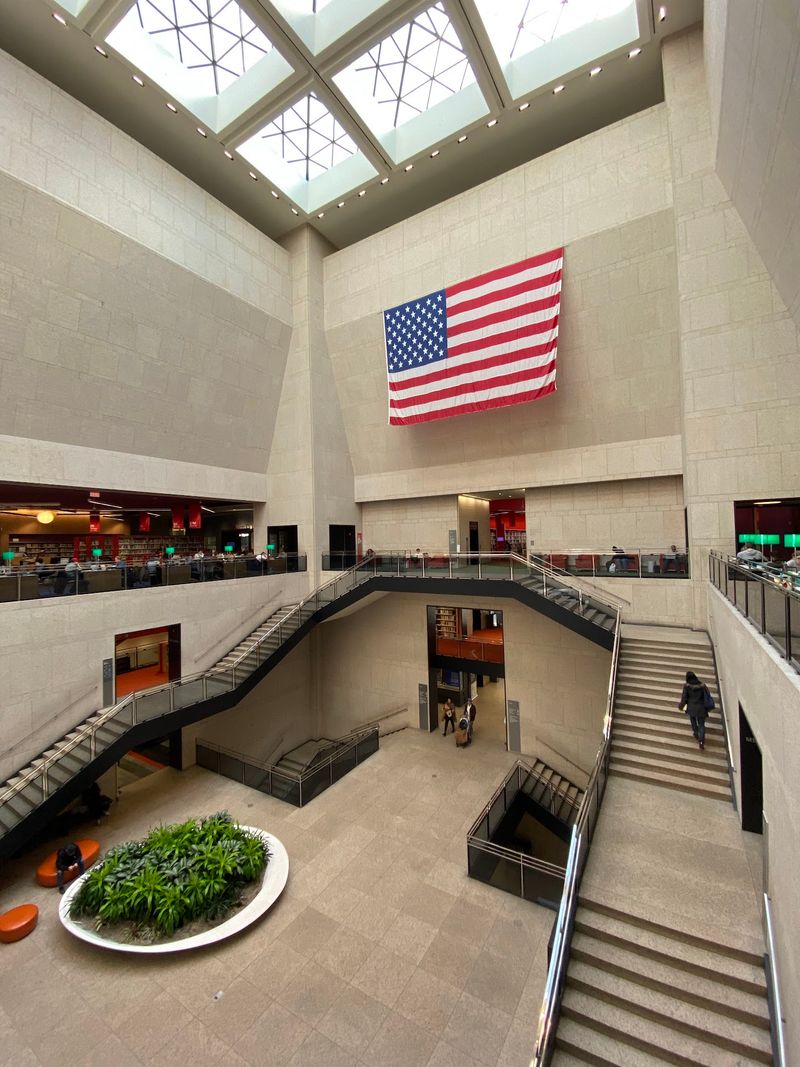
History buffs, take note. The newer building hosts exhibits, including many copies of the Declaration of Independence.
Displays rotate, so what you see can differ from visit to visit. That alone is a good reason to come back more than once.
The library also supports genealogy research. Some people use a stop here to dig into their family surname, which can turn an art outing into a personal discovery.
Exhibitions fit naturally alongside the reading rooms and galleries. Together they make the library feel like a public museum with a lending desk attached.
For Massachusetts residents who take pride in local history, these resources sit right in the heart of the city, free and open. Few places let you move from a famous mural to a founding document in a single afternoon.
Tea Room, Café, and Bookstore Breaks
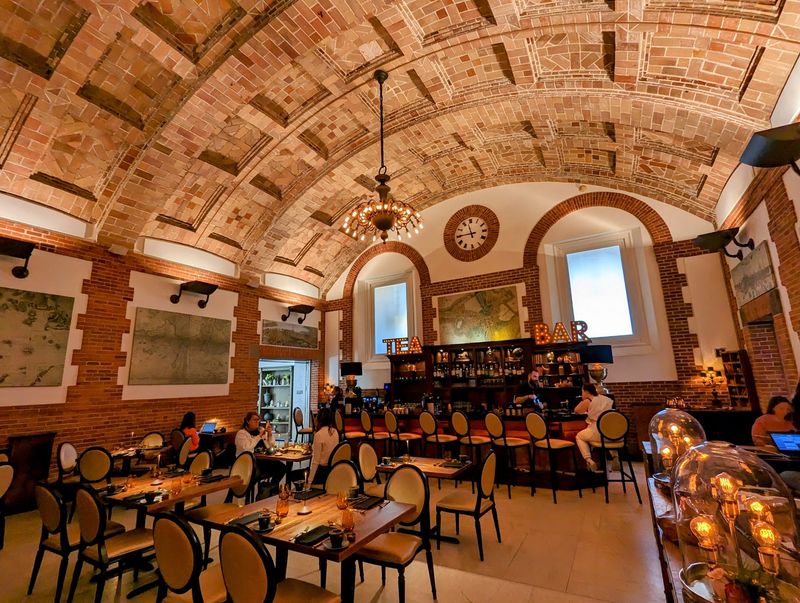
All that exploring builds up a need for a break. Thankfully, the library offers a few ways to refuel without leaving the building.
The historic side features a tea room that many people put on their list for a return trip. It adds a touch of old-fashioned charm to an already elegant setting.
Over in the modern wing, a café provides a more casual option. Staff there are described as kind and helpful.
A sizable bookstore also operates on site. Browsing it makes a natural last stop before heading back out onto Boylston Street.
Restrooms are available on the first floor, a small but welcome detail. Building in time for a tea room visit or café pause turns a quick walkthrough into a relaxed half day.
Who Feels Right at Home Here
Architecture fans come first to mind, but the list runs much longer. Book lovers, art enthusiasts, students, and families all find a reason to stay.
A quiet atmosphere is among the most praised qualities of the historic building. It works well for focused study, reflection, or a gentle stroll.
Kids have their own top-tier children’s section in the newer wing. Teens get a gaming lounge, which helps keep everyone happy.
Couples also choose the library as a wedding venue. Ceremonies can happen in the courtyard, with receptions in the grand spaces through the on-site catering partner.
Etiquette is simple. It remains a functioning library, so keeping voices low shows respect for those working.
Beyond that, the building welcomes nearly anyone with time and a curious streak.
Hours, Tours, and Timing Tips
Timing matters more than most people expect. Monday through Thursday, the library opens from 9 AM to 8 PM.
Friday and Saturday hours run 9 AM to 5 PM. Sunday opens later, from 11 AM to 5 PM.
Arrive well before closing. Staff may begin announcing closing time a bit early, which can cut a late visit short.
Plan on at least 45 minutes to see the art and sculpture. A 15-minute walkthrough covers the courtyard and floors, but an hour or more feels far better.
Free tours are offered, and a self-guided audio tour app is available at the entrance. Fun bonus: the Boston Marathon finish line sits just outside, so the stop pairs nicely with a Copley Square stroll.
For questions, the library website lists current details.
A Verdict Worth Sharing Quietly
So, does a library really deserve a spot on your weekend list? In this case, the answer leans strongly toward yes.
The Boston Public Library offers Sargent murals, a Roman-inspired courtyard, a legendary reading room, and modern spaces for every age. Every bit of it is free to enjoy.
Few outings in Massachusetts deliver this much culture for this little effort. Hop off at Copley Square, walk in, and start wandering.
Many first-timers arrive with modest expectations and leave planning a return. The tea room, the Map Room, and a slower pass through the galleries all give good reasons to come back.
Bring a book, bring a friend, or bring nothing but time. The building handles the rest, and it might just become your favorite free afternoon in the city.
Share this story