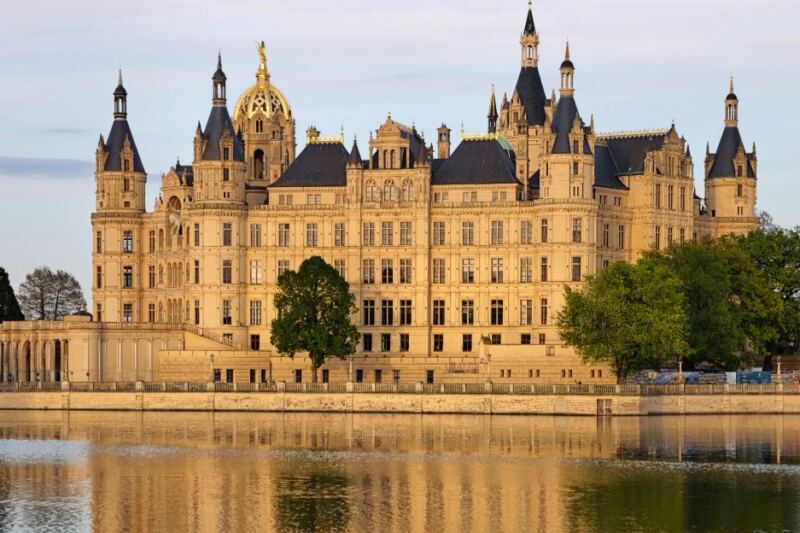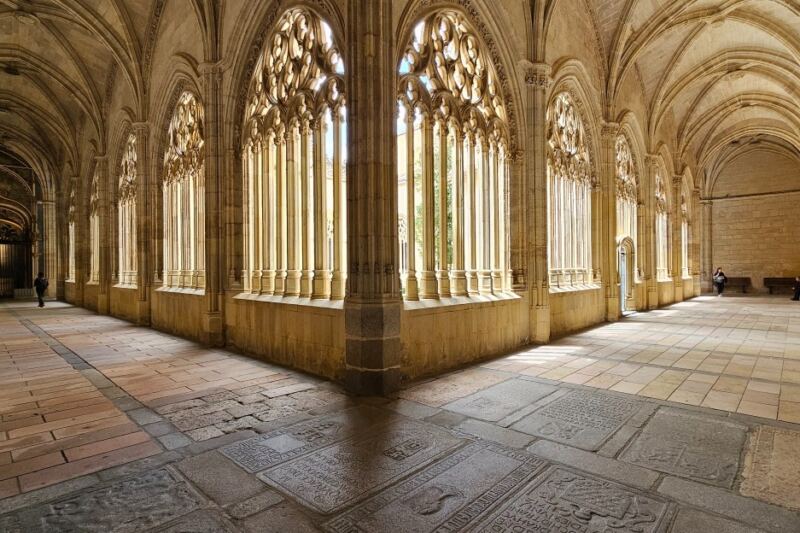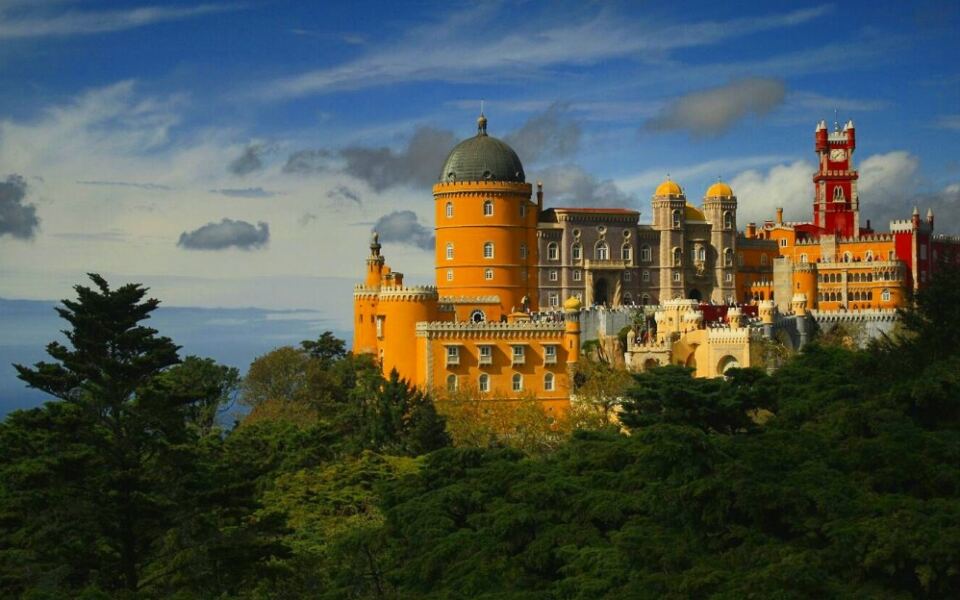
Perched on a misty hilltop above Sintra, the National Palace of Pena looks like a storybook castle that escaped its pages. Yellow towers, red walls, and carved arches all fight for your attention at once.
Behind the bright colors lies a tale of monks, kings, and one very creative royal. Here are ten things that make this Portuguese landmark so unforgettable.
A Monastery Turned Fairytale
Long before the bright paint, a quiet monastery sat on this rocky peak. Monks lived here in the 12th century, and a chapel on the hill was later given to a religious order.
Stones from that old building still live inside the palace today.
Then King Ferdinand II came along in the 19th century and had big plans. He bought the ruins and decided to turn them into a summer home for his family.
Instead of tearing everything down, he built right on top of the old walls.
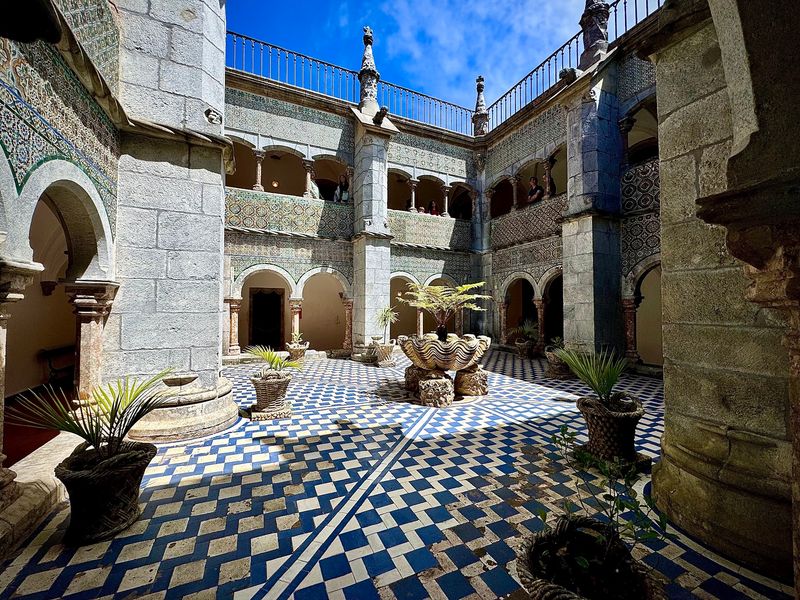
That choice gives the palace a layered feel. You can spot the old cloister, the chapel, and the newer royal wings all squeezed together.
It is a bit like a history lesson that decided to throw a party.
Today the whole site is part of the Sintra UNESCO World Heritage listing. Visitors call it one of the most iconic buildings in Portugal.
Even people who skip the inside tend to leave smiling after seeing the outside.
King Ferdinand’s Wild Imagination
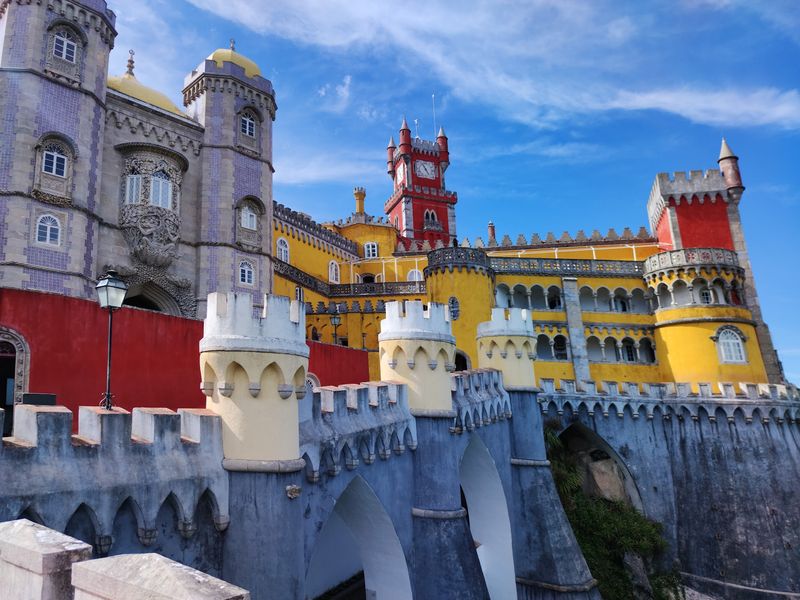
Few kings have ever played architect quite like Ferdinand II. Born in Germany, he fell in love with Portugal and with the romantic art movement of his day.
He wanted a home that felt like a dream, so he mixed every style he liked.
He worked with a German engineer named Baron von Eschwege to turn the plan into stone. Together they borrowed ideas from Moorish, Gothic, and Manueline design.
Nobody said a palace had to follow rules.
The result looks bold, a little odd, and totally charming. One visitor said they had never seen a castle quite like it.
That is exactly what Ferdinand was hoping to hear.
Look closely at the details while you wander. Small carvings and tiles show how much he loved storytelling in stone.
Every corner feels like it came from a very busy daydream.
Colors That Almost Hurt Your Eyes
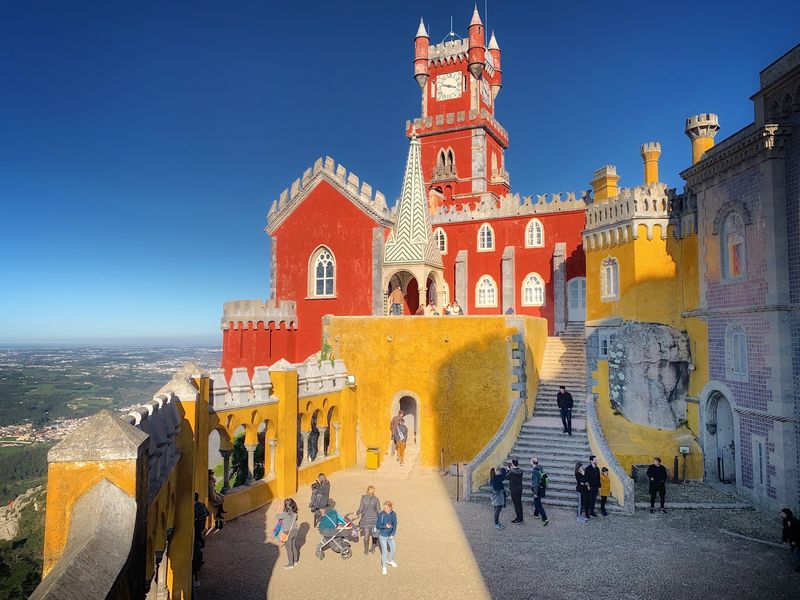
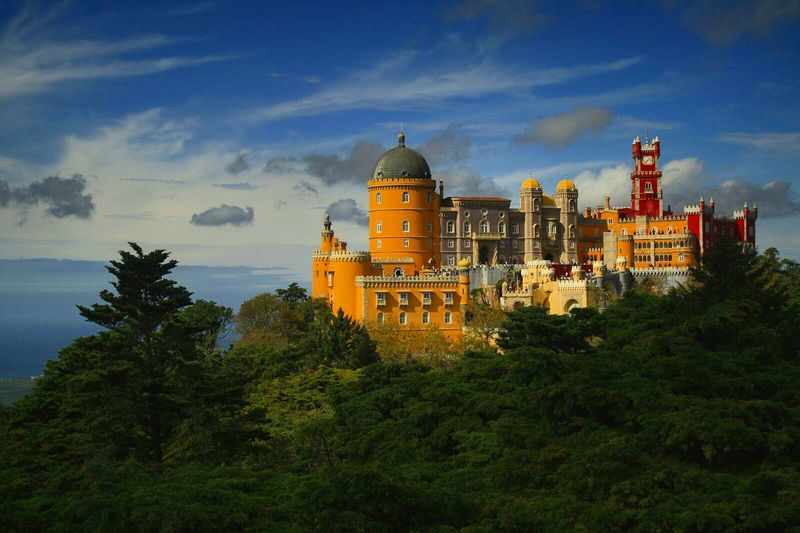
Bright yellow, brick red, and soft pink hit your eyes as soon as the palace comes into view. Photographers love it, and visitors say the colors look even bolder in person.
One traveler called the place a fever dream of color and shape.
The paint choices were part of the romantic idea behind the build. Ferdinand wanted a castle that stood out against the green hills.
Mission accomplished, since you can spot it from far across Sintra.
Clear days make the shades pop the most. Fog can turn the palace into a ghostly shape, which has its own charm.
Either way, bring a camera with plenty of space.
For the best photos, try the terraces and the paths just outside the walls. Early hours usually mean fewer people in your shot.
Patience pays off when a crowd finally clears.
Moorish Arches and Tile Magic
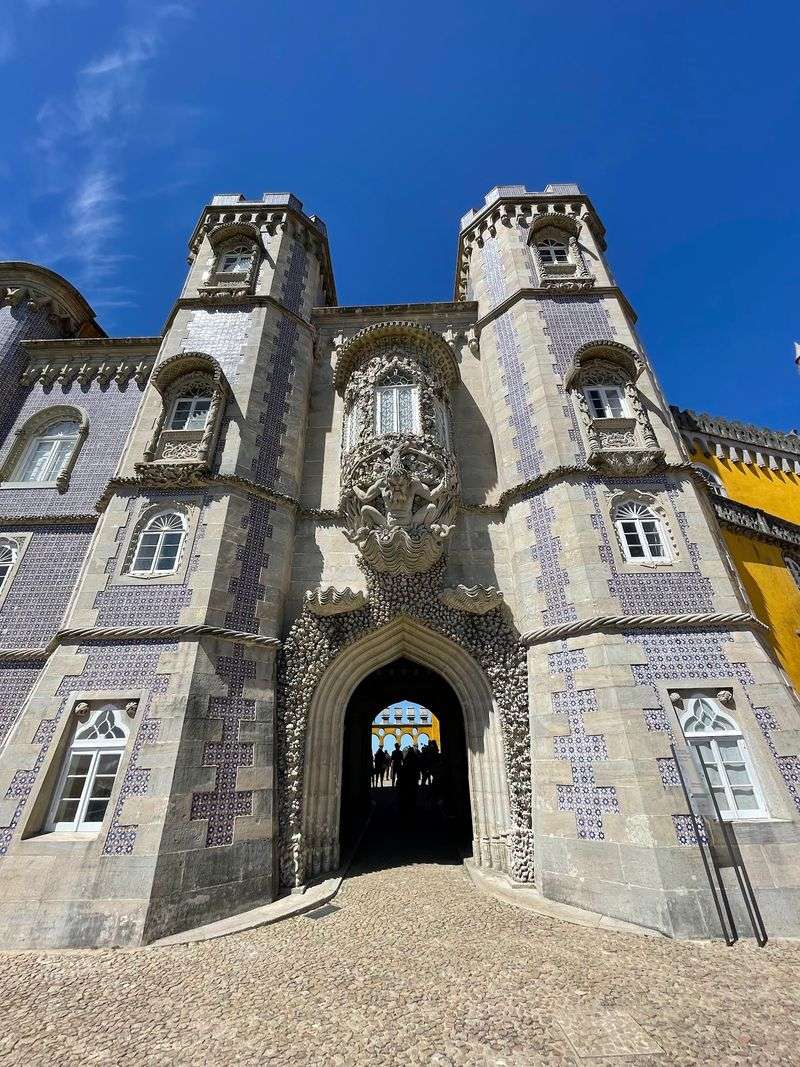
Tile work steals the show in many corners of Pena. Patterned panels and horseshoe-shaped arches give parts of the palace a Moorish flavor.
Walk slowly and you will find new designs on almost every wall.
Portugal has a long tradition of painted tiles, called azulejos. At Pena they cover facades, walls, and shaded passages.
Some patterns are bold, while others are soft and delicate.
Visitors who took the outdoor route said the tilework alone made the trip worthwhile. You do not need to go inside to enjoy a lot of it.
The terraces and courtyards are packed with detail.
Here is a handy trick. Look up as well as ahead, because ceilings and arches hide fine carvings.
A quick glance down the hall can miss them completely.
Gothic Towers and the Triton Gate
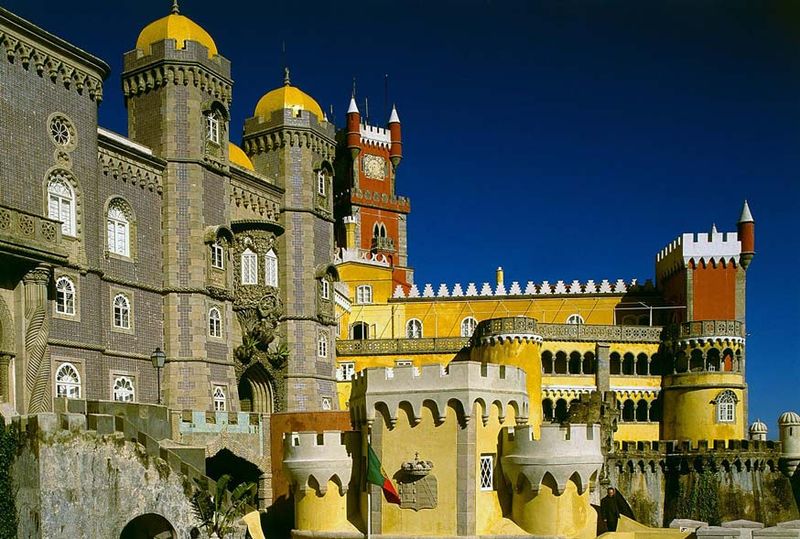
Meet Triton, the grumpy sea creature guarding an arch at Pena. This carved figure is said to stand for the creation of the world.
Some visitors find him a little scary, and that seems to be the point.
Around him rise towers, battlements, and pointed windows that give off strong Gothic vibes. Guides love pointing out hidden symbols in the stonework.
Without one, many people just see a pretty building and walk on.
The palace also nods to Manueline style, a Portuguese form from the age of explorers. Think twisted ropes, shells, and sea themes carved in stone.
It fits well with a country that grew famous on the ocean.
If stories interest you, a guide can turn the visit into a treasure hunt. Reading signs inside is limited, so extra context helps.
Ask about the symbols and you might hear some surprises.
Royal Rooms Frozen in Time
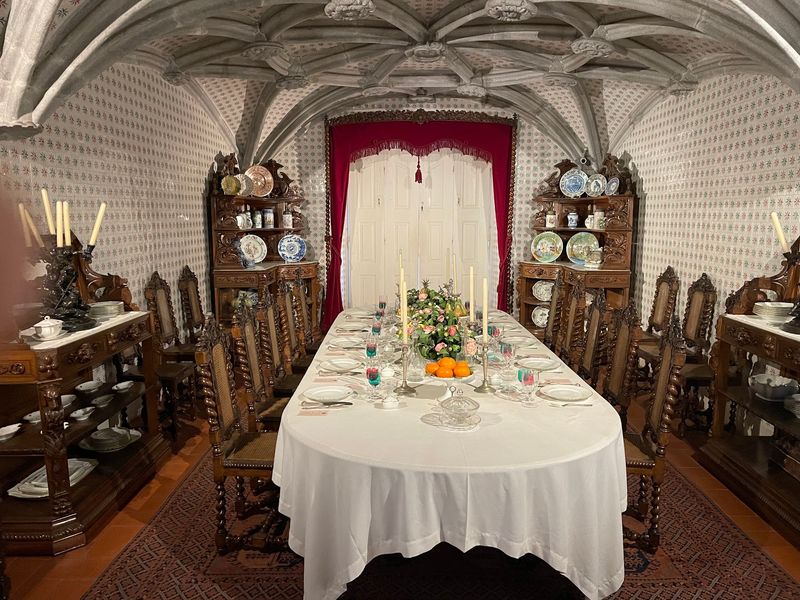
Step inside and the rooms feel like the royals just stepped out for tea. Original furniture, decor, and personal items still fill many spaces.
One visitor praised how much of the old style remains.
The family used the palace as a summer retreat, so the rooms mix comfort with showy taste. Heavy drapes, fancy ceilings, and painted details add to the feel.
There are bedrooms, dining spaces, and halls full of trinkets.
Be ready for company, though. Corridors are narrow and the line of people keeps moving.
Several reviewers said it was hard to stop and enjoy the details.
The indoor tour often lasts only 30 to 60 minutes. That means you should look quickly and choose a few things to enjoy.
A full ticket costs more, so decide if rooms matter to you.
Terraces With Atlantic Views
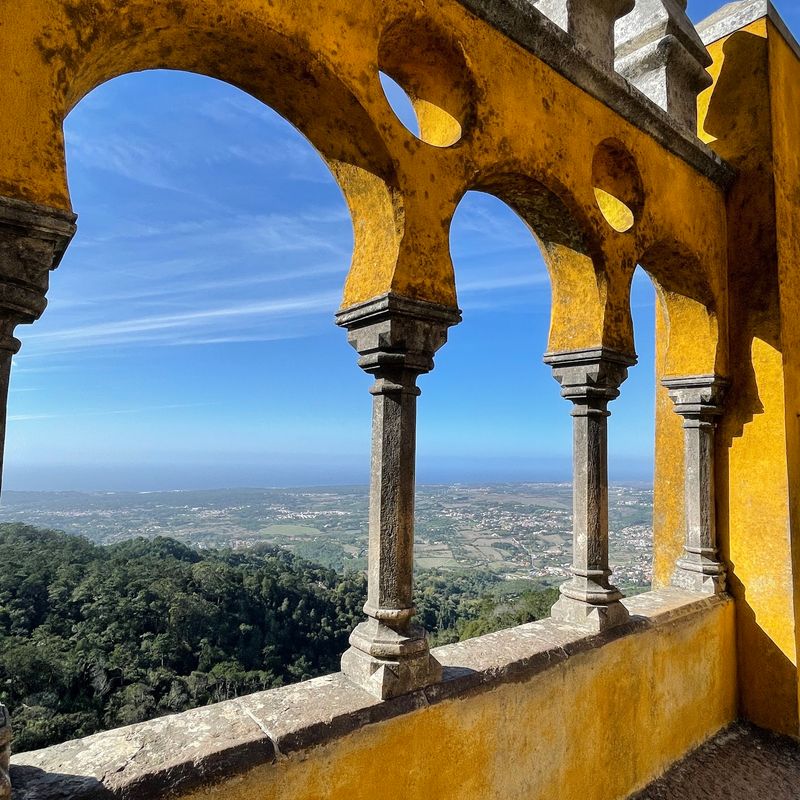
Stand on the terraces on a clear day and the world opens up. Hills roll out below, towns sparkle in the distance, and the Atlantic shows up on the horizon.
Many guests say the views are the real star.
Fog can drift in without warning. One visitor had a foggy day and still found the palace impressive.
Still, a clear morning gives you the best chance of a big view.
Wind is another surprise. It gets colder and blowier up here than in Lisbon, even when the day feels warm.
Pack a light jacket before you leave town.
Take your time on the outdoor paths and walkways. They run across several levels, so you get new angles as you climb.
Security may ask to see your ticket, so keep it handy.
The Park Is a Show of Its Own
Giant trees and winding paths wrap around the palace like a green blanket. The park was planned by Ferdinand too, with plants from far-off lands.
Fresh air and calm corners make it a peaceful break from the crowds.
Lakes, benches, and little viewpoints dot the trails. Some visitors said they enjoyed the gardens as much as the palace.
Others found them more peaceful than the building itself.
A garden-only ticket lets you wander and see the outside of the palace. Several guests chose this route and loved it.
It also costs less than the full pass.
Wear shoes with good grip, since paths can be steep and dusty. Bring water and a map saved offline, because phone signal can be weak.
A slow walk here is easy to remember.
Hike to the High Cross
Want a view that beats the palace terraces? Head for the High Cross, called Cruz Alta.
It sits at one of the highest points in the park.
The walk takes around 20 minutes along a cobblestone path. It is a moderate climb, so take it easy and rest when needed.
A reviewer said it was the best spot for views.
From the top, you can look back at the palace sitting like a jewel on the hill. Photos from here show the colors against the forest.
Few angles are as dramatic.
It is also a good plan if you only bought a park ticket. You still get a full outing with a big payoff.
Bring water and a sense of adventure.
Smart Tips for Beating the Crowds
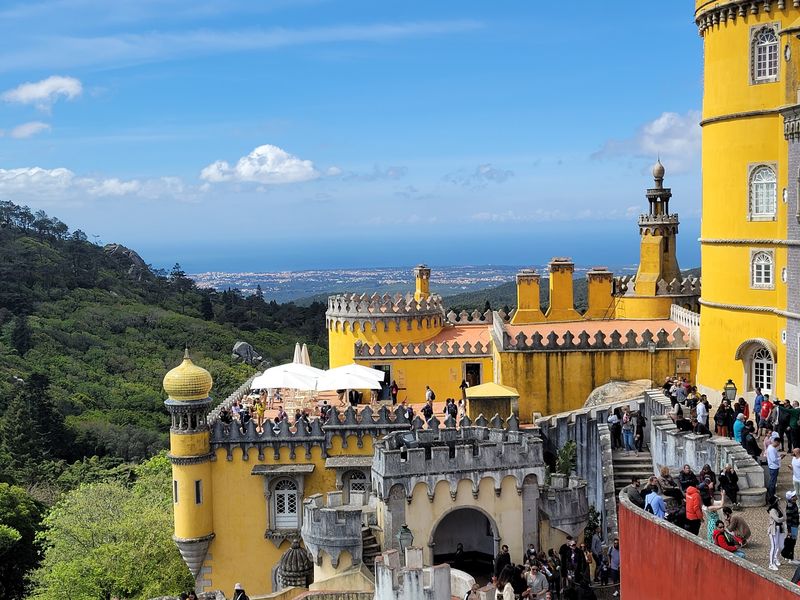
Crowds are the palace’s biggest plot twist. Reviews mention long queues, tight corridors, and packed time slots.
Planning ahead makes a huge difference.
Buy tickets online and book early, since popular slots from 10 a.m. to noon and 3 to 5 p.m. fill fast. The palace opens at 9:30 AM and closes at 6:30 PM.
Arriving early helps you avoid the biggest lines.
Getting up the hill takes effort too. Options include a bus, a tuk tuk, a ride-share, or a steady walk.
A shuttle from the lower gate to the top costs a few euros.
Parking is limited, so leave the car in town if you can. Allow at least an hour between reaching Sintra and your entry time.
Pack snacks, since food at the top is limited and pricey.
Share this story