Pumpkin pie gets most of the attention in November, but apples have been quietly running the Thanksgiving dessert table for centuries. Long before canned pumpkin arrived in grocery stores, cooks in colonial New England were stewing, baking, frying, and layering apples into dozens of different treats.
The reason was practical. Apples stored well through the cold months, grew easily in orchards, and could be stretched with bread, flour, or oats when money was tight.
Many of the recipes we still bake today came from very specific moments in history. Some appeared in the first American cookbook in 1796.
Others became popular during the rationing years of World War II, when butter and sugar were hard to find. A few traveled across the ocean from England, France, Germany, and Austria with immigrant families who refused to leave their favorite recipes behind.
Some desserts on this list are still famous. Others have almost disappeared from American kitchens, even though they were once holiday staples.
Each one has a story about how people lived, what they could afford, and how they made the most of what grew nearby. Keep reading to find out where these desserts came from, who loved them, and which forgotten classic might deserve a spot on your table this year.
1. Apple Fritters
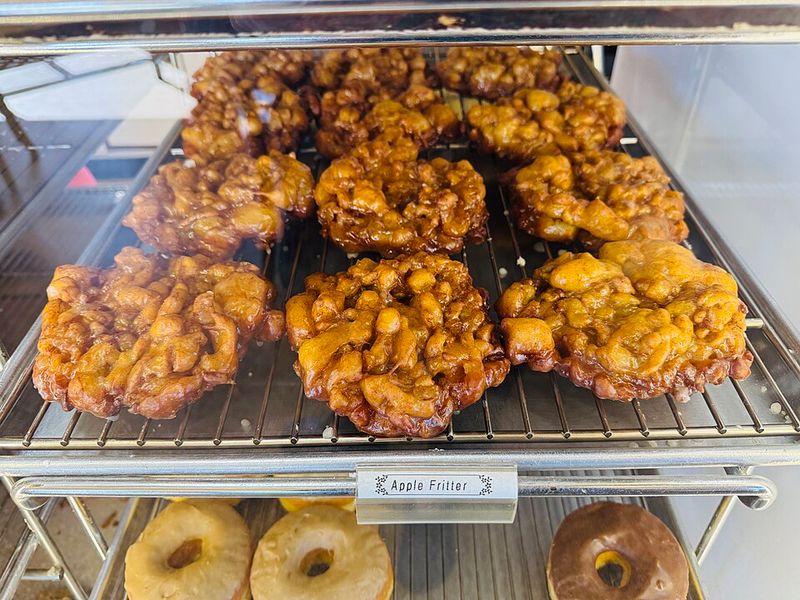
Ancient Romans were frying dough long before anyone thought to add apples. Their dish, called scriblita, is one of the earliest relatives of the modern fritter.
During the Middle Ages, Europeans made a version called cryspeys, often finished with sugar. By the 1600s, apple fritter recipes were showing up in colonial American cookbooks.
Cooks liked fritters for a smart reason. They were a fast way to use apples that would not stay fresh much longer.
One famous American recipe came from Mary Randolph in her 1828 cookbook, The Virginia Housewife. Randolph ran a boarding house before writing the book, which became a kitchen classic for generations.
Early fritters were usually fried in lard and served warm with cinnamon sugar. They were cheap, filling, and perfect for harvest season.
The story did not stop in the 1800s. In 1969, Dorothea Dot Czarnota created a fritter recipe for the Apple Harvest Festival in Southington, Connecticut.
Her fritters became so popular that people still wait in long lines for them each year. That is quite a legacy for a simple piece of fried batter.
For Thanksgiving, small fritters make a fun dessert that guests can grab by hand while the coffee brews.
2. Apple Crisp
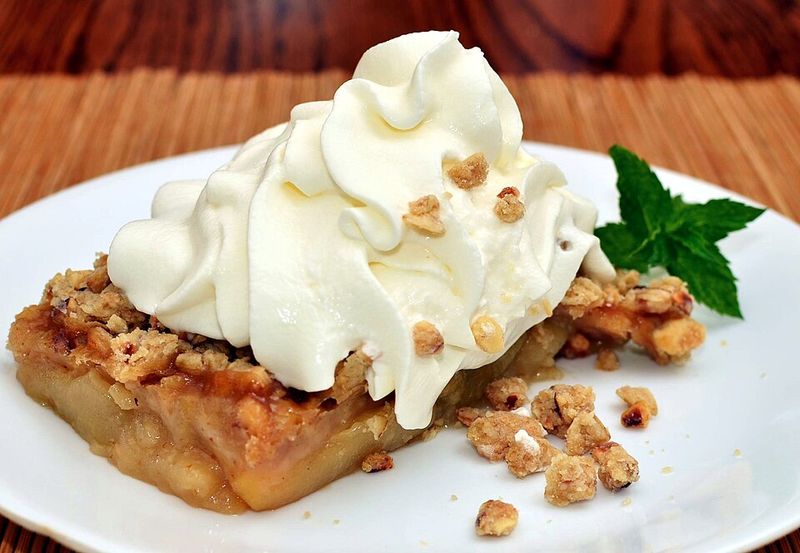
Plenty of people assume apple crisp has been around forever. In fact, it is one of the younger desserts on this list.
The earliest known printed recipe appeared in the September 1915 issue of Good Housekeeping. Another showed up in a newspaper in 1924.
Its real breakout came during World War II. Rationing made butter and flour harder to get, and a double-crust pie used plenty of both.
A crisp needed far less. Home cooks could scatter a simple topping over sliced apples and still serve something sweet.
The secret ingredient in the American version is oats. They give the topping a crunch that sets it apart from the British apple crumble.
After the war, the crisp never left. It became a favorite across the United States and Canada, where apples are cheap and easy to find every fall.
Here is a handy tip for the holiday. Mix the topping a day ahead and keep it in the fridge.
On Thanksgiving, just slice the apples, add the topping, and bake. Serve it warm with ice cream or custard, and nobody will guess it started as a wartime money saver.
3. Apple Brown Betty
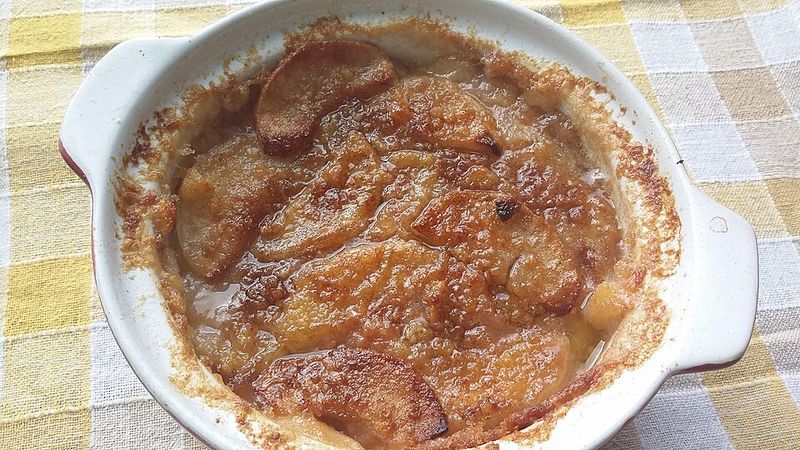
Stale bread rarely gets a happy ending, but in this case it became a classic. Apple Brown Betty layers spiced apples with buttered breadcrumbs.
As it bakes, the crumbs soak up the apple juice and butter. The middle turns soft and pudding-like, while the top stays crisp.
The first known mention in print appeared in 1864, in the Yale Literary Magazine. The dish itself likely grew out of earlier home kitchens where nothing was wasted.
The name is a bit of a puzzle. The Oxford Companion to Food suggests it may have been named after a cook named Betty.
Naming dishes after the people who made them was common at the time. The word brown may refer to the caramel color from brown sugar and cinnamon.
By 1890, a Brown Betty recipe had even won an award from the American Public Health Association. That was serious praise for a humble pudding.
Nearly a century later, the dessert gained famous fans. President Ronald Reagan and Nancy Reagan reportedly loved it during their White House years.
For your own table, try using leftover bread from Thanksgiving week. It is exactly what the original cooks would have done.
4. Applesauce Cake
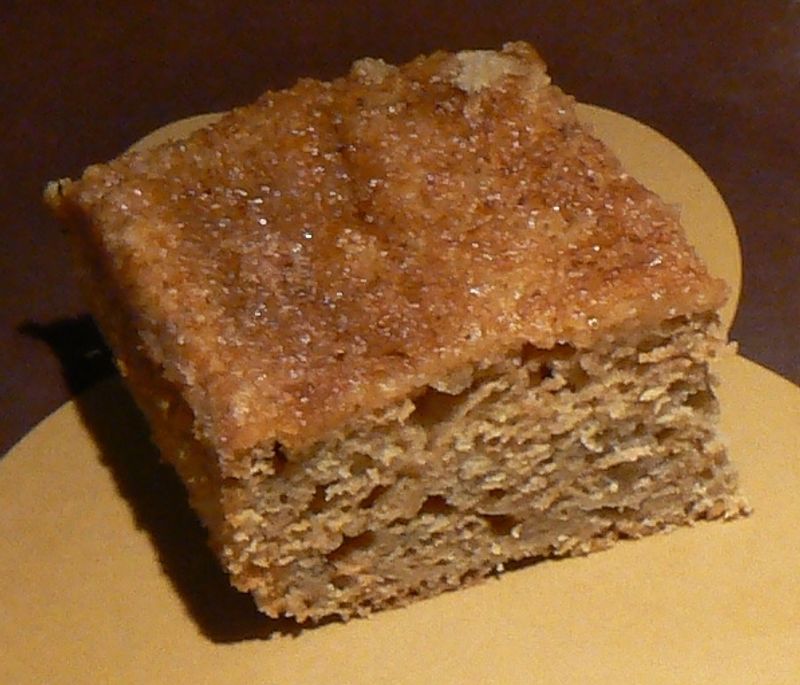
When sugar and eggs ran short, applesauce stepped in to save dessert. That is the main reason this cake became a household favorite.
The recipe goes back to colonial New England. Settlers liked it because flour and applesauce were cheap and easy to find.
Spices did more than add flavor. They also helped the cake last longer, which mattered a lot before refrigerators existed.
The cake had its biggest moments during World War I and World War II. Rationing limited sugar, eggs, and sometimes flour.
Applesauce brought moisture and natural sweetness, so bakers could use less of those scarce items. Many people saw baking it as both smart and patriotic.
From about 1900 to the 1950s, applesauce cake appeared in cookbook after cookbook. Grandmothers often had a stained recipe card for it tucked away somewhere.
Today, it is easy to overlook next to fancier holiday treats. That is a shame, because it is one of the simplest desserts to make ahead.
Bake it two days before Thanksgiving and wrap it tightly. The spices actually get better with time, which frees up oven space on the big day.
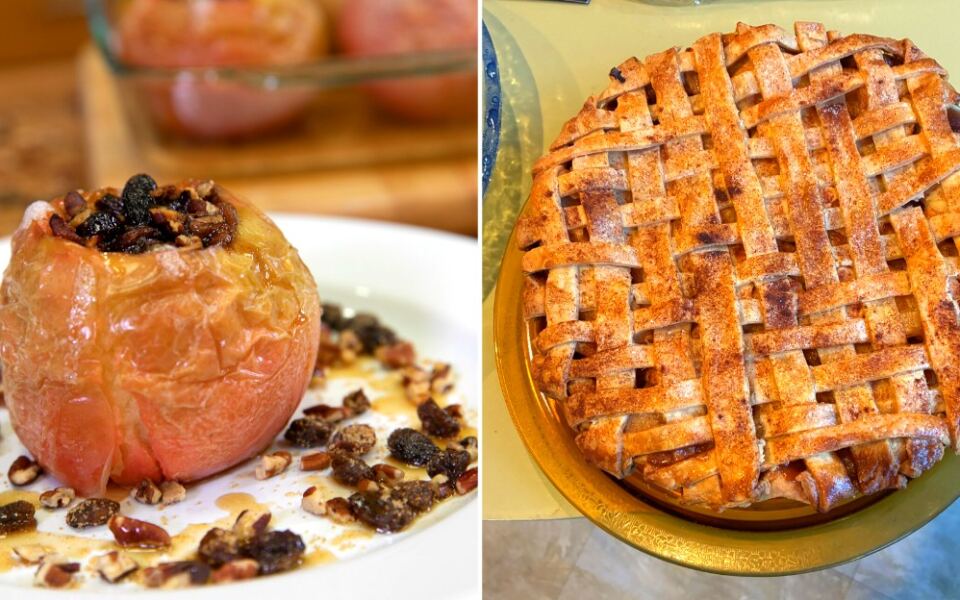
5. Apple Pie
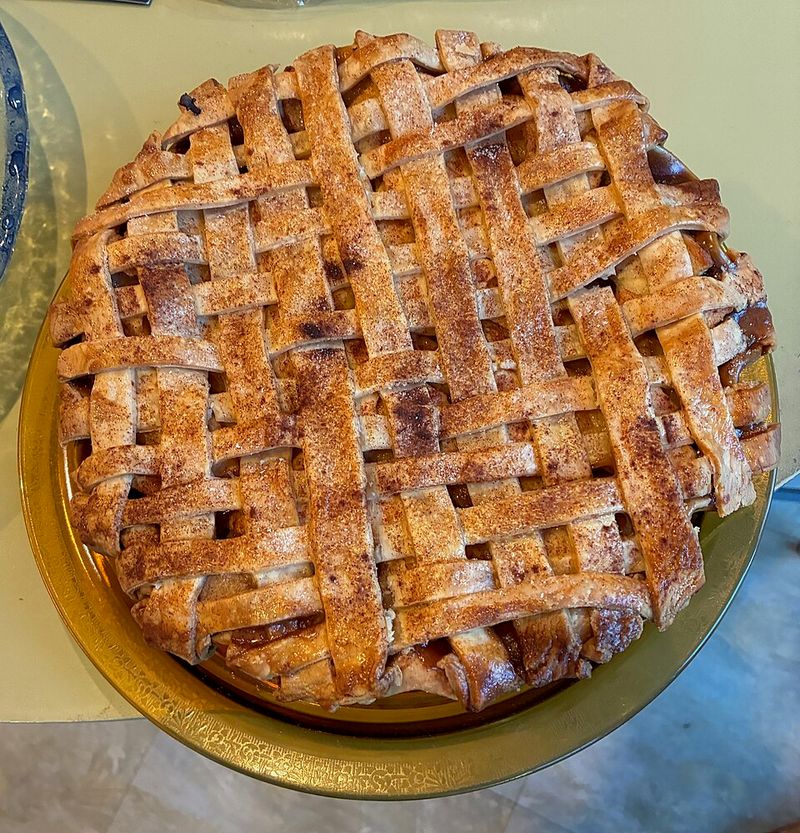
Nobody in early America could make a sweet apple pie without first planting a lot of trees. The only apples native to North America were small, sour crabapples.
European colonists from England, Holland, and Sweden brought both the recipes and the apple varieties during the 1600s and 1700s. Funny enough, many of those first orchards grew apples for cider rather than dessert.
The pie itself is much older than the United States. English cooks were baking apple pies in the 14th century, and a Dutch cookbook printed a recipe in 1514.
In 1796, Amelia Simmons included two apple pie recipes in American Cookery, the first cookbook written by an American. That book helped turn a European import into a local favorite.
By the 1800s and 1900s, the dish had become a national symbol. The phrase as American as apple pie grew popular, and during World War II, soldiers often said they were serving for Mom and apple pie.
American versions grew sweeter, with thicker crusts than the old European ones. In New England, some families still serve each slice with a piece of sharp cheddar cheese.
Give that pairing a try this Thanksgiving. It has a few centuries of practice behind it.
6. Apple Turnovers
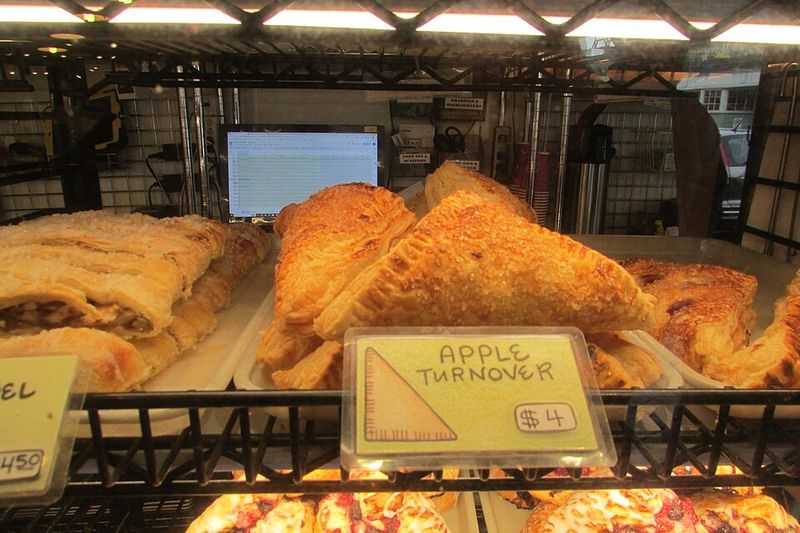
A small French town claims the credit for this pastry, and it throws a festival every year to prove it. Saint-Calais says the apple turnover was born there in 1630.
According to local legend, the lady of the town handed out flour and apples to people who were unwell. Residents turned those supplies into pastry pockets.
Whether or not the story is fully true, Saint-Calais still celebrates its Chaussons aux Pommes festival. Fruit-filled pastries themselves are far older, going back thousands of years.
England got in on the action too. A recipe called Apple Pasties to Fry was printed in an English cookbook in 1753.
Settlers carried the idea to America. By the late 1700s, colonial cooks were making them with puff pastry and sometimes calling them puffs.
The name apple turnover became standard in the early 1900s. One recipe appeared in Mrs. Rorer’s New Cook Book in 1902.
Turnovers were popular because they traveled well. People could pack them for work, school, or long trips.
That makes them a smart Thanksgiving pick if you are bringing dessert to someone else’s house. No pie plate required.
7. Apple Dumplings
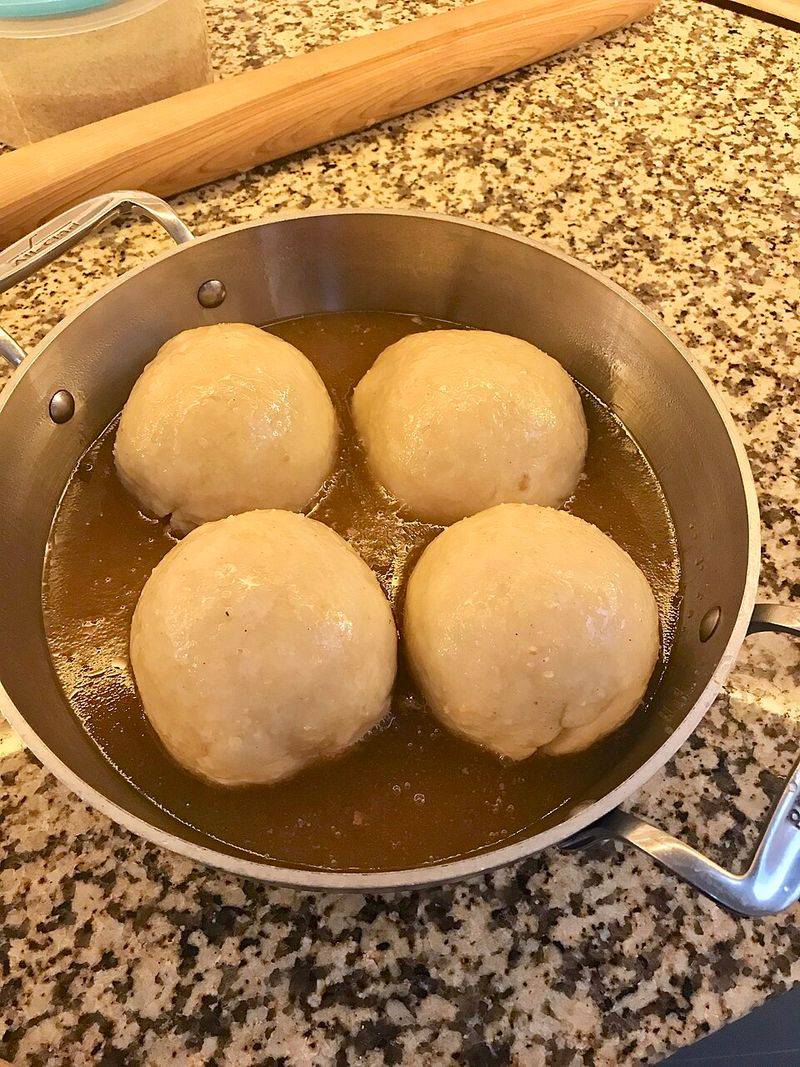
Dessert for breakfast sounds like a kid’s dream. In Pennsylvania Dutch country, apple dumplings have long filled both roles.
The dish began in 17th-century England and other chilly parts of Europe. Early dumplings were boiled, and the dough acted mostly as a wrapper for the fruit.
Hannah Glasse printed a well-known recipe in her 1747 book, The Art of Cookery Made Plain and Easy. Her cookbook was a bestseller on both sides of the Atlantic.
Immigrants brought dumplings to America, where apple harvests were huge. The dish became especially popular in Pennsylvania Dutch and Appalachian communities.
A big change came in the 1800s. Cooks started baking dumplings instead of boiling them, and recipes like the one in Miss Leslie’s 1851 cookbook spread the idea.
Pennsylvania Dutch families often eat them warm with ice cream for dessert. Some also serve them in the morning with a splash of milk.
The dumpling even has its own holiday. National Apple Dumpling Day falls on September 17, and several towns host festivals.
For Thanksgiving, each guest gets a whole apple. It feels special and saves you from slicing a pie.
8. Apple Cobbler
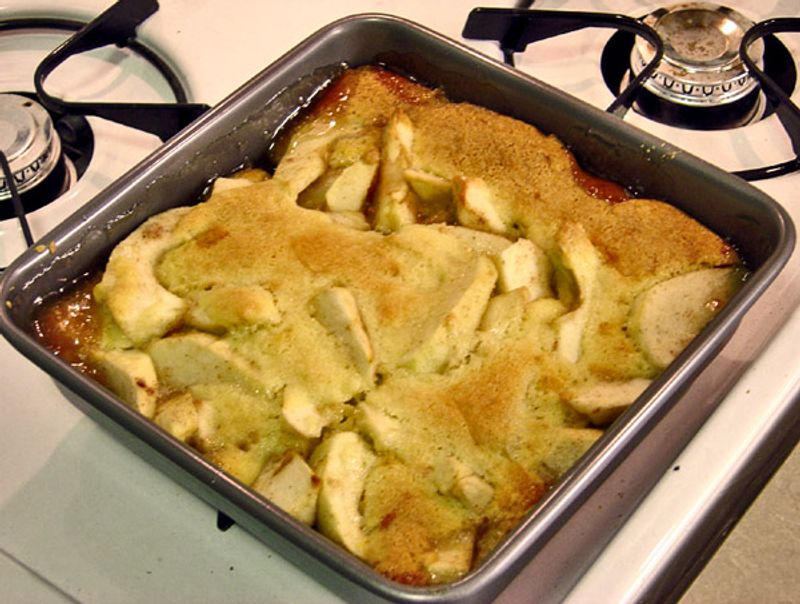
Bumpy streets gave this dessert its name. The dropped biscuit topping bakes into lumps that people thought looked like cobblestones.
Cobblers came from British American colonists in the 1800s. Pioneers especially liked them, since a full pie crust was hard to make without proper ovens and tools.
A cobbler just needed fruit, biscuit dough, and a pot. It could even be cooked over a campfire in a heavy Dutch oven.
Apples were only one option. Cooks used whatever was in season, including peaches, berries, and pears.
Here is a surprise. Early Americans did not treat cobbler only as dessert.
It often showed up as part of a main meal or even at breakfast. It was not until the late 1800s that cobbler settled into the dessert category for good.
The word itself was in print by 1859, showing it was already well known. Today, apple cobbler is usually seasoned with cinnamon and served warm.
A practical tip for Thanksgiving is to bake the fruit layer early. Add the biscuit dough right before dinner so the topping comes out fresh and fluffy for dessert.
9. Baked Apples
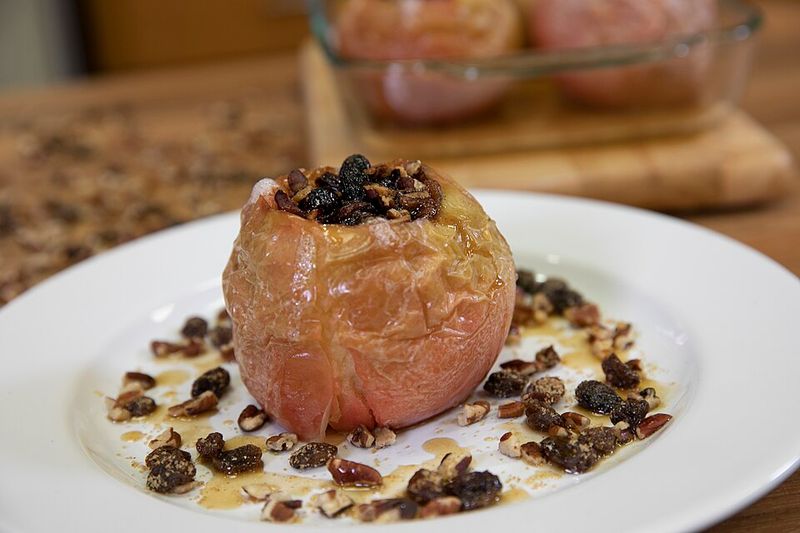
Take one apple, remove the core, and bake it. That is about as simple as a historic dessert gets, yet cooks have been fancying it up for centuries.
In Germany, baked apples are called Bratapfel. They were a common holiday dessert, especially around Christmas.
Apples were one of the few local fruits that lasted through winter, so they were easy to keep on hand. German families stuffed them with almonds, marzipan, raisins, butter, sugar, and spices.
English cooks had their own versions. Hannah Glasse’s 1747 cookbook, later printed in America in 1805, flavored baked apples with cloves, lemon peel, and sugar.
Americans kept things fairly plain. They usually chose large apples like Rome, Empire, and Cortland, which hold their shape well in the oven.
The dessert has stuck around for good reasons. It costs very little, needs almost no special skill, and works for people avoiding pie crust.
For Thanksgiving, set up a small filling bar with oats, nuts, raisins, and brown sugar. Let each guest stuff an apple before dinner.
By the time the turkey is carved, dessert will be ready. A dollop of cream finishes the job.
10. Apple Charlotte
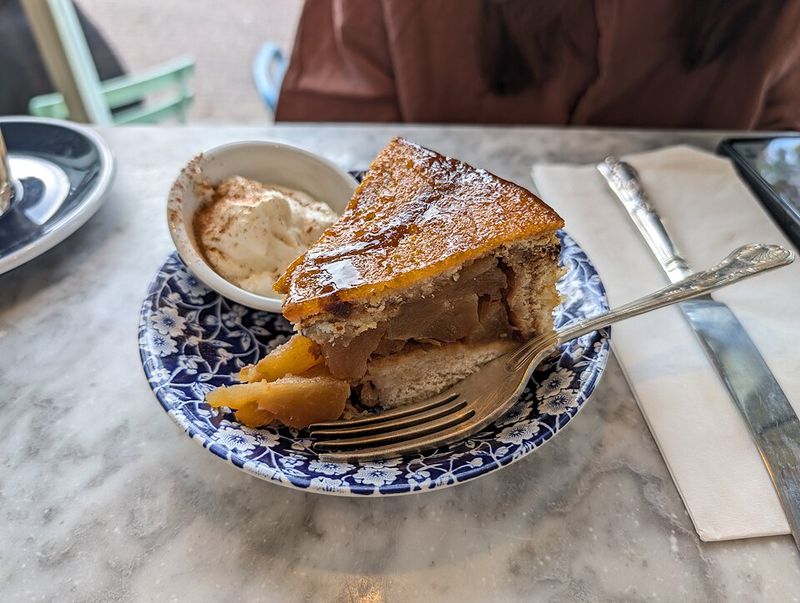
Royalty and leftovers rarely share the same recipe. Apple Charlotte manages to combine both.
The dessert is widely believed to be named after Queen Charlotte, wife of King George III of England. She was known as a supporter of apple growers.
To make it, cooks line a mold with buttered slices of bread. They fill the center with spiced apple puree and bake it until the outside turns golden.
The earliest references date to around 1796. Recipes became common in English cookbooks in the early 1800s.
People sometimes credit the French chef Antonin Careme with the idea. He did create the cream-filled Charlotte Russe, but the apple version came first.
Even with its royal name, the dish was quite thrifty. Slightly stale bread worked best because it held its shape.
The Charlotte is still a favorite in Britain. In the United States, it has mostly faded away.
That is interesting, since it is a close cousin of the American Apple Brown Betty. Both rely on bread and apples.
Turning a golden Charlotte out of its mold at the table is a fun moment. Your guests will think you planned something fancy.
11. Apple Strudel
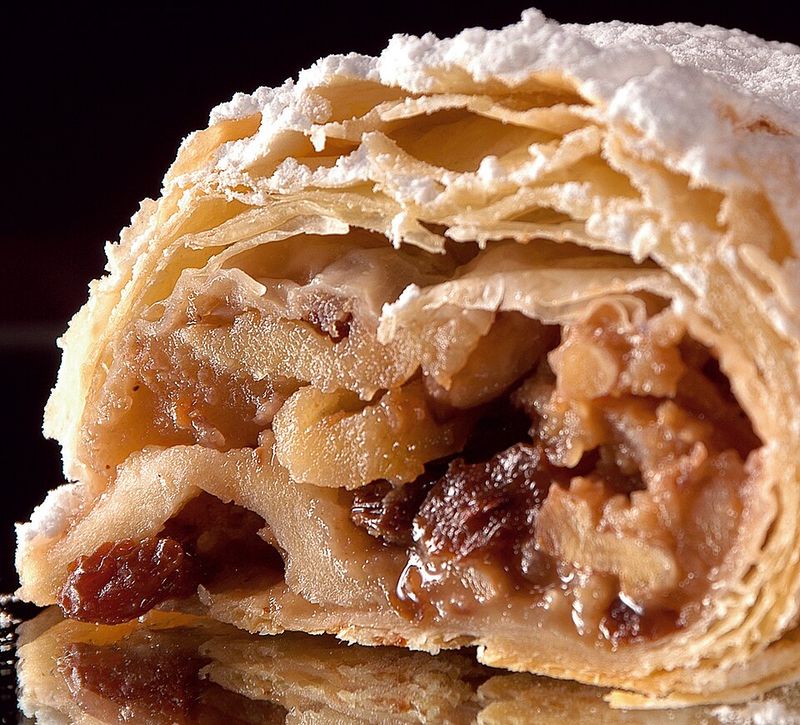
Tucked inside the Vienna City Library sits a handwritten recipe from 1697. It is the oldest known strudel recipe in the world.
Apple strudel, or Apfelstrudel, is closely tied to Austria. Its roots likely reach back to layered pastries like baklava, which spread into Europe with the Ottoman Empire in the 1400s and 1500s.
The pastry grew famous in the 1700s and 1800s under the Habsburg Empire. It appeared at royal feasts before moving into bakeries and coffeehouses across Central Europe.
What makes strudel special is the dough. Bakers stretch it by hand until it is incredibly thin.
There is an old saying that you should be able to read a newspaper through it. That takes serious practice.
The filling usually includes tart apples, cinnamon, sugar, raisins, and breadcrumbs browned in butter. The crumbs keep the juices from making the pastry soggy.
Many European families moved to North America in the 1800s and early 1900s. They brought strudel recipes with them.
If stretching dough sounds scary, store-bought phyllo makes a great shortcut. It turns this imperial treat into a doable Thanksgiving project.
12. Apple Crumble
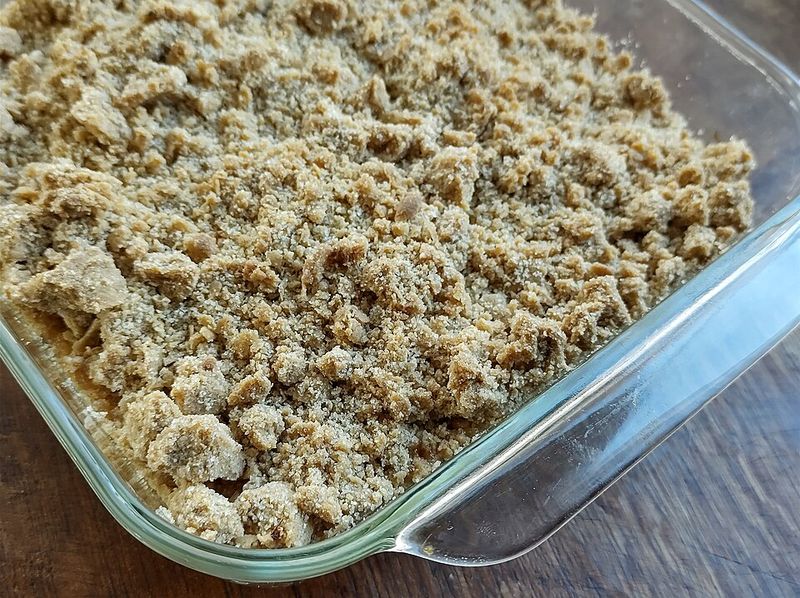
Across the Atlantic, wartime rationing produced a dessert that Britain now treats as a national treasure. During World War II, butter, eggs, and flour were all tightly limited.
Making a proper pie crust became difficult. British home cooks responded with the crumble, a quicker and cheaper option.
The topping is simple. Flour, butter, and sugar get rubbed together by hand until they form coarse crumbs.
Those crumbs go over stewed apples, and the dish bakes until golden. Unlike the American crisp, the classic British version skips oats.
Once rationing ended, the crumble did not disappear. Families kept making it in the postwar years, and it became a symbol of seasonal British cooking.
It even crossed the English Channel. French cooks embraced the crumble in the 1990s, which is quite a compliment from a country famous for pastry.
In Britain, it is almost always served with warm custard. That pairing is worth copying.
For an American Thanksgiving, crumble is a nice change from pie. You can also add a handful of cranberries to the apples for color and a tangy holiday flavor.
13. Eve’s Pudding
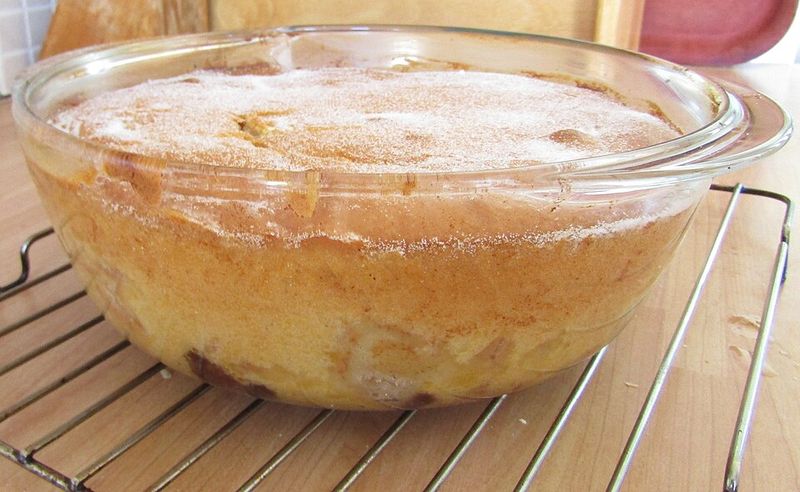
With a name pointing straight to the most famous apple story of all, this pudding was bound to catch attention. Most people assume it refers to Eve from the Book of Genesis.
The dessert is a British classic. Stewed apples go in the bottom of the dish, and a light sponge cake batter covers the top.
As it bakes, the sponge rises over the fruit. Each spoonful gets soft apples and fluffy cake together.
The earliest known recipe dates to 1824. That places it squarely in the era when British home baking was part of everyday routine.
Details about who invented it are hard to find. Its steady appearance in cookbooks shows that ordinary families made it again and again.
Eve’s Pudding needs no special skills. The sponge uses basic pantry items like flour, butter, sugar, and eggs.
That simplicity makes it a good choice for young or new bakers. It also works well when oven space is limited, since it cooks in one dish.
Serve it warm with cream or custard. It makes a fitting final course, since every story on this list started with an apple.
Share this story