A creek in Pennsylvania’s Sinking Valley emerges from a rock wall, crosses a giant sinkhole, and disappears into a cave. The entire scene is protected within Tytoona Cave Nature Preserve, a small property near Tyrone with an unusual underground story.
Unlike commercial caverns, Tytoona has no guided tours, paved walkways, or installed lighting. Its massive limestone entrance leads into a wild cave where an underground stream continues toward Arch Spring, nearly a mile away.
Visitors can explore the sinkhole and discover how this unusual cave system works. Entering the cave requires a permit, proper equipment, and preparation for wet, uneven terrain.
There is also a surprising history behind this place, including an unsuccessful attempt to turn it into a commercial attraction and underwater passages that remain off-limits to ordinary visitors.
Finding the Hole in Sinking Valley
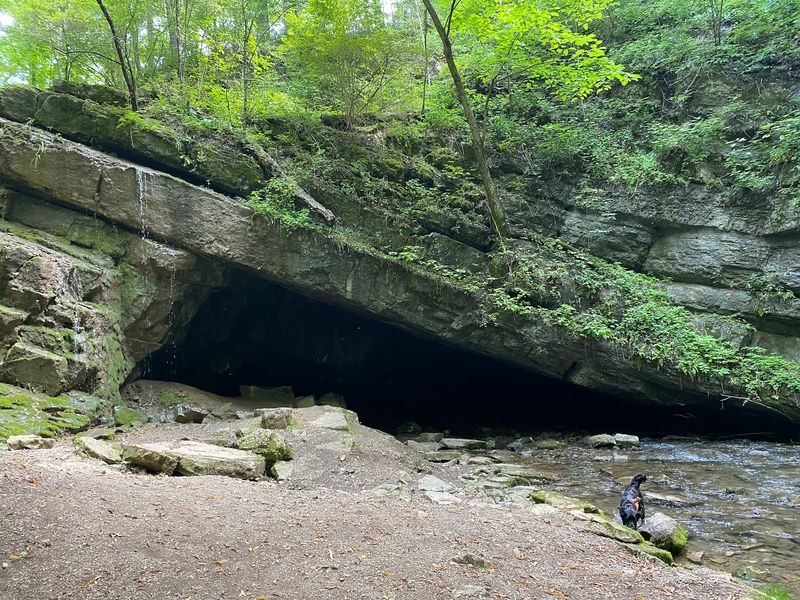
My GPS announced that I had arrived, and all I could see was a gravel pull-off and some farm fields. Trust that voice.
Tytoona Cave Nature Preserve sits along Morrow Rd, Tyrone, PA 16686, in Blair County, Pennsylvania.
The spot lies in Sinking Valley, between Tyrone and Altoona. Rolling hills, quiet farms, and small patches of woods surround it, so the drive feels calm and slow in the best way.
Parking is a simple roadside berm with room for about six to eight cars. The road is not busy, but I still pulled well off the pavement.
On weekends, those few spots fill up fast. I arrived in the morning and had my pick, which felt like winning a tiny prize.
From the cars, the stairs down to the cave are only a short walk away. The whole preserve covers about 6.8 acres, so it is small but packed with surprises.
The first surprise is the giant pit waiting at the end of that path.
A Stadium Carved by Water
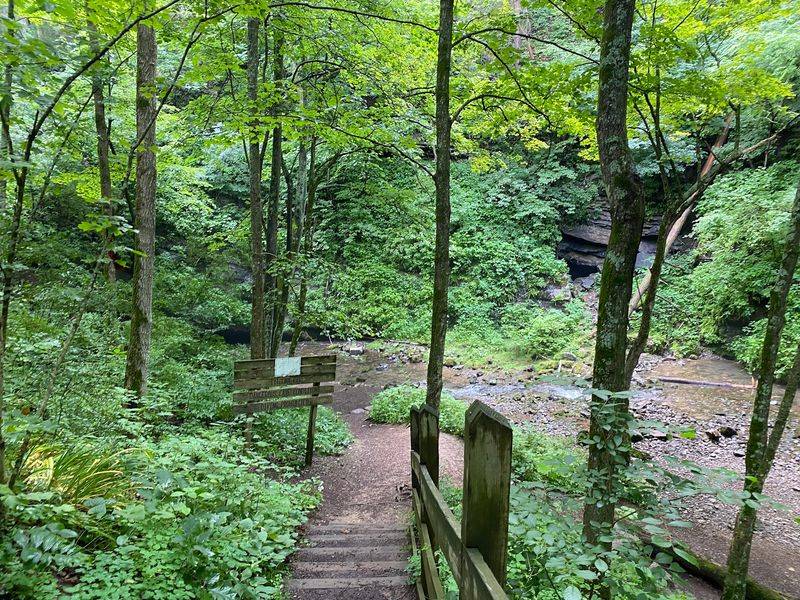
Wooden steps lead down into a huge, bowl-shaped sinkhole. Standing at the top, I felt like I had found an outdoor theater built for rocks instead of actors.
The pit formed when part of an old underground chamber collapsed. Now the sunlight reaches a spot that used to be totally hidden.
Moss, ferns, and trees cling to the rocky walls. On my visit, the only sounds were birds and moving water.
The preserve team installed sturdy stairs, so getting down is easy for most people. You can see a lot from just the first few steps if climbing all of them sounds like too much.
After heavy rain, small waterfalls can spill over the rim of the pit. That makes the bowl feel even more alive, though it also means the cave below may be risky.
Take your time on the stairs, since they can get damp and slick. The real show starts when you reach the floor and spot where the creek comes from.
The Creek That Plays Hide and Seek
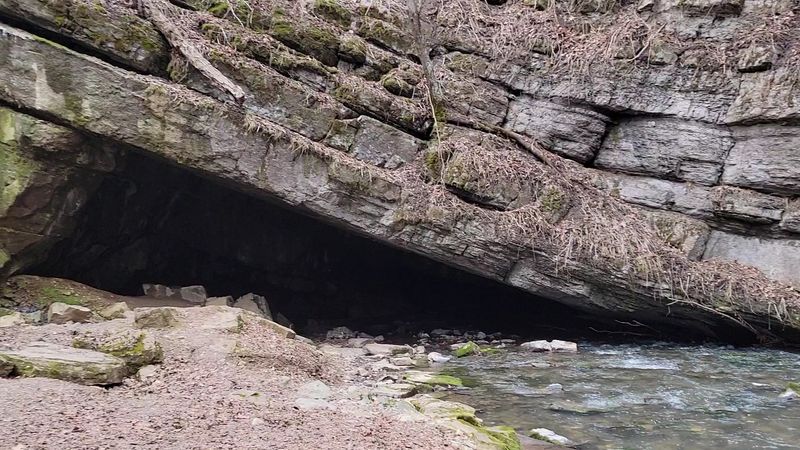
Sinking Run is the star of this place. At the bottom of the pit, the stream bubbles out from under one rocky wall.
It flows across the open floor for a short stretch, maybe 150 feet. Then it rushes straight into the dark cave mouth on the other side and vanishes.
I stood there for a long time just watching it. Seeing a creek appear and disappear in the same view is hard to beat.
Geologists call this kind of land karst. That means the bedrock can dissolve in water, so streams sink, travel underground, and pop up somewhere new.
The water starts near Fort Roberdeau before it sinks into the ground. Sinking Valley earned its name honestly.
I dipped my hands in, and the water was cold enough to make me gasp. On a hot day, that chill felt like free air conditioning.
Of course, the creek does not end its trip inside the cave. Its comeback spot is close by, and it is impressive.
Where the Water Pops Back Up
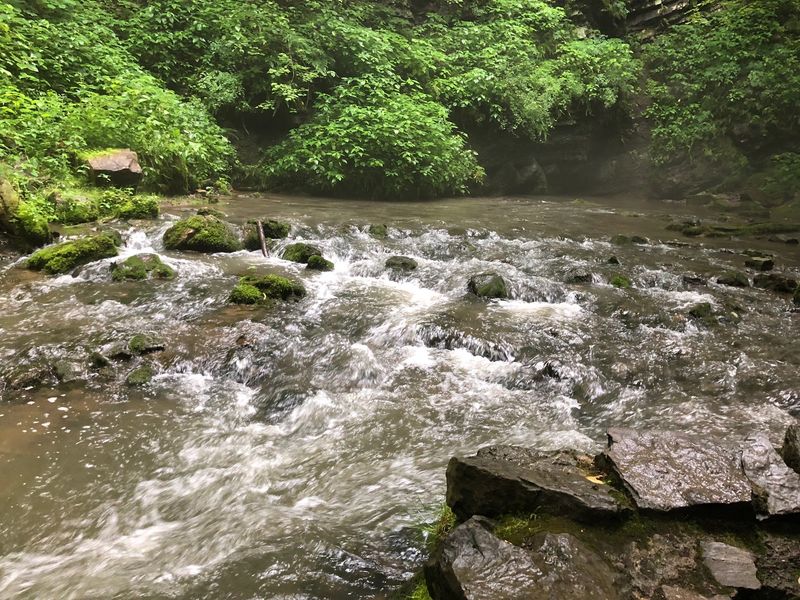
About a mile away, give or take, Sinking Run returns to daylight at Arch Spring. Water pours out beneath a natural stone arch, finishing its secret trip through the hill.
Arch Spring is not part of the preserve. Still, it is the other half of the story, and you can spot it from the road on the way to the cave.
Learning this made the cave feel bigger in my mind. The stream I watched slip into the dark spends its hidden time cutting a path through solid rock.
This link also shows why people protect the area. Whatever runs off nearby fields can end up in the underground water, so the whole valley matters.
I liked seeing both ends of the same creek in one afternoon. It felt like reading the first and last pages of a mystery book.
The middle chapters, though, belong to the cave itself. Grab a light, because the tunnel waiting there is much larger than I expected.
A Doorway 40 Feet Wide
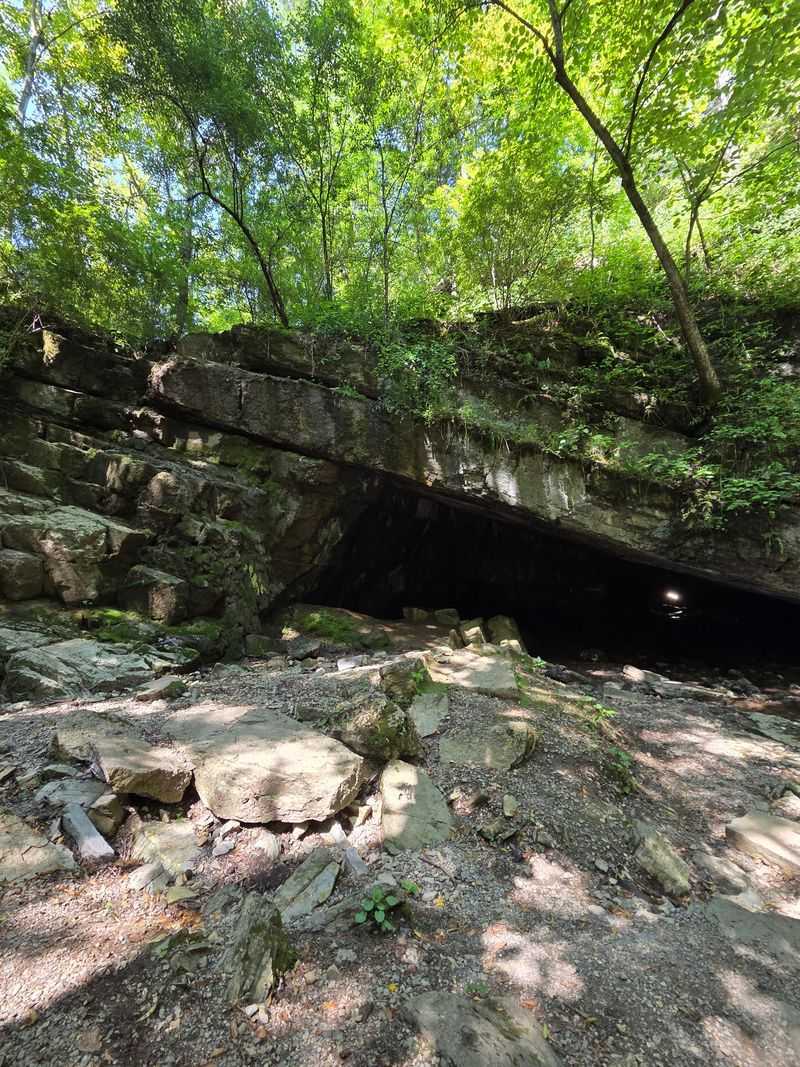
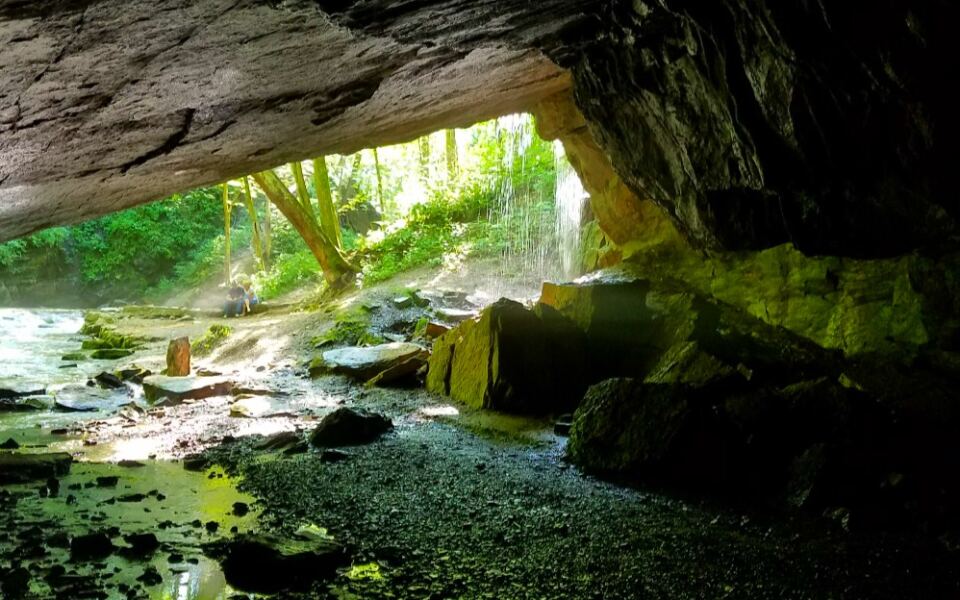
Forty feet across and about 12 feet high, the cave entrance looks like the mouth of the hill. It is cut into thick layers of Trenton limestone.
Once I passed the opening, the air turned cool and damp. Daylight faded quickly behind me.
For roughly the first 1,000 feet, the main passage stays mostly flat and easy to follow. In many places it stays around 30 feet wide and 12 feet or more tall.
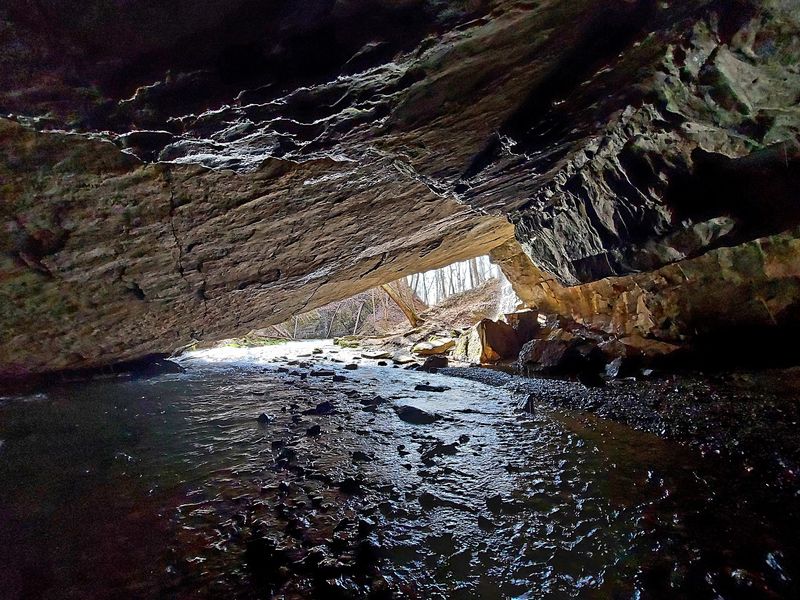
The walls are smooth and shaped by water. You can see the curves the stream has worn into the rock over a very long time.
There are no paved paths or rails here. This is a true wild cave, so every step is on rock, gravel, mud, or water.
That raw feeling is exactly why I loved it. Nobody dressed it up, and the cave does not pretend to be anything else.
Here is a fun twist, though. Someone once tried to turn it into a tourist stop.
Old Maps, Old Legends, and a Short-Lived Makeover
Stories about this cave go back a long way. Native Americans likely knew about it before European settlers reached Sinking Valley in the 1750s.
A local legend says the cave was found in 1788 by men chasing two Native Americans who were never seen again. People guessed the cave had a secret exit, though that tale is more lore than proven fact.
Early writings described a big stream vanishing into the earth here. Over time, it carried names like Arch Spring Cave and Sinking Valley Cave.
In 1853, Henry Rogers, Pennsylvania’s first state geologist, studied and documented the area. That gave the cave real scientific importance.
Then, in 1972, someone tried to open it as a show cave called Indian River Caverns. The plan did not last long.
Nature took the place back, and almost nothing from that attempt remains. Honestly, I think the cave won that contest fairly.
Today, a caving group cares for it, and you need their blessing first.
Your Free Ticket Is a Permit
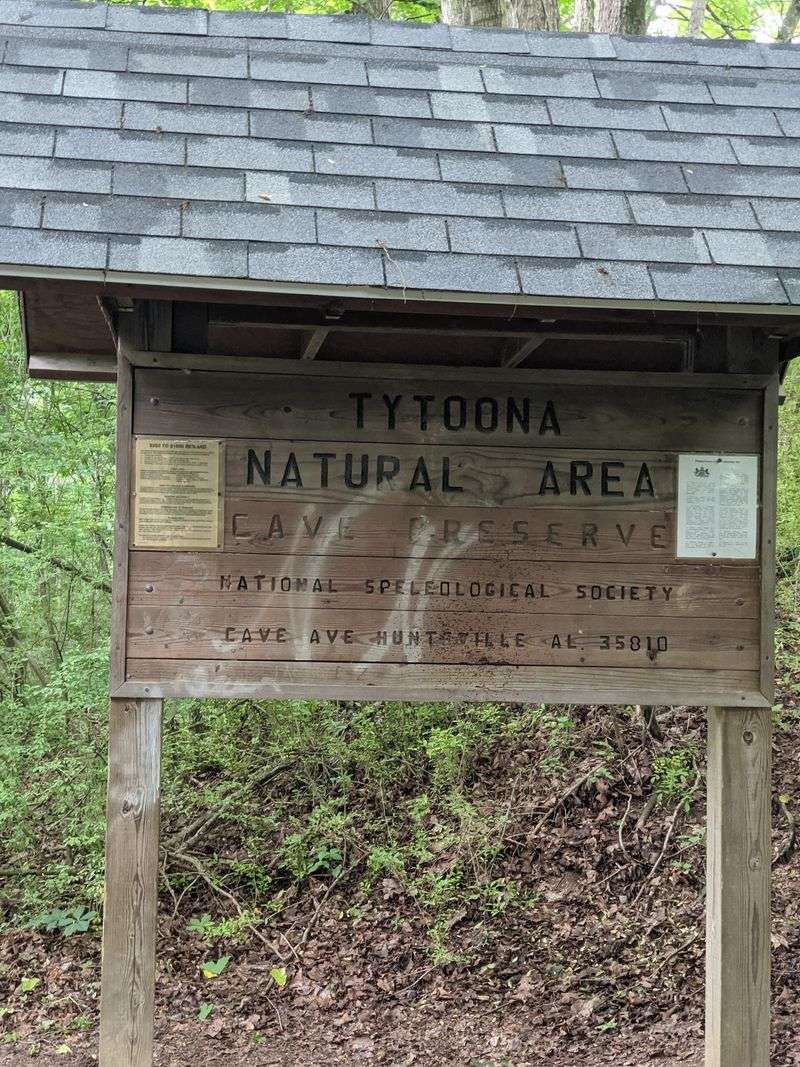
Paperwork is not exciting, but this step matters. The National Speleological Society owns and manages the preserve, and it asks every visitor to get a free permit and sign a waiver online first.
The process is quick. I filled it out at home, and it also walked me through the preserve rules.
The site opens daily from 6 a.m. to 9 p.m. After dark, the area is closed to visitors.
The National Speleological Society works to explore, study, and protect caves. Owning this land lets them keep it open while guarding its fragile insides.
Some people arrive without a permit and have to settle for looking from the stairs. I would hate for that to be you.
Scuba diving is not allowed for regular visitors, and posted signs say so. There is a good reason, and it has to do with what hides past the water.
So print or save your permit, then get ready for the gear talk. One item matters more than anything else.
Bring More Light Than You Think
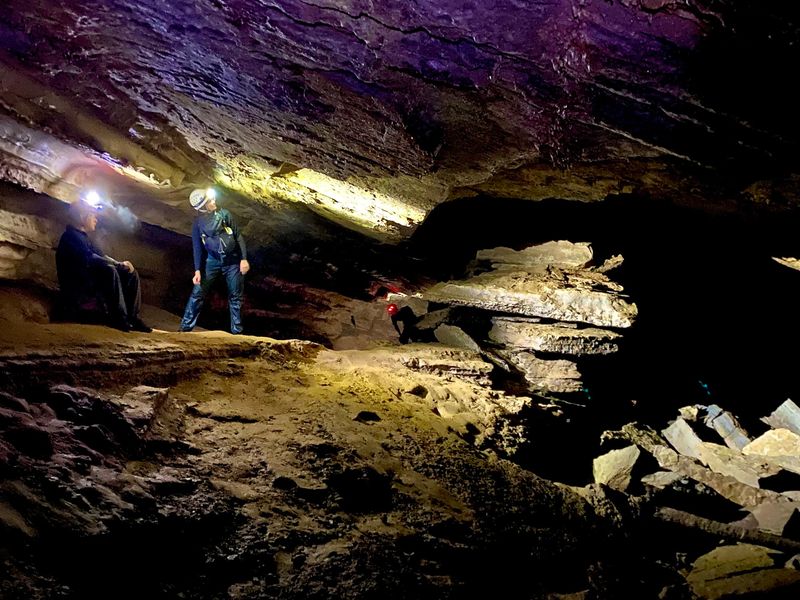
Darkness inside this cave is total. Ten minutes past the entrance, I could not see my own hand without my lamp.
A phone light simply will not do the job. Many visitors turn back early because their lights are too weak.
I carried a strong headlamp plus a waterproof handheld flashlight as a backup. Fresh batteries made me feel much calmer.
Some families even bring a portable work light. A wide, bright beam shows the whole passage and helps everyone spot rocks and deep spots.
Good light also makes the trip more fun. The rock shapes, side nooks, and moving water look amazing when you can actually see them.
Keep your hands free when you can, since the floor gets uneven. A headlamp helps with that.
Light is only half the packing list, though. Your feet will have their own adventure, and they will get wet.
Wet Feet Are Guaranteed
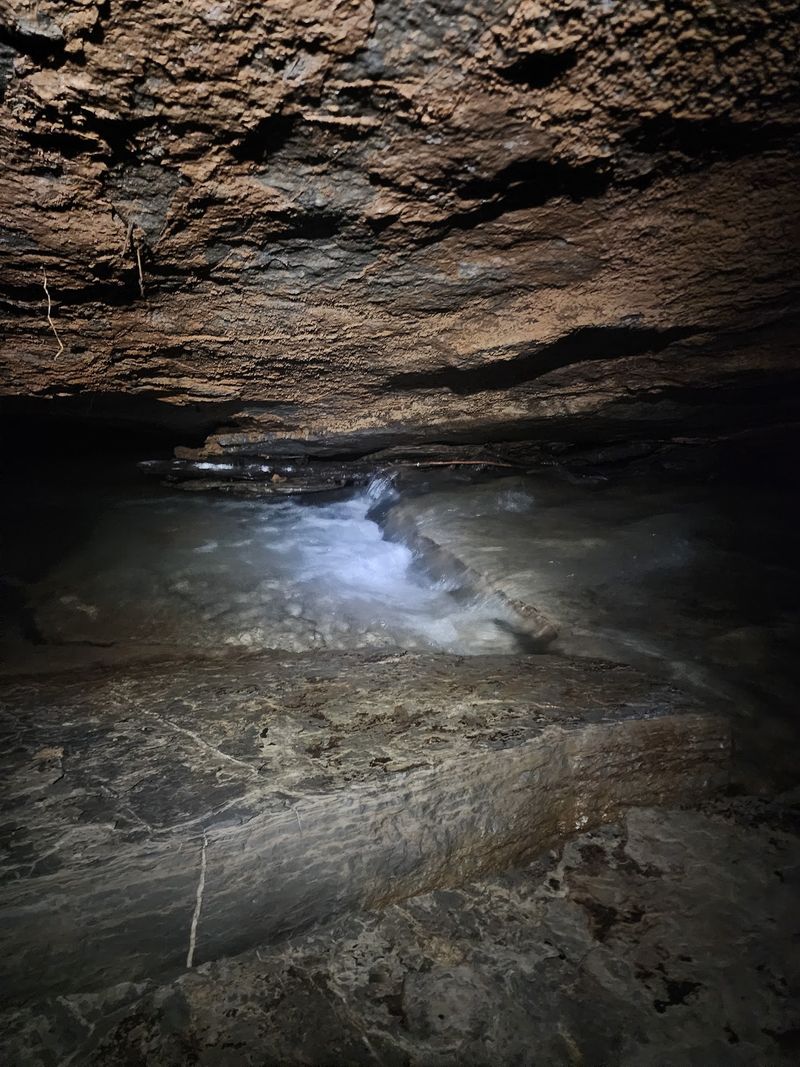
Plan on getting wet. Sinking Run flows across much of the cave floor, even when the weather has been dry.
On my trip, the water stayed around ankle deep near the front. Rubber boots kept me mostly dry and gave me grip on slick rocks.
Some visitors prefer knee-high waterproof boots. That is a smart pick if you want to push farther back.
The water is cold, even in summer. On a 90-degree day, though, that chill is a treat.
Water levels change a lot. After big rains, the stream can rise and move fast, and this low spot can flood quickly.
I checked the forecast before I left home. If the water looks high or fast, stay out and enjoy the view from the pit instead.
Going with at least one buddy is wise, since no staff is on site. Speaking of company, the cave has some locals of its own.
Meet the Neighbors Who Live in the Dark
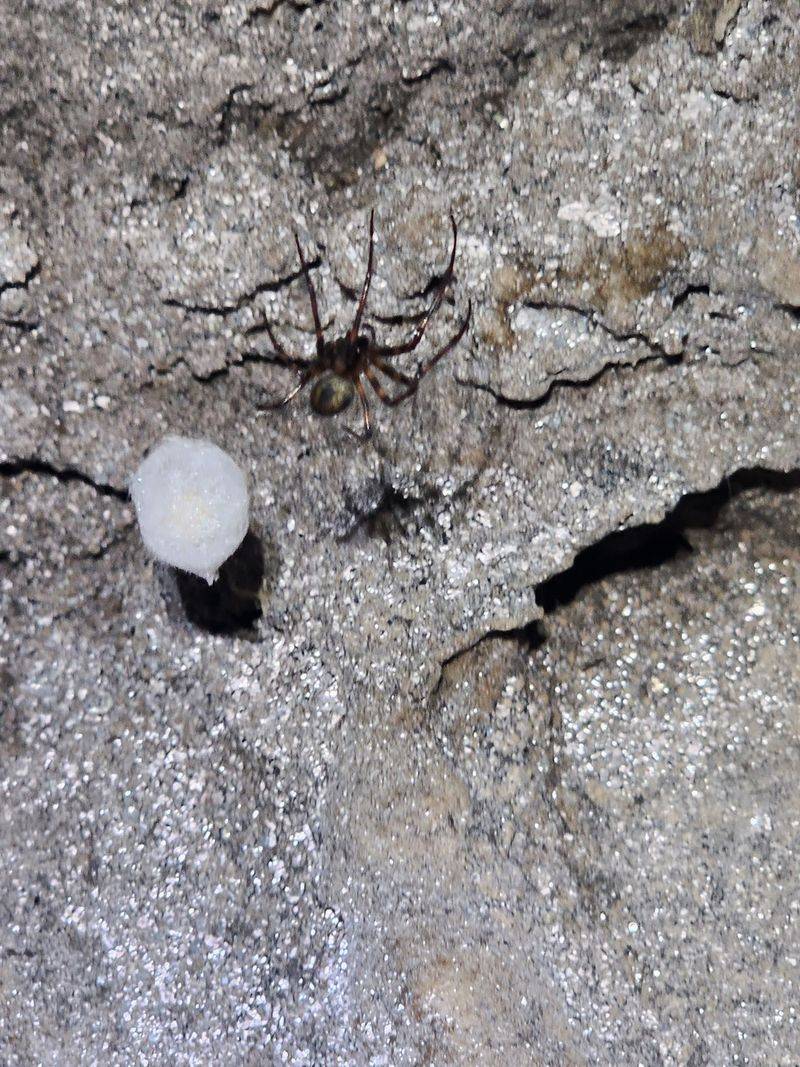
Spiders greeted me first, tucked along the walls near the entrance. They minded their business, and I minded mine.
Deeper in, life gets more interesting. Crayfish scoot through the stream, and sharp-eyed visitors may see large cave salamanders.
Little brown bats have also been seen here. Snakes and frogs sometimes hang around the entrance too.
Here is my favorite fact. Researchers have spotted sculpin fish in the underground stream, and studies are looking at whether they are a special cave-adapted group.
All of these creatures depend on clean water and quiet visitors. Disturbing plants or animals is not allowed at the preserve.
I kept my light off the bats and watched where I stepped. A small amount of care goes a long way in a place this delicate.
Beyond the animals, there is an even bigger secret. Most people will never see it, but it lies just past the water.
The Hidden Room Behind the Water
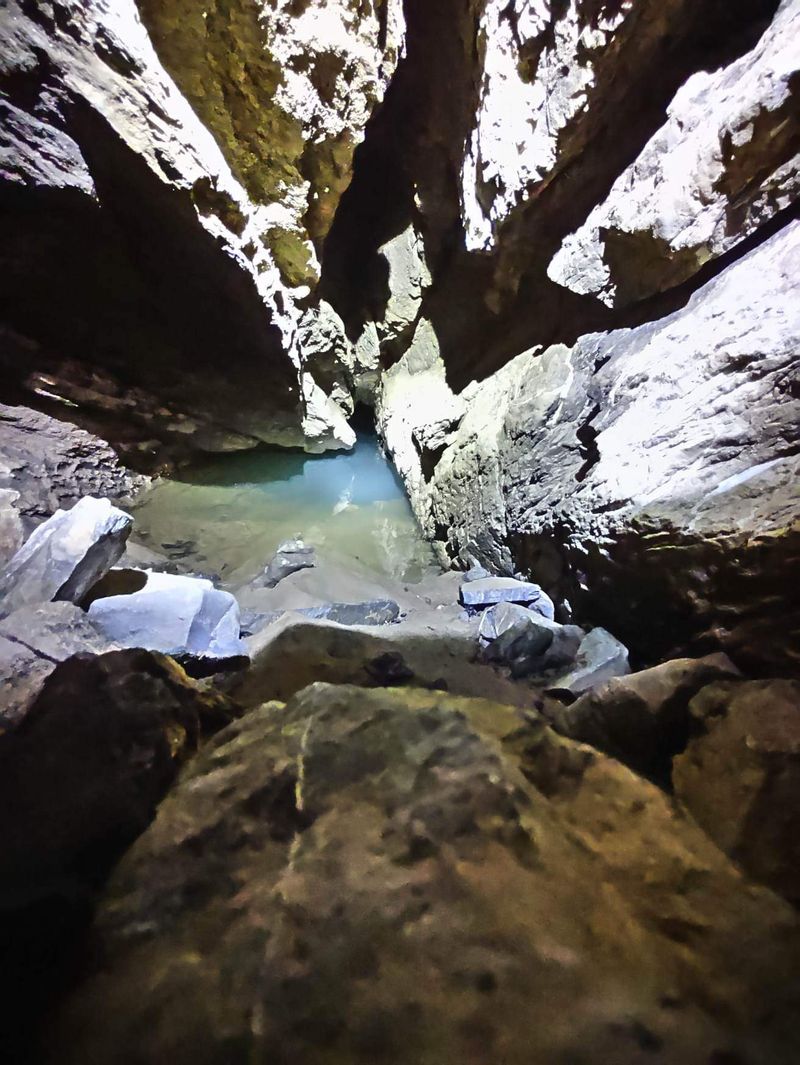
Eventually, the walking passage ends at water that fills the tunnel completely. Cavers call this a sump.
Only trained, specially permitted cave divers go past it. Regular visitors should treat the sump as the end of the road.
Divers have found more large rooms on the other side, with some water reported deeper than 100 feet. One chamber past the first sump is filled with beautiful formations.
Those include delicate soda straws, thin hollow tubes that hang from the ceiling. Because they are so hard to reach, floods and crowds have left them alone.
I never saw that room, and I am fine with it. Knowing it exists made the dark water ahead of me feel exciting.
Some of the most special things last because people cannot easily get to them. The water acts like a guard.
Back on the surface, there is plenty more to enjoy without a scuba tank.
Lingering Above Ground Before You Leave
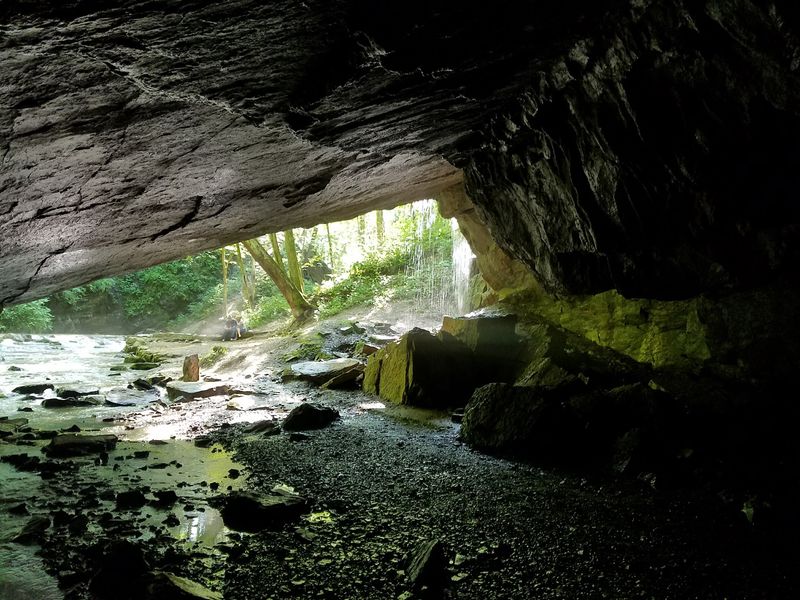
Most trips here last 20 to 40 minutes, but I stayed close to two hours. The pit is a peaceful spot to sit and listen to the stream.
Families do well here. Kids as young as six have explored with help, and the cave is a popular first trip for youth groups and college students.
Dogs are welcome too, which made my pup very happy. Keep pets close near the water.
There are no restrooms or trash cans. I packed out every wrapper and left the place as I found it.
The drive through Sinking Valley adds to the fun. Taking the scenic route shows off wide farmland and quiet country roads.
Climbing back up the steps, I felt cooled off, a little muddy, and very pleased. This small preserve packs a creek that vanishes, a wild cave, and a hidden world into a few acres.
Bring a bright light, boots, and your permit. Sinking Run will handle the rest.
Share this story