Tucked at the foot of Korea’s craggy Seoraksan range, Sinheungsa Temple has been welcoming visitors for over 1,300 years. It is home to a giant bronze Buddha, quiet courtyards, and views that make phones come out of pockets fast.
Best of all, you can walk right in for free. Here are ten things that make this mountain temple worth your time.
A Bronze Buddha That Steals the Show
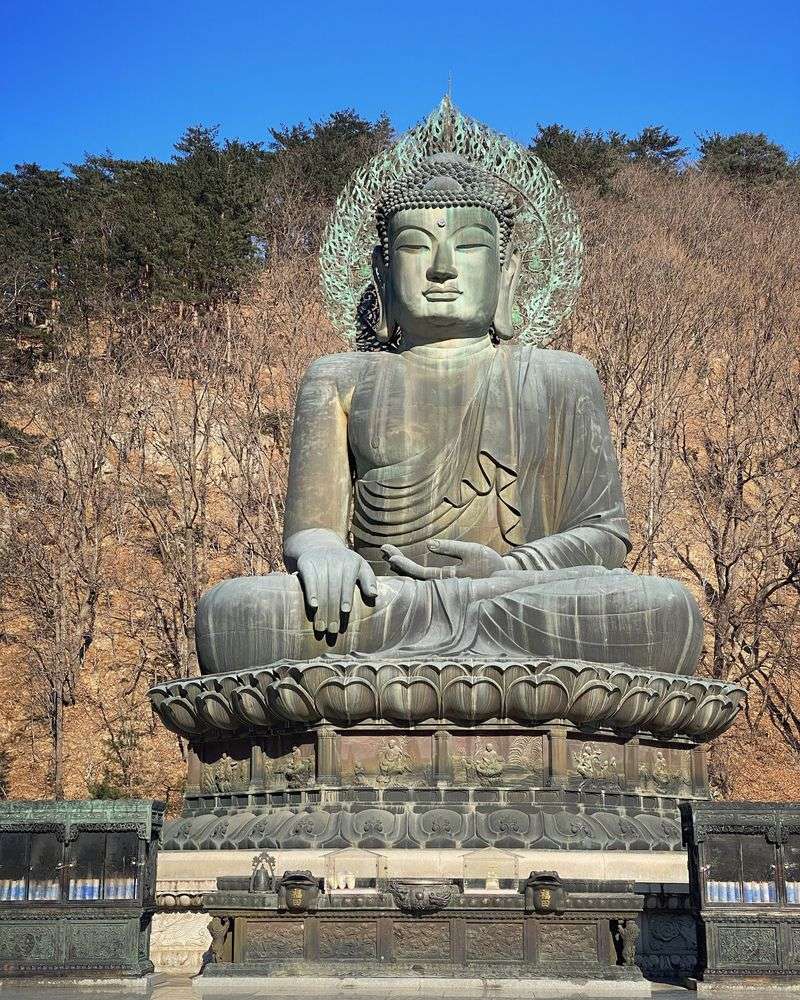
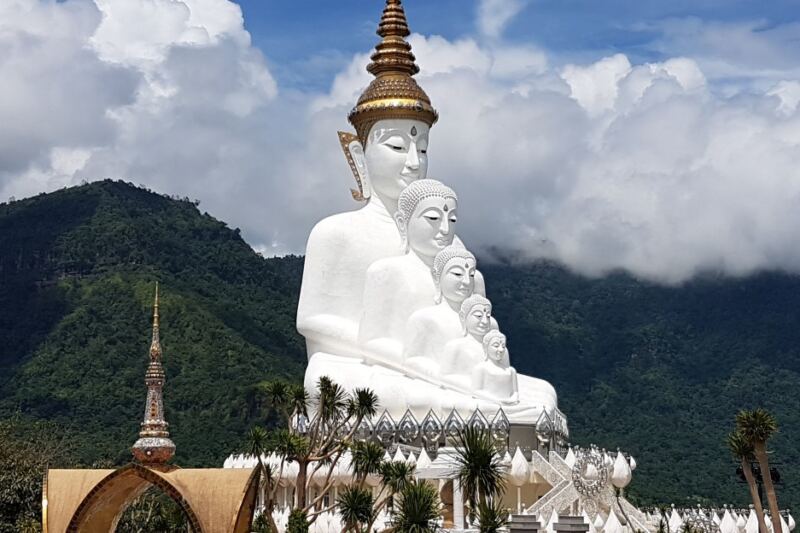
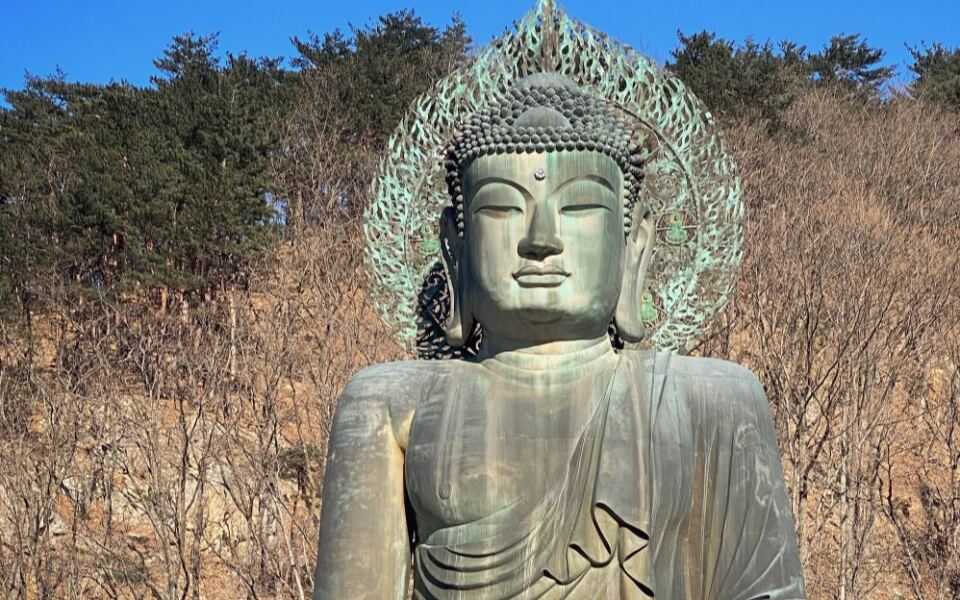
Round the first bend and there he is: a huge bronze Buddha sitting calmly, as if traffic jams and deadlines were someone else’s problem. Reviewers keep calling him massive, and they are not exaggerating.
He stands at the temple entrance, so you meet him before anything else.
The statue is called the Tongil Daebul, or Unification Buddha. It was built with a wish for peace and for Korea to be reunited one day.
Local visitors often stop here to bow quietly before going on.
Walk around the base and look up. The mountains behind his head make a backdrop that no photographer could plan better.
Winter is especially striking, when snow settles on the peaks and the bronze turns deep and dark against the white.
Bring a camera, but also leave a few minutes for just standing still. The place has a way of slowing everyone down.
Even visitors who say they are not religious often admit the spot feels calming.
Over 1,300 Years of History
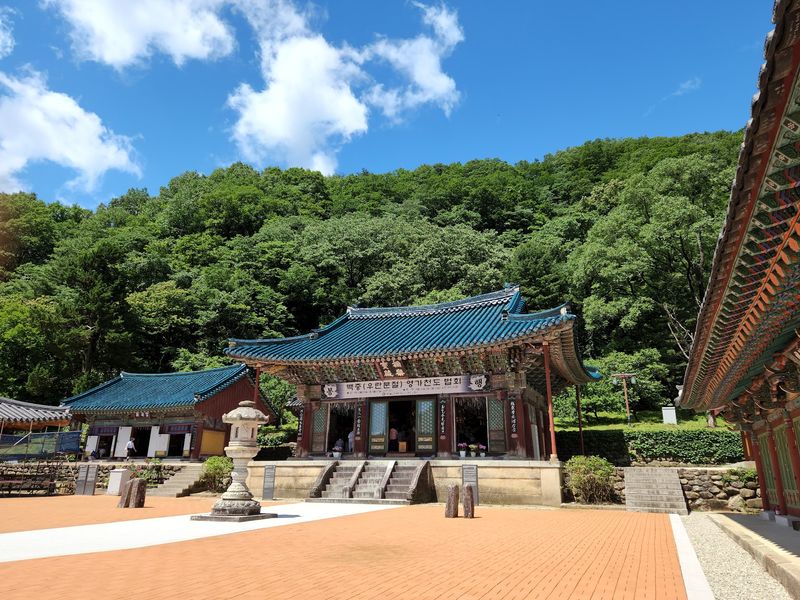
Here is a number to chew on: more than 1,300 years. According to tradition, the temple was first founded in the 7th century by the monk Jajang.
That makes it older than most countries on today’s map.
It has not stayed the same, though. Fires and war destroyed the buildings more than once, and each time monks rebuilt them.
The current halls mostly date from the 17th century, and one reviewer praised their typical Korean style of that era.
The name has a nice story too. Sinheungsa means something like New Renaissance Temple, a title that fits a place that keeps coming back to life.
As you wander, notice the painted patterns under the roof edges. Reds, greens, and blues have been brushed on by hand in traditional style.
Reading a little history before you visit will make every wooden beam feel more meaningful.
Free Entry, Zero Stress
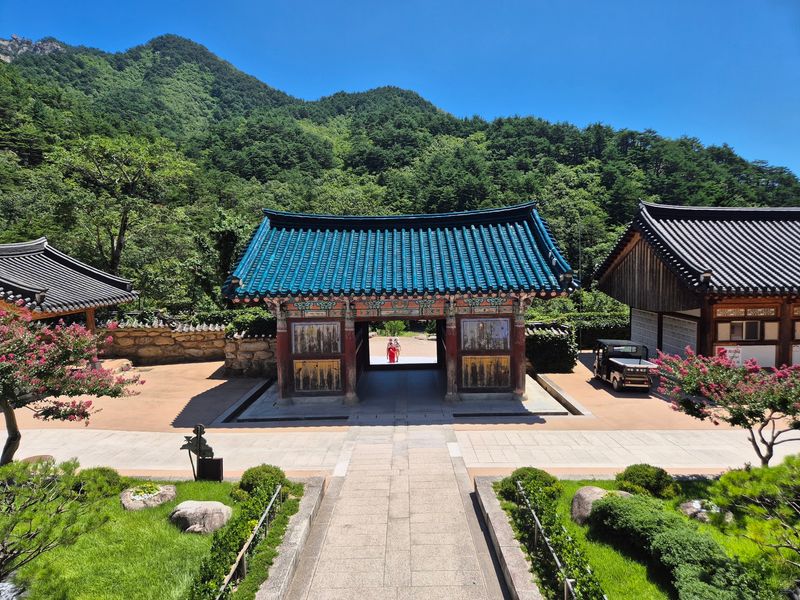
Good news for your wallet: stepping into the temple grounds costs nothing. Several reviewers mention that tickets are no longer required.
You can simply stroll in and start exploring.
That makes it an easy add-on to any Seoraksan trip. Waiting for the cable car?
Use the time here. Heading to a trail?
Stop by on the way.
Because the visit is free, there is no pressure to see everything in a rush. Linger over one building, or wander back to the Buddha for a second look.
Nobody is watching the clock.
Do remember that this is still an active place of worship. Keep your voice low, dress modestly, and follow any signs posted near the halls.
A little courtesy goes a long way, and the monks and other visitors will appreciate it.
The Gateway to Ulsanbawi
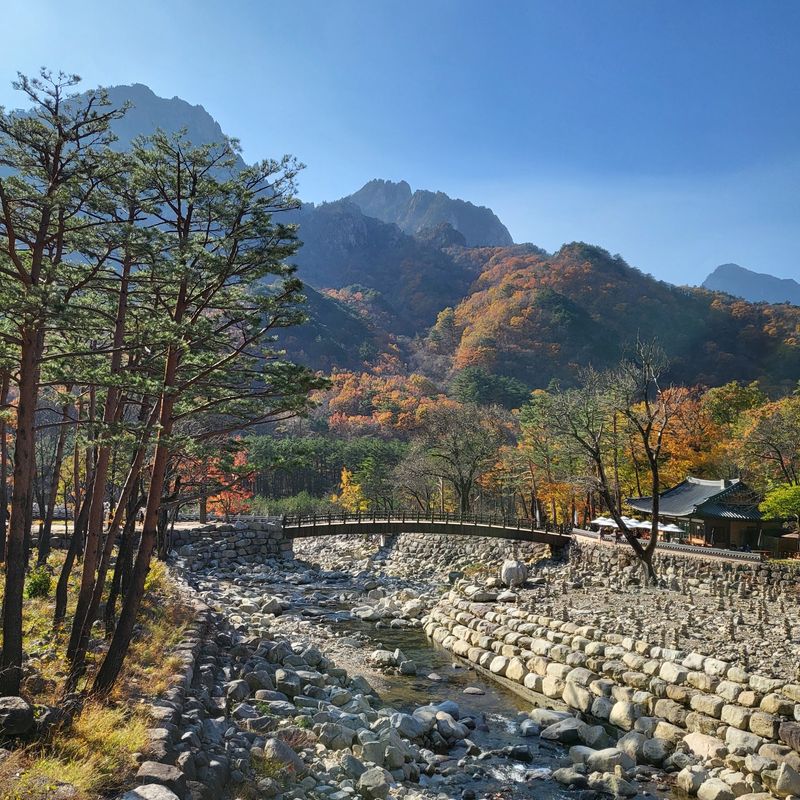
Hikers, lace up. The trail to Ulsanbawi, one of the park’s most popular treks, begins right beside the temple.
Many reviewers call it the perfect warm-up stop.
The hike is no stroll. One visitor described the climb as challenging, but said the views from the top of the granite rock are worth every step.
Expect lots of stairs and a few burning legs.
Go early if you can. Morning starts give you cooler air, fewer crowds, and time to rest at the top without watching the sun sink.
After the climb, return to the temple for a calm walk and a snack. Your muscles will thank you, and the quiet courtyards feel even better when you have earned them.
Pack water, sturdy shoes, and a light jacket for the wind.
Morning Chanting at 10 AM
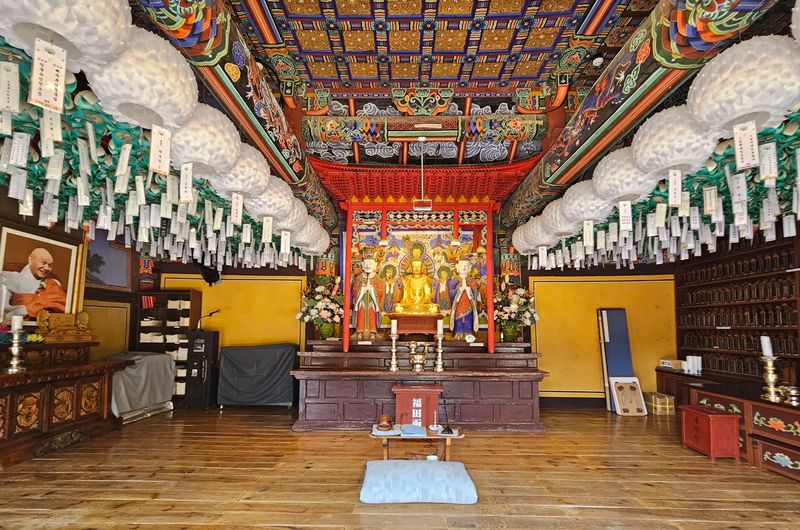
“If you are there at 10AM, you will have the chance to see a monk singing while praying.” That tip from a past visitor is worth saving. The sound drifts across the courtyard and changes the mood of the whole place.
Another reviewer, who said they were not religious, found the morning service calming to watch and hear. You do not need to know the words.
The steady rhythm does the work.
If you join in, sit quietly at the back and keep your phone silent. Avoid flash photos, and ask before filming anyone up close.
Respect makes the experience better for everyone.
Schedules can shift, so arriving a little early gives you a buffer. Even if you miss the chanting, the temple in the morning is peaceful and fresh.
Birdsong and mountain air fill in the gaps.
Snow Day Magic
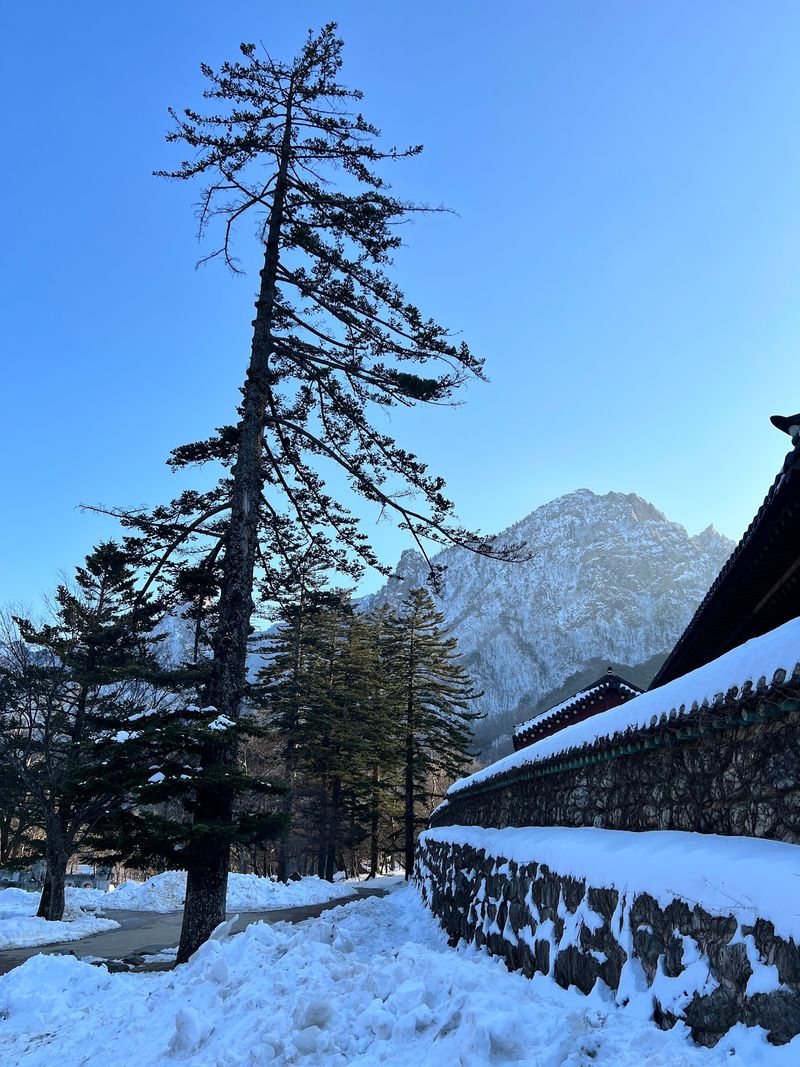
Picture a temple wearing a white blanket. One reviewer saw this for the first time and called it a nice view, which might be the understatement of the year.
Snow turns the rooftops soft and the mountains sharp.
Winter visitors say the scenery feels amazingly serene. The crowds thin out, sounds get muffled, and the bronze Buddha stands out in dark contrast to the frosty slopes.
Dress warmly and wear shoes with good grip. Paths can be slick, especially near the steps.
Gloves help too, since you will want your hands free for photos.
Reviewers say the temple is lovely in all four seasons, so snow is not your only choice. But if you can handle the cold, a winter visit gives you postcard scenes and a hush that is hard to find elsewhere in Korea.
Autumn Colors Everywhere
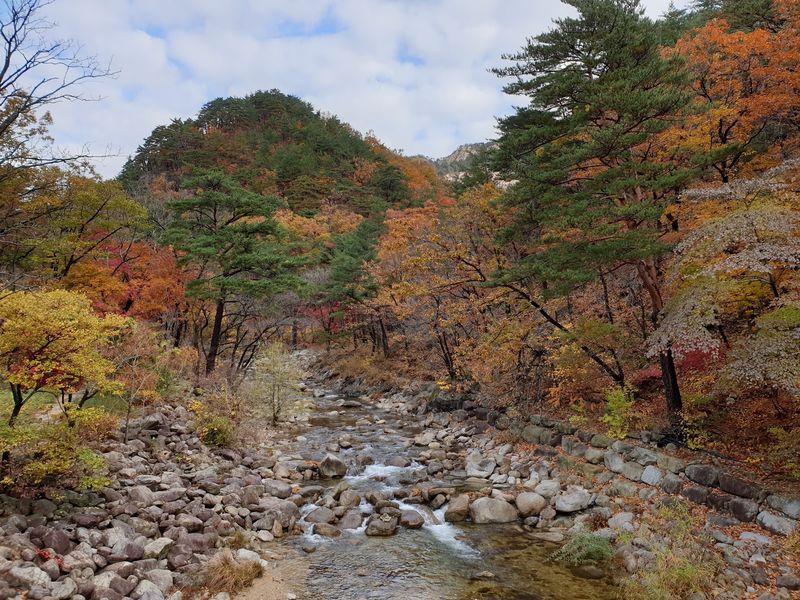
Come October, the mountainsides turn into a paintbox. Reds, oranges, and golds wrap around the temple roofs.
Visitors call this one of the best fall spots in South Korea.
Popularity has a price, though. One traveler said the road into the park was long and slow, so they parked lower and walked an extra mile each way.
The walk turned out to be pleasant anyway.
Timing matters. Another visitor missed the peak colors by a bit, so check foliage reports before you go.
Peak dates shift a little each year with the weather.
Try arriving on a weekday morning to beat the rush. Public transport also reaches the area, which saves you the parking headache.
Bring a light layer, because mountain air gets crisp quickly once the sun dips behind the ridges.
Easy to Pair with the Cable Car
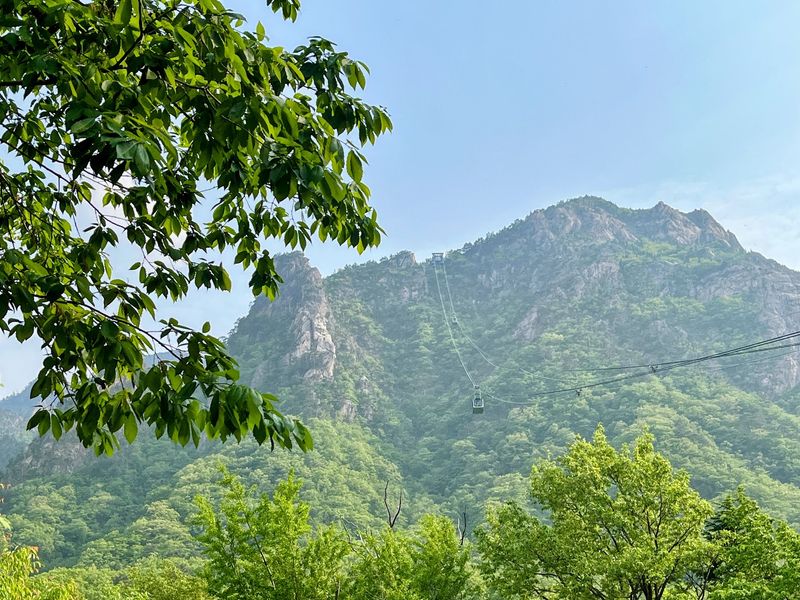
Short on time? Combine two highlights in one outing.
The temple sits near the cable car station, so you can visit the Buddha and then glide up the mountain.
Reviewers like using the temple as a pleasant way to pass the wait for the cable car. Lines can be long on busy days, and a stroll beats staring at a queue.
The ride takes you to a viewpoint with an aerial look at the national park. One cruise passenger with only a couple of hours called it a great way to see the park’s beauty fast.
Plan your order of stops. Check the cable car’s operating hours, and note that wind can pause service.
If the line looks huge, see the temple first and return later. Flexible plans make for a happier day in the mountains.
Trails, Waterfalls, and Caves Nearby
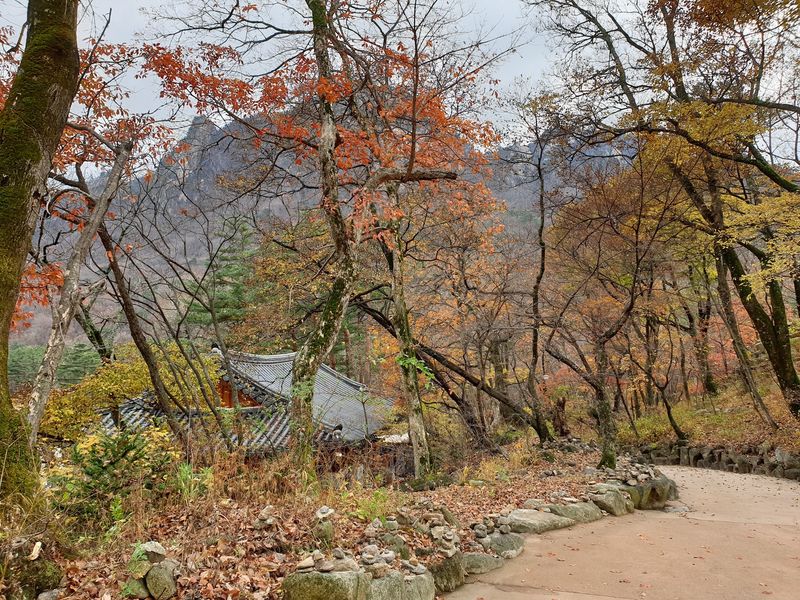
Think of the temple as a trailhead with great manners. From here, paths branch out toward waterfalls, rock formations, and hidden spots.
One visitor said you can head to the waterfalls after seeing the temple.
Biseondae is a popular target, and a reviewer estimated about an hour to reach it. Fit hikers can push on to the Geumganggul cave for a tougher adventure.
Not everyone wants a big climb, and that is fine. Riverside and forest paths near the temple make for easy walks.
Plenty of visitors just stroll and enjoy the air.
The area is described as plastic free, so bring a reusable bottle and carry out your trash. Going in the morning gives you more daylight for longer routes.
Whatever your pace, the surroundings reward curious feet.
Planning Your Visit
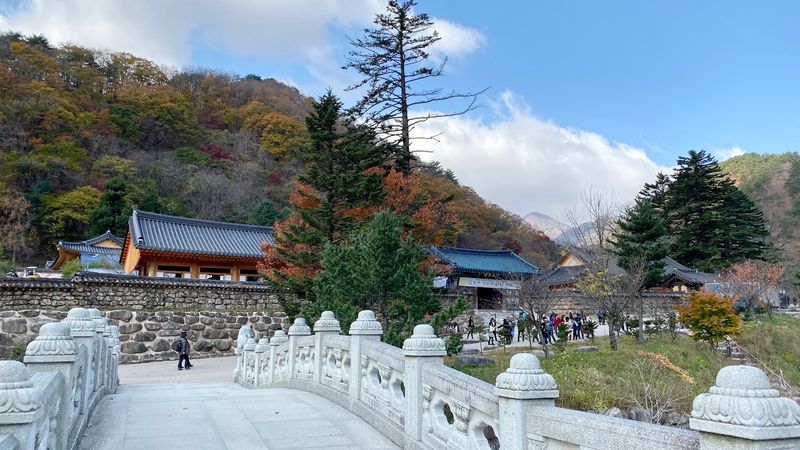
Ready to go? The temple is at 1137 Seoraksan-ro in Sokcho, Gangwon-do.
From the parking lot, it is about a 15 minute walk, and public buses also reach the area.
Restaurants and souvenir shops sit nearby. One reviewer said not to expect too much from food quality or portions, so treat meals as a simple refuel.
Packing snacks is smart.
Ratings average around 4.2 stars from thousands of reviews, with most people praising the scenery and calm. One traveler felt it was an ordinary temple if you are short on time, so match your plans to your interests.
Give yourself one to two hours here, or a full day if you add a hike. Go in the morning, wear comfy shoes, and check the website or call ahead for updates.
Then enjoy the mountain quiet.
Share this story