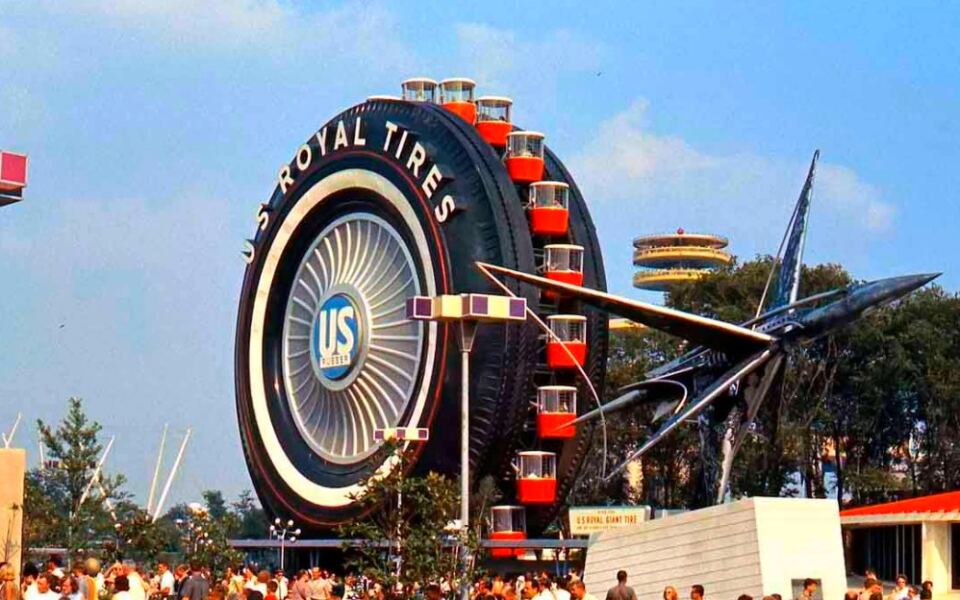
An 80-foot tire stands beside Interstate 94 in Allen Park, Michigan, but it wasn’t originally built for the highway. It started as a Ferris wheel at the 1964–1965 New York World’s Fair, where more than two million people took a ride inside it.
The giant structure once carried 96 passengers at a time. After the fair closed, it was dismantled, transported to Michigan, and rebuilt as a roadside landmark near Detroit.
Today, the Uniroyal Giant Tire is one of the area’s most recognizable highway sights. Most drivers only get a few seconds to see it, and the surrounding property isn’t open for casual visits.
But its history goes far beyond an oversized advertisement. From its World’s Fair beginnings to decades of unusual makeovers, this roadside giant has a few surprises that aren’t obvious from the freeway.
A Rubber Giant Beside Interstate 94
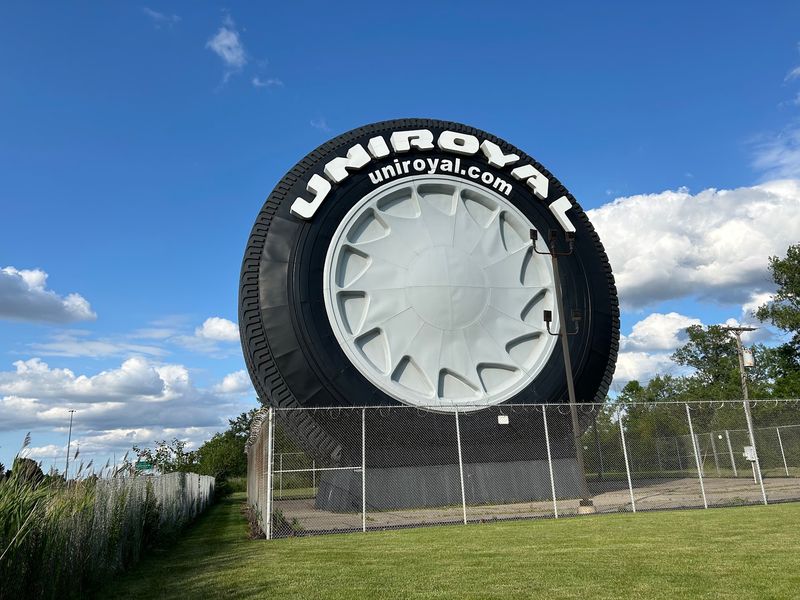
Drivers heading toward downtown Detroit often get a surprise when a tire roughly 80 feet tall rises beside the road. The landmark is officially known as the Uniroyal Giant Tire, though most people simply call it the Uniroyal Tire.
Its spot is along the Detroit Industrial Expressway, which is Interstate 94, in Allen Park, Michigan 48101, in the United States. That puts it in the Metro Detroit area, not far from Detroit Metropolitan Airport.
The tire is a historical landmark rather than a park or museum. You won’t find a gift shop, a ticket booth, or a visitor center here.
It simply stands in place, day and night, for anyone passing by.
I find that simple setup part of the fun. The whole point is to be seen, and it does that job without any extra help.
Size is what grabs people first. A tire usually fits under a car, so seeing one that towers over the trees feels a little strange in the best way.
Of course, a tire this large wasn’t built just to sit by a freeway. Its first job was much livelier, and it involved happy riders in New York.
Riders Once Circled Inside the Tread
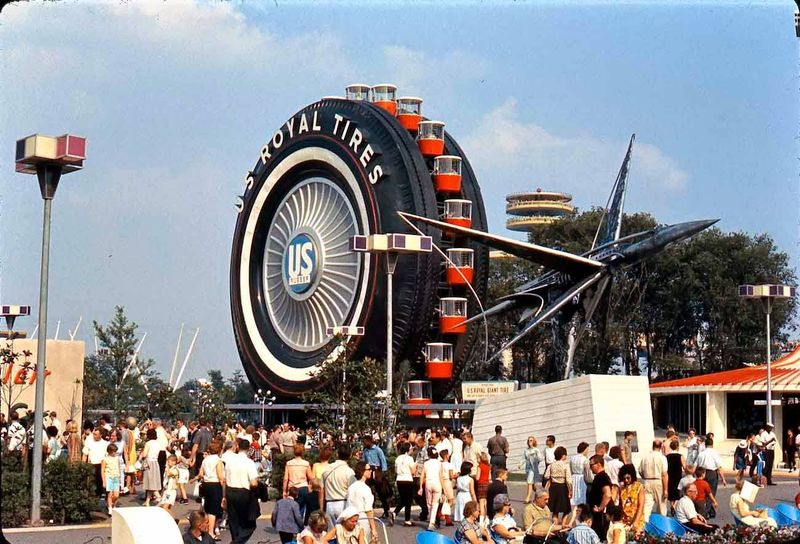
Back in 1964, fairgoers in New York could climb into a gondola and ride around inside a giant tire. The structure was built as a Ferris wheel for the 1964 New York World’s Fair.
The idea came from the United States Rubber Company, the business that later became Uniroyal. A tire-shaped ride was a smart way to get attention at a crowded event full of big exhibits.
Picture the setup in simple terms. The outside looked like a huge tire, and the passenger cars moved around within it, giving riders a slow trip upward and back down again.
Older photos show the tire with its gondolas still attached. Those pictures help explain why so many people today are surprised to learn about its first life.
The fair ran across 1964 and 1965, so the ride entertained crowds for two seasons. Millions of visitors passed through the fairgrounds during that time.
I like the idea of a company turning its own product into a ride. It is playful advertising that people could actually enjoy, not just look at.
When the fair closed, though, the tire needed a new home, and Michigan was waiting.
The Long Trip From Queens to Michigan
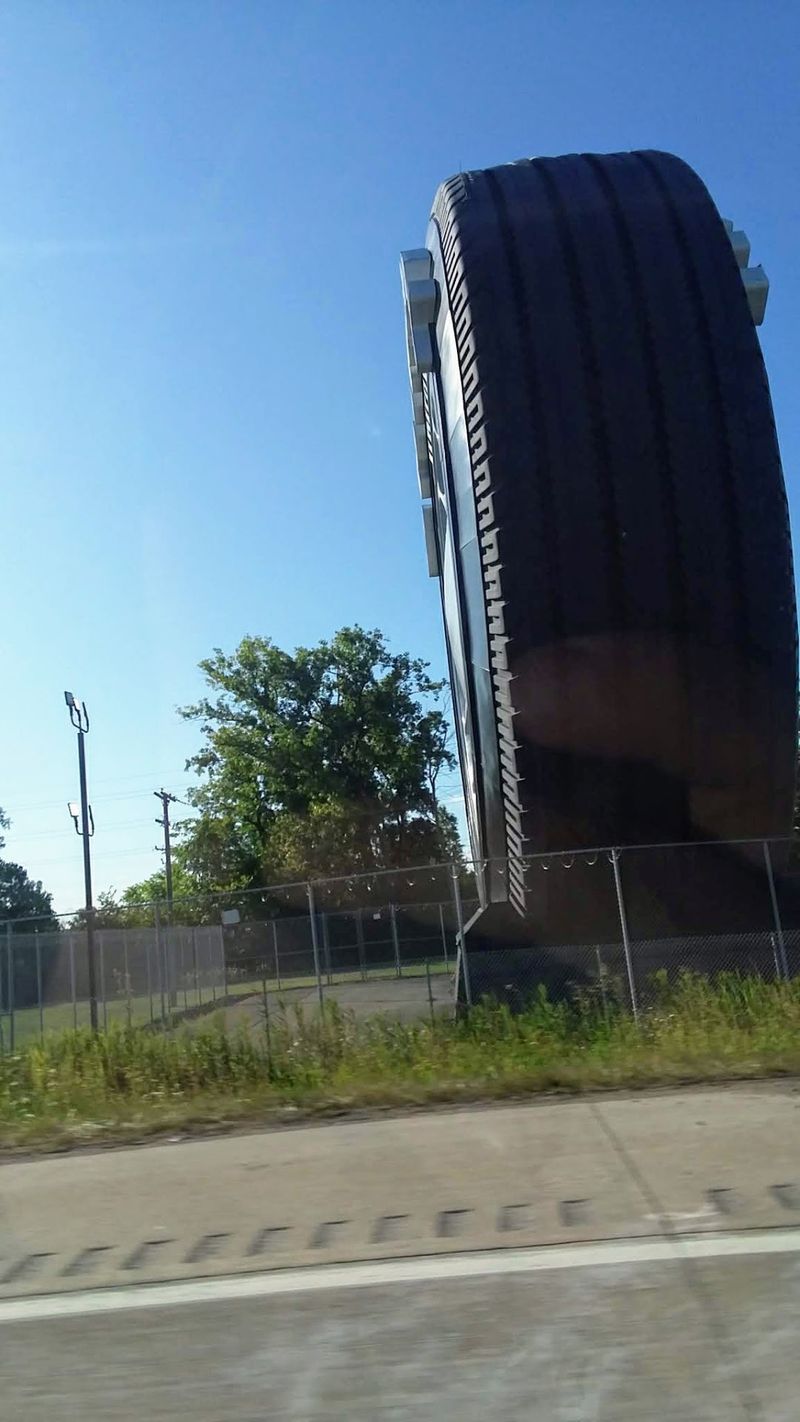
Moving a Ferris wheel across several states is not a weekend chore. After the fair, the giant tire was taken apart and shipped to the Detroit area.
In 1966, crews reassembled it in Allen Park. This time it went up without its passenger gondolas, so it became a still display instead of a working ride.
It was placed at a Uniroyal sales office beside the freeway. That location made sense, since Detroit was the center of the American car business and a perfect place to advertise tires.
Families still share stories connected to that rebuild. One traveler mentioned that her grandfather worked on the crew that helped put it up, which shows how personal this landmark can feel.
Later, the sales office moved away. The tire, thankfully, stayed right where it was.
I find that detail really interesting. Plenty of old signs vanish when a business leaves, but this one had already become part of the local scenery.
Over the years, the tire also needed care to stay looking sharp. Those updates helped it survive Michigan weather, which is no small feat for something sitting outdoors in every season.
Numbers Behind a Very Large Wheel
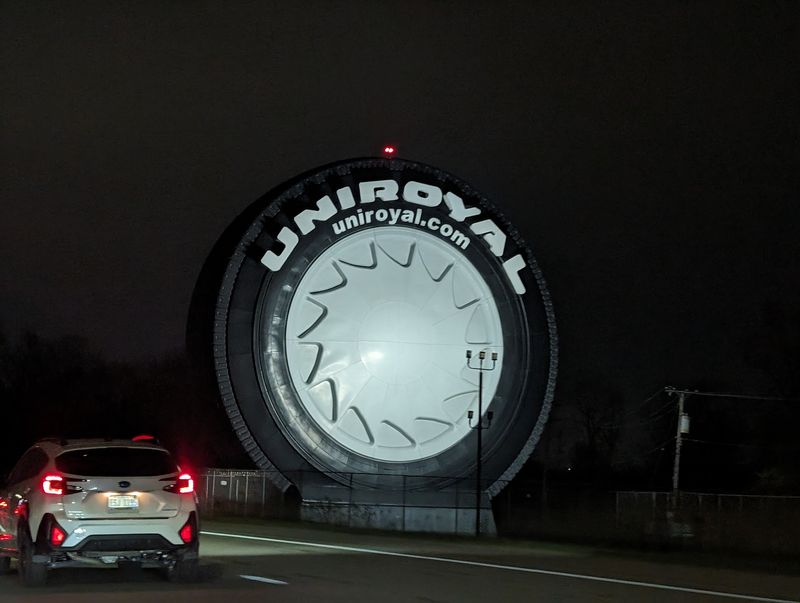
Eighty feet tall is the figure most people repeat, and it’s enough to make any car tire look tiny. Some sources list the height a bit higher, at around 86 feet.
That small difference comes from the landmark’s mixed historical records. Either way, it stands taller than many nearby trees and power lines.
Its weight is often listed at about 12 tons. That’s a lot of material for something designed to look like it could roll away down the interstate.
Size fools people in a funny way. Visitors often say it looks much larger in person than in photos or videos, and some family members are surprised even after being warned.
The tread, the sidewall, and the center hub all copy the look of a real tire. It’s basically a regular product blown up to giant scale, which is why people recognize it instantly.
Some fans call it the biggest tire in the world. I’d keep that as friendly roadside pride rather than an official record.
What matters more is how easily it can be spotted. In fact, some travelers notice it from the air after leaving the nearby airport.
Best Seen Through a Car Window
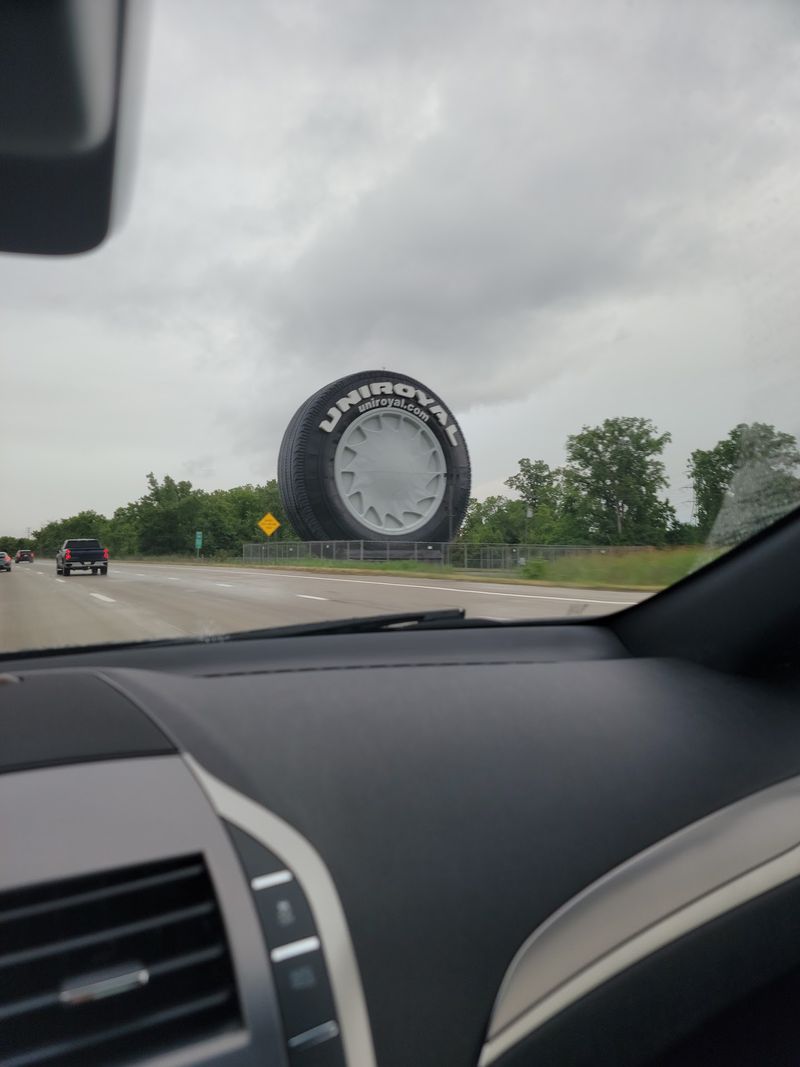
Here’s a landmark that works best at highway speed. The clearest view usually comes from Interstate 94, where the tire stands in full sight beside traffic.
Passengers have the advantage. One traveler said a passenger can snap three or four good photos while the car keeps moving with traffic.
Drivers should keep their eyes on the road. A quick look is fine, but the camera work belongs to whoever is sitting in the passenger seat.
Pulling over on the shoulder is a bad idea. The freeway is very busy, and stopping just to look at the tire can create real danger for you and others.
Police also don’t appreciate drivers who stop only to sightsee. Traffic safety comes first, even when a giant tire is begging for a selfie.
I would plan the drive with a helper ready, phone unlocked and camera open. That simple prep makes a few seconds count.
Since the tire was designed as a big three-dimensional billboard, this kind of viewing actually matches its purpose. Still, some people want a closer look, and that comes with a few surprises.
Fences, Tracks, and a GPS Detour
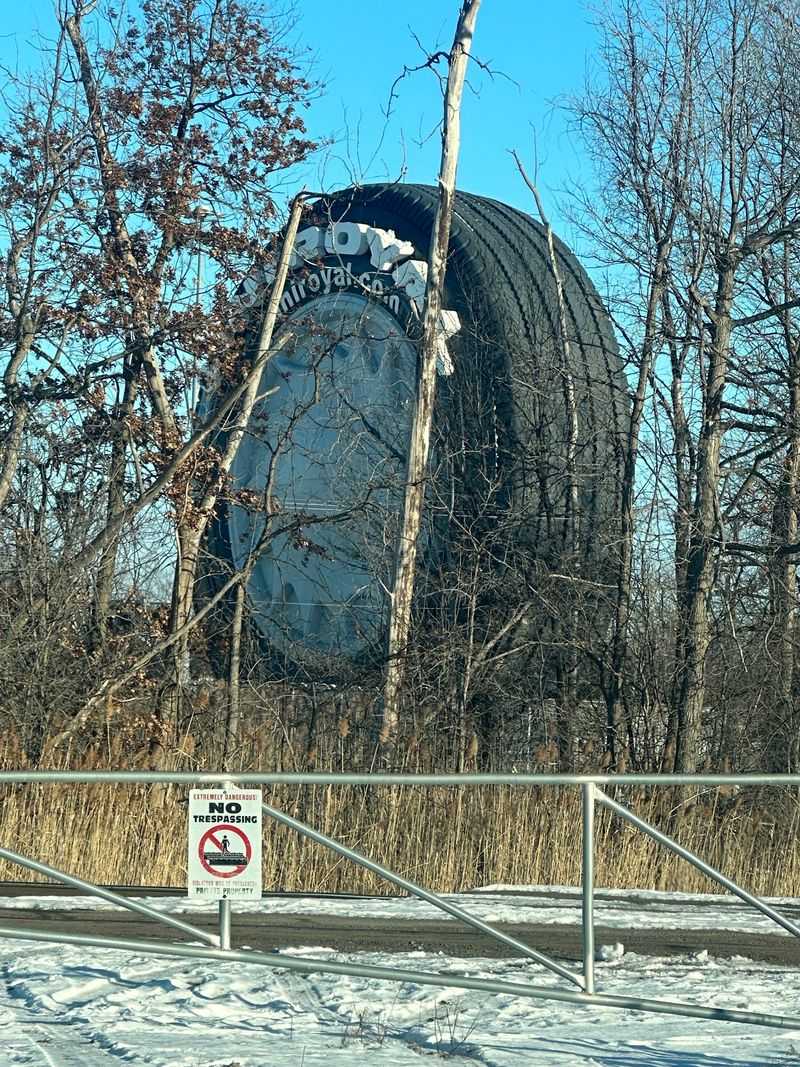
Typing the tire into a map app can lead to an odd little adventure. GPS directions often send people down a side road into an industrial area behind the landmark.
From there, you may reach railroad tracks with gates and signs marked private property. The tire sits on land that is fenced off, and some fencing even includes barbed wire.
That means you can’t walk right up to it. Getting close would mean trespassing, so it’s smart to respect the signs.
Some visitors still grab decent photos from the side road. Trees often appear in the foreground, and power lines or fences can block part of the view.
Honestly, that view has its own charm. Seeing the tire rise above the treetops shows how tall it really is.
I’d treat this route as a bonus, not the main event. Stay on public roads, avoid the tracks, and don’t expect a perfect clear shot.
If a clean, full picture matters most, the freeway view usually wins. Either way, the tire has a long history of looking good, thanks to several makeovers over the decades.
Makeovers for an Aging Roadside Star
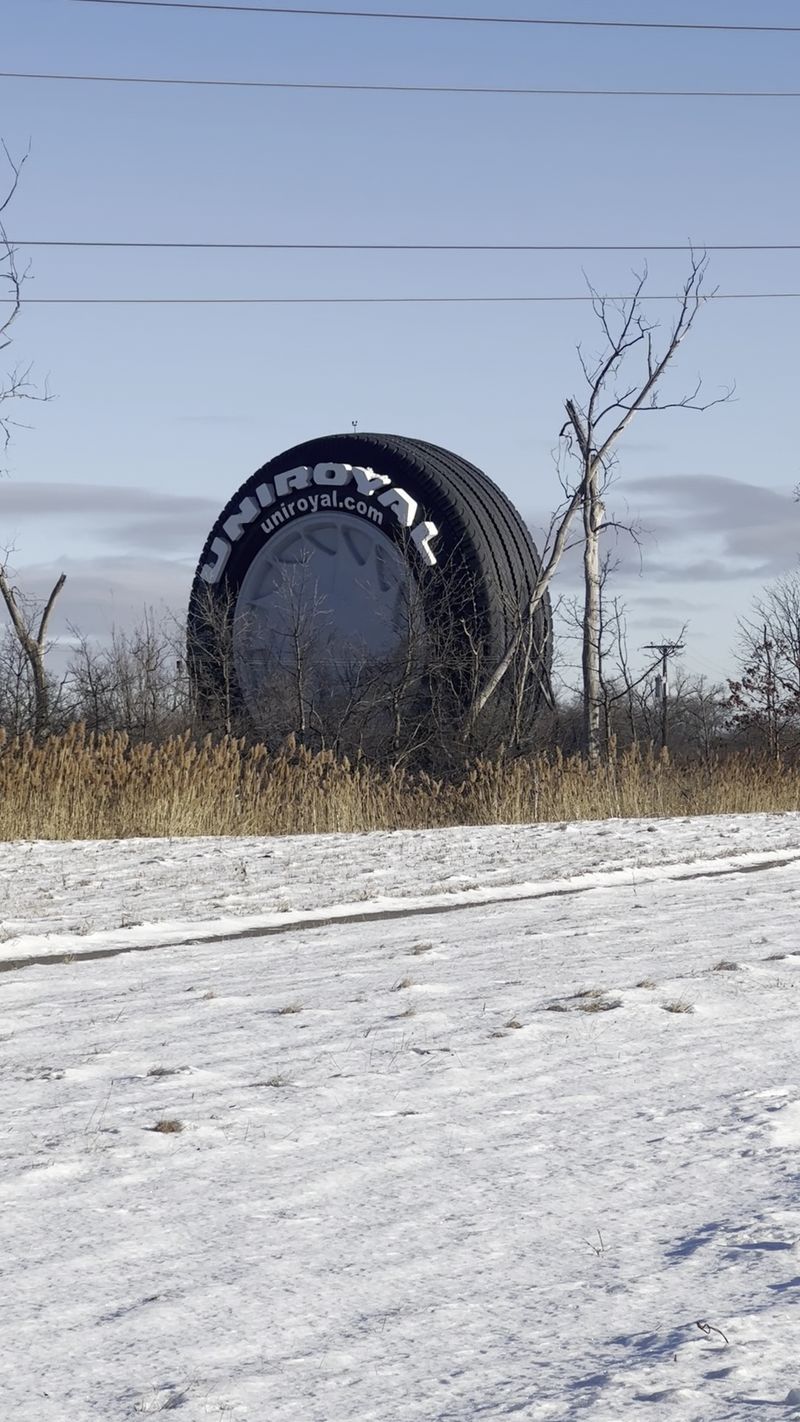
Michigan winters are hard on everything, and a giant outdoor tire is no exception. Over the years, the Uniroyal Tire has received a couple of makeovers to keep it in shape.
The landmark has been standing in Allen Park for roughly six decades. Snow, rain, summer heat, and constant freeway traffic all take a toll on its surface.
Restoration work has helped the tire keep its crisp look. Fresh lettering and repairs let drivers keep spotting the brand name easily from the highway.
Its construction also changed after the fair. The outer shell, which had no moving parts left, was rebuilt on a new frame when it arrived in Michigan.
That fresh frame made sense for a display that no longer carried riders. It turned a ride into a sturdy sign.
I like knowing people kept caring about it long after its first job ended. Plenty of roadside oddities fade away, but this one keeps getting attention.
Not everyone loves it equally, though. Some locals tease it as an eyesore, while others call it a proud piece of history, and that split says a lot about its place in Detroit culture.
Pride, Jokes, and Motor City Identity
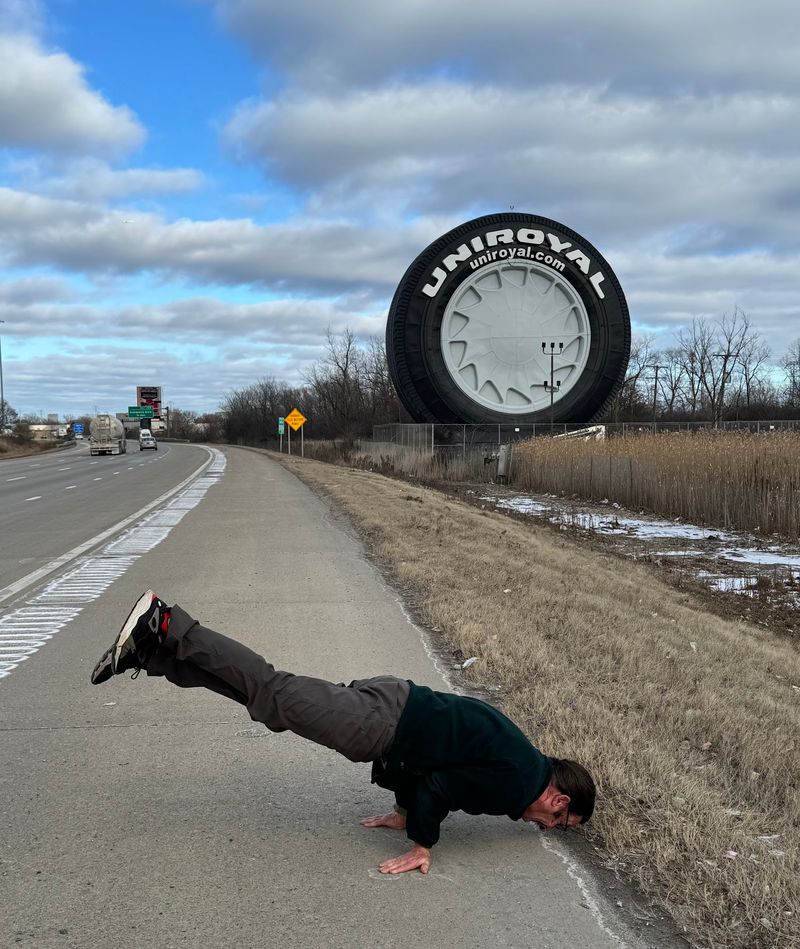
Few things say Motor City quite like a tire the size of a building. For many people around Detroit, this landmark is a symbol of the region’s deep ties to the car industry.
Uniroyal itself has a long story. It started in 1892 as the United States Rubber Company, formed by merging nine companies, and later became a major supplier for General Motors.
In 1985, its tire business merged with B.F. Goodrich.
Michelin later acquired that company in 1990, but the big tire in Allen Park kept the Uniroyal name alive along the freeway.
Locals have mixed feelings, and that’s part of the fun. Some joke that it’s an eyesore, while others see it as treasured history.
Even jokes show affection, though. People don’t tease a landmark they ignore.
I can understand the appeal for families who grew up around it. It’s been there longer than many drivers have been alive, so it becomes a familiar sight on trips home.
That shared feeling turns a simple sign into a memory. Many parents now point it out to their kids, passing the tradition along.
A Car Ride Tradition for Families
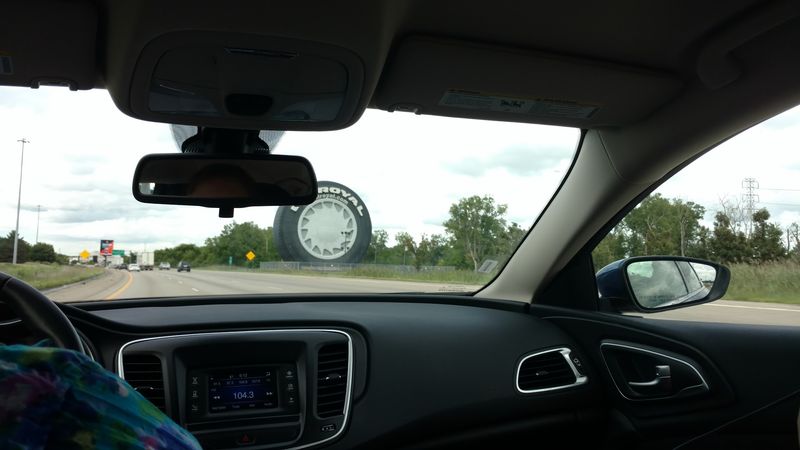
Spotting the giant tire can feel like a game for kids in the back seat. Families traveling through Metro Detroit often make a point of watching for it.
One family heading from Warren to Alabama made seeing the tire a priority on their trip. Another family brought relatives visiting from Maryland just to show it off.
Moments like these are why the landmark matters. It’s free, it’s open around the clock, and it fits easily into a normal drive.
Kids can turn it into a little challenge. Who can see it first?
Who can guess how tall it is before you share the answer?
Grown-ups get a dose of nostalgia, too. Plenty of adults remember seeing it as children, and now they share that same view with their own kids.
I’d suggest telling the Ferris wheel story right before it comes into view. That bit of history makes the sight more exciting for young travelers.
Light travelers can also think about timing. Daylight gives the clearest look, especially if your passenger hopes to snap a photo during the quick pass.
Smart Tips Before You Go Looking
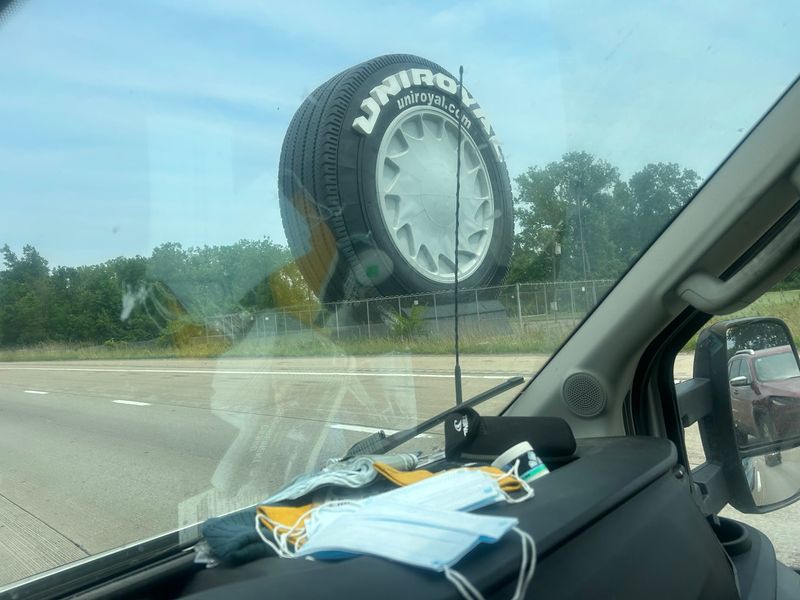
A little planning goes a long way with this landmark. The tire is listed as open 24 hours, since it’s simply standing outdoors beside the freeway.
Daylight is your friend for photos. Clear weather helps, and a passenger with a ready camera can capture the best freeway shots.
Skip parking on the shoulder. Interstate 94 carries heavy traffic, and stopping there puts everyone at risk.
Don’t count on walking up close, either. The land around the tire is private and fenced, so respect posted signs near the industrial area and railroad tracks.
Curious fans can learn more online. There’s a Facebook group called Fans of the Giant Tire where people share news and history about the landmark.
Since the tire sits close to Detroit Metropolitan Airport, travelers flying in or out might spot it, too. Keep a window seat in mind if you’d enjoy that view.
I’d treat the tire as a fun moment on a bigger Detroit trip. It takes only seconds to see, but the story behind it, from fair ride to freeway icon, sticks around much longer.
Share this story