Between the late 1950s and 1980, the electric guitar went from a backup instrument to the main event in popular music. Radio stations, record shops, and music magazines helped spread new sounds faster than ever before.
Teenagers who heard a great riff on a transistor radio often ended up saving allowance money for a cheap guitar and a small amplifier. Some of those players became stars.
Most simply became people who could play a few songs for friends, and that counted too. A single riff could turn a casual listener into a lifelong player.
The songs that sparked this wave came from many corners of rock. Some were built on just a handful of notes that a beginner could learn in an afternoon.
Others had solos that took years of practice to get right. Many introduced new tools, such as fuzz pedals and studio tricks, that changed how guitars sounded on records.
In the list ahead, you will find the stories behind fifteen famous recordings, who played them, what made them special, and why they still show up in guitar lessons today. Grab a pick if you have one.
1. Johnny B. Goode by Chuck Berry, 1958
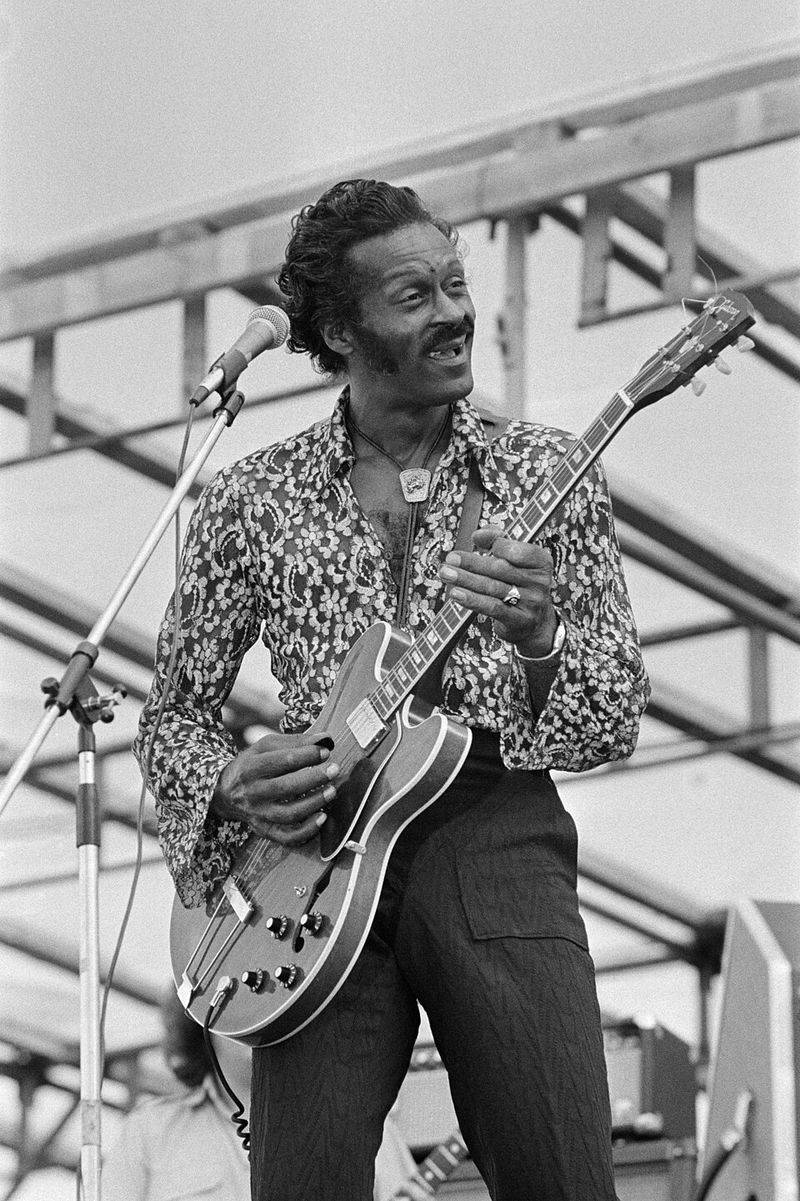
Long before arena tours and guitar heroes, a man from St. Louis wrote the blueprint. Chuck Berry released Johnny B.
Goode in 1958, and its opening guitar lick became one of the most copied passages in music history.
Berry built that intro from double-stops, which means playing two strings at once. He mixed blues ideas with fast, bouncy rhythms.
The result sounded fresh, playful, and very hard to ignore.
The lyrics tell the story of a country boy who could play guitar like ringing a bell. Teenagers loved the idea that talent and practice might lead somewhere big.
Here is a quirky detail. In 1977, NASA placed the song on the Voyager Golden Record, which was sent into space.
So this tune has traveled farther than any other guitar song. Countless players, from Jimi Hendrix onward, learned their first licks from it.
2. Sunshine of Your Love by Cream, 1967
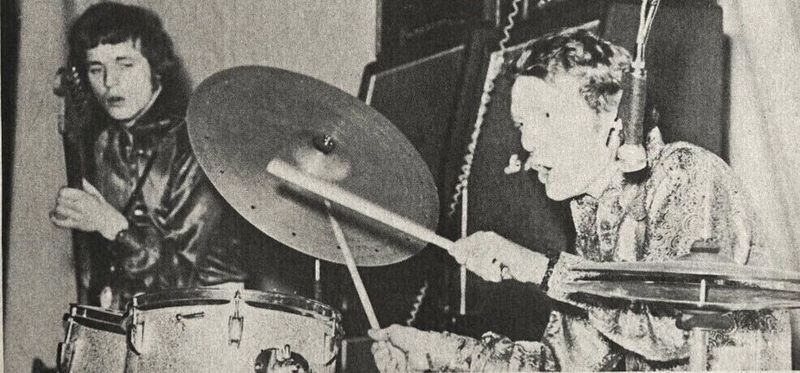
Credit for this famous riff actually belongs to the bass player. Jack Bruce came up with the idea in 1967 after seeing Jimi Hendrix perform in London.
Eric Clapton then added guitar parts, and drummer Ginger Baker gave it a heavy, rolling beat. The song appeared on Cream’s album Disraeli Gears and became one of the band’s biggest hits in America.
For students, the main riff is a smart lesson in blues-rock. It moves down in a clear pattern and sounds powerful without being complicated.
Players with more experience often turn to Clapton’s solo. It is full of string bends, steady vibrato, and careful timing.
Clapton played a Gibson SG covered in bright psychedelic paint during this period, and that guitar became famous on its own. Sometimes one simple idea, played with confidence by three skilled musicians, is all a song needs.
3. Purple Haze by The Jimi Hendrix Experience, 1967
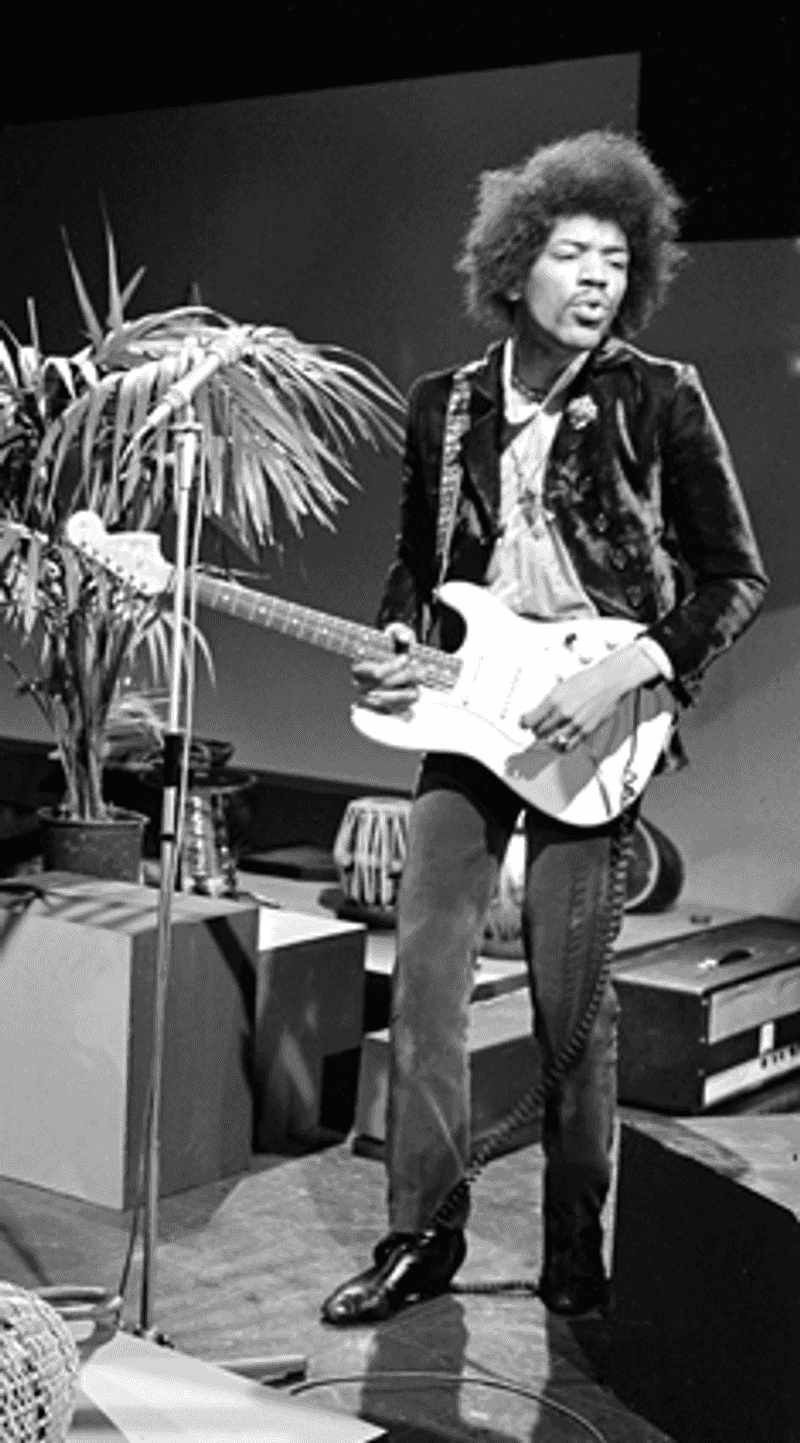
Radio listeners in 1967 had never heard anything quite like it. Jimi Hendrix opened Purple Haze with a clashing interval and then launched into a riff full of fuzz and bold energy.
The song used a chord so unusual that guitarists now call it the Hendrix chord. Its official name is the dominant seventh sharp ninth.
Try saying that three times quickly.
Hendrix played left-handed on a right-handed Fender Stratocaster flipped over and restrung. He also used feedback, fuzz effects, and bold string bends to create sounds that seemed years ahead of their time.
Beginners often found the song tough to copy. That challenge was part of the fun.
Purple Haze showed young players that the guitar had no fixed rules. It could be loud, strange, and creative all at once, and many players picked one up hoping to find that freedom.
4. (I Can’t Get No) Satisfaction by The Rolling Stones, 1965
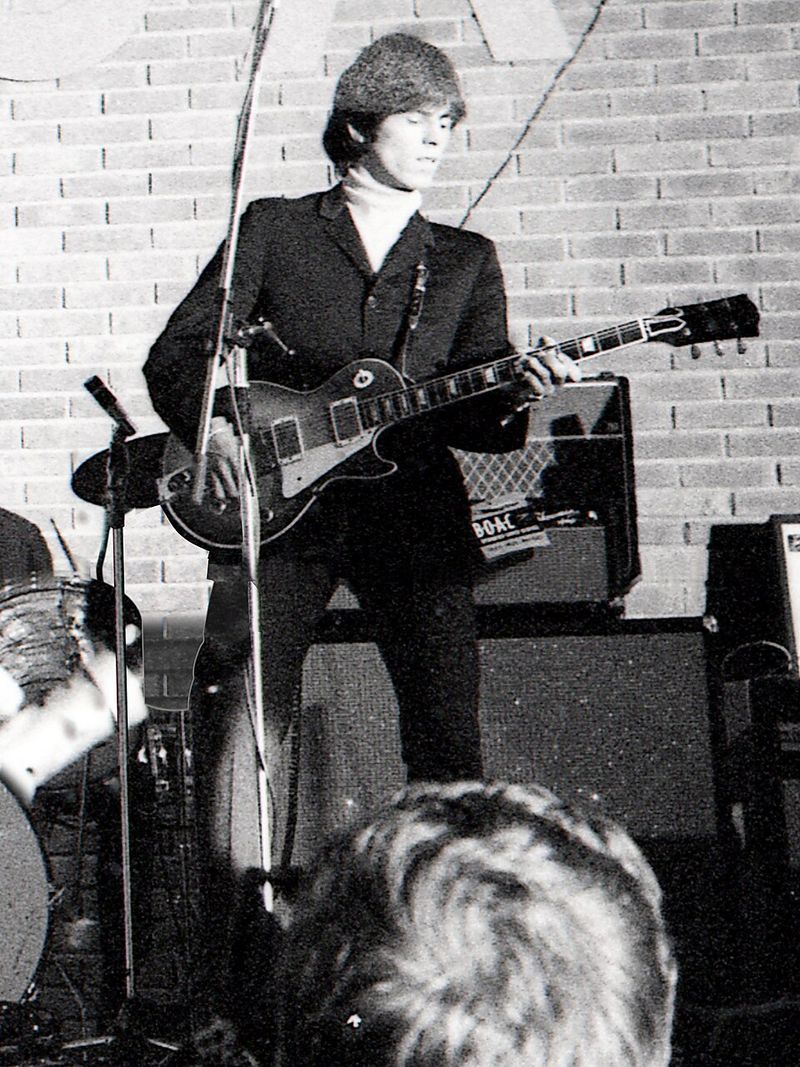
Keith Richards reportedly came up with this riff in his sleep in May 1965. He recorded a rough version on a cassette player, and the rest is rock history.
The Rolling Stones released the song that summer, and it became their first No. 1 hit in the United States. The riff uses only a few notes, yet almost everyone recognizes it within seconds.
Richards played it through a Maestro FZ-1 Fuzz-Tone pedal. Gibson first sold that pedal in 1962, but sales were poor.
After Satisfaction, stores could hardly keep it on the shelves.
For young players, the lesson was clear. A great song does not need dozens of chords.
It needs a strong idea and the right rhythm. Garage bands across the country took that lesson seriously and started practicing.
5. Smoke on the Water by Deep Purple, 1972
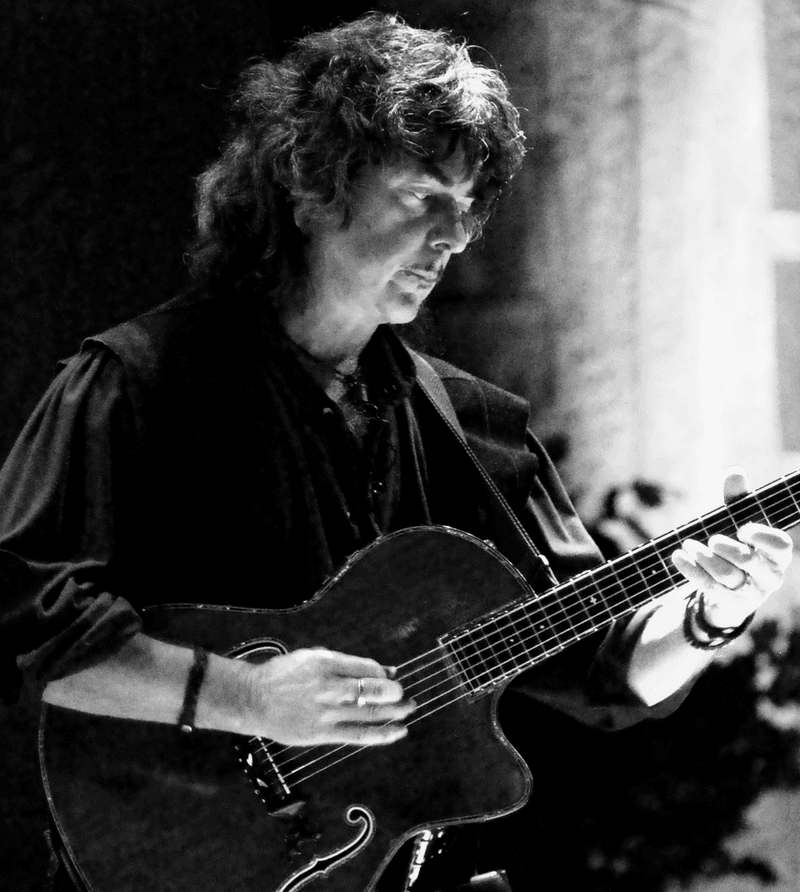
Ask almost any guitar shop worker which riff they hear most from customers testing instruments, and the answer rarely changes. Ritchie Blackmore wrote it, and Deep Purple released it on the 1972 album Machine Head.
The riff uses just four notes played in a simple pattern. That made it the perfect first step for beginners with sore fingertips and big dreams.
Still, copying Blackmore’s timing and punchy tone took more effort than it seemed.
The lyrics describe a real event. In December 1971, the band was in Montreux, Switzerland, getting ready to record when a fire broke out at the local casino during a Frank Zappa concert.
Everyone got out safely, and the band turned the story into a song.
Fun fact: the single version reached No. 4 in the United States in 1973. Learning this riff became a rite of passage for new players everywhere.
6. Whole Lotta Love by Led Zeppelin, 1969
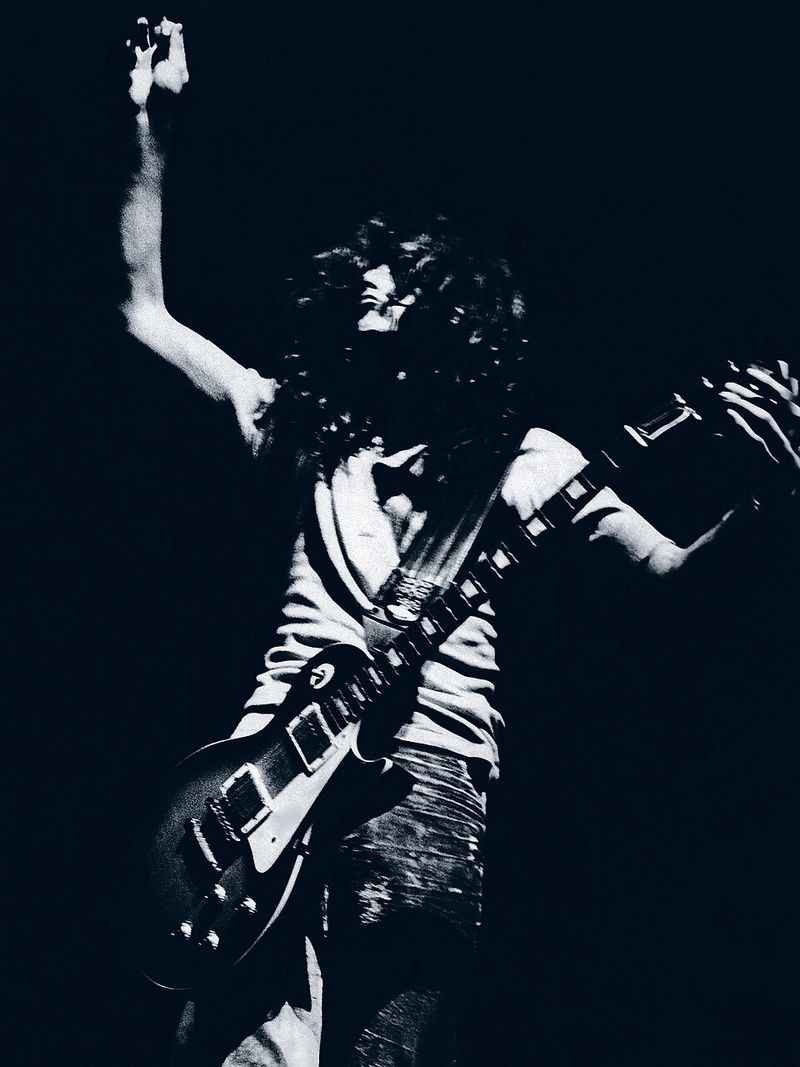
A houseboat on the River Thames is an unlikely birthplace for a heavy rock anthem. Yet that is where Jimmy Page worked out this riff in the summer of 1968.
Led Zeppelin released the song on Led Zeppelin II in 1969. Page later said he wanted a riff strong enough to drive the whole track, not just open it.
He got a thick, doubled sound by playing two strings together and bending one slightly. The middle section of the song is packed with studio experiments, odd effects, and sounds bouncing between speakers.
For students, though, the main riff is compact and easy to remember. Played through an amplifier, it feels huge.
Few beginner riffs give such a big reward for so little effort. That balance helped make Page one of the most studied guitarists of the 1970s.
7. Layla by Derek and the Dominos, 1970
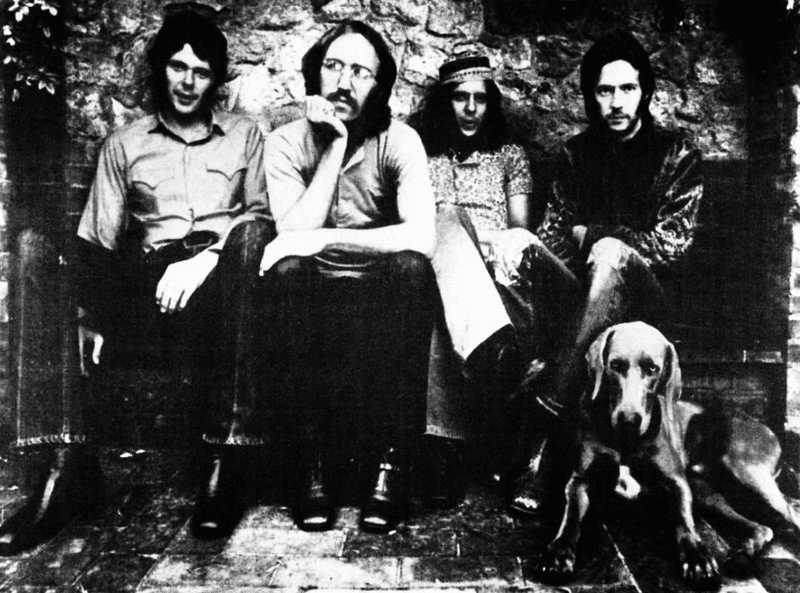
Two guitar giants met in a Miami recording studio in 1970, and the result was one of rock’s great introductions. Eric Clapton led the band, while Duane Allman of the Allman Brothers joined the sessions.
The song appeared on Layla and Other Assorted Love Songs. Interestingly, the album sold slowly at first.
Radio play grew over time, and the single became a bigger hit when it was reissued in 1972.
Allman’s slide guitar adds high, singing lines on top of Clapton’s riff. The two players sound very different, yet they fit together well.
The track ends with a long piano section written mostly by drummer Jim Gordon. For learners, the opening riff is a reachable goal.
The full performance is another story. Many guitarists bought their first glass slide after hearing Allman play.
8. Paranoid by Black Sabbath, 1970
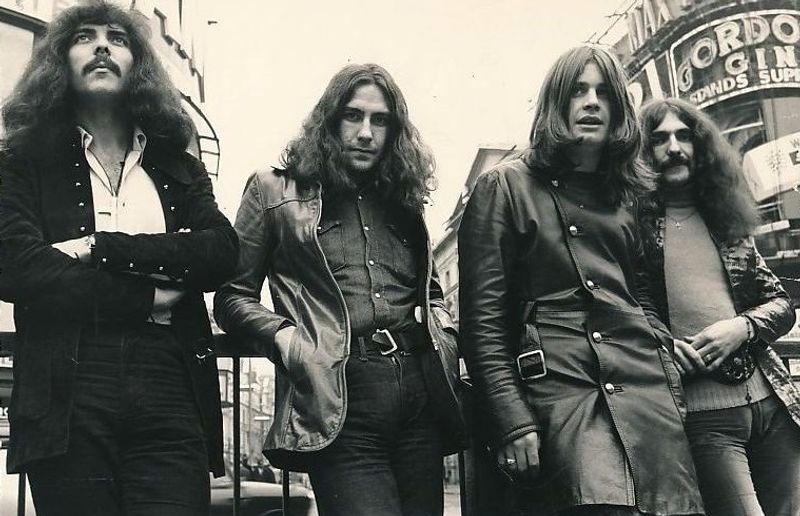
Some classics take months to build. This one reportedly took about 20 minutes.
Black Sabbath needed a short track to fill out their second album in 1970, so guitarist Tony Iommi came up with a fast riff on the spot.
The song became the title track of the album and reached No. 4 in the United Kingdom. Not bad for filler.
Iommi’s story inspired many players. As a teenager in Birmingham, he lost the tips of two fingers in a factory accident.
He made small caps for those fingers and kept playing.
Paranoid is a great lesson in tight rhythm playing. The main part uses simple power chords, but keeping the speed steady takes practice.
It proved that heavy music could be simple and still hit hard.
9. Hotel California by Eagles, 1976
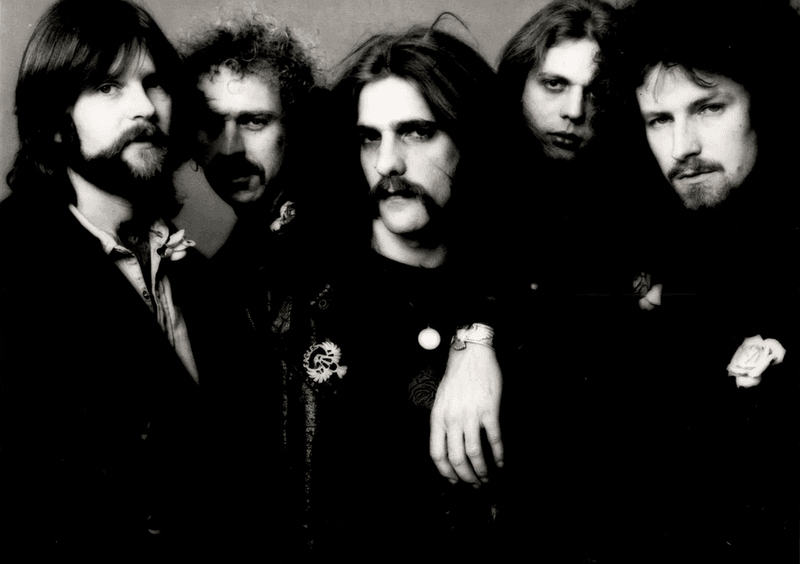
Readers of Guitarist magazine voted this the greatest guitar solo of all time in 1998. That honor went to two players, not one.
Don Felder and Joe Walsh traded lines at the end of the song before joining together in harmony. Felder used a 1959 Gibson Les Paul for a thick sound, while Walsh played a Fender Telecaster for a brighter edge.
The Eagles released the song on their 1976 album of the same name. The album hit No. 1 on the Billboard 200 in January 1977.
The single later won the Grammy for Record of the Year.
Beginners often start with the chord pattern, which moves in an unusual way. Advanced players study the closing duet.
The big takeaway is simple. Good guitar playing is about choosing the right notes, not the most notes.
10. Free Bird by Lynyrd Skynyrd, 1973
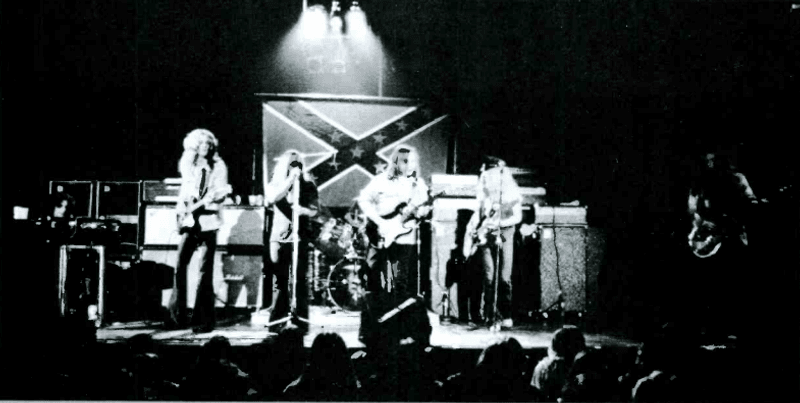
Shouting the title of this song at concerts became a running joke that has lasted for decades. Fans yell it at shows of every kind, even when the band has nothing to do with Southern rock.
Lynyrd Skynyrd released Free Bird on their 1973 debut album. It begins as a slow ballad with piano and slide guitar.
Then the tempo jumps, and a long guitar finale takes over.
Allen Collins played much of that famous lead section, with Gary Rossington adding slide parts. The full album version runs over nine minutes.
For students, the early sections are friendly. The finale is a test of speed and stamina.
Many players spent hours trying to keep up. The song also helped popularize the idea of a band with three guitarists, which became a Southern rock trademark.
11. Black Magic Woman by Santana, 1970
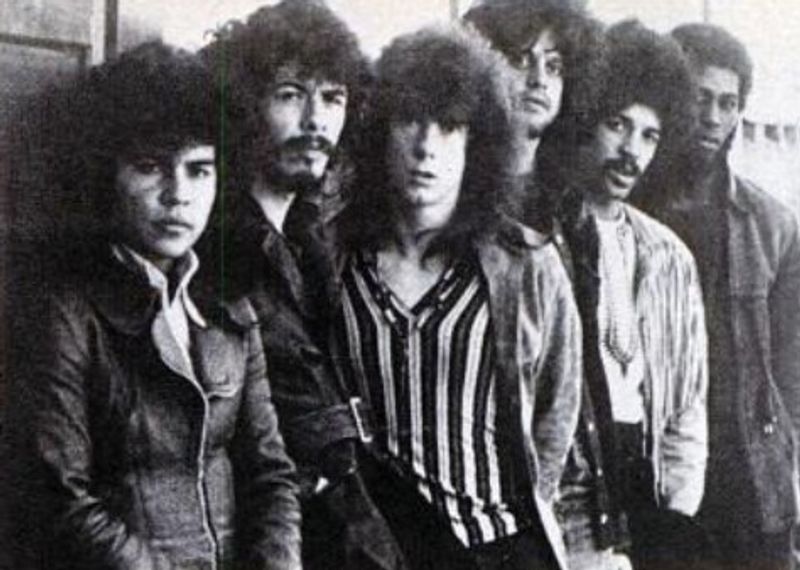
Not every hit begins as an original. Peter Green wrote this song for Fleetwood Mac in 1968, back when that band played blues.
Two years later, Carlos Santana gave it a new life. His band paired it with Gypsy Queen, an instrumental by Hungarian jazz guitarist Gábor Szabó.
The 1970 single reached No. 4 on the Billboard Hot 100.
Santana’s style mixed blues, rock, and Latin rhythms. Congas and timbales played beside the guitar, which was rare on rock radio at the time.
His long, sustained notes and smooth vibrato made the guitar sound close to a singing voice. For learners, this song offers a calm alternative to loud riffs.
It teaches patience, string bending, and feeling. Many players who wanted to express emotion found their model in Santana.
12. All Right Now by Free, 1970
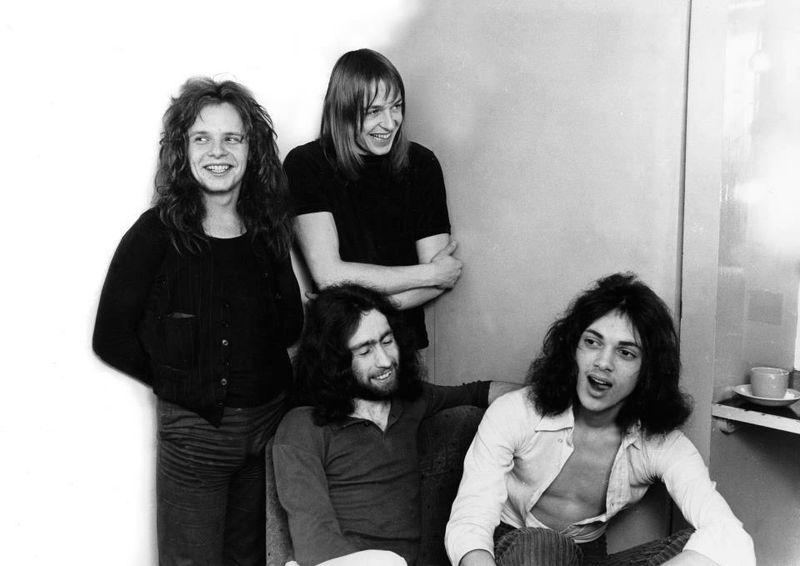
Silence is the secret weapon here. Paul Kossoff built the opening around a few big chords with clear gaps between them, and those gaps matter as much as the notes.
Free released All Right Now in 1970. The song reached No. 2 in the United Kingdom and No. 4 in the United States.
Kossoff was only about 19 when it was recorded.
Singer Paul Rodgers reportedly wrote it backstage after a quiet show, hoping to create something the crowd could move to. It worked.
For new players, the chord pattern is a fine introduction to classic rock rhythm. Kossoff’s lead work is famous for its wide, expressive vibrato.
Guitar teachers still use this track to show students that playing less can make a part stronger. Leaving space is a skill worth learning early.
13. More Than a Feeling by Boston, 1976
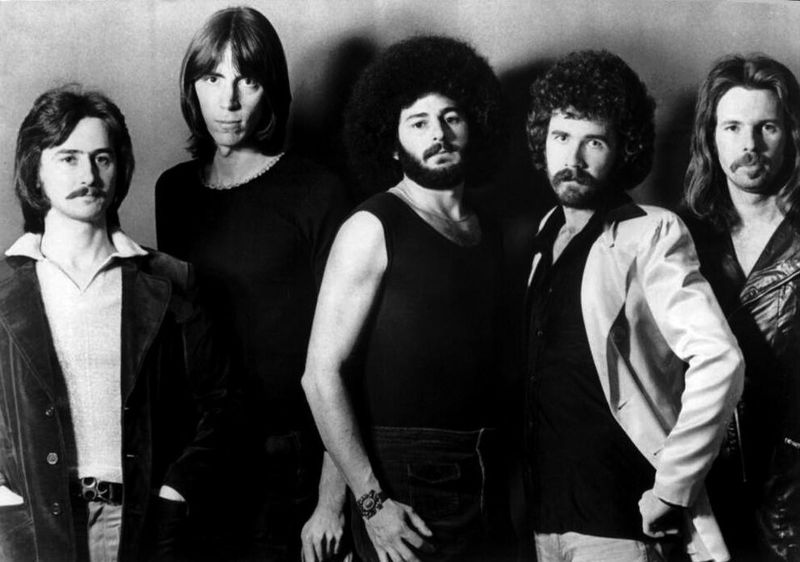
A basement studio near Boston produced one of the best-selling debut albums ever. Tom Scholz, an engineer with a degree from MIT, recorded most of the music at home.
He played many of the guitar parts himself and stacked them in layers. Boston released the album in 1976, and More Than a Feeling reached No. 5 on the Billboard Hot 100.
The song opens with gentle acoustic picking. Then the electric guitars arrive with a full, polished sound.
Scholz later invented the Rockman, a small headphone amplifier sold in the 1980s.
For learners, this track covers a lot of ground. The quiet parts build careful picking skills, while the loud parts show the power of layered guitars.
It also inspired a generation of home recording fans who wanted to build their own records.
14. Sultans of Swing by Dire Straits, 1978
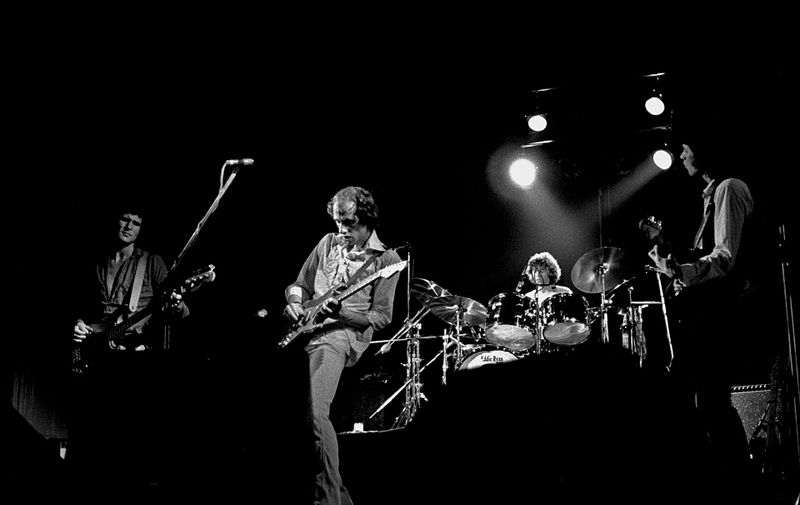
Punk rock ruled British headlines in 1978, so a band playing clean, careful guitar seemed out of step. Dire Straits did it anyway, and the gamble paid off.
Sultans of Swing first caught attention on a London radio show. It later reached No. 4 in the United States in 1979.
Mark Knopfler played with his fingers instead of a pick. That choice gave his notes a crisp, flowing quality.
He reportedly used a 1961 Fender Stratocaster with the switch set between two pickup positions.
The lyrics describe a jazz band playing for a small crowd in a London pub on a rainy night. For learners, the solos are tricky.
Speed matters, but touch and timing matter more. Plenty of players set down their picks for weeks trying to master his style.
15. Back in Black by AC/DC, 1980

Gibson once named this the greatest guitar riff of the 1980s. Not bad for a song built on a few chords and some well-placed pauses.
AC/DC released Back in Black in 1980 as the title track of their first album with singer Brian Johnson. The band designed the album as a tribute to their former singer, Bon Scott.
Instead of a slow ballad, they chose a bold, upbeat rock record.
Angus Young played lead guitar in his famous schoolboy outfit. His brother Malcolm handled rhythm with great precision.
The album has sold an estimated 50 million copies worldwide. For students, the riff is a lesson in timing.
Every stop and start counts. Playing it loudly is easy, but playing it tightly takes real practice, and that is the skill this song teaches best.
Share this story