
You know that feeling when a quick stop turns into the best part of your whole trip? Somewhere on the Oregon coast, a giant rock rises from the surf, and small birds with parrot-like beaks zip around it like they own the place.
Most folks come for the photo and leave talking about the wildlife. Here is how to be the Oregonian who knows exactly when to show up.
A Giant Sea Stack at the Edge of Town
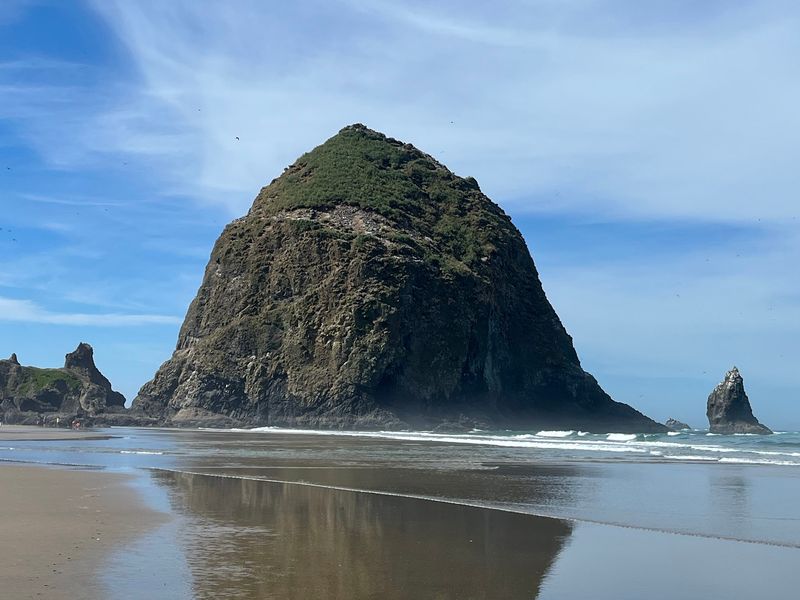
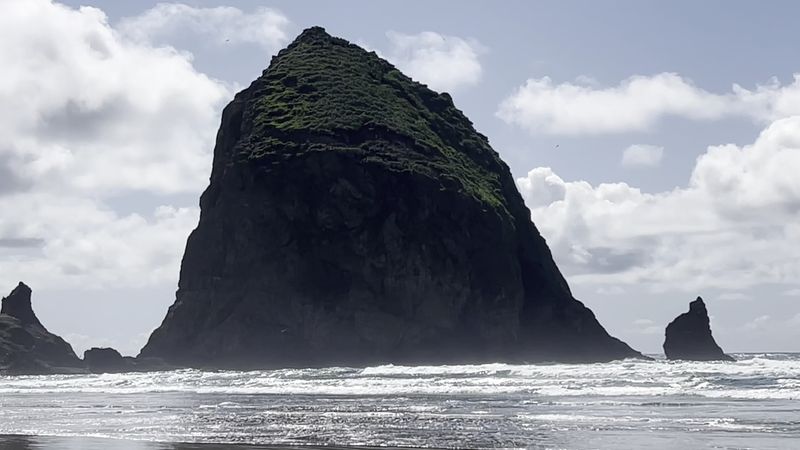
Picture a towering rock jutting from the Pacific, dotted with green, with waves crashing at its base. That is Haystack Rock, sitting right off the sand at Cannon Beach on the Oregon coast.
Visitors call it something you would expect to see in a nature magazine. Many say they could not believe how easy it was to reach from town.
The Google listing describes it as a soaring shoreline formation in a dramatic setting, with low-tide access and plenty of marine activity. It is also a protected marine garden and wildlife refuge, so the rock itself is for looking, not climbing.
Plenty of people get their first look at the Oregon coastline here, and they tend to remember it. The beach is wide, clean, and made for wandering.
Lava, Rescues, and a Movie Cameo
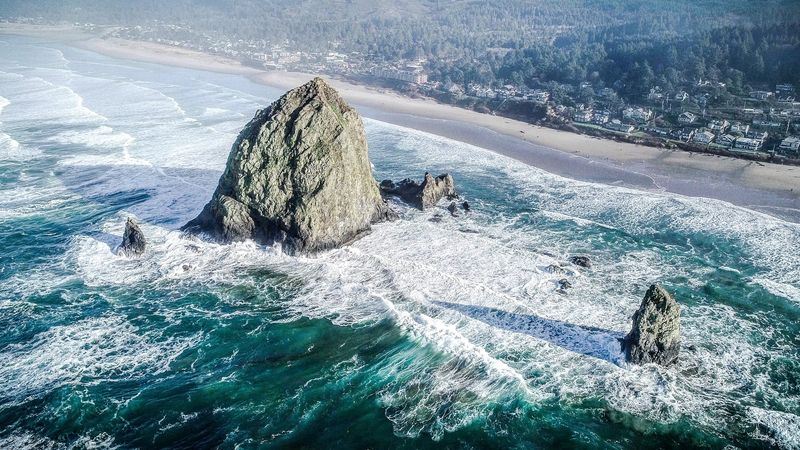
Here is a bit of history to share on the sand. The rock was formed by ancient lava flow, which explains its sturdy look.
Back in the day, people climbed it and got stranded when the tide came in, which led to many rescues. To stop that, the base was dynamited, shaping the monolith you see now.
These days it is a protected marine garden and wildlife refuge. It also had a starring turn in The Goonies, and visitors mention the film a lot.
Fans of the movie often arrive with a camera and a grin, ready to match the scene to the view. Even if you have never seen it, the backstory makes the rock feel like a character with a past.
Puffin Season Starts in Spring
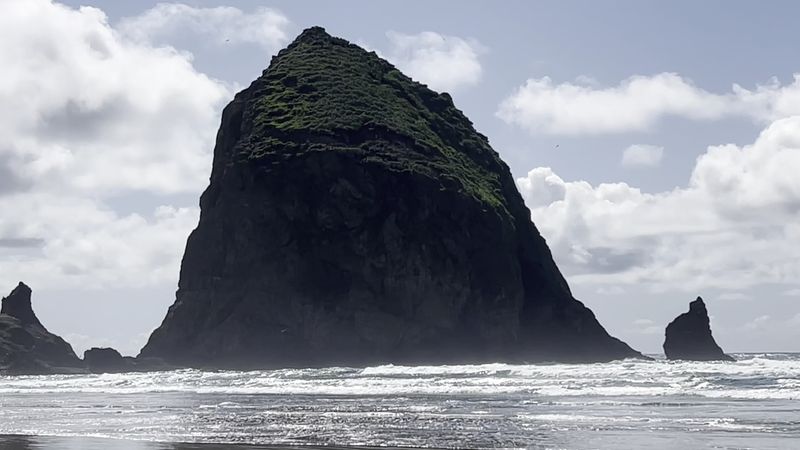
Bring your patience and a good zoom, because the stars of the show are small. Tufted puffins come to nest here in spring, and one visitor counted a ton of them in late May.
They fly round and round the rock, which makes them fun to watch even from a distance. Another early riser, who arrived at seven in the morning, spotted three.
Puffins are a top topic in visitor comments, with 165 mentions. That tells you plenty about how many people leave happy after seeing one.
Spring and early summer are your best bet. Pack binoculars if you have them, and keep your eyes on the grassy slopes and the sky above.
Low Tide Opens the Tide Pools
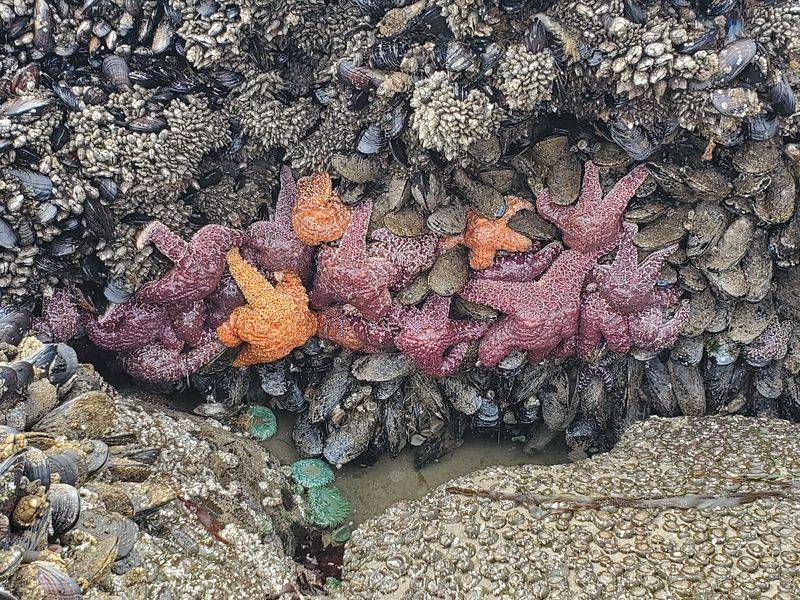
Check the tide chart before you leave the car. Tide pools are the most mentioned topic at this spot, with 493 mentions.
When the water pulls back, you can walk close to the base. Visitors report sea stars, anemones, mussels, tiny crabs, and even jellyfish eggs scattered along the sand.
Starfish alone earn 186 mentions. One catch: city officials ask that you not touch living things on the rocks, and visitors say starfish are strictly look-only.
Staying off the rocks keeps the residents safe. Kids enjoy the up-close views, and an ultra-low tide even lets you walk toward the nearby Needles.
Sunrise, Sunset, and Camera Magic
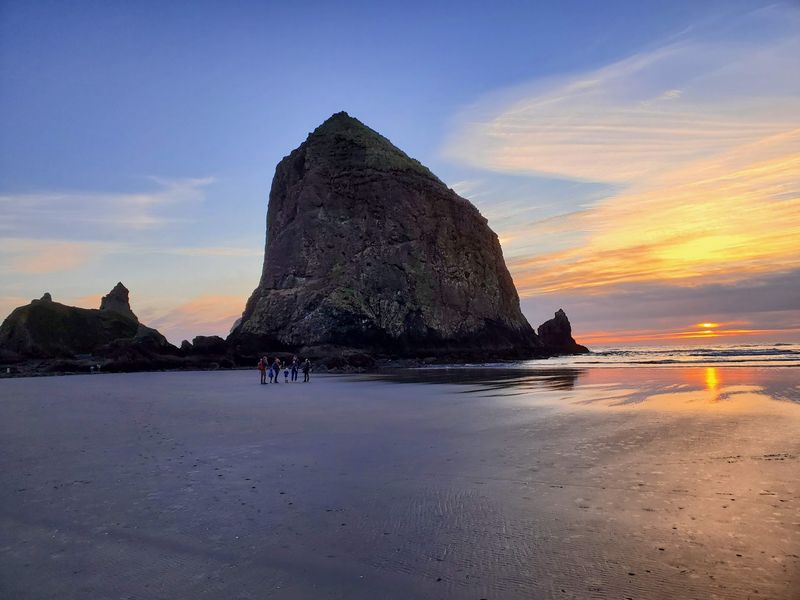
Light is the secret ingredient here. Visitors rave about sunset and sunrise, when colors spread across the sky and the wet sand reflects everything like a mirror.
One family caught the sun peeking from behind the rock and still treasures the photo. Photographers say it is hard to take a bad picture, whether you use a phone or a pro camera.
Clouds can crash the party, though. A couple of visitors found their sunrise and sunset a bit gray, and hazy or foggy days dim the view.
Check the forecast, then give yourself a couple of tries. The patient get the glow.
Fires, Dogs, and Easy Beach Days
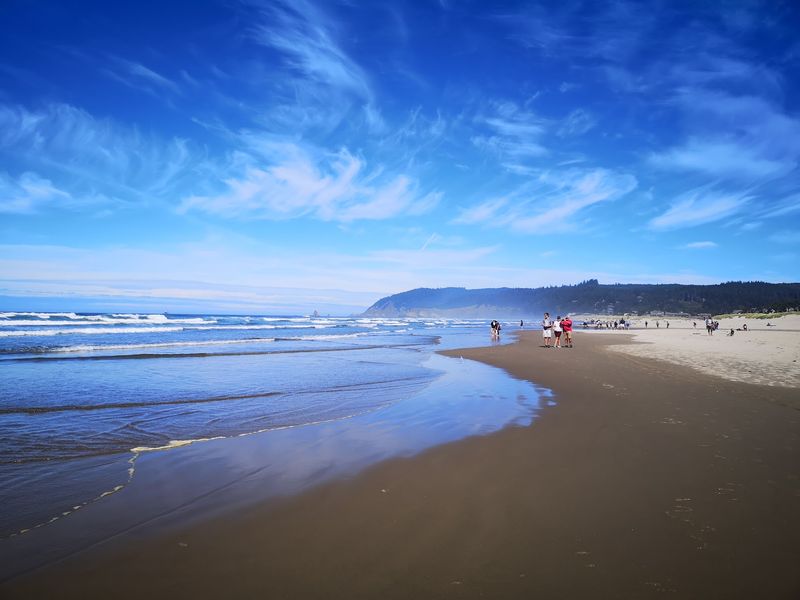
Evenings here have a cozy streak. Visitors describe beach fires and s’mores at night, and one called the atmosphere incredible after dark.
Dogs get in on the fun too. Some visitors say dogs may run off leash under voice control, and others noted friendly, playful pups along the shore.
The beach stretches for miles, so you can keep walking long after you have admired the rock. Locals walk or run along it daily.
Bring layers, since the weather can turn windy and rainy fast. The ocean stays cold even in summer, so swimmers will want a wetsuit and a warm blanket waiting.
Crowds, Quiet, and Elk Sightings
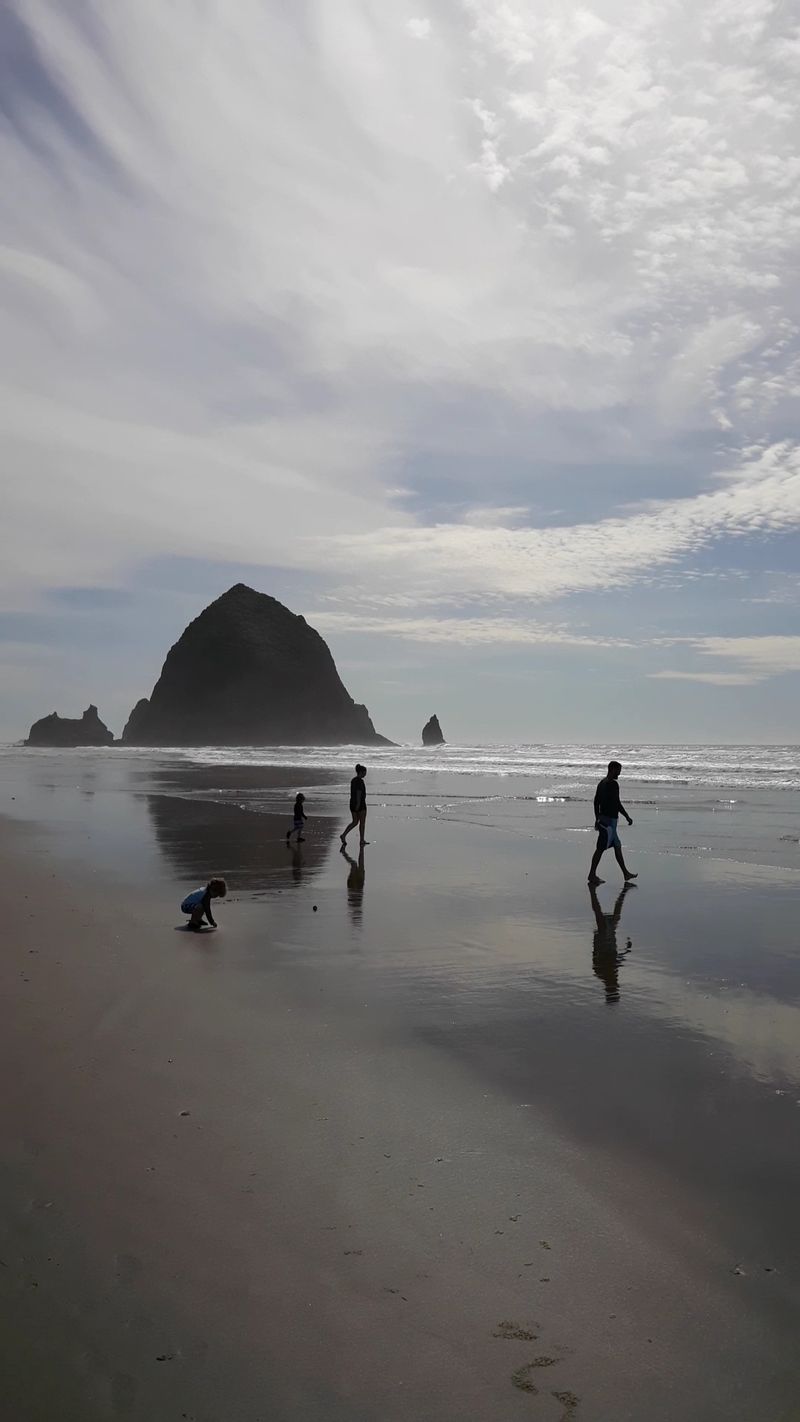
Let’s be honest: this is not a secret to everyone. Visitors report heavy crowds on holiday weekends like Labor Day and during summer.
Still, the sand is wide, and some say there is plenty of room even then. Early mornings feel calmer, and off-peak days are your friend.
Wildlife adds surprises. A few visitors spotted elk wandering near the beach.
If you want a quieter moment, aim for sunrise or a cool spring day. One visitor went over Mother’s Day weekend, found it chilly, and still loved it.
Locals tend to keep to the early hours.
Parking, Restrooms, and Getting There
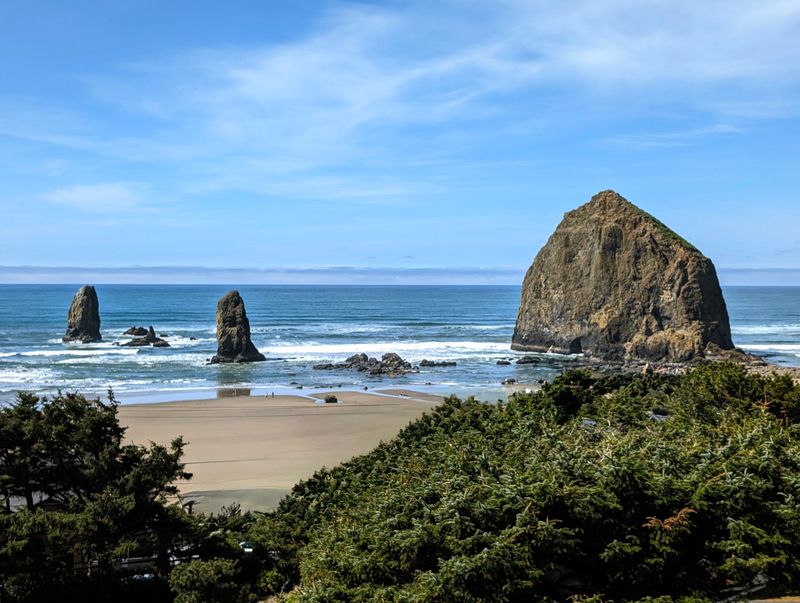
Parking is the one part that takes planning. Visitors call it hit or miss and difficult when busy, though others found a spot quickly, and going later in the day helped one group.
One visitor suggests parking in the neighborhood to the south and walking to the rock. Another notes the walk from parking can be long.
You cannot drive onto the beach, so plan to walk. Plenty of access points exist, and the easiest route is across the street from the lot, past the public restrooms.
Restrooms are nearby, with a rinse station by them. For questions, call +1 503-436-2623 or visit the Cannon Beach website.
The listing shows US-101, Cannon Beach, OR 97110.
A Gentle Verdict for Rock Fans
So, is it worth the trip? Visitors give it high marks, and many call it a highlight of their Oregon coast journey.
Families like the tide pools, photographers like the light, and bird fans come for the puffins. The main drawbacks are crowds, parking, and the occasional foggy day.
Time it right and you get a lot: spring puffins, low-tide sea life, and a long, clean beach. Check the tide schedule and weather first.
Walk down, slow down, and let the rock do its thing. Cannon Beach has shops and dining nearby for afterward.
Share this story