Every culture has its own way of saying goodbye. Some families celebrate with music and color, while others hold quiet rituals that last for days.
Looking at these customs helps us understand how people around the world honor memory, family, and belief. Here are 13 traditions that show just how varied farewells can be.
1. Ma’nene, Indonesia
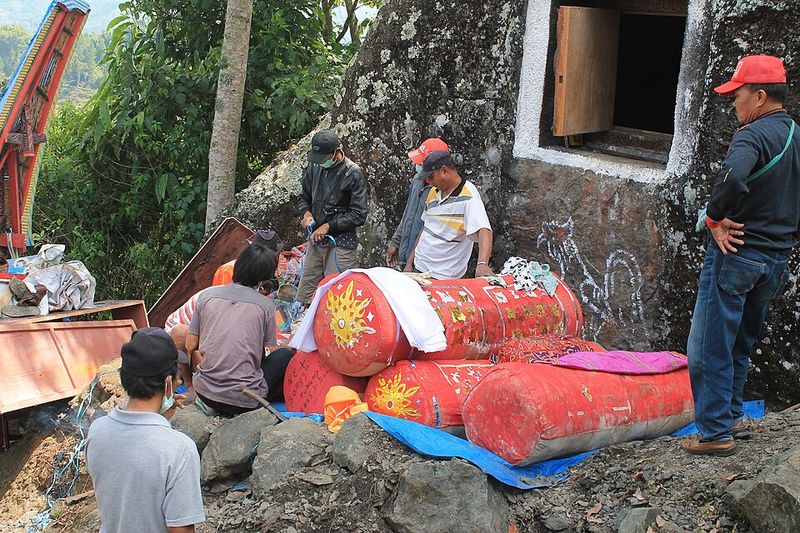
Imagine visiting a relative who passed away years ago and bringing along a fresh set of clothes for them. In parts of Toraja society in Sulawesi, Indonesia, that is exactly what happens during Ma’nene.
Families return to ancestral burial sites, usually after the harvest season, to care for the remains of loved ones.
The ritual involves carefully cleaning the body, brushing hair, and dressing the deceased in new garments. Family members often take photos together and share stories about the person.
Relatives who live far away often travel home to take part.
For the Toraja, death is seen as a gradual passage rather than a sudden end. Caring for the departed keeps family bonds strong across generations.
Children join in too, learning that remembering ancestors is a shared duty and a sign of deep respect.
2. Sky Burials, Tibet
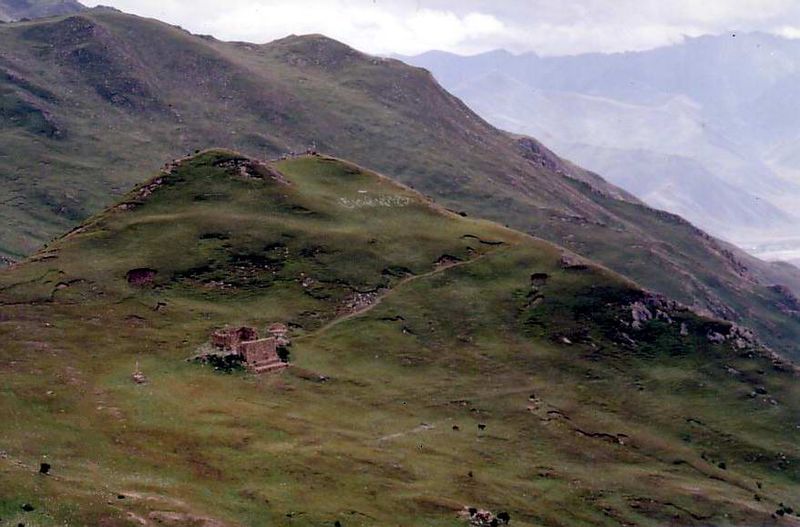
High on the Tibetan plateau, the ground is rocky and frozen for much of the year, and wood for cremation is scarce. Over many centuries, Tibetan Buddhist communities developed a practice known as a sky burial.
In it, the body is offered to vultures in a quiet, carefully guided ritual.
The act reflects two important Buddhist ideas. One is impermanence, the belief that all living things eventually change and pass away.
The other is generosity, since the body becomes a final gift that feeds other living creatures.
Monks often chant prayers while specialists prepare the site. Families may watch from a distance or stay away, depending on local custom.
Outsiders are usually not welcome, because the ceremony is considered deeply sacred. Understanding the beliefs behind it helps explain why it is seen as an act of compassion.
3. Fantasy Coffins, Ghana
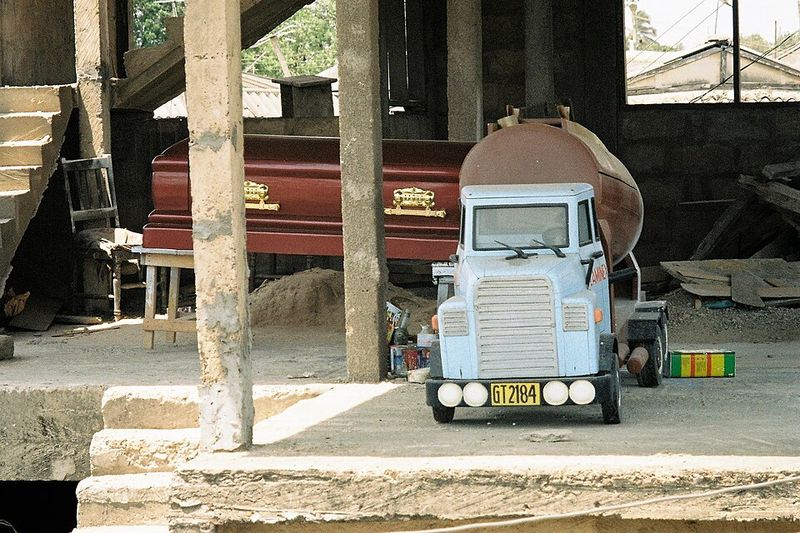
Picture a coffin shaped like a giant fish, a shiny car, or even a cocoa pod. In Ghana, among the Ga people near Accra, these fantasy coffins are carefully built by skilled carpenters.
Each design is chosen to reflect who the person was in life.
A fisherman might be laid to rest in a fish, while a pilot could have an airplane. A farmer or a business owner might choose a shape linked to a crop or a product.
The coffins are painted in bright colors and finished with great detail.
The tradition grew popular in the mid twentieth century and has since drawn the attention of art museums worldwide. For families, the coffin is a proud statement about identity and achievement.
Funerals are often large gatherings with music, dancing, and plenty of shared memories.
4. Jazz Funerals, New Orleans, USA
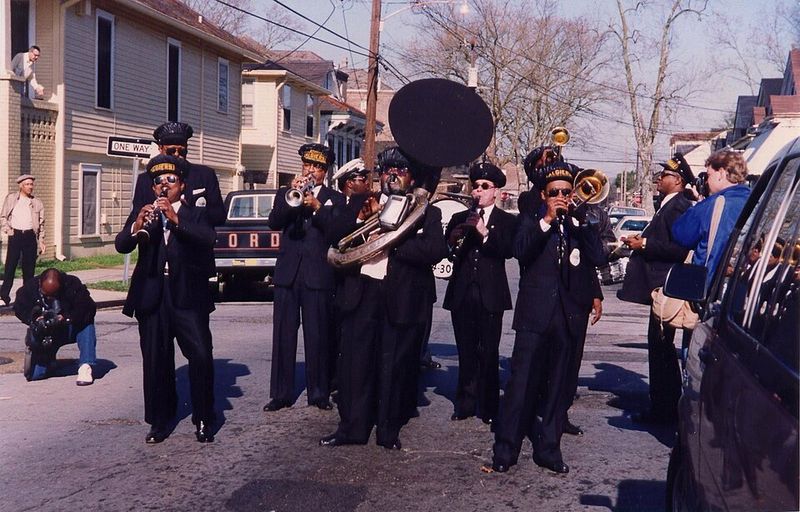
The music starts slowly, with a mournful hymn drifting down the street. Then, after the burial, the band shifts into upbeat jazz and the crowd begins to dance.
That change in mood is the heart of a traditional New Orleans jazz funeral.
Brass bands lead a procession from the service to the cemetery. On the way back, mourners and neighbors join in, forming what is known as the second line.
People wave handkerchiefs, twirl umbrellas, and move to the rhythm.
The tradition has roots in African customs and later blended with European brass band music. It carries a simple message: grief and joy can exist side by side.
Honoring a life with music allows a community to share sorrow while also celebrating the person who has passed.
5. Ngaben Cremation Ceremonies, Bali, Indonesia
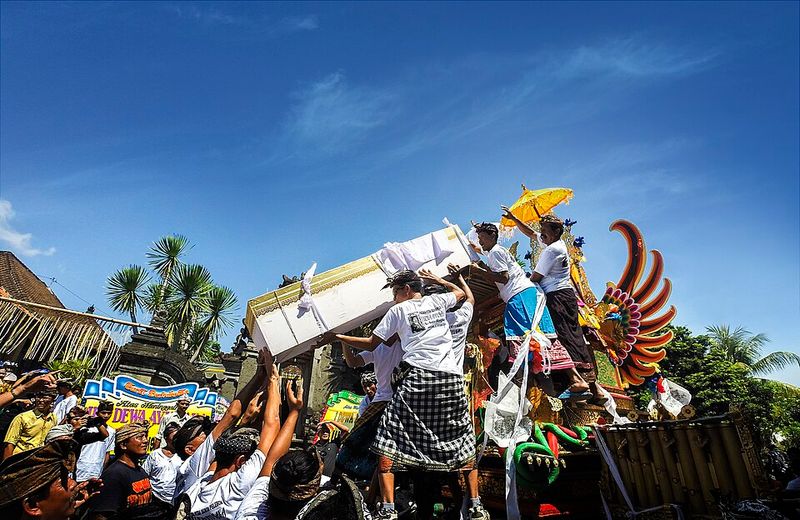
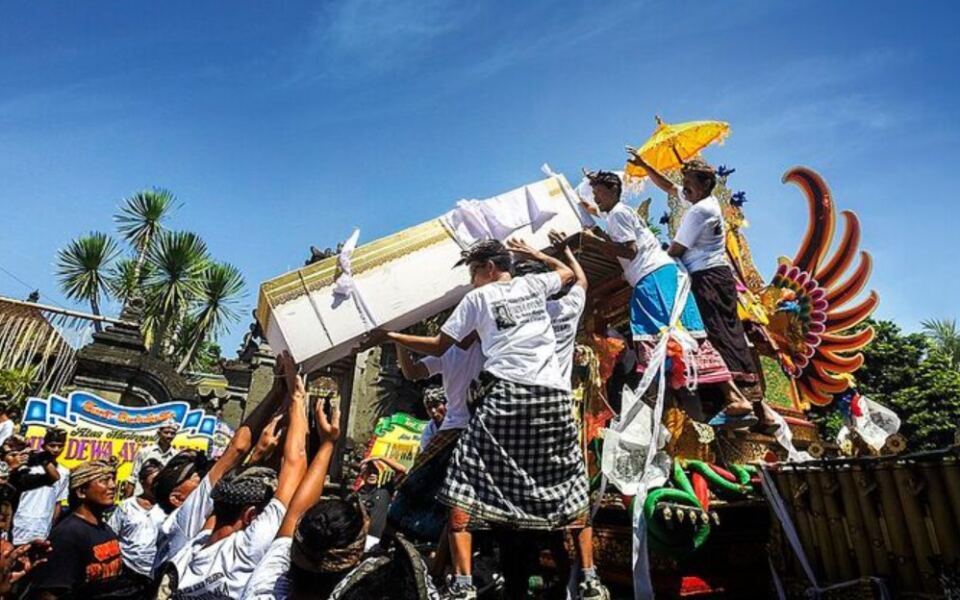
Few farewells are as colorful as a Balinese cremation. In Bali, Hindu families hold a ceremony called Ngaben to help release the soul from the physical body so it can continue its journey.
The event can be large, and sometimes several families share the cost and organize it together.
The body is placed inside a tall, ornate tower made of bamboo and paper, then carried through the village by many people. Music from gamelan orchestras fills the air.
The bearers may spin the tower to confuse spirits so the soul does not find its way back.
At the cremation site, the body is placed in a symbolic animal-shaped sarcophagus and burned. Ashes are later scattered at sea or in a river.
The atmosphere is respectful yet festive, because the ritual is seen as a release rather than only a loss.
6. Famadihana, Madagascar
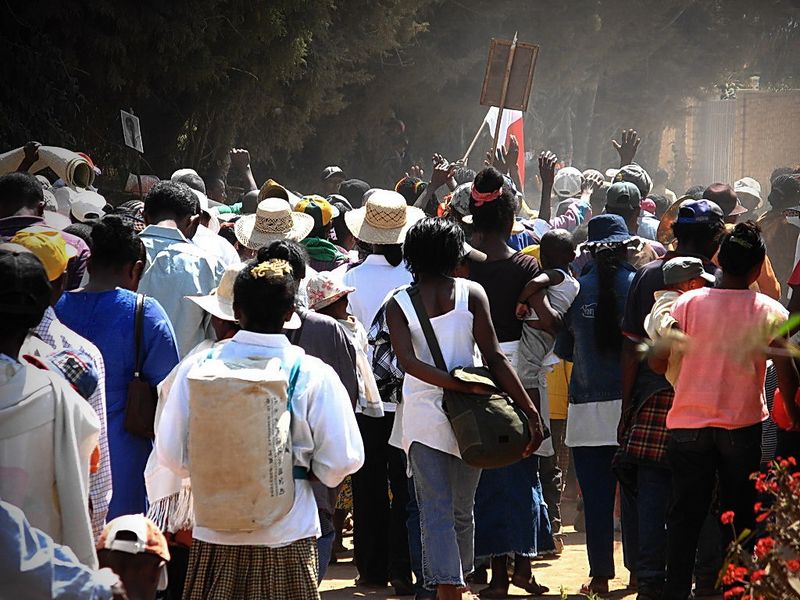
Here is a surprise for many visitors: in Madagascar, a funeral can happen more than once. In some Malagasy communities, families hold a ceremony called Famadihana, often translated as the turning of the bones.
Every several years, they open the family tomb and bring out the remains of ancestors.
The remains are wrapped in fresh cloth, sometimes with the person’s name written on it. Relatives may dance with the bundles while a band plays lively music.
Stories are told, and the gathering often includes a large shared meal.
For participants, the event is a joyful reunion between the living and the dead. It reinforces family ties and shows that ancestors are still considered part of the household.
Because preparing the feast and the cloth can be costly, families often save for years beforehand.
7. Hanging Coffins, Philippines
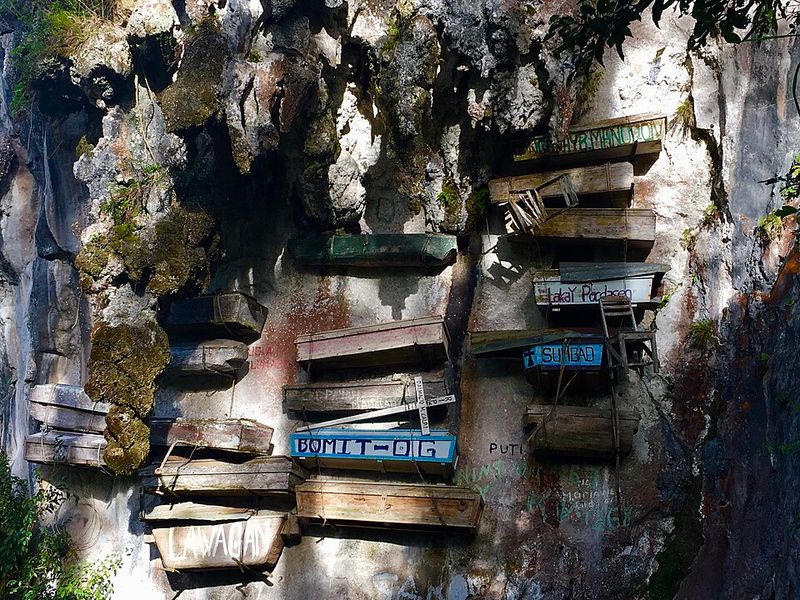
Walk through the mountains of Sagada and you may spot wooden coffins fixed high on a limestone cliff. This is the Igorot tradition of hanging coffins, carried out for many generations.
Some of the coffins are believed to be hundreds of years old.
Elders traditionally prepared their own coffins before they died. Families then placed the coffin on the cliff, either hanging from supports or resting on ledges.
A common belief holds that burying a person higher up brings them closer to the ancestors and spirits.
The coffins are often small, because the body is placed in a folded, seated position, similar to the way a baby rests before birth. Some families still follow the custom today, though fewer than in the past.
Visitors are encouraged to explore with local guides and to show respect at the site.
8. Zoroastrian Towers of Silence, India
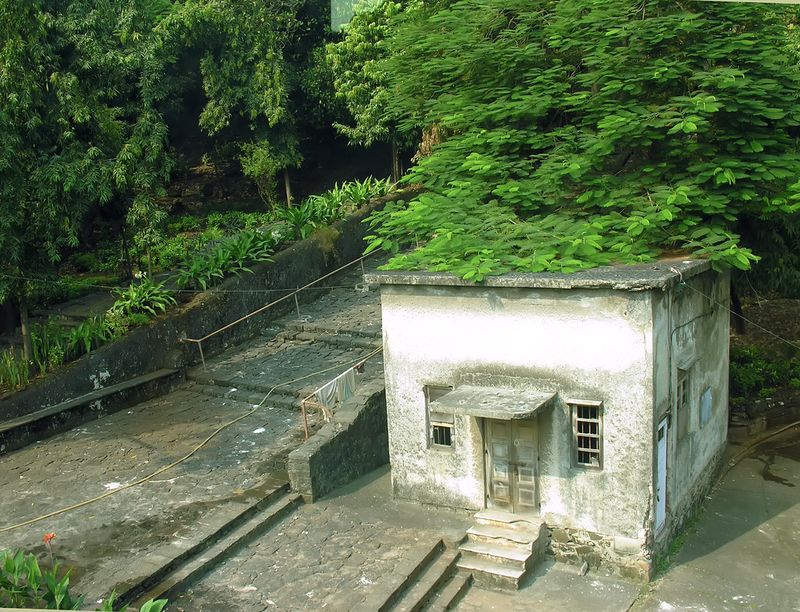
Protecting nature sits at the center of Zoroastrian belief. Earth, fire, and water are considered sacred, so burying or burning a body was traditionally avoided.
Instead, followers of the faith built raised circular stone structures known as Towers of Silence, called dakhmas.
Bodies were placed on the open top, where vultures and the sun would take care of them. The design kept remains away from soil and water.
Mumbai, home to a large Parsi community, has some of the best-known towers.
In recent decades, vulture numbers in India have dropped sharply, which has made the practice harder to continue. Some communities now use solar concentrators or choose other methods, including cremation or burial.
Even so, the towers remain a powerful symbol of a faith that values purity and respect for the natural world.
9. Kotsuage Bone-Picking Ceremony, Japan
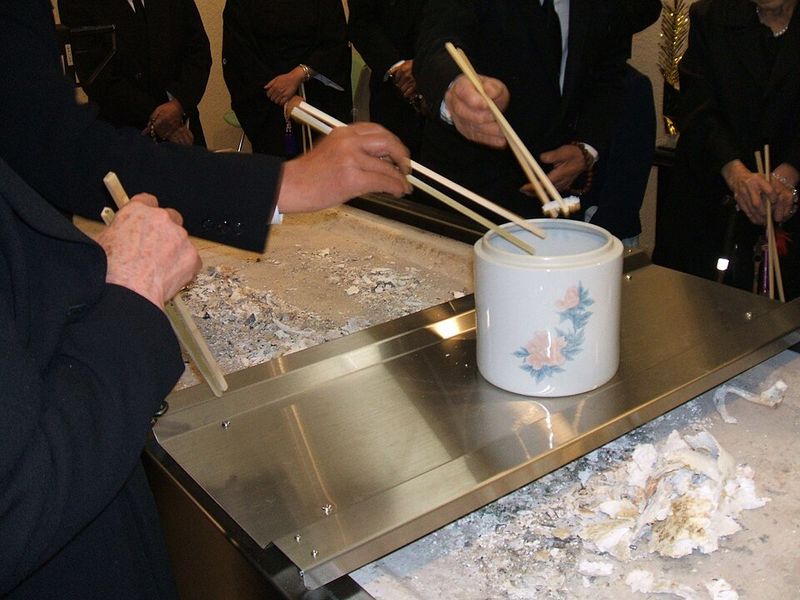
Chopsticks are everyday tools in Japan, yet at a funeral they take on a special role. After a cremation, family members gather in a quiet room to take part in kotsuage, which means bone picking.
Using long chopsticks, they pick up small bone fragments and place them into a funerary urn.
Two people often hold the same bone together and pass it between their chopsticks. This is the only time in Japan that passing food this way is acceptable, which is why doing it at the dinner table is considered bad manners.
The bones are arranged in a set order, usually beginning with the feet and ending with the skull. The ritual allows relatives to take a hands-on part in the farewell.
It is calm, respectful, and deeply personal, giving close family a final moment of care.
10. Electric Flower Car Funerals, Taiwan
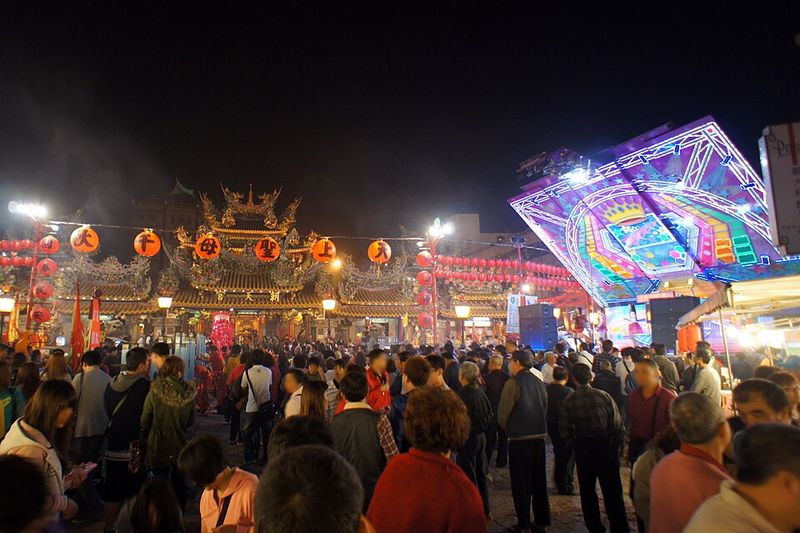
A truck covered in flowers and flashing lights rolls down the street, and a performer steps onto a small stage on its side. This is the electric flower car, a sight at some funerals in Taiwan.
The vehicle transforms into a mobile stage for music and shows.
The custom grew from a belief that a lively send-off honors the deceased and keeps the spirit company. A bigger crowd is often seen as a sign of respect and good fortune.
Families may hire singers, dancers, or bands to take part.
Traditions vary, and not every family chooses this style. Some find it too showy, while others see it as a heartfelt tribute.
Over time, local rules and changing tastes have shaped how the performances are carried out, but the flower cars remain a memorable part of Taiwanese culture.
11. Antyesti, India
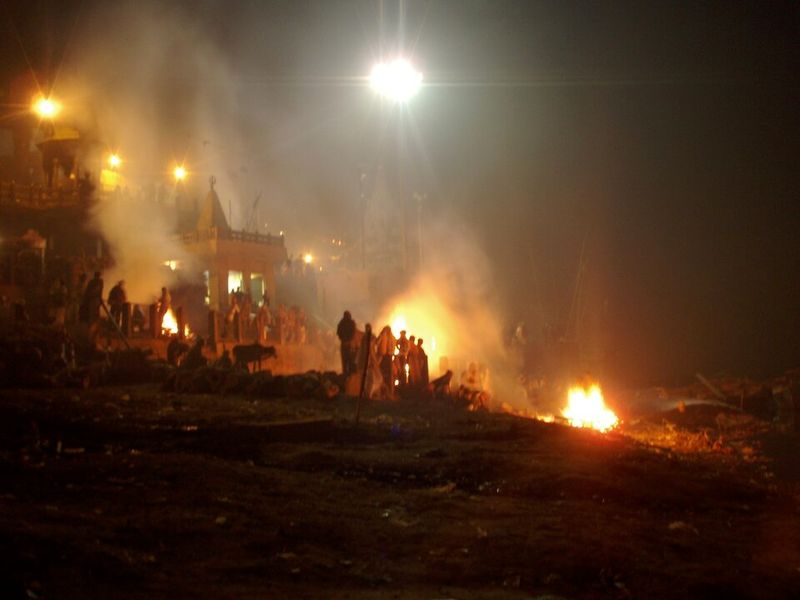
Hindu tradition views life as a cycle, and Antyesti, meaning last rites, is the final step along the way. The ceremony prepares the soul for its next journey.
It usually takes place soon after death, often within a day.
The body is washed, wrapped in cloth, and carried to a cremation ground. Priests recite sacred prayers called mantras.
Traditionally, the eldest son lights the funeral pyre, and fire is seen as a purifier that releases the soul.
Many families aim to scatter the ashes in a holy river, with the Ganges being especially honored. Varanasi is a well-known place for these rites.
In the days after, relatives often observe a period of mourning with rituals, offerings, and shared meals. Each step is meant to support the soul and bring comfort to the family.
12. Rambu Solo’, Indonesia
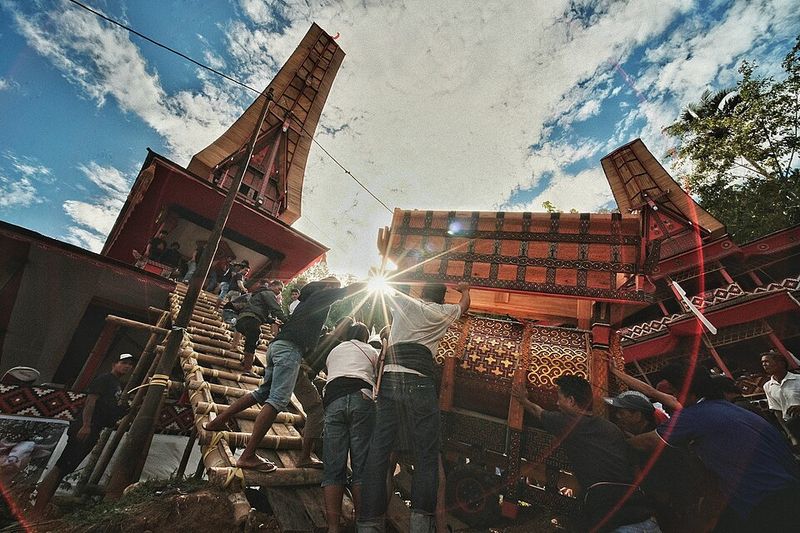
Some funerals last an afternoon, but a Toraja funeral can stretch across several days. Known as Rambu Solo’, the ceremony is among the most important events in Toraja life.
Families may spend months or even years preparing, because the gathering can be large and costly.
Guests travel from many villages. The program includes processions, music, shared meals, and traditional dances.
Buffalo are sacrificed as part of the ritual, and their number reflects the family’s status and the belief that they help carry the soul onward.
Until the ceremony takes place, the deceased may be treated as if they are only sick or sleeping, and remain in the family home. After the funeral, the body is placed in a tomb, often carved into a cliff.
The whole event strengthens community ties and honors the ancestors.
13. Jewish Shiva, Israel and Jewish Communities Worldwide
When the burial ends, a different kind of ceremony begins at home. In Jewish tradition, close relatives observe shiva, a word that means seven.
For seven days, the family stays together, remembers the person, and welcomes visitors.
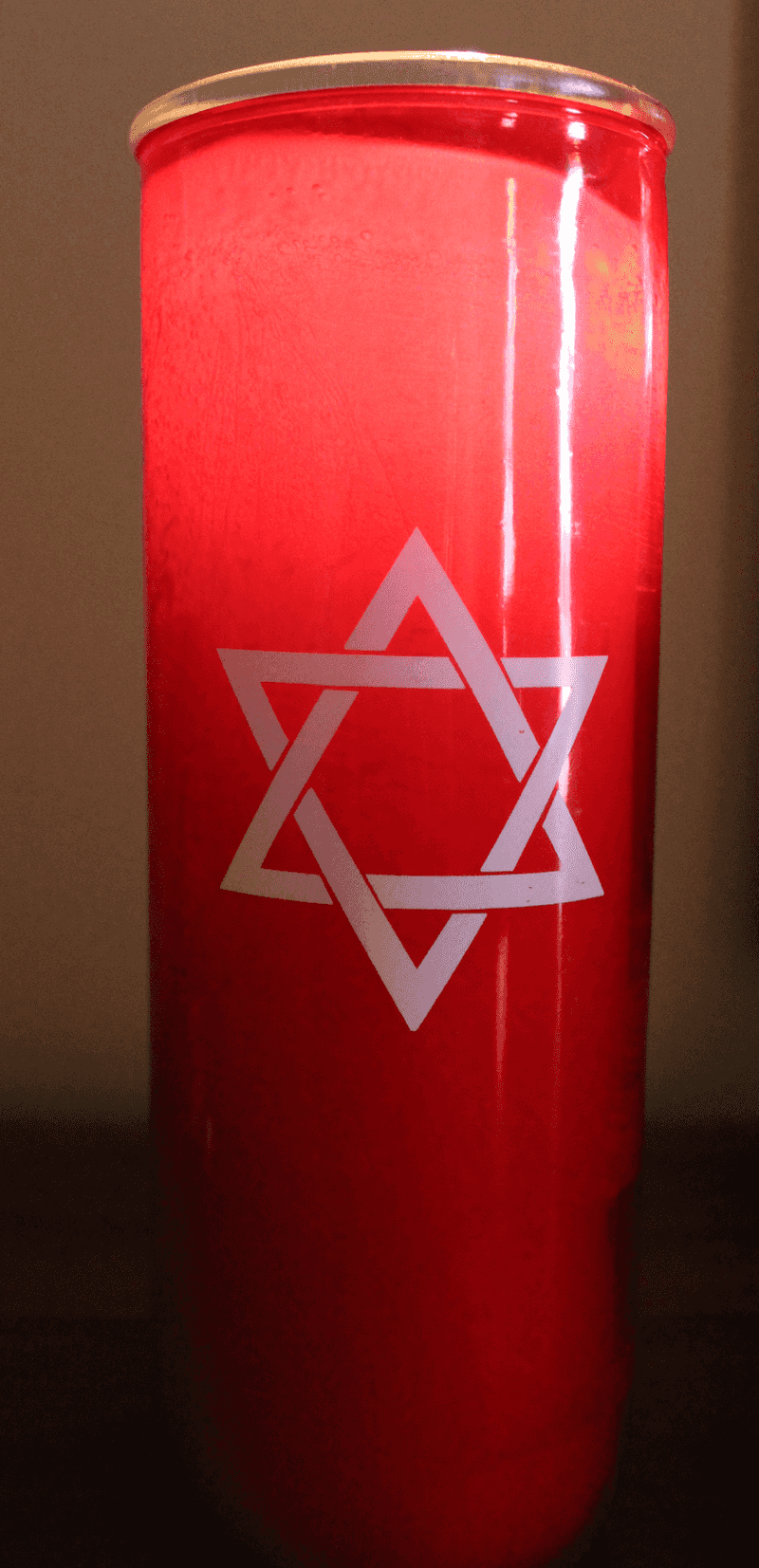
Mourners often sit on low stools or chairs, a sign of humility and grief. A memorial candle is lit, and mirrors in the home may be covered.
Friends and neighbors bring meals so the family does not need to cook, and they offer comfort by sharing memories.
Prayers are recited each day, and a group of ten adults, called a minyan, may gather at the house for services. Shiva follows burial customs practiced in Israel and in Jewish communities across the globe.
The purpose is simple: to give mourners time and support so they never have to face loss alone.
Share this story