A mastodon skeleton, an Egyptian mummy, and a room of glowing minerals share one building, and nobody asks for a ticket. That alone made me look twice.
Admission is free, with donations welcomed.
The building dates to 1872, so the setting feels as old-school as the specimens inside. Fossils fill the main floor.
A mezzanine upstairs holds rows of minerals and gemstones, many tied to New Jersey itself.
I like how compact it is. You can wander the whole space in about an hour, and kids get a scavenger hunt that ends with a shark tooth prize.
That’s a pretty great deal for a weekday detour.
I can’t imagine a better rainy-day stop for curious families. So what else is hiding behind those old brick walls, waiting for someone to notice?
A Free Museum Packed Inside a University Landmark
Rutgers Geology Museum sits right on the Rutgers University campus in New Brunswick, New Jersey. It’s a natural history museum run by the university, and it costs nothing to enter.
Inside, you’ll find fossils, minerals, rocks, a mastodon skeleton, and even an Egyptian mummy. That mix sounds like a bigger museum’s floor plan, squeezed into one memorable room.
The museum is open Tuesday through Friday, from 10 AM to 4 PM. Weekends and Mondays are closed, so plan around a weekday schedule.
Free entry changes the whole mood of a visit. You don’t feel pressure to squeeze value out of every minute or see every case twice.
Instead, you can drop in, look at a few skulls, and leave curious for next time. Families often treat it as a regular stop rather than a once-a-year outing.
Visitors simply sign in at the entrance, and donations are welcomed. That small gesture helps keep the specimens on display for everyone else.
For a New Jersey day trip, few stops deliver this much variety for so little effort. And the building itself is part of the story, as you’ll see next.
Brick Walls That Have Been Holding Rocks Since 1872
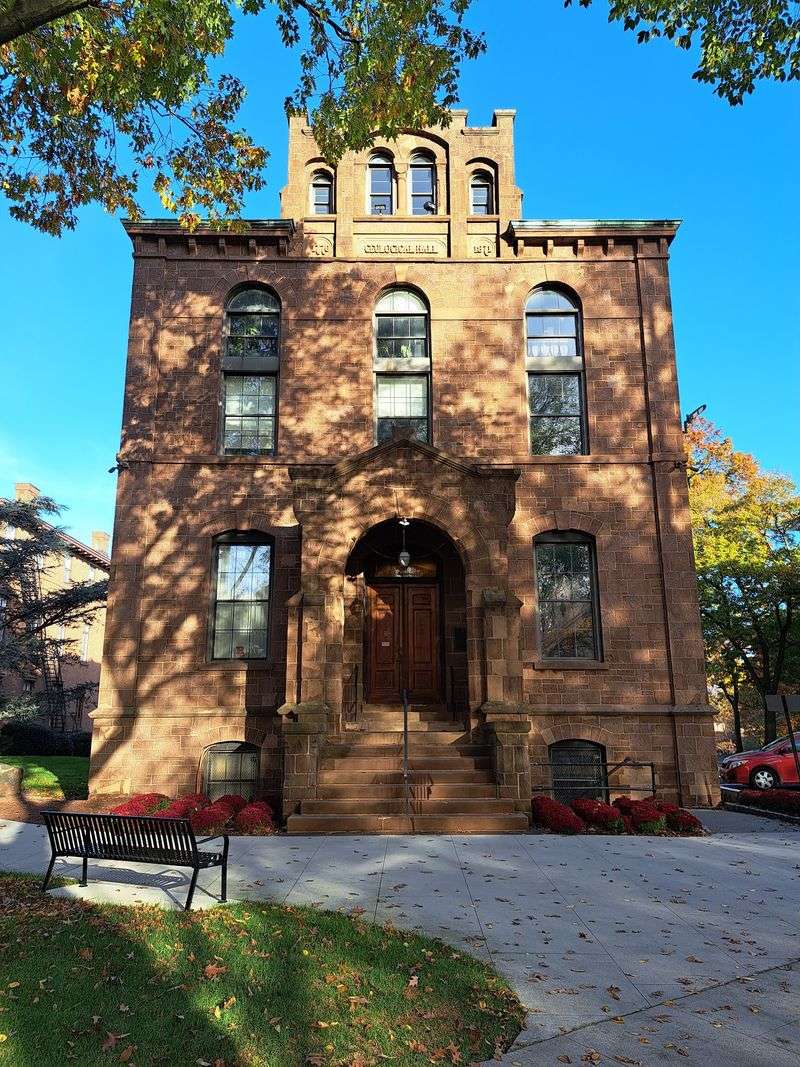
Old buildings usually hold old stories, and this one fits the pattern perfectly. The museum occupies a historic landmark building constructed in 1872.
That date puts it among the older museum spaces you can visit in New Jersey. The architecture alone earns a pause before you head inside.
Expect stairs at the entrance. The climb up is part of the deal, so anyone with mobility concerns should plan ahead.
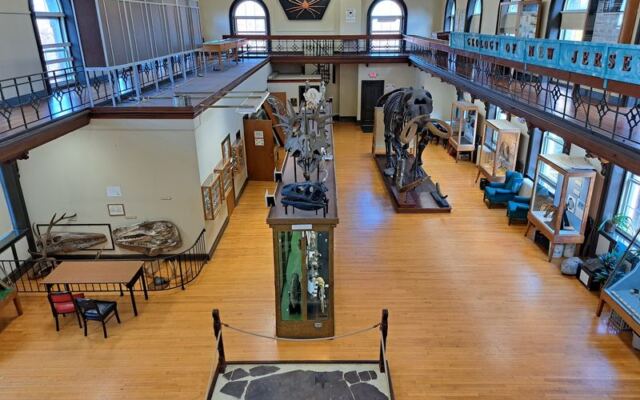
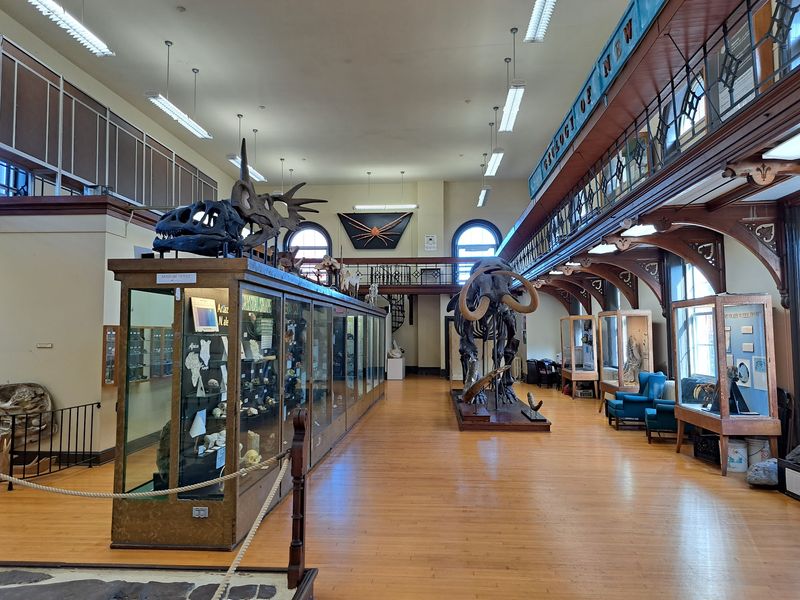
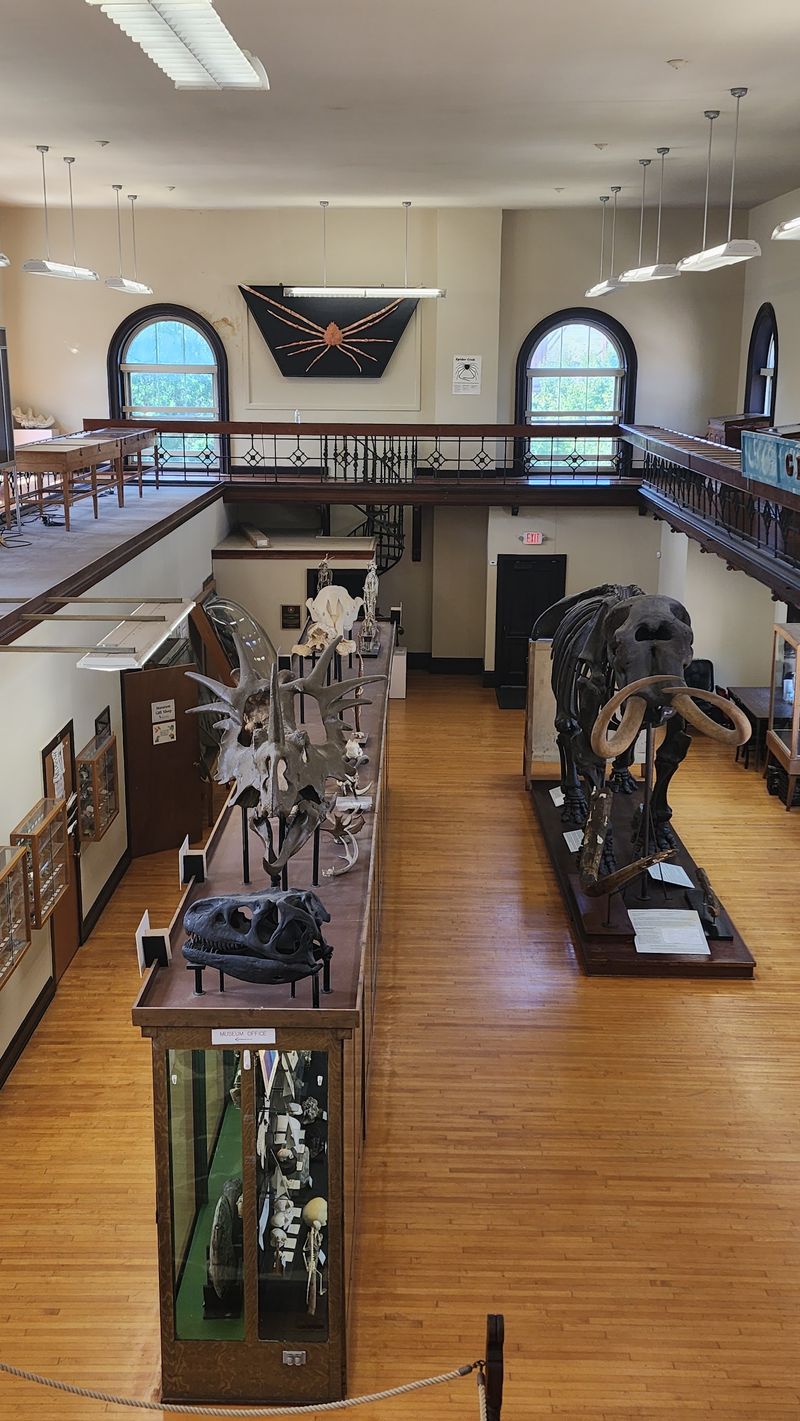
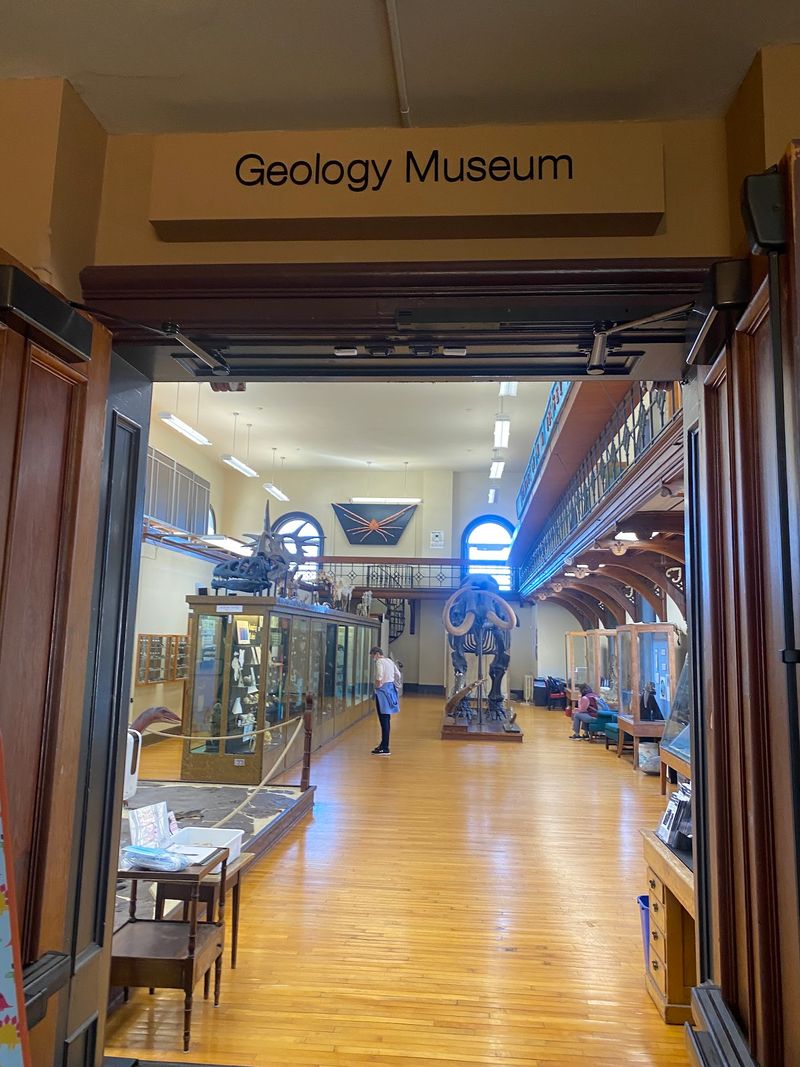
Once inside, the layout is refreshingly simple. One large, open room fills the main level, with a second-floor mezzanine wrapping above it.
That design lets you see much of the collection from almost anywhere. Look up from a fossil case and you’ll spot mineral displays waiting on the balcony.
Some displays feel classic rather than flashy. Longtime visitors note the space has a timeless, unchanged character, which can feel charming or nostalgic depending on your taste.
Honestly, that vintage atmosphere suits a geology museum. Rocks don’t exactly rush, and neither should you.
Take a moment to notice how the old building frames the specimens. It’s a fitting stage for millions of years of Earth history.
The Mastodon That Steals the Main Floor
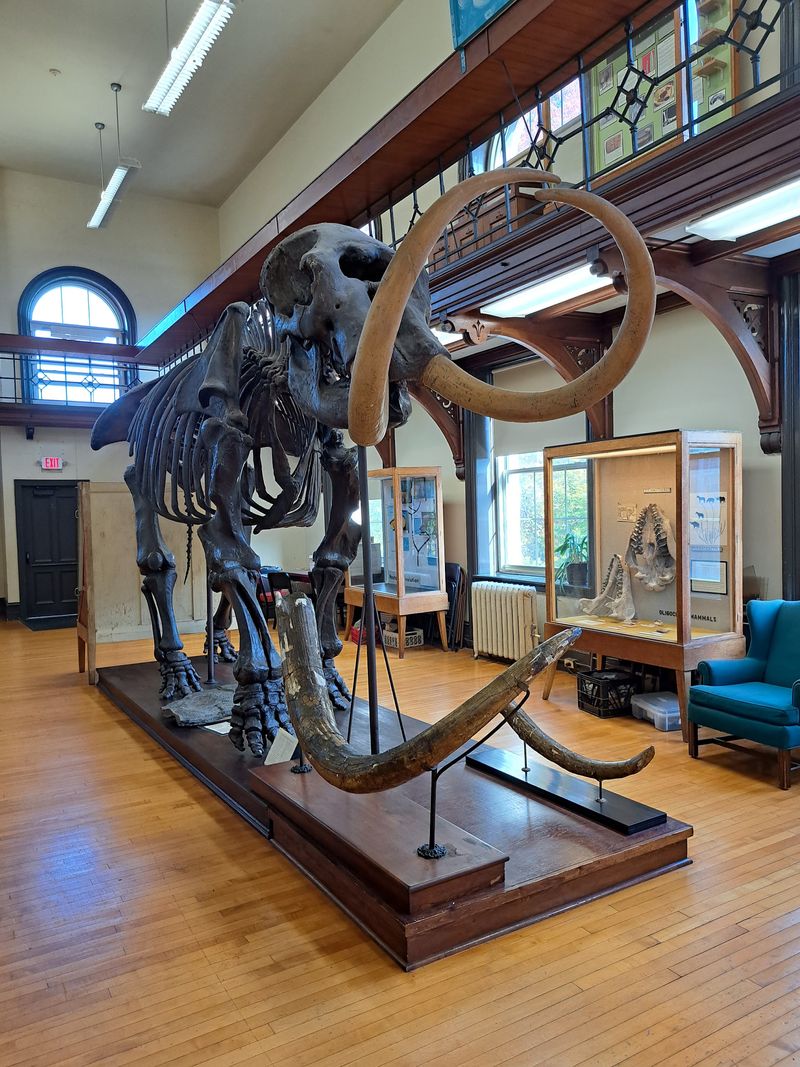
Big bones get attention fast. The mastodon skeleton is one of the museum’s best-known highlights, and it anchors the main level.
Mastodons were ancient relatives of elephants that once roamed North America. Seeing one up close gives kids a real sense of scale that no textbook manages.
The skeleton isn’t huge compared to a full-grown elephant. Still, it carries plenty of wow factor in a room this size.
Around it, fossil cases cover the main floor. You’ll see ancient plants, marine creatures, and prehistoric mammals arranged for close viewing.
A saber-tooth cat skull is part of the mix too. Skulls in general show up throughout, which younger visitors tend to love.
Many specimens connect directly to New Jersey. That local angle makes the fossils feel personal, like a peek at what lived under your own backyard.
Slow down here and read the exhibit cards. Rushing through might take ten minutes, but careful reading turns it into a much richer visit.
Good luck walking past those massive tusk sockets without stopping. They practically demand a closer look.
Dinosaur Fossils for the Prehistoric Fans
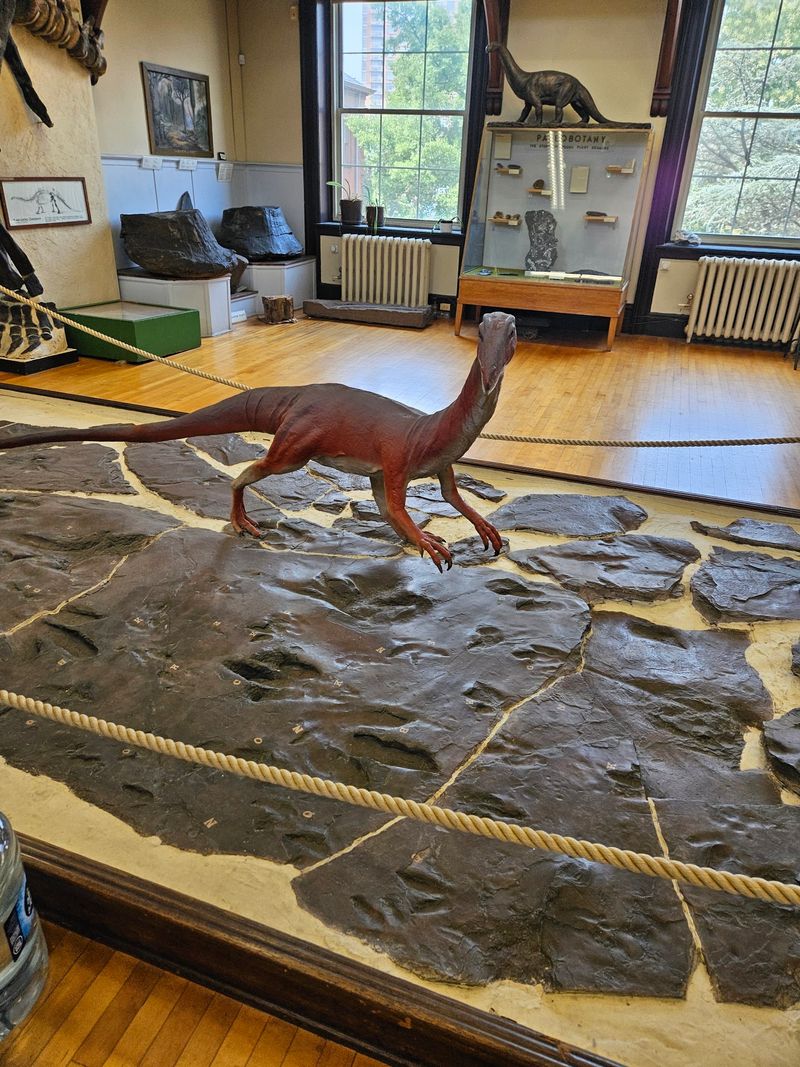
Ask any seven-year-old what belongs in a fossil museum, and dinosaurs top the list. The museum doesn’t disappoint on that front.
Dinosaur fossils, skeletal reconstructions, and casts appear among the displays. They help visitors picture creatures that walked the Earth long before mastodons arrived.
These exhibits aren’t the size of giant city museum halls. They’re compact, approachable, and easy to examine without craning your neck.
That closeness is a quiet advantage. Kids can study teeth, claws, and bone shapes at nearly eye level.
New Jersey has its own dinosaur history, which adds local flavor to the experience. Fossils tied to the state show up throughout the collection.
Pair the dinosaur cases with the nearby marine fossils for a fun comparison. Shells and sea creatures reveal how different ancient New Jersey once looked.
Parents can turn the visit into a mini lesson on timelines. Which came first, the dinosaurs or the mastodon?
Answering that question together makes the cases far more memorable. And nobody has to buy a ticket to get the conversation started.
An Egyptian Mummy in a Rock Museum, Somehow
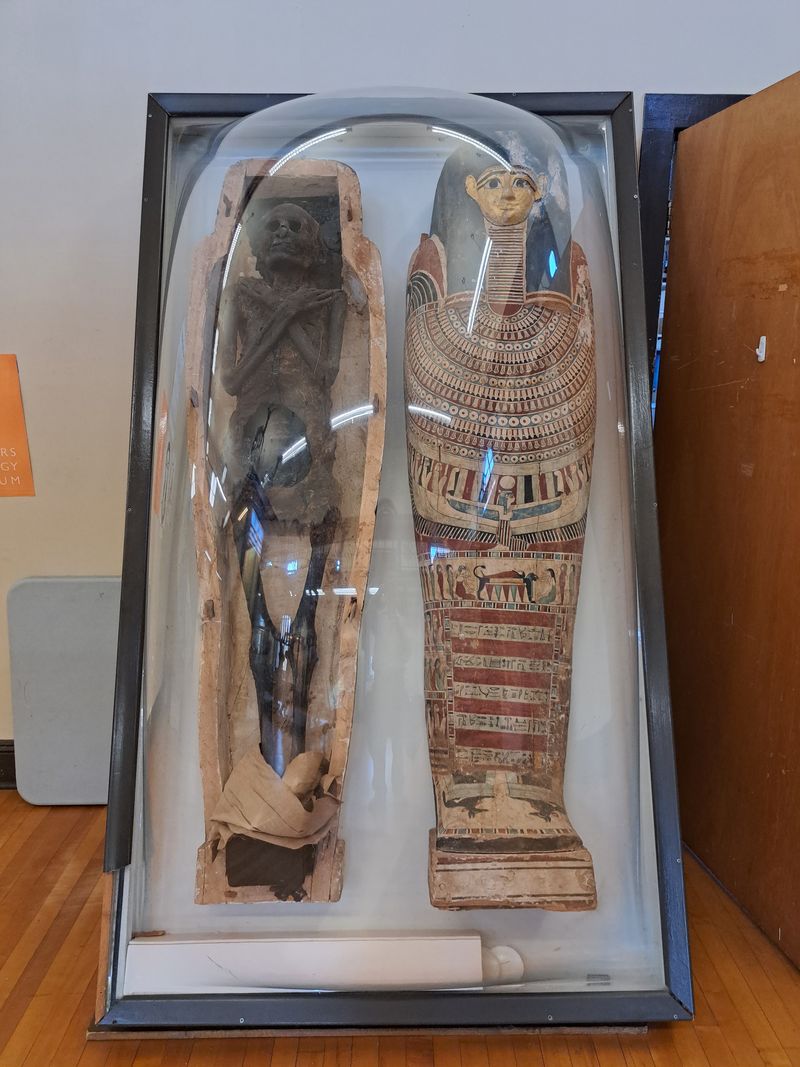
Wait, a mummy at a geology museum? Yes, and it’s one of the most talked-about pieces in the building.
The Egyptian mummy sits alongside Ancient Egyptian artifacts. It’s an unexpected twist that makes the collection feel like a treasure chest.
Plenty of people arrive for fossils and leave talking about the mummy. That surprise is part of the fun.
The display gives visitors a rare local chance to see an artifact from ancient Egypt. You don’t need to travel far to stand near something thousands of years old.
Kids often find the mummy fascinating rather than scary. It sparks questions about history, burial customs, and how ancient people lived.
Native American tools and other human artifacts appear in the collection as well. Together, they stretch the museum beyond pure geology into human history.
That variety keeps the visit lively. Just when you think you’ve figured out the theme, another era pops up.
Honestly, the mummy might be the best argument for the museum’s charm. Small building, big surprises, and absolutely no entry fee.
Mineral Rows That Sparkle Across the Mezzanine
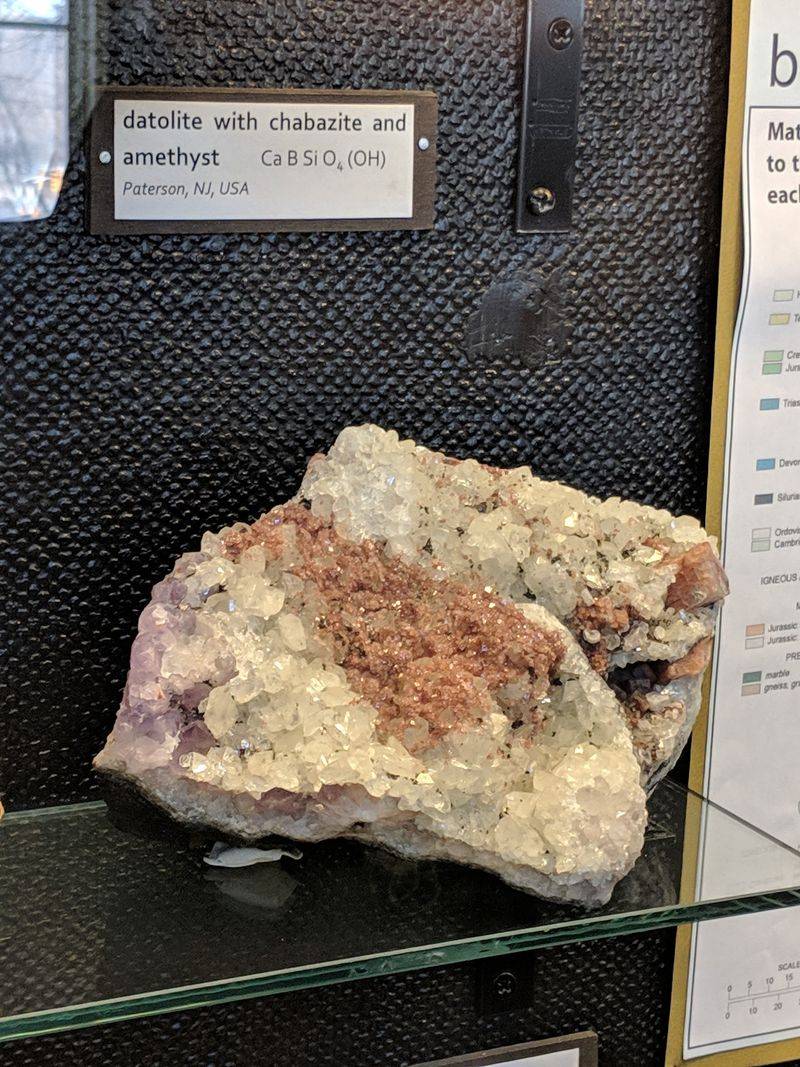
Upstairs is where the shine happens. The second-floor mezzanine holds a large mineral and gemstone collection from around the world.
The samples are small in size but numerous. That means lots of colors, crystal shapes, and textures to compare case after case.
New Jersey minerals get special attention here. The state has a strong mineral history, and the museum highlights local specimens with pride.
One favorite display shows how various minerals end up in everyday products. Spotting a bag of cat litter in a museum case is unexpectedly delightful.
Little touches like that make geology click for kids. Suddenly rocks aren’t just pretty, they’re useful.
Meteorites appear in the collection too. Seeing a rock that traveled from space is a solid reason to linger.
The balcony view also offers a fresh angle on the main floor below. Look down and the mastodon feels like a centerpiece in a giant display case.
Bring patience for this level. The best finds reward visitors who actually stop and read.
A Back Room Where the Rocks Glow
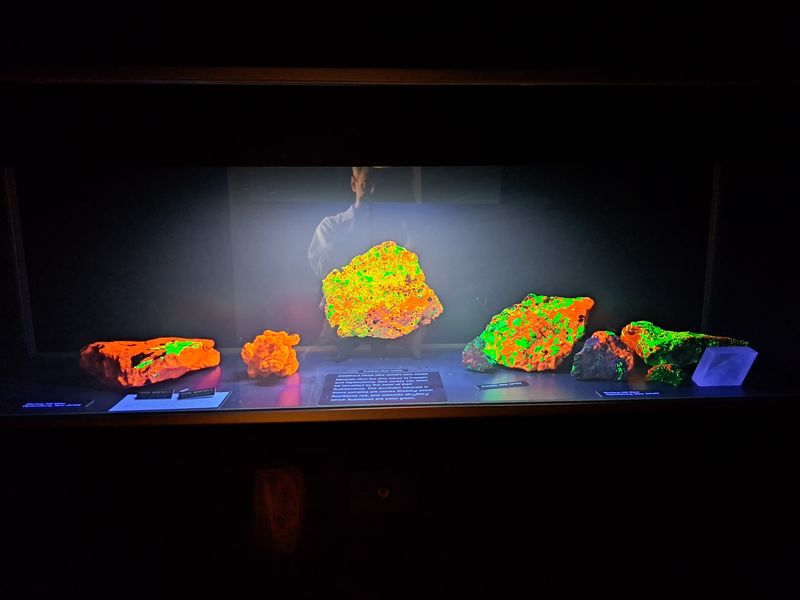
Lights off, colors on. A small room in the back showcases fluorescent minerals, including franklinite.
Under special lighting, these minerals glow in vivid shades. It feels a little like a science fair met a night sky.
Franklinite has strong New Jersey roots. The mineral is closely linked to the state’s famous zinc mining region in Sussex County.
That connection gives the glowing display extra meaning. You’re looking at a slice of New Jersey’s mineral fame, not just a light show.
Kids usually react fast in this room. Adults do too, if we’re being honest.
The space is small, so take turns and enjoy the moment. A few minutes of quiet looking reveals subtle color differences.
Fluorescent minerals regularly rank among visitor favorites at the museum. It’s easy to understand why.
Save this room for the end if you can. It makes a bright finale before heading back out into daylight.
Scavenger Hunts and a Shark Tooth Reward
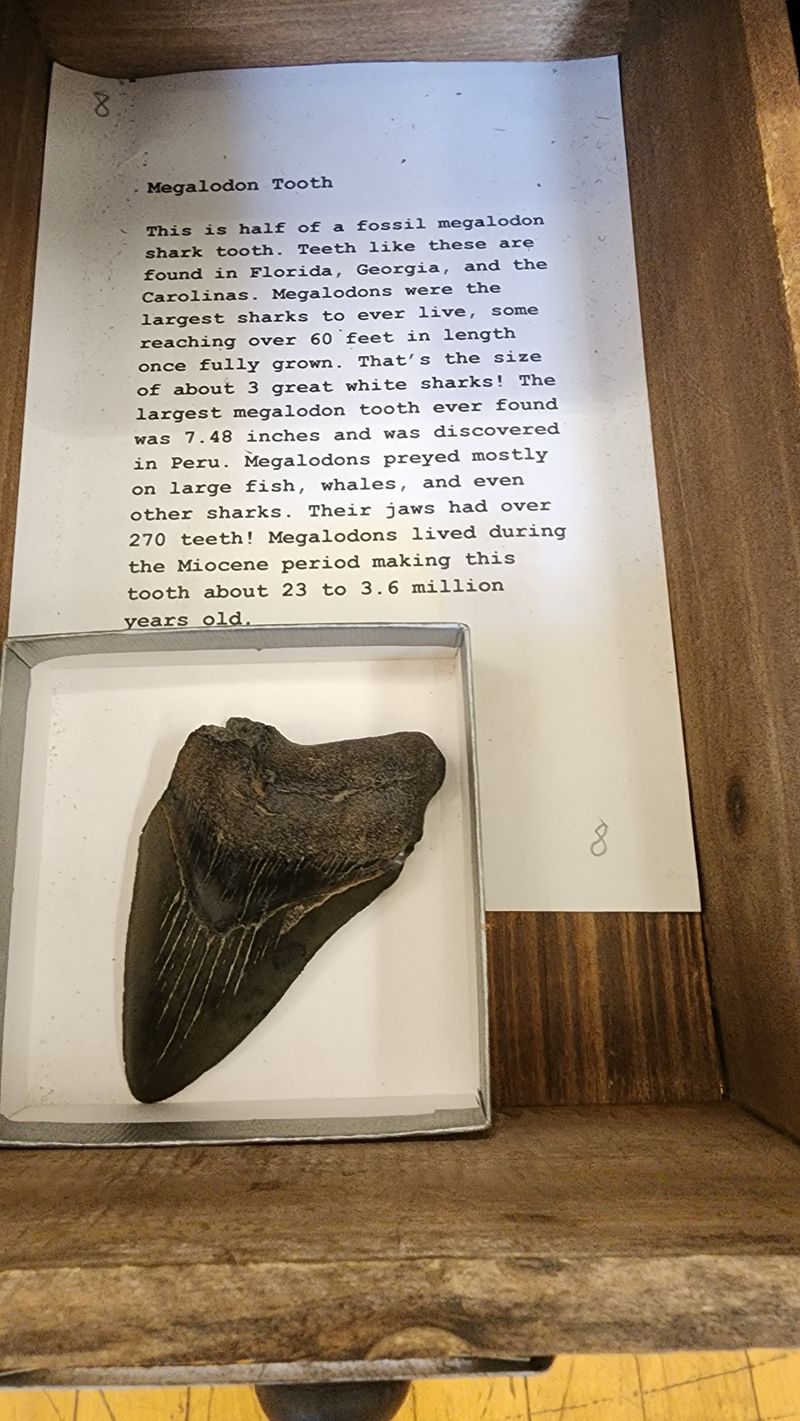
Kids love a mission. The museum hands young visitors a scavenger hunt sheet that turns browsing into a game.
Finish the hunt, and children can earn a shark tooth. That’s a pretty irresistible prize for any budding fossil hunter.
The hunt nudges kids to look closely at displays. They end up noticing details adults might skip entirely.
Quizzes and activities help keep younger visitors engaged. A big ferromagnetic rock has also charmed even toddlers.
Plan around 30 to 60 minutes for young children. The compact layout keeps little legs from tiring out too quickly.
It’s also easy to keep an eye on everyone. One open room with a mezzanine means fewer worries about wandering off.
Group trips work well here too. Staff have organized school and group visits with care.
For parents, the best part might be the price tag. A free outing that teaches science and ends with a shark tooth feels like a small win.
Who Will Love an Hour Among the Fossils
Families with young kids are a natural fit. The museum’s size makes for a stress-free visit without endless corridors.
Science-minded adults find plenty to enjoy too. Reading exhibit cards and studying minerals rewards careful attention.
Students drop in between classes. Being on campus makes it an easy break from lectures.
Day-trippers who enjoy small museums should add it to the list. It packs a surprising amount into one building.
Visitors expecting massive halls should adjust expectations. This is a compact collection with personality rather than a sprawling attraction.
Budget about an hour for a relaxed look. Fast walkers might finish quickly, but slower explorers get more out of every case.
The space can feel warm in summer. Dressing light during hot months is a sensible idea.
Quiet moments are common, though crowds vary. Either way, the atmosphere stays easygoing and curious.
For anyone who loves discovery, it’s a satisfying stop. A little effort brings a lot of reward.
Hours, Parking, and Finding the Front Door
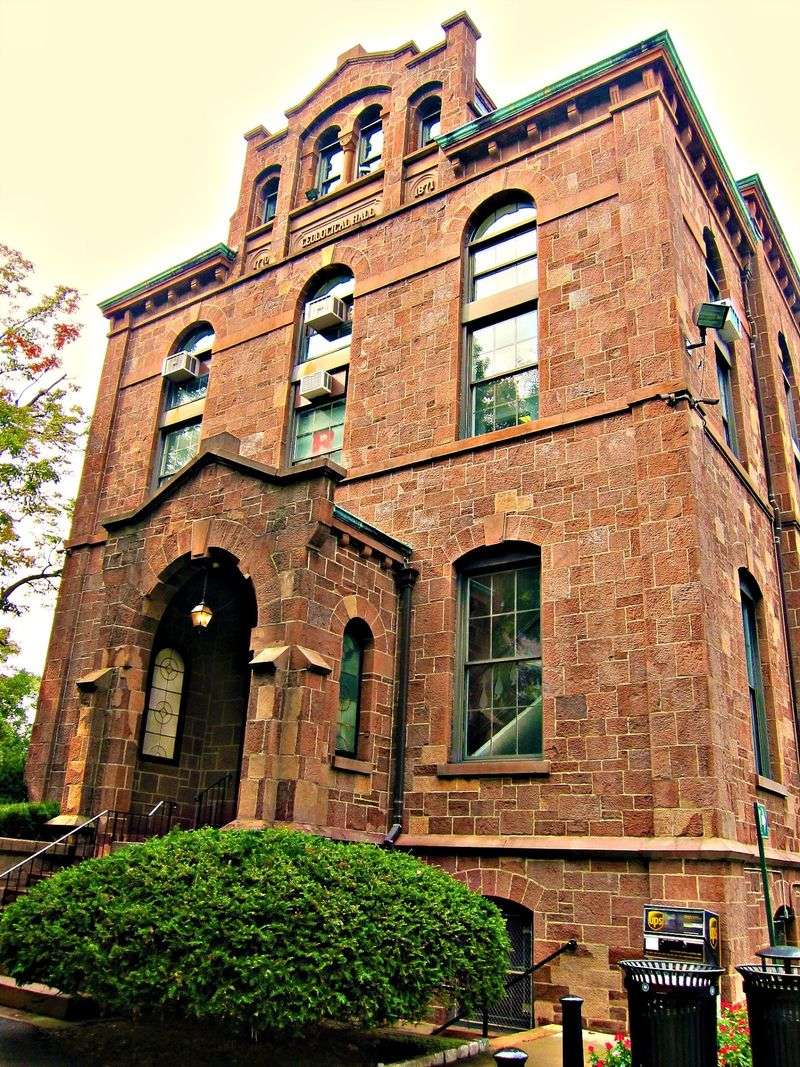
Getting there takes a little planning. Rutgers Geology Museum is located at 85 Somerset St, New Brunswick, NJ 08901.
It sits on the College Avenue side of the Rutgers campus. The area is busy, so finding the right building can be tricky the first time.
Look up a photo of the exterior before you go. That simple step saves circling around campus.
Parking can also be a challenge. Research nearby parking options ahead of time to avoid surprises.
Hours run Tuesday through Friday, 10 AM to 4 PM. The museum is closed Saturday, Sunday, and Monday.
Admission is free. Visitors sign in, and donations are appreciated to support the collection.
Remember those stairs at the entrance. Plan accordingly if anyone in your group has limited mobility.
Nearby, the College Avenue area offers a lawn, outdoor seating, and food options. Kids can run around the quad after their fossil adventure.
A little prep turns this into an easy New Jersey outing. Then the fun part is all inside.
A Small Stop That Earns a Big Spot on Your List
Some outings cost a fortune and leave you tired. This one costs nothing and leaves you curious.
Rutgers Geology Museum blends fossils, minerals, a mastodon, and a mummy into one charming space. It’s an unexpected mix that keeps surprising you.
The 1872 building adds old-school character. The glowing mineral room adds pure wow.
For kids, the scavenger hunt and shark tooth reward seal the deal. For adults, the New Jersey minerals and fossils tell a story about home.
It isn’t flashy or huge. That’s exactly why it works so well for a short, relaxed visit.
Bring a little patience and read the cards. The details turn ordinary rocks into real stories.
Pair it with a stroll around the College Avenue campus. You’ll have a full, easy afternoon without spending on tickets.
New Jersey has plenty of surprises, and this museum is a great example. Plan a weekday visit and see which display wins you over.
My guess? The glowing rocks might just steal the show.
Share this story