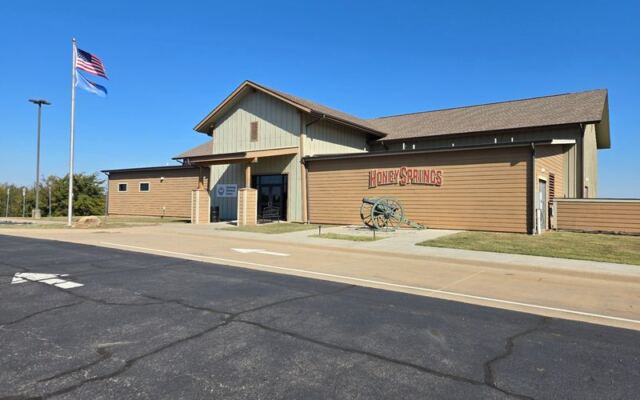
I almost drove right past it, a quiet patch of Oklahoma prairie with a modest building and a few trails slipping into the trees. Then I learned that the largest Civil War battle in the state happened right here, and suddenly the grass looked different.
Soldiers from very different backgrounds met on this ground, and their story still surprises people today. If you love history that hides in plain sight, this stop deserves a spot on your next road trip.
A Quiet Field Near Checotah
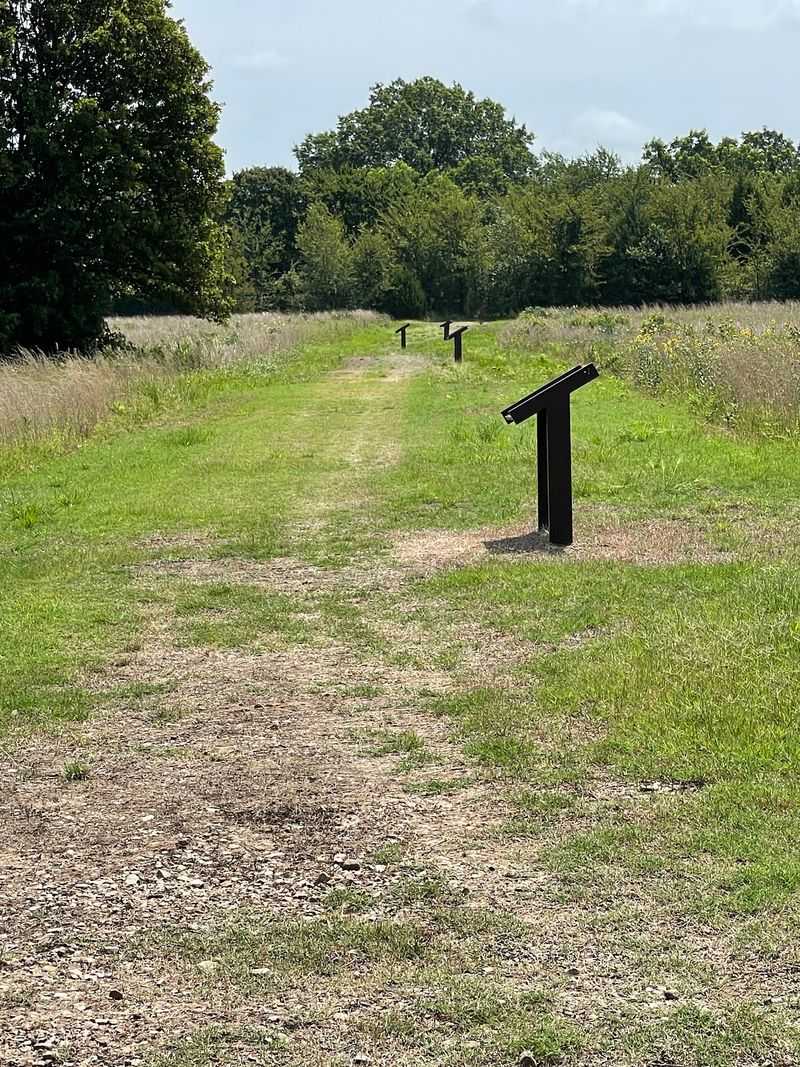
Picture rolling grassland, scattered trees, and a creek winding through eastern Oklahoma. That calm scene near Checotah hides one of the most important chapters in the state’s past.
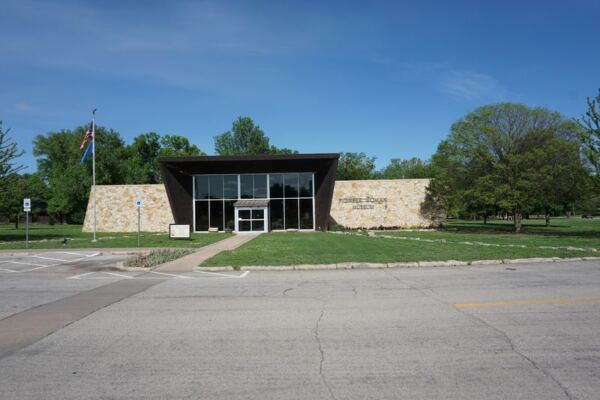
Honey Springs Battlefield sits at 423159 E 1030 Rd, and it is run by the Oklahoma Historical Society. The site includes a visitor center with a small museum, a theater, and a research library, plus trails that wander across the actual ground where the fighting took place.
Visitors who have toured famous battlefields in other states often say this one feels different. Much of the land looks nearly untouched, with no paved roads cutting across it.
You can easily imagine how two armies stumbled into each other in what was then the middle of nowhere.
Plenty of travelers call it a little gem, the kind of place you find almost by accident and then tell everyone about. It does not shout for attention from the highway.
Instead, it rewards curious people who take the time to slow down and look around.
So what exactly happened here? The story starts in the summer of 1863, when the war reached far beyond the big eastern battlefields and into Indian Territory, the land we now call Oklahoma.
The Day the War Came to Indian Territory
Long before Oklahoma became a state, it was Indian Territory, and the Civil War did not leave it alone. In July 1863, Union and Confederate forces clashed near a stop called Honey Springs.
Confederate troops had set up camp in the area, and Union soldiers marched in to attack. Visitors walking the grounds today can see where the Confederate lines were placed and the direction the Union attack came from.
Elk Creek, which crosses the site, played a part in how the day unfolded.
Compared with giant clashes like Gettysburg, this was a smaller engagement. Even so, it turned into a very important victory for the Union.
Visitors and staff point out that the win stopped the Southern army from controlling Kansas and what is now Oklahoma.
That outcome shaped the rest of the war in the region. Supply routes, territory, and the safety of nearby communities all hung on what happened during those hours on the prairie.
Here is the twist that makes this place unforgettable: the soldiers on both sides were not who many people expect. The armies at Honey Springs were some of the most diverse of the entire war, and that fact sets this battle apart.
Soldiers From Many Walks of Life
Ask most people to picture a Civil War soldier, and they imagine one kind of face. Honey Springs flips that picture upside down.
American Indian soldiers fought here, along with Black troops and white soldiers. One visitor shared a striking detail: Black troops fought at Honey Springs in larger numbers than in the well-known South Carolina fighting that often gets the spotlight in history books.
The visitor center makes a point of sharing these perspectives. Guests mention that the film includes viewpoints from the Black soldiers and the Indian soldiers, not just the generals.
Several people say this approach left them thinking about the battle long after they drove home.
That mix of voices is what gives the site its depth. You are not just learning which side won.
You are learning how families, nations, and communities were pulled into a conflict that reached deep into their own land.
For students, this can be a powerful lesson. The war was not a far-off event for the people of Indian Territory.
It came right to their doorsteps, and their choices shaped what came next for the region and for Oklahoma’s future.
Inside the Visitor Center
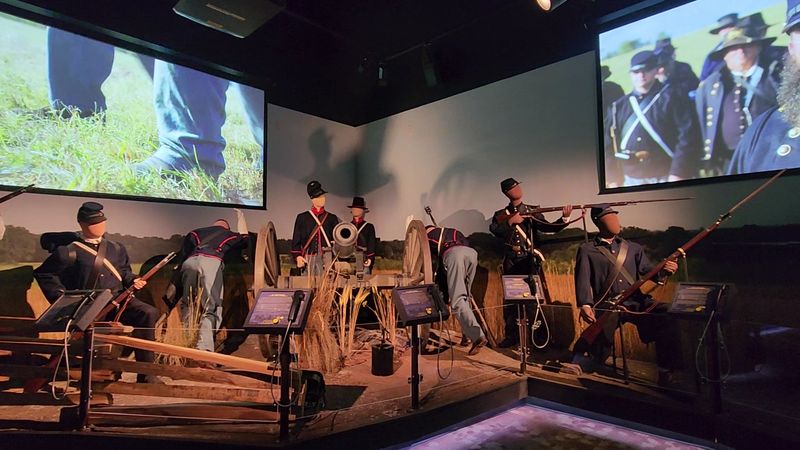
Step through the doors and the first surprise is how much fits inside. Guests regularly describe the visitor center as clean, well kept, and packed with more history than they expected.
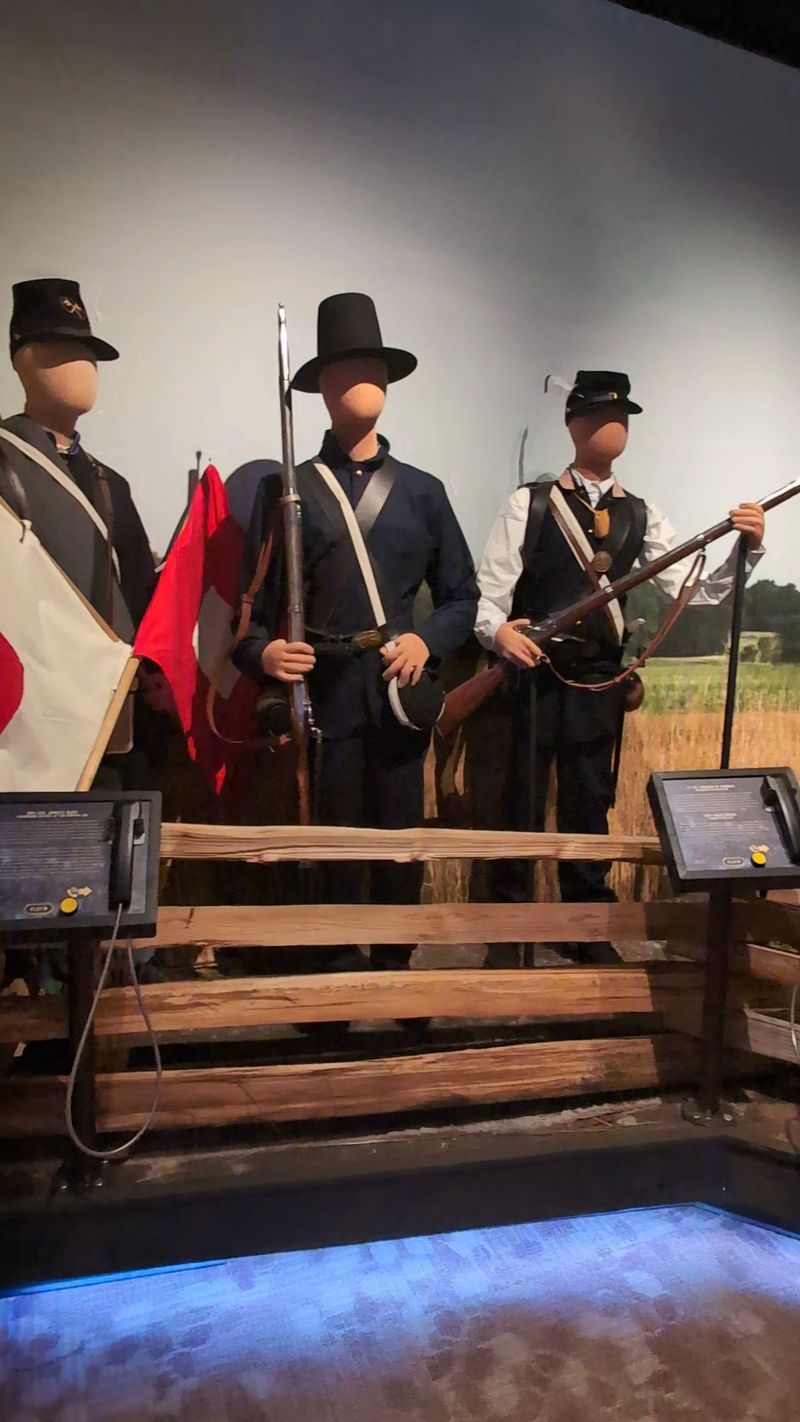
Life sized mannequins stand dressed in Union and Confederate outfits, with artillery right on display beside them. Other rooms hold additional exhibits, and some visitors admit there was almost too much to take in during one visit.
Words like informative and excellent pop up again and again when people describe the displays.
A few folks call it a small museum, and that is fair. It is not a giant complex that takes all day.
Still, the size works in its favor, since you can study each case without feeling rushed or lost.
Many travelers recommend starting your trip here before heading outdoors. The exhibits give you a clear sense of the people, the gear, and the layout of the fight.
Once you have that background, the empty fields outside suddenly start to make sense.
Fun fact for the curious: the exhibits are coordinated with the short film in the theater, so the story you watch on screen connects directly to what you see in the cases around you.
A Short Film With Three Points of View
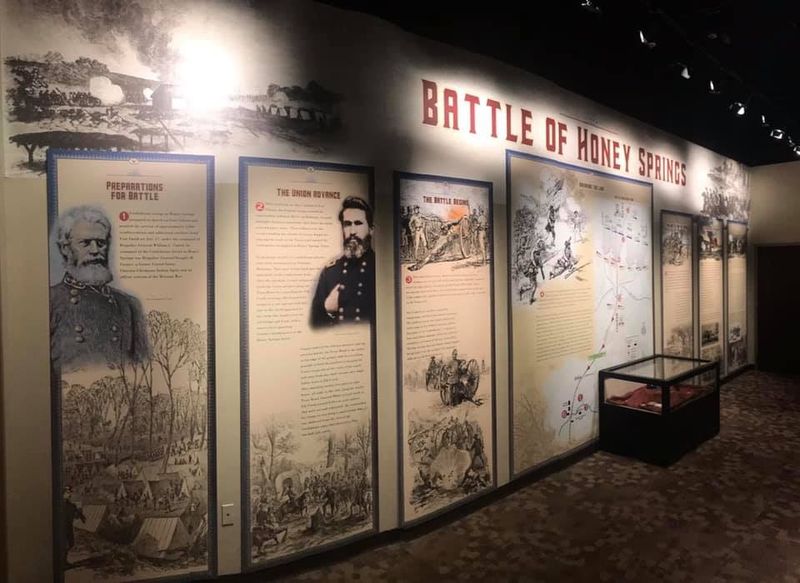
Grab a seat, because the theater might be the highlight of your visit. Nearly every guest who mentions the film says it is worth the time.
The movie runs about 12 to 15 minutes, depending on who you ask. It walks you through how the battle unfolded, step by step.
Two generals narrate the story, one from each side, which gives the film a back-and-forth feel that keeps it lively.
What really grabs people is the extra perspective. The film also shares the experience of Black soldiers and Indian soldiers, so you hear the story from more than one angle.
Visitors describe it as insightful, educational, and very thought provoking.
Families appreciate that it is short enough for younger viewers to sit through. Kids in middle school will likely follow along easily, and the visuals help bring the action to life without getting too heavy.
A smart plan is to watch the film first, then explore the exhibits and trails. Several guests say this order made everything click.
You will walk outside already knowing where the lines stood and why the fight mattered, which turns a simple stroll into a real journey back in time.
Research Corner and Helpful Historians
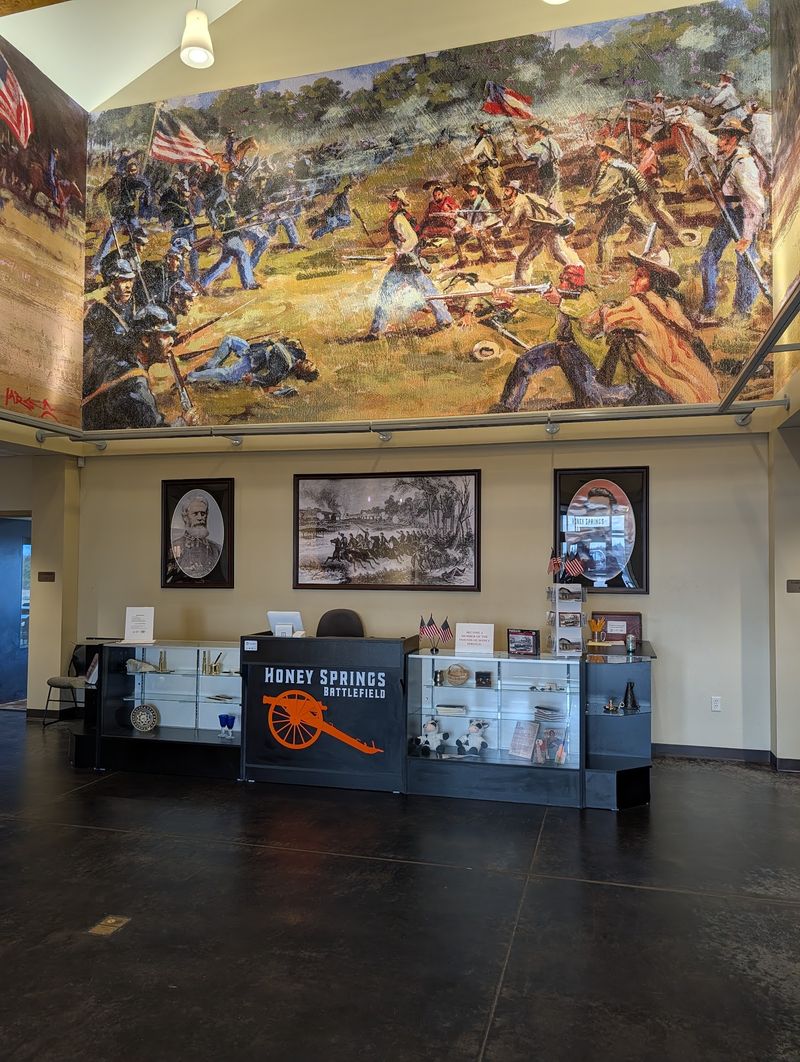
Got a question nobody else can answer? The staff at Honey Springs might be your best bet.
Friendly staff is the most talked-about topic among visitors, and it is easy to see why. People describe the historians as open and happy to answer questions, explaining the battle in ways that feel more like a conversation than a lecture.
Several guests left saying they learned history they never knew before.
Tucked inside the visitor center is a neat little library. Researchers, students, and history fans can spend time digging into the battle and the region.
One visiting author even dropped off a copy of his own book about the road to Honey Springs, which shows how much the site means to people who study it.
The team also stays engaged with guests after they leave. The site director regularly replies to feedback and shares updates about projects on the grounds.
That kind of care makes the place feel personal rather than distant.
If you are planning a school report, a family history search, or just want to satisfy your curiosity, bring a notebook. A chat with the staff could turn a quick stop into a much richer afternoon.
Trails Across Hallowed Ground
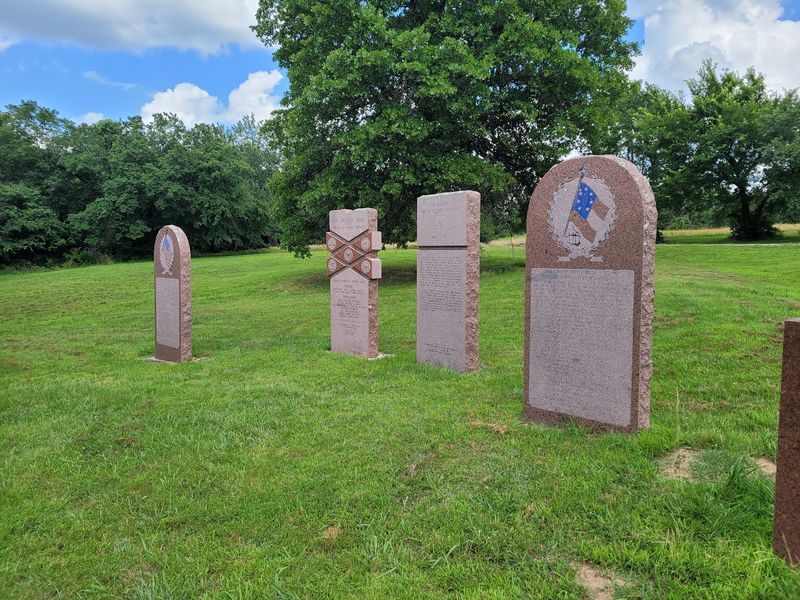
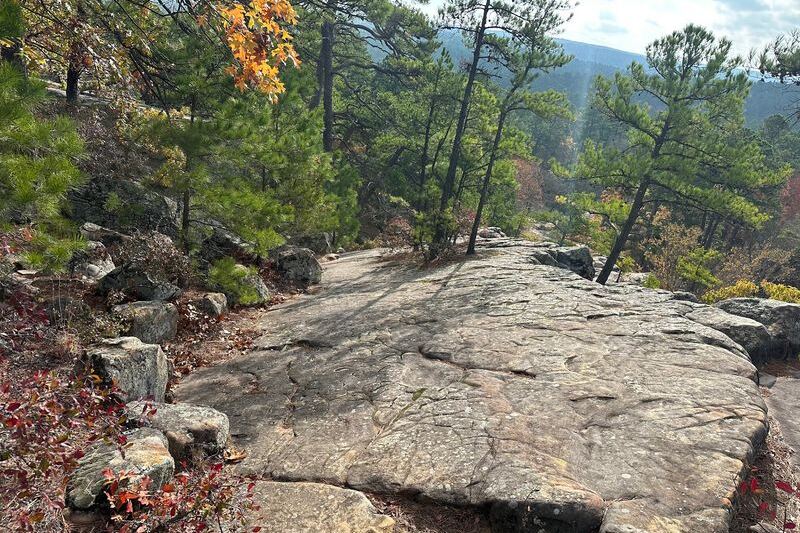
Lace up your shoes and head outside, where the real ground waits. The battlefield trails let you walk the same land where soldiers once lined up and moved forward.
Visitors mention plenty of walking trails to choose from. Along the way you will find granite memorials, which guests say are in good shape.
Elk Creek is a favorite stop, and more than one person called it pretty neat.
Many guests describe a quiet, respectful feeling out there. One visitor said it felt like hallowed ground, and that sense of stillness stays with a lot of people.
Without busy roads or crowds, it is easy to imagine the camps, horses, and soldiers who once filled these fields.
Staff have also been clearing underbrush north of the visitor center. The goal is to show a more realistic view of how the land looked when around 6,000 soldiers and their horses were camped there.
Visitors have noticed and appreciated the change.
Bring your imagination along with your water bottle. The trails do not hand you every answer, but they let you stand in the story.
For many people, that moment is the most memorable part of the whole trip.
Signs, Restoration, and a Work in Progress
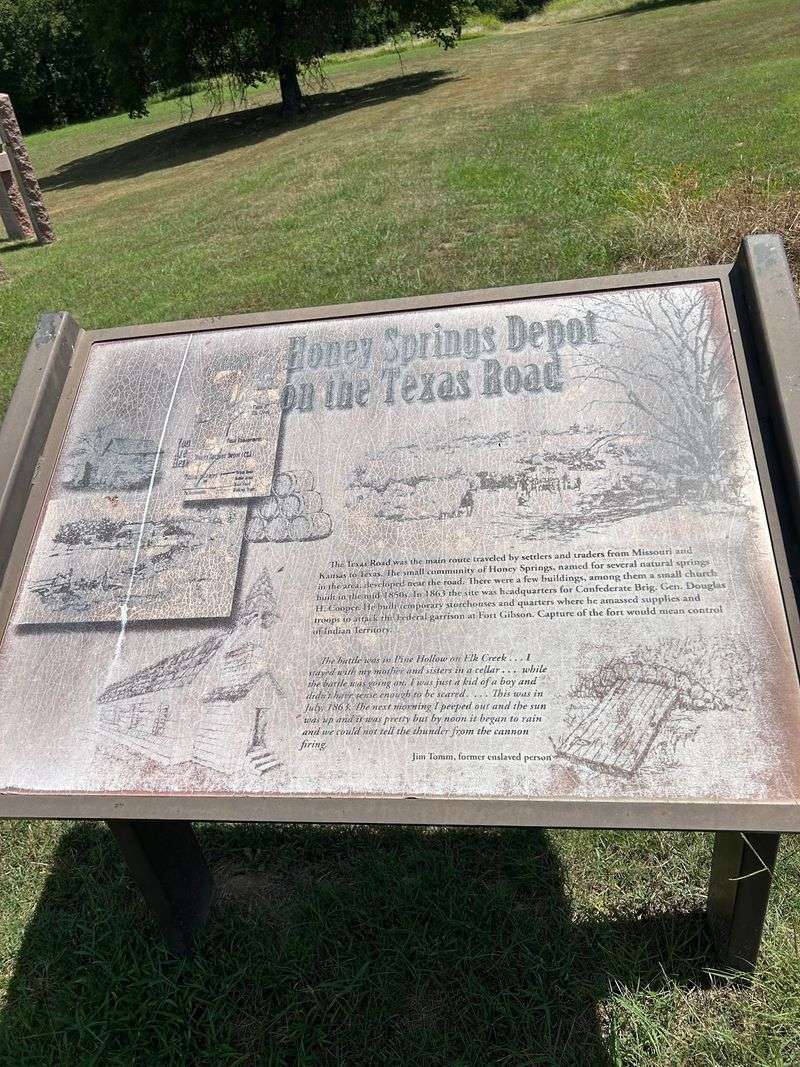
Honesty time: not everything on the trails is polished yet. Visitors frequently mention that many outdoor signs are faded, cracked, or hard to read after years in the hot Oklahoma sun.
Some guests also say it can be tricky to picture exactly where the armies clashed. Spots like Chimney Mountain come up in the story, but finding them on the ground takes some guessing.
A few history fans wish artillery positions were marked more clearly.
The good news is that changes are underway. The site director has shared that the team is updating and re-printing trail signs.
Larger restoration and maintenance projects are also in the early stages, and the full effort is expected to take a few years.
Visitors have suggested ideas too, like protective coverings for new signs and more outdoor displays showing camps and soldiers. It is clear that people care about this place and want to see it shine.
For now, a simple tip helps a lot. Learn the story inside the visitor center first, then head to the trails.
With the film and exhibits fresh in your mind, those weathered markers become much easier to understand, and the fields tell their own tale.
Reenactment Weekends Worth Planning Around
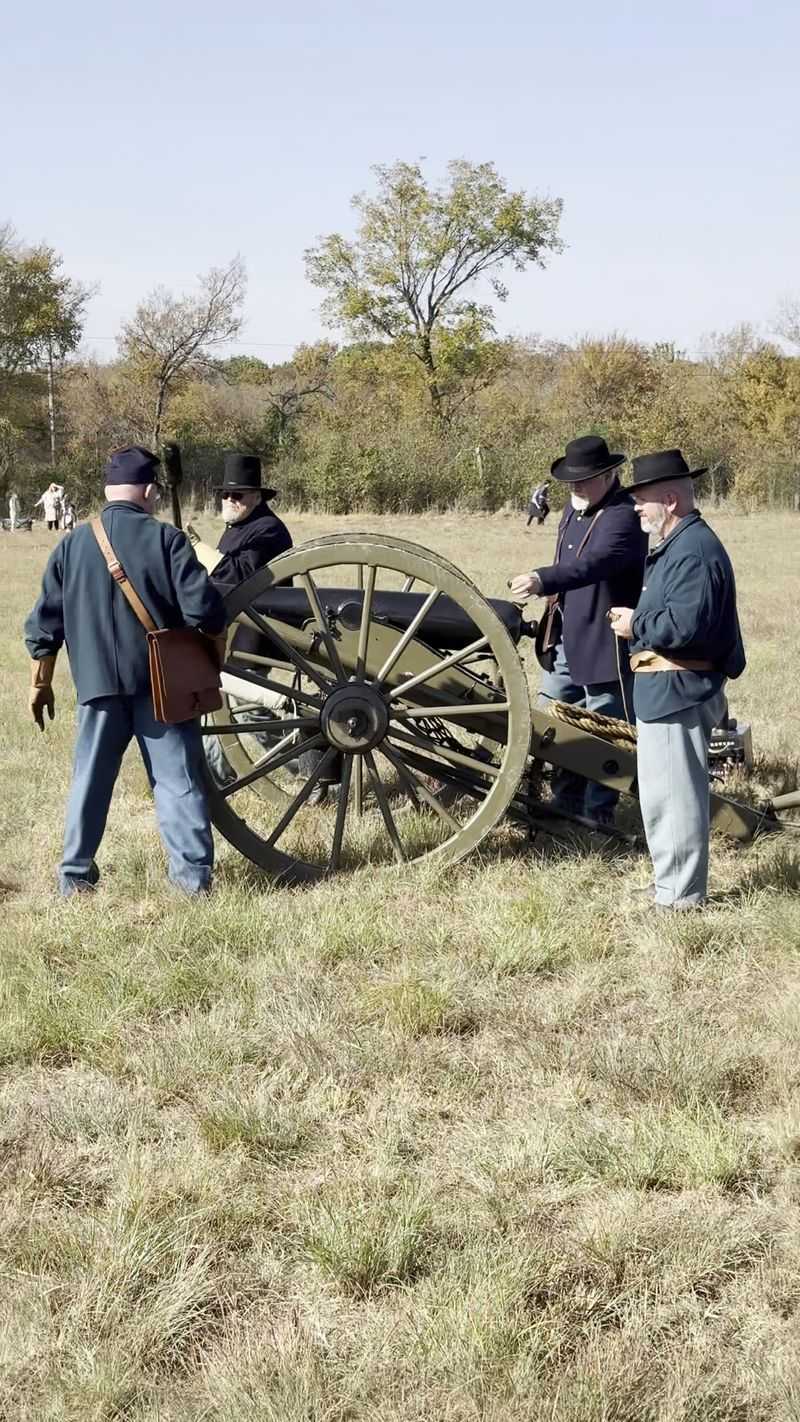
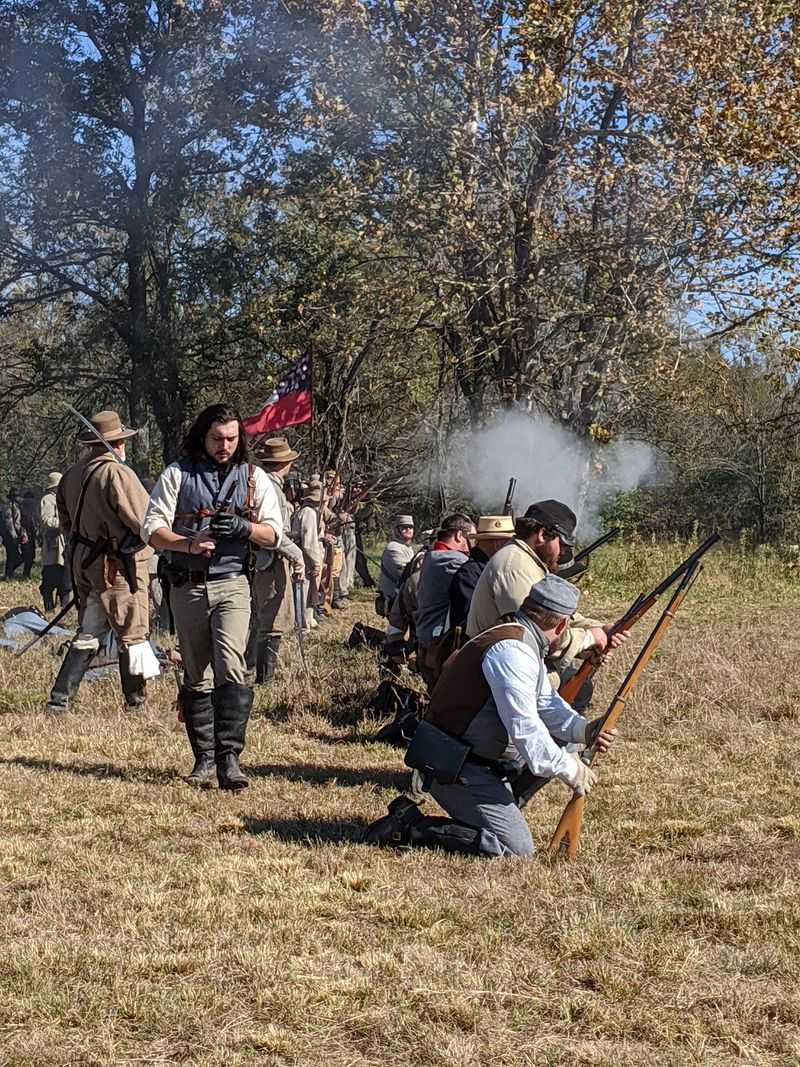
Boom! If cannons echoing across the prairie sound exciting, mark your calendar.
The Honey Springs reenactment is the most talked-about event at the site.
According to visitors, it happens every odd year, with recent events held in November. Guests call it phenomenal, fantastic, and a fun weekend.
Reenactors act out the battle while an announcer explains the action and the local history leading up to it.
After the fight, the fun keeps going. Reenactors have set up a campsite across a small bridge from the field, and visitors can wander through and ask questions.
People say the actors are great at sharing details, even when guests bring a whole pile of questions.
Vendors have offered goods and food, and portable restrooms have been available. One first-timer had a single urgent piece of advice: no matter what, get the root beer.
Another wished there had been even more vendors to browse.
The amount of work behind the event really shows. Organizers, volunteers, and reenactors all put serious effort into making it feel real.
For many families, it becomes a tradition worth returning to every couple of years, and it brings the history off the page in a way few places can.
Smart Packing for Reenactment Day
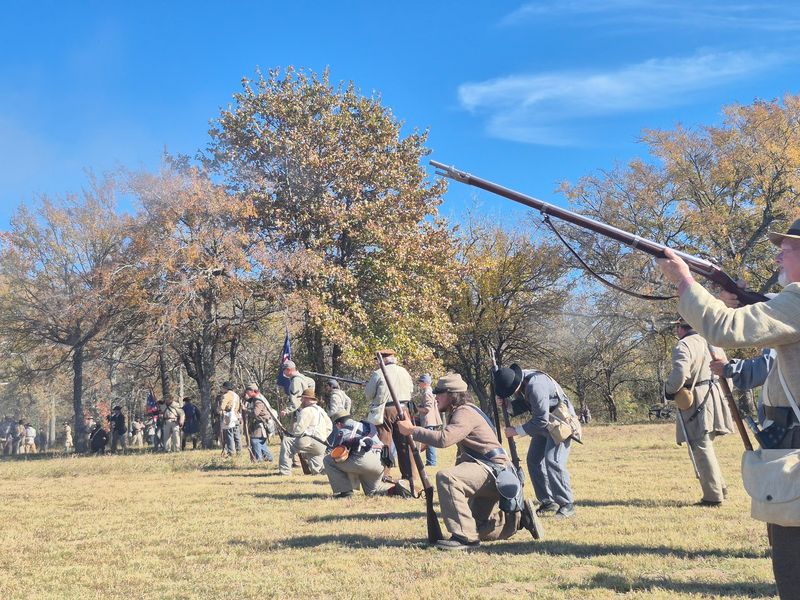
Show up prepared and the day gets a whole lot more comfortable. Past visitors have shared some handy tips worth stealing.
First, bring your own chairs or a blanket. You will be there a while, and seating is up to you.
Arriving about half an hour early helps you grab a good viewing spot before things kick off.
Parking has been in a pasture across the road from the battlefield. If it has rained recently, expect mud, so sturdy shoes are a smart choice.
Next, think about your ears. Guests warn that the cannons are VERY loud, and they recommend hearing protection for anyone sensitive to noise, especially kids.
A pair of earmuffs can turn a scary moment into an exciting one for little ones.
Bug spray belongs in your bag too, even on regular trail days. Some visitors ran into ticks while walking the battlefield paths, so a quick check afterward is a good habit.
Finally, save a little cash for vendors and that famous root beer. With a chair, earmuffs, bug spray, and patience, you will be ready to enjoy every minute of the action without a single complaint.
Hours, Admission, and Getting There
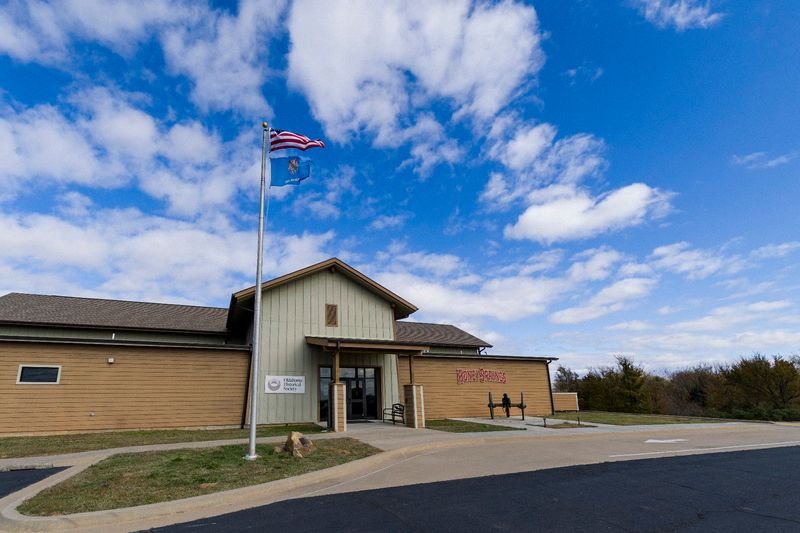
Timing matters here, so plan ahead. The visitor center is open Tuesday through Saturday from 9 am to 4:30 pm, and it is closed on Sunday and Monday.
Admission is friendly on the wallet. Visitors have reported $7 for adults, $5 for kids ages 6 to 12, and free entry for children 5 and under.
Prices can change, so it is a good idea to check before you go.
Getting there takes a little care. One visitor recommends using directions that include Highway 69 to stay on paved roads, since some routes send drivers down about four miles of dirt road.
The site has worked to make the visitor center easier to find and has updated its listed address.
Occasional closures do happen. The staff posts updates on the website, Facebook, and Instagram, and Facebook is described as the most current source for events and closures.
A quick look before leaving home can save you a wasted drive.
Questions? Call 918-617-7125 or visit okhistory.org/honeysprings.
With hours checked and the right route loaded, the trip is easy and fits nicely into a day of exploring eastern Oklahoma.
Who Will Love It and Why to Go
Some places dazzle with size, while others win you over with heart. Honey Springs belongs in the second group.
History lovers will appreciate the untouched land and the layered story of who fought here. Families get a short film, hands-on exhibits, and trails that make learning feel like an adventure.
Road-trippers can add it as one stop on a tour of Oklahoma historic sites, which is exactly how several visitors suggest enjoying it.
It is not perfect, and the staff would be the first to say so. Trail signs are still being improved, and restoration will take time.
Even so, visitors keep using words like gem, must-see, and so glad we found it.
The real magic is how much this quiet field teaches. You walk away knowing that the biggest Civil War battle in Oklahoma involved American Indian, Black, and white soldiers, and that its outcome shaped the future of the region.
So pack some bug spray, check the hours, and maybe aim for a reenactment year. Honey Springs may look simple from the road, but standing on that prairie, many visitors discover it is one of the most meaningful stops in the entire state.
Share this story