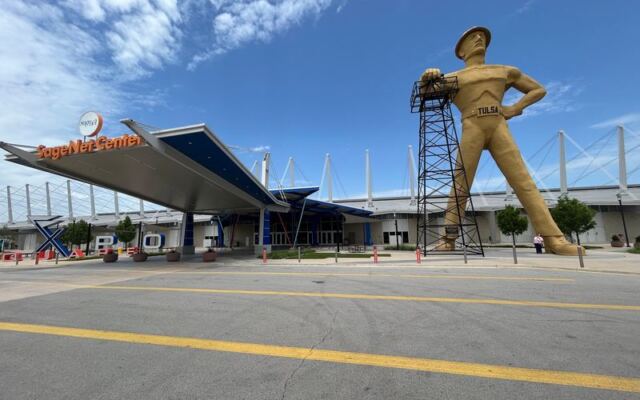
I almost drove right past him, the way so many people do on a busy Oklahoma afternoon. Then a giant gold figure filled my windshield, and my curiosity took the wheel.
I pulled over expecting a quick snapshot and a snow cone, but I left with a story about oil, ambition, and one very tall worker who refuses to be ignored. If you think you already know this landmark, there is a good chance you have only seen him at sixty miles per hour.
A Golden Giant on East 21st Street
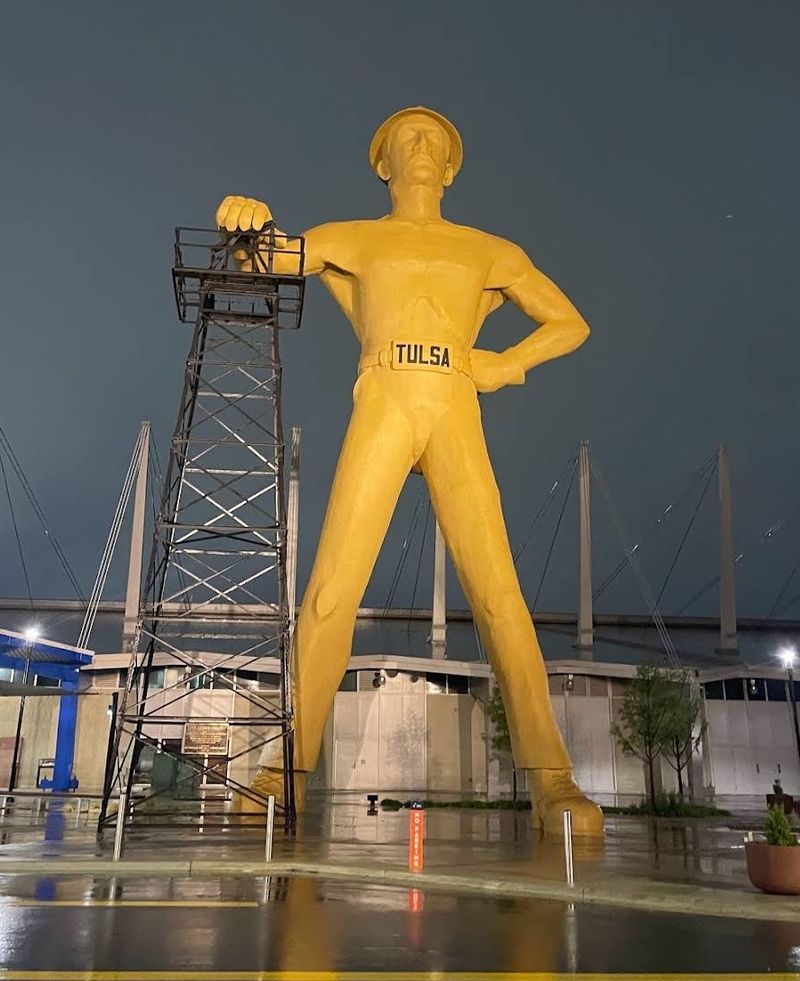
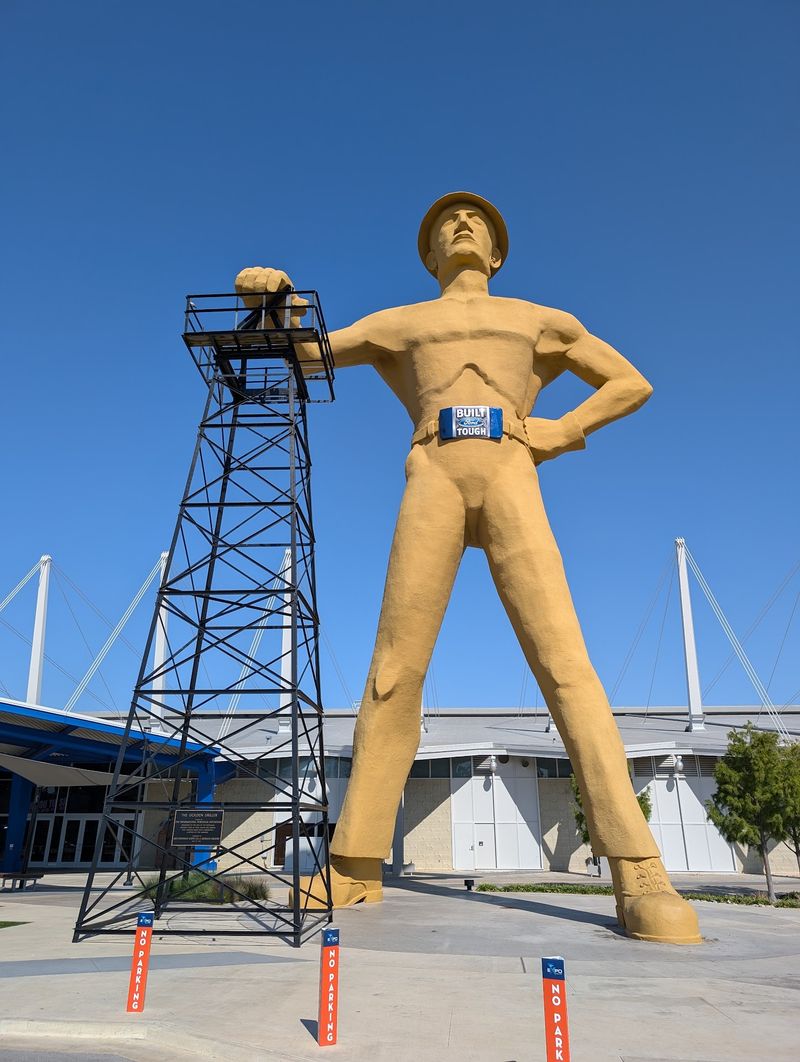
Picture a man taller than most buildings in the neighborhood, painted bright gold, with one hand resting casually on an oil derrick. That is the Golden Driller, and he stands at the Tulsa Expo Center at 4145 E 21st St in Tulsa, Oklahoma.
Officially, the site is listed as a historical landmark. The statue shows an oil driller in work clothes, posed like he is taking a short break from a long shift.
The derrick beside him helps sell the scene, linking the figure to the industry that shaped the city around him.
Plenty of locals admit they have passed him so many times that he barely registers anymore. One visitor shared that after years of driving by, finally pulling up close made them realize just how massive the statue really is.
That reaction pops up again and again.
He sits right beside the grounds that host fairs, car shows, and expos, so the Driller often acts as a giant welcome sign. Still, you do not need an event ticket to visit him.
He is simply there, every hour of every day, waiting for someone to look up and notice.
Born for the 1953 Petroleum Exposition
Back in the early 1950s, Tulsa wanted the world to know it meant business. According to local accounts, the Golden Driller was originally built for the 1953 International Petroleum Exposition, a major showcase for the oil industry.
Those were the days when Tulsa proudly carried the nickname Oil Capital of the World. A giant golden worker made a bold statement for visitors arriving from far away.
He was not a king or a general, but an everyday laborer, which says a lot about how the city saw itself.
Visitors often describe the statue as a symbol of grit, strength, and the blue-collar work ethic that helped build Tulsa. That framing feels right when you stand beneath him.
He looks less like a monument to wealth and more like a tribute to the people who did the hard, dirty work.
Family stories add even more color. One visitor mentioned a family legend that their grandfather helped paint the statue just in the nick of time.
Tales like that are part of local lore, passed down at kitchen tables, and they give the Driller a personal, homegrown feel that numbers alone never could.
Scale That Photos Never Capture
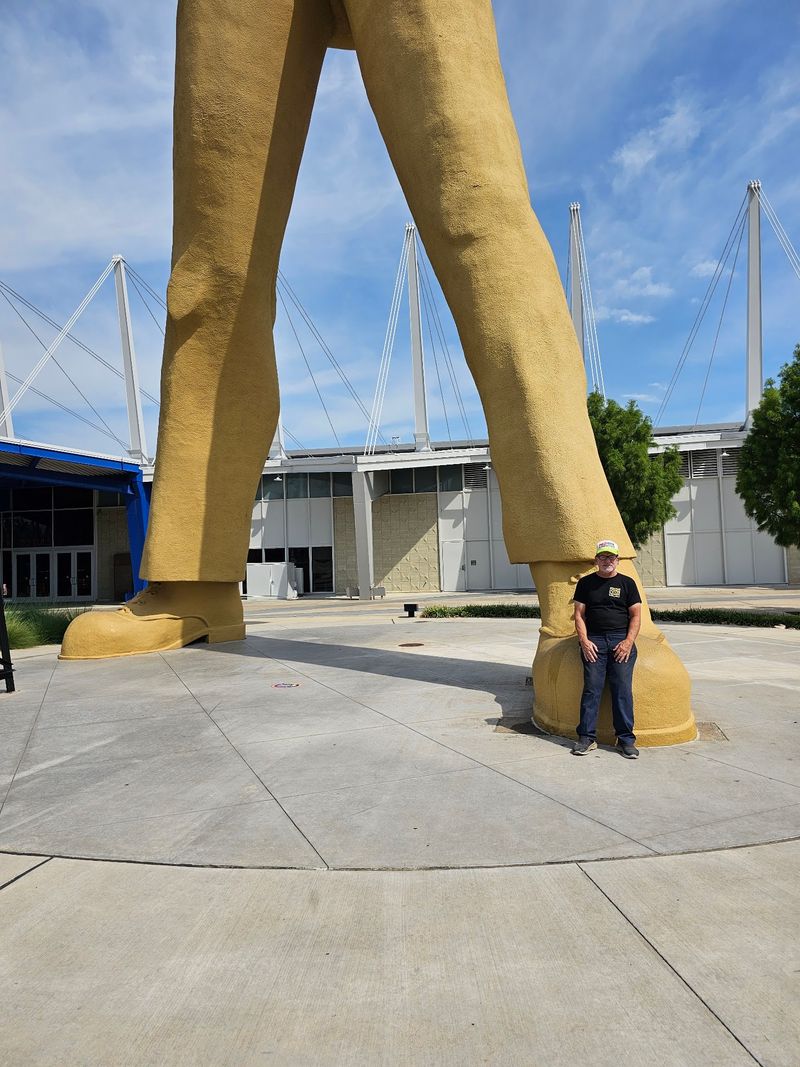
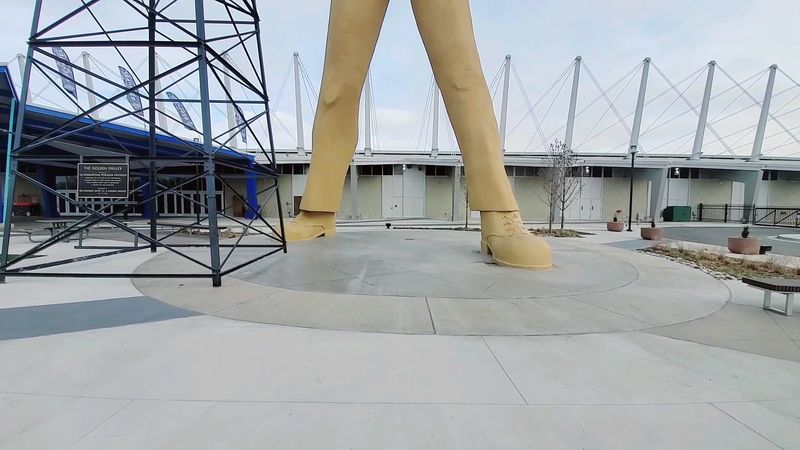
Boots taller than a grown person. Let that sink in for a second, because it is one of the details visitors mention most once they get close.
The official description puts the statue at about 75 feet, while some fans cite 76 feet. Either way, he is enormous.
Local accounts also claim he weighs over 40,000 pounds, which helps explain why he looks so firmly planted in Oklahoma soil.
Pictures online never quite prepare people for the real thing. Travelers often say they were surprised by the sheer size once they stepped out of the car.
Seen through a windshield, he looks like a fun roadside figure. Seen from his feet, he becomes something closer to a skyscraper with a personality.
One Route 66 traveler called him possibly the tallest giant they saw along the entire historic highway. That is quite a claim considering how many oversized figures line that road.
For the best sense of scale, stand right beside the boots and have someone snap a shot from a distance. Your friends back home will finally understand why you kept talking about this guy.
A wide lens helps squeeze in the whole figure.
The Derrick at His Side
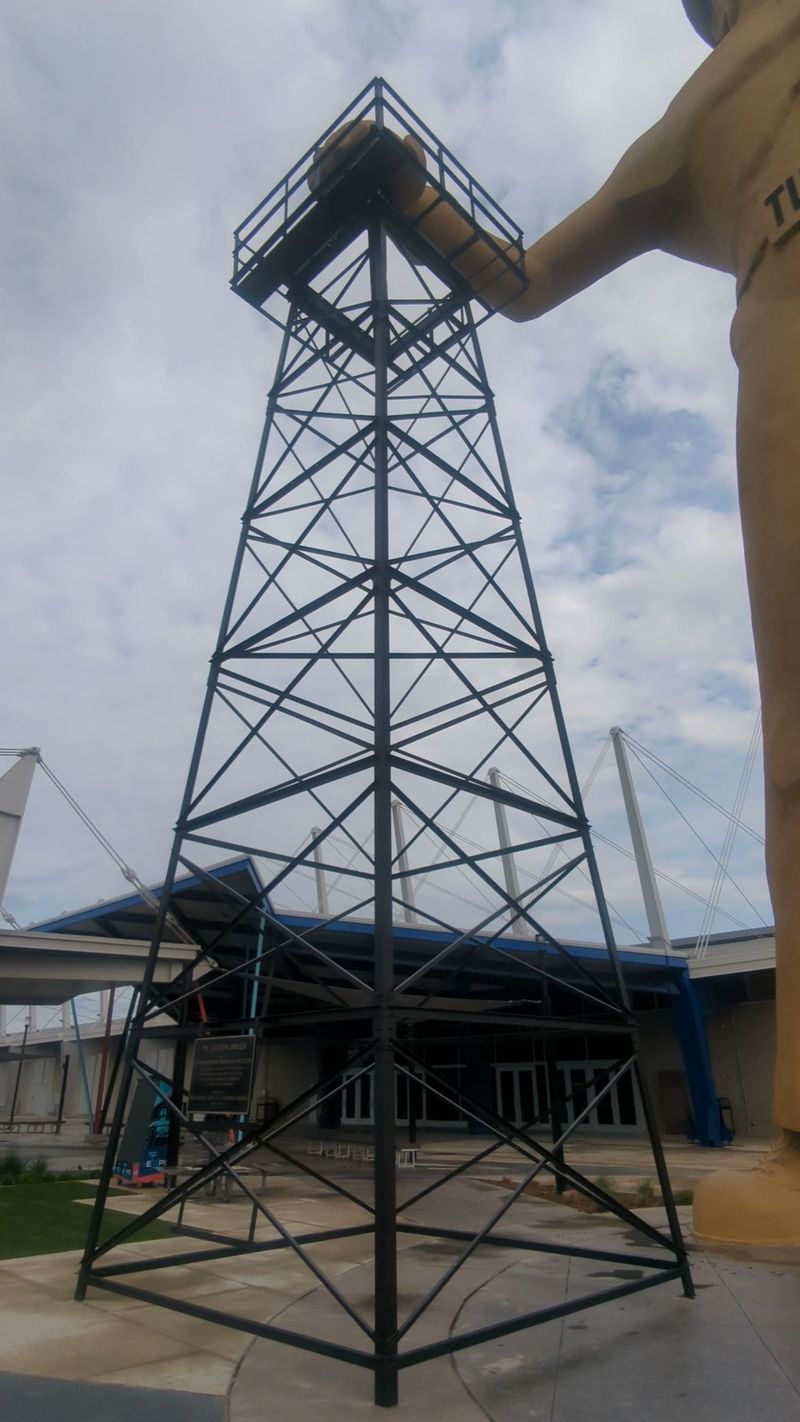
Every good statue needs a prop, and the Driller picked a meaningful one. His hand rests on an oil derrick, the tall framework that once dotted fields across the state.
Without that derrick, he might just be a big man in work clothes. With it, the message becomes clear.
He is an oilman, and the structure beside him connects the statue directly to the industry that turned Tulsa into a boomtown.
Visitors who know Oklahoma history tend to appreciate this detail most. One local noted that oil history runs deep here, and the Driller does a great job of showing that.
Kids may not know what a derrick is at first, which makes it a handy conversation starter on family road trips.
Take a moment to notice his pose, too. He is relaxed and confident, almost like he just finished a shift and is admiring the work.
It is a friendly stance rather than a stiff, formal one.
For photographers, the derrick adds height and lines that frame the figure nicely. Try shooting from an angle that includes both the hand and the top of the derrick for a picture that tells the whole story at a glance.
Route 66 Detour Worth Taking
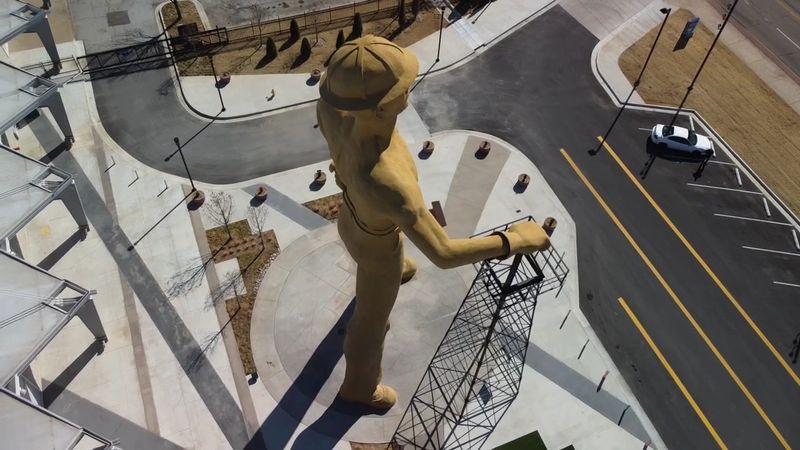
Route 66 travelers love their giants, and the Driller ranks among the best. He sits a couple of miles off the main alignment that most people follow through Tulsa, so a small detour is required.
Is it worth the extra turns? Travelers who made the trip say absolutely.
One called it a must-see for Route 66 fans and lovers of roadside attractions visiting the Tulsa area. The detour is short, and the payoff is huge, quite literally.
International visitors show up here too. A local once ran into a couple from Hungary who were in Tulsa for only a day while driving the historic highway.
They asked for photos by the Driller, proof that his fame reaches well beyond Oklahoma borders.
That same local suggested they also catch the Route 66 sign at sunrise, which is a nice tip if you are building a Tulsa photo itinerary. Pairing the two makes for a fun morning.
Plan for roughly fifteen minutes here if you are just stopping for pictures. That fits neatly into most road trip schedules without throwing off your timeline.
Then you can return to the Mother Road with a new favorite story.
Costume Changes for Special Events
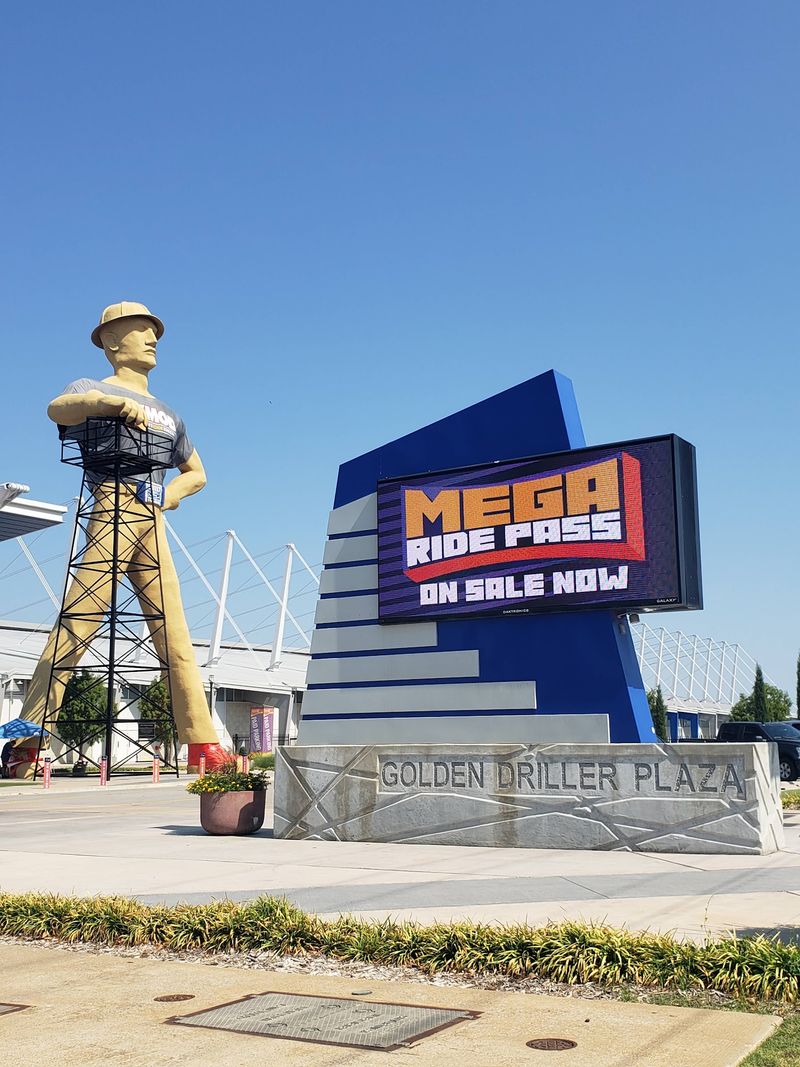
Here is a quirk most passing drivers miss: the Driller sometimes gets dressed up. One visitor stopped by before an expo and found him wearing a giant t-shirt.
Imagine the size of that shirt. Someone has to make it, and someone has to get it onto a 75-foot figure.
It is a playful tradition that makes the statue feel more like a member of the community than a fixed piece of metal and paint.
These little outfit changes turn an ordinary visit into a surprise. You might show up expecting the classic gold look and find him promoting whatever event is happening on the grounds that week.
It adds a sense of humor that fits Oklahoma perfectly.
Locals seem to enjoy these moments as much as tourists do. A dressed-up Driller becomes an instant photo op and a fun talking point around town.
If you want a chance to see him in costume, plan your visit near a big event at the Expo Center. There is no guarantee, of course, but timing your stop around a show raises the odds.
Either way, he looks impressive, shirt or no shirt, and the camera will love him.
Art Deco Treasures Behind the Statue
Surprisingly, one of the coolest things near the Driller is not the Driller at all. A visitor pointed out that the art deco ceramics on an administration building several buildings behind the statue are even more interesting.
Tulsa is known for its art deco style, so it makes sense that some of it would show up on these grounds. Those decorative details often feature bold patterns and crafted tilework that reward anyone who takes a few extra steps.
Most people snap their selfie with the big gold guy and leave. That means the ceramic work stays mostly overlooked, which makes finding it feel like a small treasure hunt.
Bring comfortable shoes and wander a little.
Architecture fans will especially enjoy this bonus stop. Even if design is not usually your thing, the contrast between a towering industrial statue and delicate decorative art makes for a memorable pairing.
Keep in mind that access around the grounds may depend on events and the season. If you can reach the building, spend a few minutes examining the details up close.
It is the kind of hidden discovery that turns a quick roadside stop into a richer piece of Tulsa history.
Tulsa State Fair Traditions
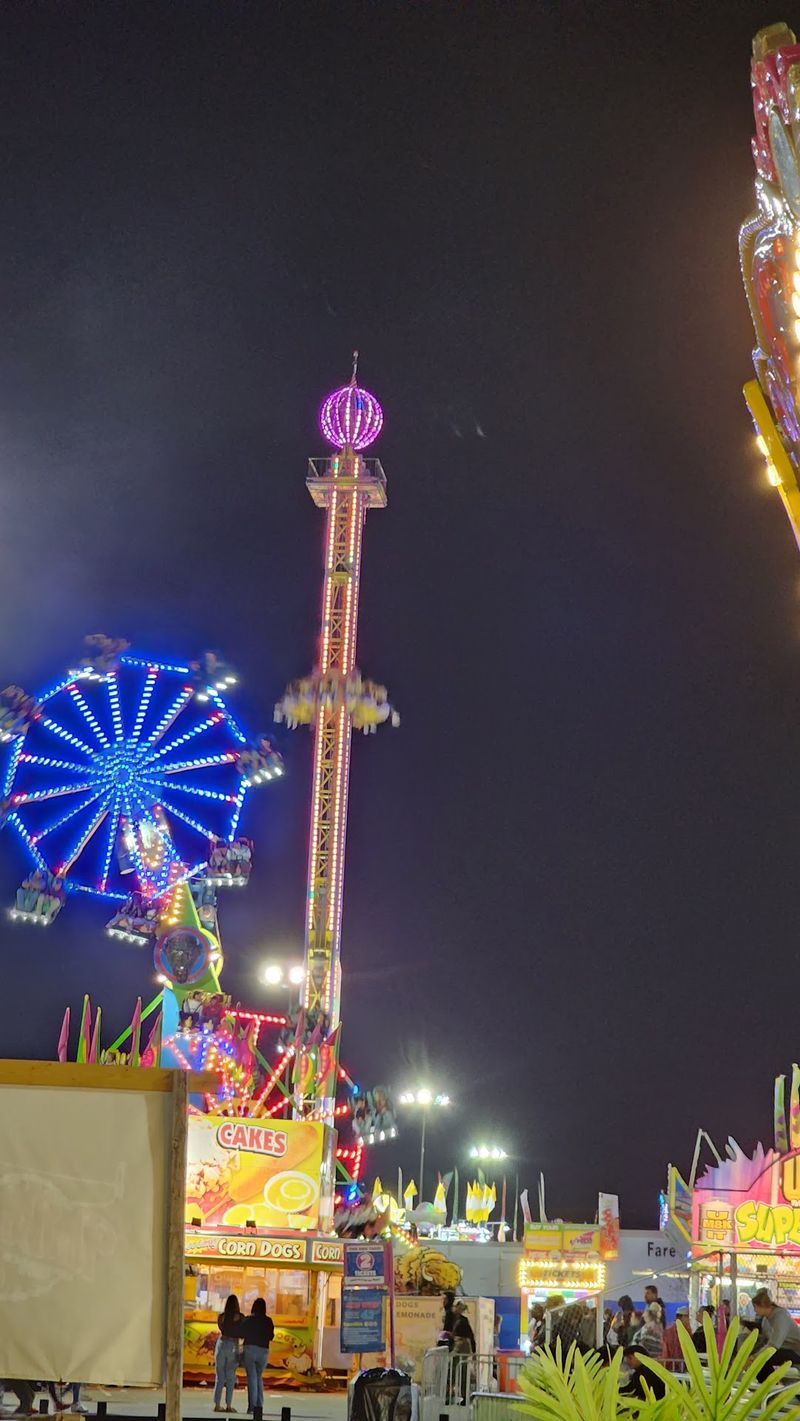
Eleven days of fun. That is how one fan described the Tulsa State Fair, which takes place on the same grounds the Driller watches over.
For many families, the fair is a yearly ritual. One visitor shared that they now carry on a family tradition with their grandchild, enjoying food, entertainment, and interesting sights together.
The Driller becomes the backdrop for generations of memories.
Classic fair food is a big draw, and visitors say it tastes great. They also mention it can be on the pricey side, so budget a little extra if snacks are part of your plan.
Livestock shows are another highlight, with some people coming specifically for those.
During the fair, the Driller feels livelier than ever. Crowds stream past his boots, kids point upward, and phones come out for pictures in every direction.
He seems to soak it all in.
If you have only seen him on a quiet weekday, visiting during fair season offers a completely different vibe. Lights, music, and excitement surround the statue.
Just expect bigger crowds and plan your parking and arrival time accordingly so the day stays fun from start to finish.
Car Shows, Expos, and Oddities
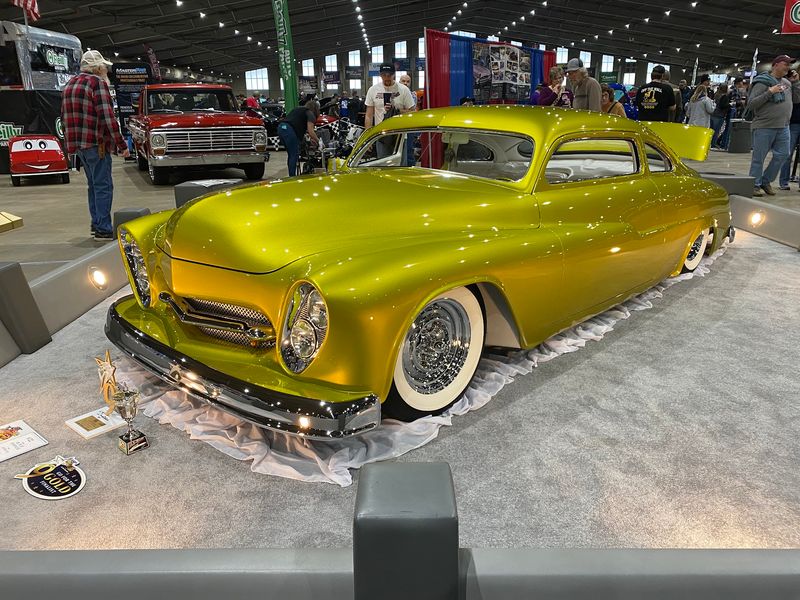
Shiny paint, leather seats, and big dreams. One car show fan recalled sitting in a red leather seated Lexus during a Friday night show and imagining driving it someday.
The Expo Center beside the Driller hosts a steady lineup of events. Visitors mention car shows, home and garden shows, and other expos throughout the year.
That means the statue often greets crowds heading in for very different reasons.
An Oddities event also takes place here. Opinions on it vary, with one attendee feeling it has shifted toward vendors selling mass-produced items like 3D printed and laser engraved goods.
Fans of the strange and unusual may still enjoy browsing, but expectations matter.
The home and garden show draws a different crowd entirely, full of people hunting ideas for their yards and houses. Few landmarks get to watch over such a mix.
A Route 66 traveler noted there is not much else to see beyond the statue unless the convention center has something going on. So it pays to check the schedule before you go.
Catching an event can transform a fifteen minute photo stop into an entire afternoon of browsing, wandering, and people watching.
Snow Cones and Friendly Strangers
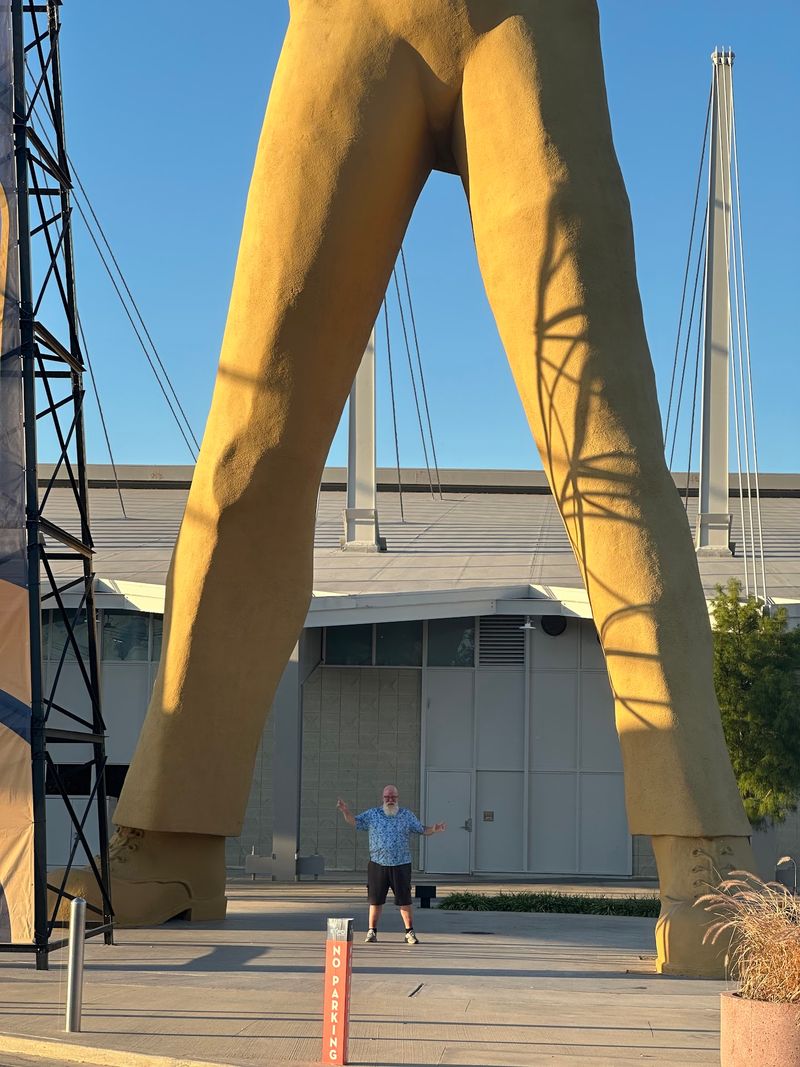
Nothing beats a cold treat beside a giant on a hot Oklahoma afternoon. Visitors mention a snow cone shack right next to the Driller, and snow cones come up often when people talk about this spot.
It is a small detail, but it changes the whole experience. Grab a cup of shaved ice, find a good angle, and take your time admiring the statue instead of rushing back to the car.
Kids especially love this combo.
The atmosphere here tends to be easygoing and social. One local described being stopped by travelers asking for help with photos, which led to a friendly chat about their journey along Route 66.
Moments like that happen naturally at a place everyone wants to photograph.
Families, road trippers, history lovers, and fans of quirky stops all seem to find something to enjoy. One visitor called it another one of their weird quirky stops on a road trip, and they meant it as a compliment.
Offering to snap a picture for someone is a simple way to join the fun. You might even trade travel tips and walk away with a new idea for your next adventure across Oklahoma.
Hours, Parking, and Practical Tips
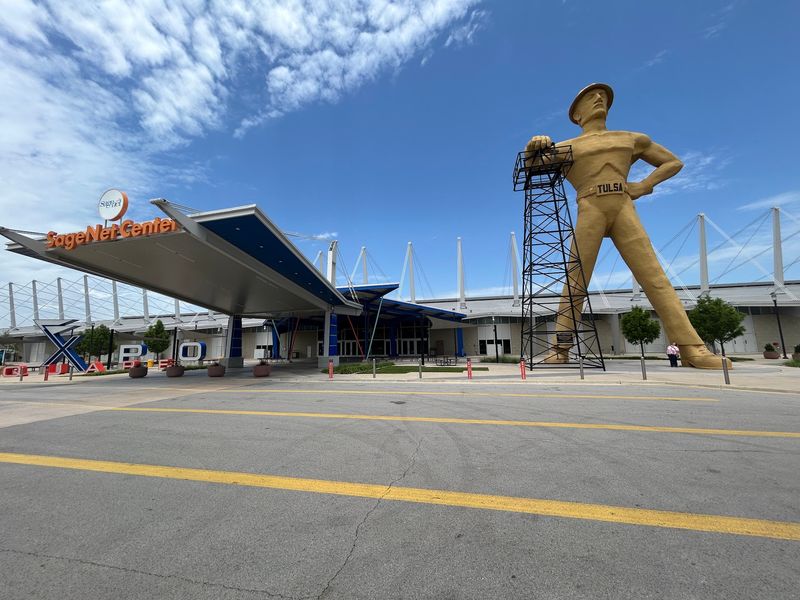
Good news for night owls and early risers: the Golden Driller is listed as open 24 hours, every day of the week. You can swing by whenever your schedule allows.
Parking is easy. Visitors mention a free parking lot right in front of the statue, and several say the parking area has been updated recently to make stopping simpler than before.
There is also a convenient pull-in area for quick pictures.
One older visit noted the statue was fenced off during the State Fair off-season, forcing a selfie from farther away with a zoom lens. Conditions may have changed since then, but bringing a camera with some zoom is a smart backup plan.
The address is Tulsa Expo Center, 4145 E 21st St, Tulsa, OK 74114. Locals know the area well, since the statue is easy to spot when driving down Yale.
For event schedules, check the Expo Square website at exposquare.com or call 918-596-2100. A quick look before heading out helps you decide between a short photo stop and a longer visit.
Plan on about fifteen minutes for photos alone, and longer if something is happening inside the Expo Center.
Why He Deserves a Pull-Over
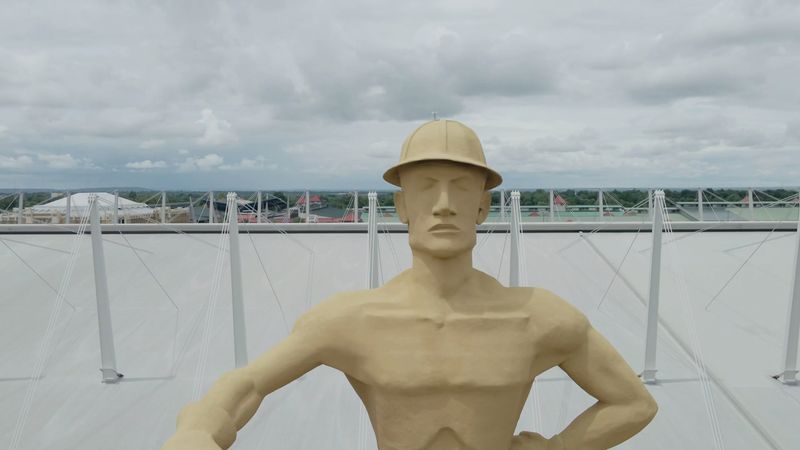
Sometimes the most familiar landmarks are the ones we understand least. The Golden Driller is a perfect example, a giant so recognizable that many people stop really seeing him.
Once you pull over, though, the story unfolds. There is the 1953 petroleum exposition, the Oil Capital of the World nickname, the playful outfits, the family legends about painting him, and the art deco surprises hiding nearby.
Few roadside stops pack this much into a fifteen minute visit.
Visitors consistently describe him as worth the detour. Some call him a must-see for Route 66 travelers, others simply say he is a great quick photo stop and a fun nod to Tulsa history.
Either way, people rarely leave disappointed.
He suits nearly everyone. Road trippers checking off giants, families looking for an easy outing, and Oklahomans who want to reconnect with local roots will all find a reason to smile here.
So next time you are cruising through Tulsa, ease off the gas. Pull into the lot, stand by those enormous boots, and look up.
The big gold guy has been waiting decades for you to say hello, and he is a proud piece of Oklahoma worth meeting.
Share this story