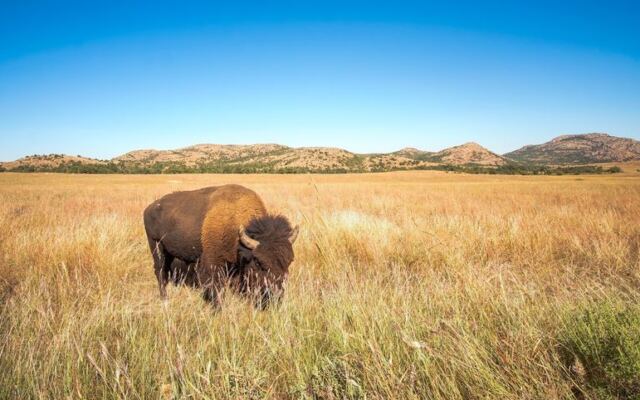
I pulled off a quiet two-lane road in southwest Oklahoma expecting a short stretch of prairie, maybe a nice photo or two. Then a shaggy bison the size of a small car wandered across the pavement like it owned the place, because honestly, it kind of does.
Granite peaks, glassy lakes, and chattering prairie dogs filled the rest of the afternoon, and I never paid a cent to get in. If you think Oklahoma is all flat fields, this hidden corner is ready to change your mind.
A Granite Wilderness in Southwest Oklahoma
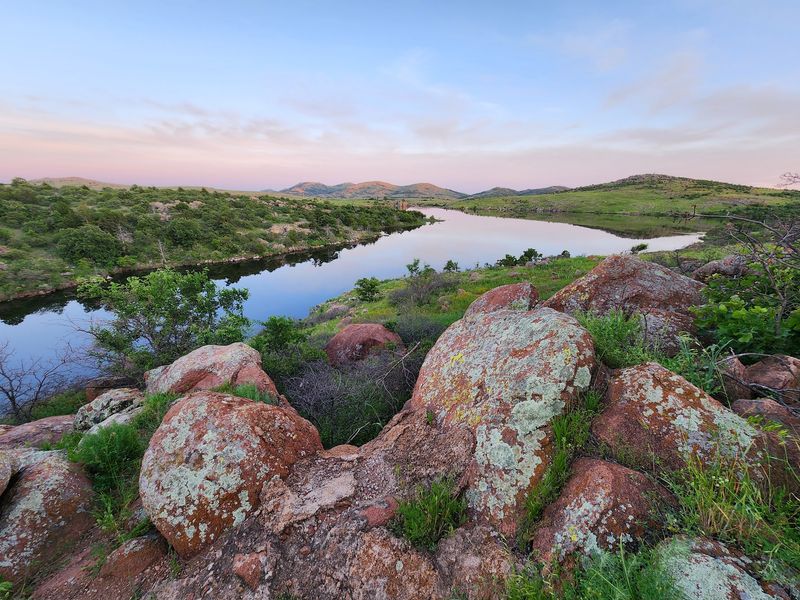
Picture the open plains suddenly breaking into rocky peaks, and you have the first surprise waiting near Lawton. The Wichita Mountains Wildlife Refuge sits in southwest Oklahoma, a vast protected area where ancient granite mountains meet mixed grass prairie and shimmering lakes.
Managed as a federal wildlife refuge, it was set aside to give animals and their habitat room to thrive. Visitors describe it as more than a park, calling it a sanctuary for wildlife and for anyone who needs a mental reset.
The landscape feels unexpected in the middle of the plains, with sudden boulder-covered summits that seem borrowed from a different part of the country.
Size is part of the magic here. Travelers mention how massive the refuge feels, with so many nooks and crannies that one trip rarely covers everything.
Some guests have been returning for nearly fifteen years and still find new corners to explore.
Best of all, the gate does not ask for money. Entry is free, which makes it one of the easiest outdoor adventures in the state to say yes to.
Whether you are a local from Lawton or rolling through on a long road trip, this is a place worth adding to the map.
Bison Roaming Free Beside the Road
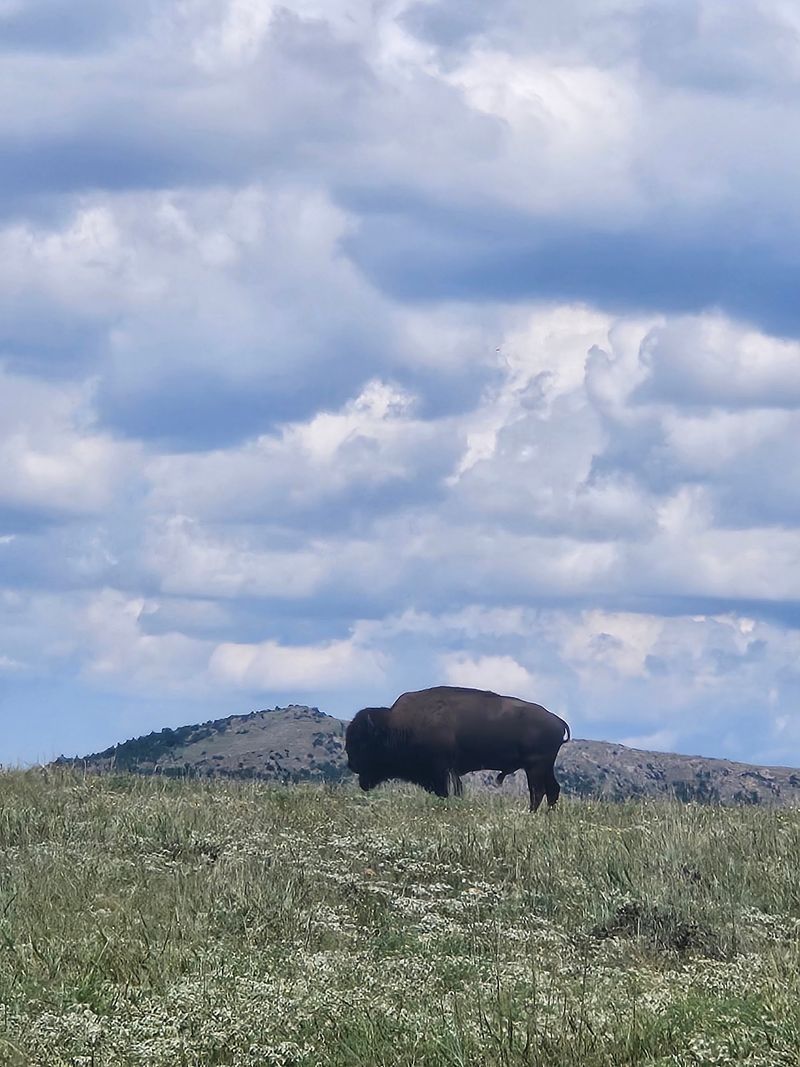
Ten mentions from visitors make one thing clear: the bison steal the show. Free-roaming herds of American bison wander the refuge, often close enough to the road that you can watch them from your driver seat.
One traveler said they saw more buffalo here than in their entire life. Families describe these animals as a favorite, and watching them graze slowly across the grass is often called a humbling experience.
Their massive heads, shaggy shoulders, and calm, unhurried pace make every sighting feel like a scene from an older version of the American West.
Timing helps. A family who visited recommended late afternoon as the best window to spot the herd, and others have had luck near sundown, even on chilly days after snow.
Keep your camera ready and your windows down for the sound of hooves on grass.
A friendly reminder belongs here too. These are wild animals, so give them plenty of space and enjoy them from a respectful distance.
One visitor noted seeing fewer animals than in years past, so sightings are never guaranteed. That uncertainty makes each encounter feel earned, and when a herd finally appears on the horizon, the whole car tends to go quiet in awe.
Longhorns and Elk on the Open Range
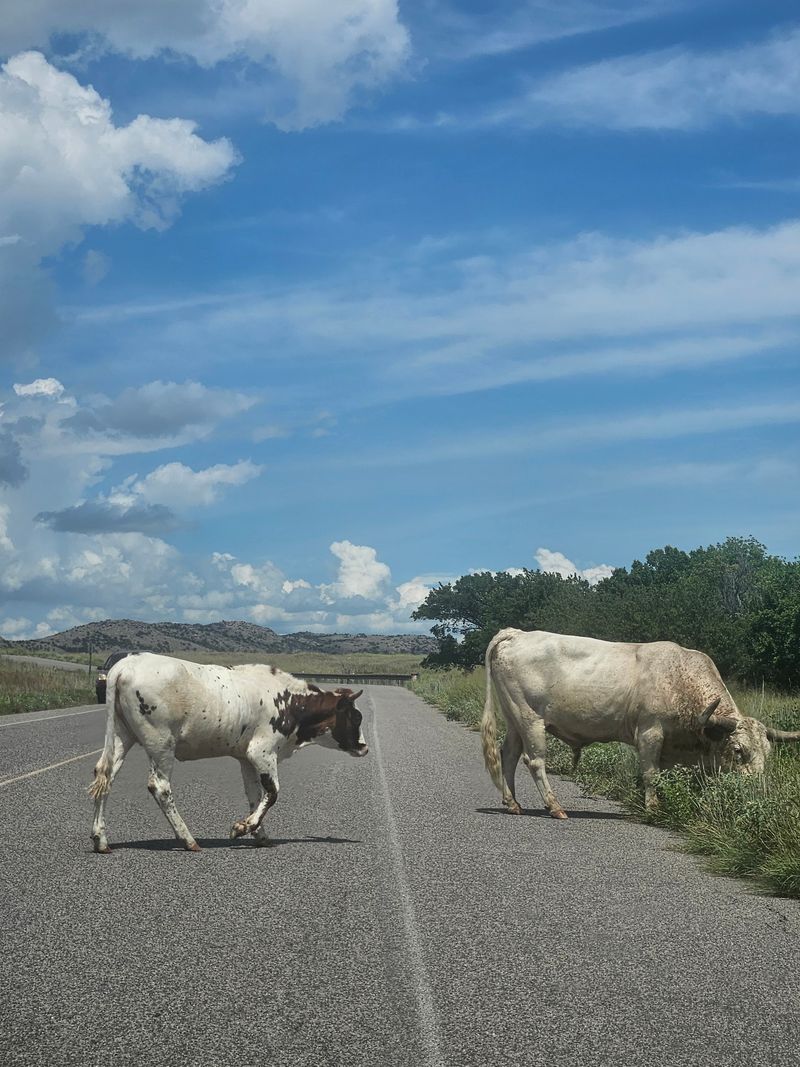
Horns stretching wider than a doorway tend to get attention fast. Texas Longhorn cattle roam the refuge alongside the bison, and their dramatic curved horns make them instant photo favorites.
Visitors regularly mention spotting both longhorn bulls and cows during a single drive. One guest who passed through shortly before sundown, the day after a snowfall, still managed to see several of them standing out against the cold landscape.
Their spotted coats and slow, steady movements give the prairie a classic ranch-country feel, even though they are living on protected land.
Rocky Mountain elk also call the refuge home. They can be harder to find than the cattle, so spotting one feels like a bonus prize on any trip.
Scanning the tree lines and open meadows with patience can pay off.
Here is a fun way to make the drive more engaging for kids or road-trip companions: keep a running tally of every animal you see. Bison, longhorns, elk, birds, and prairie dogs all count.
Before long, the backseat turns into a team of eager wildlife spotters pressing their faces to the glass, and the scenic loop becomes a game everyone wants to win.
Prairie Dog Town Antics
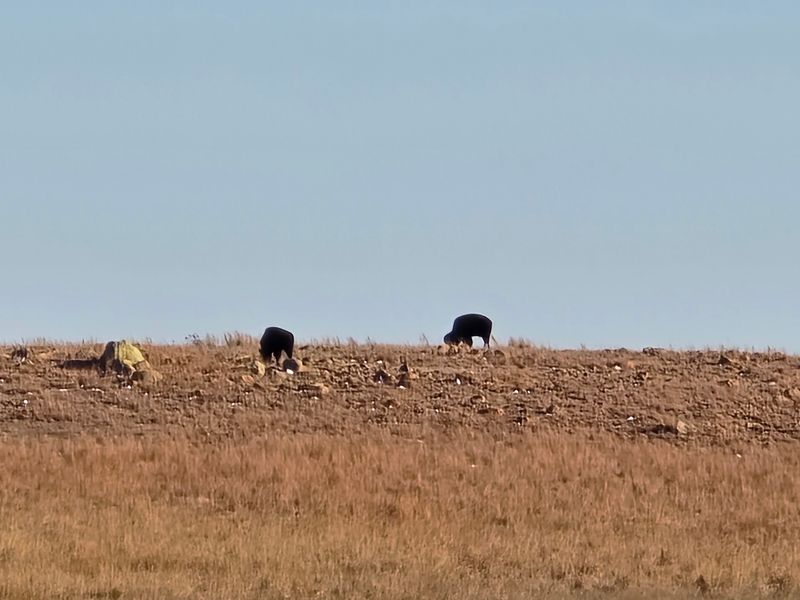
Squeaks, chirps, and tiny heads popping out of the dirt set the mood at one of the cheeriest stops on the refuge. Prairie Dog Town is exactly what it sounds like, a busy colony of burrowing critters going about their day.
Visitors love watching the lively community. The little animals stand upright on their back legs, keep watch for danger, dart between burrows, and generally act like they are running a small, very important city.
It is hard not to grin while watching them.
Warm weather seems to bring out the most action. One traveler who visited in winter said they could not wait to come back when things green up so they could see the prairie dogs in full swing.
If you plan a spring or summer trip, this stop deserves a spot near the top of your list.
Bring a zoom lens or binoculars for the best view without disturbing them. Kids especially enjoy counting how many heads they can spot at once.
Since the stop is easy to reach by car, it works well as a quick break during a longer scenic drive, giving everyone a chance to stretch, laugh, and recharge before heading deeper into the mountains.
Scenic Drives Made for Slow Cruising
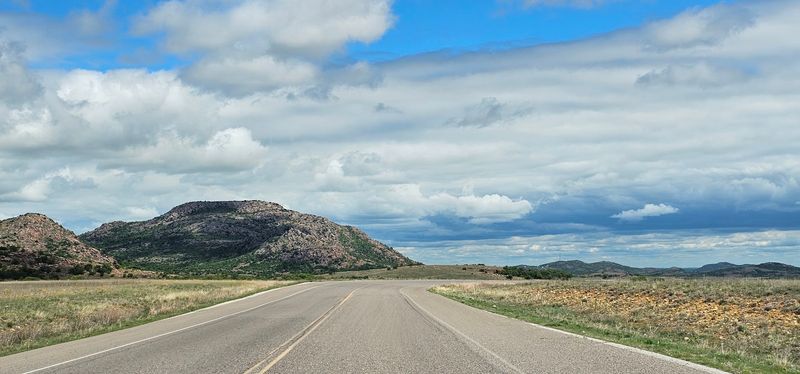
Some roads are just a way to get somewhere, but the routes through this refuge are the destination themselves. Visitors call the drive an adventure on its own, full of sweeping prairie views and sudden granite peaks.
Sunday drivers and motorcyclists both rave about the scenic routes. Travelers describe the trip as a great and easy drive, with plenty of pullouts and moments that make you want to stop the car and simply look around.
The road winds past lakes, boulder fields, and grazing animals, so there is always something new around the bend.
Slow is the right speed here. Wildlife can appear on or near the pavement at any moment, and cruising gently gives you time to spot a bison in the distance or a longhorn resting under a tree.
It also makes for smoother photos.
One more tip from guests: cell service is close to nonexistent in much of the refuge. Download offline maps before you arrive so you do not lose your way.
Many people actually enjoy the disconnect, though. With no notifications buzzing, the only things competing for your attention are the scenery, the animals, and whoever is riding shotgun with you.
The Climb Up Mount Scott
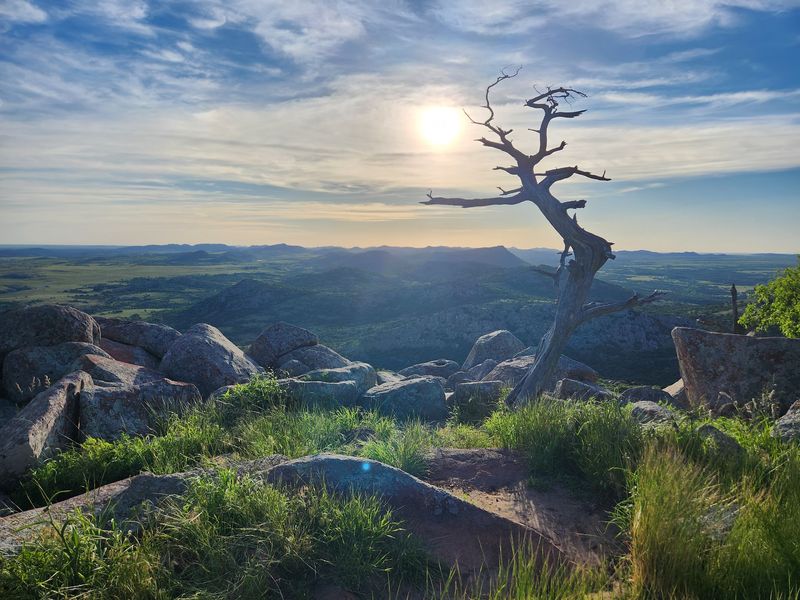
Bring more water than you think you need. That advice comes straight from a hiker who tackled the Mount Scott Trail and called it a great full day outing.
Minimal shade makes this route especially demanding during summer months, so sunscreen, a hat, and extra bottles are smart packing choices. The good news is that the trail is easy to follow, and hikers often spot plenty of animals along the way.
Just remember to leave the wildlife alone for a safe experience.
Cyclists can enjoy it too. The path is wide enough for biking, though some inclines will test your legs on the way up.
Reaching higher ground rewards the effort with sweeping views across the granite landscape and the plains beyond.
Weather can change access, too. One winter visitor found the road up Mount Scott gated after a couple of stormy days, so it is wise to check the official refuge website before planning your route.
The site offers helpful maps and trail details. When conditions cooperate, standing high above southwest Oklahoma and watching the land roll out in every direction is a moment that tends to stick with people long after the trip ends.
Trails, Boulders, and Rock Climbing Crags
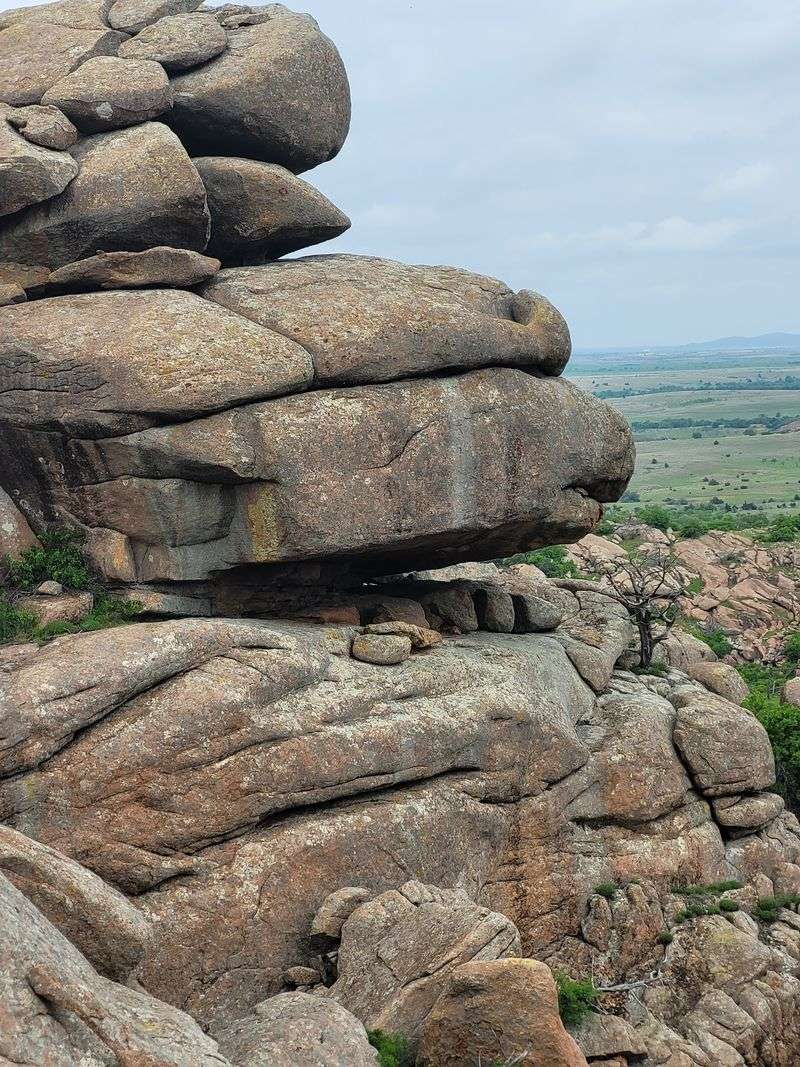
Big boulders, rugged terrain, and room to wander: that is how one excited visitor summed up the trail system. Options range from easy lakeside strolls to challenging mountain scrambles, so both casual walkers and serious explorers can find their pace.
Names like Charons Garden and Elk Mountain come up often among adventurous hikers. These areas offer rocky paths and dramatic views, though several guests mention that some trails are barely marked and can wind in confusing directions.
Another visitor struggled to find a few trails using the visitor center map and suggested downloading an offline map before heading out.
Climbers have their own reasons to visit. The refuge offers access to many crags, mostly suited to traditional climbing.
One climber wished for more bolted sport routes, but still called the experience one-of-a-kind, with jaw-dropping views.
Even dogs get to join some of the fun. A traveler from North Texas brought their pup on her first road trip and hiking adventure, and both loved it.
Wherever you roam, pack water, wear sturdy shoes, and stay alert for wildlife such as snakes and birds. The reward is a landscape full of hidden corners that practically begs you to keep exploring.
Quiet Lakes for Fishing and Reflection
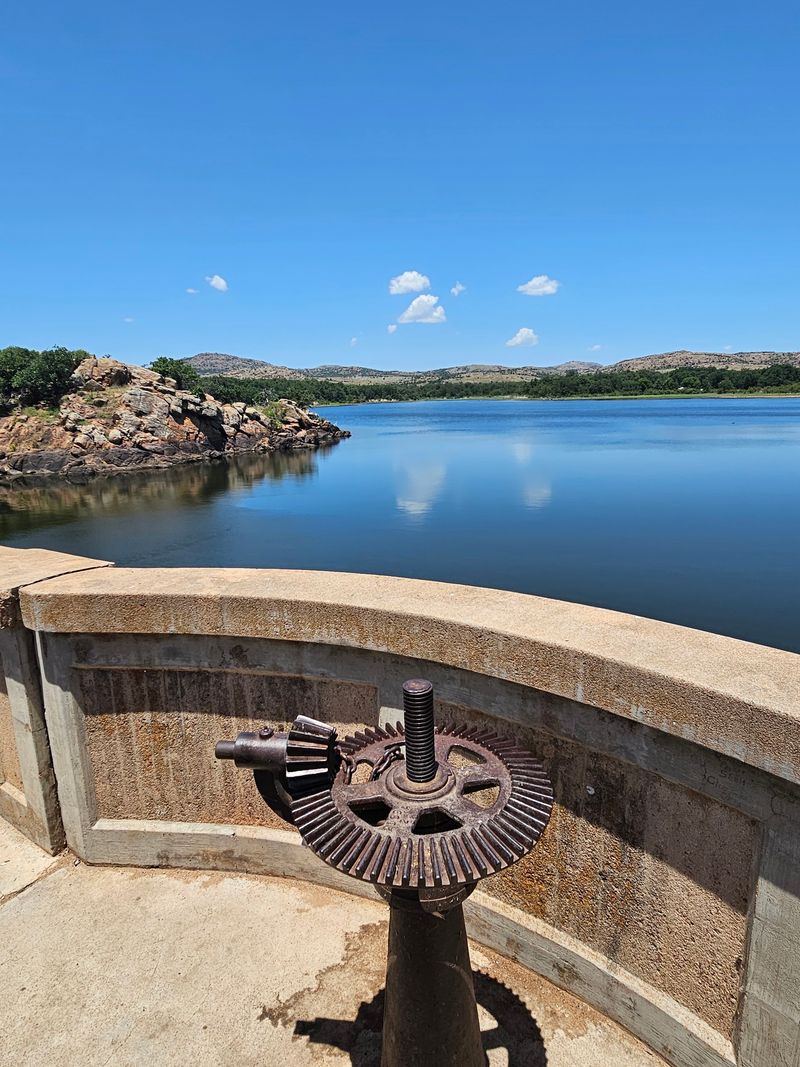
Water appears in surprising places across this rocky landscape. Small lakes and dams are scattered throughout the refuge, offering peaceful spots to pause between wildlife sightings.
Lake Elmer Thomas and Quanah Parker Lake are two names visitors mention. Guests describe them as good places for fishing, quiet reflection, or simply a refreshing stop on a warm day.
The way the granite hills mirror on calm water makes for gorgeous early morning or evening photos.
Lakes came up repeatedly when travelers talked about what they loved most, often in the same breath as peace, quiet, and nature. Sitting on the shore with a snack and listening to birds may become your favorite memory of the trip, even more than the big animals.
Picnic areas nearby make lakeside lunches easy. Pack a cooler with sandwiches and fruit, find a shady table, and let the kids skip stones while you rest.
For a slower-paced visit, building the day around one or two lakes can be just as rewarding as a full loop drive. Nature lovers who prefer gentle outings will find this side of the refuge especially soothing, a calm counterpoint to the rugged peaks rising all around.
Holy City of the Wichitas
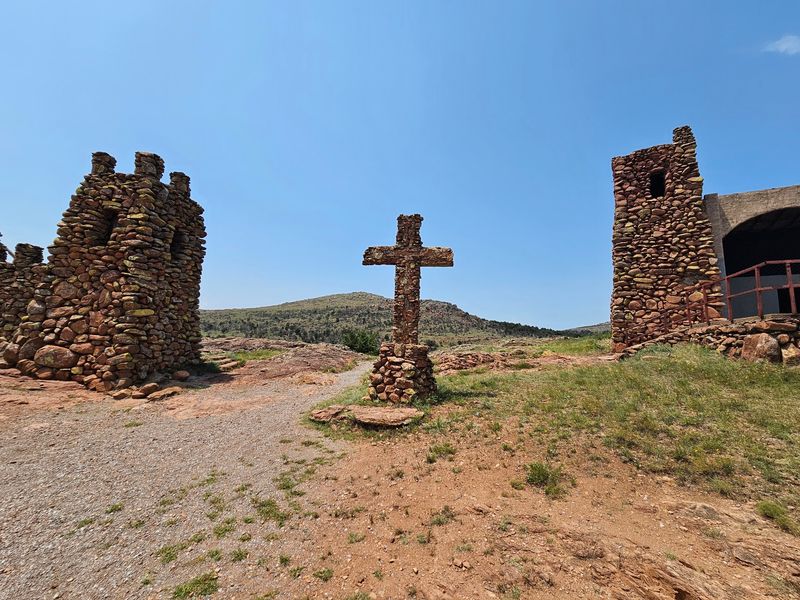
Stone buildings tucked among the hills give one corner of the refuge an almost storybook feel. The Holy City of the Wichitas is a notable stop that visitors describe as a unique historical and cultural experience.
Its stone structures stand against the rugged backdrop, offering a striking contrast to the wild prairie surrounding them. Travelers say the site is especially meaningful around Easter, when it draws extra attention.
Even outside that season, it makes a memorable detour for anyone curious about the human story woven into this landscape.
One recent visitor called the drive and the Holy City an easy combination they would recommend. Pairing it with a wildlife loop gives your day a nice mix of nature and history without much extra driving.
Photography fans will enjoy framing the old stonework with the mountains behind it. Walk slowly, take in the craftsmanship, and imagine the effort it took to build in such rocky terrain.
It is the kind of place that adds depth to a trip, reminding you that the Wichitas are not only about animals and trails. They also hold stories, traditions, and quiet spaces that invite you to slow down and reflect.
Visitor Center, Camping, and Practical Tips
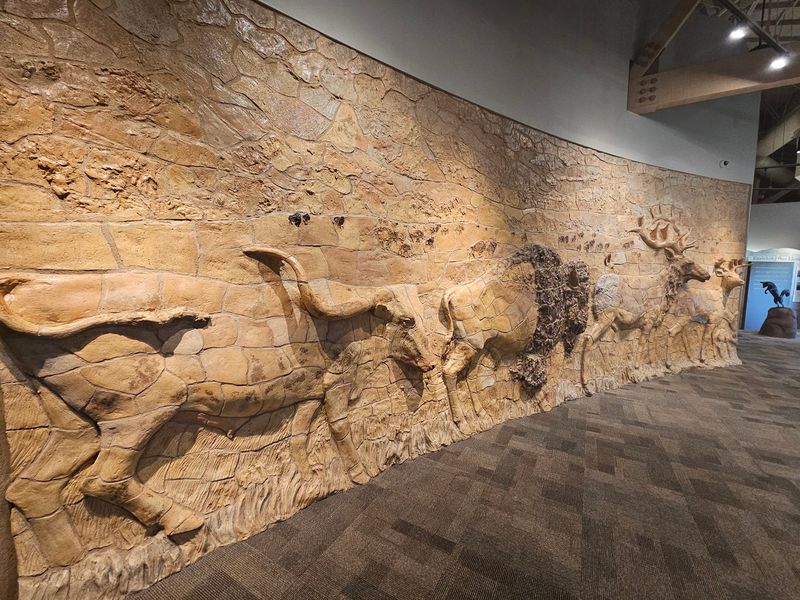
Smart trips start with a quick stop for information. The refuge has a visitor center with a museum, and guests describe it as a nice place to learn before heading out.
Veterans will appreciate that the shop offers veteran discounts.
Overnight stays are possible too, since there is a campground inside the reserve. Picnic areas provide easy spots for lunch breaks.
Entry is free, which travelers still find hard to believe.
For questions, call +1 580-429-3222 or visit the official website at fws.gov/refuge/wichita-mountains. Guests praise the site for detailed maps, picnic area info, and trail difficulty notes.
The refuge sits near Lawton, and one North Texas visitor said it is only about three hours from the Dallas-Fort Worth area.
Pack with care. Bring plenty of water, sun protection, and snacks, especially in summer.
Download offline maps, since cell service is nearly nonexistent and some printed maps may feel outdated. Check road conditions after storms, as access to places like Mount Scott can close.
Plan wildlife drives for late afternoon to boost your chances of seeing bison. Visitors also note the refuge is well maintained and not very crowded, making it easy to enjoy at your own pace.
Why This Free Refuge Belongs on Your Oklahoma List
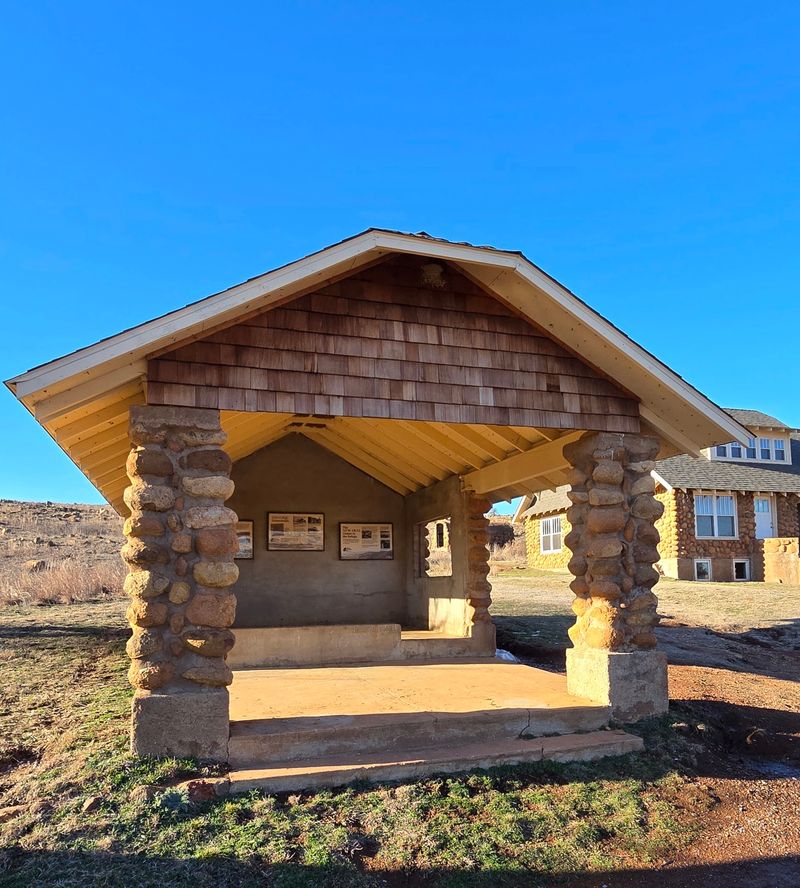
Few places in Oklahoma pack so much into a free day out. Wild bison, longhorns, elk, chattering prairie dogs, granite peaks, calm lakes, and a historic stone landmark all share the same stretch of land.
Families will love the easy wildlife viewing from the car. Hikers and climbers get rugged trails and crags.
Motorcyclists and road-trippers get some of the prettiest drives in the region, and anyone feeling worn down gets a chance to unplug, since your phone will likely lose signal anyway.
Visitors use words like indescribable, peaceful, and jaw-dropping. Many say they cannot wait to return, and some have been coming back for well over a decade.
That kind of loyalty says a lot about a place.
Sure, a few trails could use better markers, and animal sightings vary from visit to visit. Those small quirks hardly dim the experience.
If you find yourself anywhere near Lawton, set aside a few hours, or better yet a whole day. Roll down the windows, drive slowly, and keep an eye on the grass.
There is a good chance a shaggy bison will be waiting to welcome you to one of the best surprises in the state.
Share this story