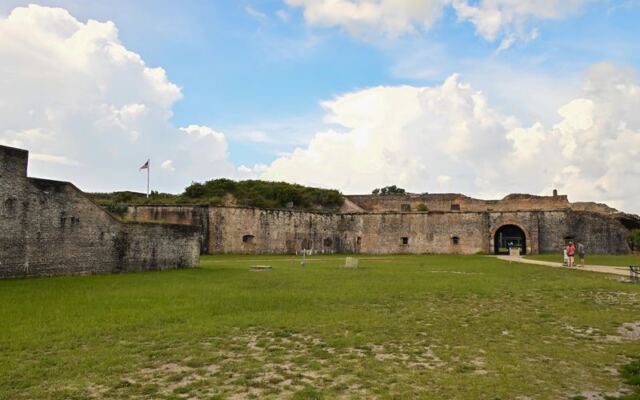
A brick fort from the 1830s sits on a Florida barrier island, and you’re free to wander its dark tunnels. Nobody hovers.
You just roam, duck through archways, and climb near cannons.
The brick walls even stay cooler than the outside air on scorching days. That alone sounds like a win to me during a Gulf Coast summer.
Then there’s the setting. White sand beaches wrap around the place, and dolphins sometimes ride the waves just offshore.
A campground trail runs about a mile through nature to an old battery.
I like how one entry pass covers history, beach time, and a quiet walk all at once. On certain days, the Blue Angels practice overhead too.
So how did a military outpost end up feeling like one of the state’s best low-key escapes?
A Brick Giant at the Tip of Santa Rosa Island
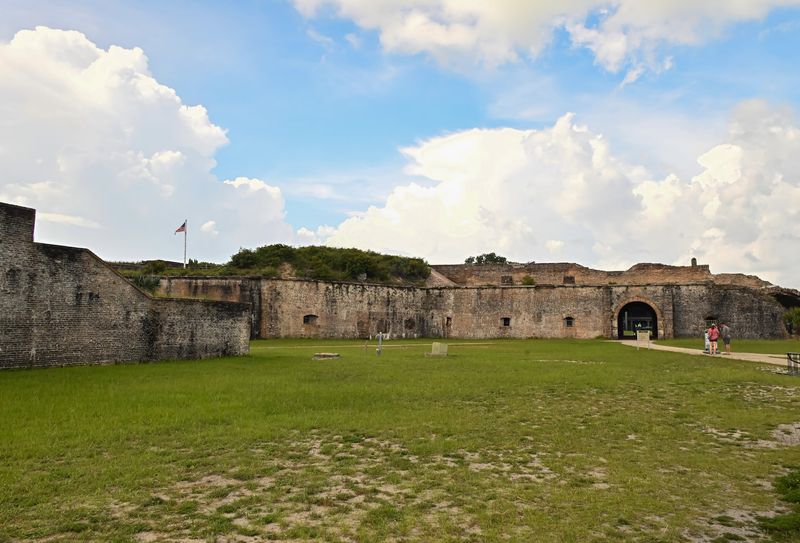
Sand, sea oats, and a massive pile of old brick. That’s the first impression of Fort Pickens, a historic military site near the far western end of Pensacola Beach.
It belongs to the National Park Service as part of Gulf Islands National Seashore.
The fort sits on a peninsula where Pensacola Bay meets the Gulf of Mexico. Its job was simple and serious: guard the entrance to the bay.
That location still explains everything about why it was built here.
Today, the mood is far calmer. Families, bikers, campers, and history fans share the same stretch of island.
The brick walls rise above the dunes like something left behind by a much older Florida.
The fort is the headliner, though the surrounding area matters just as much. Beaches, a campground, trails, and a fishing pier all sit within the same park zone.
You could easily spend a whole day without running out of things to see.
Getting oriented is part of the fun. The road narrows, the condos fade away, and the island starts to feel wilder with every mile.
Then the brick entrance appears, and the day officially begins.
Built in the 1830s to Guard Pensacola Bay
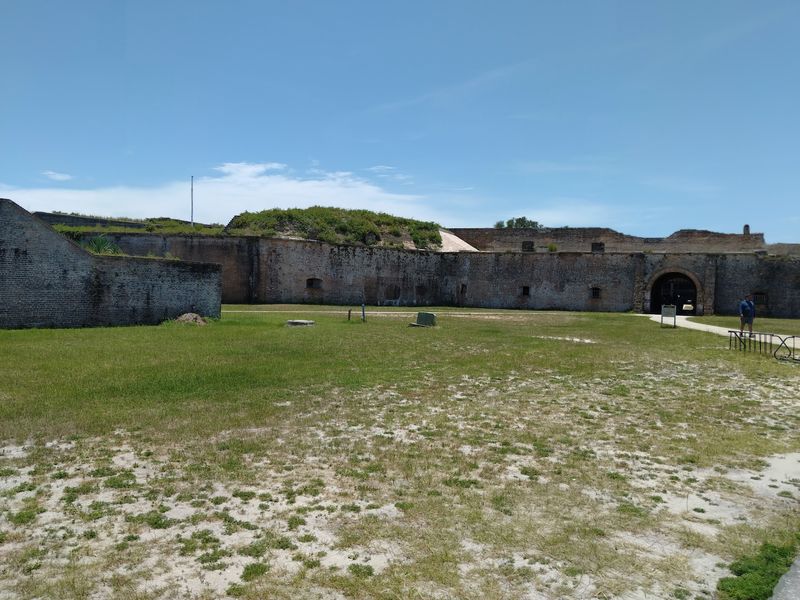
Construction wrapped up in the 1830s, and the goal was clear from day one. Fort Pickens existed to defend Pensacola Bay and its valuable harbor.
Few spots on the Gulf Coast held more strategic weight back then.
The fort later played a role during the Civil War era. Union forces held it, which made it a notable outpost in the Deep South.
That chapter remains one of the biggest draws for history fans today.
Military use stretched on long after that period. Newer batteries were added around the island as defense technology changed.
Walking the grounds, you can sense those different eras stacked on top of each other.
Here’s a fun angle for curious minds. A local PBS documentary about the fort runs roughly thirty minutes online.
Watching it before a visit can make every wall and tunnel more meaningful.
The fort isn’t trying to be flashy about any of this. Its history comes through in weathered brick, quiet rooms, and heavy cannons.
For a structure nearly two centuries old, it holds up impressively well, and that endurance is part of the story too.
Cannons Standing Watch on the Walls
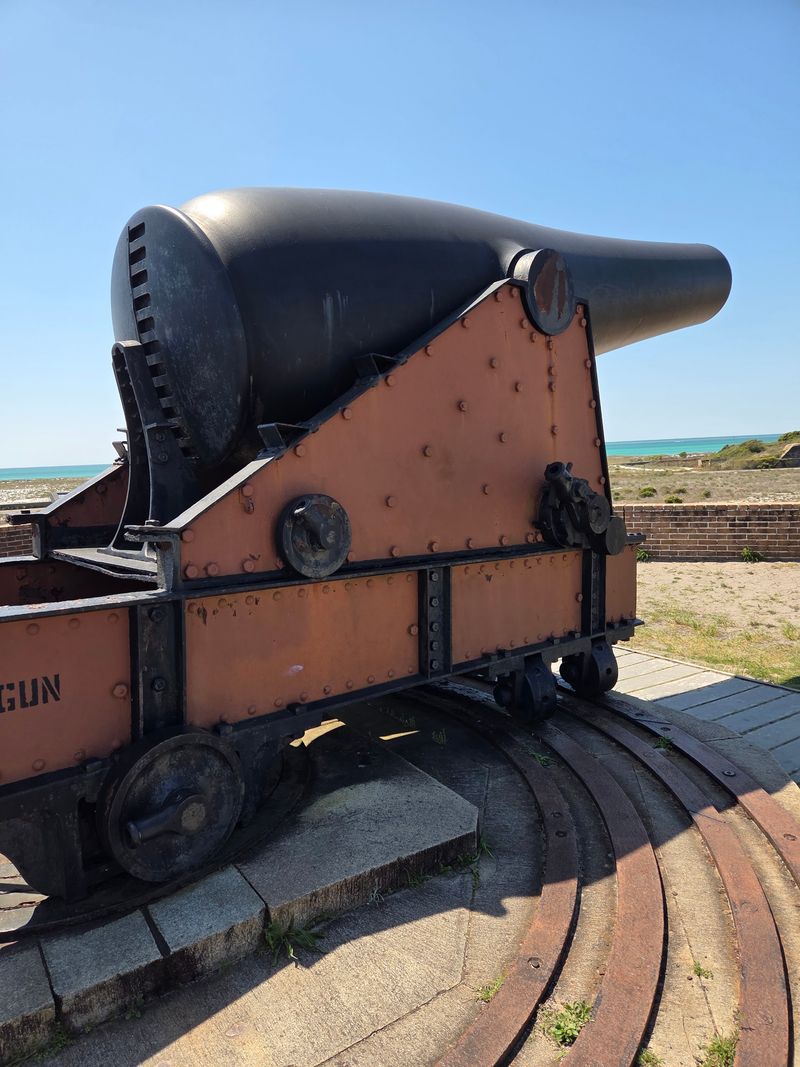
Turn the corner past the entrance and one thing grabs attention fast. A huge cannon sits on top of the wall, pointed toward the water.
It’s the kind of sight that makes kids and adults stop at the same time.
Cannons are among the most talked-about features at Fort Pickens. They help explain what the fort was built for in a way no sign ever could.
One look at their size, and the purpose of these walls becomes obvious.
Photographers love them for good reason. Dark iron against pale brick and blue sky makes a striking frame.
Add the Gulf glittering behind them, and your camera roll may fill up quickly.
These big guns also spark questions. How far could they reach?
How many people did it take to load one? Rangers and volunteers often have answers, and their knowledge turns simple curiosity into a real lesson.
Take your time around them. Walk the length of the walls and notice how each position faces a different angle of the bay.
The layout reveals how carefully the defenders planned to cover every approach by sea.
Dark Tunnels Worth a Flashlight
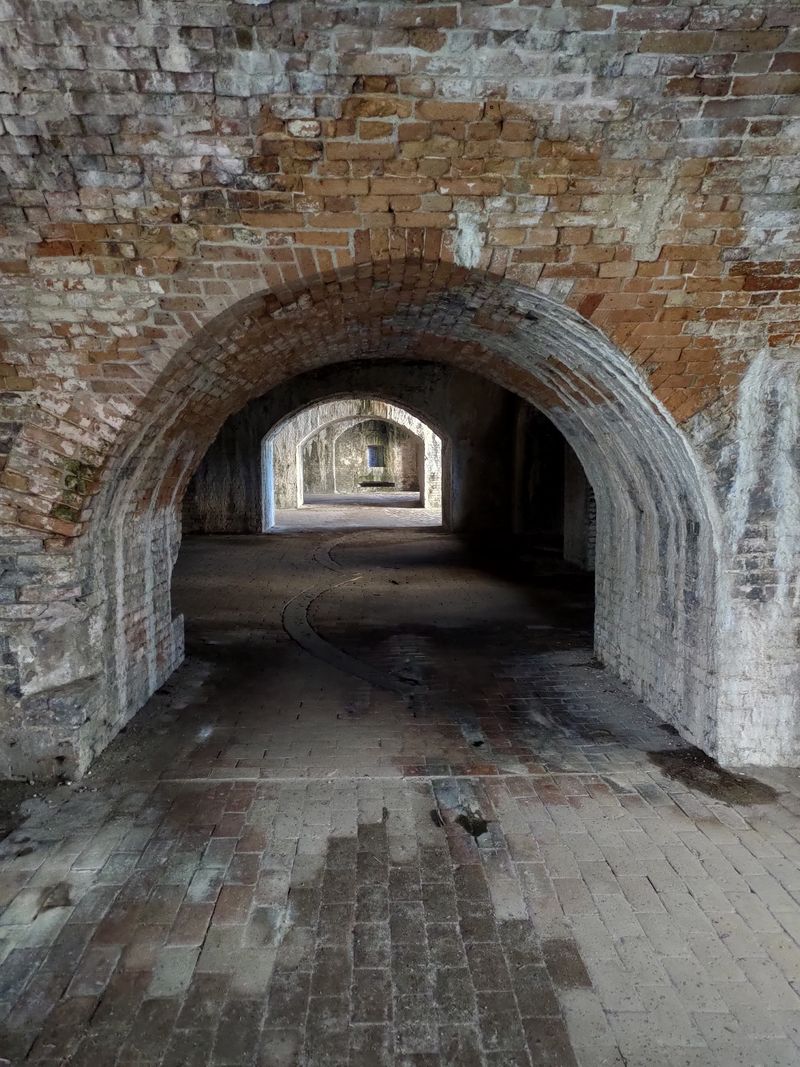
Sunlight disappears a few steps in. The tunnels at Fort Pickens are dark, arched, and wonderfully echoey.
They might be the most memorable part of the whole visit.
Exploring is mostly self-guided here. You can walk, duck, and poke around at your own pace without anyone hovering nearby.
That freedom feels rare at historic sites, and it makes the fort feel like an adventure.
Bring a small flashlight or use your phone light. Some passages get quite dim, and seeing the brickwork up close adds to the experience.
Watch your footing too, since old floors aren’t always perfectly even.
There’s a bonus during summer. The thick brick walls keep these spaces noticeably cooler than the blazing air outside.
On a near-100-degree day, that shade feels like a gift.
Families tend to treat the tunnels like a real-life maze. Couples find them oddly romantic, in a spooky-castle sort of way.
Either way, it’s hard to resist peeking around one more corner, and then another, until you’ve covered far more ground than planned.
The Mile-Long Nature Trail to the Battery
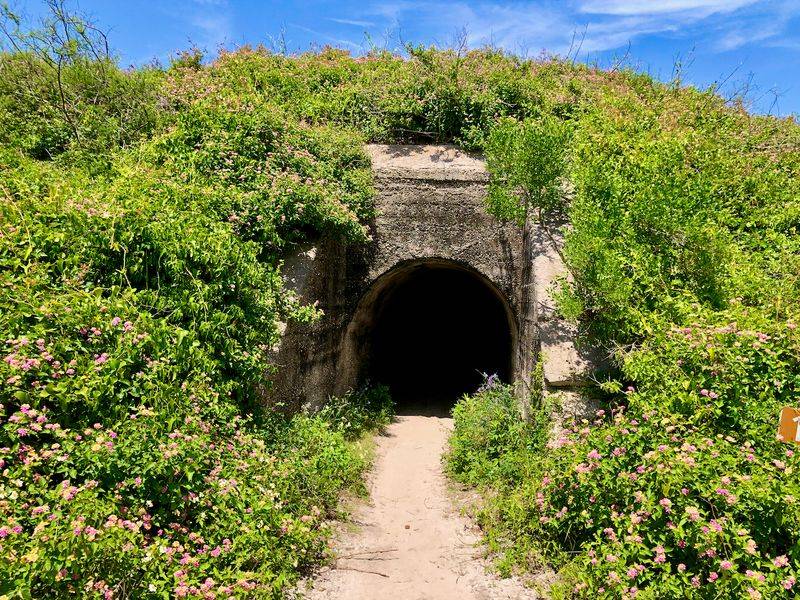
Not every path here leads straight to the main fort. Near the campground, a nature trail runs about a mile to one of the old batteries.
It’s an easy walk with a historic payoff at the end.
That distance makes it friendly for most fitness levels. Kids, casual walkers, and anyone avoiding a sweaty slog can handle it.
Just pace yourself when the Florida sun gets strong.
Along the way, coastal plants and island scenery take over. The overgrown feel gives the batteries a ruins-in-the-wild mood.
Nature has clearly been reclaiming some corners of this island for years.
Water matters on this walk. Shade can be limited, and the heat sneaks up quickly.
Packing a full bottle is one of the smartest moves you can make here.
Hikers who enjoy this trail will find more to explore beyond it. The park offers several walking routes and roads that stretch across the area.
Strung together, they turn a fort visit into a gentle outdoor day that never feels rushed or crowded, especially on weekdays.
Beaches That Steal the Second Half of the Day
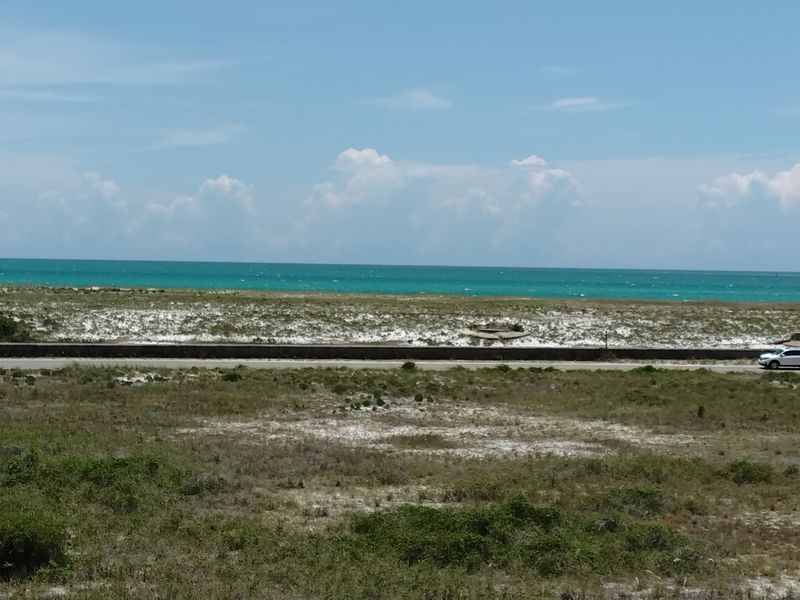
Soft, bright sand starts just beyond the fort. The beaches around Fort Pickens are part of Gulf Islands National Seashore, so they stay wild and undeveloped.
No towering hotels block the view.
The water here often looks warm and impossibly blue. On lucky days, dolphins have even been spotted riding the waves offshore.
That’s a pretty great reward for a little patience.
Plan a swim after touring the fort. It’s an easy switch from brick walls to beach towel.
Many people pack a swimsuit specifically for this reason.
A beach pavilion gives picnickers a handy spot for lunch. Bring sandwiches, snacks, and drinks from home.
Then spread out on the sand for a lazy afternoon.
Weekdays usually feel calmer than weekends. Some stretches can seem almost empty compared with busier parts of the Florida Panhandle.
If quiet beach time sounds good, timing your visit midweek is a smart strategy that pays off.
Blue Angels Roaring Over the Inlet

Few historic sites come with a jet soundtrack. Naval Air Station Pensacola sits right across the inlet, home base for the famous Blue Angels.
On practice days, the team often flies right over this area.
Watching from Fort Pickens gives you a special backdrop. Open water, sand, and old brick frame the sleek blue jets overhead.
It’s a mix of old and new that’s hard to find anywhere else.
Check the practice schedule online before you go. Sessions don’t happen every day, and dates can shift.
A little planning makes all the difference here.
Expect more traffic on those mornings. Lines at the entrance gate can stretch out, sometimes for around half an hour.
Arriving early or scouting the area the day before can help.
After the show, the fort is right there to explore. That makes a practice day an easy two-for-one outing.
Pack sunscreen and something to sit on, then tilt your head back and enjoy the roar.
Rangers and Volunteers Who Bring the Walls to Life
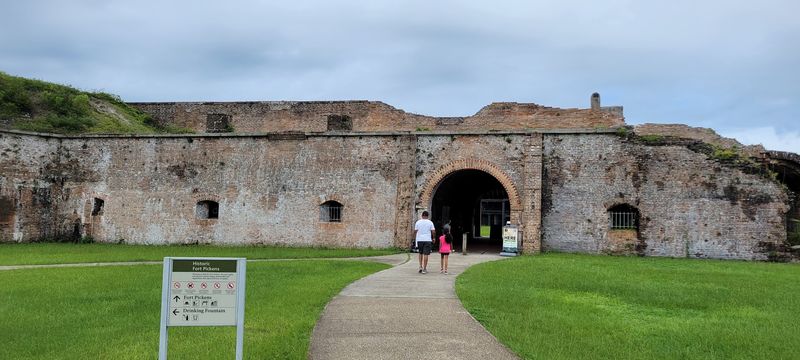
Knowledgeable guides make a big difference at Fort Pickens. Park rangers lead scheduled tours that explain the fort’s purpose, layout, and history.
Volunteers often share stories too.
Guided tours are among the site’s most popular features. A short history talk can change how you see every wall and tunnel.
Suddenly, plain brick tells a much richer story.
Prefer to explore solo? A downloadable app offers a guided tour you can follow at your own pace.
It’s handy for filling gaps between the signs posted around the grounds.
Kids can join the Junior Ranger program as well. Older children tend to get the most out of it.
Very young kids may lose interest faster, so plan accordingly.
Passport stamp collectors, take note. The National Park stamp is available in the gift shop.
It’s a small detail, but collectors know how satisfying that fresh ink feels after a long, rewarding day of exploring.
Campsites Where the Trip Stretches Into Days
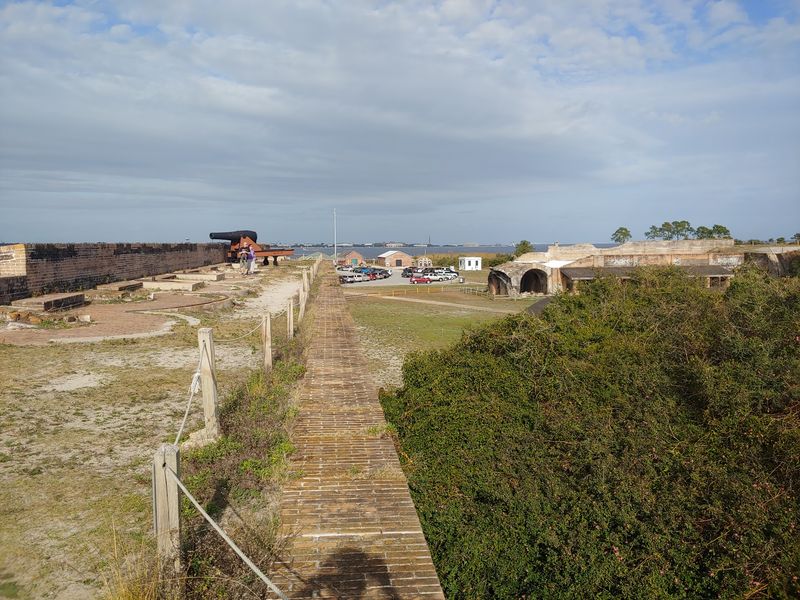
Some visitors never leave after just one day. The Fort Pickens campground lets people stay right on the island.
Waking up near the beach and the fort feels like a serious upgrade.
Reservations can be tough to snag, especially in busy seasons. Persistence often pays off.
Checking for openings repeatedly is a common strategy for landing a spot.
Campers get easy access to the nature trail toward the battery. Bikes are a great addition too.
Roads wind throughout the area, perfect for casual rides.
Many families return year after year for week-long camping trips. That kind of loyalty says a lot about the setting.
The trails and upkeep keep people coming back.
Camping also makes the week-long entry pass really shine. You can visit the fort at different times, catch sunrises, and enjoy quieter evenings by the water.
It turns a quick history stop into a full Gulf Coast getaway that feels relaxed instead of rushed.
Fishing, Ferries, and Golden Sunsets
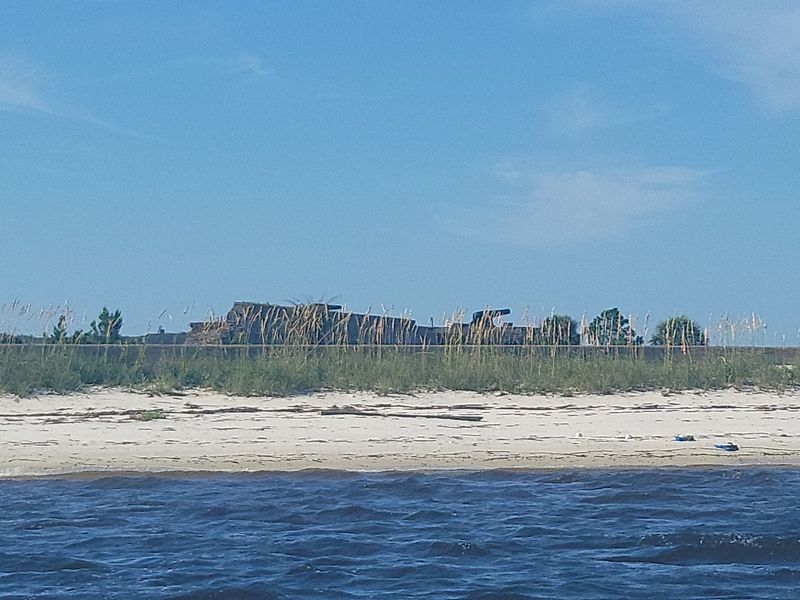
Anglers, grab your gear. A fishing pier sits within the Fort Pickens area, giving rod-and-reel fans a scenic spot to cast.
It’s a relaxing way to spend an hour between adventures.
Ferry service also runs across the bay. Riding the water offers a fresh view of the coastline and fort.
Plus, it skips some of the road traffic.
Then come the sunsets. Western views over the Gulf glow in shades of orange and pink.
It’s a popular moment for photos and quiet reflection.
Plan your evening carefully, though. The fort itself closes at 5 PM daily, so explore the walls first.
Then head toward the water as daylight fades.
Combining these extras makes the visit feel complete. History, fishing, a boat ride, and a glowing sky all fit into one outing.
Not bad for a single entry pass, right? Honestly, it’s hard to find a more varied day on this stretch of the Panhandle.
Who Will Love This Place Most
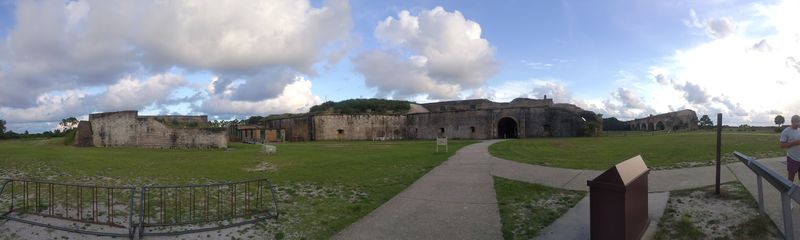
History buffs are obvious fans. Yet Fort Pickens appeals to a surprisingly wide crowd.
Even folks who skip museums tend to enjoy roaming here.
Families get tunnels, cannons, and open space to burn off energy. Couples enjoy the beaches and sunset views.
Photographers find endless angles among arches and brick.
Outdoor lovers win too. Trails, bike-friendly roads, and quiet sand make the park feel adventurous.
You can stay active or simply relax.
Veterans have a bonus worth knowing. A free lifetime pass is available through recreation.gov for eligible veterans.
That makes repeat visits even easier.
The atmosphere leans peaceful most days. The grounds feel clean and well kept.
Weekdays tend to be calmer, while Blue Angels practice days draw bigger crowds. Choose your timing based on the mood you want, whether that’s lively energy around the jets or a quiet, unhurried wander through the old walls by yourself.
Hours, Fees, and Getting There
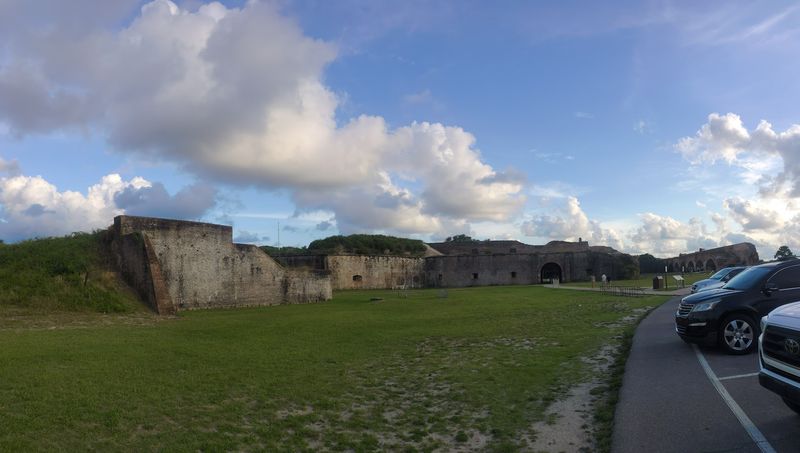
Mark your calendar for 9 AM. Fort Pickens opens daily at that time and closes at 5 PM.
Those hours stay the same seven days a week.
The fort sits at 1400 Fort Pickens Rd, Pensacola Beach, FL 32561. Drive west along the island until the road leads into the park.
Road signs can be sparse, so keep directions handy.
An entry fee applies per vehicle, and the pass lasts a full week. Annual passes are also available for frequent visitors.
Buying ahead of time can save a little hassle at the gate.
Plan around two hours to explore the fort itself. Add more time for beaches, trails, or fishing.
A whole day disappears easily here.
Restrooms, a gift shop, and a snack shop are on site. A water bottle refill spot helps in the heat.
Still, bring extra water, sunscreen, and a hat, especially during the long, steamy Florida summer.
Why the Drive Down the Island Pays Off
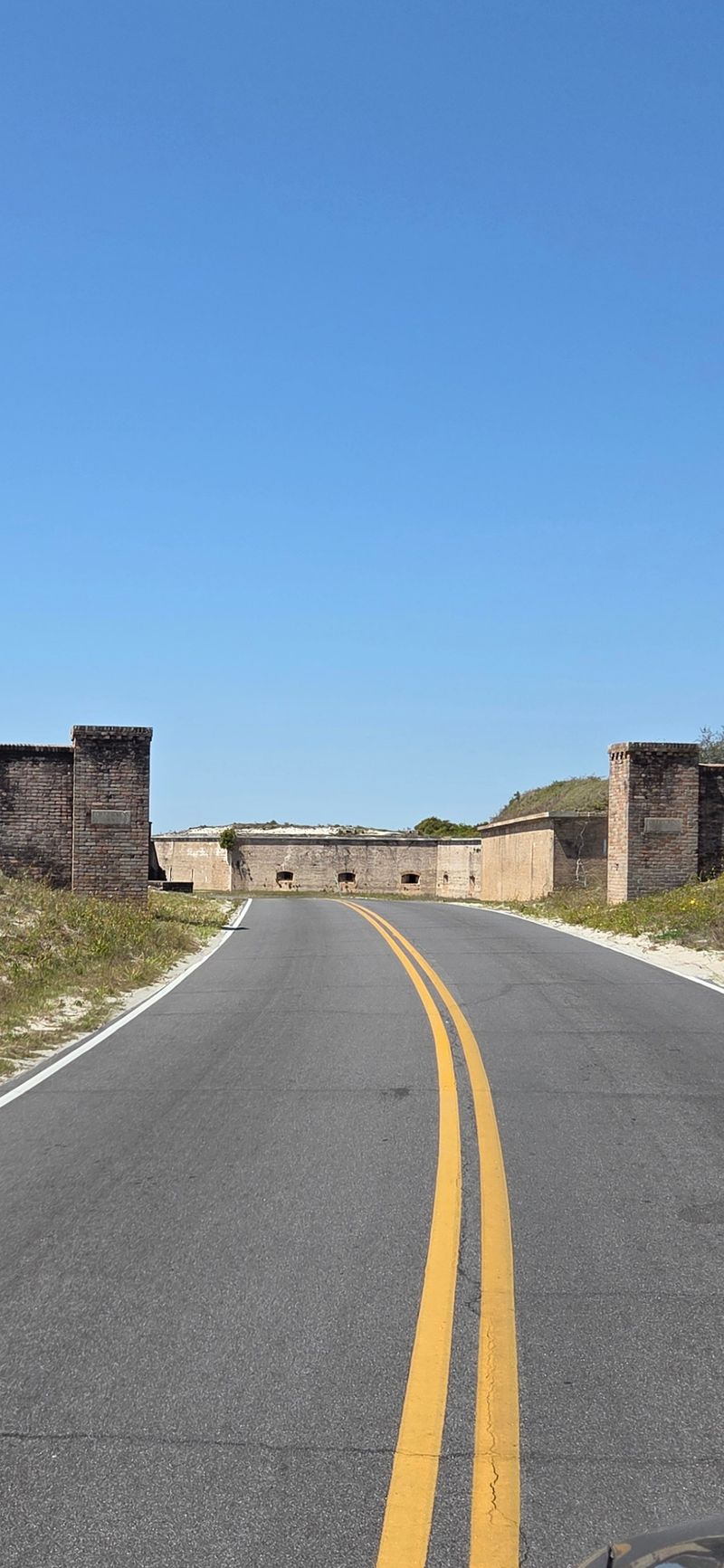
Honestly, it’s hard to beat this combination. Fort Pickens packs history, beaches, trails, and wildlife into one easygoing trip.
And it all fits under a single weekly pass.
I love how unhurried it feels. You set your own pace, wander freely, and switch from tunnels to sand whenever you like.
That flexibility suits nearly every kind of traveler.
The Florida Panhandle has plenty of beautiful beaches. Few come with a nearly two-century-old fort attached.
That pairing makes this stretch truly special.
Timing helps everything shine. Go on a weekday for quiet, or a practice day for jets.
Either way, start early and pack water.
So grab your sneakers, swimsuit, and maybe a flashlight. The old walls are waiting at the edge of the island, guarding the bay just like they always have.
Something tells me one visit won’t be enough, and that week-long pass makes coming back awfully tempting.
Share this story