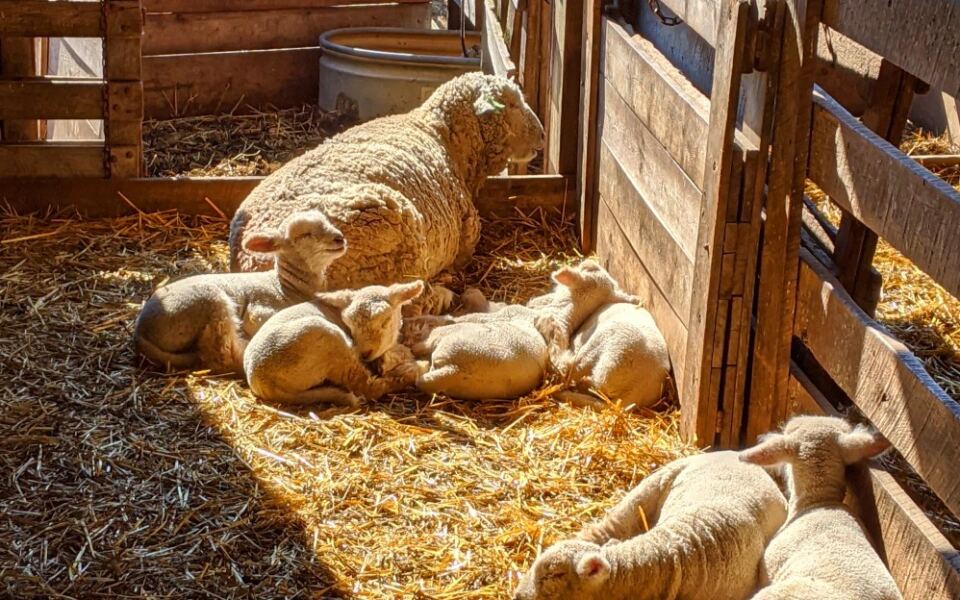
Some farm animals in America look like they wandered out of a history book. There are sheep with long curly wool, cattle with horns wide enough to block a doorway, and hogs whose ancestors arrived on Spanish ships more than 400 years ago.
Many of these heritage breeds came close to vanishing when modern farms switched to faster-growing animals. A few breeds dropped to just a few hundred animals in the whole country.
Luckily, careful breeders, history museums, and working farms stepped in to keep them around. Today, you can visit these animals in person, watch them pull carriages, and even see their newborn lambs in spring.
The places on this list span from Virginia to Iowa, and each one has its own story about saving a breed. Keep reading to find out where these rare animals live, what makes each breed special, and the best times to plan your visit.
1. Colonial Williamsburg, Williamsburg, Virginia
Curly wool once ruled colonial fashion, and the Leicester Longwool sheep here prove it. Their fleece hangs in long ringlets that hand spinners love.
The breed was developed in 1700s Britain by a farmer named Robert Bakewell. By the 1940s, it had nearly vanished from the United States.
In 1990, Colonial Williamsburg brought the sheep back from Australia.
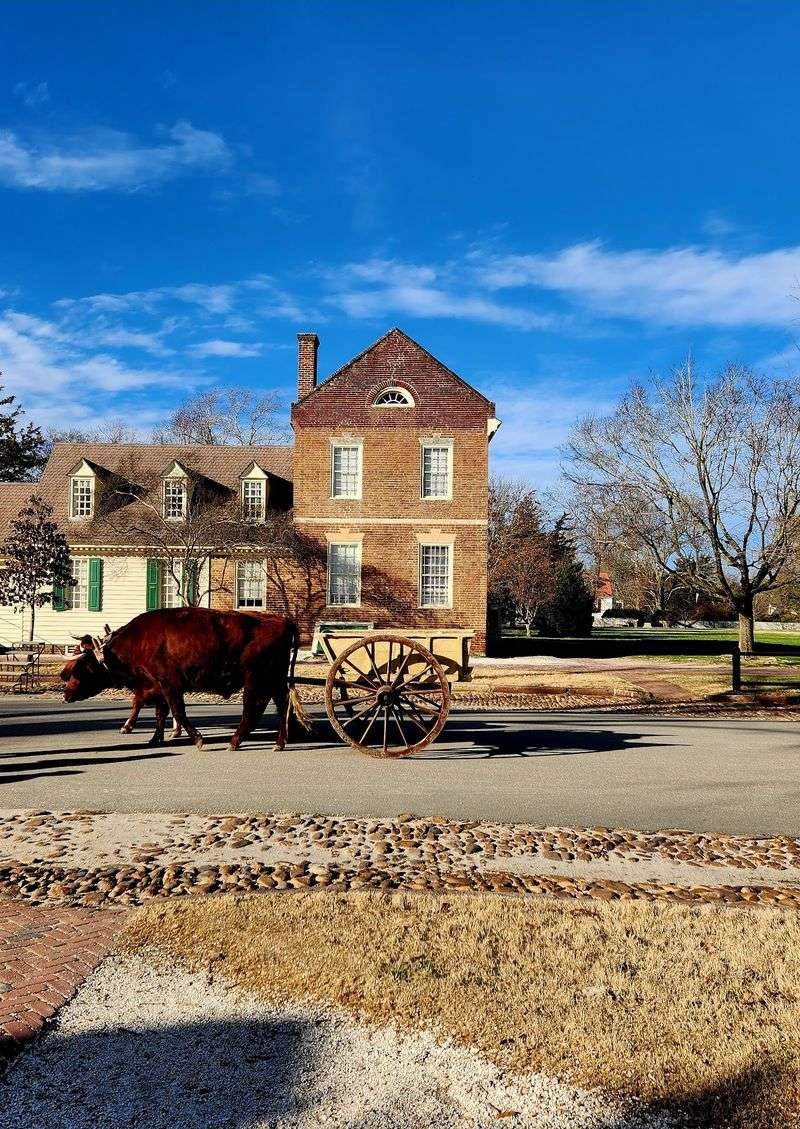
The Rare Breeds program does not stop with sheep. Cleveland Bay horses, England’s oldest horse breed, pull carriages through the historic streets.
Only about 200 registered purebreds live in the United States. Colonial Williamsburg runs the largest Cleveland Bay breeding program in North America.
American Milking Devon cattle round out the cast. These red cattle first arrived from England in 1623 and provided milk, meat, and muscle for farm work.
Plan a spring trip if you can. That is when Leicester Longwool lambs show up in the pastures, and they are a crowd favorite.
Bring patience for photos, since the lambs rarely hold still. A good zoom lens helps a lot near the fences.
2. George Washington’s Mount Vernon, Mount Vernon, Virginia
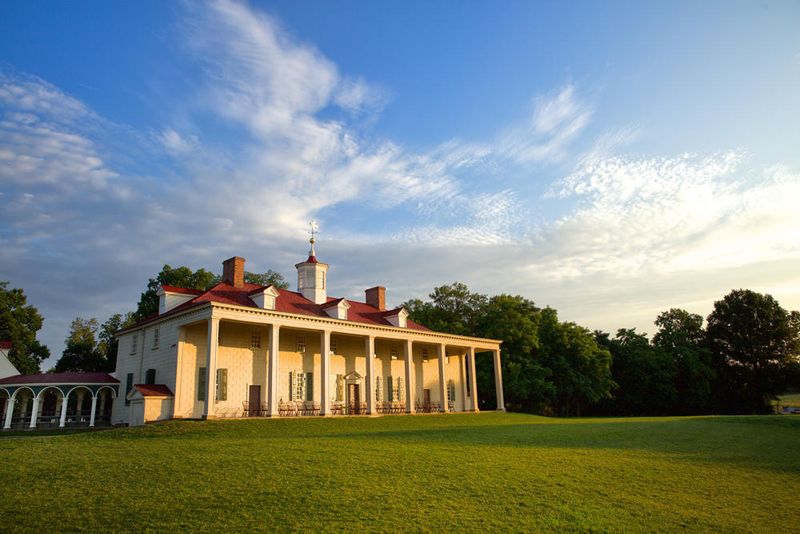
George Washington loved farming almost as much as leading a young nation. His estate still keeps that passion alive with rare animals in its fields.
Hog Island sheep are the local stars. Their ancestors lived alone on a Virginia barrier island starting in the 1600s, so they kept traits that modern sheep lost.
The Livestock Conservancy lists them as critical. That label means very few remain, which makes Mount Vernon’s breeding work a big deal.
Ossabaw Island hogs also call the estate home. Their family tree goes back over 400 years to pigs left by Spanish explorers on an island near Georgia.
They have thick coats, long snouts, and upright ears. Mount Vernon has raised them for more than two decades and shares piglets with other historic sites.
Timing matters here. New lambs usually arrive in March, and sheep shearing demonstrations often happen in May.
Check the schedule for Meet the Animals programs before you go. Staff explain how each animal helped the estate earn its keep, which makes the visit far more than a stroll past fences.
3. Conner Prairie, Fishers, Indiana
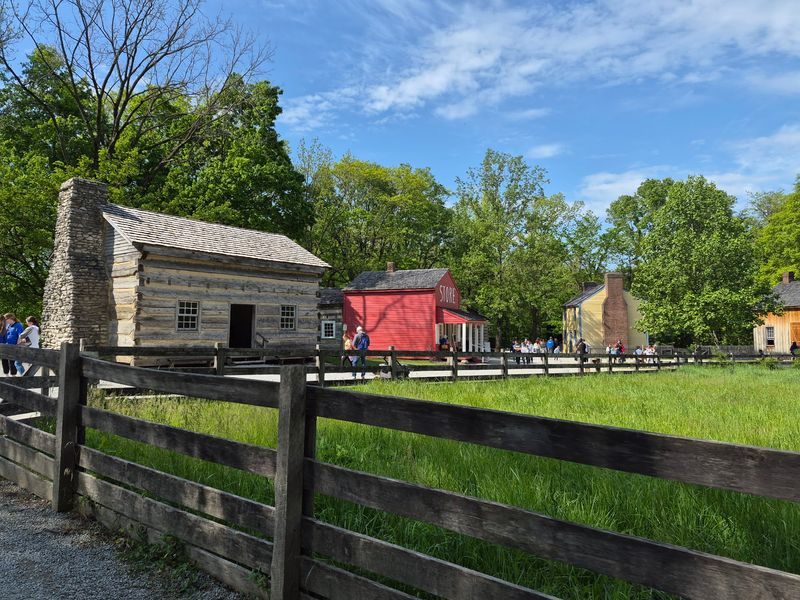
Fewer than 100 English Longhorn cattle are believed to live in the United States. One of the biggest herds grazes right here in Indiana.
These cattle have wide, sweeping horns that curve down around their faces. The breed once vanished from North America before being brought back, and Conner Prairie even used embryo transfer to help grow its herd.
Longhorns are calm animals that do well on rough grass. Farmers once used them for meat, milk, and pulling loads.
Tunis sheep add a splash of color with red faces and cream wool. Their ancestors were a gift from North Africa in the late 1700s, and the breed nearly disappeared during the Civil War.
Arapawa goats are rarer still, with fewer than 300 worldwide. Their story connects to goats left in New Zealand by Captain James Cook in 1777.
Ossabaw hogs complete the lineup. Stop by the Animal Encounters barn to watch goat milking and egg collecting.
Kids usually ask a hundred questions, and the staff seem happy to answer every one.
4. Plimoth Patuxet Museums, Plymouth, Massachusetts
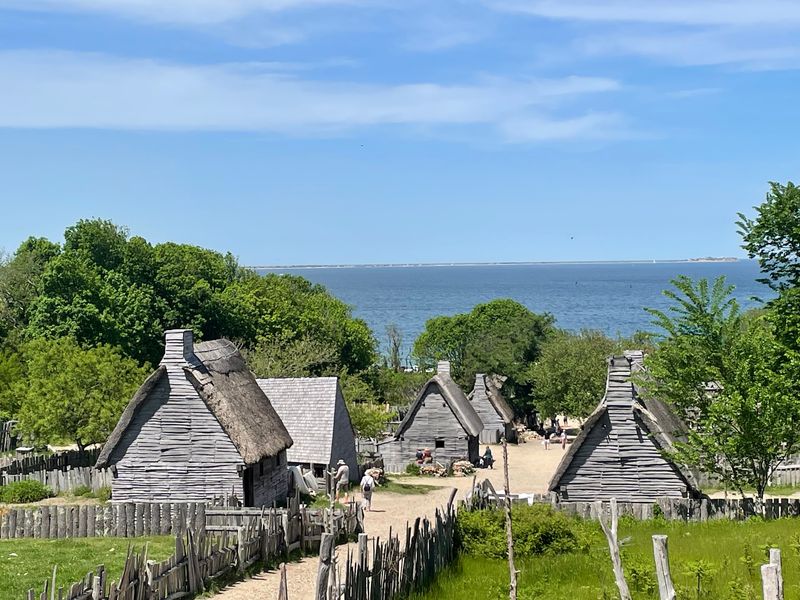
Time travel is not real, but the 17th-century English Village here comes close. Timber-framed houses, gardens, and farm animals recreate life in Plymouth Colony.
The cattle include black Kerry cows and red Milking Devons. Milking Devons first reached Plymouth in 1623, so seeing them here makes a lot of sense.
Goats get serious attention too. The museum imported six Arapawa goats in 1993 to stand in for the old English milk goat that no longer exists.
That small group became key to Arapawa conservation in America. San Clemente Island goats from California also live on the grounds.
Look closely at the chickens. Red Dorkings have five toes instead of four, plus short legs that make them waddle a bit.
Do not skip the Nye Barn. It gives a behind-the-scenes peek at the Rare and Heritage Breeds program away from the main village.
Costumed interpreters handle daily chores while staying in character. Ask them about their cows, and you may get an answer straight from the 1620s.
5. Old Sturbridge Village, Sturbridge, Massachusetts
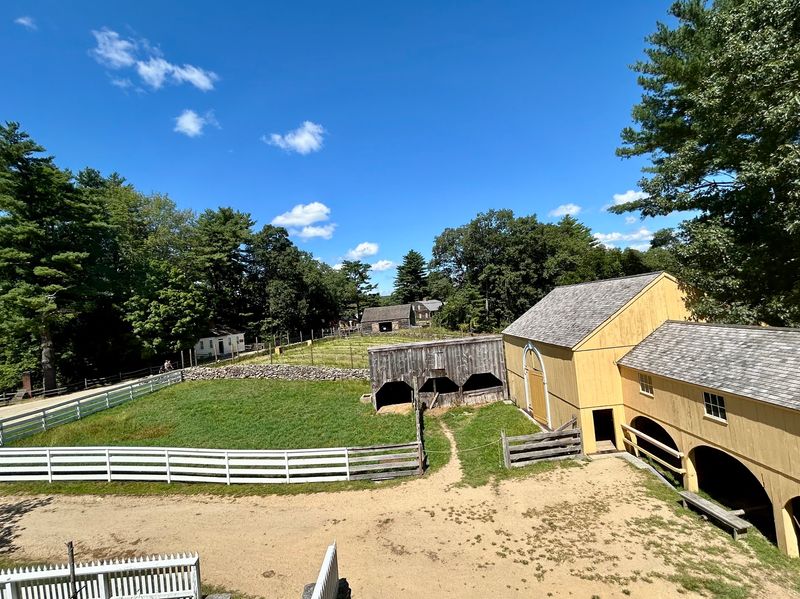
Hand shears, wooden buckets, and patient oxen set the pace at this 1830s New England village. The farm animals are part of the daily work, not just decoration.
Sheep here include Merino crosses that look like the fine-wooled sheep popular in the 1800s. Horned Wiltshire and Dorset crosses represent the common farm sheep of the era.
Each spring brings Wool Days. Farmers shear sheep by hand, and historians show every step from raw fleece to dyed yarn.
The cattle lineup is impressive. Milking Devons, Shorthorns, and rare Randall Linebacks all live in the barns and pastures.
Shorthorns came from Britain as an improved breed that gave more milk. Farmers back then were always trying to upgrade their herds.
Trained oxen haul loads around the village, and milking demonstrations show old dairy skills.
The chickens deserve a nod as well. They are Red Dorking and Dominique crosses, once nicknamed Dunghill Fowl.
That name is not flattering, but these birds were excellent at finding their own food.
6. National Colonial Farm, Accokeek, Maryland
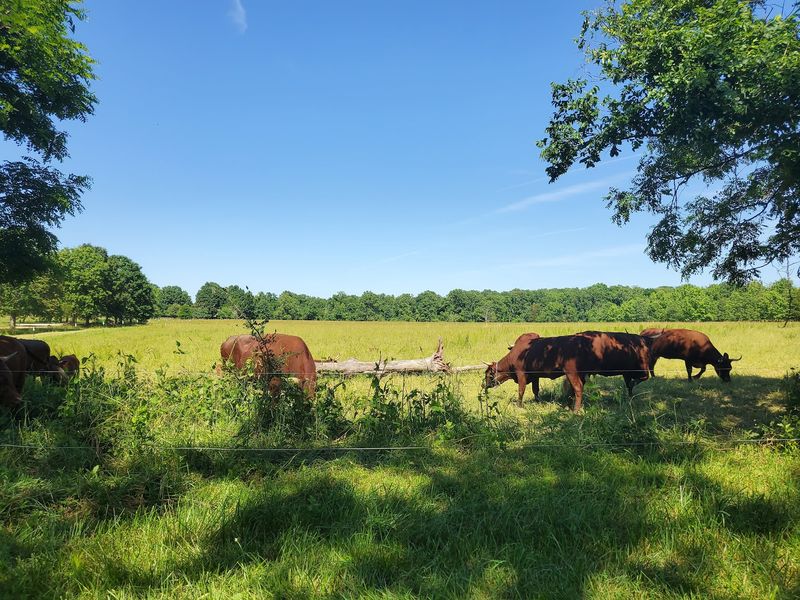
Mount Vernon sits right across the river, yet far fewer travelers know about this quiet neighbor. The National Colonial Farm recreates a Maryland family farm from just before the American Revolution.
It sits inside Piscataway Park. The setting includes colonial buildings, heirloom gardens, and fields of rare animals.
American Milking Devon cattle stand out with deep red coats and black-tipped horns. Colonial families relied on them for many jobs at once.
Hog Island sheep live here too, and only about 500 exist. Many have horns and dark-spotted faces.
The farm also raises Ossabaw hogs and Spanish goats. Java chickens and Jersey Buff turkeys keep the poultry yard busy.
Interpreters guide visitors around the farmstead and explain how each animal helped the household. Their stories make old farm life easy to picture.
Wear good walking shoes. Trails wind through the park, and some offer views across the water toward Mount Vernon.
A visit here pairs nicely with a picnic and a slow afternoon outdoors.
7. Nashville Zoo at Grassmere, Nashville, Tennessee
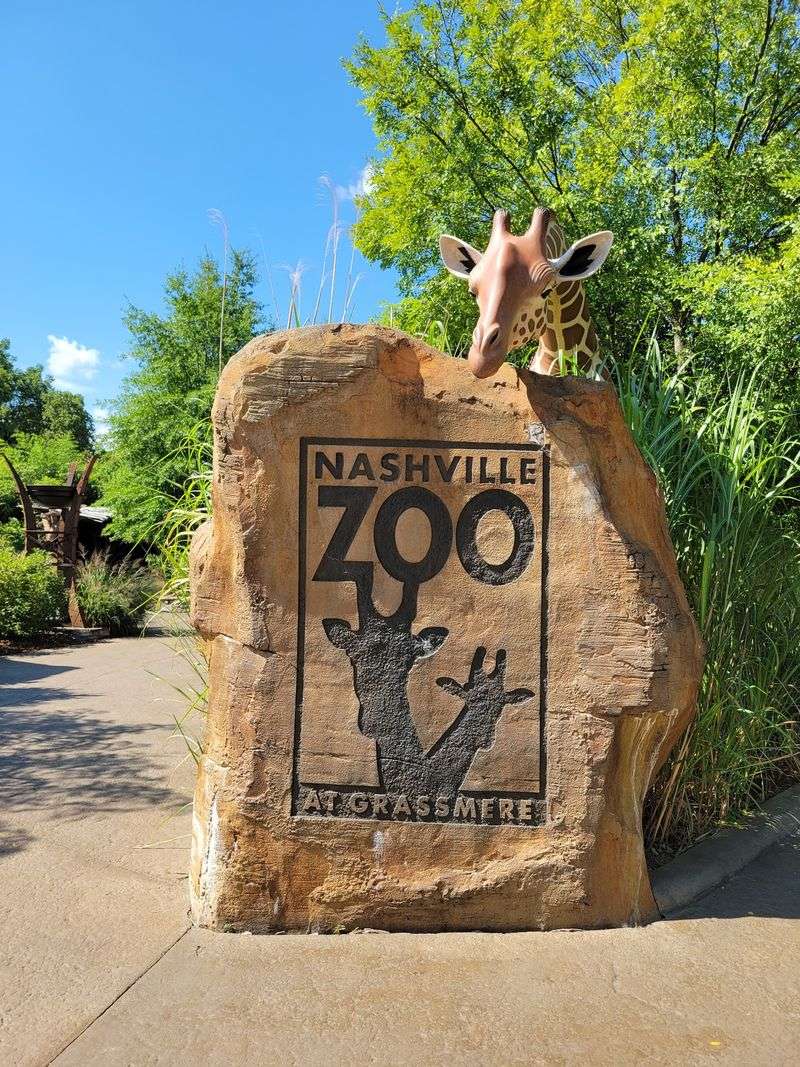
Most zoo visitors come for the giraffes and leave surprised by the cows. Grassmere Historic Farm tucks rare farm breeds into a modern Nashville zoo.
American Milking Devon steers named Tipton and Boone are local celebrities. Only about 600 registered Milking Devons remain, so meeting two in one spot is a treat.
Belted Galloway cattle steal plenty of attention. With black bodies and a wide white band, they earn nicknames like Oreo cows.
These hardy Scottish cattle first came to the United States in the 1940s. They are smaller and fuzzier than most modern cattle.
Cotswold sheep, Scottish Highland cattle, and Clydesdale horses also share the farm. Silver-laced Wyandotte chickens add some flair to the barnyard.
The farm centers on a farmhouse built in 1810. It gives visitors a look at how Tennessee families lived and worked long ago.
Save time for this section after the exotic exhibits. It is a calmer corner of the zoo, and younger kids often enjoy it the most.
8. Kline Creek Farm, West Chicago, Illinois
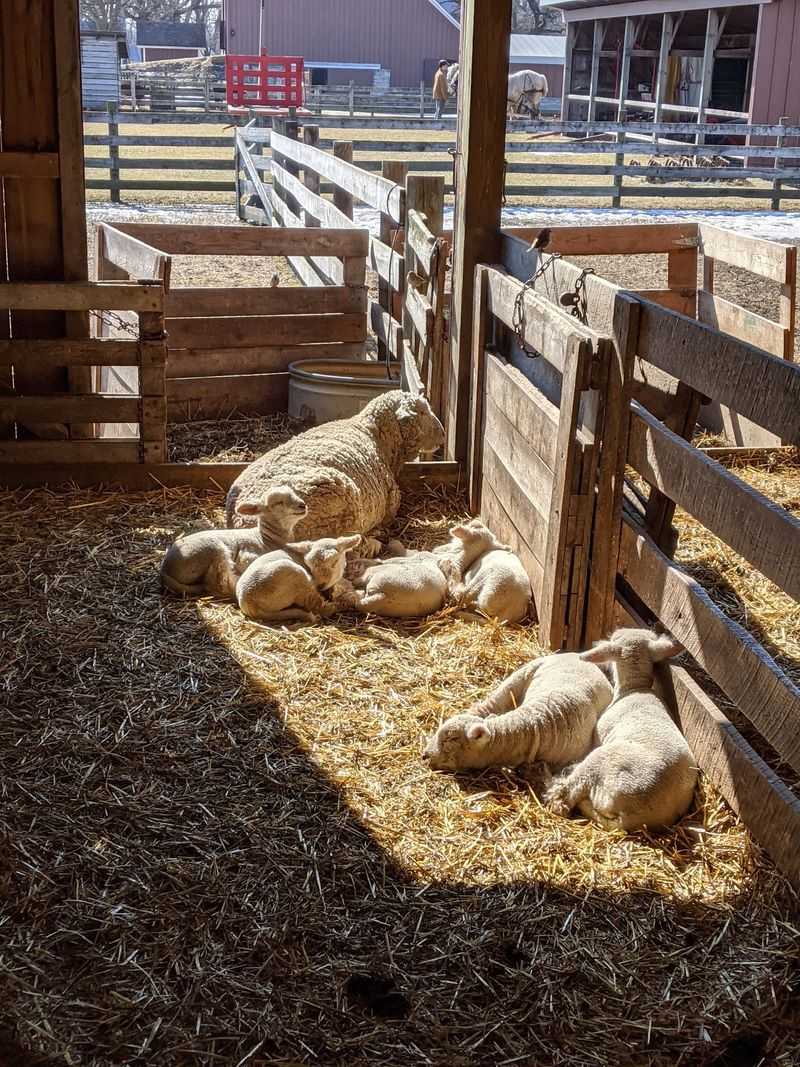
Fewer than 700 registered Heritage Milking Shorthorns exist in the United States. Kline Creek Farm is working hard to keep that number climbing.
The farm recreates DuPage County life in the 1890s. Its restored farmhouse and barns show how a family farm ran over a century ago.
Milking Shorthorns once did it all, from giving milk to pulling plows. In warmer months, staff milk the cows by hand in the barn.
Cotswold sheep are another highlight. Their long wool is easy to spot, and staff shear them with old-fashioned blade shears during public demonstrations.
These sheep were common in Illinois during the late 1800s. Today, they are rare around the world.
Berkshire hogs recently joined the conservation work. Percheron horses help plant crops and even haul ice in winter.
Spring lambing season is a fine time to visit. The farm is usually less crowded than big museums, so you can chat with interpreters and take your time at each stop.
9. Shaker Village of Pleasant Hill, Harrodsburg, Kentucky
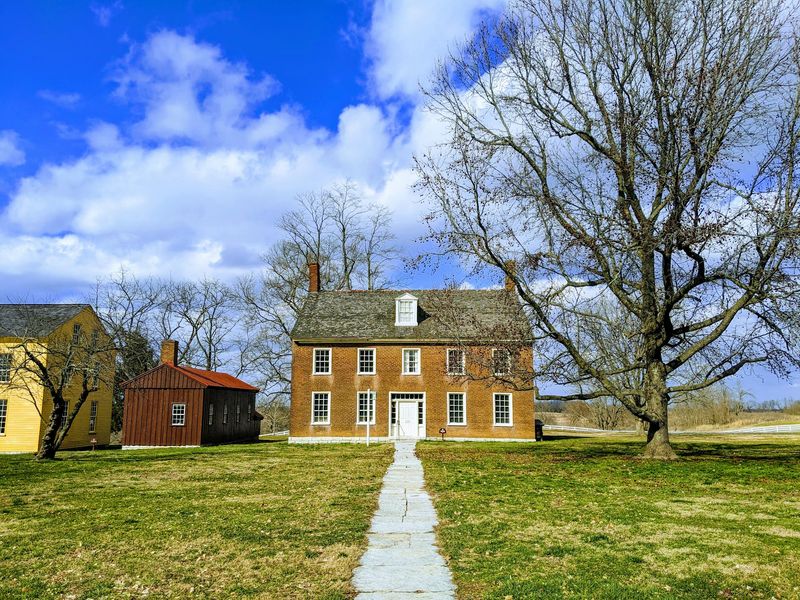
Long before science fairs, the Shakers of Pleasant Hill were running farm experiments. They bred animals carefully and imported top livestock to improve their herds.
At one point, they owned one of America’s largest collections of registered Durham Shorthorn cattle. Today, Shorthorns still graze the village fields.
The pigs here are true characters. Red Wattle hogs are large and red, with fleshy wattles hanging from their necks.
That breed is found only in North America. It forages well and does great on pasture.
Tamworth hogs are long, lean, and ginger-colored. They are believed to come from ancient European forest pigs, which explains their impressive snouts.
Original Shaker buildings stand all around the farm. Scheduled programs let visitors meet the animals and learn about Shaker farming habits.
Families should watch for the Baby Animals Festival and Family Farm Days. Lambs, piglets, calves, and baby goats take center stage.
Sheep shearing demos round out the fun.
10. Genesee Country Village & Museum, Mumford, New York
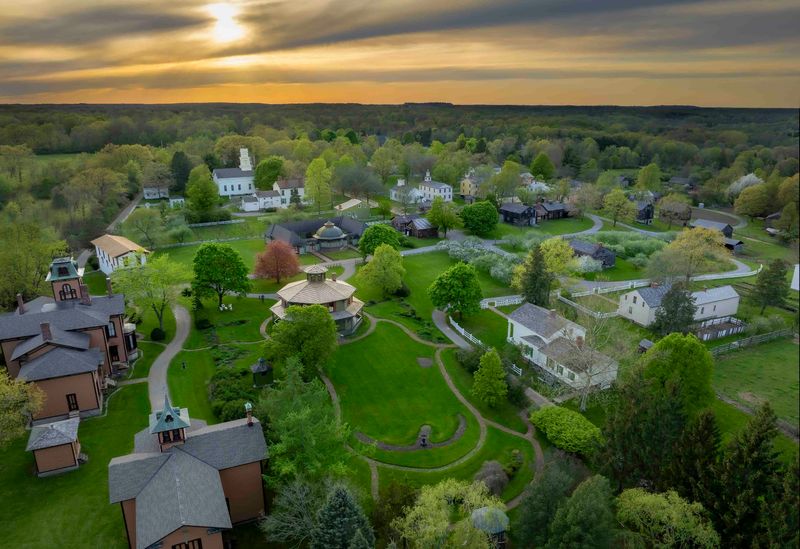
Tom and Ben have big hooves to fill. In 2026, these Randall Lineback oxen became the museum’s newest working team.
Randall Linebacks are critically endangered cattle from New England. A white stripe runs down each animal’s back, making them easy to identify.
The museum covers more than 600 acres of 19th-century village life. Kerry cows from Ireland and Milking Devon oxen also live here.
Sheep fans get a double feature. Hog Island sheep and Leicester Longwools both graze the pastures, and spring brings new lambs.
Duroc pigs and Cayuga ducks add variety. Cayugas have shiny black feathers that catch the eye.
Meet the animals at the Early Settlement Farm, Livery Barn, and Jones Farm. Staff show how the animals provided wool, milk, eggs, and plowing power.
The annual Agricultural Fair is a great time to go. It features livestock shows and sheep herding demonstrations.
Afterward, the nature center trails offer a nice break from the farmyards.
11. Living History Farms, Urbandale, Iowa
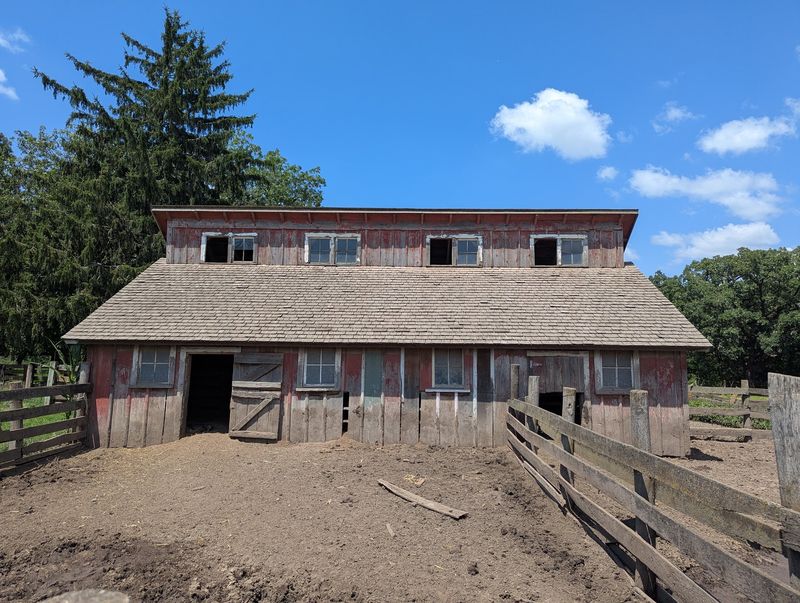
Three centuries of farming fit onto one 500-acre property in Iowa. Living History Farms lets you compare how farm life changed over time.
The tour includes a 1700 Ioway Farm, an 1850 Pioneer Farm, and a 1900 Horse-Powered Farm. Each site shows different tools, crops, and animals.
At the 1850 farm, oxen, pigs, cows, and chickens fill the barnyard. Wool spinning happens inside a log cabin.
The 1900 farm shows how machines started to change everything. Percheron horses pull equipment to plant and harvest corn, oats, and hay.
Shorthorn cattle appear at both later farms. They were once the most common cattle in Iowa, valued for milk, beef, and pulling power.
Sheep, ducks, geese, turkeys, and hogs also call the farms home. Lambs arrive in spring, and sheep are shorn each May.
Wear comfortable shoes, because there is a lot of ground to cover. Interpreters in period clothing do real chores, and they enjoy curious questions.
12. Slate Run Living Historical Farm, Ashville, Ohio
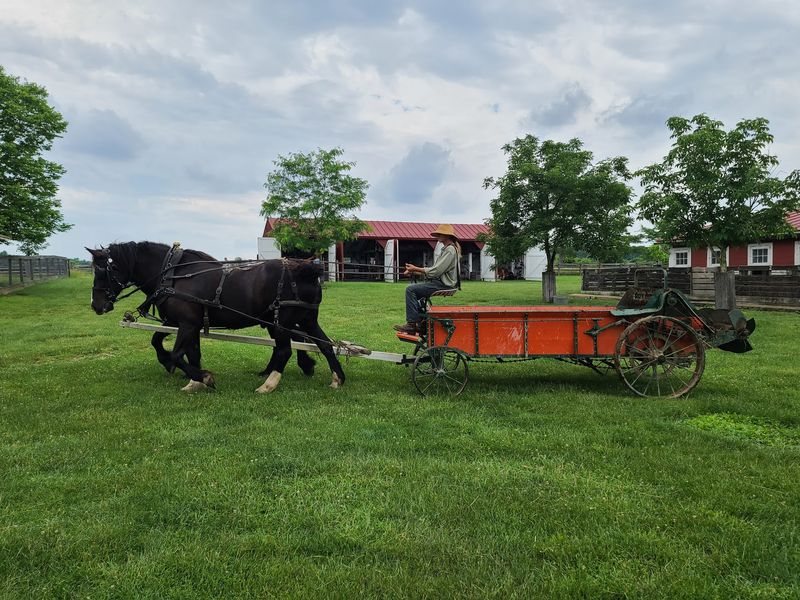
Ohio gave the world the Poland China hog in the early 1800s. Fittingly, Slate Run keeps the breed in its 1880s barnyard.
Back then, these hogs supplied meat and lard. Families used lard for cooking and making soap.
Modern Poland Chinas are leaner, but the ones here resemble their old-time relatives. It is a neat chance to see farm history up close.
Shorthorn cattle were popular in 1880s Ohio for both beef and milk. Merino and Southdown sheep represent the wool side of farm life.
Four Percheron horses handle plowing and other heavy chores. By 1879, Percherons had become America’s favorite workhorse.
The poultry list is long and fun. Buckeye chickens, Slate turkeys, Muscovy ducks, and Toulouse geese all roam the farm.
Staff and volunteers in costume tend gardens and cook on wood stoves. The farm sits inside Slate Run Metro Park, so a trail walk makes a nice ending to your rare breed road trip.
Share this story