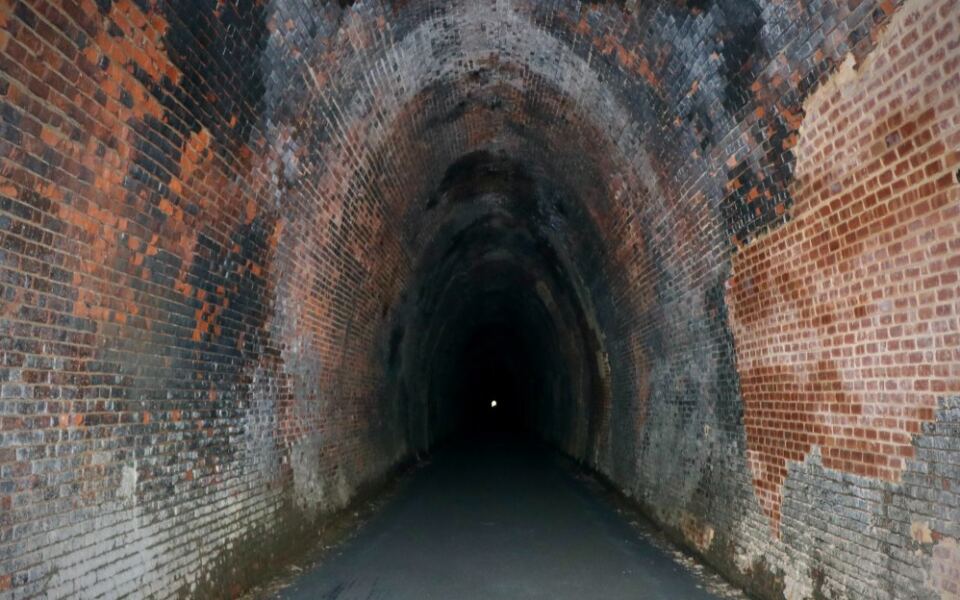
A railroad tunnel in Virginia was once the longest in the country, and today you can stroll right through it. It has no lights inside, so a flashlight is a must.
I love that the path follows an old rail bed. Crews carved the passage through solid mountain rock more than 160 years ago.
The tunnel stays cool all year, even when the weather outside is sticky. Dripping water, tiny salamanders, and a glowing circle of daylight at the far end make the walk feel like a real adventure.
I can’t imagine a better excuse to leave the phone in your pocket. Ready to find out where it is?
A Railroad Dream Carved Through Solid Rock
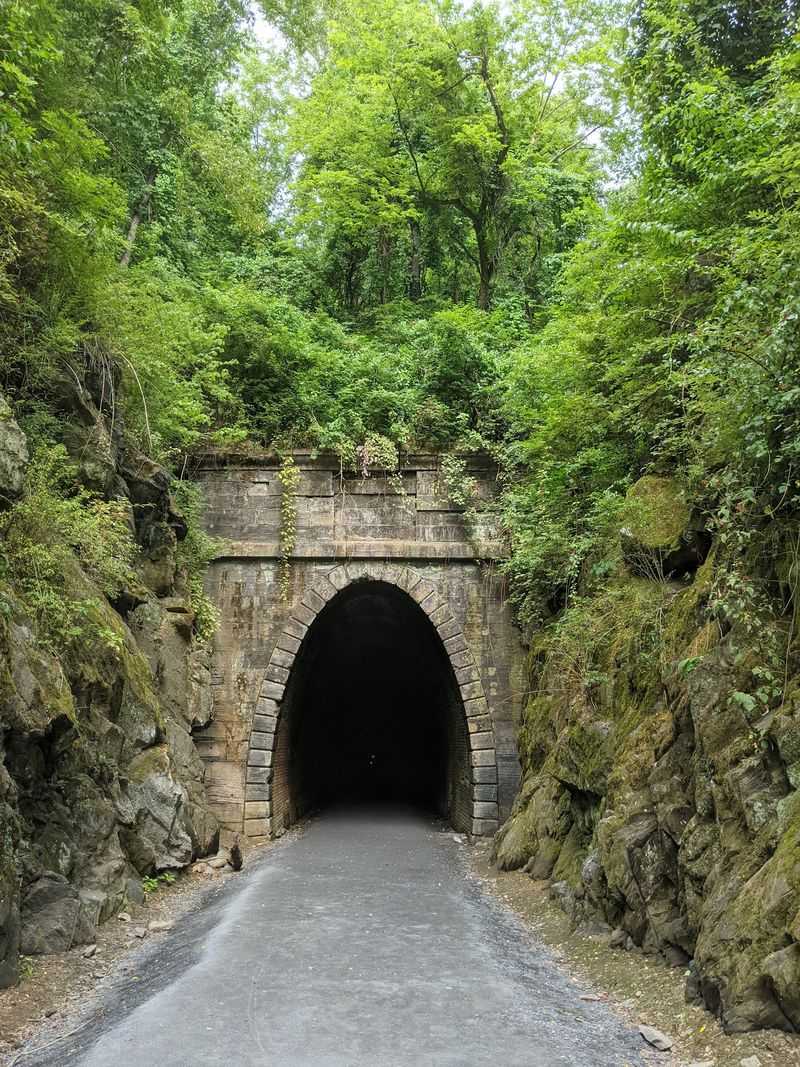
Blue Ridge Tunnel, Afton, VA, began as a bold plan to move trains across the Blue Ridge Mountains. Back in the 1850s, Virginia wanted a rail link between the Shenandoah Valley and the coast.
The mountain stood squarely in the way.
Claudius Crozet, a French-born engineer, led the design. Crews worked from both ends and met in the middle.
When the job ended, it was the longest railroad tunnel in the United States.
Think about the tools of that time. Workers drilled and cleared rock with hand tools and black powder.
There were no modern machines to speed things along.
The tunnel opened for trains in 1858. It carried them for decades, until a newer and wider tunnel replaced it in 1944.
That newer one still sits close by and carries trains today.
Walking through the old passage now gives you a front-row seat to that history. It also gives you a sense of just how stubborn those builders were.
Good luck not feeling impressed.
Yes, You Really Need Your Own Light
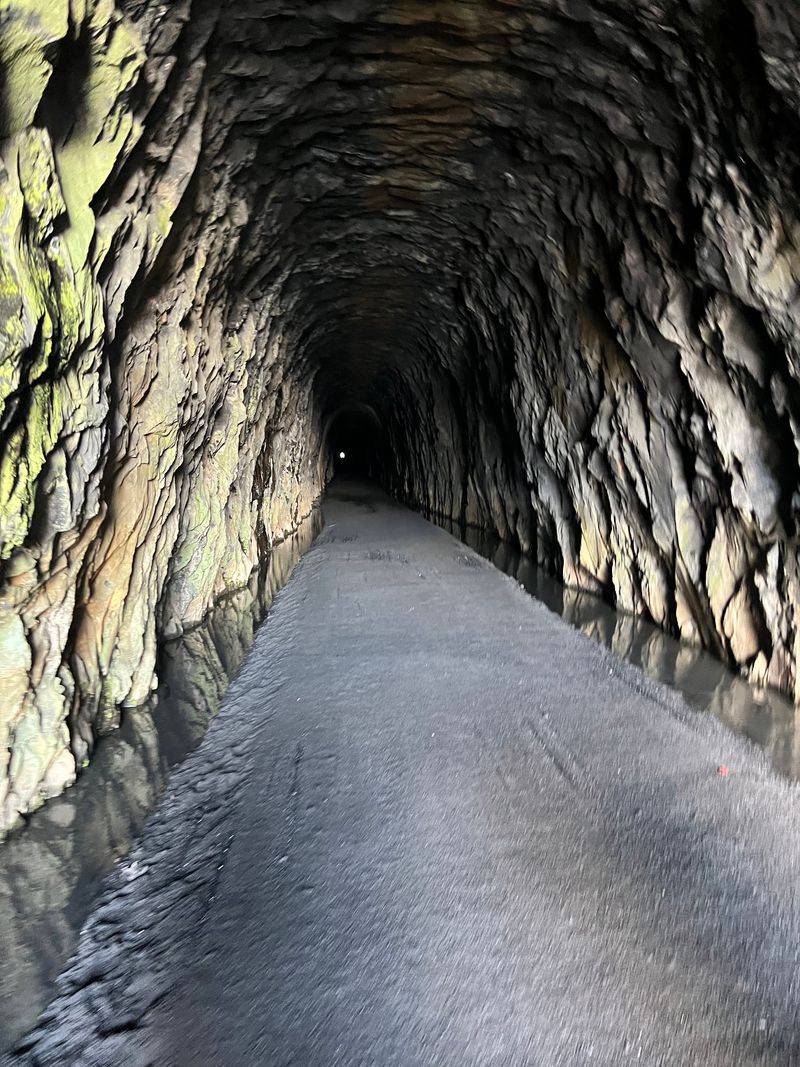
Nobody installed lights inside this tunnel. Once you step past the entrance, the only glow comes from what you carry.
A flashlight or headlamp is the smart choice.
A phone light can work in a pinch. Even so, a real flashlight gives a wider beam and lights up the puddles before your shoes find them.
Spare batteries are cheap insurance.
Here is a comforting detail. The far entrance stays visible as a small bright dot the whole way.
That makes it hard to feel lost.
Still, the middle stretch is very dark. Walls, ceiling, and ground blend together without a beam to guide you.
Keep the light pointed low so you can spot wet patches.
Some hikers like to stop halfway and switch their lights off for a moment. The quiet is dramatic.
Just warn your group first, so nobody jumps.
Choosing Between the East and West Trailheads
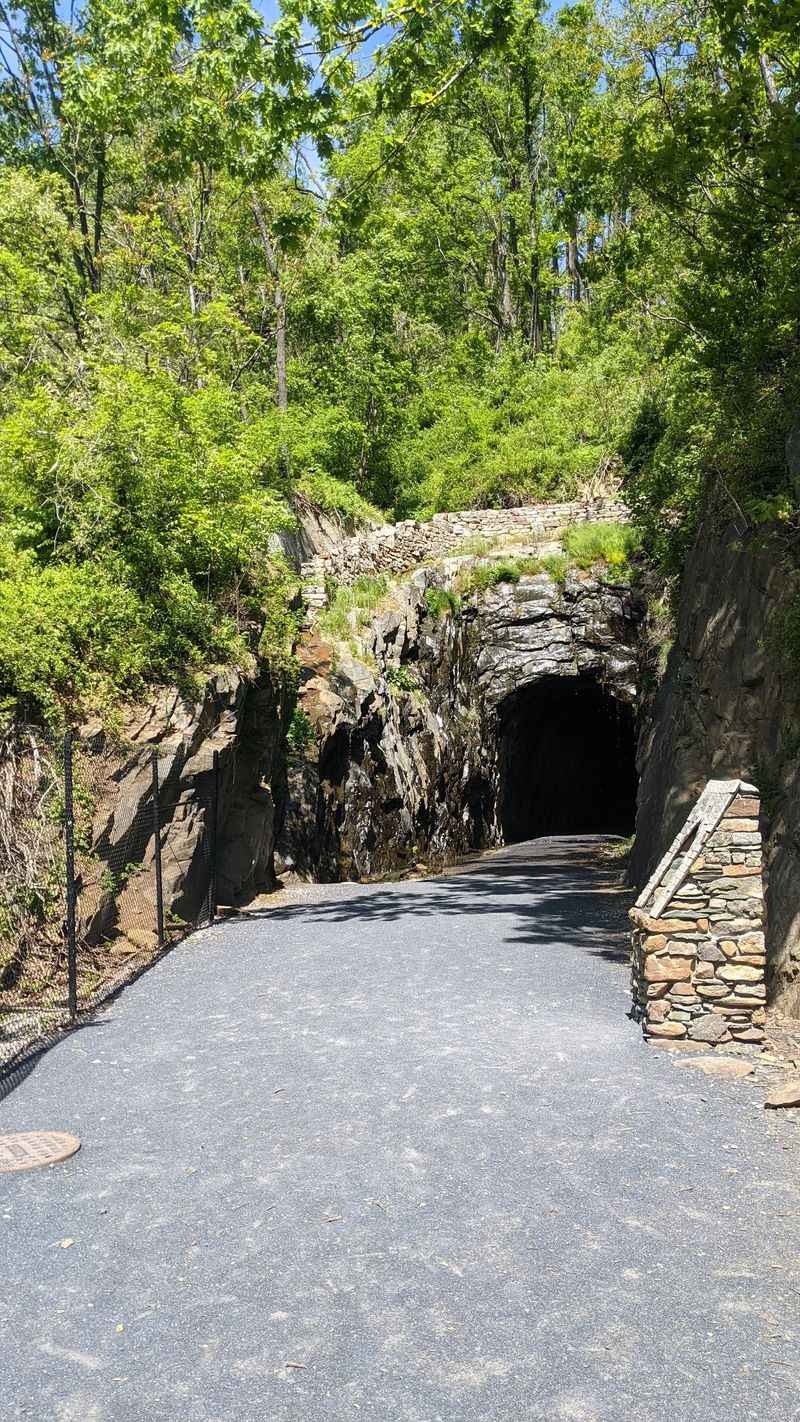
Two trailheads give you options. The east side is in Afton, close to the old depot.
The west side sits near Waynesboro, not far from Interstate 64.
The trail runs roughly 2.25 miles from the east end to the west end. A round trip from either side lands around four to five miles, depending on how far you go.
Plan on a couple of hours.
From the east, the walk to the tunnel mouth is under a mile and mostly gentle. The west side starts with a downhill stretch.
That means the walk back up to the car is the harder part.
Parking is limited at the west trailhead, so a nice weekend may fill it. Arriving early helps.
Simple restroom facilities are available at the trailheads.
Pick the side that matches your energy. Many hikers choose one end and turn around inside the tunnel.
Others arrange a pickup at the opposite end.
A Natural Air Conditioner in the Middle of Summer
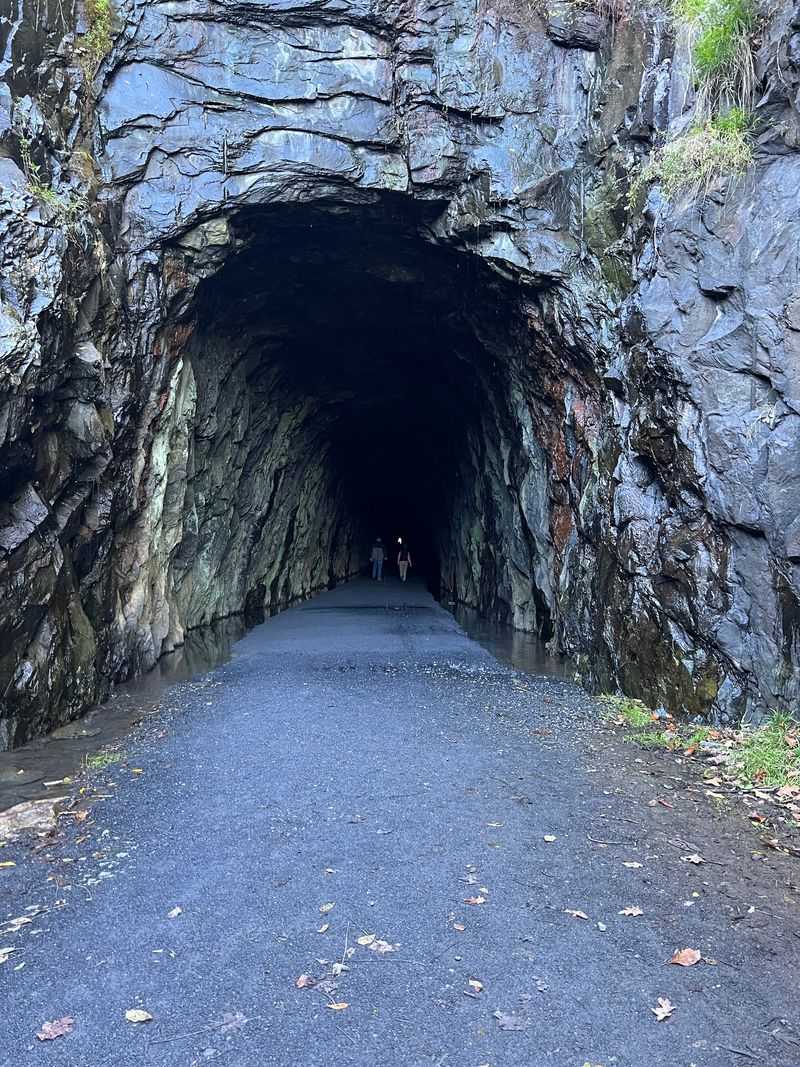
Steady cool air greets you inside the mountain. The tunnel stays around the 50-degree mark year-round, much like a cave.
On a muggy Virginia afternoon, that feels fantastic.
Packing smart makes the trip better. A light jacket helps, especially one with a hood.
Wind can funnel through the passage and chill your ears.
Wet spots are common. Water drips from above and collects in puddles along the path.
Shoes with good grip are a wise pick.
Winter flips the story. Outside may feel icy, yet the tunnel can seem milder by comparison.
Either way, the temperature stays remarkably even.
Bring a bottle of water too. The trail is gravel and the return walk may include hills.
Staying hydrated keeps everyone smiling at the finish.
Walls That Tell the Story
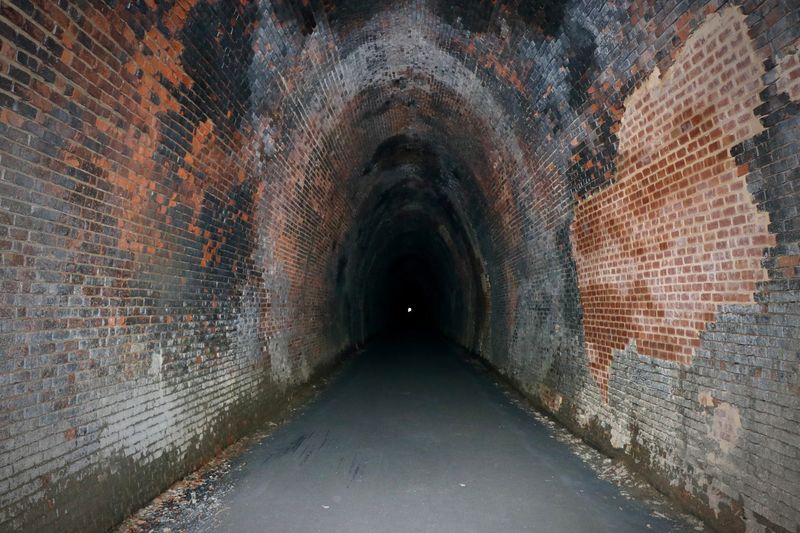
Reach out and you can almost touch the work of 1850s crews. The walls show the rough shape of the rock they carved.
Some sections are lined with stone or brick.
Tool marks and uneven surfaces add character. Aim your flashlight along the wall and notice the texture.
It looks nothing like a modern tunnel.
The passage is also narrow by today’s standards. Trains of that era were smaller.
Picture that tight fit with a steam locomotive rolling through.
Along the trail, signs share stories about the tunnel and its builders. They are worth a pause.
Reading them adds depth to the walk.
Remember that the tunnel is protected as a historic site. Take photos and leave everything as you found it.
That keeps the walls strong for the next hiker.
Small Wildlife With Big Charm
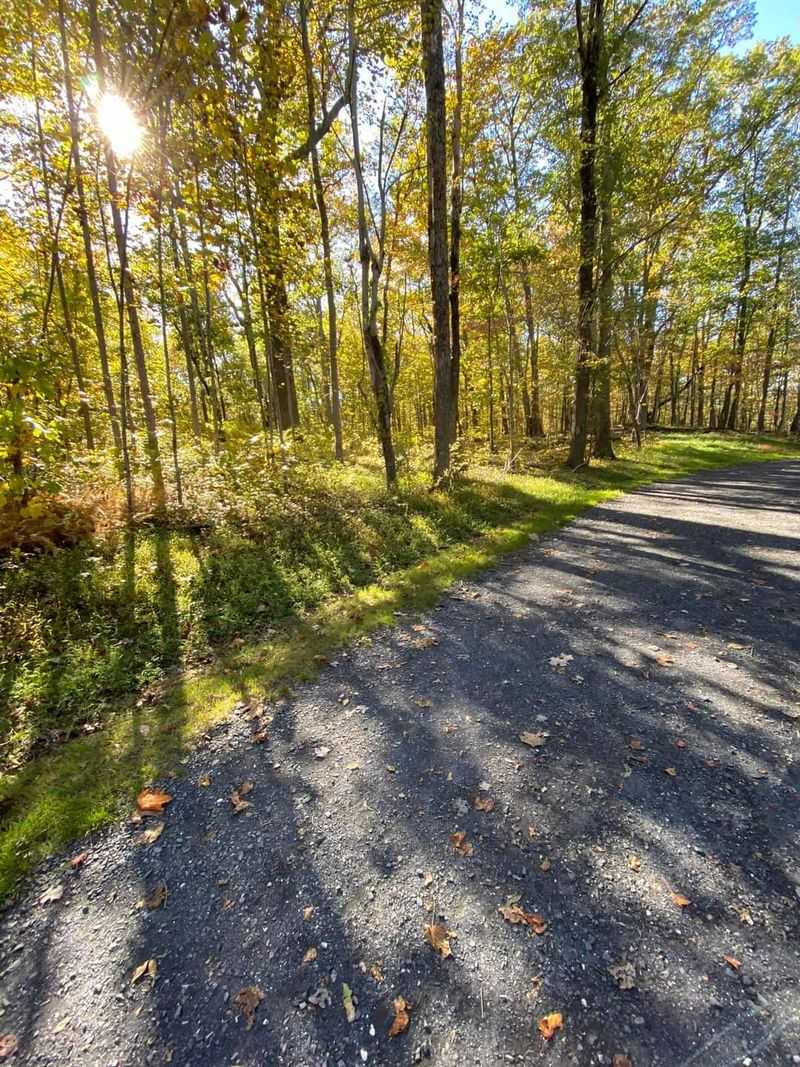
Keep your eyes open for tiny residents. Salamanders can turn up in the damp, cool spaces around the tunnel.
They make a fun bonus for curious kids and adults alike.
Look, but don’t touch. Their skin is delicate, and the habitat is easy to disturb.
A quiet glance is plenty.
The woods outside add more to see. Moss, ferns, and tall trees line the approach.
Shade makes the early part of the trail pleasant even on a bright day.
Water is part of the scene as well. Drips fall from the ceiling and trickle near the entrances.
Listen closely and you will hear it echo.
Dogs are welcome on the trail when kept under control. Check current rules before you go.
A short leash helps around puddles and other hikers.
Easy Enough for Families, With One Catch
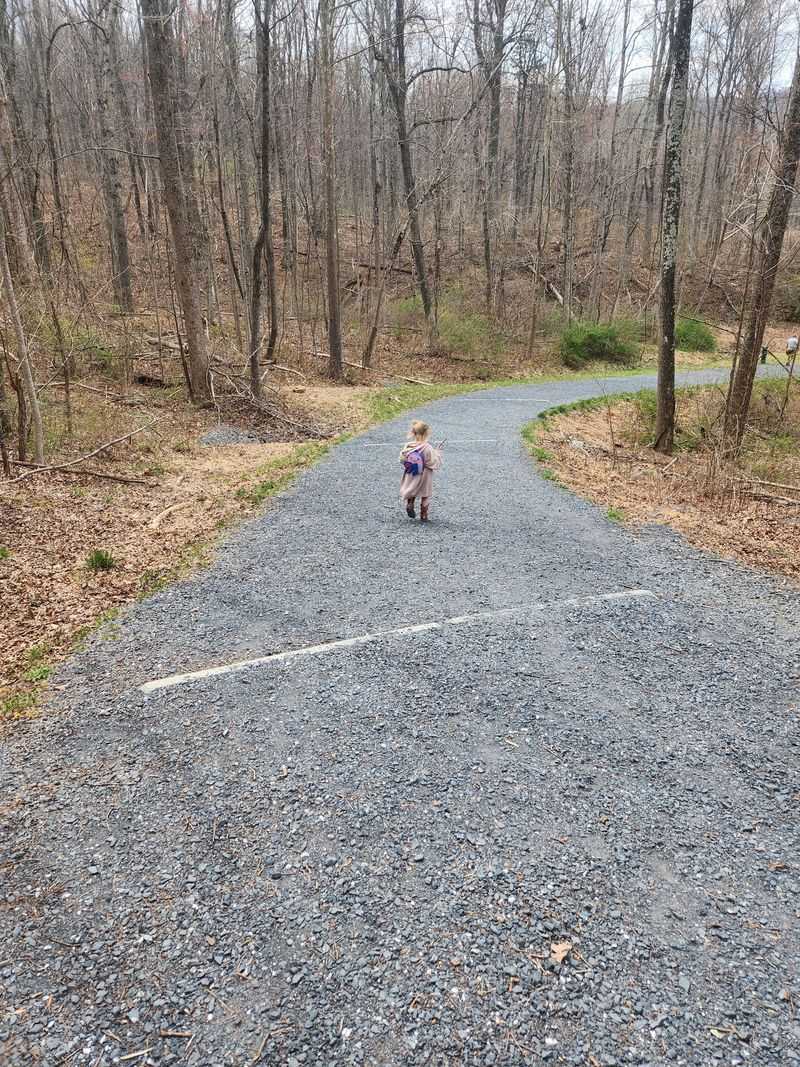
Kids often love this hike. The wide gravel path is simple to follow.
A tunnel at the end of it turns the walk into a mini quest.
Strollers with sturdy wheels can handle the gravel. Smaller, lightweight ones may struggle.
Plan for the surface before you load up.
Here comes the catch. If you start from the west side, the trip back is uphill.
Little legs may get tired, so carrying a toddler is a real possibility.
Snacks and water help morale. Take breaks at the information signs.
They double as rest stops and history lessons.
Give every child their own small light if you can. They feel like explorers.
Just remind them to keep the beam off other people’s faces.
Bikes Are Welcome, With Some Manners
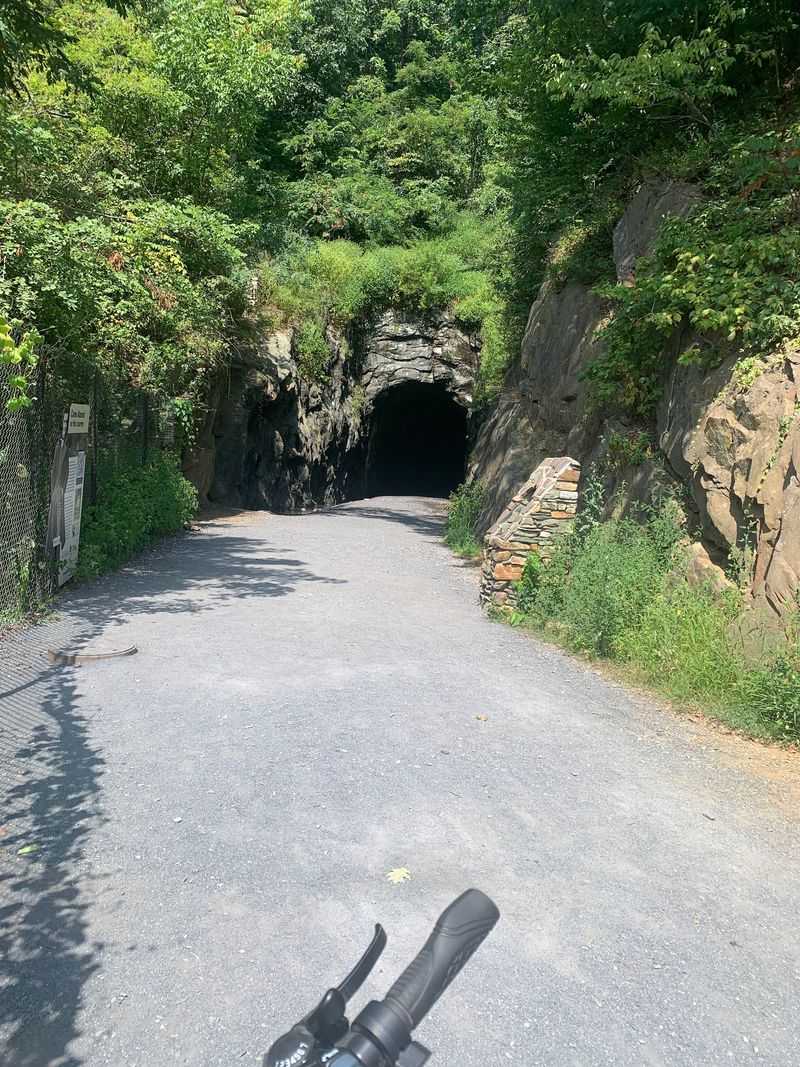
Cyclists can roll through the tunnel too. Gravel is the surface, so wider tires are a good idea.
Lights are a must.
Etiquette matters here. Hikers share the same narrow space, and puddles can force sudden swerves.
Slow down and give walkers plenty of room.
Route choice makes a difference. The west approach is hillier, and some riders find it tough going.
The east side is gentler.
Many people simply walk, and that is a great option. A bike adds distance, but a slow stroll lets you notice more.
Either way, you will pass through the same cool darkness.
Park your bike safely at the entrance if you want to explore on foot. Keep valuables with you.
A little planning keeps the day relaxed.
Fall Color and a Quiet Finish
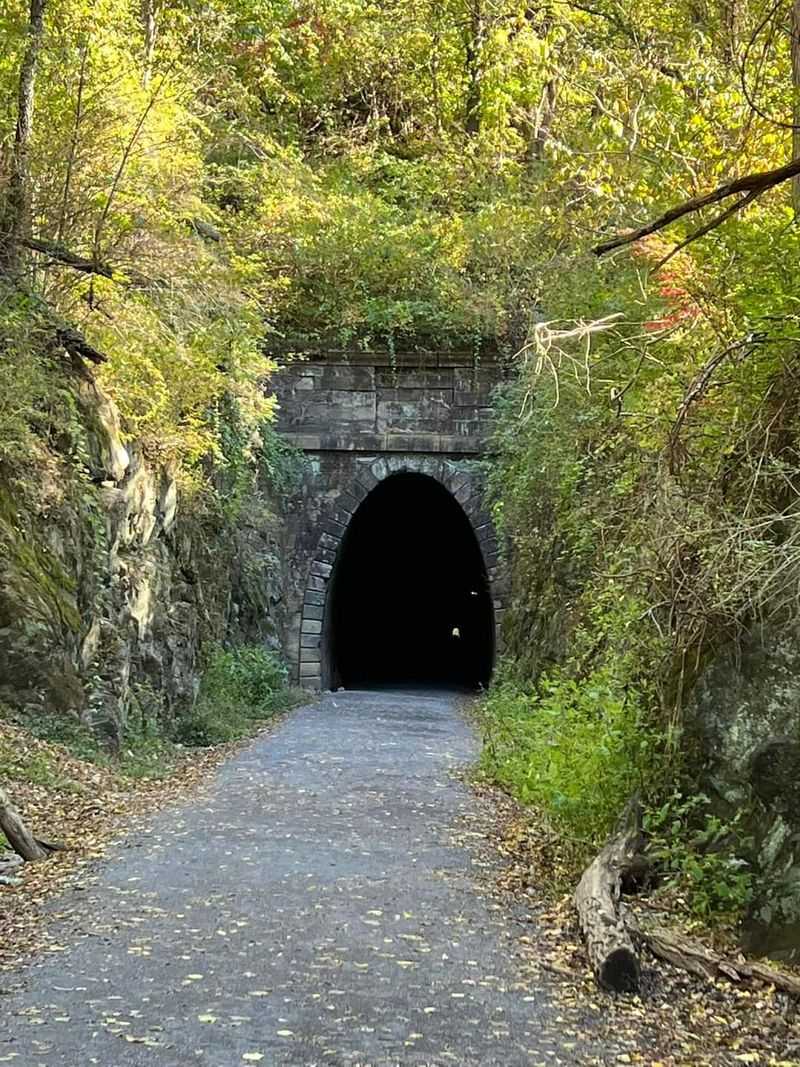
Autumn gives this trail a bright frame. Leaves along the Blue Ridge turn warm shades of gold and red.
The approach to the tunnel is a pretty walk before you even reach the dark.
The area sits near Afton in Nelson County, close to Interstate 64. That makes it an easy add-on to a Virginia road trip.
The east entrance is near the old Afton depot.
Crowds can grow on nice-weather weekends. Early mornings and weekdays tend to feel calmer.
Check conditions before heading out.
Plan a little extra time for photos at both portals. The glowing opening at the end of the tunnel makes a striking shot.
Hold your camera steady in the low light.
When you step back outside, the warm air feels almost surprising. You have just walked through a mountain.
That is a pretty good story to bring home.
Share this story