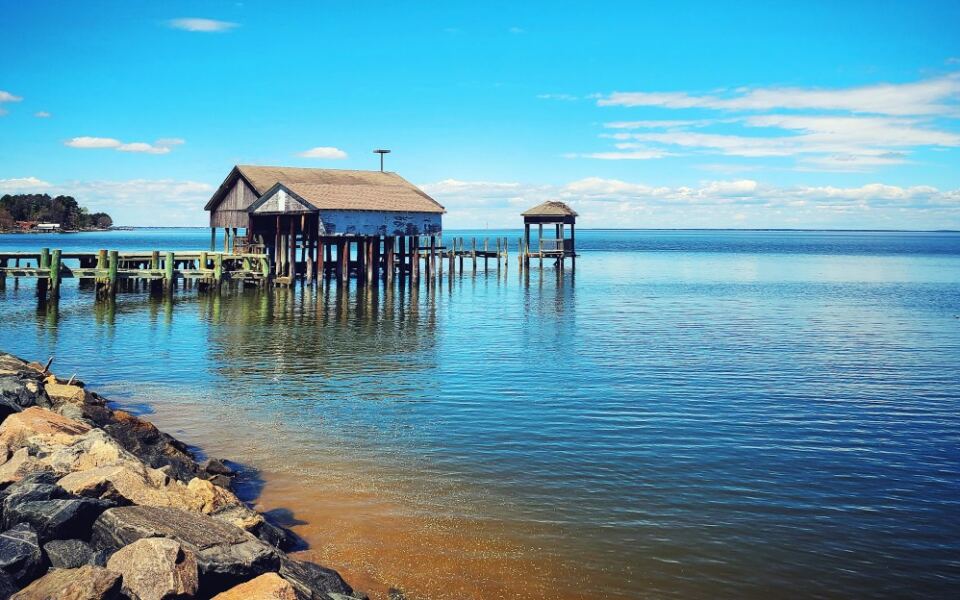
I love a beach with no boardwalk, no arcade, and no neon. Virginia has several where the main attractions are sand, water, and wide open sky.
Some sit on the Chesapeake Bay. Others face the Atlantic, and a few sit beside rivers that feed the bay.
I can’t imagine a better reason to leave the crowded shoreline behind. Pack a towel, bring curiosity, and plan to slow down.
So which quiet stretch of sand should you try first?
1. Bethel Beach Natural Area Preserve
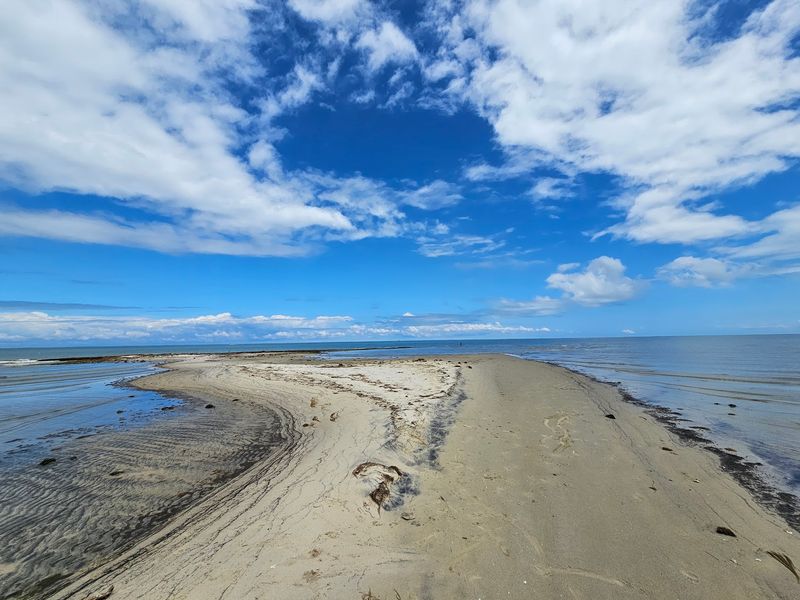
Bethel Beach Natural Area Preserve lies along the Chesapeake Bay in Mathews County, Virginia. This protected coastal landscape features sandy shoreline, dunes, salt marshes, and shallow tidal waters.
Its natural character makes it very different from a traditional beach resort.
The preserve is especially important for coastal wildlife. Its beach and marsh habitats provide nesting and feeding areas for shorebirds, including species that depend on relatively undisturbed coastal environments.
The shoreline is also constantly changing as tides, storms, and coastal erosion reshape the sand.
Visitors come primarily for nature observation, photography, and quiet walks along the coast. There are no typical resort amenities, and the preserve’s sensitive habitats require careful treatment.
Because this is a protected natural area, access may be restricted in certain locations or seasons to safeguard nesting birds and fragile vegetation. Visitors should check current rules before arriving and remain outside any posted closures.
2. Hughlett Point Natural Area Preserve
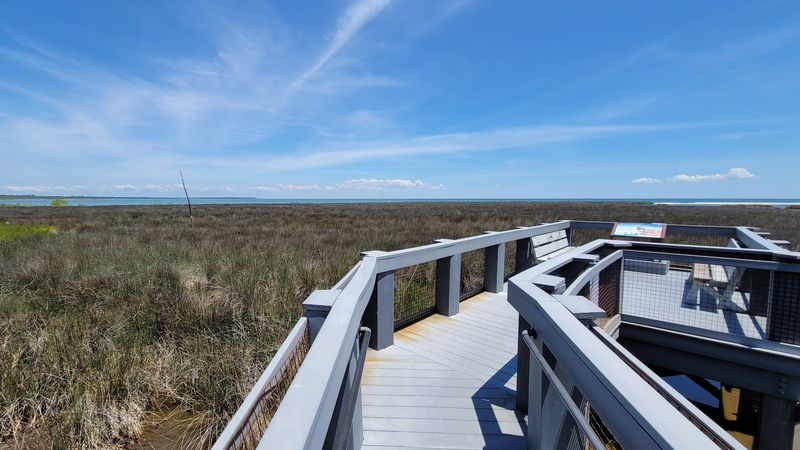
Hughlett Point Natural Area Preserve is located in Northumberland County on Virginia’s Northern Neck, where the Chesapeake Bay meets a landscape of tidal marshes, sandy beaches, and coastal woodlands.
The preserve protects an important section of relatively undeveloped Chesapeake Bay shoreline. Its varied habitats support numerous bird species, including migratory shorebirds and waterfowl.
Salt marshes and shallow coastal waters also provide valuable habitat for fish and other wildlife.
Visitors can explore designated trails that pass through wooded and marshy environments toward the shoreline. The combination of forest and open water creates opportunities for birdwatching, photography, and observing the Chesapeake Bay’s natural ecosystems.
Unlike a conventional public beach, Hughlett Point is managed primarily for conservation and low-impact recreation. Swimming facilities, lifeguards, and commercial beach services are not part of the experience.
Visitors should follow posted trail information and seasonal restrictions, particularly where sensitive wildlife habitats are concerned.
3. Grandview Nature Preserve Beach
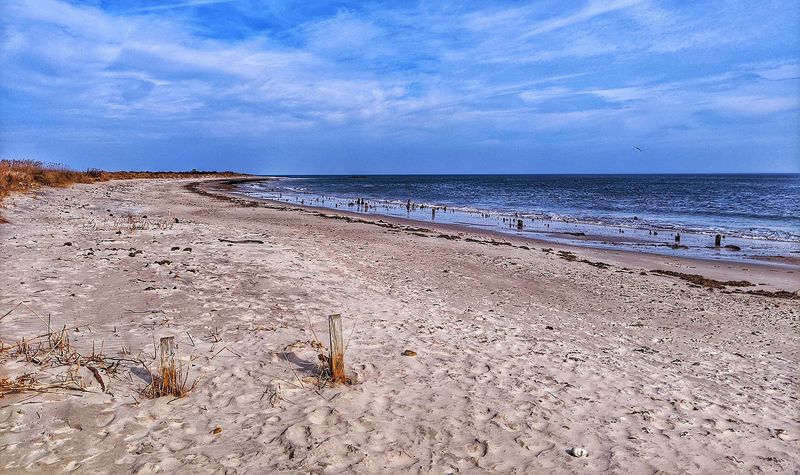
Grandview Nature Preserve is located in Hampton, Virginia, along the Chesapeake Bay. It protects a coastal environment that includes sandy beach, tidal marshes, and other important shoreline habitats.
One of its defining features is the relatively undeveloped waterfront. While much of Hampton Roads is heavily urbanized, Grandview offers a chance to experience a more natural section of the bay.
The preserve is particularly valuable for birdwatching because its shoreline and marshes provide habitat for coastal birds. Its beach is also an important nesting area for certain shorebird species, making seasonal access restrictions necessary.
Visitors generally reach the shoreline on foot, and the preserve has limited facilities compared with developed recreational beaches. It is better suited to walking, photography, and nature observation than to a conventional beach day.
The city manages the preserve to protect its ecological resources, so visitors should respect posted closures, stay out of sensitive areas, and check current access rules before visiting.
4. False Cape State Park Beach
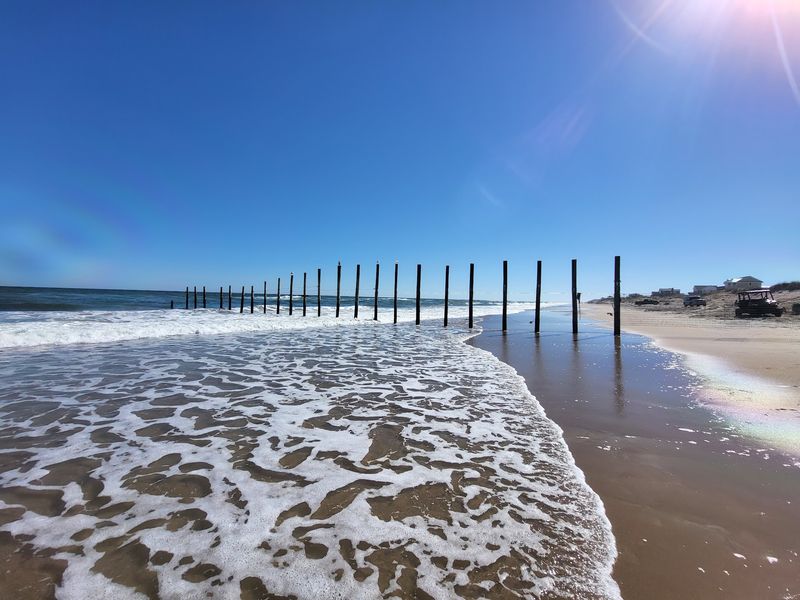
False Cape State Park offers one of Virginia’s most remote coastal experiences. Located south of Sandbridge in Virginia Beach, the park stretches between the Atlantic Ocean and Back Bay, protecting nearly six miles of undeveloped oceanfront.
Unlike conventional beach destinations, False Cape cannot be reached by private car. Visitors arrive on foot, by bicycle, or by boat, with access routes passing through or around Back Bay National Wildlife Refuge.
The park also offers reservation-based tram tours.
Its landscape includes sandy beaches, dunes, maritime forests, marshes, and wooded wetlands. Hiking and biking trails allow visitors to explore these different environments, while primitive camping provides an opportunity to spend more time in the coastal wilderness.
False Cape also preserves the history of Wash Woods, a former coastal community.
There are no designated swimming areas, so this is primarily a destination for beach walks, wildlife observation, and outdoor exploration rather than a typical swimming vacation.
5. Kiptopeke State Park Beach
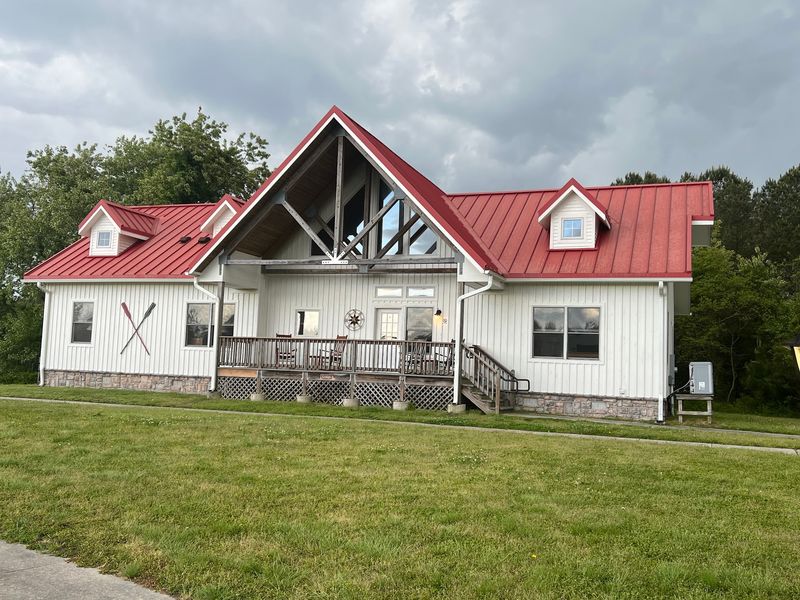
Kiptopeke State Park sits near Cape Charles on Virginia’s Eastern Shore, offering sandy beaches along the Chesapeake Bay. The park combines waterfront recreation with excellent opportunities to observe migrating birds traveling along the Atlantic Flyway.
One of its most recognizable features is the collection of concrete ships visible offshore. These vessels were deliberately sunk to form a breakwater, creating an unusual coastal landmark.
Kiptopeke has two unguarded beaches. The northern swimming beach stretches nearly half a mile and operates seasonally, while the southern beach accommodates additional activities, including fishing, crabbing, and boating.
Beyond the shoreline, visitors can explore more than five miles of hiking and biking trails, including paths through coastal woodland and dune habitats.
The park also provides camping, cabins, yurts, a fishing pier, picnic areas, and a boat ramp. Its combination of beach access, birdwatching, and overnight accommodations makes it one of the more versatile coastal parks in Virginia.
6. Westmoreland State Park Beach
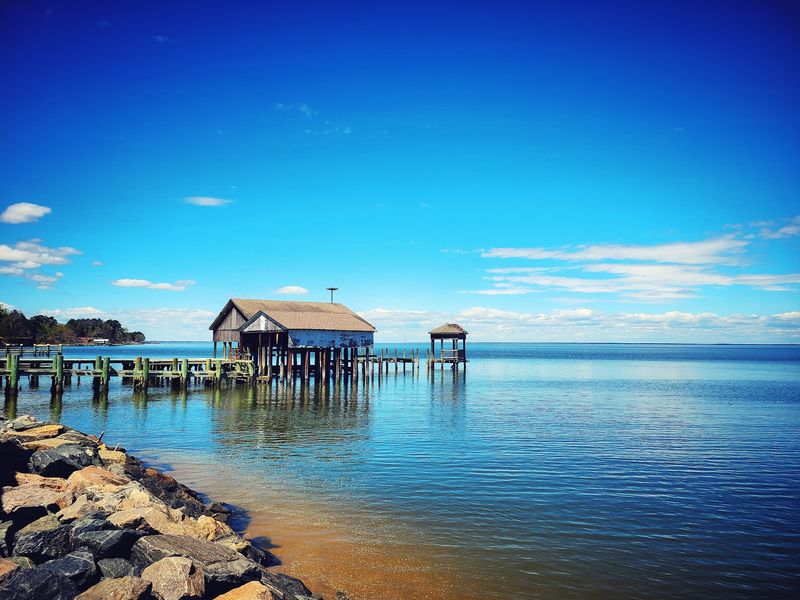
Westmoreland State Park overlooks the Potomac River near Montross in Virginia’s Northern Neck. Its shoreline is known for scenic river views, wooded bluffs, and opportunities to discover fossils associated with the region’s ancient marine environment.
Fossil Beach is one of the park’s best-known attractions. The surrounding cliffs contain geological deposits that have produced prehistoric marine fossils, including shark teeth.
Visitors should stay away from unstable cliff faces and follow the park’s collection rules.
Several hiking trails lead through forests and toward the waterfront. The park also offers fishing, boating, and opportunities to observe wildlife along the river.
Unlike a developed swimming beach, Westmoreland has no designated swimming areas or lifeguards.
The park is undergoing shoreline stabilization and cabin renovation projects. Its official updates indicate that Fossil Beach and the Day Use Beach remain accessible, although construction equipment and fencing may affect certain views and access routes.
7. York River State Park Beach
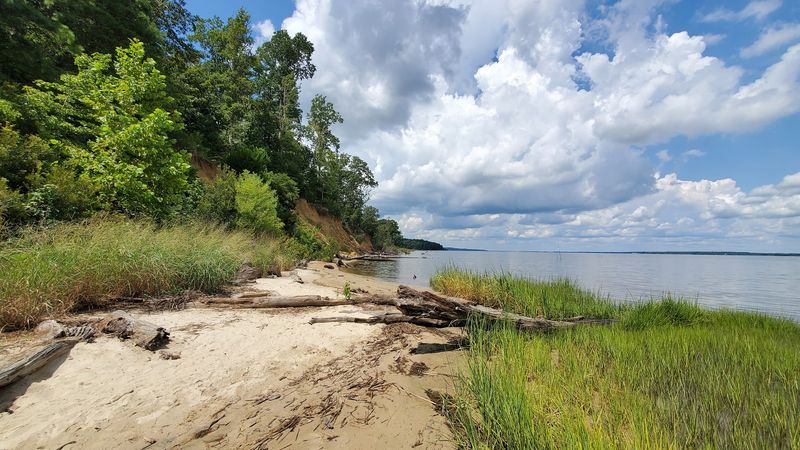
York River State Park, near Williamsburg, protects a beautiful stretch of Virginia’s tidal river landscape. The park is particularly significant because it lies within an estuarine environment where freshwater and saltwater mix, supporting a wide variety of plants and animals.
Visitors can explore wooded trails, marshes, and shoreline areas while learning about the ecosystems associated with the York River. The park’s trails provide opportunities for hiking, wildlife observation, and photography.
Taskinas Creek is another important natural feature. Its marshes and waterways can be explored through guided paddling programs, while Croaker Landing offers a fishing pier and boat-launch facilities.
Although parts of the park’s shoreline may resemble a traditional beach, York River State Park has no designated swimming areas. It is primarily a destination for hiking, fishing, paddling, and environmental education.
The combination of tidal wetlands, wooded trails, and river scenery makes this park especially interesting for visitors who enjoy coastal nature without needing an oceanfront setting.
8. Chippokes State Park Beach
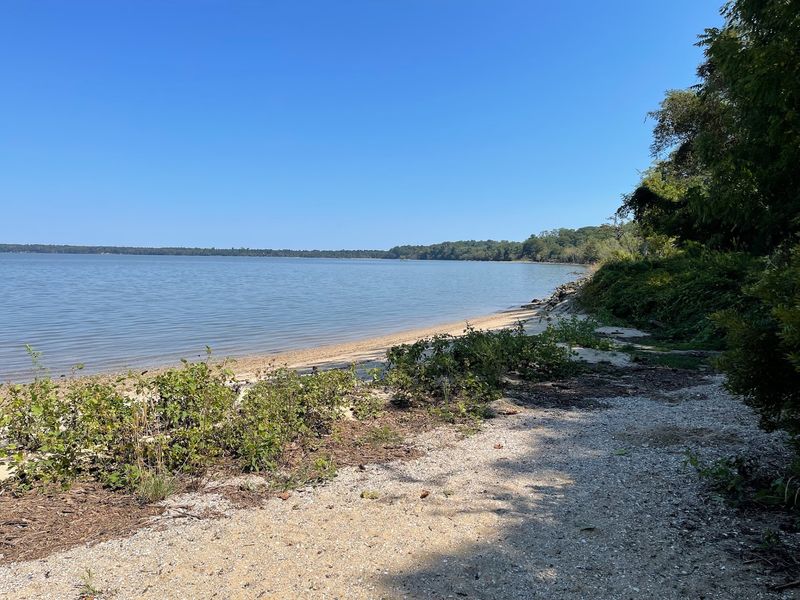
Chippokes State Park occupies a historic landscape along the James River in Surry County, directly across the water from Jamestown. Its shoreline combines natural beauty with a fascinating record of Virginia’s geological and agricultural history.
The riverbank is particularly interesting for fossil hunting. Prehistoric shark teeth and other marine fossils can be found along parts of the shoreline, and the park organizes educational programs that introduce visitors to these ancient remains.
Chippokes is also one of the country’s oldest continually farmed plantation properties, with a history dating to 1619. Visitors can explore historic buildings, formal gardens, and the Farm and Forestry Museum.
The park offers approximately 12 miles of trails, along with camping and overnight accommodations. Its James River setting provides opportunities for walking, photography, and nature observation.
There is no designated swimming area, making the shoreline better suited to exploration and fossil discovery than conventional beach recreation.
9. Colonial Beach
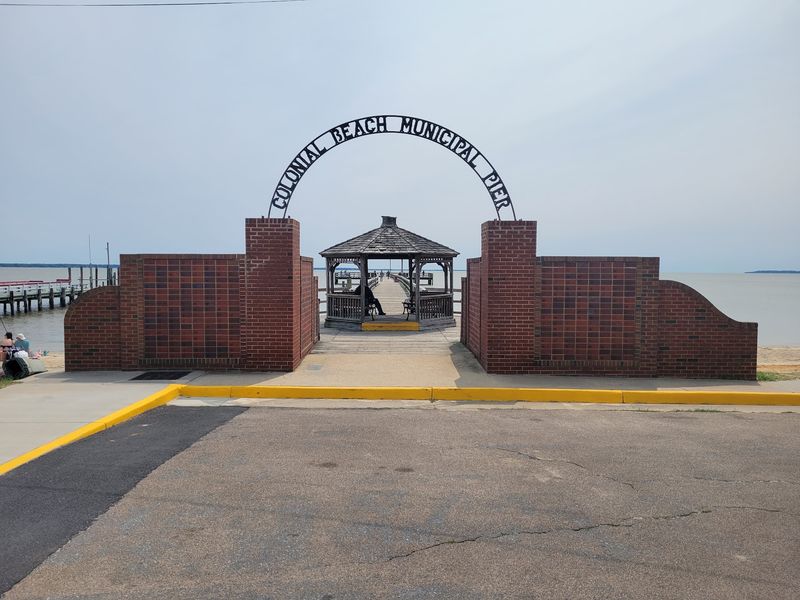
Colonial Beach is a waterfront town on the Potomac River in Virginia’s Northern Neck. Unlike the secluded nature preserves elsewhere on this list, it offers a traditional beach-town atmosphere with sandy public beaches, restaurants, waterfront businesses, and recreational activities.
The town has several distinct beach areas. Downtown Boardwalk Beach is the liveliest, with a public bathhouse, a fishing pier, waterfront dining, and access to watersports.
North Beach offers a quieter setting while remaining close to downtown.
Irving Avenue Beach runs alongside a residential area with vacation rentals and lodging, while Castlewood Beach lies near a public boat launch, park, and playground.
Because Colonial Beach sits along the tidal Potomac River rather than the Atlantic Ocean, its waterfront provides a different coastal experience from Virginia’s ocean beaches.
Visitors can combine time on the sand with a walk along the boardwalk, a meal overlooking the river, or an afternoon exploring the town’s waterfront.
Share this story