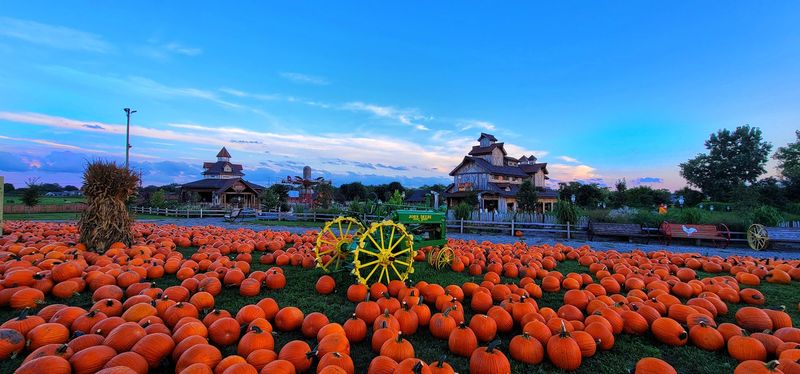
You pop open a can of pumpkin for Thanksgiving pie and never wonder where it grew. Then you learn the answer may be a flat stretch of farmland in Illinois, far from any fancy pumpkin patch.
The story is bigger than a single town, and it is easy to get wrong. Let’s follow the pumpkins from Illinois fields toward the can, and sort out what is solid fact and what is just a good story.
Illinois’s lead rests on more than a catchy title
Start with the numbers, because they are big. USDA reports that Illinois produced about 485 million pounds of pumpkins in 2024, roughly as much as the next four leading states combined.
Farmers there harvested 15,400 acres, more than twice the acreage of any other top pumpkin state. Illinois also averaged about 38,000 pounds per acre from 2021 to 2024, mostly from pie varieties meant for processing.
Keep one detail in mind. That 485 million pounds covers pumpkins for every use, from porch decorations to pies.
Illinois leads the country, but it is not the only grower, and the total says nothing yet about cans. For that, we need to look at the special pumpkins grown for processing.
The pumpkins in cans are chosen for the job
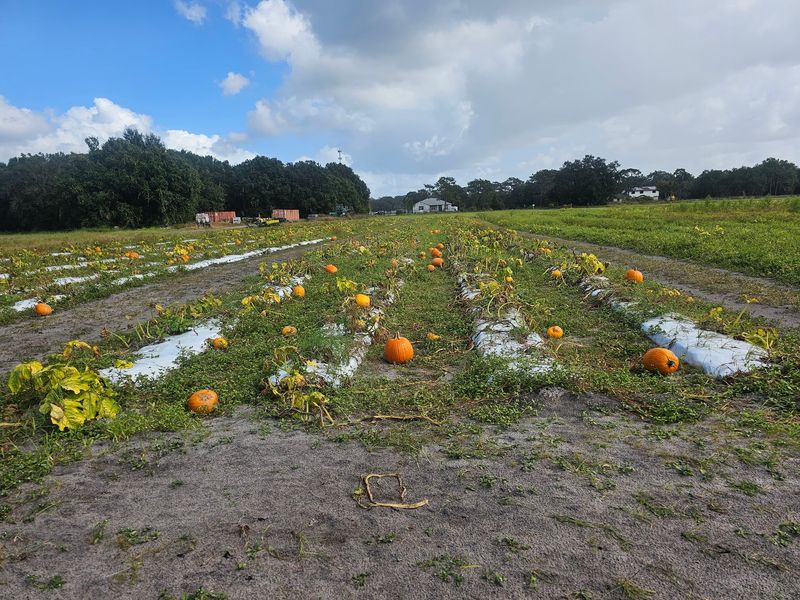
Picture the classic jack-o’-lantern, round and bright orange. Now forget it.
Pumpkins grown for cooking and canning are a different crowd, and Illinois Extension’s variety guide lists Dickinson among the varieties used for processing.
Libby’s says its 100% pure pumpkin is made from Dickinson pumpkins, which look different from typical jack-o’-lantern pumpkins. That is one company’s recipe, not a description of every can.
You may have heard that canned pumpkin is secretly squash. That is a oversimplification.
USDA keeps separate standards for canned pumpkin and canned squash, so the two are treated as distinct products.
Why processing pumpkins grow near the canneries
Pumpkins are bulky, and they do not love long trips. That helps explain why the crop grows close to where it gets cooked.
USDA reporting shared by Illinois Extension points to two Illinois processing plants, in Morton and Princeville, and says processing pumpkins are grown near canning facilities.
Libby’s tells its own version of the story. In its account, the Morton operation works with area farms, including family farms.
The company also says pumpkins can go from field to can in a few hours. That is Libby’s claim about its own operation, so it should not be applied to every processor.
Morton’s famous title comes with a date attached
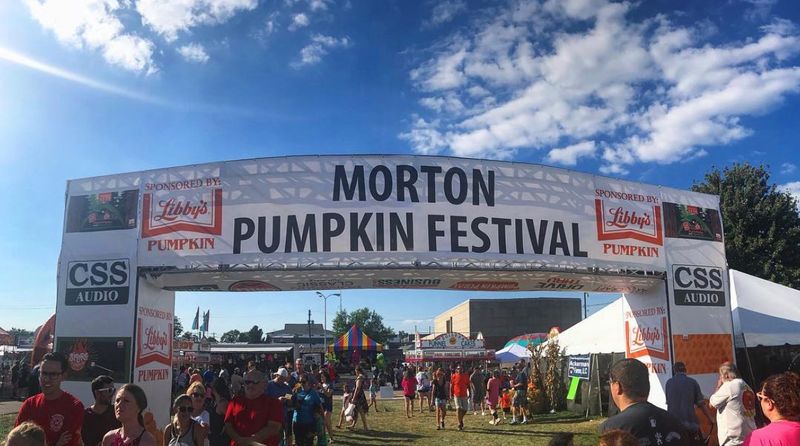
Morton wears its nickname proudly: Pumpkin Capital of the World. The Morton Pumpkin Festival’s history ties the title to a 1978 proclamation by the Illinois governor.
According to the festival, that proclamation cited 85% of the world’s canned pumpkin being processed at the local Libby’s plant at that time.
Treat that number as a snapshot from 1978, documented locally. It is not today’s market share, and it is not a figure for all the pumpkin pie in America.
The title is a lovely piece of local history, and it fits best as a story about one town and one plant in one year.
What the processing-pumpkin estimates do—and don’t—say

Two estimates float around, and they do not match. Illinois Extension says about 90 to 95% of the processed pumpkins grown in the United States come from Illinois.
A 2026 Illinois Extension and USDA broadcast gives a lower estimate, at least over 70%, for U.S. pumpkins meant for processing. The sources do not reconcile the two or show that they define things the same way, so neither is a precise current share.
Both are about pumpkins grown for processing. Neither tells you which can, brand, or prepared pie filling is on a shelf.
For solid ground, the USDA production data show Illinois’s broader pumpkin-growing lead.
Illinois’s role is clear; every can’s origin is not

Put the pieces together and Illinois’s role makes sense. The state leads in U.S. pumpkin production, grows varieties suited to processing, and has canneries nearby, including the Libby’s operation described by Nestle.
What those facts do not show is that Illinois fills nearly every can of pie filling, or that all canned pumpkin on store shelves comes from the state. Labels and brands vary, and the evidence here does not trace every can.
If you want to bake from scratch, freeze your puree rather than canning it at home. Next time you open a can, you can thank some Illinois farmland, and leave the rest to the label.
Share this story